Introduction
Bone health for seniors is one of the most important yet overlooked parts of healthy aging. Our bones quietly support every movement we make — from standing up in the morning to reaching for a glass on a shelf. After age 50, however, the balance between bone building and bone breakdown shifts. Each decade brings a gradual loss of density that can make bones weaker and more prone to fractures. For adults in their sixties and seventies, that decline can affect independence, confidence, and quality of life.
The encouraging news is that bone loss is not inevitable. With the right nutrition, activity, and habits, seniors can maintain or even improve bone strength well into later life. This guide explains how vitamin D and calcium work together, what science says about healthy bone maintenance, and which everyday choices make the biggest difference.
Why Bone Health for Seniors Deserves Your Focus
After about age 30, bone mass naturally plateaus. In later years, our bodies pull small amounts of calcium from bone to maintain normal blood levels. If that borrowed calcium isn’t replaced, bones slowly thin out — a condition called osteopenia that can progress to osteoporosis.
Hip and spine fractures are the most serious consequences. They don’t just cause pain; they can shorten life expectancy and limit mobility for good. Even minor breaks can lead to fear of falling, which discourages activity and accelerates further bone and muscle loss.
Keeping bones strong means protecting your freedom of movement. It also protects overall well-being, since staying active is tied to better heart health, balance, and mood.
If you’re already taking steps to improve daily safety — for example, installing grab bars or toilet frames like those in the Best Toilet Safety Rails for Elderly (2025 Guide to Bathroom Support Frames) — focusing on bone nutrition is the perfect next step.
Understanding Calcium: The Framework of Bone
Calcium is quite literally what bones are made of. Ninety-nine percent of the body’s calcium resides in the skeleton; the remaining one percent circulates in the bloodstream to keep nerves firing and muscles contracting.
When the diet lacks calcium, the body pulls it from bone to keep those vital systems running. Over years, that slow borrowing weakens bone structure, which is why maintaining bone health for seniors starts with steady, consistent calcium intake from food.
Recommended Daily Calcium for Older Adults
Guidelines from the National Institutes of Health (NIH) recommend:
- Women 51 + years: 1 200 mg/day
- Men 51–70 years: 1 000 mg/day
- Men 71 + years: 1 200 mg/day
Because the gut absorbs only about 500–600 mg at a time, spread intake across meals rather than taking one large supplement.
Calcium-Rich Foods
Whole foods remain the best source. Try rotating:
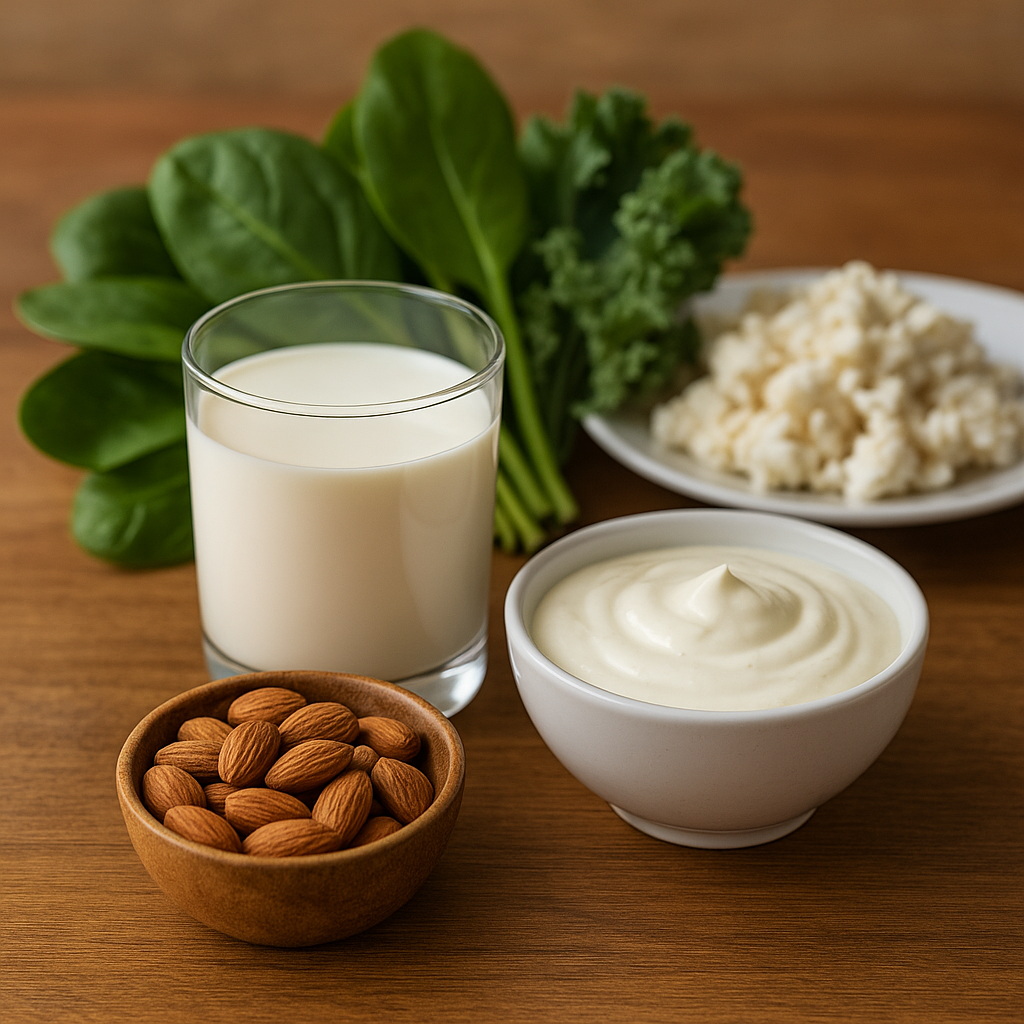
- Dairy: milk, Greek yogurt, cottage cheese, hard cheeses
- Fortified non-dairy milks: almond, soy, or oat beverages
- Fish with edible bones: sardines, canned salmon
- Leafy greens: collard, kale, bok choy
- Calcium-set tofu or fortified juices
If you’re tracking nutrition for mobility or wound healing, see Nutrition for Elderly (2025 Guide to Healthy Aging & Mobility Support) for a broader food-planning overview.
Calcium Supplements — When They Help
When appetite, lactose intolerance, or dietary limits make it hard to hit targets, supplements can fill the gap.
- Calcium citrate is absorbed well with or without food.
- Calcium carbonate is cheaper but best taken with meals.
Avoid exceeding 2 000 mg total per day; more isn’t better and may raise kidney-stone risk.
Always discuss supplements with your clinician, especially if you take thyroid, blood-pressure, or heart medications that interact with calcium.
Vitamin D: The Key That Unlocks Calcium
You can eat all the calcium you want, but without enough vitamin D, very little gets absorbed. Vitamin D acts as a hormonal switch that allows the intestines to pull calcium into the bloodstream and deposit it into bone. In fact, vitamin D deficiency is one of the most common reasons bone health for seniors declines over time.
Why Seniors Often Run Low
- Less skin production: Older skin synthesizes 70–80 % less vitamin D from sunlight than younger skin.
- Limited sun exposure: Mobility limits or sunscreen use reduce UV-B contact.
- Reduced kidney activation: Aging kidneys convert less vitamin D to its active form.
Daily Vitamin D Needs
Most adults over 60 should aim for 800–1 000 IU (20–25 µg) daily. Those with known deficiency may require higher doses for a short period, guided by blood tests.
You can read details directly from the NIH Office of Dietary Supplements – Vitamin D Fact Sheet.
Sources of Vitamin D
- Sunlight: 10–20 minutes on arms and face a few times weekly, when weather allows.
- Food: fatty fish (salmon, mackerel), fortified milk or cereal, eggs.
- Supplements: vitamin D₃ (cholecalciferol) tends to raise blood levels more effectively than D₂.
If you have limited outdoor time or live in northern climates, supplementation is often the easiest solution.
Beyond D and Calcium: Nutrients That Support Bone Metabolism
Protein
Bones are 30 % protein by weight. Adequate protein helps produce collagen — the flexible scaffolding that minerals attach to. Seniors often need slightly more than younger adults: around 1.0–1.2 g of protein per kg body weight.
If hitting that target feels difficult, see Best Protein Powders for Seniors (2025 Guide) for practical supplement options.
Magnesium and Phosphorus
Magnesium activates vitamin D; phosphorus partners with calcium to create the mineral crystals that harden bone. Nuts, seeds, whole grains, and legumes cover both.
Vitamin K₂
This under-recognized nutrient tells calcium where to go — into bones instead of arteries. Found in green leafy vegetables and fermented foods like natto or aged cheese.
Omega-3 Fatty Acids
Chronic inflammation accelerates bone breakdown. Omega-3s from salmon, walnuts, or flaxseed counter that effect and support joint comfort.
How Medications Affect Bone Strength
Certain prescription and over-the-counter medications can quietly weaken bone over time. These drugs may interfere with calcium absorption, reduce vitamin D levels, or directly accelerate bone loss.
Common Medications Linked to Bone Loss
- Corticosteroids (prednisone, methylprednisolone): Often prescribed for asthma, arthritis, or autoimmune conditions. Long-term use is one of the leading causes of secondary osteoporosis.
- Proton pump inhibitors (PPIs) used for heartburn: These lower stomach acid, which in turn reduces calcium absorption.
- Anticonvulsants (phenytoin, phenobarbital): Can affect vitamin D metabolism.
- Certain diabetes and cancer drugs: Some treatments for type 2 diabetes or breast/prostate cancer influence hormone levels that control bone turnover.
If you use any of these regularly, speak with your doctor about bone-protective strategies such as additional calcium, vitamin D, or medication alternatives. Never stop prescribed medication on your own.
For a more complete list of medicines that can affect bone health, the Mayo Clinic’s osteoporosis prevention page offers an up-to-date reference.
Practical Bone-Healthy Meal Plan Example
Food synergy matters as much as isolated nutrients. Here’s what a balanced, bone-friendly day might look like:
Breakfast
- Fortified oatmeal made with milk or calcium-fortified almond milk
- Chopped walnuts and chia seeds for omega-3s
- One boiled egg for vitamin D and protein
- Mid-morning: 15 minutes of light outdoor movement for sun exposure
Lunch
- Grilled salmon salad with mixed greens, tomatoes, and shredded carrots
- Dressing with olive oil and lemon (vitamin K & C combo)
- Whole-grain crackers and a serving of yogurt
Snack
- Smoothie with spinach, frozen berries, fortified soy milk, and a scoop of protein powder
- Handful of almonds
Dinner
- Stir-fried tofu with broccoli, mushrooms, and garlic
- Brown rice or quinoa
- Optional: calcium citrate supplement if total intake for the day was low
This simple framework delivers roughly 1,200 mg calcium, 800 IU vitamin D, and 90–100 grams of protein — an ideal combination for older adults supporting muscle and bone health for seniors. These balanced meals show that protecting bone strength doesn’t require complex diets — just consistent nutrients and smart food pairing.
Lifestyle Habits That Keep Bones Strong
1 | Weight-Bearing Movement
Bones are living tissue that remodel themselves in response to stress. Walking, climbing stairs, and light jogging all stimulate new bone formation.
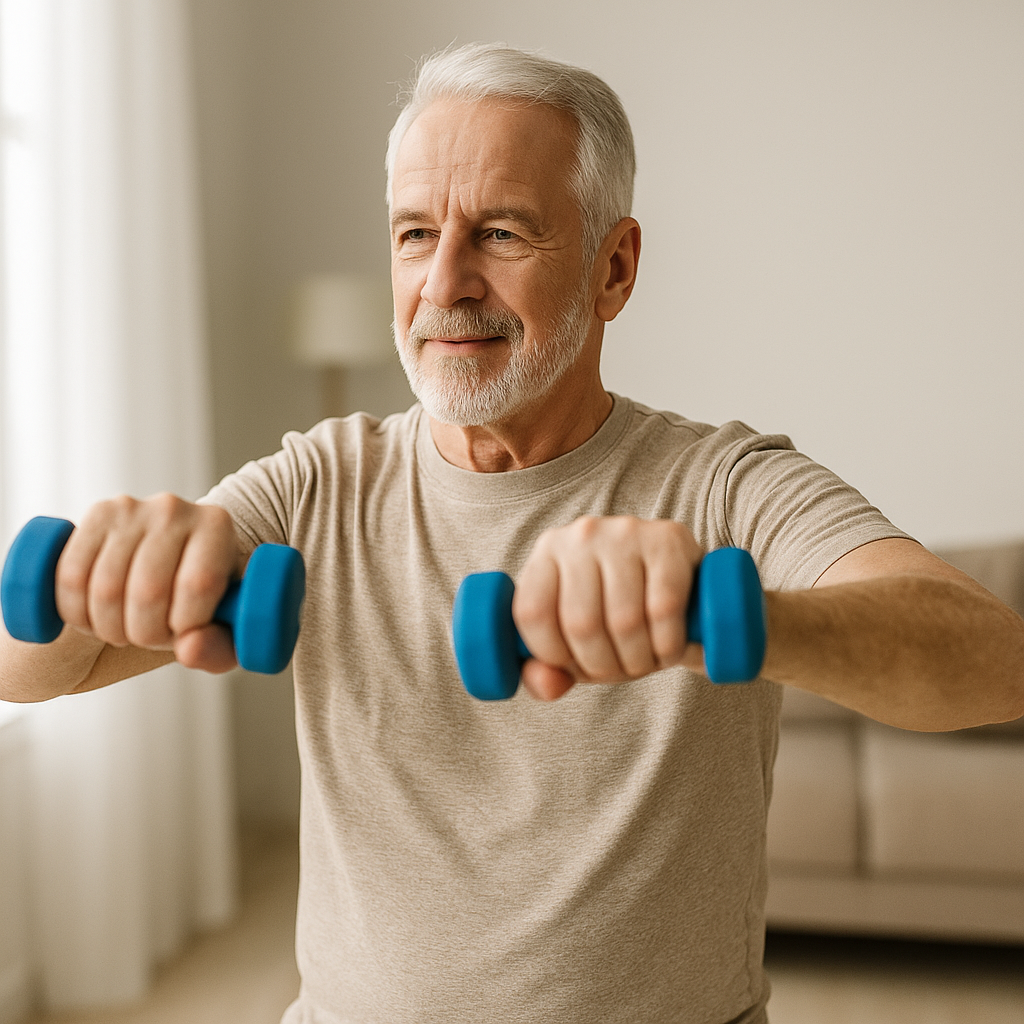
If mobility is limited, resistance bands or seated leg presses work too. Even pushing a rollator walker, as discussed in Best Walkers & Rollators for Seniors (2025 Guide), provides healthy load through hips and legs.
2 | Strength Training
Muscles pull on bones; stronger muscles mean stronger bones. Two or three short sessions a week using hand weights or body weight are ideal. Focus on legs, hips, and core for balance and fall prevention.
3 | Balance and Flexibility
Yoga or tai chi improve coordination and reduce falls. For seniors using wheelchairs, upper-body stretching and light resistance maintain posture and spinal health. See Traveling with a Wheelchair: 9 Tips for Safe Trips (2025) for travel-friendly movement ideas.
4 | Quit Smoking and Moderate Alcohol
Nicotine and excessive alcohol both suppress the cells that build bone. Quitting smoking can start to reverse damage within months.
5 | Maintain a Healthy Weight
Very low body weight correlates with reduced bone density, but excessive weight can impair mobility. Aim for gradual, balanced nutrition that fuels activity without extremes.
Combining Bone Health with Fall Prevention
Bone strength is only half the equation. Preventing falls keeps those strong bones from breaking. Integrating both strategies leads to the best outcomes.
Build Strength and Stability
- Add 10 minutes of balance practice (standing on one leg near a wall, heel-to-toe walking) to your exercise routine.
- Strengthen core muscles to improve posture and stability.
Make the Home Safer
- Clear clutter, secure throw rugs, and use nightlights in hallways.
- Choose supportive seating like those reviewed in Best Lift Chairs for Seniors (2025 Guide).
- In bathrooms, install grab bars and non-slip mats — guidance is in Tips for Making Your Home Safer for Seniors (2025).
Use Mobility Aids Confidently
A well-fitted cane or walker can prevent falls before they happen. The key is proper height and grip style. If unsure, How to Choose the Right Mobility Aid for Your Needs explains how to match aids to different activity levels. Using these supports strategically isn’t a sign of weakness — it’s part of maintaining mobility and bone health for seniors long-term.
Medical Testing and When to Seek Help
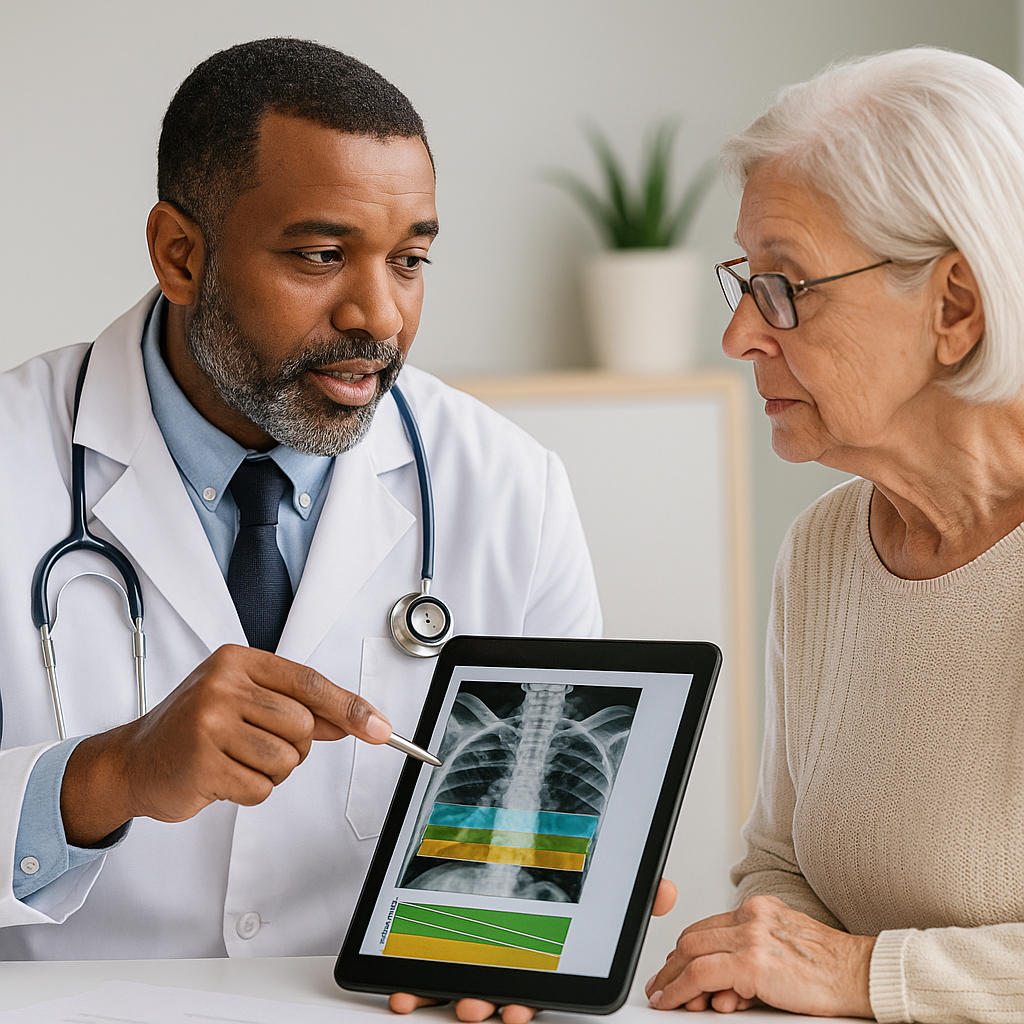
A bone density scan (DEXA) is the gold standard for diagnosing bone loss.
- Women 65 + and men 70 + should be screened at least once.
- Earlier testing is recommended if you’ve had fractures, long-term steroid use, thyroid disorders, or strong family history.
If your score shows osteopenia or osteoporosis, your clinician might suggest prescription treatments such as bisphosphonates, denosumab, or newer bone-building agents. These drugs slow bone breakdown or encourage formation, but they work best alongside good nutrition and exercise.
Learn more from the National Osteoporosis Foundation – Bone Density Testing.
How to Strengthen Bones Naturally After 60
- Eat a nutrient-dense diet with calcium-rich foods and adequate protein.
- Get safe sun exposure or supplement vitamin D as advised.
- Exercise regularly with a mix of resistance, balance, and flexibility work.
- Avoid smoking and excess alcohol.
- Review medications that might deplete bone (steroids, certain heartburn meds).
- Get screened and track progress with your provider.
Small, consistent habits are more powerful than occasional bursts of effort.
FAQs About Bone Health in Older Adults
These are the most common questions about bone health for seniors and how to maintain it naturally.
When is it too late to build bone density?
Never. While rebuilding large amounts of lost bone becomes harder after 70, bone tissue still responds to targeted exercise and improved nutrition. Even modest increases in density can cut fracture risk dramatically.
How can I increase bone density after 60?
Combine regular weight-bearing activity with 1 000–1 200 mg of calcium and 800–1 000 IU of vitamin D daily. Add strength training to stimulate bone growth, and check with your doctor about vitamin K2 or magnesium intake.
What is the best vitamin for bone repair?
Vitamin D tops the list because it helps your body use calcium. Vitamin K2 and C support collagen, and magnesium assists calcium metabolism. A balanced diet covering all of these works better than any single pill.
How can I make bones and joints strong naturally?
Stay active, stretch daily, eat high-quality protein, and include anti-inflammatory foods like olive oil, nuts, and fish. Mobility aids such as rollators or canes can keep you moving safely — see How to Choose the Right Mobility Aid for Your Needs for guidance.
Can bone density be increased after 70?
Yes, though slower. Weight training, vitamin D optimization, and medication when needed can stabilize or slightly increase density. More important, these actions preserve balance and reduce falls.
Does caffeine or coffee weaken bones?
Moderate coffee intake (one to two cups daily) has little effect if calcium intake is adequate. Excess caffeine can slightly increase calcium loss in urine, but adding milk or pairing coffee with a calcium-rich breakfast offsets this.
What’s the difference between osteopenia and osteoporosis?
Osteopenia means mild bone thinning — a warning sign but not yet disease. Osteoporosis is more severe bone loss that greatly raises fracture risk. Both require attention, but early lifestyle changes can often halt osteopenia before it worsens.
Final Thoughts
Strong bones mean freedom — the freedom to walk unassisted, travel, and stay active with family. Age may slow bone renewal, but it doesn’t stop it. With consistent calcium, vitamin D, and daily movement, your skeleton can remain resilient for decades.
If you’re improving diet or starting exercise to strengthen bones, you’re already on the right path. Continue layering those habits, check your progress yearly, and celebrate every step that keeps you upright, confident, and independent.
Medical Disclaimer: This information is educational only and not a substitute for professional medical advice. Always consult your healthcare provider before making changes to diet, supplements, or medications.
