
Affiliate Disclaimer: This article contains affiliate links. As an Amazon Associate, Mobility With Ease may earn a small commission from qualifying purchases at no additional cost to you.
Introduction
Folding walkers remain one of the safest and most reliable mobility aids for seniors, especially for those who need consistent balance support during daily activities. Unlike rollators—which rely on wheels, hand brakes, and momentum—folding walkers provide a stable, forward-facing frame that helps seniors maintain control at their own pace. This makes them an excellent choice for individuals experiencing mild-to-moderate instability, recovering from surgery, or navigating smaller home environments where maneuverability matters.
Beyond stability alone, folding walkers also offer practical advantages for seniors and caregivers. They collapse quickly for transport, fit easily into car trunks or beside chairs, and require no complicated adjustments to operate safely. A correctly fitted folding walker can improve posture, reduce fall risk, lessen joint strain, and give seniors the confidence to move around with greater independence—whether they’re completing morning routines, moving between rooms, or walking short distances outside the home.
This guide reviews the best folding walkers of 2025, breaking down lightweight models, wheeled walkers, narrow-space designs, heavy-duty frames, and combination walkers with seats. Each recommendation focuses on real-world usability, comfort, safety, and the practical needs of seniors and their caregivers. The goal is simple: help you choose a walker that supports strength, mobility, and peace of mind every single day.
Why Folding Walkers Matter for Seniors
As adults age, stability tends to become more important than speed or convenience. Folding walkers offer a solid foundation for safe movement, especially for seniors who experience unsteadiness, muscle weakness, or changes in gait. These walkers provide forward support, promote better posture, and reduce the risk of falls by distributing weight evenly.
They also excel in tight living spaces. Standard walkers can feel bulky, but folding models collapse quickly and store easily behind furniture or in a vehicle. For seniors who use rollators or canes at times, a folding walker offers a safe alternative during days with increased weakness or when navigating smaller areas.
For seniors exploring the full spectrum of mobility devices, the broader category of walking aids—including options like rollators—offers additional flexibility and features. You can learn more about those expanded choices in our Best Walkers & Rollators for Seniors (2025 Guide), which covers models designed for longer-distance walking and outdoor use.
Doctor’s Note: How to Choose the Right Type of Folding Walker
Choosing a walker isn’t about buying the most expensive one—it’s about matching the walker to the senior’s needs. Seniors with mild instability may not need wheels, while those with limited lifting strength often find two-wheel walkers easier to move forward. Height adjustability, frame width, and weight capacity also play major roles.
A walker should support a senior’s natural stride, not interrupt it. That means the walker must be adjusted so the elbows bend comfortably at 15–20 degrees. Too low, and the walker encourages slouching. Too high, and it forces shoulder strain.
For seniors trying to decide whether a walker, cane, rollator, or wheelchair offers the best long-term support, our How to Choose the Right Mobility Aid for Your Needs guide covers this decision in depth and helps match the device to the individual’s daily routine and mobility challenges.
Top Picks: Best Folding Walkers for Seniors (2025)
Best Overall Folding Walker
Drive Medical 2-Button Standard Foldable Walker for Seniors, Adults, and Disabled — Silver
This reliable, easy-fold walker offers maximum stability without unnecessary weight, making it ideal for seniors who need steady support throughout the day. Its simple two-button design folds quickly and smoothly, allowing effortless transport and storage.
Pros:
- The frame offers excellent stability and balance support, making it a dependable choice for seniors who need a secure walking aid throughout the day.
- The dual-button folding mechanism is intuitive and responsive, allowing seniors or caregivers to collapse the walker quickly—even with limited hand strength.
- Adjustable height settings help ensure proper posture and a more comfortable, ergonomic fit for users of different heights.
- Despite being lightweight, the aluminum frame feels sturdy and durable enough for daily use on a variety of indoor surfaces.
Cons:
- The walker comes without wheels, which means users must lift it with every step unless wheels are purchased separately.
- Because it lacks rolling capability, it’s not the best option for outdoor trips or for seniors who prefer a smoother, continuous walking motion.
Best Lightweight Folding Walker
Medline Lightweight Two Button Folding Walker with 5″ Wheels, Aluminum Frame Supports up to 300 lbs
One of the lightest walkers available, this aluminum-frame model glides forward easily and collapses in seconds for quick storage. It’s an excellent choice for seniors who prioritize portability, independence, and low-effort handling.
Pros:
- Its ultra-lightweight aluminum design makes it easy for seniors to lift, maneuver, and load into cars without strain.
- The slim profile and smooth 5-inch wheels allow for effortless movement through standard home layouts and narrow hallways.
- The walker folds down quickly with a simple two-button system, making storage and transport extremely convenient.
Cons:
- Smaller wheels and a lightweight frame can struggle on plush carpeting or softer outdoor surfaces.
- It supports up to 300 lbs, which is solid, but not suitable for individuals who require bariatric-level stability.


Best Folding Walker With Wheels
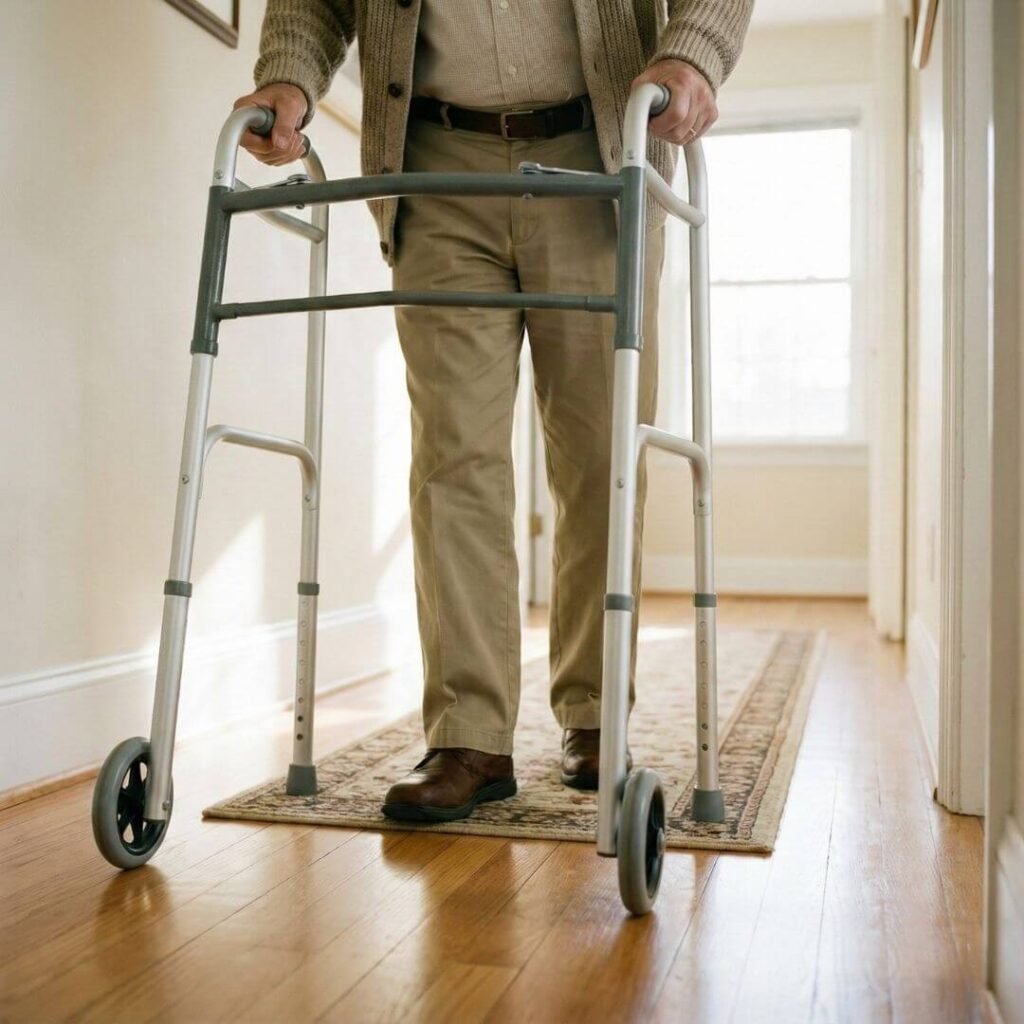
Drive Medical 10210-1 2-Button Folding Walker with Wheels, Front Wheel Walker, Supports up to 350 lbs
This classic two-wheel folding walker provides smoother forward motion while preserving the stability of a traditional non-wheeled frame. It’s perfect for seniors who prefer steady, continuous steps without lifting the walker each time.
Pros:
- The 5-inch wheels create a smooth gliding motion, reducing the need to lift the walker and supporting a more natural walking rhythm.
- The two-button folding mechanism works well for those with arthritis or limited hand strength, allowing for quick folding on the go.
- Its adjustable height range helps users maintain proper posture and avoid leaning too far forward.
- The overall structure balances stability and mobility, making it ideal for indoor use on hard floors and low-pile carpet.
Cons:
- The small wheels aren’t built for uneven sidewalks, gravel, or rough outdoor terrain, limiting where it can be used.
- It is slightly heavier than the most basic walkers, which may matter for seniors who lift their walkers frequently.

Best Narrow Walker for Small Spaces
DELOG Narrow Folding Walker for Seniors with Trigger Release and 5″ Wheels
Designed specifically for tight hallways, bathrooms, and small living spaces, this slim folding walker offers dependable support without taking up extra width. Its trigger-release mechanism allows one-handed folding, improving safety and ease of use.
Pros:
- The compact, narrow-width frame allows seniors to move safely through tight hallways, small bathrooms, and cozy apartment layouts.
- Its one-handed trigger-release makes folding easy even for those with arthritis, limited grip strength, or balance concerns.
- Despite the slimmer profile, the frame remains supportive and lightweight enough for daily indoor use.
- Maneuverability is excellent in small homes where standard walkers may bump into walls or doorframes.
Cons:
- The narrow stance can feel less stable for seniors with wider gaits or more advanced balance limitations.
- Smaller wheels work well indoors but can feel less comfortable when transitioning over uneven outdoor surfaces.

Best Heavy-Duty / Bariatric Folding Walker
Medline Heavy-Duty Bariatric Folding Walker with 5″ Wheels, 500 lb Capacity
Built with a reinforced steel frame and wide stance, this heavy-duty walker provides exceptional stability for larger adults. Despite its strength, it folds quickly and moves smoothly on 5-inch wheels for daily use around the home.
Pros:
- The reinforced steel frame provides exceptional strength and stability, giving larger adults a safe and reliable mobility aid.
- Despite its weight-bearing capacity, the walker still folds quickly and is manageable for caregivers to transport.
- The included 5-inch wheels help the user glide forward smoothly and reduce strain compared to lifting a fully non-wheeled walker.
- Adjustable height options ensure the walker can be customized for proper posture and joint alignment.
Cons:
- The heavyweight construction makes it noticeably heavier than standard aluminum walkers, especially when transporting it.
- Its wider frame requires more space to maneuver and may not fit easily through tight bathrooms or narrow bedroom doors.

Best Folding Walker With Seat (Hybrid Walker/Seat Combo)
Medline Superlight Folding Aluminum Mobility Rollator Walker, Smoky Blue, 6″ Wheels, Adjustable Seat
This lightweight rollator-style walker includes a comfortable padded seat, giving seniors a convenient place to rest during longer outings. Its easy-fold frame and smooth 6-inch wheels make it practical for both indoor and outdoor use.
Pros:
- The integrated padded seat provides a comfortable, stable place to rest during longer outings, reducing fatigue and fall risk.
- Lightweight aluminum construction keeps the rollator easy to fold, lift, and transport—even with the added seat and accessories.
- The 6-inch wheels roll smoothly across indoor and outdoor surfaces, offering more versatility than smaller standard walker wheels.
- Adjustable handle height helps seniors maintain proper posture and decreases strain on shoulders, wrists, and the lower back.
Cons:
- The larger rollator-style frame requires more turning space and isn’t ideal for very tight hallways or compact bathrooms.
- Although lighter than most rollators, it’s still bulkier than standard walkers without seats and may feel oversized for petite seniors.

Educational Overview
Folding walkers play an important role in helping seniors move with greater control, balance, and predictability. Their stable, forward-facing frame supports a more measured walking pace, which is especially helpful for individuals who experience unsteadiness, leg weakness, or changes in gait speed. Because folding walkers require the user to stay inside the frame rather than behind it, they promote safer alignment and discourage the forward rushing that can happen with rollators.
These walkers also reduce strain on the hips, knees, and lower back by encouraging upright posture. Proper weight distribution through the arms helps offload painful joints and provides a steady point of contact during transitions such as rising from a chair, navigating turns, or stepping over small thresholds. For seniors with balance deficits or those recovering from orthopedic surgery, this predictable support can significantly reduce fall risk and increase confidence.
Their design also makes them especially effective in tighter or more cluttered living environments. Older homes often have narrower doorways, compact bathrooms, and limited turning space—areas where larger mobility devices may not fit. A folding walker that collapses quickly and remains lightweight allows seniors to navigate these spaces without sacrificing stability. Seniors who are adapting to new mobility limitations often find that a good folding walker reduces the mental strain of moving around the home, making daily routines feel more manageable.
Many seniors use folding walkers as a transitional device during rehabilitation or strengthening periods, even if they eventually move to a wheelchair or scooter for longer distances. For those comparing different options, our Best Lightweight Wheelchairs for Seniors guide explains when a wheelchair may be the safer or more practical choice.
For more detail on how various mobility aids support balance, gait, and posture, the NIH provides an excellent overview of assistive mobility tools that explains how different devices meet different physical needs and functional goals. This kind of foundational understanding helps caregivers and seniors choose the safest and most effective tool for day-to-day mobility.
How to Use a Folding Walker Safely
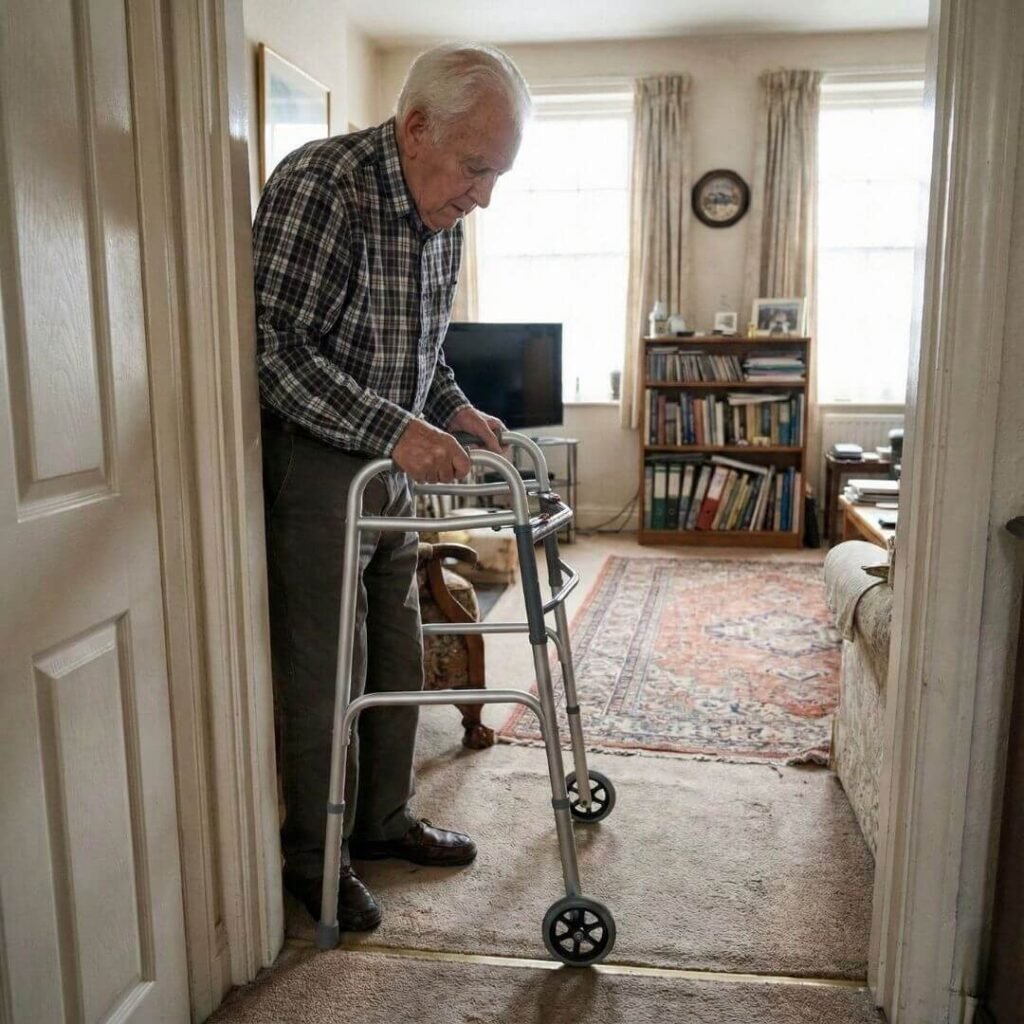
Using a folding walker correctly is one of the most effective ways to prevent falls and maintain confidence during daily movement. Even a well-fitted walker can become unsafe if the technique is off or if the environment isn’t adapted for safe navigation. Mastering a few core habits dramatically improves stability and reduces strain on joints and muscles.
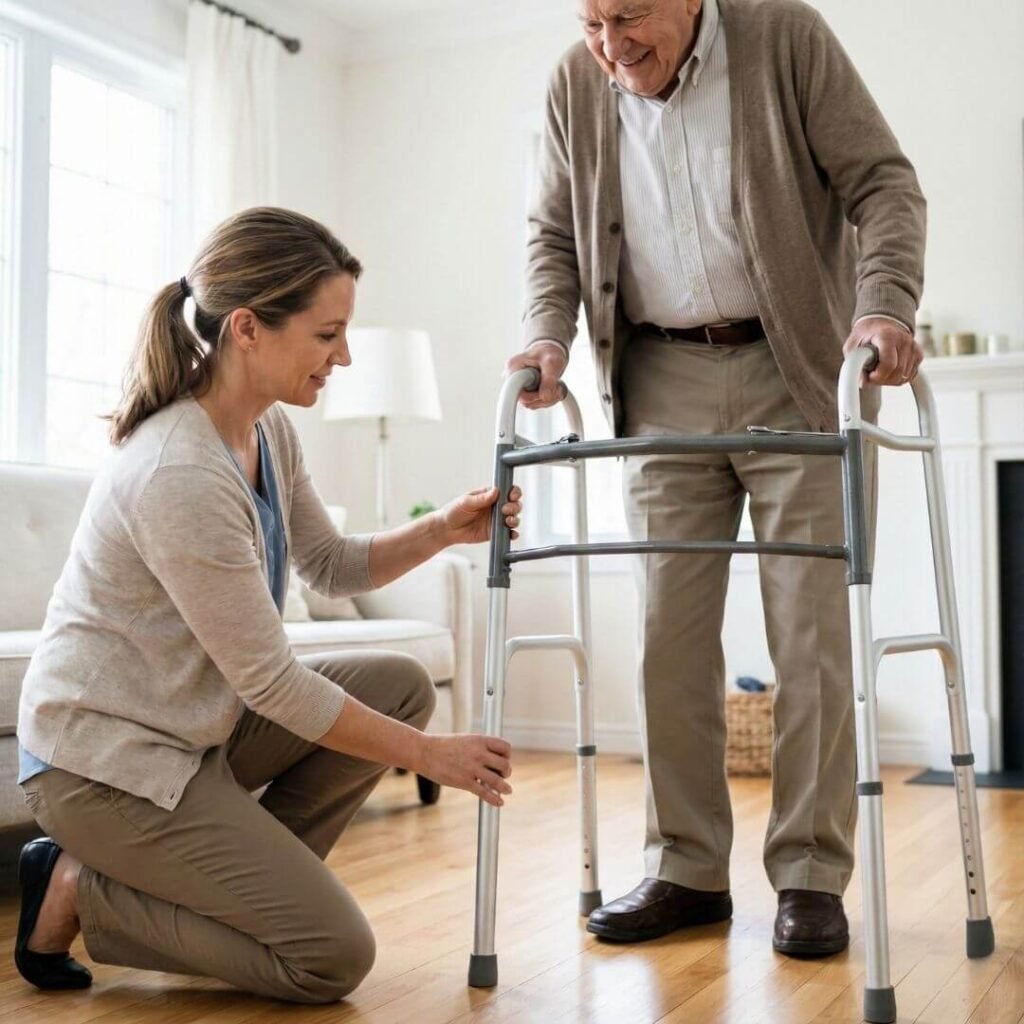
A walker should always be adjusted so the user can stand tall without leaning forward. When the handgrips align with the wrist crease, the arms settle into a natural 15–20 degree bend at the elbows. This position supports better posture, keeps the chest open, reduces lower-back tension, and allows the shoulders and core to work together for balance.
Once fitted properly, technique matters just as much as the device itself. Seniors should position the walker a small step ahead, then step into the frame, not behind it. Stepping too far behind delays weight transfer, which increases the risk of tipping forward or losing balance during turns. Controlled, consistent forward movement is key.
Different walker types require different handling:
- Non-wheeled walkers must be lifted with both hands for each step. This demands good grip strength and upper-body control.
- Two-wheel walkers glide more easily, which reduces effort but requires awareness on slopes or uneven surfaces.
- Walkers with specialty tips or skis improve movement on carpet but should still be used cautiously on tile or hardwood.
To maximize safety, reinforce the following best practices:
- Maintain good posture. Avoid hunching over the walker, which can strain the back and shift weight forward.
- Lift or glide slowly and evenly. Jerky or uneven movements reduce stability.
- Pause before changing direction. Turns are one of the most common fall points with walkers.
- Use the walker on flat, uncluttered surfaces.
These strategies align with fall-prevention principles outlined by the CDC, which emphasizes environmental safety as a core factor in preventing falls. - Watch transitions carefully. Rugs, thresholds, grout lines, and bathroom flooring often create unexpected resistance or slipperiness.
- Keep pathways wide and clear. Clutter, deep carpet, and dimly lit corners interfere with both visibility and traction.
- Slow down when rising or sitting. Many walker-related falls occur during these two movements rather than while walking.
For seniors whose balance needs are mild or intermittent, a cane may offer enough support. Our Best Canes for Balance (2025 Guide) breaks down options that provide stability without the bulk of a walker.
If the safety challenge is more about the surrounding environment—tight hallways, cluttered rooms, or poor lighting—our Tips for Making Your Home Safer for Seniors provides room-by-room strategies to reduce hazards and improve safe mobility throughout the home.
Lifestyle Synergy: Building Strength and Reducing Fatigue
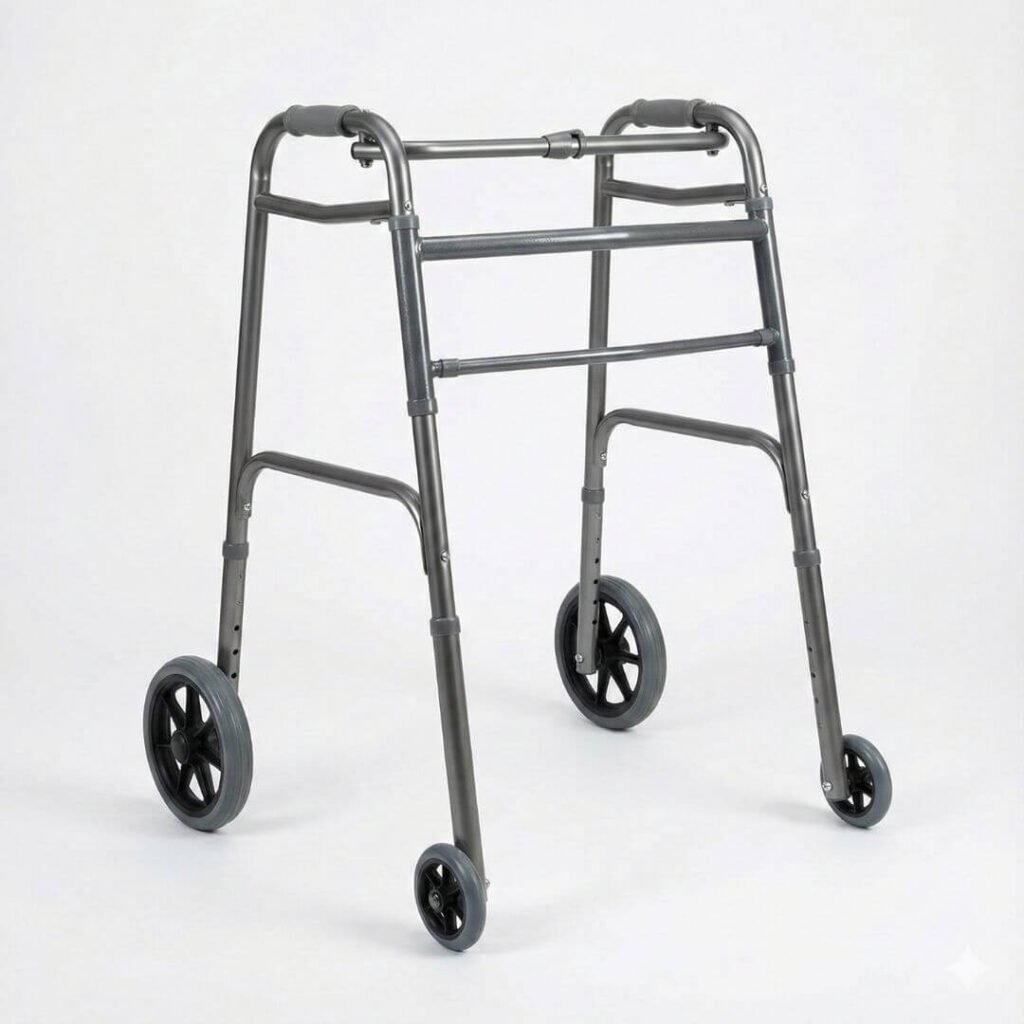
A folding walker delivers the best results when it’s supported by daily habits that keep muscles active, joints flexible, and endurance stable. Even small routines make a major difference. Gentle stretching in the morning helps loosen stiff hips and backs, while short, purposeful walks maintain cardiovascular health and reinforce confidence using the walker. Seniors who combine walker use with simple strengthening—such as seated leg lifts, mini-squats using a countertop for support, or heel raises—often see better balance and reduced fatigue during everyday tasks.
Hydration and nutrition also play a much bigger role in mobility than most people realize. Staying hydrated improves circulation and joint lubrication, while adequate protein intake supports the muscle strength needed to use a walker safely. When a senior is fatigued, dehydrated, or under-fueled, their gait becomes less steady and their walker technique suffers.
For seniors who can comfortably walk short distances but tire during longer errands or appointments, a mobility scooter can seamlessly fill the gap. Our Best Mobility Scooters for Seniors (2025 Guide) breaks down models that support safe community mobility without pushing beyond a senior’s energy limits. Pairing a walker at home with a scooter for longer outings helps preserve independence, reduce strain, and prevent overexertion.
Physician Tips for Maximizing Stability
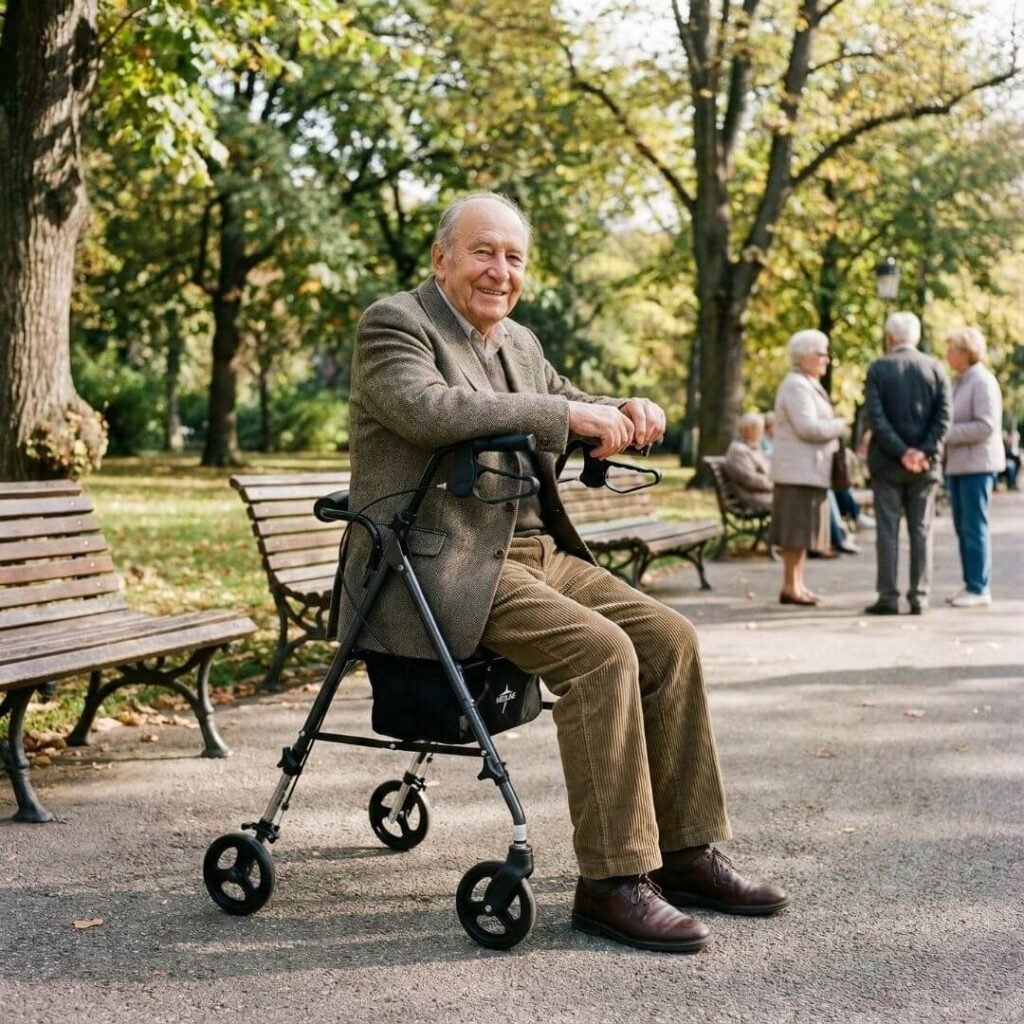
- Proper walker use goes beyond height settings and forward movement—small adjustments to posture, grip, footwear, and home setup can significantly improve safety and reduce fatigue. These physician-recommended strategies help seniors maintain better balance, conserve energy, and avoid the most common hazards associated with folding walkers.
- Check the rubber tips or glide caps weekly. Even slight wear can reduce traction, especially on tile or hardwood flooring. Replace tips promptly if they appear smooth, uneven, or cracked. Glides should also be inspected for flattening or resistance that forces the user to push harder than necessary.
- Re-evaluate handle height anytime footwear changes. Shoes, slippers, orthotics, or compression socks can alter leg length and body alignment. If a senior switches from soft house shoes to firm supportive walking shoes, the walker may need a subtle height adjustment to maintain proper elbow bend and upright posture.
- Practice turnarounds in a safe, open space. Walkers—especially those without wheels—require wider turning radiuses than most seniors expect. Practicing slow, controlled turns reduces the risk of tipping the frame or overstepping the side of the walker. Start with quarter turns and progress to full rotations.
- Monitor grip fatigue and hand discomfort. Seniors with arthritis or neuropathy may benefit from cushioned or ergonomic handles to improve comfort and reduce slipping. If hand weakness is present, a two-wheel walker may be easier to maneuver safely.
- Use thresholds and transitions with intention. Small height changes between rooms create a surprising number of walker-related stumbles. Step up and down slowly, keeping the walker square to the transition. For homes with multiple raised thresholds, consider small, low-profile ramps—our Best Portable Wheelchair Ramps (2025 Guide) includes options that work well for walkers too.
- Maintain proper body alignment during longer walks. Encourage seniors to periodically reset: shoulders relaxed, chest open, gaze forward—not downward. This reduces back strain and keeps weight distributed inside the walker frame, improving overall stability.
- Pair walker use with supportive footwear. Shoes with firm heel counters, non-slip soles, and good arch support improve balance and reduce the risk of sliding, especially on smooth surfaces. Avoid backless shoes, floppy slippers, and worn treads.
- These principles align with broader mobility safety recommendations from the Mayo Clinic, which emphasizes proper device setup, hand positioning, and safe movement mechanics for seniors using walkers and other mobility aids.
Comparison Table
Below is a quick side-by-side view of the top folding walkers for seniors:
FAQs
1. What features make a folding walker safest for seniors?
The safest folding walkers combine a durable, well-balanced frame with height adjustability and reliable traction at the base. Rubber tips or wheels that grip the floor help prevent sliding, especially on tile or hardwood surfaces. A properly fitted walker also encourages upright posture, reducing the risk of leaning too far forward or backward. When these elements work together, seniors experience more stable steps and improved confidence during daily movement.
2. How do I know if a senior needs wheels or no wheels?
Walkers without wheels offer the highest level of stability, making them ideal for seniors who struggle with significant balance issues or require firm support during every step. Two-wheel walkers, on the other hand, provide smoother forward motion and are easier to maneuver for seniors who have enough strength to maintain control but may fatigue when lifting a walker repeatedly. The right choice often depends on strength, balance, home layout, and the senior’s comfort with maintaining a steady pace. A brief trial of each style often makes the decision clearer.
3. What height should a folding walker be for proper posture?
A folding walker should generally reach the level of the user’s wrists when their arms hang comfortably at their sides. This position allows for a natural 15–20 degree elbow bend, which supports good posture and reduces strain on the shoulders and lower back. A walker that’s too low forces hunching, while one that’s too high causes the shoulders to lift unnaturally. Most walkers have multiple height settings, making it easy to achieve the right fit.
4. Are narrow folding walkers stable enough for daily use?
Narrow folding walkers are designed to fit through tight doorways and small hallways without sacrificing stability. When properly adjusted, they offer the same forward support and weight distribution as standard-width walkers. Their slimmer profile simply makes them more practical for homes with limited space, especially older buildings with smaller bathrooms or long, narrow corridors. As with any walker, ensuring the correct height and grip comfort is essential for safe daily use.
5. Is a bariatric folding walker necessary for heavier adults?
Bariatric folding walkers are strongly recommended for seniors who weigh more than 300 pounds due to their reinforced frames and wider bases. These features provide greater durability and reduce wobbling, especially during standing transitions or when leaning into the walker for support. The added width also offers more room for comfortable movement between the handles. Choosing a walker designed for higher weight capacity ensures long-term safety and prevents premature equipment wear.
6. When should a senior choose a walker with a seat?
Walkers with seats are an excellent option for seniors who tire easily during errands, appointments, or community activities and need a place to rest periodically. The built-in seat allows them to pause safely without searching for nearby chairs or sturdy surfaces. These models are especially helpful for individuals with endurance limitations, mild cardiac conditions, or chronic pain. While slightly bulkier than basic walkers, they offer a blend of mobility support and convenience that benefits many older adults.
In some cases, nighttime bathroom trips present unique fall risks. Bed rails can help provide stability during transitions, and our Best Bed Rails for Seniors explains safe options to consider. Seniors who have difficulty stepping over raised transitions may also benefit from ramps; our Portable Ramp Guide covers these solutions in more detail.
Final Thoughts
The right folding walker can dramatically improve a senior’s confidence, mobility, and safety. Whether you need an ultra-light model, a walker with wheels, a space-saving narrow design, or a heavy-duty frame, the options above cover the full spectrum of needs. Pairing the correct walker with smart safety habits and regular activity helps seniors stay independent longer and reduces fall risk—no matter their living environment or mobility history.
Medical Disclaimer: This guide is for general educational purposes only and is not intended to serve as personalized medical advice, diagnosis, or treatment. Always consult a licensed healthcare professional for recommendations tailored to your specific medical condition, mobility needs, or safety concerns.
Last update on 2026-10-23 / Affiliate links / Images from Amazon Product Advertising API
