

Affiliate Disclaimer: This article contains affiliate links. As an Amazon Associate, Mobility With Ease may earn a small commission from qualifying purchases at no additional cost to you.
Introduction
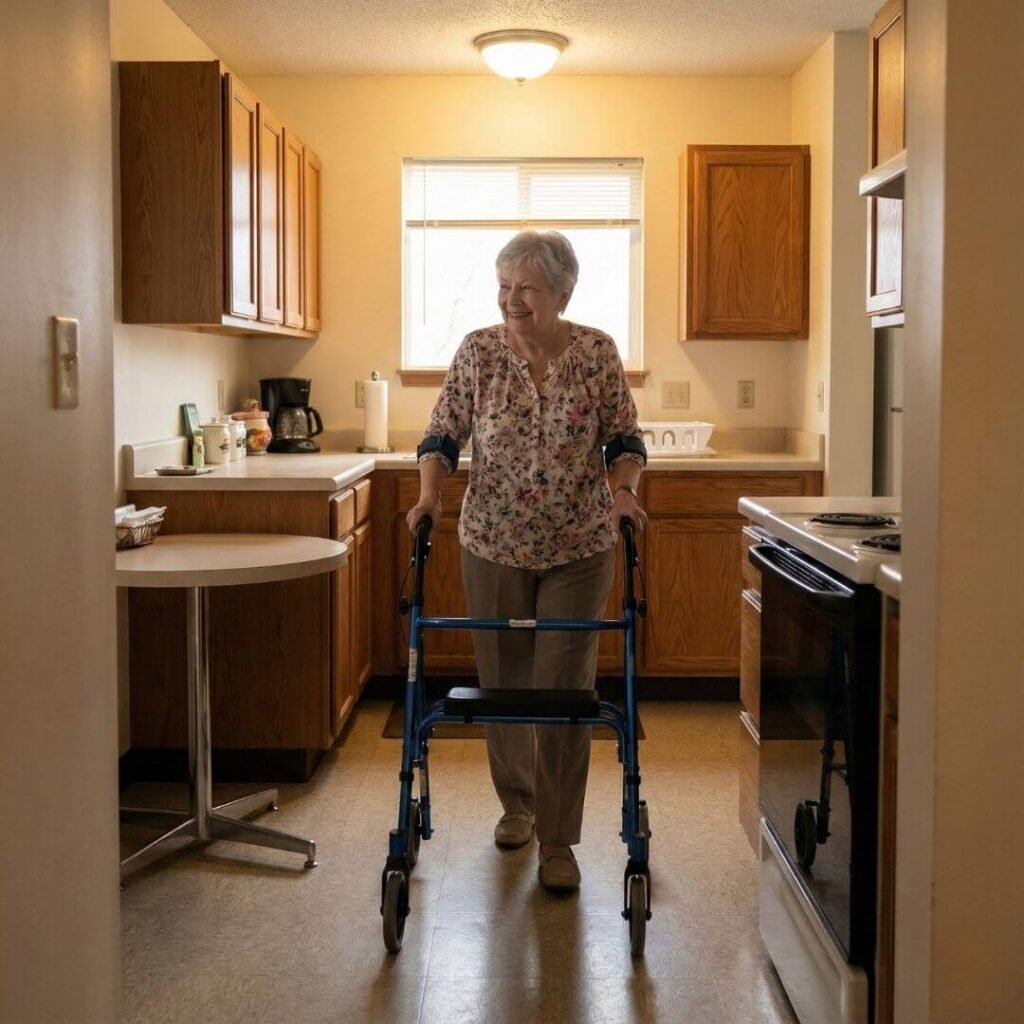
Upright walkers have become one of the most important mobility aids for older adults who struggle with posture, back pain, forward-leaning gait, or the fear of falling. Unlike standard rollators and four-wheel walkers, upright walkers lift the handles and forearm supports higher, allowing seniors to walk in a more natural, straighter position. This reduces strain on the neck and shoulders, improves breathing efficiency, and helps users look forward instead of down at the ground — a key factor in avoiding obstacles and maintaining confidence while walking.
These devices are especially beneficial for seniors with arthritis, balance issues, spinal changes, or limited upper-body strength who find traditional rollators uncomfortable or unstable. By encouraging a more upright stance, they support healthier gait mechanics, better weight distribution, and greater control during movement.
In this 2025 guide, you’ll find the best upright walkers for seniors across different needs — best overall, premium medical-grade models, seat-supported designs, outdoor options with large wheels, lightweight travel-friendly frames, and walkers specifically suited for tall or petite users.
Whether you’re a senior choosing your first upright rollator or a caregiver searching for a safer, posture-friendly alternative to a standard walker, this guide will help you compare today’s top models for stability, comfort, adjustability, and long-term ease of use.
Why Upright Walkers Matter for Senior Mobility
As a physician, I’ve seen firsthand how posture decline contributes to unsteady gait, chronic neck pain, impaired peripheral awareness, and an increased likelihood of tripping over environmental hazards. Many older adults gradually adopt a forward-leaning posture without realizing how significantly it alters their balance. Upright walkers directly address these issues by elevating the forearm supports, reducing the downward pull on the shoulders, and encouraging a more vertical, aligned walking position.
This change in posture is more than a comfort improvement — it is a true fall-prevention strategy. Falls remain one of the most significant risks to independence in older adults, often leading to hospitalizations, long-term mobility losses, and fear of future activity. According to the Mayo Clinic’s fall-prevention guidance, improving posture, lower-body strength, and environmental awareness dramatically reduces fall risk. Upright walkers support all three by positioning the arms in a way that minimizes forward-flexion, improves visibility, and stabilizes the center of mass over the legs.
Another major benefit is consistency. Seniors who would otherwise hunch over a standard rollator often find that upright walkers help them maintain a slower, safer gait pattern with less fatigue. The elevated supports shift some of the workload from the hands and wrists to the forearms, which is especially helpful for individuals with arthritis, limited grip strength, or chronic shoulder discomfort. Over time, this can reduce pain, improve endurance, and help seniors walk longer distances with far more confidence. Upright walkers don’t just make movement possible — they make it steadier, more sustainable, and safer.
Doctor’s Note: Posture, Safety & Gait Mechanics
Proper walking mechanics are crucial as adults age. Even small changes in posture can shift a senior’s center of mass, alter stride length, and reduce the ability to react quickly to uneven surfaces. Forward-leaning posture — which is extremely common with traditional rollators — moves the upper body ahead of the hips, forcing the legs to “catch up” with every step. This creates a continuous state of imbalance that increases fatigue and raises the likelihood of tripping or misstepping. Upright walkers counter these mechanics by elevating the arm supports, which naturally realigns the spine, lowers tension through the shoulders, and enables a more stable, controlled gait.
This improved positioning also enhances the user’s field of vision. Seniors are better able to look forward rather than down at the ground, which is critical for identifying obstacles, assessing surface changes, and planning safe foot placement. Vision and posture work hand-in-hand: when one improves, the other typically follows.
The CDC reports that millions of older adults experience falls each year, often due to a combination of balance decline, posture issues, and unsafe walking patterns. Upright walkers help reduce these risks by distributing body weight more evenly across the forearms, minimizing reliance on grip strength, and discouraging the forward-flexed posture that contributes to instability. For many seniors, this design makes walking feel more secure and less physically taxing, allowing for longer and more confident movement.

The Best Upright Walkers for Seniors (2025 Picks)
Below are the top upright walker options for seniors, carefully selected based on stability, comfort, posture improvement, adjustability, durability, and user feedback.
Best Overall Upright Walker
ELENKER Upright Walker with Padded Seat and Backrest, Lightweight, Compact Folding, Fully Adjustable Frame for Seniors (Blue)
This upright walker earns the top spot as the best overall option thanks to its balanced combination of stability, comfort, and adjustability. The blue ELENKER model features padded forearm supports, a comfortable seat for resting, and a lightweight folding frame that works well indoors or outdoors. Seniors who want strong posture support without the bulk or cost of more premium medical-grade devices will appreciate how approachable and versatile this design is. The dual braking system improves safety, and the overall build feels sturdy while still being easy to maneuver.
Pros:
- The padded forearm supports significantly reduce wrist strain and help encourage upright, supported posture for more comfortable walking.
- Its lightweight folding frame makes it easy to transport, store, or load into a vehicle without requiring excessive strength.
- The padded seat offers a convenient resting spot for seniors who fatigue quickly or need intermittent breaks during longer outings.
- Adjustable height settings accommodate a wide range of users and help improve overall ergonomics.
- The walker feels stable on indoor flooring, uneven pavement, and outdoor sidewalks.
Cons:
- The seat depth is slightly shallow for larger seniors who may want more support during rest periods.
- Turning radius is adequate but not as smooth as more premium upright models.
- The forearm pads may feel firm for seniors with sensitive skin or arthritis in the elbows.

Best Premium Upright Walker (Most Stable / Medical-Grade)
Journey UPWalker Premium Lite – The Original Upright Walker with Motion Sensor Lights & Narrow Build
The Journey UPWalker Premium Lite stands out as the top medical-grade option due to its superior stability, ergonomic adjustability, and advanced safety features. The premium design includes motion-activated safety lights for visibility, a narrower build to navigate tight spaces, and exceptionally supportive forearm rests. Seniors with significant posture challenges, advanced arthritis, or high fall risk may benefit most from this model’s robust design. It feels exceptionally stable and secure while maintaining smooth, controlled rolling.
Pros:
- Motion-activated lights enhance visibility in dimly lit hallways or outdoor evening environments for added safety.
- Highly adjustable forearm supports and handle height settings improve ergonomics for a wide range of seniors.
- The sturdy construction offers medical-grade stability and control for individuals with severe balance or mobility limitations.
- Narrow width makes it easier to navigate smaller indoor spaces like hallways or kitchens.
- Turning and maneuvering feel exceptionally smooth due to high-quality wheels and durable engineering.
Cons:
- The premium construction increases price compared to standard upright walkers.
- Slightly heavier than lightweight models, making transport more challenging for some users.
- The advanced features may feel unnecessary for seniors who only require basic support.

Best Upright Walker With Seat
Helavo All Terrain Upright Walker with Flat-Free Rubber Tires
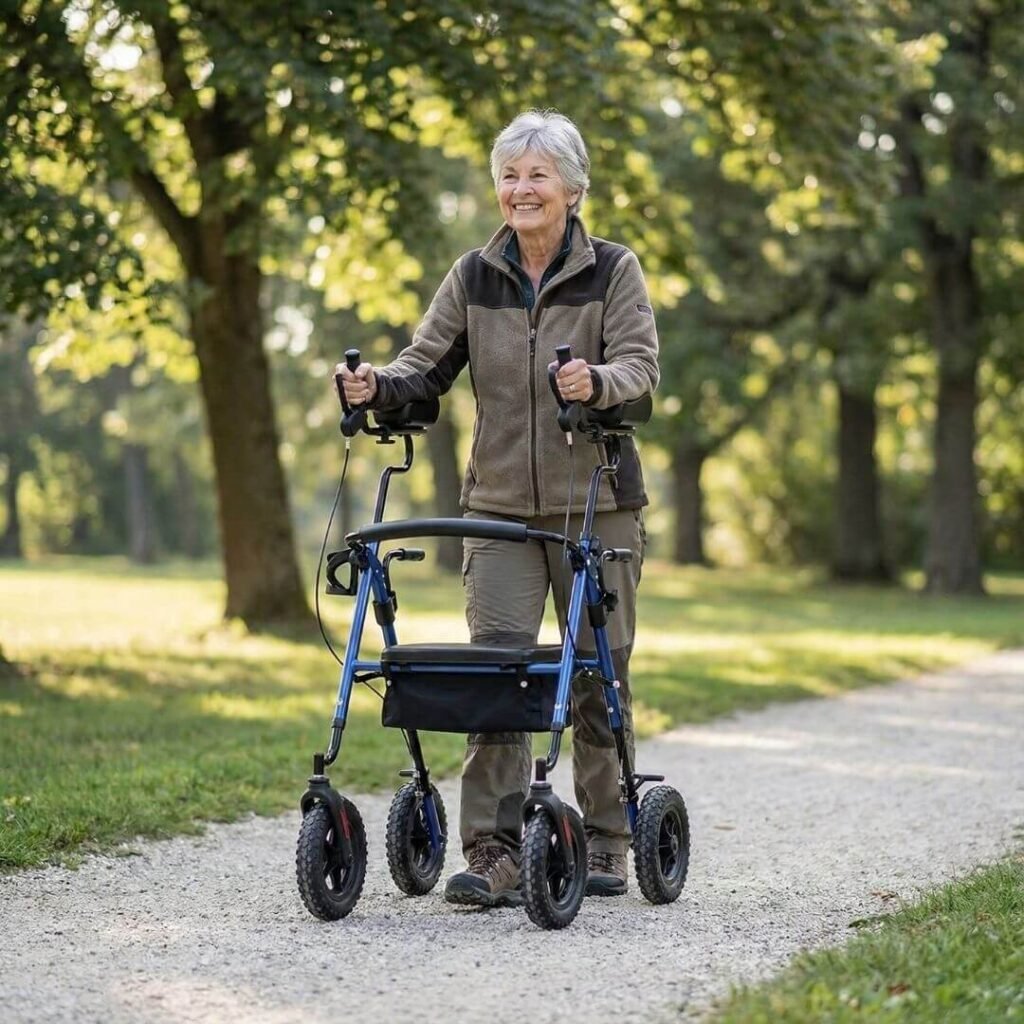
The Helavo All Terrain Upright Walker is the top choice for seniors who need a comfortable and supportive seat along with the ability to move over mixed outdoor surfaces. Flat-free rubber tires provide shock absorption and grip, making this walker ideal for parks, uneven sidewalks, and grass. The seat is wider and more supportive than many alternatives, giving seniors a dependable place to rest during longer outings.
Pros:
- Flat-free rubber tires allow for smooth rolling over uneven surfaces while reducing vibration through the frame.
- Wide, comfortable seat supports longer rest periods during walks or errands.
- The upright frame promotes healthier posture compared to traditional rollators.
- Excellent outdoor stability makes this walker ideal for active seniors who frequently walk outdoors.
Cons:
- Larger wheels add weight, making folding and lifting less convenient for weaker users.
- Indoor maneuverability is slightly reduced due to the broader wheelbase.
- Seat is higher than on smaller models, which may feel less comfortable for petite seniors.

Best Upright Walker for Outdoor Use (Large Wheels)
ELENKER Upright Rollator Walker with 10” Big PU Wheels
For seniors who primarily walk outdoors on uneven terrain, the ELENKER upright walker with extra-large 10-inch PU wheels offers exceptional stability. The large wheels glide easily over gravel, uneven sidewalks, and grass while maintaining great control. Adjustable padded armrests help keep seniors supported and upright, making this walker ideal for longer outdoor strolls.
Pros:
- Large 10’’ wheels provide excellent stability and reduce jolts on rough terrain.
- Armrest height adjusts to fit a wide range of users, ensuring proper posture.
- Heavy-duty wheels resist wear and perform well in outdoor environments.
- Frame handles outdoor conditions like grass, gravel, and pavement with ease.
Cons:
- Larger wheels can make indoor turning feel slightly less nimble.
- Heavier construction adds strain when lifting in and out of cars.
- Seat design is simpler than more premium upright walker models.

Best Lightweight Upright Walker (Travel-Friendly)
Elevate Upright Walker, Blue — Drive Medical
This lightweight upright walker excels for seniors who need portability while maintaining stable forearm-supported posture. With a compact folding frame and light build, it’s easy to lift into vehicles or travel with. Despite being lightweight, it maintains strong stability during indoor and outdoor use, and the frame feels sturdy and reliable.
Pros:
- Lightweight frame makes it easy to transport, especially for seniors or caregivers.
- Compact fold is ideal for car travel, storage, or bringing into appointments.
- Forearm supports help maintain upright posture even with a smaller frame.
- Ideal for seniors who travel frequently or split time between multiple homes.
Cons:
- Not as robust or stable as heavier premium upright walkers.
- Smaller wheels may handle uneven terrain less smoothly.
- Seat comfort is more basic than what full-size upright walkers provide.


Best Upright Walker for Tall Seniors
Vive Bariatric Upright Walker with Seat — Extra Wide Frame
Tall seniors often struggle with walkers that don’t reach a comfortable height, leading to slouching or back pain. The Vive Bariatric Upright Walker solves this issue with a higher handle range and a wide, sturdy frame. Its reinforced construction supports taller or larger seniors safely, and the padded armrests improve comfort during extended walks.
Pros:
- Higher forearm support range suits tall adults who need upright posture.
- Bariatric frame construction offers increased stability and durability.
- Seat is supportive and properly sized for larger seniors.
- Armrests and backrest padding provide comfort during extended use.
- Excellent for individuals recovering from surgery who need stable support.
Cons:
- Wider frame can feel bulky in smaller indoor spaces.
- Heavier build reduces portability.
- May not be the best choice for petite seniors.

Best Upright Walker for Short Seniors (Petite Users)
Stander Wonder Rollator Plus Short — Petite-Friendly Upright Walker
Petite seniors face challenges with upright walkers that are too tall or too wide. The Stander Wonder Rollator Plus Short is specifically built for smaller users with a lower height range and narrow frame. Its compact size makes it easy to maneuver in small spaces like kitchens and bathrooms, and the foldable design is ideal for travel and storage.
Pros:
- Shorter handle height supports proper posture for petite seniors.
- Narrow frame enhances maneuverability in tight indoor areas.
- Lightweight structure makes it easy to fold and transport.
- Seat is well-sized for smaller users who need short rest breaks.
Cons:
- Not suitable for tall or average-height adults.
- Seat height may be too low for seniors with knee or hip stiffness.
- Lighter frame can feel less robust on rough outdoor surfaces.
Educational Overview: How Upright Walkers Improve Posture & Gait
Upright walkers differ from traditional rollators by elevating the forearm supports and encouraging a more vertical alignment of the spine. This elevation changes the entire walking chain—from cervical posture down through the hips and knees—and reduces the tendency for seniors to lean forward or place excessive weight on their wrists. Instead, the load is distributed through the forearms, which helps decrease strain on the shoulders, neck, and lower back. This improved alignment also supports better breathing mechanics and reduces the “downward gaze” posture that limits awareness of obstacles and trip hazards.
One of the primary benefits of upright walkers is how they influence the user’s center of mass. By shifting posture upright, the hips and torso naturally stack over the legs, creating a more stable base and lowering the chance of missteps. Many seniors report improved control and confidence, particularly those who struggle with balance, chronic neck tension, or fatigue from leaning on standard rollators. This design is especially helpful for users with spinal changes from arthritis, osteoporosis, or degenerative disc disease.
Traditional rollators still provide excellent mobility for seniors who prefer a lower center of gravity or need tighter indoor maneuverability. In fact, some individuals do best with a hybrid setup: an upright walker for outdoor posture-focused walks and a standard rollator for indoor navigation. For seniors or caregivers comparing frame styles, braking systems, and wheel configurations, the broader context in our comprehensive Best Walkers & Rollators for Seniors (2025 Guide) offers helpful contrasts and practical decision-making advice woven directly into the mobility needs most seniors encounter.
From a safety standpoint, posture alignment matters more than most people realize. Research from the National Institute on Aging consistently highlights that upright posture, improved step mechanics, and increased environmental awareness are key predictors of reduced fall risk. Upright walkers support these principles by enabling users to lift their chest, look forward, scan the environment, and maintain a smoother gait rhythm without excessive forward flexion. For seniors experiencing diminished grip strength, neuropathy, or shoulder arthritis, the forearm-supported design can reduce hand fatigue and make longer walks more sustainable.
Upright walkers also tend to promote a healthier cadence. With less slouching and fewer compensatory movements, step length becomes more consistent, which translates into better balance and fewer abrupt shifts of weight. These devices often feel “steadier” because the frame encourages the user to remain closer to the walker’s center, rather than drifting too far forward—one of the most common contributors to rollator-related falls.
Overall, upright walkers function as both a mobility aid and a posture-training tool. For seniors who need structured support but want to maintain an active lifestyle, they can bridge the gap between comfort, control, and long-term safety.
How to Use Upright Walkers Safely
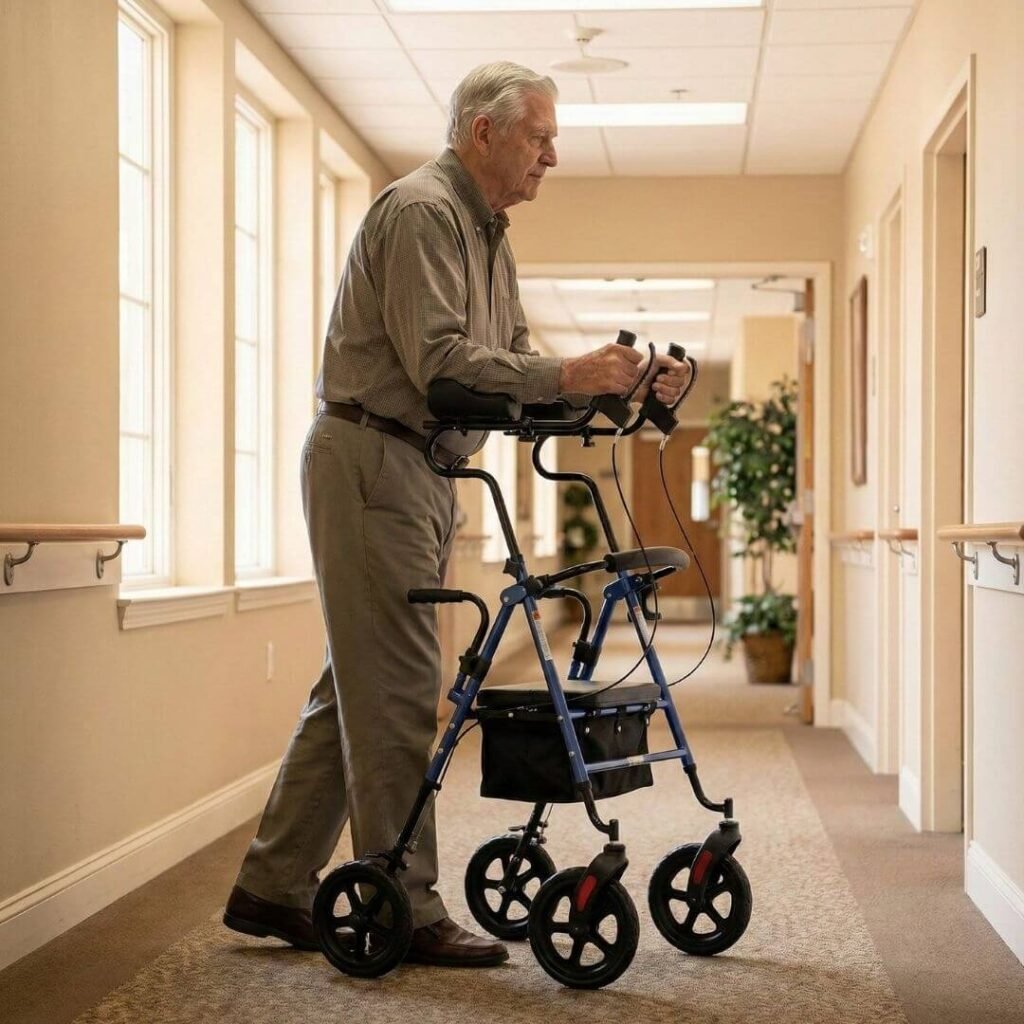
Proper setup is crucial when using an upright walker. The forearm supports should be positioned so the elbows rest at roughly a 90-degree angle, allowing the shoulders to stay relaxed and the spine upright. The goal is support without compression — if a senior is pushing too hard into the pads, the walker is set too low or the user may be shifting weight incorrectly. Rechecking the height every few weeks is important, as posture, footwear, and joint stiffness naturally fluctuate over time.
Before walking outdoors, it’s helpful to practice controlled movements indoors where surfaces are consistent. Seniors should work on starting and stopping smoothly, making deliberate turns, and engaging the brakes before sitting. Many inexperienced users also benefit from practicing step length, since upright posture can initially change gait mechanics. Once those basics feel natural, outdoor walking becomes safer and more predictable.
Environmental setup plays a major role in safe walker use. Many fall risks come from clutter, narrow pathways, and poor lighting rather than from the device itself. Improving the layout of living spaces, clearing walkways, and adjusting furniture spacing can dramatically reduce tripping hazards. These home-based adjustments are outlined in greater detail in our Home Safety Tips for Seniors guide, which reinforces how important the environment is when introducing a new mobility aid.
Seniors should also check the walker regularly for signs of wear — loose screws, worn brake cables, or foam padding that has compressed over time. Even high-quality upright walkers need periodic tuning to maintain safety and stability. Taking a minute before each walk to ensure wheels roll freely and brakes engage firmly can prevent accidents.
Lifestyle Synergy: Walking Routines, Outdoor Tips & Travel Readiness
Daily habits strongly influence how well seniors adapt to upright walkers. Incorporating short, regular walking sessions — even 5 to 10 minutes at a time — helps build strength, endurance, and familiarity with the walker’s posture mechanics. Consistency matters more than duration; seniors who practice a little each day often progress more steadily than those who walk only during errands or appointments. Outdoor walking adds cardiovascular benefits but requires intentional attention to terrain, lighting conditions, uneven sidewalks, and curb management to prevent missteps.
Environmental transitions also shape how comfortably a senior uses upright walkers throughout the day. Many homes include porch steps, garage lip thresholds, or narrow patio entries that interrupt smooth rolling. In these cases, using a compact ramp such as those highlighted in our Best Portable Wheelchair Ramp guide can eliminate abrupt height changes and improve both safety and walker performance. These small adaptations often make the difference between a senior confidently using the walker independently and avoiding certain areas of the home due to fear of navigating transitions.
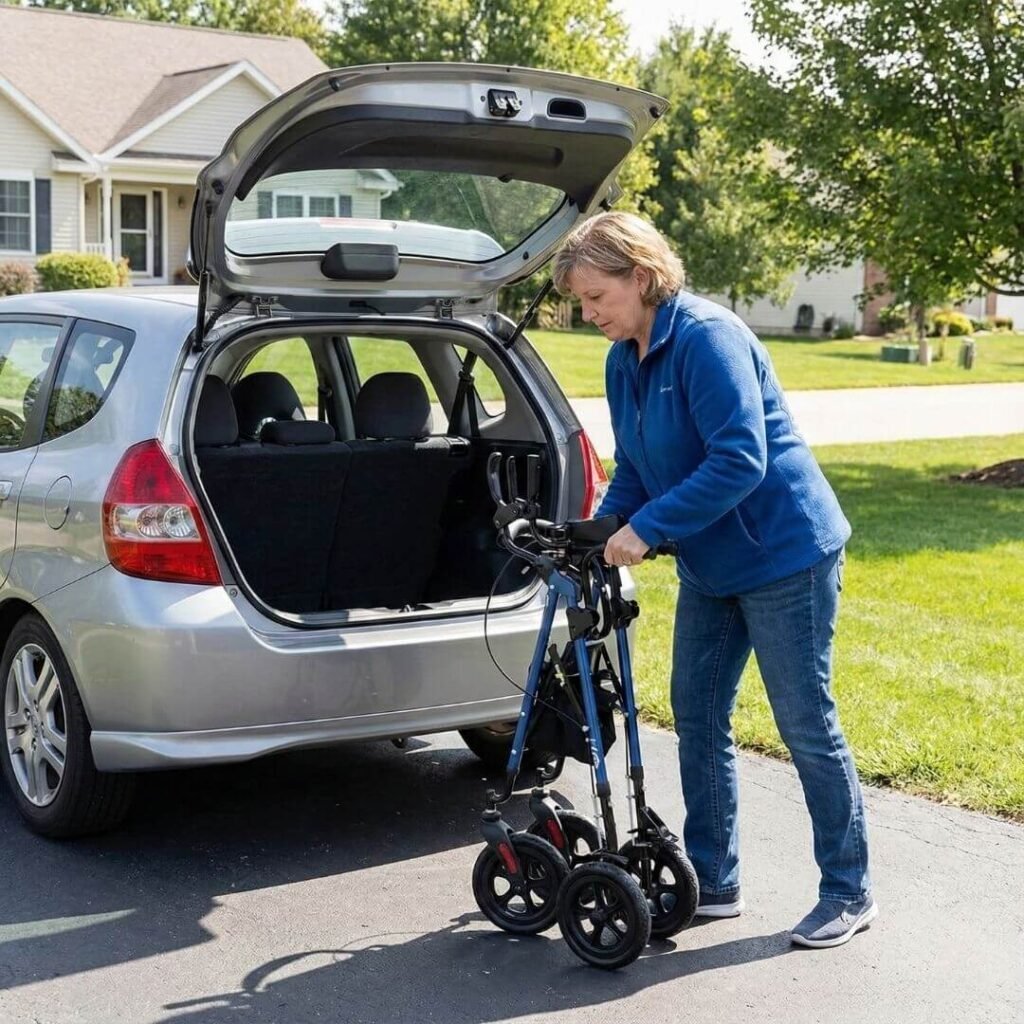
For seniors who travel or frequently leave the house, choosing a lightweight folding upright walker can simplify car loading and reduce strain on caregivers. The easier the walker is to bring along — whether to medical appointments, family outings, or everyday errands — the more consistently it will be used. This regular use supports better posture, safer gait patterns, and higher day-to-day mobility.
If most of your walking happens on unpaved ground, it’s worth comparing these against dedicated outdoor upright walker options built with oversized wheels for grass, gravel, and trail use.
Physician’s Tips for Upright Walker Success
Many seniors experience immediate posture relief when transitioning to upright walkers, but it’s important to recognize their limitations. In cases of advanced weakness, severe fatigue, cardiopulmonary limitations, or neurological conditions such as Parkinson’s disease or peripheral neuropathy, an upright walker may not provide adequate stability. If a senior cannot walk even short distances without stopping to rest, or if they struggle to maintain balance despite proper forearm support, a lightweight wheelchair may be more appropriate. Our Best Lightweight Wheelchairs for Seniors guide outlines safe, practical mobility options for individuals who need greater support without overexertion.
Proper height adjustment is critical for long-term comfort and safety. Forearm supports should be reassessed regularly, especially if a senior notices new shoulder tension, increased wrist pressure, or a tendency to lean forward again over time. Footwear changes, edema fluctuations, and posture variability can all influence ideal height settings, so periodic fine-tuning helps maintain a neutral spine and steady gait.
Seniors should also be encouraged to pace themselves. Upright walkers can improve visibility and control, but they don’t eliminate fatigue. If dizziness, neck strain, or leg heaviness develops, pausing to rest is safer than pushing through discomfort. Caregivers should monitor for signs of overuse, such as foot dragging or increased reliance on the arm supports, which may indicate that the walker is no longer meeting the user’s mobility needs.
Comparison Table: Best Upright Rollators With Forearm Supports
FAQ
1. Are upright walkers actually better than standard walkers for most seniors?
Upright walkers can offer better posture support and improved visibility compared to standard rollators, which often encourage forward leaning. Seniors who experience neck or shoulder strain or who struggle with awareness of obstacles may benefit from an upright style. However, upright walkers are not a one-size-fits-all solution, and some seniors may still prefer the stability of traditional rollators. The best choice depends on posture, strength, and home layout.
2. Who should avoid using an upright walker and consider a different mobility aid instead?
Seniors with severe balance disorders or rapidly progressing neurological conditions may find upright walkers too unstable for their needs. Individuals who become easily fatigued or cannot walk safely even with forearm support may require a wheelchair or scooter for safe mobility. It’s important to evaluate a senior’s gait, strength, and endurance before choosing an upright walker. In some cases, a physical therapist can recommend safer alternatives.
3. How high should I set the arm supports on an upright walker for safe posture?
Arm supports should be adjusted so that the elbows bend at roughly 90 degrees while allowing the user to stand upright without leaning forward. If the posts are too low, the senior may hunch over; too high, and the shoulders may elevate uncomfortably. The correct height allows relaxed shoulders, engaged core support, and natural walking rhythm. Periodic adjustments are important as posture and comfort needs may change.
4. Are upright walkers safe to use outdoors on grass, gravel, or uneven sidewalks?
Many upright walkers perform well outdoors, especially models with 10-inch wheels or flat-free rubber tires. Seniors should still exercise caution on uneven terrain and start with short distances to build confidence. Outdoor performance varies by model, so choosing one specifically designed for outdoor use is essential. Braking and downhill control should be tested in a safe, low-risk area first.
5. Will Medicare or private insurance help pay for an upright walker?
In most cases, Medicare does not cover upright walkers because they are classified as “deluxe” or “non-essential” features beyond a standard mobility device. Some private insurance plans offer partial reimbursement, but coverage varies widely. Seniors can ask their physician for a letter of medical necessity to support reimbursement requests. Budget-friendly upright walker options still offer excellent support for posture and safety.
Final Thoughts
Upright walkers offer real benefits for seniors who want to walk more comfortably and safely while maintaining a natural posture. Whether you need a premium medical-grade device, a lightweight model for travel, or a walker built specifically for petite or tall users, today’s upright rollators provide more choice than ever. The best upright walker for seniors is one that fits their height, posture requirements, lifestyle, and confidence level during daily movement. By selecting the right model and practicing safe walking principles, seniors can regain independence, reduce pain, and stay active with greater stability and peace of mind.
Medical Disclaimer: This guide is for general educational purposes only and is not intended to serve as personalized medical advice, diagnosis, or treatment. Always consult a licensed healthcare professional for recommendations tailored to your specific medical condition, mobility needs, or safety concerns.
Last update on 2026-10-25 / Affiliate links / Images from Amazon Product Advertising API
