
Affiliate Disclaimer: This article contains affiliate links. As an Amazon Associate, Mobility With Ease may earn a small commission from qualifying purchases at no additional cost to you.
Introduction
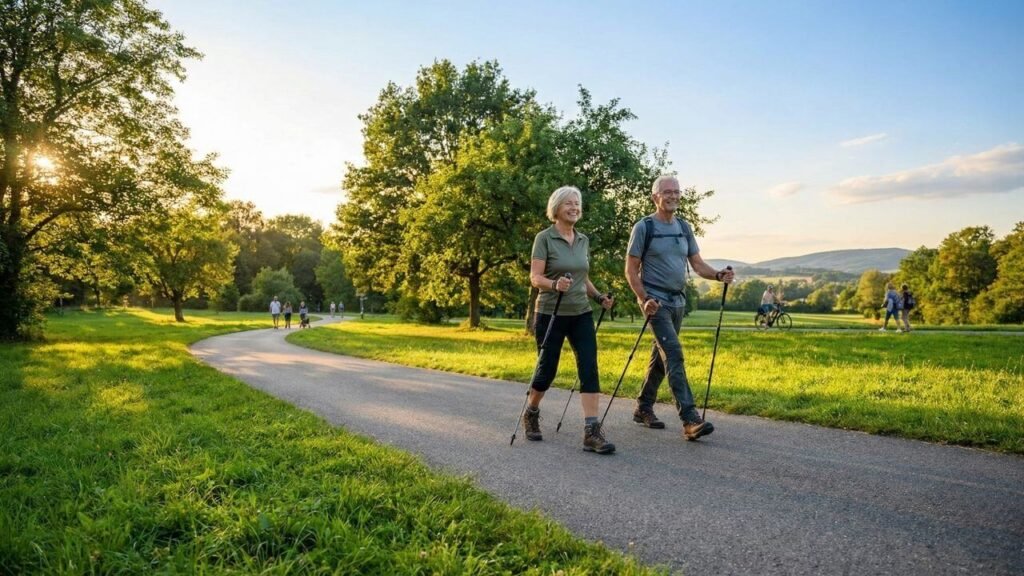
Walking poles are one of the simplest mobility tools a senior can use to instantly improve balance, reduce joint strain, and increase confidence while walking. They provide an extra point of stability with each step, helping older adults feel more secure on sidewalks, neighborhood paths, and indoor flooring. For many seniors, walking poles become a natural extension of their stride, encouraging better posture, smoother movement, and safer daily activity.
Whether someone is enjoying a leisurely neighborhood stroll, recovering from an injury, or trying to stay active with arthritis, the right walking poles can make a dramatic difference in posture, stride efficiency, and overall safety. They reduce load on the knees and hips, improve arm engagement, and support a more upright walking pattern. These benefits are particularly valuable for seniors who have noticed changes in balance or who may feel hesitant about walking unassisted.
Walking poles also offer a unique combination of support and freedom. Unlike walkers or canes, they remain lightweight and portable, making them easy to carry, store, and travel with. Many seniors appreciate that walking poles provide confidence without feeling like a medical device, which can make staying active feel more enjoyable and natural.
This guide breaks down the best walking poles for seniors in 2025, including options for arthritis, balance support, travel, outdoor terrain, and lightweight mobility. You’ll also learn how to choose the correct poles, how to set them to the right height, and how to use them safely. By the end, you’ll be able to match the right walking pole to your mobility needs and walking style so you or your loved one can stay steady, active, and confident on every step.
Why Walking Poles Matter for Seniors
As we age, our balance, joint mechanics, and walking patterns naturally change. These shifts often occur slowly over time, but they can make walking feel less stable or more effortful than before. Walking poles help counter these changes by reducing pressure on the knees and hips, promoting upright posture, and adding an extra point of stability with every step. They also encourage a smoother, more rhythmic stride, which can be especially reassuring for seniors who worry about tripping or losing balance.
From a medical perspective, walking poles are effective because they engage the upper body while reducing load on the lower body. This redistribution allows many seniors to walk farther with less discomfort, especially those dealing with arthritis, chronic knee pain, back issues, or general muscle weakness. By spreading the work across more muscle groups, walking poles help conserve energy and maintain a steady pace.
Walking poles also support healthier movement patterns. They can help:
- Improve trunk stability, which supports safer balance reactions
- Reduce overstriding, a common cause of falls in older adults
- Encourage symmetrical movement, especially if one side of the body is weaker
- Promote natural arm swing, which improves overall gait efficiency
When used correctly, walking poles often give seniors the confidence to stay active, which is one of the most important factors in maintaining mobility and independence as they age.
Doctor’s Note
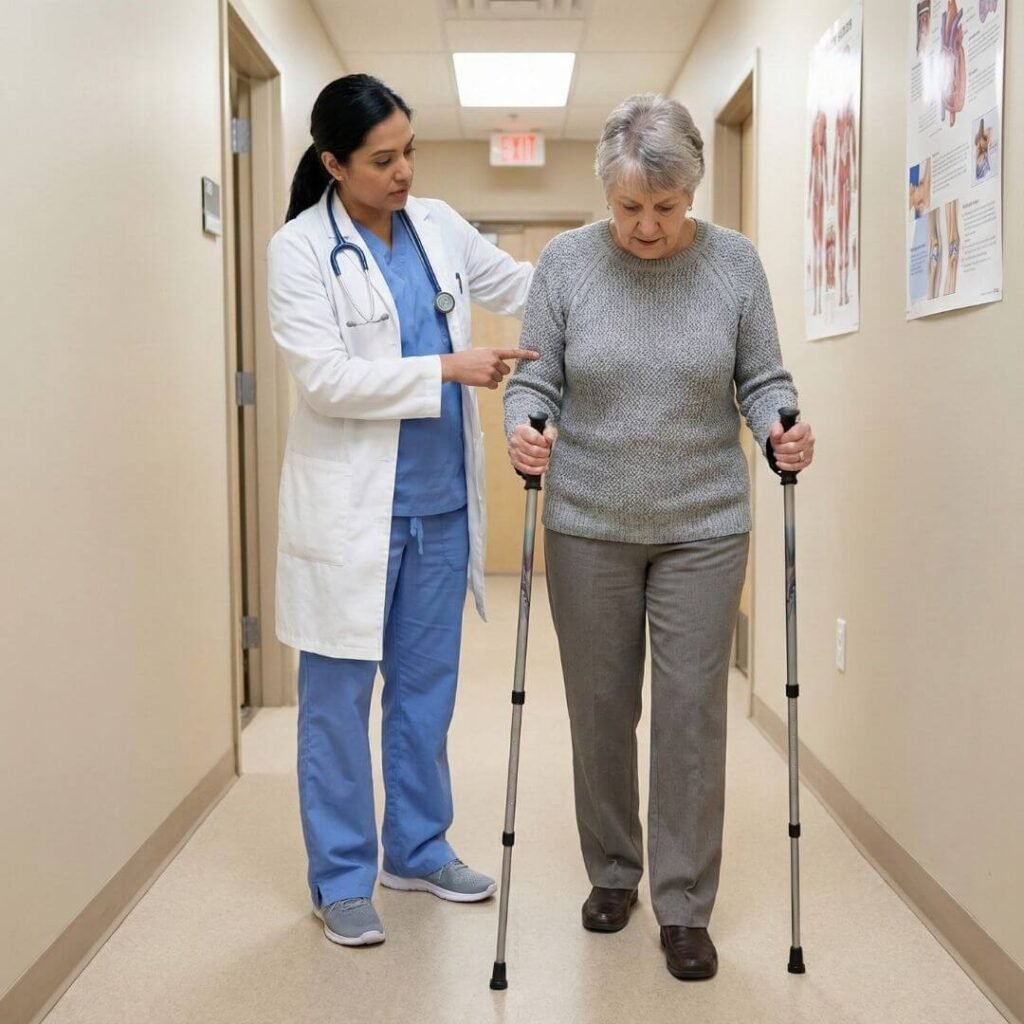
Walking poles are one of the most underrated mobility tools for older adults. They improve gait stability by widening the base of support and offloading pressure from painful joints. Seniors with arthritis, chronic knee discomfort, or mild balance instability often feel relief within just a few steps because the poles help control weight shift and reduce the effort required with each stride. When using poles, posture should remain tall with the shoulders relaxed, because leaning forward or taking overly long steps can reduce their benefits and place extra strain on the lower back.
Walking poles also encourage a smoother, more coordinated walking pattern. By involving the upper body, they help steady the trunk and reduce side-to-side sway—two common contributors to falls. Many older adults find that poles increase their sense of control, which is just as important as the physical stability they provide.
In my practice, I frequently recommend walking poles for seniors who are not yet ready for a walker but still want meaningful support. They are lightweight, easy to store, and can be used in many environments, from neighborhood sidewalks to indoor hallways. Walking poles are also a great tool for seniors who want to stay active but need a small boost in confidence before walking longer distances.
However, if a senior continues to experience significant imbalance despite proper pole use, or if the instability feels unpredictable or sudden, a rollator or other structured mobility device may offer more consistent support. Walking poles are best suited for mild to moderate balance needs; more advanced instability often requires a device that provides continuous contact with the ground.
Top Picks: Best Walking Poles for Seniors (2025)
Below are the top walking poles across key categories, each chosen for safety, adjustability, comfort, and senior-friendly features.
Best Overall Walking Poles for Seniors
TrailBuddy Trekking Poles – Lightweight 7075 Aluminum Hiking Poles for Women, Men & Seniors – Collapsible Walking Sticks for Travel
These dependable poles offer an excellent blend of durability, comfort, and adjustability, making them a strong fit for most seniors. TrailBuddy Trekking Poles feature a lightweight aluminum build, ergonomic grips, and simple flip-lock adjustments that allow seniors to set the right pole height with ease. They perform well on sidewalks, indoor flooring, and outdoor trails, making them one of the most versatile options available.
Pros:
• These poles adjust quickly and easily, making them beginner-friendly and well-suited for seniors who need simplicity.
• The ergonomic grips help reduce hand fatigue and offer secure handling for longer walks.
• Their lightweight aluminum construction provides a stable walking experience without adding unnecessary strain.
Cons:
• They may feel slightly less stable than heavier wooden poles for seniors with significant balance challenges.
• The metal tips can wear faster with heavy daily use on pavement unless rubber caps are used consistently.

Best Walking Poles for Seniors with Arthritis / Wrist Pain
Urban Poling ACTIVATOR® Walking Poles (CoreGrip™ Handles)
The Urban Poling ACTIVATOR® Poles were designed by rehab professionals specifically for seniors recovering from injury, managing arthritis, or needing extra upper-body support. Their CoreGrip™ handles significantly reduce wrist stress by allowing a natural, neutral hand position. They are ideal for seniors who experience wrist fatigue or weakness with traditional trekking poles.
Pros:
• The CoreGrip™ handles promote a neutral wrist position that reduces strain and allows seniors with arthritis to walk comfortably for longer periods.
• The poles provide enhanced stability thanks to their weight distribution and rehab-focused design.
• They are easy to adjust and collapse, making them practical for both indoor and outdoor walking.
Cons:
• They are more expensive than standard trekking poles, which may not be ideal for casual or infrequent users.
• The design is focused heavily on rehabilitation, which may feel more “clinical” compared to traditional hiking-style poles.
Best Walking Poles for Balance Support (Most Stable Option)
Brazos Handcrafted Wood Walking Stick, Twisted Oak, Ergonomic Style Handle, for Men & Women, Made in The USA
For seniors wanting maximum stability rather than a lightweight trekking pole, the Brazos Twisted Oak Walking Stick provides outstanding support. The ergonomic handle offers a comfortable grip, while the weight and natural rigidity of the wood provide superior balance assistance for indoor and outdoor walking.
Pros:
• The sturdy wooden construction provides a strong, grounded feel that enhances stability for seniors with mild balance concerns.
• The ergonomic handle supports the hand comfortably and minimizes strain during longer walking sessions.
• Each stick is handcrafted, offering durability and long-lasting quality.
Cons:
• It is heavier than aluminum or carbon poles, which may be tiring for seniors who prefer ultralight devices.
• Since it is a single walking stick, it may not offer the bilateral support that some seniors prefer from two poles.

Best Lightweight Walking Poles for Seniors
Foxelli Carbon Fiber Trekking Poles – Lightweight Collapsible Hiking Poles
The Foxelli Carbon Fiber Poles are ideal for seniors who fatigue easily or need a pole that is extremely light. Carbon fiber reduces arm strain while still offering excellent shock absorption. The cork grips help manage moisture, making them a great choice for warm climates or longer walks.
Pros:
• These poles are exceptionally lightweight, reducing shoulder and elbow fatigue during extended walks.
• Cork grips conform to the hand and offer better temperature control than synthetic handles.
• The shock-absorbing design makes them especially helpful for seniors with knee or hip discomfort.
Cons:
• Carbon fiber poles can splinter if damaged, so they require more careful handling.
• They are not as stable on rough terrain compared to heavier aluminum or wooden poles.

Best Folding / Compact Walking Poles for Seniors
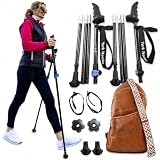
York Nordic Motivator Swift Connect Travel Walking Poles for Balance and Rehab
These travel-friendly poles fold down small and set up quickly, making them ideal for seniors who travel frequently or need a portable rehab tool. The Patented Stability Grips offer excellent traction and comfort, and the detachable feet make them highly adaptable.
Pros:
• The compact folding design is perfect for travel, storage, and seniors with limited space.
• Stability Grips provide enhanced traction and reduce slippage on various surfaces.
• The height adjusts easily, making them suitable for seniors with varying stride lengths or rehab needs.
Cons:
• They may not feel as sturdy as fixed-length or wood-based poles on uneven outdoor terrain.
• The folding joints require occasional tightening to maintain stability.
Best Walking Poles for Seniors on Uneven Terrain / Outdoor Trails
BLACK DIAMOND Distance Z Trekking Poles (Pair) | Ultralight 100% Aluminum | Foldable Z-Pole Design | Trail Running & Hiking Stability
The Black Diamond Distance Z Poles offer exceptional support on trails, hills, and uneven ground. They are ultralight yet strong, and their Z-fold design makes them easy to carry. Active seniors who enjoy hiking or varied outdoor environments will appreciate their secure feel.
Pros:
• These poles provide outstanding stability on challenging surfaces such as gravel, grass, or uneven trails.
• Their ultralight construction makes them comfortable for seniors who walk longer distances.
• The Z-fold design allows simple and compact storage when not in use.
Cons:
• They are not as soft on the wrists as rehab-specific poles like the ACTIVATOR®.
• They are overbuilt for indoor walking and may be unnecessary for seniors who only walk on even surfaces.

Educational Overview: How to Choose the Right Walking Poles
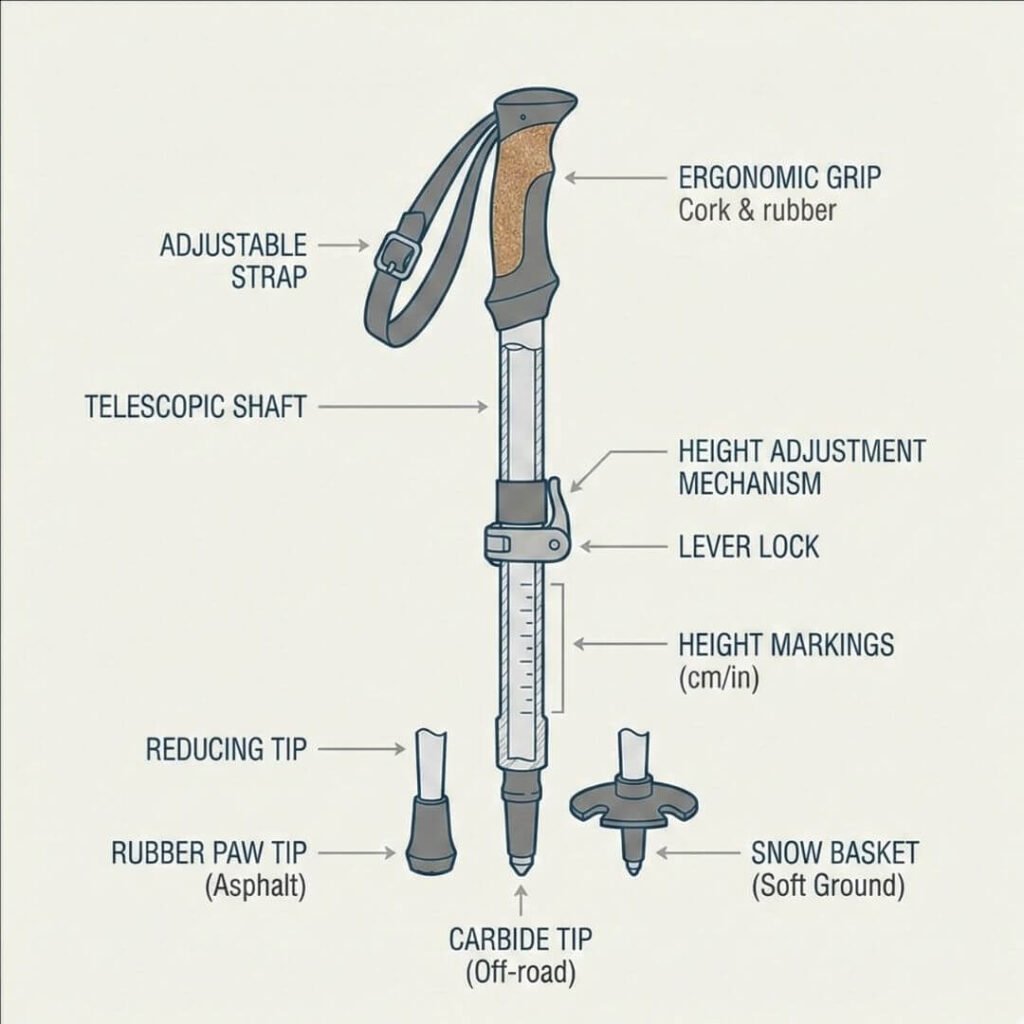
Selecting the right walking poles depends on a senior’s balance needs, wrist comfort, daily walking habits, and overall strength. No single pole works for everyone, so it helps to think about where the poles will be used and what kind of support is needed. Seniors who walk mostly indoors or on paved neighborhood paths tend to prefer lightweight aluminum or ergonomic designs because they feel easy to lift and handle. Those who spend more time on grass, gravel, or uneven surfaces often benefit from poles with stability grips, stronger materials, or wider tip options that improve traction.
When comparing walking poles, several features matter more than others:
- Grip style: Ergonomic grips reduce hand strain and help maintain better posture during longer walks.
- Pole weight: Lighter poles reduce arm fatigue and make it easier for seniors with limited strength to control their stride.
- Adjustment mechanism: Flip-lock systems are simple to use and stay secure, even for seniors with arthritis or limited hand strength.
- Shock absorption: Built-in shock-absorbing features are especially helpful for seniors with arthritis or chronic joint pain, as they soften the impact with each step.
For seniors with more noticeable balance concerns, a single sturdy pole—such as the Brazos Twisted Oak walking stick—may offer better grounding and a more stable feel. On the other hand, seniors who primarily want posture support or exercise-based walking often prefer using a matched pair of poles because they encourage symmetrical movement and a smoother walking rhythm.
If you’re unsure how walking poles fit into the broader landscape of mobility aids, the Best Canes for Balance (2025 Guide) provides helpful context on when a cane may be more appropriate. Some seniors benefit from switching between different devices depending on the situation, such as using walking poles for exercise and a cane for shorter indoor distances.
In addition, the Arthritis Foundation offers evidence-based guidance on how walking aids can reduce joint stress and improve movement efficiency. Their recommendations can be especially helpful for seniors managing arthritis, stiffness, or chronic pain, and can support better decisions when choosing the right style of walking pole.
How to Use Walking Poles Safely
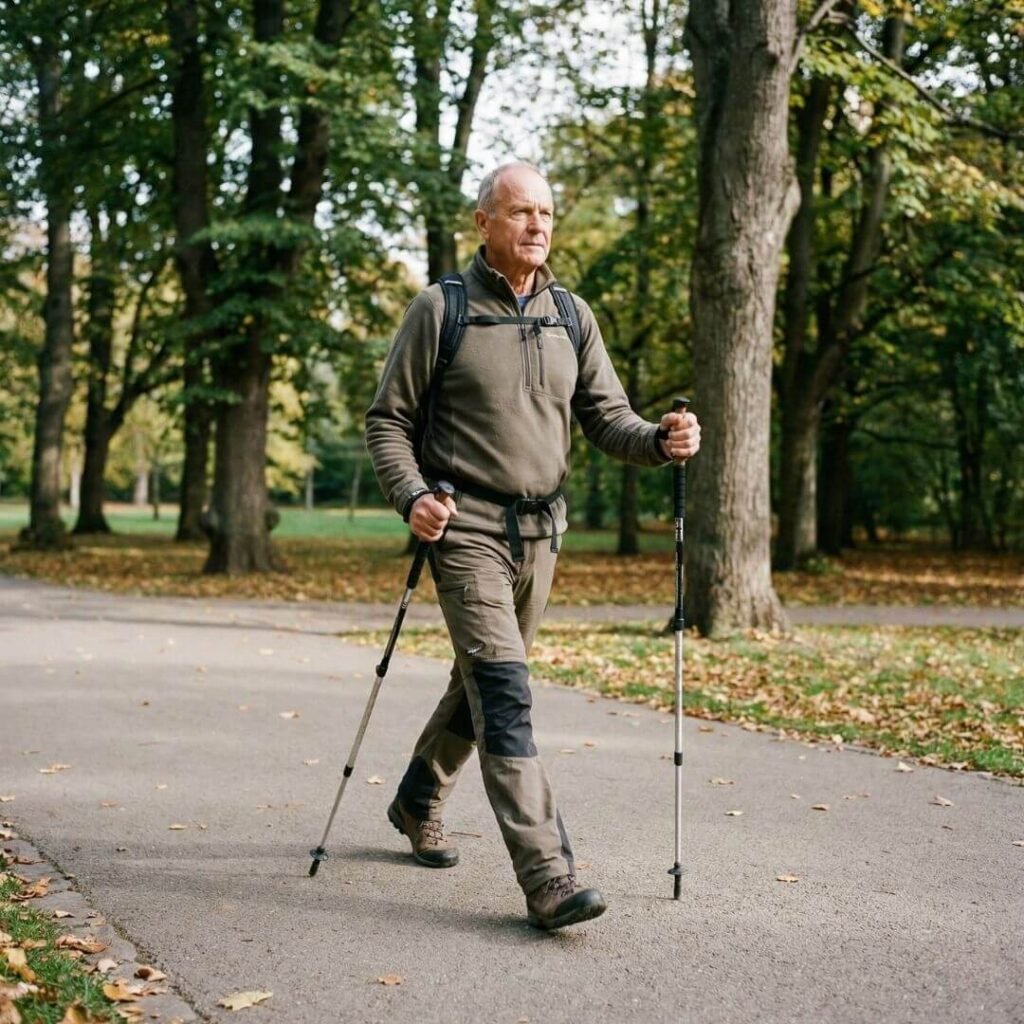
Proper pole technique is essential for getting the most benefit out of walking poles and for staying safe while using them. The poles should be adjusted so the elbows bend at roughly 90 degrees when the senior is standing upright. This position promotes better posture and reduces strain on the shoulders and wrists. As they walk, seniors should maintain a tall, relaxed stance and let the opposite arm and leg move together in a natural walking rhythm. This pattern keeps the gait smooth and helps distribute weight evenly.
Good technique also means paying attention to how the body feels. Seniors should pause immediately if they notice wrist discomfort, shoulder strain, or dizziness, as these may be signs that the poles are set at the wrong height or being used with too much force. Walking poles offer mild to moderate support, but they are not a replacement for devices that provide full structural stability. For seniors who continue to feel unsteady even with poles, the Best Walkers & Rollators for Seniors (2025 Guide) is a helpful resource for finding more supportive options.
Choosing the right pole tips also improves safety and traction. Indoors, rubber tips work best because they grip smooth flooring and help prevent slipping. Outdoors, switching to carbide tips or basket attachments provides better control on uneven surfaces such as gravel, dirt, or grass. These small adjustments make a big difference in how secure and comfortable the poles feel during use.
To keep technique safe and effective, seniors can also focus on:
- Taking steady, moderate-length steps rather than large strides that can throw off balance.
- Keeping the shoulders relaxed to avoid upper-body tension or unnecessary strain.
- Checking pole locks regularly to ensure they stay tight and stable during use.
- Walking on even ground first before progressing to more challenging environments.
With proper setup and mindful technique, walking poles can make walking more stable, comfortable, and enjoyable for older adults.
Lifestyle Synergy: Making Walking Poles Part of Daily Life
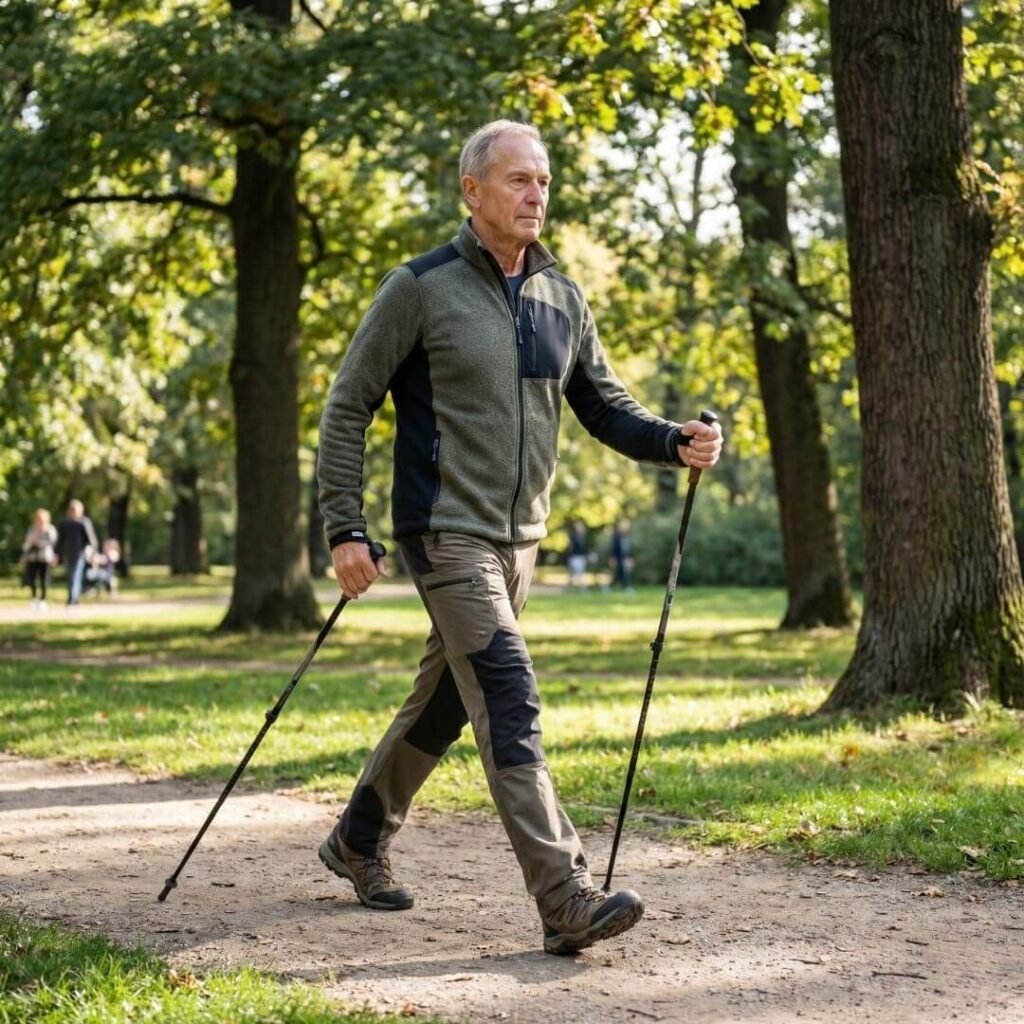
Walking poles blend easily into a senior’s daily routine because they are lightweight, portable, and simple to use in a variety of settings. Many older adults start by using them on short neighborhood walks, then gradually incorporate them into warm-up exercises or strength-building routines. The poles encourage steady, intentional movement, which is one of the best ways to maintain mobility and keep joints healthy over time. Their portability also makes it easy for seniors to stay active throughout the day, even during short breaks or spontaneous walks.
For seniors who want to combine walking poles with a broader home-safety and activity plan, the Tips for Making Your Home Safer for Seniors guide provides practical advice for setting up safe walking paths, removing fall hazards, and creating an environment that supports daily movement. When the home space feels safe and accessible, seniors are more likely to stay active and use their walking poles regularly.
Walking poles also work well alongside other gentle fitness routines. They can help seniors maintain better posture, improve balance awareness, and build confidence during movement. Activities such as stretching, low-impact strength training, and seated warm-ups can pair naturally with pole walking and make overall activity levels more consistent.
Research supports these benefits. The Mayo Clinic highlights that regular walking supports cardiovascular health, muscle strength, and mental well-being—all essential components of healthy aging. By making walking more comfortable and secure, walking poles encourage seniors to stay active longer and enjoy the physical and emotional rewards of daily movement.
Seniors may find walking poles especially helpful for:
- Building a daily walking habit, even if starting with short, five- to ten-minute walks.
- Increasing stability on uneven or unpredictable surfaces.
- Supporting upright posture, which helps reduce back or neck discomfort during activity.
- Adding gentle upper-body activation to improve overall body strength and endurance.
With consistent use, walking poles become more than a mobility tool—they become a simple, supportive way for seniors to maintain independence and stay engaged in the activities they enjoy.
Physician Tips
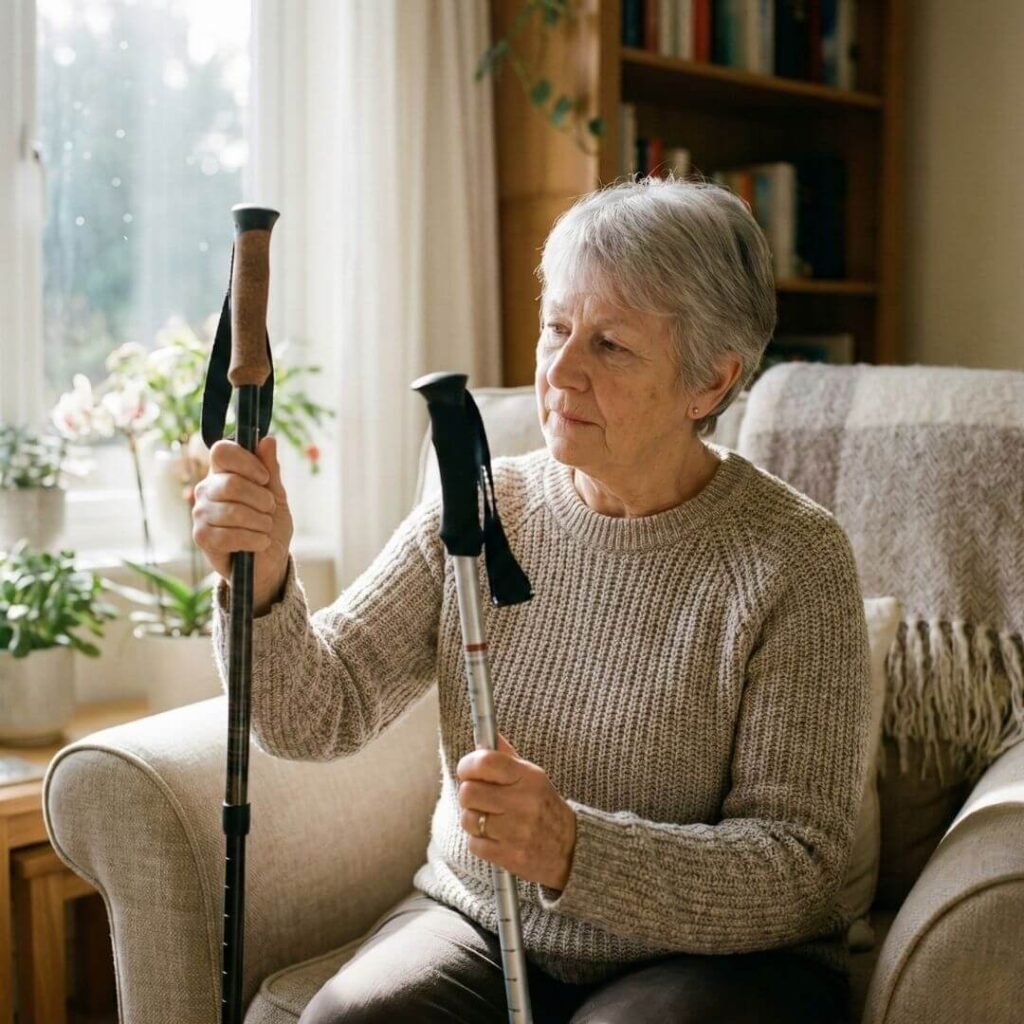
Walking poles should feel like an extension of the arms rather than a device that requires constant attention. When used correctly, they help guide the body into a smoother, more controlled walking pattern. Seniors should take a moment before each walk to check the pole height, wrist strap tension, and grip comfort, because these settings can shift with regular use. A few small adjustments often make the poles feel lighter and easier to handle.
For safer walking, seniors with balance concerns should begin on smooth, even surfaces before progressing to more challenging areas. Downhill slopes, loose gravel, and uneven paths require more control, so it’s best to practice technique and confidence first. Knowing which surfaces cause the most trouble helps you plan routes — our breakdown of outdoor fall hazards for walking pole users covers curbs, gravel, and weather conditions in details. If a senior feels tension in the shoulders or leans too heavily on the poles, lowering the pole height slightly may promote a more relaxed posture.
Seniors recovering from surgery or managing chronic joint pain often receive guidance from a physician or physical therapist on how to pace themselves. Using shorter strides and walking at a slower, steady speed helps maintain proper mechanics and reduce stress on the joints. It also lowers the risk of overuse injuries or muscle fatigue during longer walks.
Additional tips that often help seniors walk more comfortably and safely include:
- Keeping steps moderate in length to avoid overreaching or shifting weight too quickly.
- Relaxing the hands and shoulders instead of gripping tightly, which reduces unnecessary tension.
- Using the poles rhythmically to support balance without overpowering the natural walking motion.
- Checking tips and locking mechanisms regularly to ensure the poles stay secure and stable.
- Avoiding sudden changes in speed or direction until fully comfortable with the pole technique.
With the right adjustments and consistent practice, walking poles can support safer, more efficient movement and help seniors remain active with less discomfort and improved confidence.
Comparison Table
FAQ
How do I choose the right walking poles for a senior?
Choosing the right walking poles depends on the senior’s balance needs, hand strength, and walking environment. Lightweight poles are ideal for fatigue-prone users, while heavier wooden poles offer more stability. Arthritis-friendly handles are essential for seniors with wrist or hand pain. Adjustable height is critical, and seniors should aim for a natural arm bend at about 90 degrees for optimal comfort and posture.
What features matter most when selecting walking poles for balance support?
For balance support, stability and handle design are the key priorities. Seniors benefit from ergonomic grips that reduce strain and promote better alignment. Heavier poles with sturdy construction often feel more stable. Flip-lock adjustment systems also ensure secure height settings that won’t slip during use. Poles with rubber traction tips are particularly useful for indoor environments or flat terrain.
Are walking poles effective for seniors with arthritis or joint pain?
Yes, walking poles are extremely effective for arthritis because they offload pressure from the knees, hips, and ankles. They also promote upper-body engagement, which reduces strain on painful joints. Poles with shock absorption or ergonomic handles — such as the ACTIVATOR® poles — are especially helpful. They allow seniors to walk longer distances with less discomfort and more confidence.
What is the safest way for seniors to use walking poles?
Seniors should adjust their poles so the elbows rest at a comfortable 90-degree angle, maintain upright posture, and walk with a natural opposite-arm, opposite-leg rhythm. Using the correct tips for indoor or outdoor surfaces enhances traction and reduces slipping. If a senior feels unstable even while using poles, transitioning to a walker or rollator may provide safer and more consistent support.
Do walking poles actually help prevent falls in older adults?
Walking poles can reduce fall risk by improving stability, balance, and stride control. They widen the base of support and allow seniors to react more effectively to uneven surfaces or sudden shifts in terrain. While they are not a replacement for medical devices used for severe balance disorders, they offer meaningful stability improvements for mild to moderate balance issues.
What height should walking poles be for seniors?
Pole height should allow the elbows to bend between 85–95 degrees when standing upright. This positioning ensures proper posture and reduces strain on the shoulders and wrists. Many poles have clear height markings, making adjustments more intuitive. Seniors should periodically recheck pole height, especially if walking on varied terrain or wearing different footwear.
Are collapsible walking poles safe for seniors?
Collapsible poles are safe as long as they have secure locking mechanisms and high-quality materials. They are ideal for travel or storage but must be inspected regularly to ensure the locks remain tight. Seniors with significant balance challenges may prefer non-collapsible or heavier poles for increased stability.
Should seniors choose single walking sticks or a pair of poles?
A single walking stick works well for seniors needing mild balance support or a steadying aid on one side. A matched pair of poles is better for posture correction, exercise walking, and full gait symmetry. Seniors with arthritis or widespread joint discomfort often benefit from using two poles, as it distributes weight evenly and reduces pressure on one side of the body.
Final Thoughts
Walking poles are an excellent, low-cost tool to help seniors stay active, steady, and confident on their feet. With the right choice, many older adults experience immediate improvements in comfort, balance, and endurance. Whether you’re looking for a lightweight pair for daily walks, a sturdy wooden pole for balance support, or arthritis-friendly handles for joint protection, the top picks in this guide offer reliable options for every need and ability.
Medical Disclaimer: This guide is for general educational purposes only and is not intended to serve as personalized medical advice, diagnosis, or treatment. Always consult a licensed healthcare professional for recommendations tailored to your specific medical condition, mobility needs, or safety concerns.
Last update on 2026-10-25 / Affiliate links / Images from Amazon Product Advertising API
