
Affiliate Disclaimer: This article contains affiliate links. As an Amazon Associate, Mobility With Ease may earn a small commission from qualifying purchases at no additional cost to you.
Introduction
Stairs are one of the most common—and most underestimated—hazards for seniors aging in place. Even older adults who remain active and independent can begin to struggle as balance, leg strength, joint stability, or reaction time subtly decline. What often starts as hesitation or increased reliance on handrails can quickly turn into near-falls, fear of using certain floors of the home, or serious injury.
Unlike many other mobility challenges, stair-related risks tend to escalate quietly. Seniors may avoid carrying items up or down steps, limit trips between floors, or reorganize their living space out of necessity rather than choice. For caregivers and family members, these changes are often early warning signs that stair safety has become a real concern—even if no fall has occurred yet.
Stair lifts offer a way to address this risk proactively. By providing a stable, seated means of moving between floors, stair lifts can significantly reduce fall risk while allowing seniors to remain in the homes they know and love. For many families, they represent a practical alternative to relocating bedrooms, remodeling entire homes, or considering assisted living earlier than necessary.
At the same time, choosing the right stair lift can feel overwhelming. Many high-quality systems require professional measurement and installation, while online marketplaces offer only a limited selection of products—some of which are true stair lifts and others that function more as temporary or caregiver-assisted alternatives. Understanding these differences is essential for making a safe, realistic decision.
This physician-reviewed guide explains the best stair lifts for seniors in 2025, how different systems compare, which options require professional installation, and what Amazon-available alternatives can realistically provide. The goal is not just to highlight products, but to help seniors and caregivers choose the right solution for their home, mobility level, and long-term safety.
Why Stair Lifts Matter for Senior Safety
Falls on stairs account for a disproportionate share of serious injuries in older adults, including hip fractures, head injuries, spinal trauma, and permanent loss of mobility. Unlike flat-surface falls, stair-related falls often involve momentum, multiple points of impact, and limited ability to recover balance mid-fall. As a result, injuries sustained on stairs tend to be more severe and more difficult to rehabilitate from—especially for seniors with osteoporosis, arthritis, or pre-existing balance issues.
What makes stair risk particularly concerning is that it often develops gradually and quietly. Many seniors continue using stairs long after safety margins have narrowed, compensating by gripping railings tightly, moving more slowly, or avoiding carrying items between floors. Over time, these adaptations can increase fatigue, reduce confidence, and raise the likelihood of a misstep—especially at the top or bottom of the staircase, where most serious falls occur.
Stair lifts address this risk at its source by removing the need to repeatedly navigate one of the most dangerous areas of the home. By providing a stable, seated way to move between floors, stair lifts can significantly reduce fall risk while allowing seniors to continue using their full living space. In many cases, they help families avoid disruptive changes such as relocating bedrooms, limiting access to bathrooms, or making rushed housing decisions after an injury.
From a broader safety perspective, stair lifts are most effective when viewed as part of a whole-home fall-prevention strategy. Improvements such as better lighting, safer bathroom setups, and supportive furniture all reduce injury risk, but stair access often remains the most challenging barrier to address. Families who are already thinking about practical tips for making a home safer for seniors often find that stairs are the final—and most impactful—risk factor limiting true independence at home.
Stair lifts help by:
- Eliminating repeated stair climbing, which reduces fatigue and balance-related missteps
- Reducing reliance on handrails alone, particularly on steep or narrow staircases
- Allowing safe, seated transfers between floors, even for seniors with joint pain or limited strength
- Preserving independence, without requiring major renovations or bedroom relocation
By proactively addressing stair safety, stair lifts can play a meaningful role in preventing injuries that too often lead to prolonged recovery, loss of confidence, or permanent changes in living arrangements.
Doctor’s Note
In clinical practice, stair safety issues often surface long before many seniors are willing—or able—to articulate them. Patients rarely say, “I’m afraid of the stairs.” Instead, they describe subtle adaptations: holding the railing with both hands, pausing at the top or bottom of the staircase to regain balance, avoiding carrying items between floors, or quietly limiting how often they go upstairs or downstairs altogether. These changes are easy to dismiss, but they are frequently early indicators that stair navigation has become unsafe.
What makes this progression particularly concerning is that stair-related risk tends to increase gradually, while confidence often lags behind reality. Many seniors continue using stairs out of habit or pride, even as strength, balance, or reaction time declines. By the time a near-fall occurs—or worse, an actual injury—the window for simple prevention has often already narrowed.
From a medical standpoint, stair lifts are not about convenience or “giving up.” They are a proactive safety intervention. In the same way that grab bars, mobility aids, or vision correction preserve function, stair lifts help prevent injuries that can lead to prolonged hospitalization, loss of independence, or permanent changes in living arrangements. When recommended early, they often allow seniors to remain active within their homes rather than becoming confined to one level.
In my experience, the most successful outcomes occur when stair safety is addressed before an injury forces the decision. When families frame stair lifts as a tool to preserve independence—not a sign of decline—seniors are more likely to accept them and continue aging in place safely.

Best Stair Lift Categories (What Actually Exists)
Most high-quality stair lifts are custom systems sold through manufacturers and local installers. Amazon’s selection is extremely limited by comparison. To keep this guide accurate and honest, each category below distinguishes between professionally installed systems and Amazon-available options when they exist.
Best Straight Stair Lift – Top Pick (Professionally Installed)
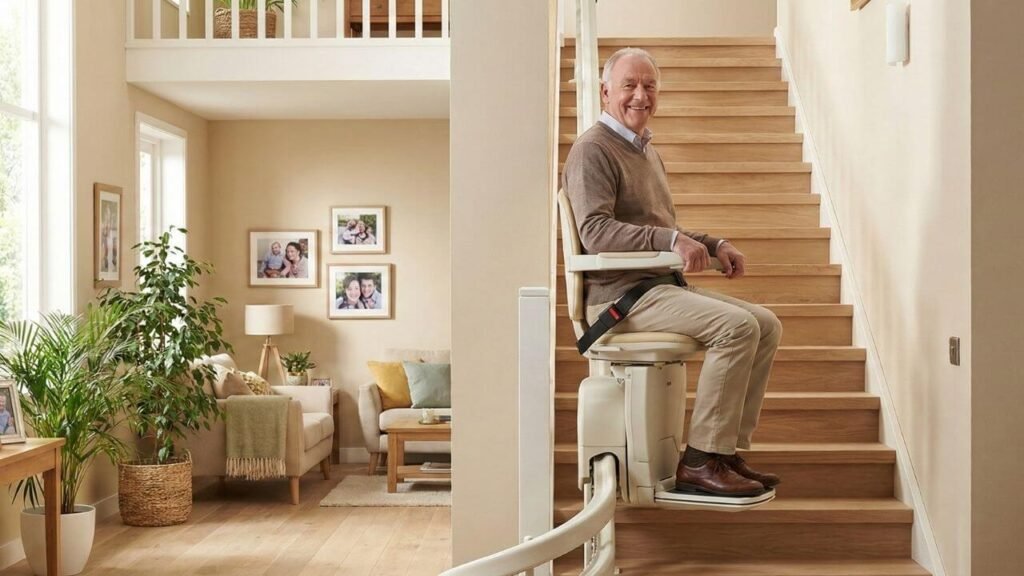
Bruno Elan Straight Stair Lift
This is one of the most commonly recommended straight stair lifts for seniors with standard indoor staircases. It offers smooth operation, strong safety features, and long-term reliability when professionally installed.
What sets systems like the Bruno Elan apart is not just the equipment itself, but the professional measurement, installation, and ongoing service that accompany it. From a safety standpoint, proper fit and reliable maintenance are critical—especially for seniors who rely on stair lifts multiple times per day.
Best for:
• Daily independent use
• Long-term mobility limitations
• Seniors aging in place
Note: Requires professional installation and is not sold on Amazon.
Amazon-Available Option (DIY-Friendly)
AmeriGlide Rave 2 Stair Lift (Self-Installable, Amazon-Available)
The AmeriGlide Rave 2 is currently the only traditional rail-mounted stair lift available for purchase on Amazon. Designed for straight indoor staircases, it offers a rare online purchasing option for seniors who need daily stair access but are comfortable coordinating installation themselves or through a contractor. While it does not match the customization or service support of premium professionally installed systems, it fills an important gap for homeowners seeking a more direct, Amazon-based solution.
Pros:
- Amazon availability simplifies purchasing, allowing families to order online without scheduling in-home sales consultations or waiting for manufacturer quotes.
- Designed for daily stair use on straight staircases, making it a viable option for seniors who rely on consistent access between floors.
- Higher weight capacity than many entry-level mobility devices, supporting users up to 350 pounds when properly installed.
- Can be installed by experienced DIY users or contractors, offering flexibility for households with renovation experience.
Cons:
- Installation is more involved than typical Amazon medical equipment, requiring careful measurement, tools, and mechanical confidence to ensure safety.
- Not suitable for curved, narrow, or complex staircases, which limits its use to standard straight stair layouts only.
- Lacks the customization and service infrastructure of premium installed systems, which may affect long-term support and maintenance options.
- Less robust than higher-end professionally installed stair lifts, particularly for users with advanced mobility limitations.

- Battery Powered
- Self Installable - 15ft. of track included
- 350 lb Maximum Weight Capacity
Best Curved Stair Lift (Professionally Installed)
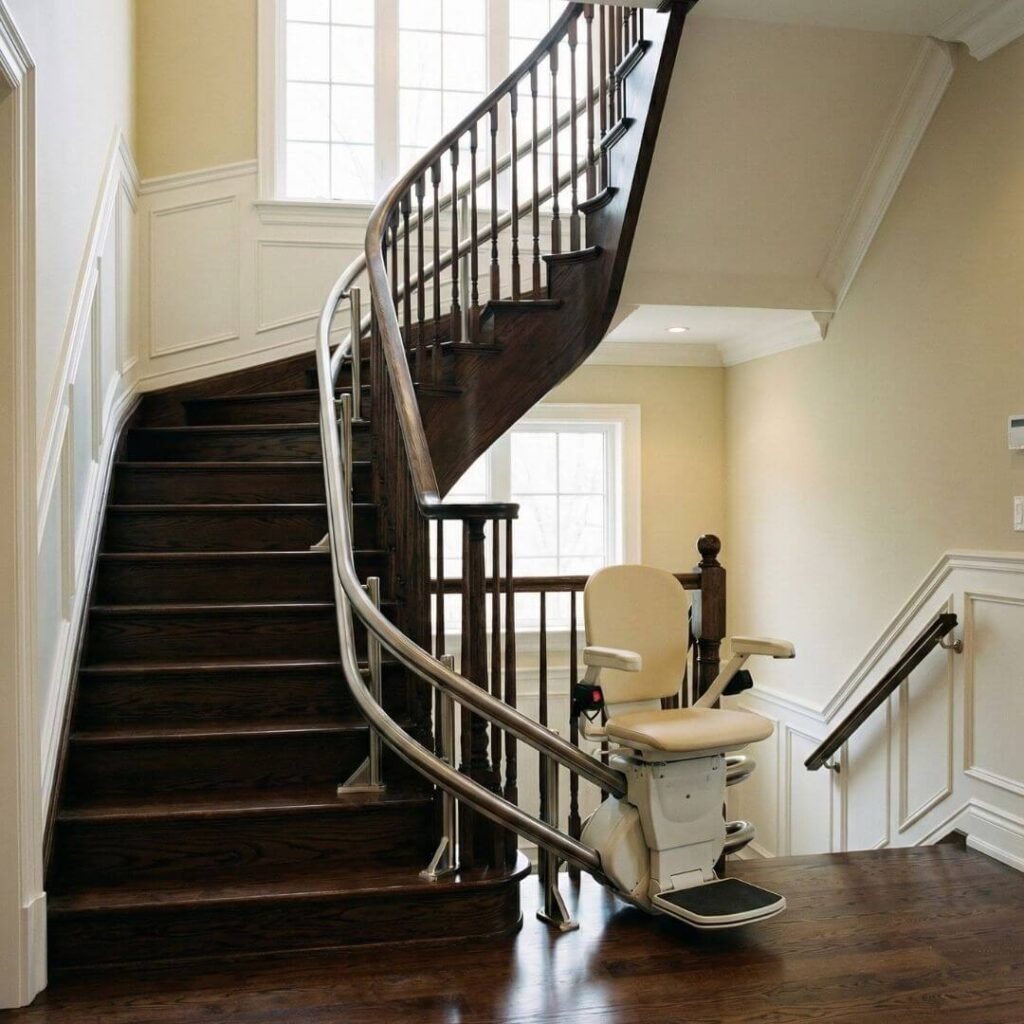
Stannah, Acorn, and Bruno Curved Systems
Curved stair lifts are custom-built to follow the exact shape of a staircase, including turns, intermediate landings, and changes in elevation. Because each rail is fabricated specifically for the home, these systems provide smooth, continuous movement and consistent support throughout the entire staircase rather than just straight segments.
From a safety and durability standpoint, customization is critical on curved or spiral staircases. Proper rail alignment reduces abrupt stops, uneven transitions, and transfer challenges—issues that can increase fall risk or discomfort over time. For seniors who rely on stair lifts daily, this precision helps ensure predictable operation and long-term reliability.
Best for:
- Curved or spiral staircases
- Multi-landing stair layouts
- Long-term aging-in-place solutions
Note: Fully custom curved stair lifts require professional measurement and installation and are not sold on Amazon.
Best Heavy-Duty Stair Lift (Professionally Installed)
Harmar Pinnacle HD
Heavy-duty stair lifts are designed to support higher weight capacities and provide additional structural stability compared to standard systems. Models like the Harmar Pinnacle HD feature reinforced seating, a wider base, and stronger drive components to accommodate seniors who need more robust support for daily stair use.
From a safety perspective, proper sizing matters. Stair lifts that are undersized for a user’s body type can feel unstable, increase transfer difficulty, or experience accelerated wear. Heavy-duty systems are built to maintain smooth operation and consistent support over time, making them a better long-term solution for seniors who require added durability and confidence when moving between floors.
Best for:
- Higher weight capacity requirements
- Larger or taller users who need additional seating space
- Long-term daily stair use where stability and durability are priorities
Best Outdoor Stair Lift (Professionally Installed)
Bruno Outdoor Elite Stair Lift
Outdoor stair lifts are specifically engineered for exterior staircases where exposure to weather, temperature changes, and moisture would quickly degrade standard indoor systems. Models like the Bruno Outdoor Elite use weather-sealed components, corrosion-resistant materials, and protective covers to maintain reliable operation in outdoor environments.
From a safety standpoint, outdoor stairs often present additional risks due to uneven surfaces, reduced traction, and seasonal hazards such as rain, snow, or ice. A properly installed outdoor stair lift can help seniors navigate these areas safely and consistently, preserving access to entryways, garages, or porches without relying on unstable steps or makeshift supports.
Best for:
- Exterior staircases such as porches, garages, or entryways
- Homes exposed to seasonal weather conditions
- Seniors who need reliable, year-round access in and out of the home
Best Stair Lift Alternative (Portable / Temporary Use/Amazon-Available)
Electric Mobile Stair-Climbing Chair (Amazon-Available Alternative)
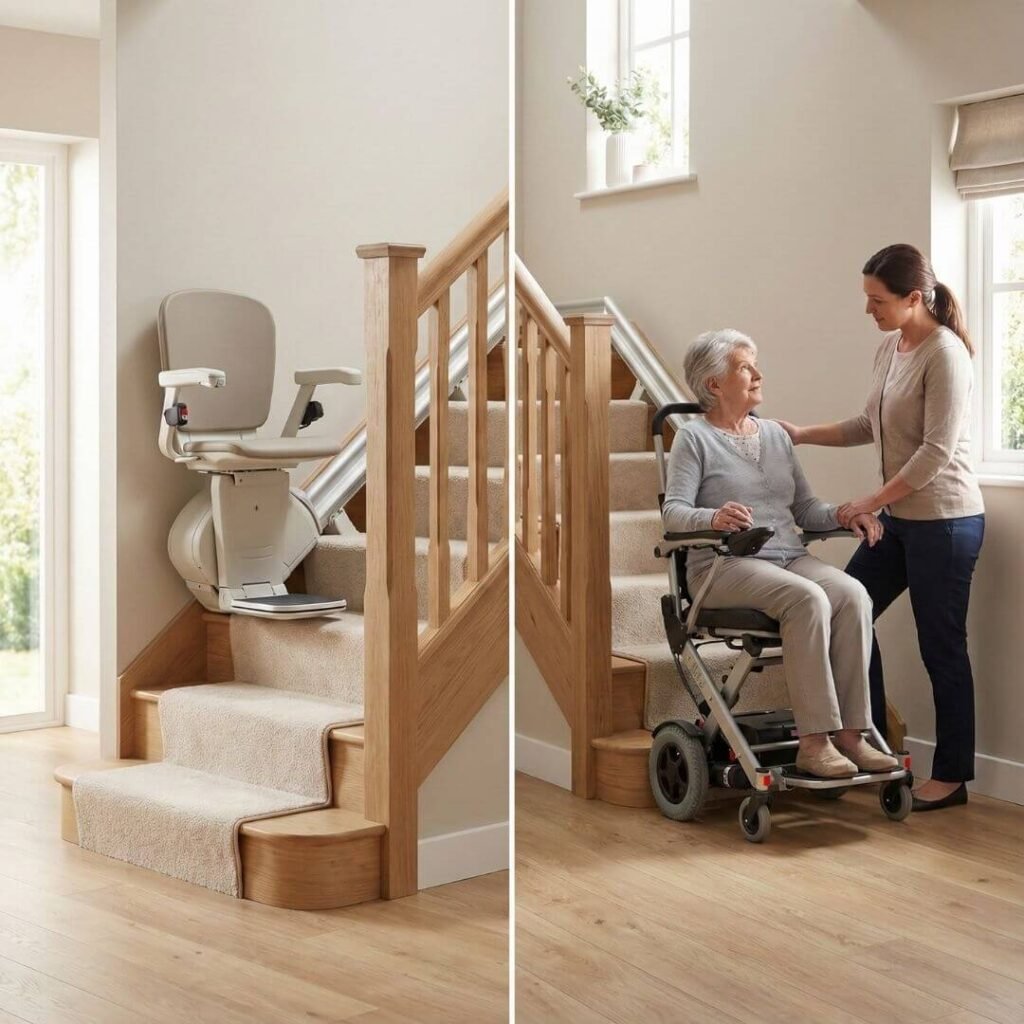
This electric mobile stair-climbing chair is not a traditional stair lift, but it can serve as a practical alternative in specific situations where permanent installation is not possible. Instead of traveling along a fixed rail, the chair uses powered tracks or wheels to assist a seated senior up or down stairs with the help of a caregiver. It is best viewed as a temporary or situational mobility solution, rather than a long-term replacement for an installed stair lift.
Pros
- Provides stair access when installation isn’t possible, making it useful in rentals, older homes, or short-term living arrangements.
- Higher weight capacity than many mobility devices, supporting users up to 480 pounds when used properly.
- Foldable design improves storage and transport, which can be helpful for caregivers or facilities with limited space.
- Powered climbing assistance reduces physical strain compared to fully manual stair transport methods.
Cons
- Requires caregiver assistance at all times, making it unsuitable for seniors who need independent daily stair access.
- Slower and more physically involved than installed stair lifts, especially on longer staircases or multiple flights.
- Less stable than fixed rail systems, as balance and control depend on proper positioning and caregiver coordination.
- Not designed for frequent long-term use, particularly in seniors with progressive mobility limitations.
No products found.
Educational Overview: Stair Lifts vs Stair-Climbing Chairs
Although stair lifts and stair-climbing chairs are sometimes discussed interchangeably, they are fundamentally different solutions designed for very different situations. Understanding these distinctions is critical for choosing a device that improves safety rather than introducing new risks or frustrations.
Installed stair lifts are fixed systems mounted to a rail along the staircase. They are designed for independent, day-to-day use, allowing seniors to move safely between floors without assistance. Once seated, the user controls the lift themselves, making stair access predictable, repeatable, and far less physically demanding. For seniors who plan to remain in a multi-level home long term, stair lifts are typically the most stable and sustainable option.
Stair-climbing chairs, by contrast, are portable devices that require caregiver involvement. Rather than traveling along a fixed rail, these chairs use powered tracks or wheels to climb stairs while being guided by another person. They are often used in temporary situations—such as short-term recovery after surgery, emergency transport, or in homes where permanent installation is not possible. While they can be useful in the right context, they are not designed for frequent independent use and often require more coordination, physical effort, and supervision.
One of the most common mistakes families make is choosing a device based on availability or cost alone, rather than on how it will be used day to day. A senior who needs to move between floors multiple times daily will often struggle with a caregiver-assisted solution, while someone with temporary mobility limitations may not need a permanent installation. Choosing the wrong device can lead to underuse, frustration, or increased fall risk—despite good intentions.
When evaluating stair lifts versus alternatives, it helps to step back and consider the broader mobility picture. Factors such as balance, strength, endurance, cognitive function, caregiver availability, and long-term goals all play a role. This same decision framework is explored in more detail in our guide on How to Choose the Right Mobility Aid for Your Needs, which walks through how different mobility solutions fit into real-world living situations rather than isolated use cases.
Seen in this context, stair lifts are not simply a piece of equipment, but part of a larger mobility strategy. The right choice supports independence, reduces injury risk, and fits naturally into a senior’s daily routine—rather than forcing the routine to adapt around the device.
How to Use Stair Lifts Safely
Even the best stair lift can introduce risk if it’s not used properly. Safe operation depends on correct seating, consistent habits, and regular maintenance—especially for seniors who may already have balance issues, slower reaction times, or joint limitations.
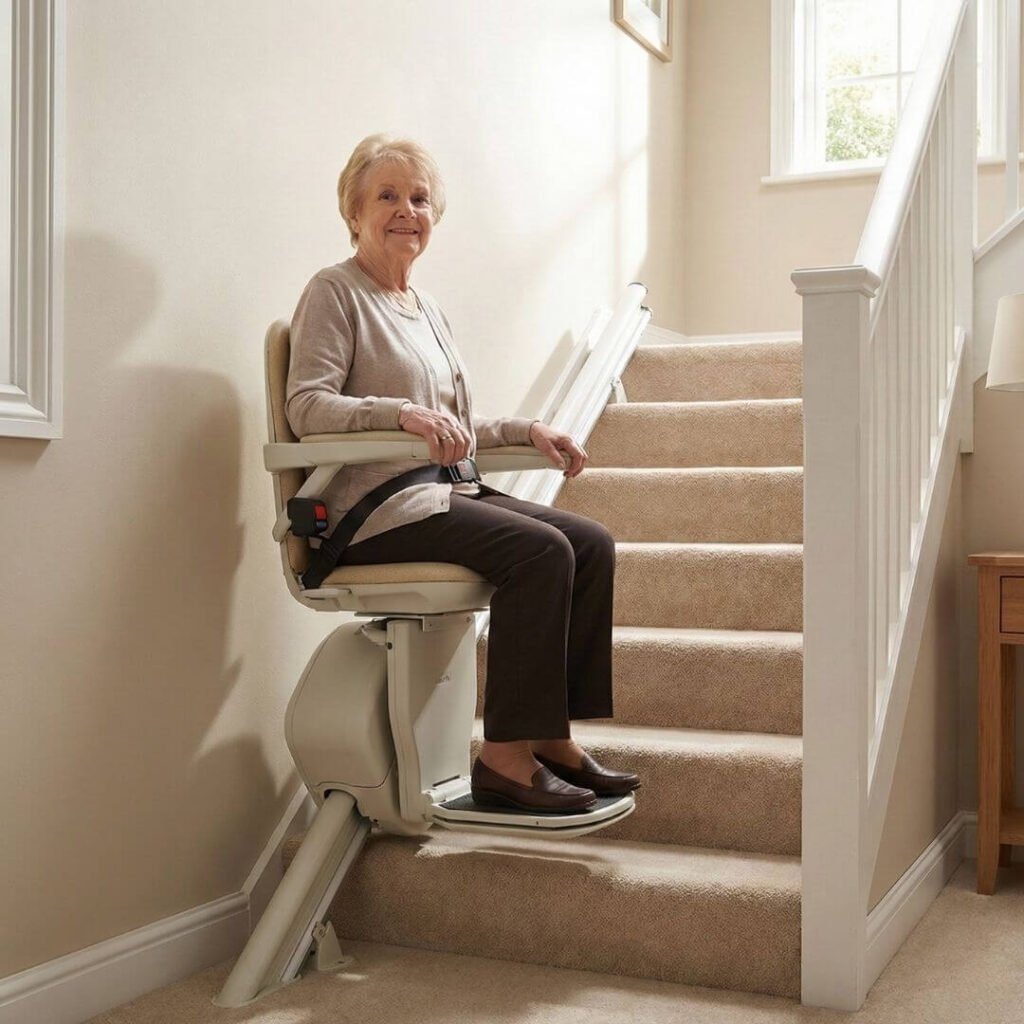
At a basic level, safe stair lift use includes:
- Sitting fully back in the seat, with hips and back supported
- Always using the seatbelt, even for short trips between floors
- Keeping feet centered on the footrest to avoid catching steps or rail components
- Ensuring the track is clear of objects, pets, or loose items before use
- Scheduling routine maintenance for professionally installed systems
Beyond these basics, positioning and consistency matter. Seniors should take a moment to fully settle into the seat before activating the lift, rather than trying to move quickly or adjust mid-ride. Many falls occur not during movement itself, but during transfers—getting on or off the lift—particularly at the top of the stairs where balance demands are highest.
From a medical safety standpoint, this attention to stair use is well justified. According to guidance from the Cleveland Clinic, falls remain one of the leading causes of injury in older adults, and stair-related falls are associated with a higher risk of serious outcomes such as head injury and fractures. Reducing unnecessary stair exposure—and using safety equipment correctly when stairs must be used—plays a meaningful role in lowering that risk.
It’s also important that seniors and caregivers receive clear instruction when a stair lift is installed. Understanding how emergency stops work, how to recognize unusual noises or movement, and when to call for service can prevent small mechanical issues from becoming safety concerns. For portable or caregiver-assisted devices, clear communication and coordinated movement are especially critical.
When stair lifts are used thoughtfully and consistently, they become a protective tool rather than a point of vulnerability—supporting daily mobility while reducing the likelihood of preventable injuries.
Lifestyle Synergy: Combining Stair Lifts with Other Mobility Aids
Stair lifts are most effective when they’re integrated into a broader mobility and fall-prevention strategy rather than used in isolation. While stair lifts address one of the most dangerous areas of the home, seniors still need safe, reliable support once they step off the lift and resume moving through their living space. Thinking holistically about mobility helps reduce risk during transitions—where falls are most likely to occur.
For many seniors, stair lifts pair naturally with walking supports on flat surfaces. Individuals who feel steady once they’re on a single level may still benefit from added stability when navigating hallways, kitchens, or living areas. In these cases, tools like walkers or rollators can provide consistent balance support throughout the home, especially for longer distances or moments of fatigue. Families exploring broader mobility solutions often start by reviewing options like the Best Walkers & Rollators for Seniors, then layer stair safety solutions as needs evolve.
Others may only need light support once they reach the top or bottom of the stairs. Seniors with mild balance issues or uneven gait patterns often do well with a cane, particularly when combined with a stair lift that eliminates the most physically demanding movement. Choosing the right cane—one that matches height, grip strength, and walking style—can make a meaningful difference, which is why resources like Best Canes for Balance are often helpful when refining a home mobility setup.
Seating and transfers are another critical but often overlooked part of daily safety. Even after stair access is addressed, getting up from chairs, sofas, or beds can pose challenges for seniors with joint pain or lower-body weakness. Lift chairs can reduce strain during sit-to-stand movements and help maintain confidence throughout the day. Many families find that stair lifts and lift chairs complement each other well, especially in multi-level homes, making guides such as Best Lift Chairs for Seniors a natural extension of stair safety planning.
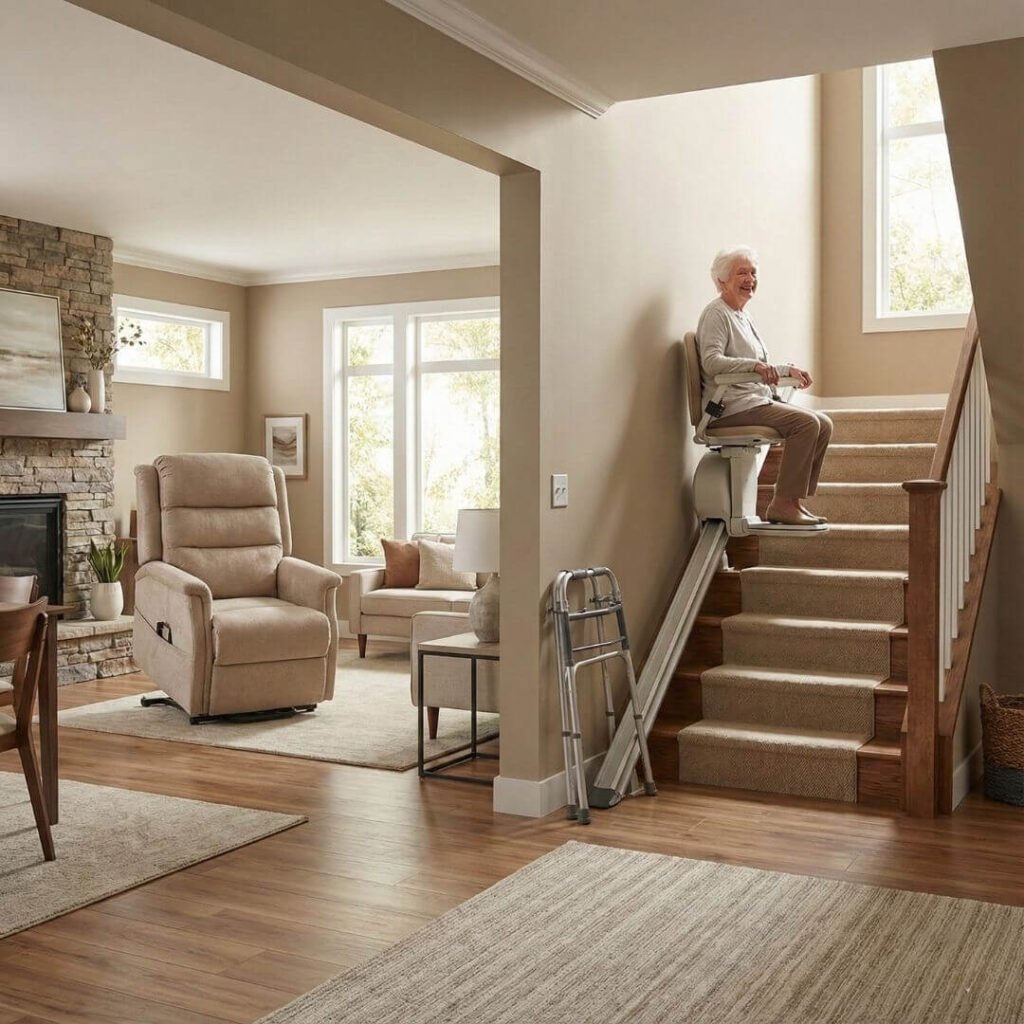
When mobility aids work together, they create a safer and more intuitive living environment—one that supports independence without forcing seniors to constantly adapt or compensate. Rather than relying on a single solution, combining stair lifts with appropriate walking and seating supports allows seniors to move through their homes with greater confidence, consistency, and long-term safety
Physician’s Tips
From a medical perspective, stair safety decisions are often delayed until after a close call—or worse, a serious injury. In practice, the warning signs usually appear much earlier. Seniors may begin avoiding stairs entirely, hesitate at the top or bottom of staircases, or rely heavily on walls and railings to steady themselves. These changes are not simply habits; they often reflect declining balance, strength, or confidence that increases injury risk over time.
A stair lift evaluation should be considered before an injury forces the decision. Early intervention preserves independence and allows seniors to continue using their homes safely, rather than reacting to an emergency that limits future options.
Some clinical indicators that stair safety has become a concern include:
- Near-falls or loss of balance on stairs, even without injury
- Difficulty carrying items up or down steps
- Fatigue or shortness of breath after climbing stairs
- Joint pain or weakness that makes controlled descent difficult
- Fear or anxiety related to stair use, even if unspoken
It’s also important to recognize that stair lifts are not a one-size-fits-all solution. Cognitive function, reaction time, vision, and caregiver support all play a role in determining whether a stair lift is appropriate and which type is safest. This is why stair safety should be viewed within the larger context of fall risk, not as an isolated issue. Families who are already learning about how to prevent falls in seniors often discover that stairs represent one of the highest-risk areas to address proactively.
Finally, framing matters. Seniors are more receptive to stair lifts when they’re presented as a way to maintain independence, not as a sign of decline. When introduced early and positioned as a safety upgrade—much like grab bars or mobility aids—stair lifts can reduce injury risk while supporting long-term confidence and quality of life.
Stair Lift Options for Seniors: Installed vs Portable
| Feature | Installed Stair Lift | Portable Stair-Climbing Chair |
|---|---|---|
| Installation Type | Rail-mounted and professionally installed | No installation required |
| User Independence | Designed for independent daily use | Requires caregiver assistance |
| Stair Compatibility | Straight or curved staircases | Most stair types |
| Customization | Custom fit to the home | One-size or limited adjustment |
| Daily Use Suitability | Yes – built for frequent daily use | Limited – best for occasional use |
| Stability and Ride | Smooth and consistent movement | Slower and more physically involved |
| Safety Profile | High when properly installed and maintained | Dependent on caregiver control |
| Typical Use Case | Long-term aging in place | Temporary or situational mobility needs |
| Availability | Primarily through manufacturers and installers | Available online (Amazon) |
FAQs
1. Are stair lifts covered by Medicare or insurance for seniors?
In most cases, Medicare does not cover stair lifts because they are classified as home modifications rather than durable medical equipment. Some private insurance plans, long-term care insurance policies, or veterans’ benefits may offer partial assistance depending on circumstances. For a clear consumer-focused explanation of coverage limitations and exceptions, resources from organizations like AARP can be helpful when families are planning financially.
2. How much do stair lifts typically cost for seniors?
The cost of a stair lift varies widely based on staircase design and installation requirements. Straight stair lifts are generally the least expensive, while curved or outdoor systems cost more due to customization. Additional factors such as weight capacity, safety features, and installation complexity also affect total cost.
3. What is the safest type of stair lift for elderly adults?
The safest stair lift is one that matches the user’s mobility level, staircase layout, and cognitive ability. Professionally installed systems with seatbelts, obstruction sensors, smooth start-and-stop motion, and swivel seats for safe transfers tend to offer the highest level of safety. Proper installation and user training are just as important as the model itself.
4. Are there alternatives to stair lifts for seniors who can’t install one?
Yes, portable stair-climbing chairs can serve as alternatives in situations where installation is not possible. These devices are typically caregiver-assisted and better suited for temporary or limited use rather than daily independent mobility. For seniors who need frequent stair access, permanent stair lifts are usually safer and more practical.
5. What features should seniors look for when choosing a stair lift?
Key features to consider include seatbelt security, swivel seats for safe entry and exit, adequate weight capacity, smooth ride operation, and reliable emergency stop functions. Ease of use, comfort, and service support are also important, especially for seniors with arthritis or limited hand strength.
6. Can stair lifts be installed on narrow or curved staircases?
Many stair lifts can be installed on narrow staircases, and curved stair lifts are specifically designed to follow turns, landings, and spiral layouts. These systems typically require professional measurement and customization to ensure safe operation. Portable alternatives may be used when permanent installation is not feasible.
7. How long does it take to install a stair lift in a home?
Installation time depends on the type of stair lift and the staircase design. Straight stair lifts can often be installed within a few hours once measurements are complete, while curved systems may take longer due to customization. Portable stair-climbing chairs require no installation but involve setup and training for safe use.
8. Who is a good candidate for a stair lift versus other mobility aids?
Stair lifts are well suited for seniors who have difficulty climbing stairs but can sit safely and follow basic operating instructions. They are often ideal for individuals who want to maintain independence in a multi-level home. Seniors with severe cognitive impairment or those requiring full assistance may benefit more from alternative mobility solutions.
Final Thoughts
Stair lifts can be life-changing when chosen appropriately. While Amazon offers limited options, understanding the difference between installed systems and portable alternatives allows seniors and caregivers to make informed, safe decisions.
This guide is designed to help families choose the right solution—not just the easiest one to buy.
Disclaimer: This content is for educational purposes only and does not replace individualized medical advice. Always consult a qualified professional when making mobility or home-safety decisions.
Last update on 2026-10-25 / Affiliate links / Images from Amazon Product Advertising API
