
Affiliate Disclaimer: This article contains affiliate links. As an Amazon Associate, Mobility With Ease may earn a small commission from qualifying purchases at no additional cost to you.
Introduction
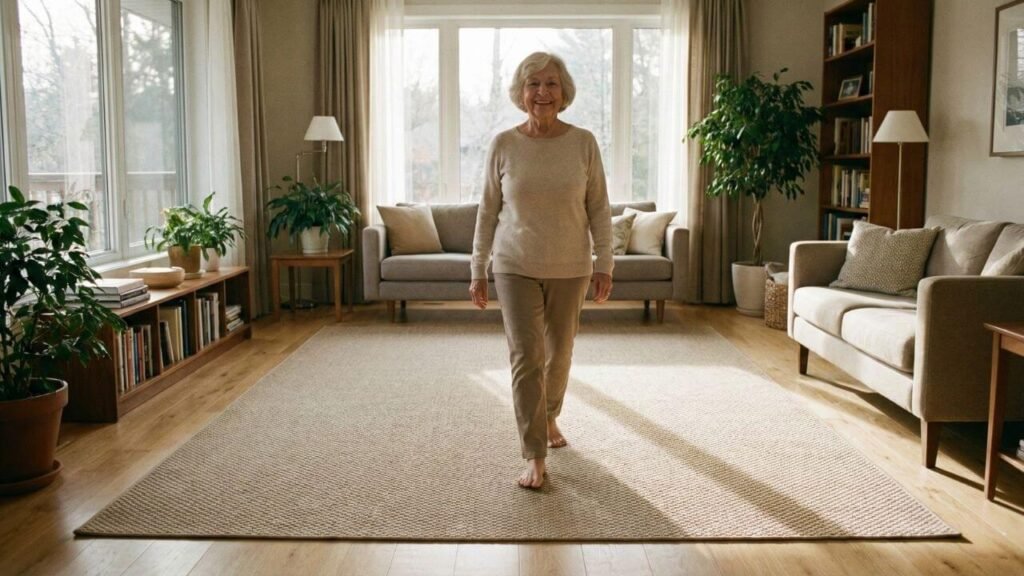
A rug seems harmless—until it shifts underfoot. For older adults, even a small slip can turn into a serious injury, a loss of confidence, or a long recovery that affects daily life far beyond the initial fall. Unlike younger adults, seniors are more likely to experience fractures, head injuries, or prolonged mobility limitations after what might otherwise seem like a minor incident. That’s why choosing the best non slip rugs for elderly safety isn’t just a home décor decision—it’s a practical, preventive step that directly affects how safe and confident someone feels moving through their own home.
Many falls happen during ordinary, routine moments: getting out of bed in the morning, walking to the bathroom at night, turning a corner in a hallway, or stepping onto a rug that looks secure but isn’t. In homes with hardwood, tile, laminate, or vinyl flooring, rugs that slide, bunch, or curl at the edges quietly increase risk every single day. These hazards often go unnoticed until something goes wrong, especially when a rug has “always been there” and hasn’t caused a problem—yet.
What makes rugs particularly tricky is that not all risks are obvious. A rug may feel stable underfoot when standing still but shift when weight is transferred during walking or turning. Others grip well at first but lose traction over time as backing materials wear down or dust builds up underneath. Thick, plush rugs can feel comfortable but raise the risk of toe catches, especially for seniors with shuffling gait, reduced foot clearance, or balance concerns. As mobility changes with age, surfaces that once felt safe may quietly become liabilities.
Choosing safer rugs isn’t about removing comfort or warmth from a home. In many cases, it’s about choosing materials, profiles, and placements that support natural movement rather than interfere with it. The best non slip rugs for elderly adults are typically low profile, lie flat, and provide reliable grip without requiring constant adjustment. When chosen thoughtfully, they can help define walking paths, reduce slipping on smooth floors, and create more predictable footing—particularly in high-risk areas like bathrooms, bedrooms, and hallways.
In this guide, I’ll walk through what actually matters when selecting non-slip rugs for seniors—not marketing buzzwords or decorative trends, but real-world considerations that affect safety and day-to-day usability. I’ll then share physician-reviewed picks for the best non slip rugs for elderly adults across common home settings, including bathrooms, bedside areas, hallways, entryways, and living spaces. The goal isn’t to promise fall prevention—no product can do that—but to help you reduce unnecessary risk and make the home environment more supportive, practical, and confidence-building.
Why It Matters
Falls at home are common in older adults, and rugs are one of the most frequent silent contributors. Unlike obvious hazards—such as stairs without railings or poor lighting—rugs often blend into the background of daily life. They don’t look dangerous, which makes them easy to overlook. Yet when a rug curls at the corner, slides on a smooth floor, or bunches slightly underfoot, it can create exactly the kind of unexpected instability that leads to a fall.
What makes rugs particularly risky is that they often fail during movement, not while standing still. A rug may feel secure when someone steps onto it slowly, but shift when weight is transferred during walking, turning, or pivoting. This is especially relevant for older adults whose balance reactions may be slower, whose stride length may be shorter, or whose feet may not clear the floor as easily as they once did. In these situations, even a small amount of rug movement can be enough to throw off balance.
Flooring type also plays a role. Hardwood, tile, laminate, and vinyl floors are increasingly common in homes, and while they are easy to clean and visually appealing, they offer very little friction on their own. Rugs placed on these surfaces are more likely to slide unless they are specifically designed to grip the floor or are paired with an appropriate non-slip solution. Without that grip, a rug can act more like a moving surface than a stable one—particularly in high-traffic areas.
Another reason rugs matter is where they tend to be placed. Bathrooms, bedside areas, hallways, and entryways are among the most common locations for rugs, and these are also the areas where falls are most likely to occur. Bathrooms involve moisture and smooth flooring. Bedside rugs are used when someone is just waking up, often in low light. Hallways and entryways are transition zones where people change direction, adjust their footing, or carry items. In these spaces, stability matters more than softness or style.
Falls don’t just cause physical injury. They often lead to a loss of confidence that changes how someone moves through their home. After a fall—or even a near fall—many seniors become more cautious, limit their movement, or rely excessively on furniture for support. Over time, this can contribute to reduced activity, muscle weakness, and increased dependence. Addressing avoidable hazards like unsafe rugs is one way to help preserve confidence and independence.
It’s important to be clear about expectations. A non-slip rug can’t eliminate fall risk entirely. Balance, vision, strength, footwear, and medical conditions all play a role. However, choosing the best non slip rugs for elderly adults can meaningfully reduce a preventable hazard that otherwise adds unnecessary risk to everyday movement. When rugs lie flat, stay in place, and match the demands of the space they’re used in, they become part of a safer environment rather than a hidden threat.
Rugs should also be viewed as one piece of a broader home safety approach. Improving lighting, reducing clutter, choosing appropriate footwear, and using supportive equipment where needed all work together. If you’re thinking more holistically about fall prevention at home, resources like Tips for Making Your Home Safer for Seniors provide helpful context for how rugs fit into a larger safety plan. Likewise, national public health guidance on falls in older adults helps underscore why addressing everyday environmental risks—like unstable rugs—can have a real impact on injury prevention.
Ultimately, the goal isn’t to remove rugs altogether or make a home feel clinical. It’s to ensure that the surfaces people walk on every day support stable, predictable movement. By understanding why rugs contribute to falls and what characteristics make them safer, you can make more informed choices that reduce risk without sacrificing comfort or livability.
Doctor’s Notes
When I evaluate options for the best non slip rugs for elderly safety, I’m not thinking about style or trends. I’m thinking about how the rug behaves during real movement—walking, turning, backing up, standing from a chair, or stepping onto it without looking down. In clinical practice, falls often happen in these transitional moments, not during slow, careful steps. A rug that looks secure can still become a problem if it doesn’t behave predictably under changing weight and direction.
The first non-negotiable is profile. Low-profile, low-pile rugs are consistently safer than thick or plush options. As people age, foot clearance often decreases slightly, even in individuals who walk independently. Add slippers, socks, or mild neuropathy, and thick rug edges become much easier to catch. A rug that lies flat and stays flat is far more forgiving than one that compresses, shifts, or curls when stepped on.
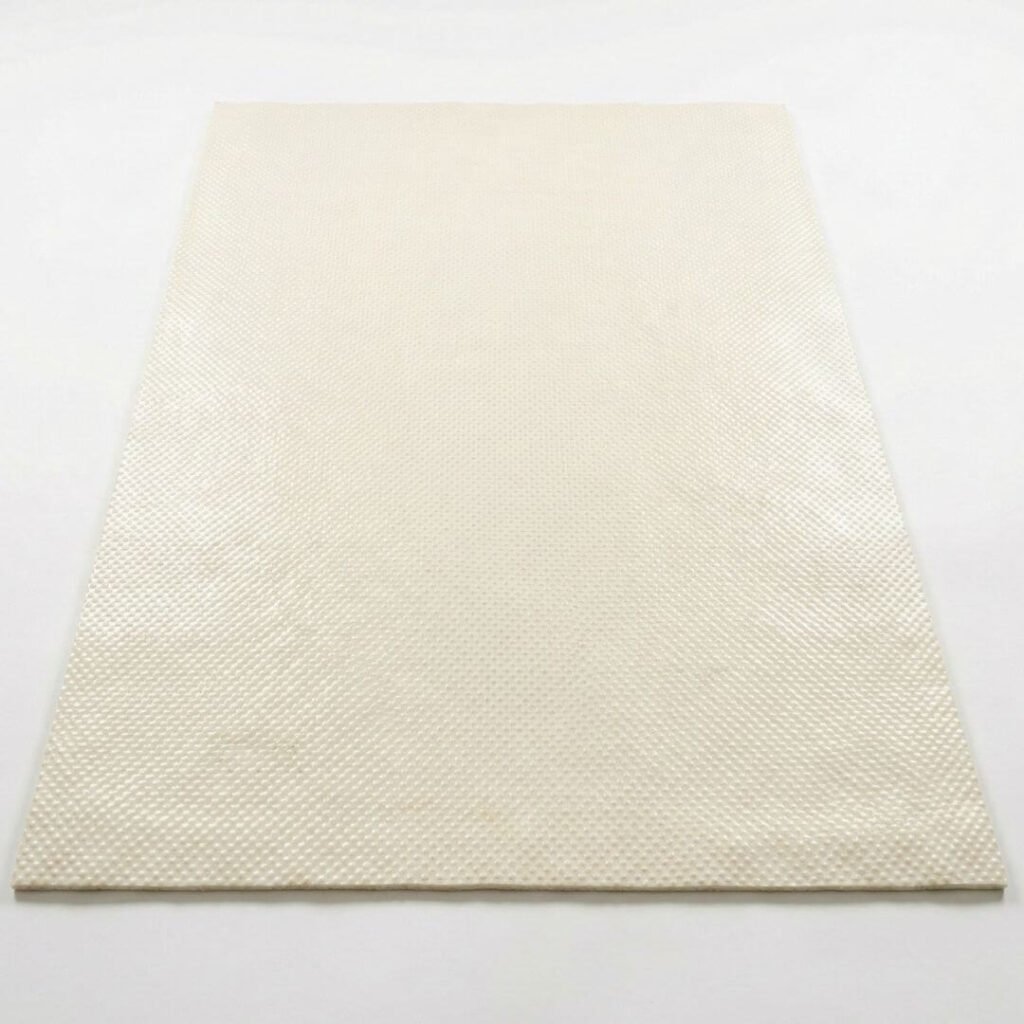
Next is grip, and this is where many rugs fail. True grip means the rug resists sliding when weight is transferred—not just when someone steps onto it slowly. Rubber or latex backing tends to perform better on smooth surfaces than felt alone. When a rug doesn’t have integrated backing, a high-quality rubber-based pad can help, but only if it fully covers the rug and stays aligned underneath. Partial pads, stacked pads, or thin mesh pads often give a false sense of security.
Edge behavior matters more than most people realize. Even a small curl at the corner can catch a toe, cane tip, or walker leg. In real homes, edges curl over time due to vacuuming, humidity, washing, or repeated foot traffic. Rugs with reinforced edges and materials that naturally lie flat tend to be safer long-term. Any rug that repeatedly needs to be straightened is sending a warning signal.
Flooring compatibility is another overlooked factor. A rug that behaves well on carpet may slide dangerously on hardwood or tile. Smooth floors reduce friction, which means the rug’s backing or pad has to do more work. This is why some rugs that feel “fine” in one room suddenly become a problem when moved to another. The best non slip rugs for elderly adults are chosen with the specific flooring type in mind, not just the room.
Maintenance is the final piece, and it’s a practical one. Rugs don’t exist in perfect conditions. They get dusty, damp, and dirty. Backings degrade. Pads shift. Washable rugs are often safer in real life because they can be cleaned without compromising grip over time. A rug that can’t be maintained easily may slowly lose the very properties that made it safe in the first place.
One important point I emphasize: a “non-slip” label doesn’t guarantee performance forever. Materials wear down. Dust and moisture build up underneath. Floors aren’t always perfectly level. Even a good rug can become unsafe if it’s placed on an uneven surface or left unchecked for long periods. Periodic inspection—simply nudging the rug with your foot to see if it moves—is one of the simplest safety checks a household can do.
From a medical standpoint, the goal isn’t perfection. It’s predictability. A rug that behaves the same way every time someone steps on it reduces surprise, and reducing surprise is a key part of fall prevention. When rugs are chosen thoughtfully and monitored over time, they can support stable movement instead of undermining it.
Product Picks: Best Non-Slip Rugs for Elderly
Best Overall Non-Slip Area Rug for Elderly
Safavieh Adirondack Collection Area Rug – 4′ Square (Light Grey & Black)
This is a strong “whole-home” option when you want one of the best non slip rugs for elderly safety that still looks like a real living-room rug. It’s low pile, designed for high traffic, and built to stay more stable than typical decorative rugs.
- Pros
- Low-pile design reduces toe-catch and edge snag risk
- Easy-care, non-shedding surface works well in high-traffic rooms
- A good balance of safety + “doesn’t look medical”
- Cons
- Not a plush/cushy feel underfoot
- Like all rugs, placement still matters—corners should be monitored

- [SUBSTANTIAL & ROBUST]: Up to 3x more material by weight than comparable rugs, offering enhanced durability and comfort; The added weight means more material, improving its ability to withstand...
- [STAIN RESISTANT & NON-SHEDDING]: Expertly machine-woven from enhanced synthetic durable fibers with a virtually non-shedding comfortable pile height
- [KID APPROVED AND PET-FRIENDLY]: Safe for everyday indoor high foot traffic and areas more prone to life’s unpredictable messes from kid or pet activity
Best Non-Slip Bathroom Rug for Elderly
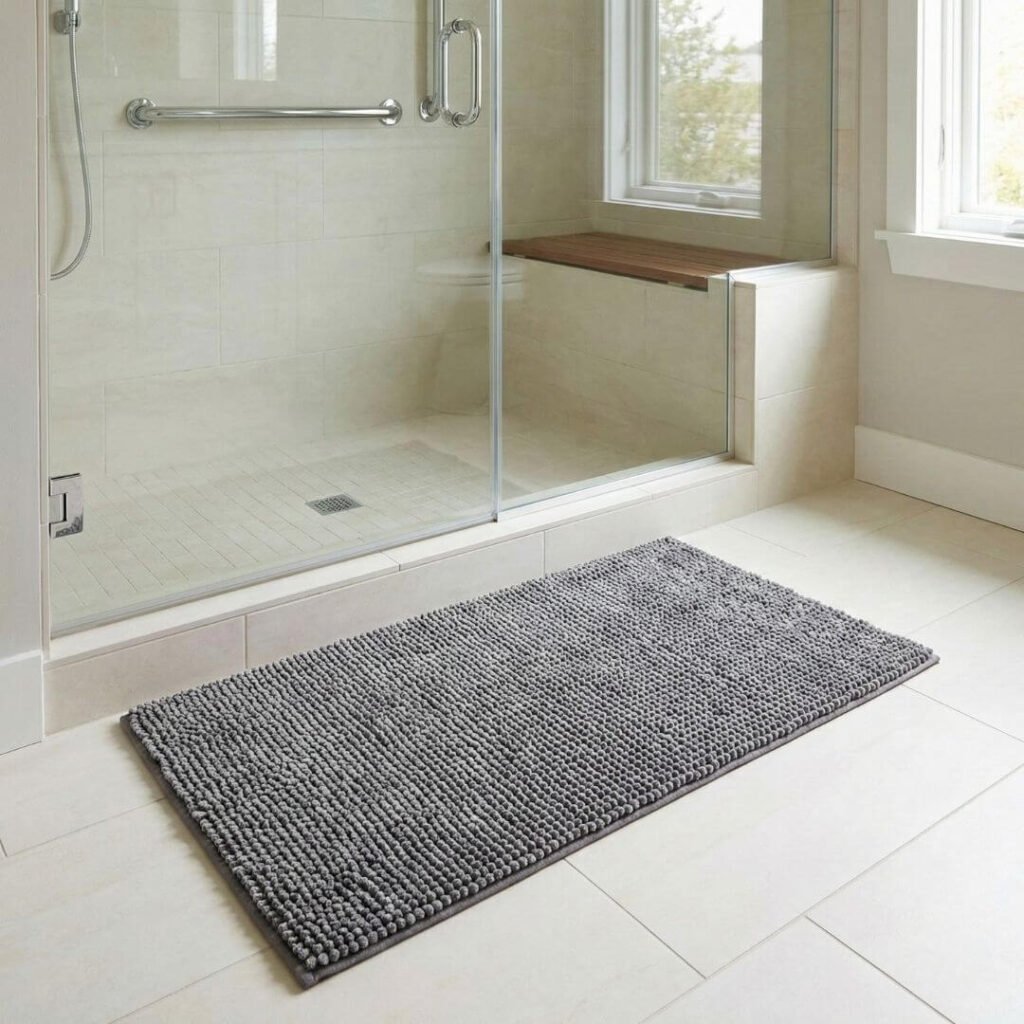
GORILLA GRIP Chenille Bath Rug Mat
Bathrooms are one of the highest-risk areas for slips, especially stepping out of the shower. This is a simple, effective pick if you want best non slip rugs for elderly bathroom safety with absorbency, comfort, and reliable grip.
- Pros
- Rubber backing helps reduce sliding on smooth bathroom floors
- Absorbent chenille helps manage water around tubs/showers
- Washable design supports hygiene and easy upkeep
- Cons
- Works best on clean, dry flooring (dust/soap residue can reduce grip)
- Needs routine washing and full drying to avoid dampness buildup

- AWARD WINNING: Winner of the 2026 HuffPost Shopping Awards recognizing excellence in the home category and problem solving products
- SOFT AND THICK CHENILLE: pamper your feet with the softest, coziest chenille; measuring almost one inch thick, plush pile helps soothe feet and keeps toes warm from the cold floor below
- ULTRA ABSORBENT: our most absorbent bath rug; dense chenille pile captures extra moisture helping to keep your floors clean while stepping out of the bath, shower, or standing at the sink
Best Bedside Non-Slip Rug for Nighttime Safety
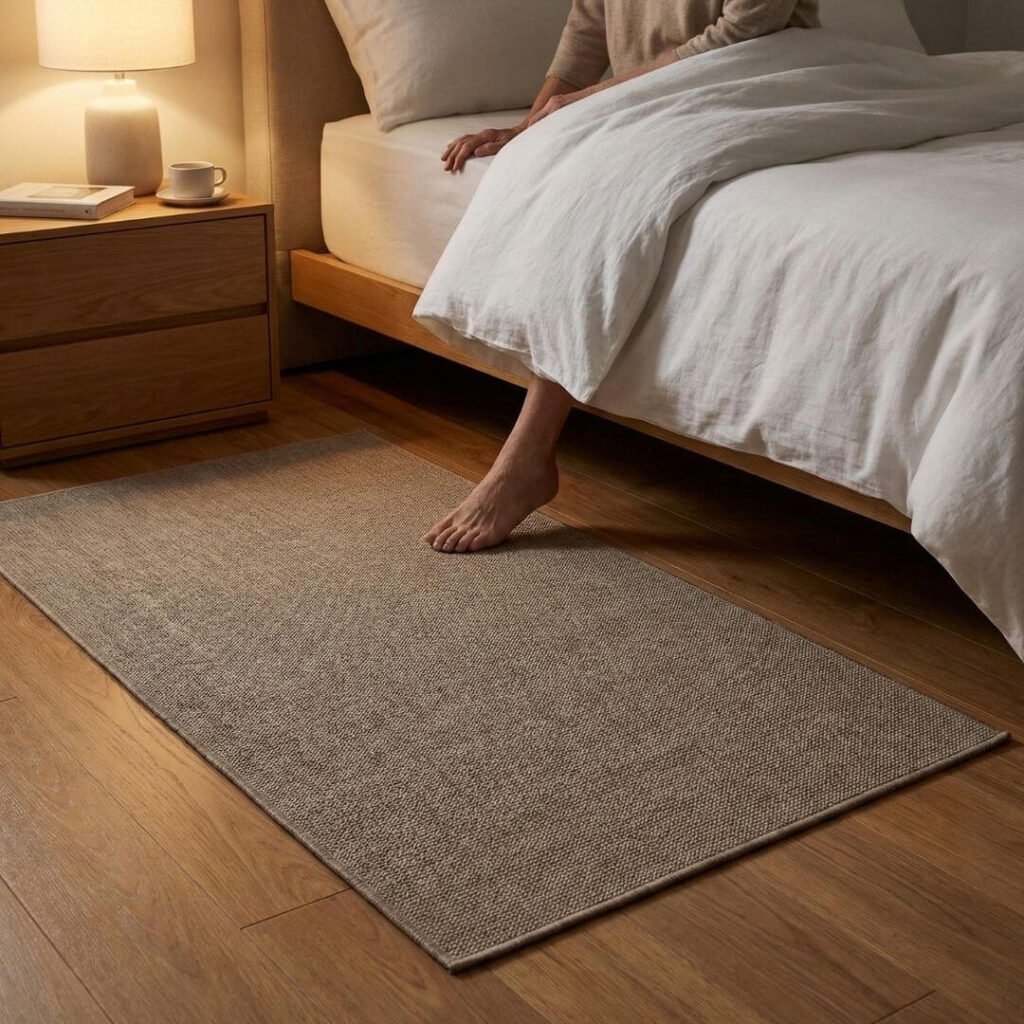
Ottomanson Border Area Rug (5′ x 6’6″)
Nighttime trips out of bed are a common moment for falls—especially if someone is groggy, rushing, or unsteady. This is a practical pick for stable footing beside the bed and a safer first step in the morning.
- Pros
- Low profile helps reduce edge-catch risk during transfers
- Durable enough for daily use in bedrooms
- Provides a stable “landing zone” for the first step out of bed
- Cons
- If the room is very tight, the size may be more than you need
- Like all rugs, corners should be checked periodically for curling
- [Living Room Area Rug]: Looking for an area rug to anchor your seating space? The 5' x 6'6" size works well in living rooms, bedrooms, or dining areas.
- [Non Slip Rubber Backing]: The rubber backing helps the rug stay stable on hardwood, tile, laminate, and other common flooring surfaces.
- [Low Profile Rug for Furniture Placement]: The low pile construction allows the rug to fit comfortably under furniture while helping reduce tripping hazards.
Best Non-Slip Runner Rug for Hallways
Maples Rugs Pelham Transitional Runner Rug
Hallways are “transition zones,” and transitions are where people fall. A stable runner helps reduce sliding and bunching while keeping the walkway comfortable and visually clear.
- Pros
- Runner format fits narrow hallways and entry corridors
- Washable, practical choice for high-traffic areas
- Good option when you want a safer rug without extra thickness
- Cons
- Less cushioning than thicker runners
- Needs correct sizing so edges don’t end up in the walking path

- Vintage Traditional Elegance – The Maples Rugs Pelham Collection features an ornate medallion design with distressed detailing and intricate scrollwork, creating a timeless vintage-inspired look...
- Durable & Stain-Resistant – Expertly crafted with 100% polyester pile, this rug offers long-lasting durability and superior stain resistance. The resilient fibers withstand daily wear and tear...
- Non-Slip & Low Profile – Featuring a skid-resistant latex backing, the rug stays securely in place to prevent slipping and shifting, offering added safety and stability. Its low-profile design...
Best Machine-Washable Non-Slip Rug
Rugshop Multi Waves Non Slip Contemporary Rug
If you’re dealing with frequent spills, pets, or other messes, washability becomes part of safety. This is a strong “real life” option in the best non slip rugs for elderly category because upkeep is actually realistic.
- Pros
- Washable design supports long-term hygiene and grip maintenance
- Works well in living areas where spills are common
- Good balance of practicality and appearance
- Cons
- Less plush feel than thick decorative rugs
- Must be washed and fully dried correctly to preserve performance

- Crafted with a durable machine-woven loop texture and 100% nylon pile, offering vivid, fade-resistant colors that bring long-lasting beauty to your space.
- Non-slip latex backing ensures stability and safety, making this rug an ideal choice for high-traffic areas where slip resistance is essential.
- Low 0.2-inch pile height allows for easy placement under doors while preventing dirt accumulation, combining style with practical functionality.
Best Rug-and-Pad Combination for Hardwood Floors
RUGPADUSA Dual Surface Felt + Rubber Rug Pad (8′ x 10′, 1/4″)
Sometimes the safest solution isn’t a new rug—it’s making an existing decorative rug behave safely. This pad is the right move when you want to keep a rug you already like but need real grip on hardwood or laminate.
- Pros
- Rubber grip helps prevent sliding on smooth floors
- Felt adds cushioning and can reduce rug “bunching”
- Useful when the rug itself has no backing
- Cons
- This is a pad, not a rug—requires a compatible rug on top
- Not ideal under thick, high-pile rugs that already create a trip hazard

- Strong gripping power - natural rubber backing keeps rugs anchored firmly in place; prevents slipping, sliding, and wrinkling in high-traffic areas.
- Durable Cushion - heat pressed 1/4-inch thick felt adds soundproofing and insulation; non-abrasive to protect rugs and floors from scratches; adds extra comfort underneath rugs without extra bulking.
- Made in the USA - 100% recycled felt needle-punched to prevent moisture buildup; odorless, low VOC’s, and hypoallergenic.
Best Entryway / Doorway Non-Slip Rug
DEXI Front Entryway Door Mat (32×48)
Doorways are a common “catch” point: wet shoes, turning, stepping over thresholds. A low-profile mat that stays put is a small change that can reduce a surprising amount of risk.
- Pros
- Low profile helps prevent door interference and toe catches
- Helps trap dirt and moisture near entrances
- Designed for indoor entryway practicality
- Cons
- Limited cushioning
- Placement matters—avoid having edges overlap a threshold

- Absorbs Moisture and Trap Dirt:The grid-textured surface, made from absorbent polypropylene fibers, effectively traps water, mud, and debris.Keep your floors clean and dry—even on rainy, snowy, or...
- Easy to Clean & Machine Washable:Designed for busy households, the enhanced thermoplastic rubber (TPR) backing allows for machine washing without compromising durability. For everyday care, simply...
- Non Slip Backing: The anti-slip stripe pattern provides a secure grip on a variety of floors, including smooth or hard surfaces. Prevent slips and trips, ideal for high-traffic areas such as hallways...
Educational Overview
When people search for the best non slip rugs for elderly, they’re usually trying to balance three competing priorities: safety, comfort, and aesthetics. Very few people start out intending to choose an unsafe rug. Instead, problems arise when a rug that feels comfortable or looks appealing behaves unpredictably once it’s placed in a real home environment.
The most common mistake I see is choosing a plush or decorative rug first, then trying to “fix” it later with tape, corner grips, or thin mesh pads. These add-on solutions often provide a temporary sense of stability but don’t address the underlying issue. Over time, adhesives loosen, pads shift, and corners curl—sometimes creating more tripping hazards than the original rug itself.
From a safety standpoint, rugs perform best when stability is built into the system from the start. In real-world senior homes, the following hierarchy tends to be the most reliable:
First: Low-profile rugs with integrated non-slip backing (rubber or latex).
These rugs are designed to grip the floor directly without relying on additional layers. Because they lie flat and resist movement during walking, turning, and pivoting, they tend to behave more predictably over time.
Second: A quality rubber-based rug pad placed under a low-pile rug.
This approach can work well when someone wants to keep an existing rug, but only if the pad fully covers the rug footprint and stays properly aligned. Pads that are undersized, too thin, or poorly matched to the flooring often fail silently until a slip occurs.
Third: Tape or adhesive solutions.
These are usually a last resort. Adhesives can degrade, peel, or stiffen at the edges. In some cases, they damage flooring or create raised edges that increase the risk of toe catches.
Another important factor is that not all rooms pose the same type of risk, and rugs should be selected based on how each space is actually used:
- Bathrooms involve moisture, bare feet, and frequent weight shifts when stepping out of the shower or standing from the toilet. Stability and water management are more important here than softness.
- Bedside areas are used during low-light conditions, often when someone is still waking up or unsteady. Rugs in these spaces must lie flat and stay predictable with the very first step out of bed.
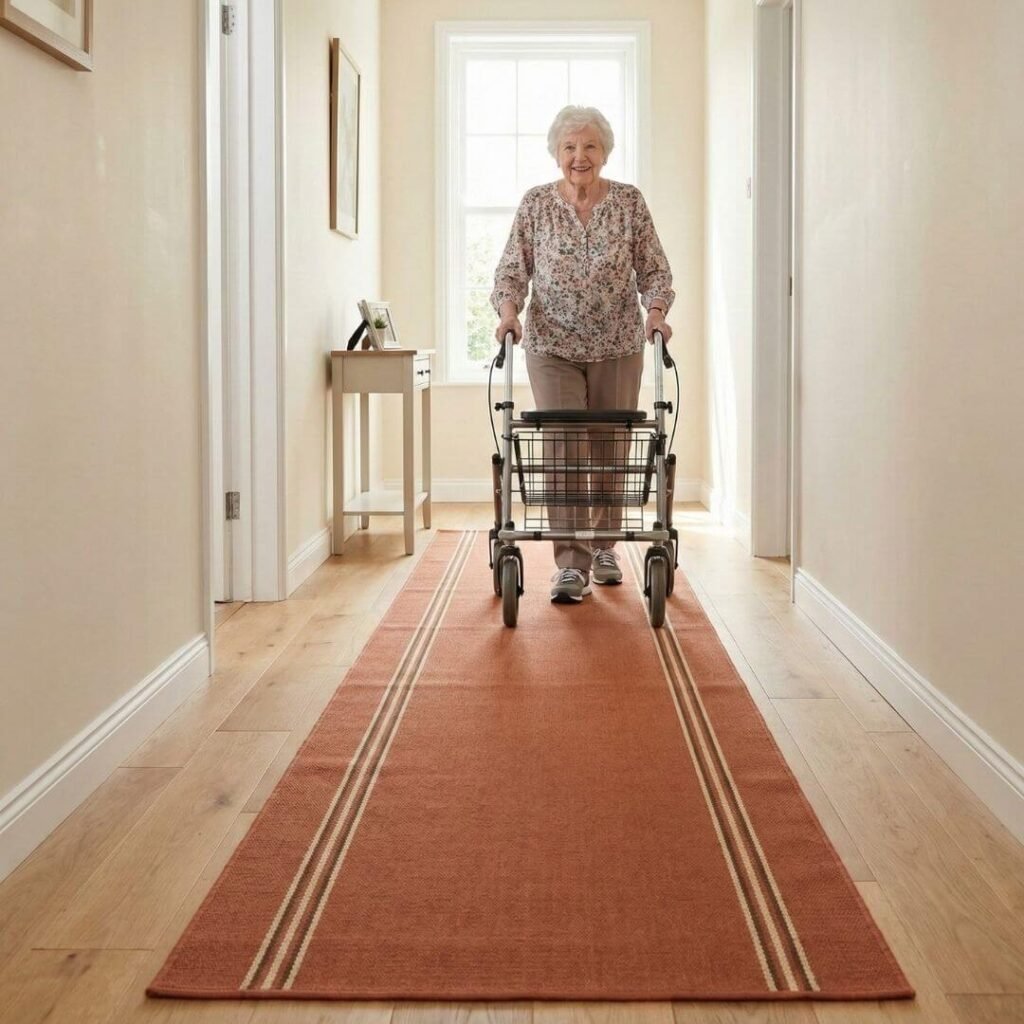
- Hallways and runners experience repeated foot traffic and often need to accommodate canes or walkers. Even minor bunching or shifting can become a recurring hazard.
- Living rooms and common areas involve turning, side-stepping around furniture, and carrying objects. Rugs here must resist movement during directional changes, not just straight-line walking.
Flooring type further shapes how a rug behaves. Smooth surfaces like hardwood, tile, laminate, and vinyl reduce friction, making rug movement more likely. A rug that feels stable on carpet can slide unexpectedly when moved to a hard floor. This is why the best non slip rugs for elderly adults are chosen with both the room and the flooring material in mind, rather than appearance alone.
Broader fall-prevention guidance from Cleveland Clinic reinforces this idea, emphasizing that surface stability and predictable footing are critical components of home safety. Environmental factors—like flooring transitions, loose rugs, and unstable walking surfaces—often contribute to falls just as much as balance or strength issues.
It’s also important to recognize that rugs change over time. Backings wear down. Pads compress. Dust and moisture accumulate underneath, reducing grip. A rug that was stable when first placed may behave differently months later. Simple habits—like periodically nudging a rug with your foot to see if it moves—can help identify problems before they lead to injury.
The goal of this guide isn’t to remove rugs or make a home feel stripped down or clinical. It’s to help rugs function as supportive, predictable surfaces rather than hidden variables. When stability is prioritized from the start, rugs can add warmth and comfort without quietly increasing fall risk.
How to Use Safely
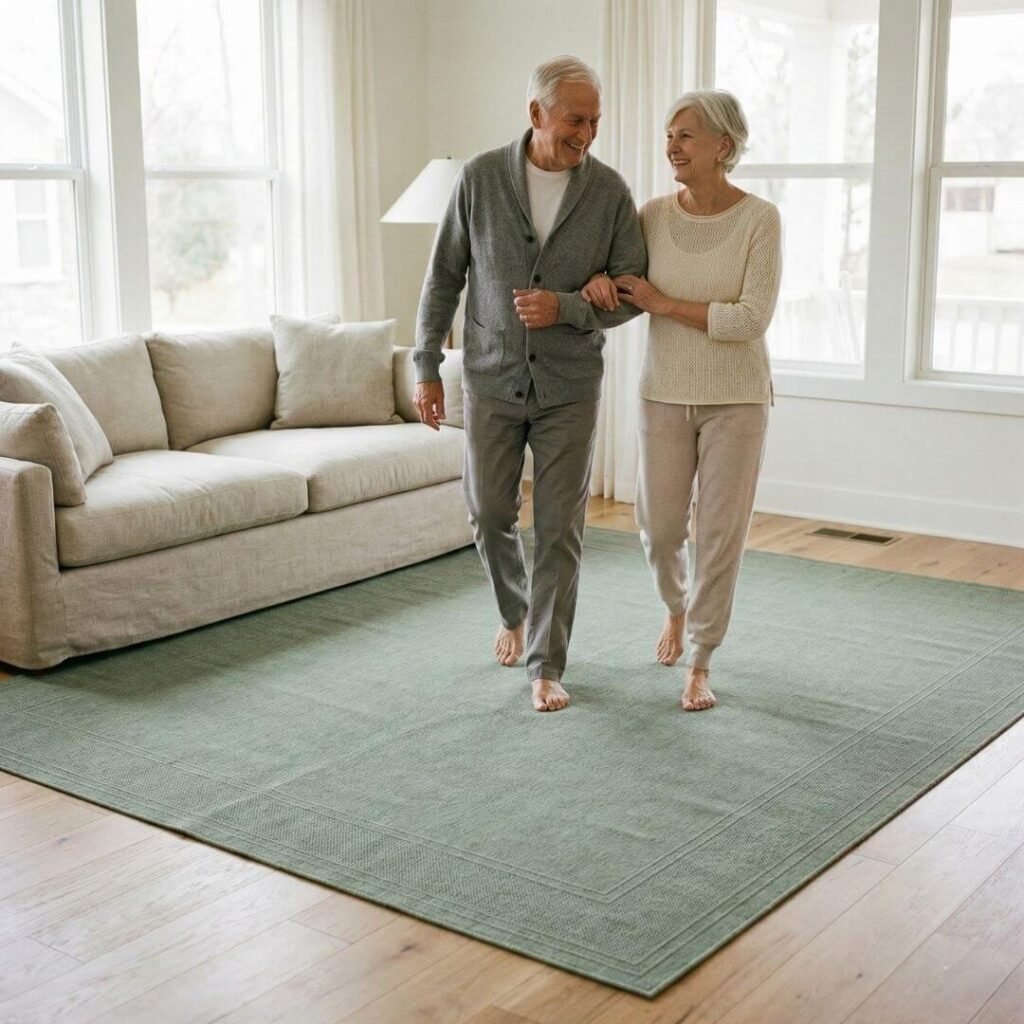
While best non slip rugs for elderly picks can improve traction and stability, no rug or mat can eliminate fall risk entirely. Real-world safety is the combination of product choice, placement, and daily habits. Even a high-quality non-slip rug can become unsafe if it’s positioned poorly or allowed to degrade over time.
One of the most important principles is keeping rugs low profile. Thick, fluffy rugs may feel comfortable underfoot, but they increase the risk of toe catches—especially for seniors with reduced foot clearance, slower gait, or balance challenges. In most cases, flatter rugs that stay predictable underfoot are safer than softer ones that compress or shift.
Corner behavior matters just as much. Even rugs marketed as non-slip can develop curled edges from vacuuming, humidity, or repeated foot traffic. If a bedroom rug keeps curling where transfers happen, it’s often better to replace it with a safer option rather than trying to “make it work”—and in higher-risk situations, pairing safer flooring choices with supportive transfer equipment like the recommendations in Best Bed Rails for Seniors (2025 Guide) can further reduce risk.
It’s also essential to keep the surface underneath the rug clean and dry. Dust, hair, and moisture reduce friction between the rug and the floor, quietly undoing the benefit of non-slip backing or pads. Bathrooms are particularly vulnerable here, where overspray or damp floors can compromise grip—especially around the toilet and sink, where many slips happen. If stability is a concern in that zone, the supports covered in Best Toilet Safety Rails for Elderly (2025 Guide) can complement a safer non-slip rug setup.
Avoid stacking solutions. Adding multiple pads, tapes, or grips often creates new movement between layers rather than stabilizing the rug. If a rug still slides after proper placement, it’s usually safer to replace it or upgrade the backing system rather than layering fixes.
Finally, re-check rugs periodically. Backing materials wear down over time, especially in high-traffic areas. A simple monthly test—nudging the rug with your foot to see if it shifts—can reveal problems before they cause an injury. Broader fall-prevention guidance from Cleveland Clinic reinforces this approach, emphasizing that surface stability and predictable footing work together to reduce fall risk.
Lifestyle Synergy
Non-slip rugs are most effective when they’re part of a broader, supportive home environment. On their own, rugs can reduce a specific hazard, but when paired with small lifestyle adjustments, their impact is much greater.
Lighting is one of the most important complements. Night lights in hallways, bedrooms, and bathrooms make rugs easier to see and help seniors judge footing more accurately—especially during nighttime bathroom trips or early morning movement.
Footwear plays a role as well. Supportive, non-slip house shoes or slippers provide traction even when someone steps partially off a rug or transitions between surfaces. Socks alone, particularly on smooth floors, can undermine the benefit of even the best rug.
Clutter control is another key factor. Rugs can’t do their job if cords, pet toys, or loose items are scattered across walking paths. Clear, predictable walkways allow rugs to serve as stable surfaces rather than obstacles to navigate around.
Furniture layout also matters. Wide, unobstructed paths reduce the need for sharp turns, side-steps, or reaching for support mid-stride. When rugs are placed within these clear paths—rather than across thresholds or tight corners—they’re more likely to support safe movement. If you’re adjusting multiple parts of the home environment at once, the checklist approach in Tips for Making Your Home Safer for Seniors can help you prioritize the highest-impact changes first.
If someone feels unsteady enough that they’re frequently using furniture or walls for balance, rugs should be viewed as one part of a larger safety strategy, not the sole solution—and that’s often the right time to revisit How to Choose the Right Mobility Aid for Your Needs to make sure the walking support matches the person’s current stability level.
Physician Tips
If you want the “doctor’s shorthand” for best non slip rugs for elderly safety, it comes down to predictability and placement.
The most reliable upgrade is low pile combined with true grip—either through integrated rubber or latex backing or a properly fitted rubber-based rug pad. These setups tend to behave consistently during walking and turning, which is when many falls occur.
The most common failure I see is corner curl. Even slight curling can catch a toe, cane tip, or walker leg. Any rug that repeatedly needs to be straightened is signaling that it’s becoming a risk.
The highest-risk zones in the home remain bedside areas, bathrooms, and hallways. At the bedside, falls often occur during low-light transitions out of bed; in these cases, rugs work best when paired with safer transfer supports and positioning habits—often the same situations discussed in Best Bed Rails for Seniors (2025 Guide). In bathrooms, moisture and smooth flooring increase slip risk, which is why stable rugs often work best alongside fixed supports like those covered in Best Toilet Safety Rails for Elderly (2025 Guide).
When fall risk appears to be driven by mobility limitations rather than isolated environmental hazards, it can be helpful to step back and reassess overall mobility support. A practical starting point is How to Choose the Right Mobility Aid for Your Needs, especially if balance, strength, or endurance are changing.
Finally, for seniors who spend long periods standing, sitting, or lying down, safety extends beyond falls alone. Skin protection becomes important as well, and understanding How to Prevent Pressure Ulcers (Bedsores) in Seniors can help address related risks that sometimes accompany reduced mobility.
Comparison Table: Non Slip Rugs for Elderly (Quick Safety Comparison)
FAQ
1. Are area rugs safe for elderly adults?
Area rugs can be safe for older adults when they are low profile, properly anchored, and either have integrated non-slip backing or sit on a high-quality rubber rug pad. Loose rugs that slide or curl are a common home fall hazard.
2. What type of rug backing is safest for seniors?
In most homes, rubber or latex non-slip backing is safest because it reduces sliding on smooth floors. For decorative rugs without backing, a properly sized rubber-based rug pad is typically the next safest option.
3. Should elderly adults use rug pads or rubber-backed rugs?
If you can choose either, rubber-backed rugs are often simpler and safer because there are fewer layers that can shift. Rug pads work well when paired with low-pile rugs and when the pad fully covers the rug footprint.
4. Are non-slip bathroom rugs safer than bath mats?
They serve different purposes. Non-slip bathroom rugs are designed to sit outside the tub or shower and reduce slipping on wet floors. Mats used inside tubs or showers must be designed specifically for that environment.
5. How often should non-slip rugs be replaced?
Non-slip rugs should be replaced when the backing loses grip, the edges start curling, or the rug begins shifting during normal walking. For many homes, this means checking rugs monthly and replacing them as needed rather than following a fixed timeline.
6. Can non-slip rugs be used with walkers or canes?
Yes—when the rug is low pile, lies flat, and does not shift. Thick rugs and curled edges are especially risky with walkers and canes, so hallway runners and bedside rugs should be chosen carefully.
Final Thoughts
Choosing the best non slip rugs for elderly adults is one of those “small changes” that can have an outsized impact—especially when it removes a hazard that people walk over multiple times every day. The best approach is to prioritize low profile, reliable grip, and correct placement in the highest-risk areas first (bathroom, bedside, hallway), then expand to living spaces as needed.
And if someone has significant balance issues or has fallen before, rugs should be part of a broader safety plan—not the only solution.
Medical Disclaimer: This guide is for general educational purposes only and is not intended to serve as personalized medical advice, diagnosis, or treatment. Always consult a licensed healthcare professional for recommendations tailored to your specific medical condition, mobility needs, or safety concerns.
Last update on 2026-07-08 / Affiliate links / Images from Amazon Product Advertising API
