
Affiliate Disclaimer: This article contains affiliate links. As an Amazon Associate, Mobility With Ease may earn a small commission from qualifying purchases at no additional cost to you.
Introduction
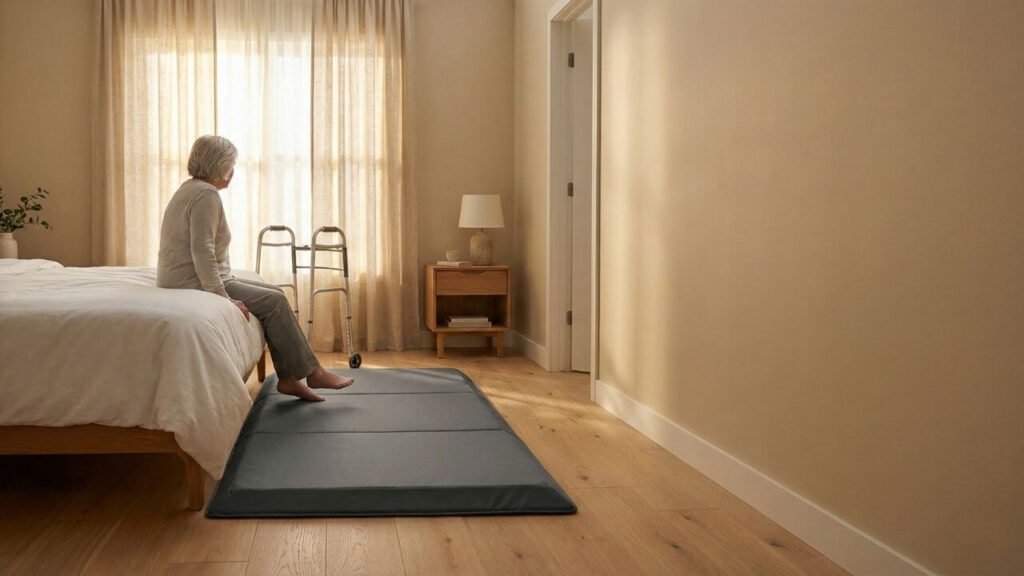
Falls can happen in seconds, and the bedroom is one of the most common places they start—especially at night. When an older adult stands up too quickly, feels dizzy, or cannot see clearly, that first step beside the bed can be the moment balance is lost. If you are searching for fall mats for elderly adults, you are likely trying to make these bed exits safer. Addressing this specific danger zone is often the first line of defense against nighttime accidents.
Many falls do not happen in the middle of the room; they happen right where feet land first, when someone is still half-awake and unsteady. Installing fall mats for elderly individuals in this landing zone lowers the chance of a serious injury if a fall does occur. This simple addition turns a hard, unforgiving floor into a managed safety zone, giving caregivers peace of mind when they cannot be in the room to help.
The right fall mats for elderly users help in two very practical ways involving traction and impact. First, they add necessary grip on slick floors like tile or hardwood, preventing feet from sliding out during that crucial initial transfer from the bed. Second, they provide essential cushioning to help soften the impact, which can protect fragile hips and knees if a loved one goes down.
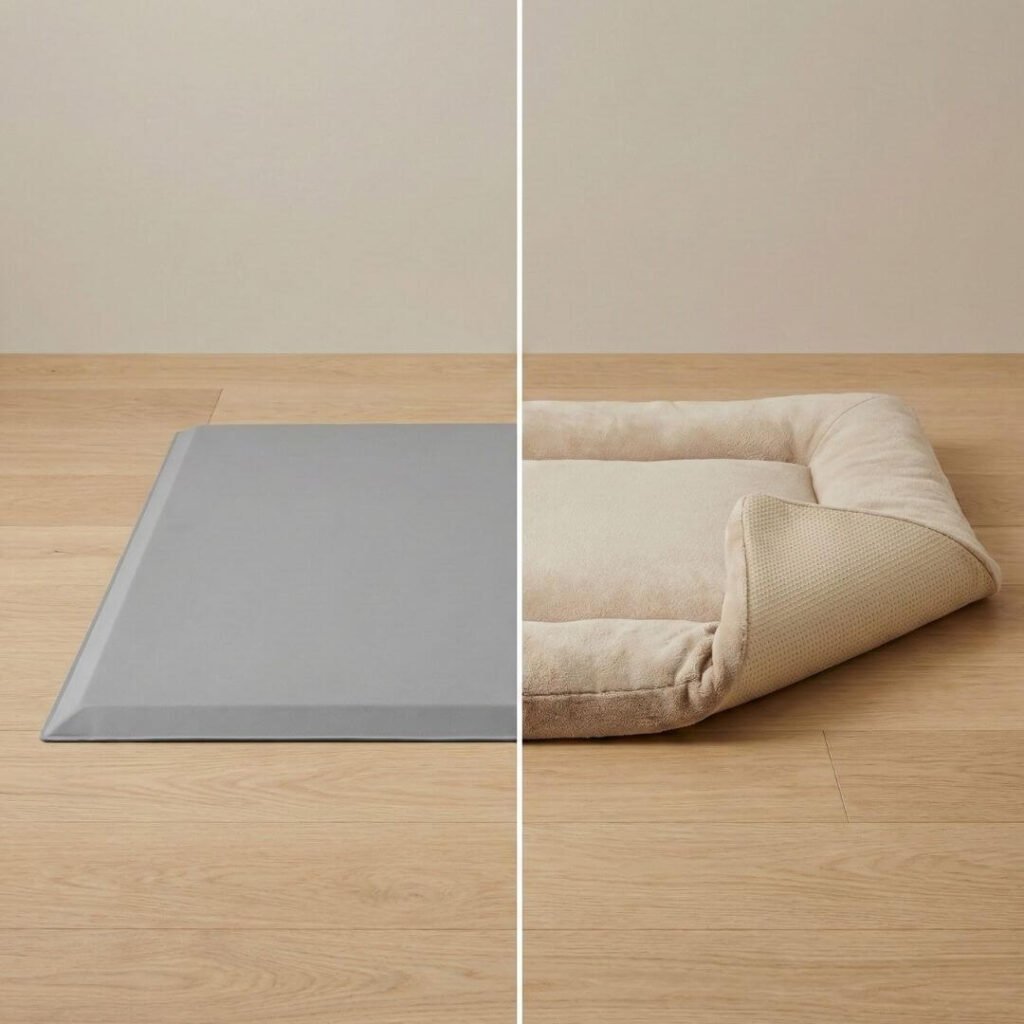
Just as important as cushioning is stability; a good mat must not become a new stumbling block. High-quality fall mats for elderly people are designed to stay flat and stay put, usually with non-slip backings and beveled edges that allow feet or walkers to slide over them easily. Choosing a specific crash mat rather than a standard rug ensures that the edge lies flush against the floor to prevent tripping.
In this 2026 guide, we will walk through top picks for fall mats for elderly needs—from standard bedside coverage to low-profile and easy-clean choices. We will also show you exactly what features to look for, how to place a mat safely to maximize protection, and how to match the setup to your loved one’s mobility needs. By the end, you will know exactly which mat is best for your home.
Why Fall Mats Matter for Elderly
Falls are a major health and safety concern for older adults, and many happen at home during normal routines like standing up, turning, or walking to the bathroom. While installing fall mats for elderly residents is a smart step, it helps to understand the bigger picture of home safety first. The CDC’s overview of older adult fall prevention explains why prevention matters and how small home changes can make a meaningful difference in daily life.
The urgency of using fall mats for elderly adults is backed by data concerning injury rates and long-term health. If you want the hard numbers, the CDC’s facts and stats on falls shows how often falls lead to serious injuries and reduced independence. Seeing these statistics often motivates caregivers to secure bedrooms with high-quality fall mats for elderly users immediately.
It is important to remember that fall mats for elderly individuals do not prevent every single fall, but they can significantly help reduce harm when falls happen near the bed. The primary goal of these mats is injury mitigation, providing a softer landing spot than a bare floor. This extra layer of protection is vital for maintaining safety in the bedroom, where hard surfaces are common.
These safety tools are most effective during high-risk times, such as night wakings or early mornings. Fall mats for elderly sleepers are especially useful when a senior is groggy, moving quickly, or stepping onto a slick floor first thing in the morning. By placing fall mats for elderly loved ones right at the bedside, you target the exact moment they are most vulnerable to slipping.
To get the most benefit from your fall mats for elderly setup, it helps to understand the root causes of accidents beyond just the floor surface. If you want a deeper breakdown of why falls happen and how to lower risk, our guide on Understanding Fall Risks in Seniors and How to Prevent Them explains common causes in a simple, practical way. Combining knowledge with the right equipment is the best way to keep your home safe.
Doctor’s Note: Choosing the Right Fall Mats for Elderly
I see many falls happen during the “in-between” moments—getting out of bed, turning toward the bathroom, or standing up too fast before the body feels steady. These aren’t dramatic slips; they’re small balance losses that happen when someone is groggy, rushing, or not fully stable yet. That’s why I view fall mats as a support tool for real life, not a “set it and forget it” product.
When I recommend fall mats, I focus on practical safety, not just padding. The mat should lay completely flat, stay in place on the floor, and fit where the person actually steps. If it slides on tile or hardwood, creeps over time, or curls at the corners, it can become a trip hazard. A mat that creates new risk defeats the purpose, even if it feels soft.
I also pay close attention to thickness because it affects how safe the mat feels when stepping on and off. Thicker mats may reduce impact, but they can also feel like a raised edge or a small step, especially for seniors who shuffle, drag their feet, or use a walker near the bed. In those cases, a low-profile mat with beveled edges is often a safer fit because it lowers the chance of catching a toe. If you’re also making mobility decisions, our guide on How to Choose the Right Mobility Aid for Your Needs can help you match home safety gear to daily movement needs.
Best Fall Mats for Seniors (Top Picks)
Best Standard Bedside Fall Mat
NYOrtho Fall Mat Elderly (FallShield)
This NYOrtho FallShield mat is a strong standard bedside option for everyday use. Its coverage works well for many bedrooms because it supports the typical “stand, steady, and take the first step” zone next to the bed. It’s often a smart starting point when you want added protection without making the floor feel unfamiliar or overly elevated. For many households, it fits easily into a normal bedtime routine.
Pros
- Standard bedside coverage for common bed-exit pathways
- Designed to reduce impact near the bed
- Anti-slip focus supports steadier footing
Cons
- May not provide enough cushioning for very high-risk situations
- Standard size may not suit unusually wide bedside walking paths

- REDUCES BEDSIDE INJURIES: The NYOrtho fall mat provides complete bedside coverage for the safety of elderly loved ones or patients who are at risk of falling. The non-slip texture of the FALLSHIELD...
- HIGH IMPACT ABSORBING MOLDED FOAM: Made from soft, high density molded foam and waterproof rubber. Also available as a bi-fold that can be stored and retrieved with ease.
- NON-SKID SURFACE & SLIP RESISTANT BACK: The NYOrtho FALLSHIELD is a secure, non-slip surface that stays firmly in place on any floor surface, including wood, tile and carpet.
Best Low-Profile Full-Length Coverage
Extra Large Bedside Fall Protection Mat (70″ x 24″ x 0.5″)
This mat is built for longer bedside coverage while keeping a low-profile thickness. The beveled edges are an important detail because they can reduce toe-catch and tripping compared to sharper transitions. It’s a good fit for seniors who take several steps while still close to the bed or for rooms where you want continuous coverage along one side. If your priority is a longer landing zone without thick foam, this option checks the right boxes.
Pros
- Full-length bedside coverage supports longer step paths
- Beveled edges help reduce trip risk
- Low-profile thickness can feel stable for many seniors
Cons
- Larger footprint may interfere with drawers or doors in tight rooms
- Less impact cushioning than thicker fall mats

- Provides superior protection against falling related injuries with its extra-large size and thick padding
- Non-slip backing always secures the mat in place and the textured grip allows for secure footing when standing on the mat
- Designed with smooth beveled edges to prevent against trips and to allow wheelchairs and medical equipment / carts to pass onto the mat easily

Best Maximum Impact Cushioning
ProHeal Foam Fall Mat (Thick Bi-Fold)
This option is designed for maximum cushioning, which can matter most on hard floors where impact is the biggest concern. The thicker foam may help soften a fall, but it also creates a higher step-up, so it’s important that the senior can step onto it confidently. It tends to work best when the user does not shuffle heavily and isn’t likely to catch their toes at the edge. The bi-fold design can also make it easier to move or store when needed.
Pros
- Thick, high-density cushioning supports stronger impact reduction
- Bi-fold design can be easier to handle than a single large mat
- Helpful for higher-risk bedside setups on hard floors
Cons
- Higher step height may feel unstable for some seniors
- May not be ideal for shuffling gait or frequent walker use near the bed

- ELDERLY MONITORING: Patient mattress roll-outs are a common and unfortunate occurrence. Protect seniors or bedridden persons falling with these high-density fall pads for eldery, which highly reduce...
- UNIQUE MEDICAL DESIGN: These bed mats are manufactured from specially cured high-density impact resistant foam that will protect your hospital or home care bed. Their bi-fold and tri-fold systems...
- PREMIUM SUPPLIES: A perfect blend of comfort and protection, the ProHeal bedside floor protection mat minimizes possible injuries that could occur from a patient falling past bed railing.
Best Trip-Reduced Low-Profile Mat
Medical Bedside Fall Safety Mat (70″ x 24″ x 1/2″)
This low-profile medical-style mat is a strong choice for seniors who shuffle or struggle to lift their feet. The half-inch thickness creates a gentle transition from floor to mat, and the beveled edge helps reduce trip risk during bed exit. Many households like this style because it feels more “floor-like” while still offering grip and basic cushioning. It can also pair well with mobility aids when stability is the main goal near the bed.
Pros
- Low-profile thickness supports easier stepping for shuffling gait
- Beveled edges reduce trip risk at transitions
- Non-slip focus supports bedside stability
Cons
- Less cushioning than thicker impact mats
- May feel too firm for households prioritizing maximum padding

- Reduce Bedside Falling Risks and Injuries: The comfort NBR foam to provide maximum absorption and rebound to reduce impact in the event of a fall. This also minimizes tripping hazards
- Safe Design: The anti slip bottom netting keeps the mat secure to help prevent accidental tripping. And the beveled edges make the wheelchair or feeding/medical supply tables easily roll onto the mat.
- High-Quality Material: The mat are constructed from the highest quality compressed foam to prevent injury in the event of an accidental roll-off from bed.
Best Non-Slip Stability for Slick Floors
Vive Fall Mat (72″ x 24″)
This mat is a strong pick when stability and grip are the priority, especially on slick flooring like tile or hardwood. It’s helpful for seniors who step on and off the mat frequently, since sliding mats can become a hidden hazard over time. The longer length can also support a steadier bedside routine by covering more of the walking path next to the bed. If slipping is your bigger concern than maximum padding, this is a sensible option to consider.
Pros
- Non-slip stability focus for slick floors
- Longer coverage supports frequent bed exits
- Designed for bedside standing comfort
Cons
- May not provide as much cushioning as thicker foam mats
- Requires thoughtful placement to avoid blocking pathways
No products found.
Best Easy-Clean Waterproof Option
MABOZOO Waterproof Bi-Fold Fall Mat (70″ x 24″ x 2″)
This waterproof, wipeable mat is ideal for caregiving homes where spills and easy cleanup are part of daily life. The 2-inch thickness adds more cushioning than low-profile mats while staying lower than the thickest impact options. It can also support hygiene routines near the bed, especially when caregiving tasks are frequent. If maintenance and cleaning are key concerns, this mat is often a practical and reassuring choice.
Pros
- Waterproof surface supports quick wipe-down cleaning
- Bi-fold design can simplify storage and handling
- Added cushioning without the tallest thickness category
Cons
- Thicker than low-profile mats, which may not suit shuffling gait
- Needs regular cleaning to maintain grip and hygiene

- 【Soft material】: Our fall mats is filled with high-density sponge, which is soft and comfortable with good resilience. FDA registered Class I medical device
- 【Large size】: The size of our anti-fall mat is 70"*24"*2", and the thickness of 2" can provide you with good support. The size is large enough to provide you with better protection.
- 【Anti-slip】: The fall mats for elderly is made of dark blue Oxford cloth, which is waterproof and non-slip, and easy to clean. At the same time, the bottom is designed with anti-slip, which is...
Educational Overview: What Is a Fall Mat Used For?
A fall mat is used to make high-risk areas safer, most commonly beside the bed. It adds a safer “landing zone” where feet hit the floor first, which is often the moment balance is weakest. A good mat can improve traction underfoot and cushion the floor if a fall happens during bed exit or a nighttime bathroom trip. Many seniors also feel more confident when the stepping surface is stable and predictable, which can help them move more carefully instead of rushing. While a mat won’t stop every fall, it can reduce the chance of injury when falls happen close to the bed.
Fall mats are most helpful for common bedroom situations like waking up groggy, standing up too quickly, or stepping onto a slick surface. They can also support caregivers by adding protection in a spot that’s hard to “fix” with furniture changes alone. That said, a fall mat works best as one part of a broader safety plan, not the only solution.
When comparing fall mats, four features tend to matter most: edge design, grip, thickness, and size. Beveled edges help reduce trip risk because they create a smoother transition from floor to mat, especially for seniors who shuffle. Non-slip backing helps prevent sliding on smooth floors, which is critical because a moving mat can cause a fall. Thickness is a tradeoff: more cushion can reduce impact, but more height can feel less stable and harder to step onto. Size should match the real bedside path without blocking drawers, doors, or walking routes, and it should sit flat without curled corners.
How to Use Fall Mats Safely
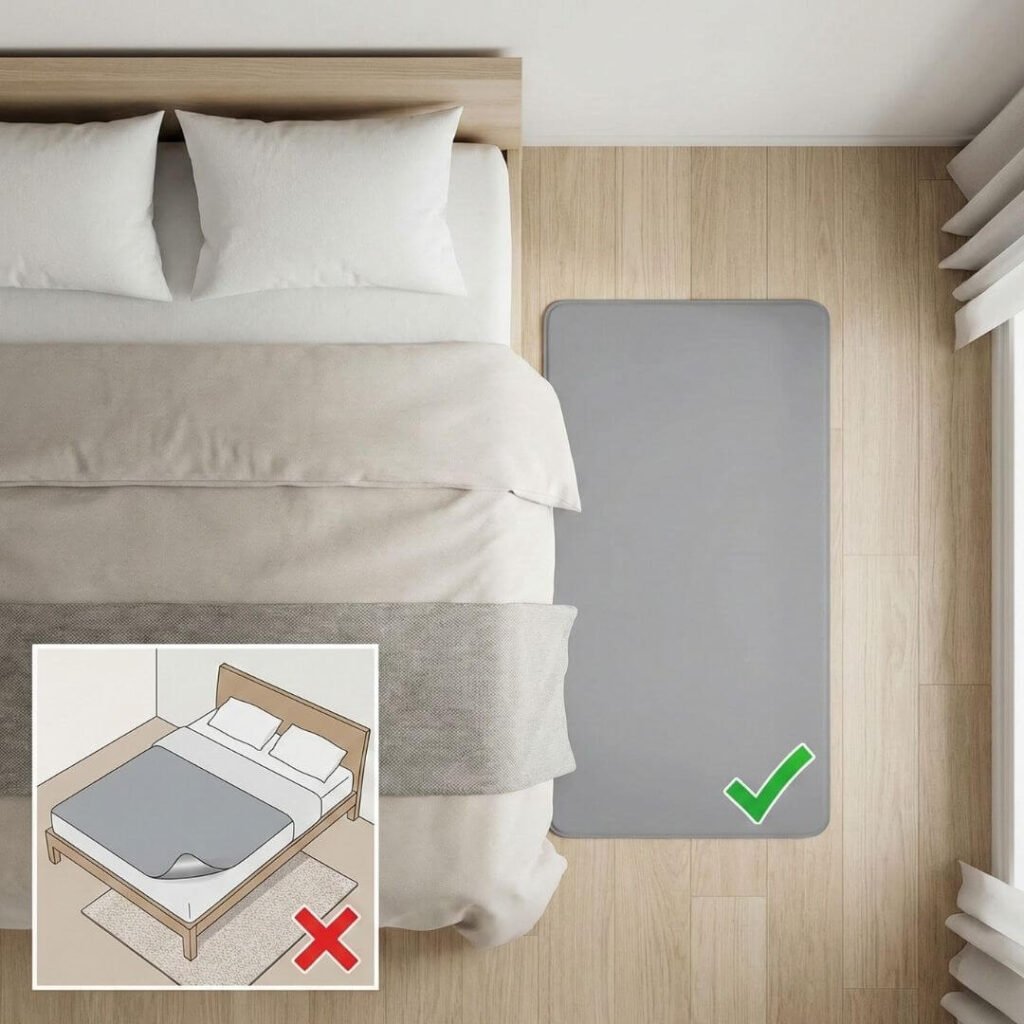
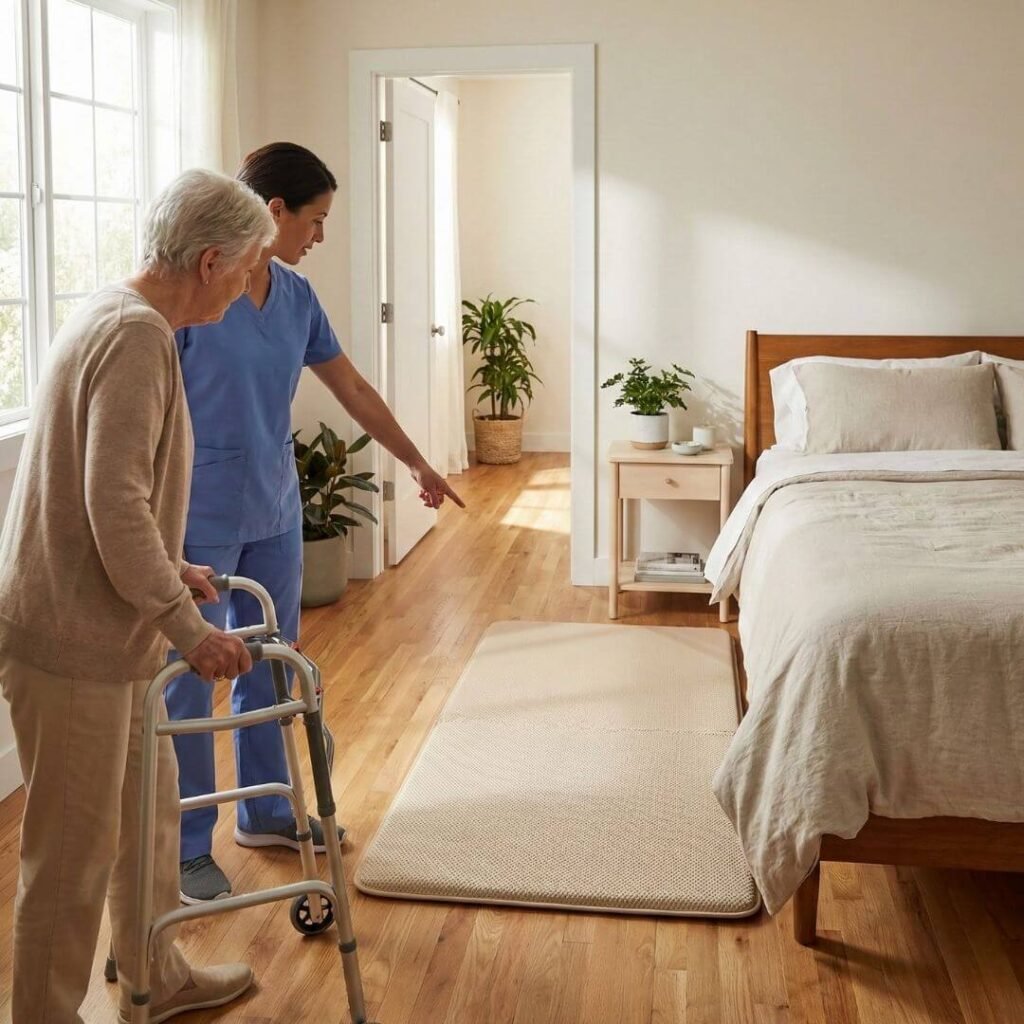
Check the positioning. The safest placement is where the senior’s feet naturally land first when standing from bed, not where it “looks right” on the floor. It helps to test this during the day by having them stand up the way they normally do, then watching the first two steps they take. In many bedrooms, that landing spot is slightly closer to the bed than people expect, especially if the person uses the mattress edge for balance. If the mat is angled oddly, shifted under a nightstand, or placed too far away, it may not provide protection in the moment it’s needed.
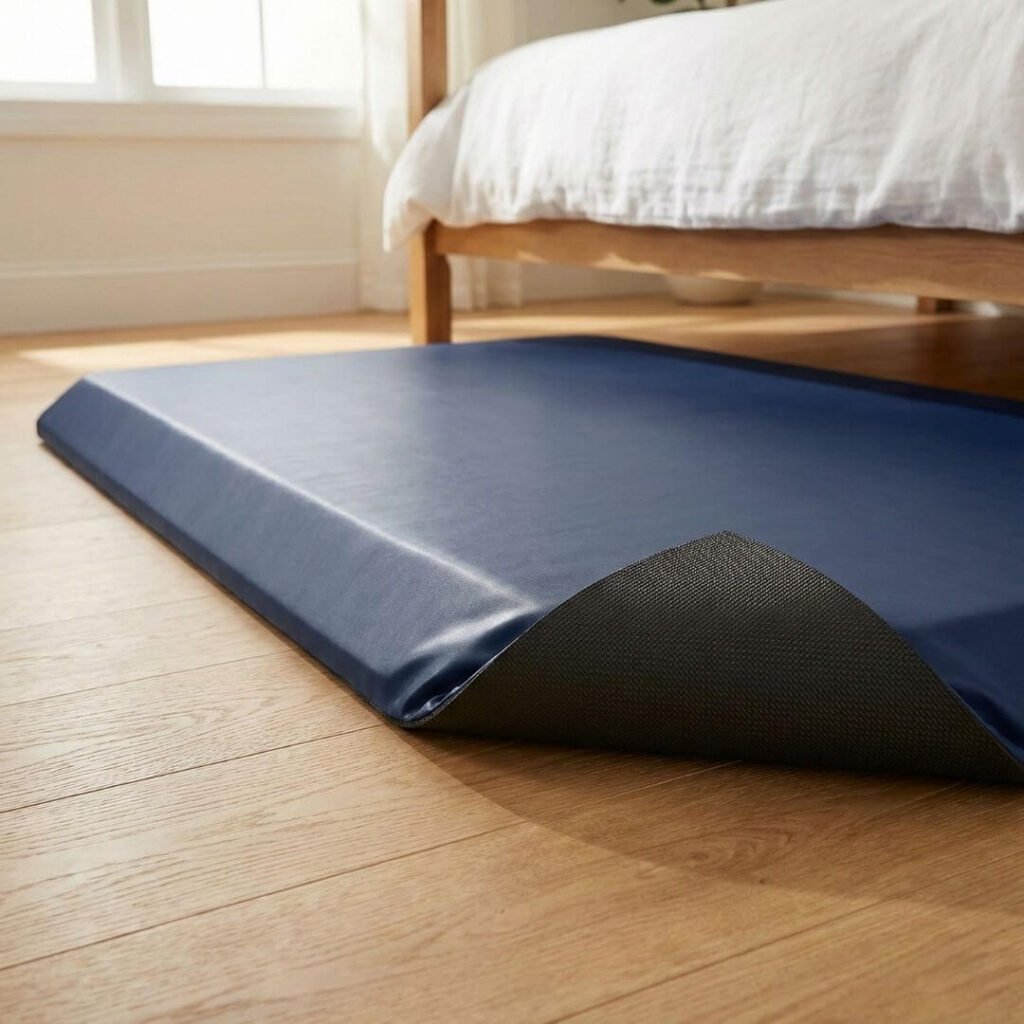
Make sure it lies flat. Curling corners and lifted edges are toe-catch hazards, particularly for seniors who shuffle or don’t lift their feet much. After placing the mat, press along the edges with your hand and step on and off it slowly to confirm it stays flat. If it won’t lay flat, check what’s underneath—rugs, cords, uneven flooring, or thick carpet edges can keep a mat from settling properly. A mat that doesn’t stay flat should not be used as a fall prevention tool, because it can create the very trip risk you’re trying to avoid.
Keep the path clear and well lit. The goal is a simple, predictable route from bed to the bathroom, with nothing to step over or around. Remove cords, loose rugs, and clutter near the bed so the mat doesn’t become part of an obstacle course, and make sure the mat doesn’t block the usual walking line. Adding a night light often reduces rushed steps and helps seniors place their feet more carefully. If you want practical checklists and handouts to guide safe routines, the CDC STEADI patient and caregiver resources can help.
Re-check stability over time. Even good mats can shift if the floor is slick or the mat is stepped on frequently, especially if the person pivots on the mat or drags a foot. Take a moment each week to confirm the mat hasn’t crept into a walkway and that the edges are still flat. Also check for wear, like corner curling or a backing that has lost grip, since those changes can happen gradually. Small adjustments now can prevent a bigger accident later.
Lifestyle Synergy: Making Fall Mats Work Better at Home
Fall mats work best when they support a wider home safety routine. Many families see better results when they pair a bedside mat with clear walking paths, improved lighting, and stable support points near the bed. The National Institute on Aging’s room-by-room fall prevention guide offers practical ideas for improving safety throughout the house.
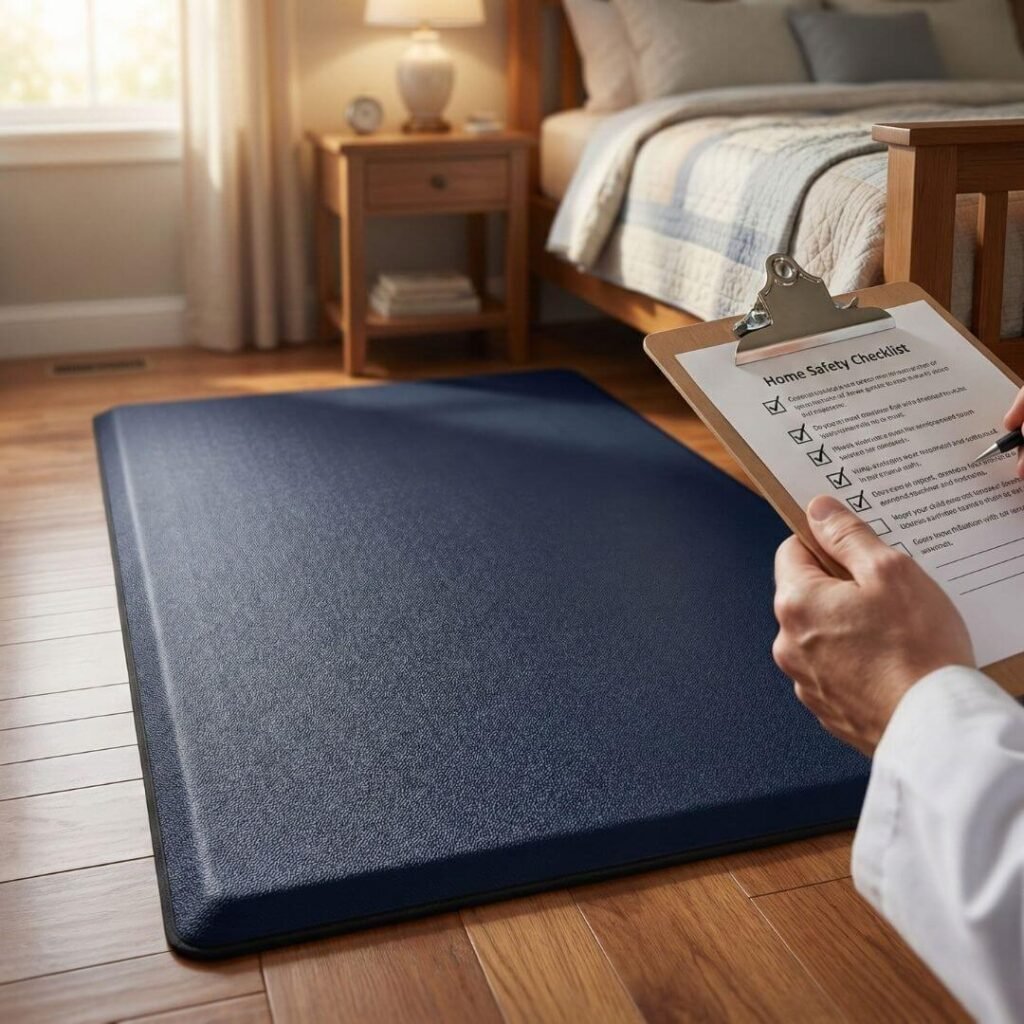
If you want a senior-focused checklist, our guide on Tips for Making Your Home Safer for Seniors can help you spot common hazards quickly. If traction issues extend beyond the bedroom, our roundup on Best Non-Slip Rugs and Mats for Seniors (2026 Guide) can help improve grip in hallways, kitchens, and entryways. When mobility support is part of daily life, pairing a mat with the right walking equipment can also help, and our guide to Best Walkers & Rollators for Seniors (2025 Guide) can help you compare options.
Physician’s Tips for Long-Term Use
I encourage families to focus on consistency and habits, not quick fixes. A safer nighttime routine often starts with slowing down: sit at the edge of the bed, take a breath, and let your balance “catch up” before standing. Many seniors feel lightheaded for a moment when they first sit up, and rushing through that moment is when missteps happen. Supportive indoor footwear matters, too, because slippery socks are a common hidden risk in bedrooms and hallways. For more practical guidance you can apply right away, the Mayo Clinic’s fall prevention tips are clear and easy to follow.
If bed exit is a frequent struggle, consider improving support around the bed, not just the floor. Some households explore rails for steadier bed exits, and our guide to Best Bed Rails for Seniors (2025 Guide) can help you understand options and safety considerations. The goal is simple: give the person a stable handhold so standing up is smoother and less rushed. In caregiving homes, safer bed movement can also reduce risk, and our step-by-step guide on How to Safely Reposition Seniors in Bed can support safer nighttime care routines.
If falls continue despite these changes, it may be time to consider broader home modifications. That can include better lighting, removing loose rugs, adding grab supports, or changing furniture placement so pathways are clearer. The National Council on Aging’s guide to home safety modifications is a helpful resource for families thinking through what to improve first. If you’re unsure where to start, focus on the places where the person walks most at night—bedroom, hallway, and bathroom—and make one small upgrade at a time.
Fall Mats Comparison for Seniors (Features & Stability)
Frequently Asked Questions
1. How to prevent seniors from falling?
Start with good lighting, clear pathways, and stable support points near the bed and bathroom. Then add targeted tools like fall mats where falls are most likely, especially beside the bed during nighttime trips. If balance is worsening, consider mobility support and talk with a clinician about vision, medications, and footwear. Our guide on Understanding Fall Risks in Seniors and How to Prevent Them can help you build a simple plan.
2. What is the best fall mat for elderly?
The best fall mat stays flat, doesn’t slide, and fits the bedside path without blocking movement. For many homes, a standard-size mat with beveled edges and non-slip backing is the safest starting point. If impact protection is the main concern, a thicker mat can help, but only if stepping on and off feels stable. The right choice depends on gait, balance, and the layout of the bedroom.
3. What are the best fall mats for elderly adults?
The best fall mats typically fall into a few categories: standard bedside mats, low-profile beveled mats, thicker impact mats, and easy-clean waterproof mats. Your best fit depends on how the person walks, whether they shuffle, and whether they use a walker near the bed. Floor type also matters, since slick floors often require stronger grip. Caregiving households may also prioritize wipeable surfaces and easy cleanup.
4. What are senior fall mats?
Senior fall mats are cushioned mats placed in high-risk areas, most commonly beside the bed. They aim to reduce injury risk by improving traction and cushioning impact if a fall occurs. They work best when the mat stays flat and does not slide on the floor. Think of them as one helpful layer within a larger fall prevention setup.
5. What is the best bedside fall mat?
A good bedside fall mat covers the first steps out of bed and stays in place over time. Look for beveled edges, non-slip backing, and a size that matches the bedside path without blocking drawers or doors. Low-profile mats often work well for shuffling gait and walker use. Thicker mats can add cushioning, but they should still feel stable during daily use.
6. What is the best fall protection for seniors?
The best fall protection is a system: lighting, clutter control, safe footwear, and the right mobility support. Add tools like fall mats in high-risk locations, and consider home modifications when falls continue. The National Council on Aging’s home safety modifications guide can help you plan bigger changes when needed. When risk is high, a clinician’s input is also important.
7. What is the best floor mat for elderly?
The best floor mat reduces slipping without creating a trip edge. That usually means strong grip, flat edges, and a thickness the person can step onto comfortably. If a mat slides on tile or hardwood, it can become a hazard and should be repositioned or replaced. The “best” mat is always the one that stays put in your home environment.
8. Where should you place fall mats for elderly adults at home?
The most common placement is beside the bed, exactly where feet land first when standing. They can also be helpful near a bedside commode setup or near a chair used for standing, as long as they don’t block walking paths. Avoid placing mats where they overlap rugs or create uneven transitions. For a broader plan, our guide on Tips for Making Your Home Safer for Seniors can help you identify other risk zones.
Final Thoughts on Fall Mats
The best fall mats for elderly adults are the ones that fit your bedside path, stay flat, and stay put. For many families, a low-profile beveled-edge mat is a safe place to start, especially when shuffling gait or walker use is part of daily life. If impact protection is the biggest concern, thicker mats can help, provided stepping on and off feels stable and safe. Pair a fall mat with good lighting, clear pathways, and the right support equipment for the strongest long-term results.
Medical Disclaimer: This guide is for general educational purposes only and is not intended to serve as personalized medical advice, diagnosis, or treatment. Always consult a licensed healthcare professional for recommendations tailored to your specific medical condition, mobility needs, or safety concerns.
Last update on 2026-09-12 / Affiliate links / Images from Amazon Product Advertising API
