

Introduction
Seeing a loved one fall is a frightening experience. One moment, everything is normal, and the next, you are facing a medical emergency that can shift the entire trajectory of a senior’s life. However, the moments and days following the accident are where the most critical work begins. Elderly recovery after a fall is not just about healing bruises or broken bones; it is a complex process that involves physical rehabilitation, emotional support, and rigorous prevention strategies to ensure it never happens again.
For many families, the initial hospital visit is just the beginning. The real challenge often arises when the senior returns home. You may find yourself asking difficult questions: How long will this take? What if they fall again? Is it safe for them to live alone? These fears are valid. Medical data shows that a single fall is the strongest predictor of future falls, often creating a cycle of decline if not managed correctly. Navigating elderly recovery after a fall requires a structured approach to break this cycle.
This guide is designed to be your roadmap. Written with physician-informed insights, we will move beyond basic first-aid advice to explore the deeper mechanics of healing. We will break down the timeline, the hidden dangers to watch for, and the practical steps you must take to create a safe environment. Whether you are caring for a parent with a hip fracture or a spouse with a minor injury, understanding the science of elderly recovery after a fall is the key to restoring their confidence and independence.
Why the Bathroom is the Danger Zone
While falls can happen anywhere—the living room, the garden, or the kitchen—the bathroom remains the single most dangerous room in the home for seniors. Understanding why this specific area is so hazardous is critical to successful elderly recovery after a fall. If a senior has fallen once, the bathroom is statistically the most likely place for a repeat incident.
From a physiological standpoint, the bathroom demands a series of complex movements that a recovering senior may no longer be able to perform safely. Consider the act of using the toilet. It involves walking, turning 180 degrees, undressing (which shifts the center of gravity), and performing a controlled squat. For someone in the midst of elderly recovery after a fall, whose muscles may be stiff and confidence shaken, this routine sequence becomes a high-wire act.
Environmentally, the bathroom is a “hard” room. Unlike a bedroom with soft mattresses and carpets, the bathroom is composed of porcelain, ceramic, and metal. There is no soft landing. Furthermore, the combination of water and smooth surfaces creates a friction deficit. Even a few drops of water from handwashing can turn a tile floor into a slip hazard.
Finally, there is the factor of urgency. Incontinence or the sudden need to use the restroom, specifically at night (nocturia), often causes seniors to rush. Rushing bypasses the careful, conscious movement required during rehabilitation. When you combine post-fall weakness with the urgency to use the toilet in a dark, slippery room, the risk of a secondary injury skyrockets. For a comprehensive review of these hazards, the CDC provides a helpful Check for Safety: A Home Fall Prevention Checklist.
The 3 Pillars of Safety (Stability, Visibility, Accessibility)
When a senior is in the recovery phase, their environment must compensate for their temporary lack of ability. Physicians and occupational therapists focus on three core pillars to secure the home and support elderly recovery after a fall: Stability, Visibility, and Accessibility.
1. Stability
Stability refers to the external support the environment provides. Before the fall, your loved one might have relied on their own core strength and balance. During elderly recovery after a fall, that internal stability is compromised. They may feel dizzy, weak, or favor one leg.
The home must offer “borrowed stability.” This means replacing reliance on furniture with reliance on fixed, weight-bearing structures. A towel rack is not a stability device; if a senior grabs it during a dizzy spell, it will rip from the wall. True stability means installing grab bars anchored into studs and ensuring that every transition point—from sitting to standing, from inside to outside—has a solid handhold.
2. Visibility
Vision is a key component of balance. Our brains use visual cues to tell us where we are in space. As we age, our eyes require more light and struggle with contrast. During elderly recovery after a fall, this need for visual clarity becomes even more urgent. Pain medication can cause blurred vision, and the stress of the injury can reduce cognitive processing speed.
A safe recovery environment uses light to define the space. It isn’t just about brightness; it’s about contrast. Can the senior clearly see where the white toilet ends and the white floor begins? Can they see the edge of the step? High-contrast markers and shadow-free lighting reduce the mental load of moving, allowing the senior to focus entirely on their physical mechanics.
3. Accessibility
Accessibility is about energy conservation and barrier removal. Healing takes immense energy. The body is using calories to repair tissue and fight inflammation. We want the senior to spend their limited energy on elderly recovery after a fall, not on fighting their environment.
If a senior has to climb stairs to reach their bedroom or step over a high tub wall to bathe, they are expending valuable energy reserves and exposing themselves to risk. Accessibility modifications—like moving a bed to the ground floor or installing a ramp—aim to lower the physical “cost” of daily living. The goal is to make basic needs (eating, sleeping, hygiene) as effortless as possible so that rehabilitation exercises get the best effort.
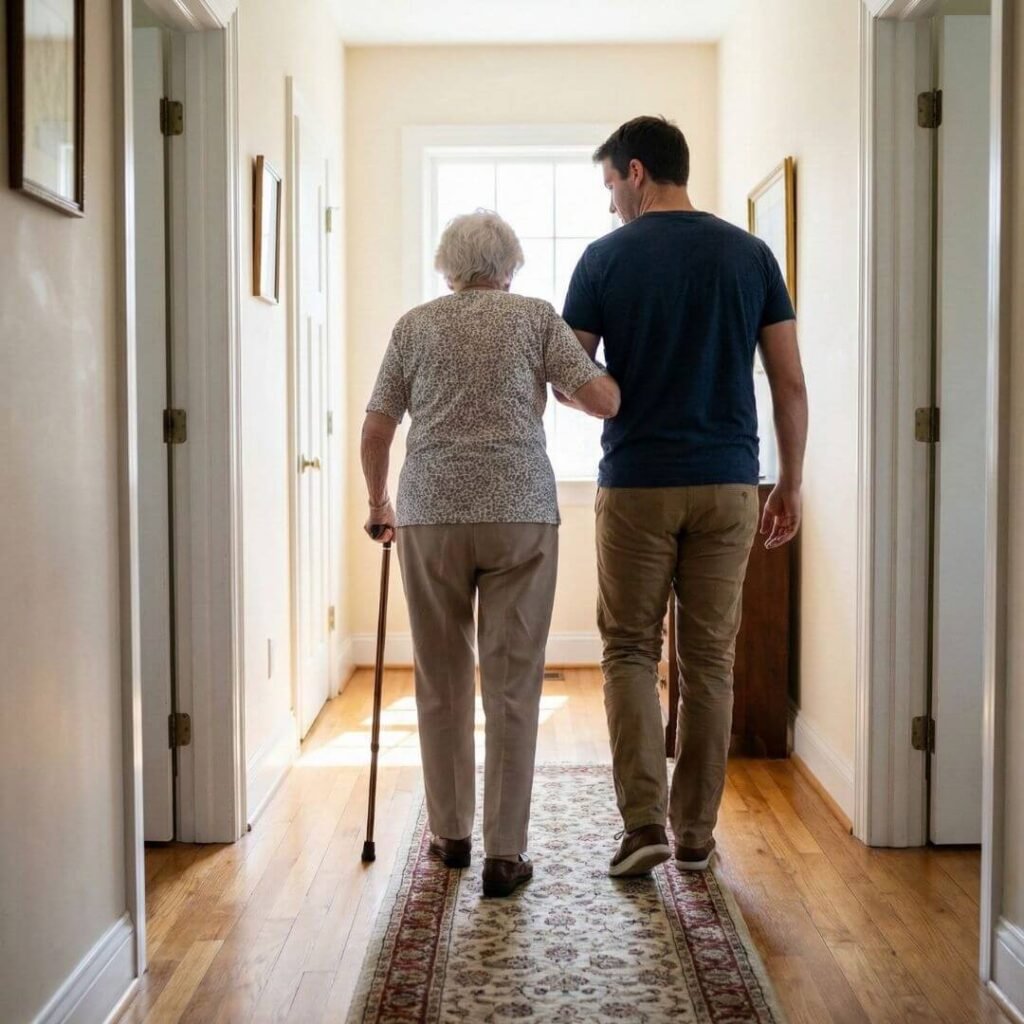
When a fall results in a hospital visit, getting the house ready before your loved one returns is just as important as the recovery routine itself. See our full guide on home preparation after a senior falls for the specific safety changes that help prevent a second injury.
Common Mistakes Seniors Make
In the weeks following a fall, the desire for independence often clashes with the reality of physical limitations. Through clinical observation, we see seniors and caregivers repeat the same mistakes that unintentionally prolong elderly recovery after a fall or lead to re-injury.
The most pervasive mistake is “furniture surfing.” This occurs when a senior navigates their home by holding onto the backs of sofas, countertops, and doorframes. While it may seem resourceful, it is incredibly dangerous. Furniture can slide, tip, or move unexpectedly. A recovering senior needs consistent, unmoving support. Relying on a dining chair for balance is a gamble that often leads to a second fall.
Another critical error is ignoring “silent” symptoms. Families often focus entirely on the visible injury—the cast, the bruise, or the stitches. However, elderly recovery after a fall is often complicated by invisible factors like fear and dehydration. A senior may be too afraid to walk to the kitchen to get water, leading to dehydration, which causes dizziness and… another fall. Or, they may be silently suffering from “post-fall anxiety syndrome,” causing them to limit their movement so severely that their muscles atrophy, paradoxically increasing their risk of falling again.
Lastly, we see the mistake of rushing the timeline. Recovery in the elderly is not linear. There will be good days and bad days. Pushing a senior to “get back to normal” too quickly—encouraging them to walk without a walker before they are ready, or to navigate stairs unassisted—is a recipe for disaster. Effective elderly recovery after a fall must be dictated by the senior’s physical response, not by a calendar or family expectations.

Non-slip Solutions (General Advice)
The floor is the foundation of recovery. If the ground feels unsafe, a recovering senior will tense up, alter their gait, and look down at their feet—a posture that actually increases the likelihood of toppling over. Creating a trustworthy surface is step one in elderly recovery after a fall.
The Trap of Throw Rugs
In the world of fall prevention, throw rugs are public enemy number one. During elderly recovery after a fall, a senior is likely shuffling their feet rather than picking them up high. The edge of a throw rug, even a thin one, is a tripping hazard.
- The Fix: Remove all throw rugs immediately. This includes the runner in the hallway, the mat in front of the kitchen sink, and the decorative rug in the entryway. If the senior insists on keeping them for warmth or aesthetics, they must be taped down completely with heavy-duty double-sided carpet tape, though removal is always safer.
Creating High-Friction Zones
Slippery floors, such as hardwood or polished tile, are terrifying for someone with balance issues. You don’t need to re-floor the entire house, but you should treat the “high-traffic” paths to support elderly recovery after a fall.
- Non-Slip Socks: While not a floor modification, equipping the senior with double-sided non-slip socks (treads on top and bottom) ensures grip even if the sock twists.
- Anti-Slip Sprays: For tile or stone floors, consider clear anti-slip sprays that increase friction without changing the look of the floor.
- Mats Done Right: If a mat is necessary (e.g., in the bathroom), use high-quality non-slip bath mats that feature a solid rubber backing and a low profile. These mats stay put and don’t curl at the edges.
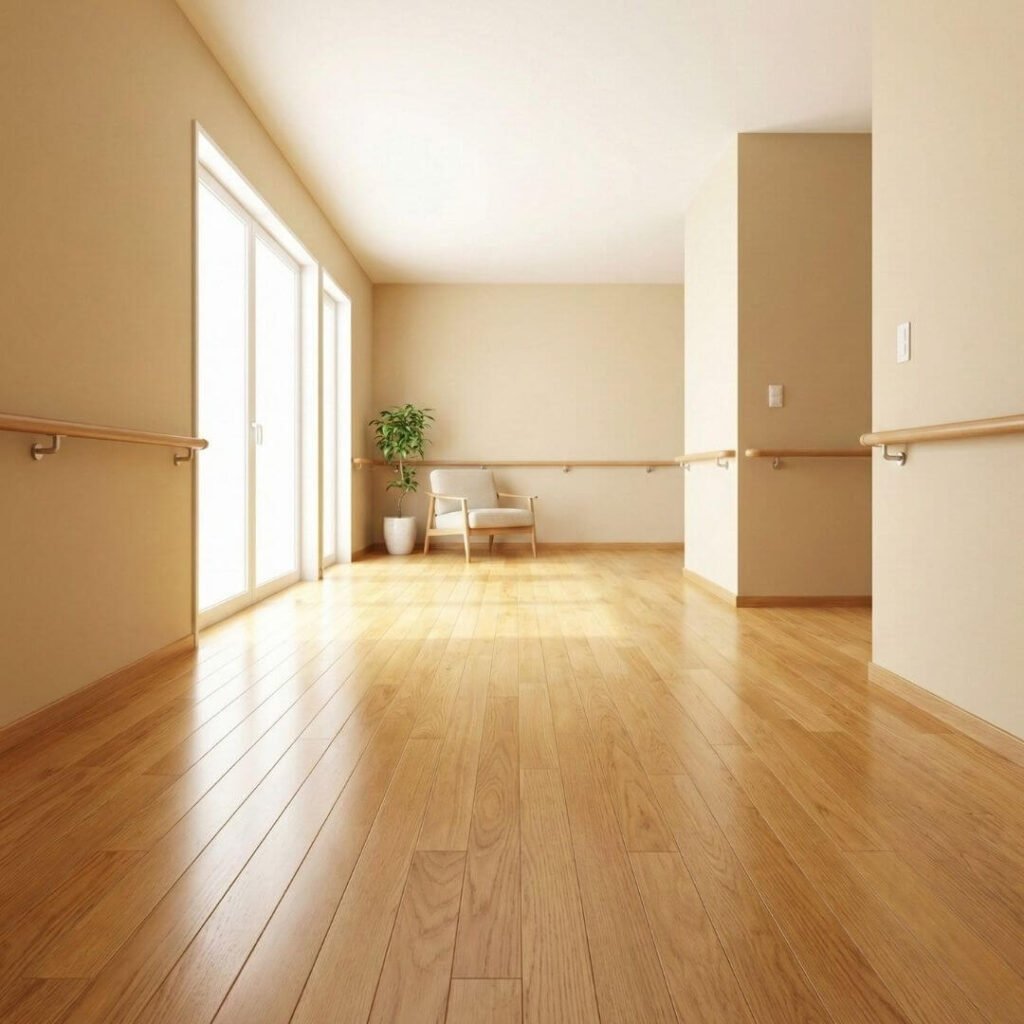
Equipment Types (General Advice)
Hygiene activities are the most physically demanding tasks a recovering senior will face. This is where the right equipment transitions from being a “convenience” to a medical necessity for elderly recovery after a fall.
The Problem with Standard Toilets
Most residential toilets are 15 inches high. For a senior recovering from a fall, sitting down this low requires deep knee flexion and significant control. Standing up requires explosive leg power that they may currently lack.
- Raised Toilet Seats: This is the quickest fix. A raised seat adds 3 to 5 inches of height, reducing the distance the senior has to travel. This minimizes strain on the hips and knees. Look for models that lock securely to the bowl to prevent shifting. Understanding the benefits of a raised toilet seat can be the difference between independence and needing 24/7 assistance during elderly recovery after a fall.
Safe Bathing Strategies
Standing in a shower on a slippery surface while closing eyes to rinse hair is a complex balance challenge. During recovery, this risk is unnecessary.
- Shower Chairs: The safest way to bathe during recovery is seated. A medical-grade shower chair allows the senior to rest. It removes the risk of dizziness causing a fall. When you choose the right shower chair, ensure it has a backrest for support and rubber tips on the legs for stability.
- Handheld Showerheads: To make the seated shower effective, pair the chair with a handheld showerhead. This brings the water to the senior, preventing them from having to lean, twist, or stand to get under the spray.
Visibility Strategies
Lighting is a powerful tool for preventing confusion and missteps. During elderly recovery after a fall, a senior’s cognitive load is high; they are concentrating hard on simply moving. Good lighting removes the guesswork.
Pathway Lighting
Most falls happen when a senior wakes up at night to use the restroom. Navigating a dark bedroom or hallway is dangerous.
- Motion Sensors: Install motion-sensor night lights along the path from the bed to the bathroom. These lights turn on automatically, illuminating potential obstacles without the senior having to fumble for a switch.
- Amber Light: Choose night lights with an amber or reddish glow. Blue-spectrum light (often found in bright white LEDs) can disrupt sleep cycles and cause “dazzle”—a temporary blindness when going from dark to bright. Amber light is softer and easier for aging eyes to adjust to, which supports better sleep—a crucial component of elderly recovery after a fall.
Task Lighting
General room lighting is often insufficient for specific tasks.
- Overhead vs. Directed: A single ceiling fixture casts shadows. In the bathroom, shadows in the shower or around the toilet can hide water spills. Add bright, plug-in lights or battery-operated LED strips under cabinets (toe-kick lighting) to clearly define the edges of the room and the floor.
Dementia or Severe Mobility Issues
When a senior has cognitive impairment or severe mobility restrictions, the standard advice for elderly recovery after a fall must be adapted. The approach shifts from “rehabilitation” to “management and supervision.”
Dementia and Fall Recovery
Seniors with dementia may not remember that they have fallen, or they may lack the insight to understand their physical limitations.
- Visual Cues: Use high-contrast tape to mark thresholds or steps. A black strip of tape on the edge of a light-colored step can prevent a misstep.
- Simplification: Remove clutter ruthlessly. A person with dementia can easily mistake an object on the floor for something else or try to step over it and lose balance.
- Alarms: Consider bed and chair alarms. These pressure-sensitive pads alert caregivers the moment the senior tries to stand up, allowing you to intervene before they start walking unassisted.
Severe Mobility Issues
For seniors who are largely immobile or confined to a bed/chair during recovery:
- Repositioning: To prevent bedsores (pressure ulcers), the senior must be repositioned every two hours. This is critical for skin integrity.
- Transfer Equipment: Never try to lift a “dead weight” senior on your own; you risk injuring both yourself and them. Use gait belts or mechanical lifts to assist with transfers from bed to chair.
Passive Exercise: Even if they cannot walk, “passive range of motion” exercises (where you gently move their limbs for them) help prevent joint stiffness and blood clots. For more detailed strategies, the National Institute on Aging provides excellent resources on Fall Prevention in the Bathroom
Frequently Asked Questions
1. Why do elderly people die after a fall?
It is rarely the fall itself that is fatal, but rather the cascade of complications that follows. A hip fracture, for example, can immobilize a senior for weeks. This immobility can lead to pneumonia, blood clots (deep vein thrombosis), and muscle atrophy. Additionally, the psychological trauma can lead to social isolation and depression, which are linked to overall physical decline. Immediate, active management of elderly recovery after a fall is the best way to break this chain of events.
2. How long does it take an elderly person to recover from a fall?
There is no single answer, as it depends on the severity of the injury and the senior’s pre-fall health. A minor bruise might take 2-3 weeks to heal. A hip fracture typically requires 3-6 months for significant recovery, and full mobility may never be completely restored. However, the first 72 hours are critical for monitoring, and the first 30 days are vital for establishing a rehabilitation routine. Patience is key; rushing elderly recovery after a fall often leads to setbacks.
3. What are the first things to do when an elderly person falls?
First, stay calm. Do not rush to pick them up immediately, as this could worsen a spinal or neck injury. Ask them to stay still and assess for pain. Check for alertness, breathing, and visible injuries like bleeding or deformity. If they are in severe pain, unconscious, or bleeding heavily, call emergency services immediately. If they are unhurt and want to get up, use a sturdy chair to help them rise slowly, monitoring for dizziness. Keep them seated and hydrated, and consult a doctor even if no injury is apparent, as some symptoms (like brain bleeds) can be delayed.
4. Do elderly people ever fully recover from falls?
Yes, many do, but “recovery” might look different than their pre-fall state. With prompt physical therapy, nutritional support, and home modifications, many seniors regain their independence and mobility. However, some may require permanent use of assistive devices like canes or walkers. The goal of elderly recovery after a fall is to return to the highest possible level of function and quality of life, even if that means adapting to a “new normal.”
5. What are the signs of decline after an elderly person falls?
Watch for “soft signs” that indicate the senior is not progressing well in their elderly recovery after a fall. These include increased confusion or delirium (which could signal infection or head trauma), a refusal to eat or drink, sudden incontinence, or a distinct lack of motivation to move (fear of falling). Physically, look for signs of infection at wound sites, increased swelling, or shortness of breath. Any rapid change in their mental or physical baseline warrants immediate medical attention.
Final Thoughts
Caring for a senior after a fall is a marathon, not a sprint. It is a journey filled with small victories and frustrating plateaus. There will be days when progress feels impossible, but remember that your support is the most potent medicine your loved one has.
By focusing on the practical steps—securing the environment, providing the right equipment, and maintaining a calm, encouraging presence—you are doing more than just managing injuries. You are rebuilding their confidence. You are giving them the safety net they need to dare to move again.
Take it one day at a time. Celebrate the small wins, like walking to the bathroom unassisted or a good night’s sleep. With patience, knowledge, and love, you can guide your loved one through elderly recovery after a fall and back to a life of dignity and connection. You are not alone in this; lean on professionals, use the resources available, and trust your instincts as a caregiver. You are doing a profound and important thing.
Medical Disclaimer: The information provided on this website is for educational purposes only and should not replace professional medical advice. Always consult your physician or qualified healthcare provider regarding any medical condition or treatment decisions.
