
Introduction
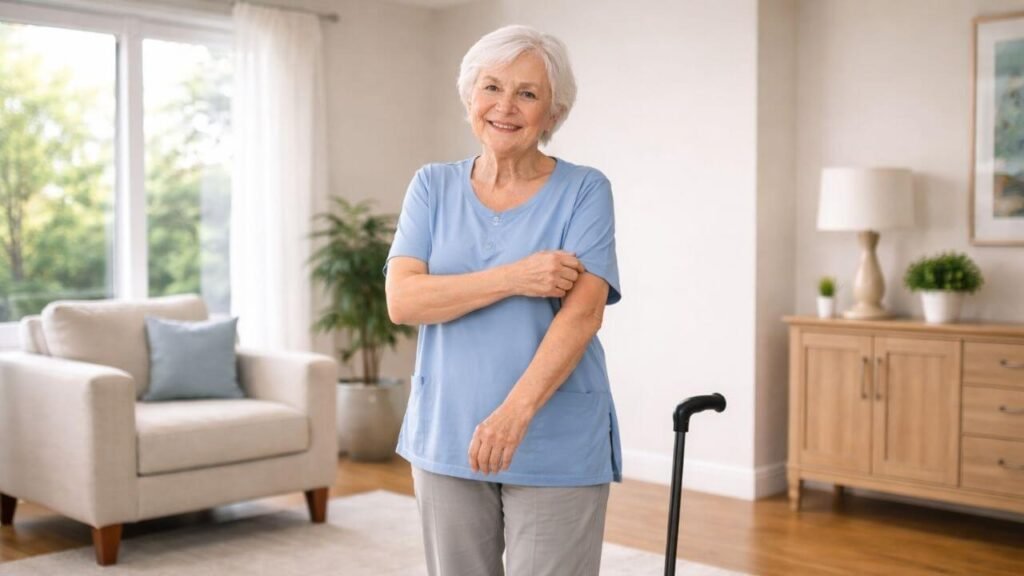
Adaptive clothing for seniors can protect comfort and dignity, but it also supports safety. Getting dressed is a physical task: you shift weight, lift legs, reach overhead, twist your torso, and manage small fasteners. As people age, normal changes—less muscle strength, slower reflexes, stiffer joints, and reduced vision—make those movements harder to control. When dressing becomes harder, the body compensates with awkward positions that increase instability.
Clothing and shoes do not “cause” most falls on their own. However, they can add risk in small ways that matter over time. A pant hem that brushes the floor can catch a toe. A loose slipper can slide on a smooth surface. A tight sleeve can limit reach for a handrail. A button that takes two minutes to fasten can push a person to rush. These are routine moments, and routine moments are where many injuries happen.
This guide explains how adaptive garments and supportive footwear help older adults stay comfortable, safe, and independent. It will also show how to choose features that reduce strain, how to set up safer dressing routines, and how to adjust choices for arthritis, dementia, or severe mobility limits. For a deeper look at overall fall causes and prevention strategies, see fall risks in seniors.
The Role of Adaptive Clothing in Fall Prevention
Falls often happen when the body is briefly unstable. Dressing creates many of these brief instability windows. One common example is standing on one leg to pull pants over the hips. Another is leaning forward to tie laces while the head is down and the balance system is challenged. A third is stepping into a garment that is bunched on the floor, where the feet can catch.
Adaptive garments reduce these windows by lowering the physical “cost” of dressing. If pants can be pulled on while seated and adjusted with a wide, forgiving waistband, there is less need to balance on one foot. If a top closes in the front with easy fasteners, there is less twisting and less reaching behind the back. If shoes can be secured without deep bending, there is less forward sway.
Fall prevention is layered. Strength and balance exercises, medication review, vision checks, and safer home layouts all matter. Clothing and shoes fit into this plan because they influence how the body moves during everyday tasks. The CDC guidelines on fall prevention highlight that many falls occur during normal activities at home. When the daily routine becomes safer, overall risk drops.
Adaptive clothing also supports prevention indirectly by reducing fatigue. Dressing that takes a long time and requires difficult movements can tire a person before the day begins. Fatigue reduces reaction time and balance, which can increase the chance of stumbles later in the day. Clothing that makes dressing quicker and calmer protects energy.
Core Principles of Safe Design: Stability, Accessibility, and Comfort
When evaluating clothing and shoes, use three principles: stability, accessibility, and comfort. These principles are simple, but they are clinically useful because they connect design choices to injury prevention.
Stability means the garment or shoe supports steady movement. Clothing should not drag, swing unpredictably, or restrict natural stride. Pants should be the correct length and not bunch at the ankle. Skirts should allow safe steps without tangling. Jackets should not be so heavy that they shift posture. Shoes should have a firm heel counter, a stable base, and a sole that grips the floor. Stability also means the shoe stays on the foot. Backless footwear is often unstable because it can slip off during a step.
Accessibility means the clothing is easy to put on and remove. Many older adults have arthritis, reduced grip, shoulder pain, or limited range of motion. Small buttons, tight zippers, and complicated laces can turn dressing into a long, unsteady process. Accessible features include wide neck openings, front closures, pull-on waists, side openings, and fasteners that can be handled with limited finger strength. Accessibility matters for toileting as well: if clothing is hard to remove, urgency can lead to rushing.
Comfort supports safety because discomfort changes movement. If clothing pinches, scratches, overheats, or restricts motion, the person will adjust and fidget, sometimes while walking. Some seniors also avoid moving when clothing is uncomfortable, which can reduce activity and lead to weakness over time. Comfort includes fabric breathability, soft seams, and fit that allows full joint motion.
A helpful way to think about these principles is this: stable clothing supports safe steps; accessible clothing supports safe dressing; comfortable clothing supports calm movement throughout the day.
How Adaptive Shoes Improve Balance and Indoor Mobility
Shoes are often the most important clothing item for safety because they directly affect the base of support. Even indoors, traction and fit matter. Many seniors wear slippers because they are easy to slide on. The problem is that many slippers are backless or have smooth soles. They may feel “safe” because they are familiar, but familiarity does not equal stability.
A safer indoor shoe usually has three traits: a secure heel, a grippy sole, and a stable shape. A secure heel prevents the foot from sliding within the shoe. Sliding inside the shoe changes the way the ankle works and can cause quick balance corrections that are harder for older adults. A grippy sole increases friction, especially on smooth floors. A stable shape means the shoe is not too soft or floppy; it should support the foot rather than collapse.
Fit is critical. Shoes that are too large increase internal sliding. Shoes that are too tight cause pain, and pain changes gait. Some people walk differently to “avoid” pain, which can reduce stability. If swelling changes throughout the day, adjustable closures help maintain fit without cutting off circulation.
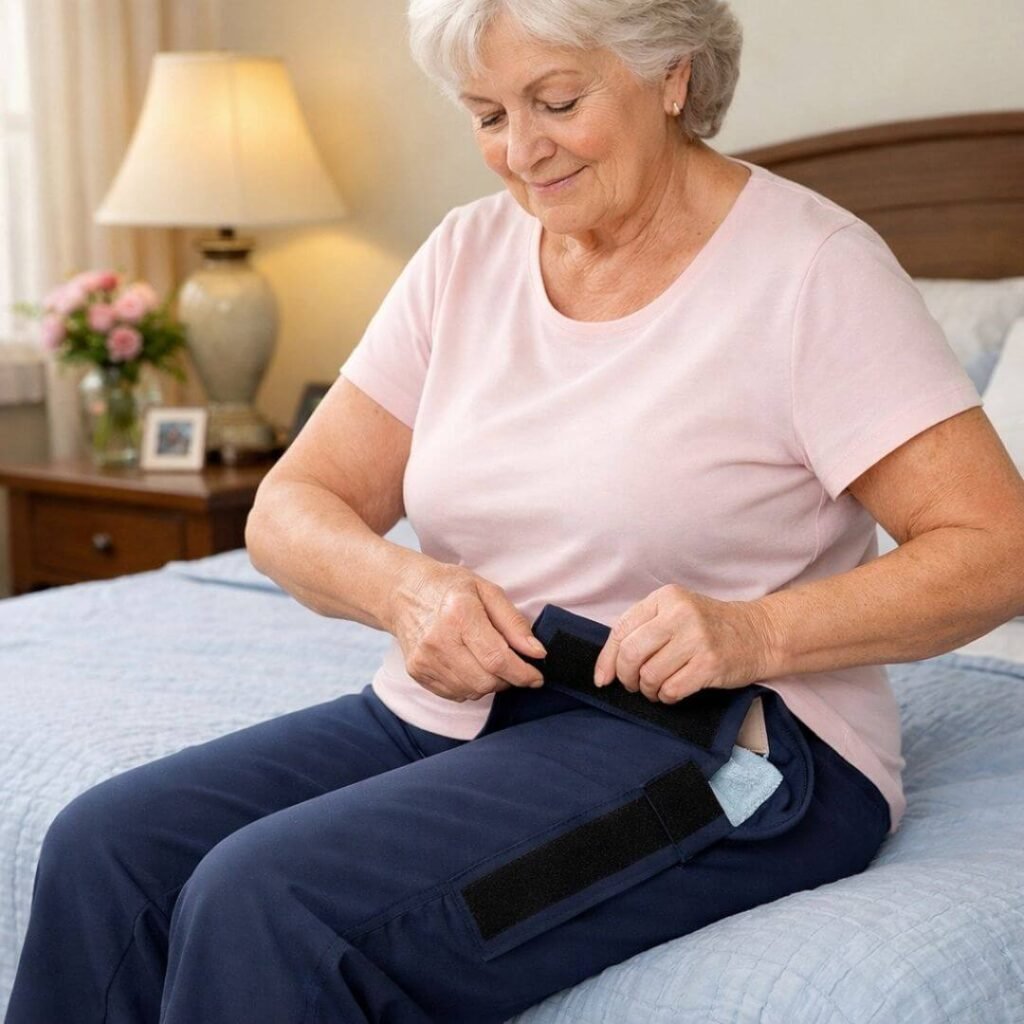
Adaptive footwear designs can also reduce bending. For example, shoes that open wide at the top can be put on with less twisting. Closures such as Velcro straps can be easier than laces for people with arthritis or tremor. The goal is not to choose “special” shoes; the goal is to choose shoes that support safe walking.
Supportive footwear also pairs well with daily movement routines meant to improve senior mobility. When shoes feel stable, seniors are more likely to walk around the house, practice exercises, and stay engaged with daily tasks.
Everyday Dressing Risks Seniors Often Overlook
Many risks are hidden because they feel normal. Seniors may have worn the same style of clothing for decades. As the body changes, those same items can become unsafe without anyone noticing.
One overlooked risk is garment length. Pants that are slightly too long can catch the front of the shoe. Even a small catch can cause a stumble. Robes that drag can tangle around the ankles. Sleeves that extend past the wrist can interfere with grip, especially when holding a cane, walker, or handrail.
One common habit is dressing while standing to “save time.” For older adults, this often means balancing on one leg while pulling on pants or stepping into socks — a small instability that can lead to a stumble. Simple assistive devices solve much of this: a set of sock aids and dressing tools for seniors lets a person pull on socks and manage fasteners while seated, removeing the single-leg balancing that makes standing-up dressing risky.
Fasteners are a third risk. When a closure is difficult, people tend to lean, brace, and twist in ways that challenge balance. They may also become frustrated and rush, which increases missteps. The same pattern appears with footwear: laces that take too long can lead to bending for extended periods. That posture reduces the ability to correct balance quickly.
Finally, fatigue matters. Dressing can be tiring, especially for people with heart or lung conditions, pain, or weakness. When tired, seniors may skip safe steps, such as sitting down to dress, or they may walk while still adjusting clothing. Safer clothing reduces time and effort, which supports steadier movement.
Choosing Safe and Supportive Clothing
Choosing clothing becomes easier when you focus on common daily tasks: dressing, toileting, walking, sitting, and sleeping. The safest clothing supports these tasks without forcing risky movements.
Start with waistbands. For many seniors, a pull-on waistband reduces strain and speeds toileting. Look for a waistband that is wide, soft, and does not roll. If the waistband is too tight, it can restrict breathing or cause discomfort that changes posture. If it is too loose, pants may slide and create a tripping hazard.
Next consider closures. Front closures are usually safer than back closures because they reduce shoulder strain and twisting. Large fasteners are safer than small ones because they require less pinch strength. For people with arthritis, magnetic closures or Velcro may be easier to manage than buttons. For people with tremor, a closure that “catches” easily reduces frustration and time spent standing.
Fabric and fit matter too. Stretch fabrics allow natural stride and easier sitting-to-standing movement. Fabrics should be breathable to reduce overheating. Seams should be soft to protect fragile skin. Clothing should not be overly loose around the feet, where it can catch, but it should not be restrictive at the hips and knees, where it can limit movement.
Think about sleeves and hems in relation to mobility aids. If a person uses a walker, loose sleeves can snag on handles. If a person uses a wheelchair, long pant legs can bunch and create pressure points. A good fit reduces these problems.
A final practical point is the “favourite outfit test.” If there is a favourite pair of pants or a robe that the person loves, do not remove it automatically. Instead, improve safety by tailoring hems, replacing ties, or changing how the garment is worn. This approach preserves dignity and increases acceptance.
Clothing choices also work best when paired with home safety routines. If you are updating other safety factors, you can connect clothing to the same plan, such as making your home safer for seniors.
Selecting Safe and Stable Footwear
Footwear should be chosen with the same principles: stability, accessibility, and comfort. A stable shoe supports the foot and grips the floor. An accessible shoe can be put on without unsafe bending. A comfortable shoe can be worn without pain.
Start with the sole. A textured rubber sole is generally safer indoors than a smooth sole. The goal is friction. This matters on tile, laminate, and hardwood. Slippers can be acceptable if they have a back or secure strap and a grippy sole, but many common slippers do not meet these standards.
Next look at the heel and upper. A firm heel counter supports alignment. A shoe that collapses at the heel allows the foot to move, which reduces balance control. The upper should hold the foot without pinching. If the shoe is too loose, the foot slides. If too tight, pain changes gait.
Consider closures. Velcro straps and elastic laces can be easier than traditional laces for people with limited grip. A wide-opening shoe can be easier to put on for people with swelling or limited ankle motion. If a shoe is hard to put on, the person may avoid wearing it and choose a less safe alternative.
Also pay attention to “indoor-only” versus “outdoor-only.” Some seniors switch into slippers inside, then back into shoes outside. This frequent change can create extra bending and balance risk. In many cases, a stable, supportive indoor shoe reduces both risk and effort.
Finally, check shoes regularly. Soles wear down. Insoles compress. Fit can change over months as the foot shape changes. A quick monthly inspection can prevent problems.
Supporting Independence Through Thoughtful Clothing Choices
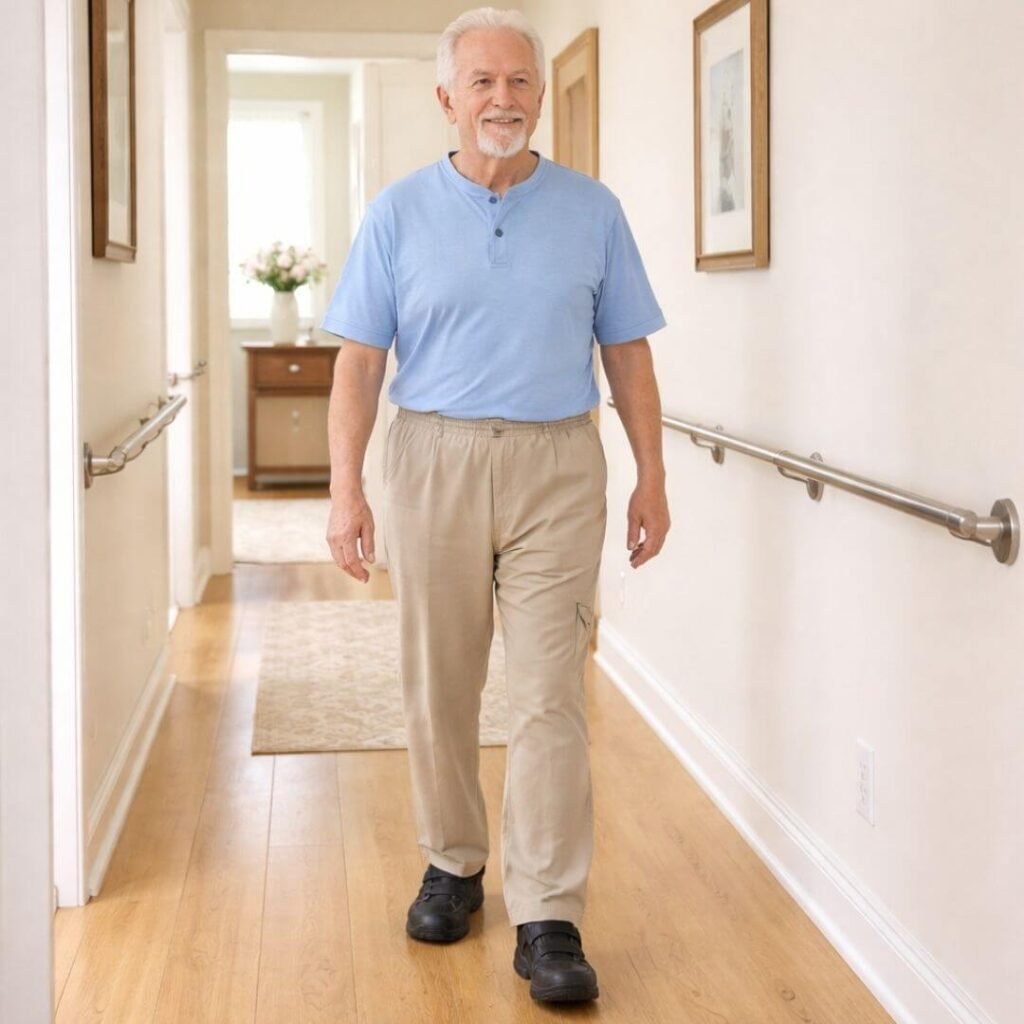
Independence is not only about walking without assistance. It includes dressing, toileting, and daily self-care. When clothing and shoes make these tasks easier, older adults maintain control over their routine. That control supports mental well-being and reduces caregiver burden.
Independence begins with set-up. Clothing should be stored at a safe height, usually between hip and chest level, so the person does not need to reach overhead or bend deeply. Shoes should be kept near a stable chair so the person can sit while putting them on. A chair with armrests is ideal because it provides support when standing up.
Routine matters. Encourage a “sit to dress” routine: sit to put on pants, socks, and shoes, then stand only for final adjustments. This routine reduces the number of single-leg balance moments. It also gives the person a chance to pause if they feel lightheaded when standing.
Time matters too. Rushing increases risk. Clothing that is easy to manage reduces time pressure, especially in the morning or before leaving the house. When clothing supports a calm routine, seniors are less likely to skip safe steps.
Independence is also supported by comfort and identity. Seniors are more likely to wear clothing consistently if it feels like “their” style. Whenever possible, adapt familiar styles with safer features: tailor hems, choose front-closure versions of similar tops, or select shoes that look normal but provide better traction.
This approach supports daily activity. When dressing is easier, seniors conserve energy for walking, household tasks, and social activities that improve senior mobility over time.
Dementia or Severe Mobility Issues
Some health conditions change what “safe” looks like. The goal stays the same—comfort, safety, independence—but the best features may differ.
With arthritis, the main problems are pain, stiffness, and weak grip. Clothing should reduce pinch and twist demands. Larger fasteners, magnetic closures, and pull-on designs are often helpful. Shoes should have easy closures and wide openings. If hand pain is significant, a caregiver can assist with set-up while still supporting independence by letting the senior do the steps they can safely manage.
With dementia, difficulty often involves sequencing, judgment, and attention rather than strength alone. A consistent dressing routine, the same order of steps, and clothing that looks familiar can reduce stress. Shoes should be stable and easy to fasten, because loose shoes can become a trip hazard that the person may not recognize.
With limited mobility from stroke, Parkinson’s disease, or severe weakness, dressing may require assistive strategies. Side openings can help with one-sided weakness. Stretch fabrics can help with rigidity. In these cases, safety is often improved by dressing while seated with stable support and allowing more time. Caregivers should watch for moments when the person tries to stand or pivot unsafely.
In all cases, remember that clothing and footwear are one part of prevention. For broader medical guidance, the National Institute on Aging fall prevention recommendations emphasize multiple strategies, including strength, vision care, and hazard reduction. Clothing and shoes support these strategies by making daily movement safer and more predictable.

Frequently Asked Questions
1. What is adaptive clothing for seniors?
Adaptive clothing is designed to make dressing easier for older adults and for people with limited mobility. It often includes features such as stretch waistbands, front closures, magnetic fasteners, or side openings. The goal is to reduce bending, twisting, and fine motor strain so the person can dress more safely and with less help.
2. How does adaptive clothing improve safety for elderly adults?
By simplifying dressing and reducing awkward movements, these garments decrease instability. Supportive footwear also improves traction on smooth indoor surfaces.
3. What features should I look for in adaptive clothing?
Look for features that match the person’s main limitations. For weak grip or arthritis, choose large or magnetic closures and pull-on waists. For limited shoulder range, choose front closures and wider neck openings. For balance concerns, prioritize safe length at hems and garments that allow seated dressing. Comfort features such as breathable fabric and soft seams also support safer movement.
4. Are adaptive shoes better for fall prevention?
Shoes with textured soles and secure fit reduce one contributing factor to falls. They improve stability during walking but should be combined with strength training and environmental safety measures.
5. Where can I buy adaptive clothing for seniors?
Adaptive garments and supportive shoes are available from specialty retailers, some medical supply stores, and many mainstream brands that now offer accessible designs. When choosing items, focus less on the label and more on the stability, accessibility, and comfort features that match the senior’s needs.
Final Thoughts
Comfort, safety, and independence are connected. When dressing becomes hard, older adults often move less, rely more on others, and feel less in control. When clothing and shoes support safe movement, the opposite can happen: the person conserves energy, moves with more confidence, and maintains daily routines longer.
The most helpful approach is practical. Look at how the senior dresses today. Identify one or two moments where balance is challenged, such as standing to pull on pants or bending for shoes. Then choose clothing features that remove those moments. Combine those choices with stable footwear and a calm, seated dressing routine. Small changes, repeated daily, can protect health and dignity.
If you are also working on broader safety steps—like clearer walkways, better lighting, and strength routines—clothing and shoes can fit naturally into that plan. When the daily routine becomes safer, independence becomes more realistic and sustainable.
Medical Disclaimer: The information provided on this website is for educational purposes only and should not replace professional medical advice. Always consult your physician or qualified healthcare provider regarding any medical condition or treatment decisions.
