

Affiliate Disclaimer: This article contains affiliate links. As an Amazon Associate, Mobility With Ease may earn a small commission from qualifying purchases at no additional cost to you.
Introduction
For many seniors, the difference between staying inside and confidently rolling through the park comes down to one overlooked upgrade — the right wheelchair tires for outdoor use. Standard factory tires are designed for smooth hospital corridors and indoor floors, but they struggle the moment wheels hit gravel, grass, cracked sidewalks, or packed dirt trails. Swapping to purpose-built outdoor tires can dramatically improve traction, comfort, and safety without replacing the entire wheelchair.
In this guide, we review the best wheelchair tires for outdoor use in 2026, breaking down the top picks across categories so you can find the right match for your terrain, your chair, and your lifestyle. Whether you are navigating a neighborhood sidewalk with uneven pavement or exploring a nature trail with a caregiver, the right tires make outdoor mobility safer and more enjoyable for older adults.
Why Wheelchair Tires Matter for Seniors
Most manual wheelchairs ship with standard smooth-tread tires that perform well on flat, hard surfaces. But the moment a senior rolls onto a gravel driveway, a grassy yard, or a cracked public sidewalk, those factory tires lose grip, increase rolling resistance, and raise the risk of getting stuck or tipping. For older adults, this is not just an inconvenience — it is a genuine safety concern. According to the CDC’s Falls Prevention data, falls are the leading cause of injury among adults aged 65 and older, and unstable surfaces are a major contributing factor. Wheelchair tires that cannot grip outdoor terrain put seniors at higher risk of sudden jolts, slides, and loss of control.
Upgrading to wheelchair tires for outdoor use addresses these risks directly. All-terrain tread patterns grip loose surfaces like gravel and dirt. Pneumatic (air-filled) tires absorb shock from bumps and cracks, reducing jarring vibrations that can cause discomfort or even pain for seniors with arthritis, spinal conditions, or pressure-sensitive skin. Wider tire profiles distribute weight more evenly, preventing wheels from sinking into soft ground like grass or sand.
Beyond safety, the right outdoor tires also expand a senior’s world. Being able to roll comfortably through a park, down a nature trail, or across a neighbor’s lawn means more fresh air, more social connection, and more independence. For seniors who feel confined to indoor spaces because their wheelchair cannot handle the terrain outside their front door, a tire upgrade can be genuinely life-changing. If you are also considering upgrading the full chair itself, our guide to the best all-terrain wheelchairs for seniors covers complete chair options. And for a deeper look at the specific outdoor mobility challenges seniors face on curbs, gravel, and in bad weather, that guide offers practical solutions worth reading alongside this one.
Doctor’s Note: Choosing the Right Wheelchair Tires for Outdoor Use
I see patients every week who want to spend more time outdoors but feel limited by their wheelchair’s performance on anything other than smooth flooring. One of the first things I ask is what kind of tires they are using. In many cases, the answer is the same factory-standard tires that came with the chair — tires that were never designed for gravel paths, uneven pavement, or grassy yards.
I recommend that seniors and caregivers think about outdoor wheelchair tires the way you would think about shoes. You would not wear dress shoes on a hiking trail, and you should not expect indoor-rated tires to perform safely on rough outdoor surfaces. The right tire depends on where you plan to go. For paved but cracked sidewalks and light gravel, a puncture-resistant pneumatic tire with moderate tread — like the Schwalbe Marathon Plus — gives excellent shock absorption and durability. For heavier off-road terrain like dirt trails, parks with unpaved paths, or grassy yards, a knobby-tread pneumatic tire provides the grip needed to prevent slipping and getting stuck.
I also advise patients to consider their upper body strength and whether they self-propel or rely on a caregiver. Knobby tires with aggressive tread provide maximum grip but require slightly more effort to push on smooth surfaces. For seniors who self-propel and split time between indoor and outdoor use, a semi-smooth all-terrain tire offers a practical middle ground. If you are unsure where to start, I encourage you to review our guide on how to choose the right mobility aid for your needs — the same principles of matching equipment to your body and lifestyle apply directly to tire selection.

Best Wheelchair Tires for Outdoor Use (Top Picks)
Best Overall — Puncture-Resistant All-Terrain Tire
Schwalbe Marathon Plus Wheelchair Tire (24 x 1 3/8″)
The Schwalbe Marathon Plus is widely regarded as the gold standard for outdoor wheelchair tires that also perform indoors. Its SmartGuard puncture-protection layer shields against glass, thorns, and sharp gravel, while the Black’n’Roll compound prevents skid marks on indoor floors. The semi-smooth tread grips light gravel and uneven pavement while keeping rolling resistance low for self-propelling seniors. With an operating range of 85–145 PSI, you can adjust firmness based on the surface you are riding on.
Pros:
- SmartGuard puncture protection — virtually flat-proof
- Black’n’Roll compound leaves no marks on indoor floors
- Adjustable PSI range for customizable ride feel
- Available in 24″, 25″, and 26″ sizes
Cons:
- Higher price point than basic replacement tires
- Semi-smooth tread is not ideal for heavy off-road terrain
- Slightly heavier than standard tires

- The absolute reference for puncture-proof pneumatic tires on wheelchairs
- 2GRIP: Hand-friendly tires thanks to the smooth sidewall (patent-protected and standard on all Schwalbe wheelchair tires)
- Black ́n ́Roll: Leaves no black abrasion marks on indoor floors – extremely durable
Best Knobby Tire for Off-Road Terrain
Primo 24 x 1-3/8″ All Terrain Knobby Tread Pneumatic Tire
The Primo Knobby is a purpose-built off-road wheelchair tire for dirt trails, park paths, grassy yards, and loose gravel. The aggressive V-Trak C763 tread pattern bites into loose surfaces to prevent slipping, while the pneumatic air-filled design absorbs impacts from rocks, roots, and uneven ground. The 24 x 1-3/8″ size fits most standard manual wheelchairs, making it a straightforward swap for anyone looking to upgrade their outdoor capability.
Pros:
- Aggressive knobby tread grips gravel, dirt, and grass effectively
- Pneumatic air-filled design absorbs shocks and bumps
- Standard 24″ size fits most manual wheelchairs
Cons:
- Knobby tread increases rolling resistance on smooth indoor floors
- Pneumatic design means punctures are possible
- Not ideal as a full-time indoor tire

- All Terrain Tread
- Non-Marking Grey Color

Best Pre-Built All-Terrain Wheel Set
Sumo All Terrain Outdoor Wheelchair 24″ Wheels (Pair)
The Sumo All Terrain Wheels are a fully assembled wheel-and-tire set — no separate tire mounting required. Simply swap your existing rear wheels and roll. Each wheel features a CST knobby off-road tire on no-bend spokes for rigidity and strength on rough terrain. The 24″ size with quick-release axle compatibility fits most standard manual wheelchairs, making this ideal for seniors or caregivers who find tire installation intimidating.
Pros:
- Fully assembled — no tire mounting or tools needed
- CST knobby tire provides excellent off-road grip
- Quick-release compatible for easy wheel swaps
Cons:
- Higher cost than buying tires alone
- Heavier than a tire-only upgrade
- Knobby tread is louder on smooth indoor surfaces

- - Sold as a pair
- - CST Puncture resistant knobby tires
- - Extremely durable, high tensile strength, no-bend spokes provide incredible strength and rigidity
Best Flat-Free Solid Tire
Wheelchair Rear Wheel Solid Tires 24×1 3/8″ PU Non-Pneumatic (Pair)
For seniors who want zero-maintenance wheelchair tires for outdoor use with no risk of flats, these solid polyurethane tires deliver peace of mind. There is no air to check and no puncture to worry about. The 24 x 1-3/8″ size fits standard manual wheelchairs, and the polyurethane construction provides a smoother ride than hard rubber solids. A practical choice for paved paths, driveways, and well-maintained park trails.
Pros:
- Completely flat-free — zero puncture risk
- No air pressure maintenance required
- PU construction is smoother than hard rubber solids
Cons:
- Less shock absorption than pneumatic tires on uneven terrain
- Heavier than air-filled tires
- Smooth tread provides less grip on loose gravel or wet grass
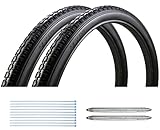
- ◆QUANTITY OF GOODS◆: Pair of solid tire (Not pneumatic tire). Solid tires do not need to be inflated and cannot be punctured. Please be sure to check the size according to the picture and text...
- ◆◆IMPORTANT◆◆Tire specifications: 24x1-3/8 (37-540). Only suitable for rims diameter of 21.3 to 22.1 inches and inner width of 0.75-0.87 inches. Please measure your RIM, not the old tire...
- ◆◆IMPORTANT◆◆24-inch tires have different model numbers, such as 24x1 3/8, 24x1, and 24x1.75, which have different diameters and widths. Therefore, it is necessary to accurately measure the...
Best Budget Option
Migeek Wheelchair Rear Wheel Replacement Tire (24″ x 1″) — Pair
The Migeek flat-free polyurethane replacement tires are a smart and affordable choice for seniors on a budget. These universal-fit 24 x 1″ tires are made from solid polyurethane foam, so they cannot puncture or go flat. The package includes two tires along with installation tools, and the universal design fits all major wheelchair brands. They perform well on paved outdoor surfaces like sidewalks, driveways, and smooth park paths.
Pros:
- Very affordable — one of the lowest-cost options available
- Completely flat-free — solid polyurethane cannot puncture
- Includes installation tools and fits all major brands
Cons:
- Less shock absorption than pneumatic tires on rough terrain
- Narrower 1″ profile offers less traction on loose gravel
- Best for paved surfaces — not ideal for heavy off-road use

- Product Material: made of polyurethane foam, model 24 "x 1" universal no-flat polyurethane tire.
- About The 24*1 Tire: It is designed to be smaller than the size of the wheel hub, but this tire is elastic to match perfectly with the 24-inch wheelchair wheels, allowing the tire to be mounted...
- Multiple Installation Methods: because the size of the tire is slightly smaller than the size of the wheel, so the installation requires a certain amount of force, we can use 1. with the help of...
Best Heavy-Duty Tire for Sand, Snow, and Beach
All-Terrain Wheelchair Tires (Pair) — 12.5″ Air-Filled Pneumatic for Sand, Snow, and Beach
For seniors who want to access beaches, sandy paths, or snowy terrain, these oversized 12.5″ balloon-style pneumatic tires are designed specifically for extreme soft-ground conditions. The wide, low-pressure design prevents wheels from sinking into sand or snow, and the air-filled construction cushions the ride over uneven natural terrain. Quick-release compatibility makes it easy to swap them on for a beach outing and swap back to standard tires for everyday use.
Pros:
- Balloon design floats over sand, snow, and very soft ground
- Air-filled pneumatic construction provides excellent cushioning
- Quick-release compatible for easy swap-on, swap-off use
Cons:
- Not suitable for everyday use on pavement or indoors
- Larger size may not fit all wheelchair frames
- Specialty product — higher price for a niche use case

- Air-Filled Superior Comfort:Experience a revolutionary smooth ride. Our air-filled pneumatic tires provide superior shock absorption, protecting your joints and spine from impact on rough...
- Conquer Sand, Snow & Mud:Engineered for extreme adventures. The aggressive tread and adjustable air pressure grant unmatched traction and floatation in sand, snow, mud, and grass. Confidently...
- Exclusive Anti-Scrub Hub Design:Our extended hub design is engineered to prevent the tire from rubbing against your wheelchair's frame or brake arms. Solves a common frustration and ensures a...
Educational Overview: What Are Wheelchair Tires for Outdoor Use?
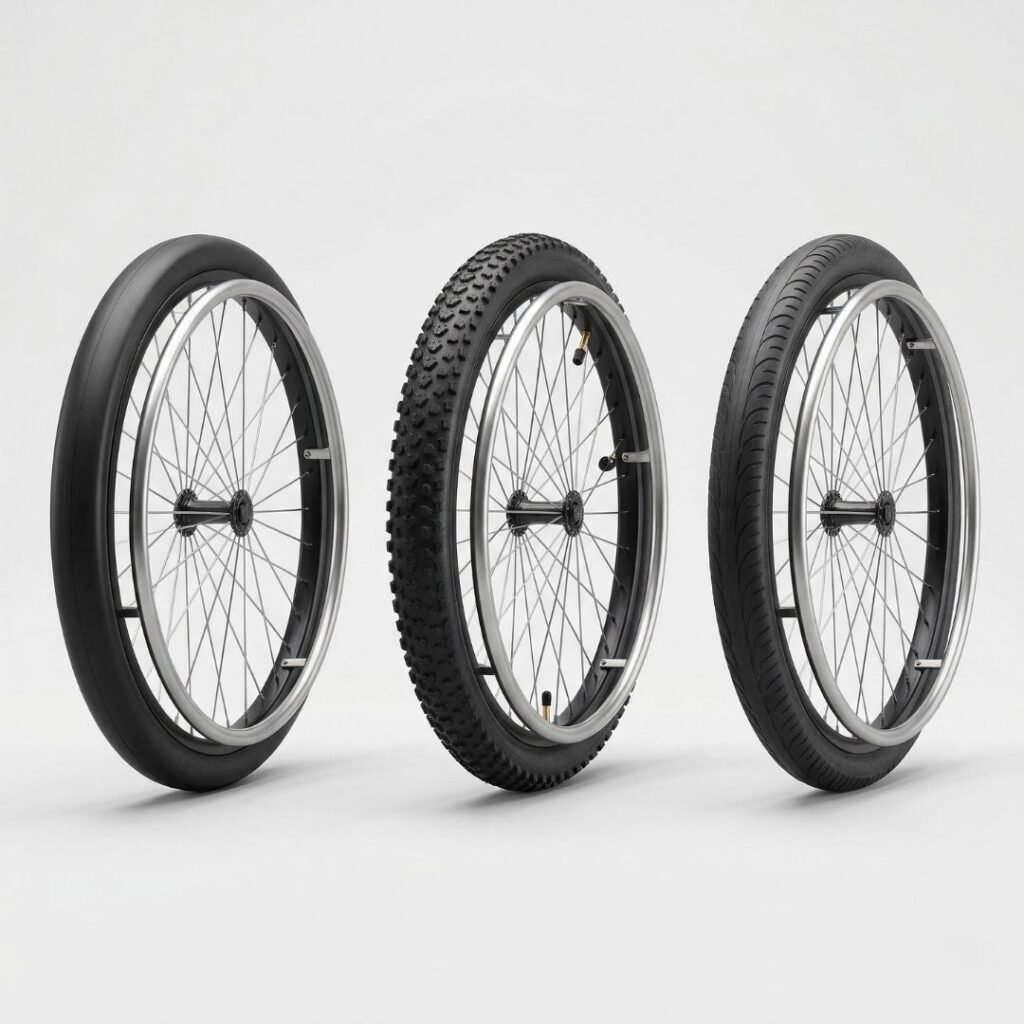
Wheelchair tires for outdoor use are replacement or upgrade tires specifically designed to handle surfaces beyond smooth indoor flooring. They come in three primary types, and understanding the differences is key to choosing the right option.
Pneumatic (air-filled) tires are the most popular choice for outdoor use. They contain an inner tube filled with air, just like a bicycle tire. The air cushion absorbs shocks from bumps, cracks, and uneven ground, providing the smoothest and most comfortable ride on rough outdoor surfaces. Pneumatic tires are available with smooth, semi-smooth, or knobby tread patterns — smooth for paved surfaces, knobby for dirt and gravel. The trade-off is that they can puncture, and they require regular air pressure checks to maintain optimal performance.
Solid (polyurethane or hard rubber) tires are completely flat-free. They are made from a single piece of solid material and cannot puncture under any circumstances. This makes them virtually maintenance-free and ideal for seniors who do not want to worry about flats. However, solid tires provide significantly less shock absorption than pneumatic options, which means the ride will feel harder and more jarring on rough terrain. They work best on paved outdoor surfaces like sidewalks, driveways, and smooth park paths.
Foam-filled tires are a hybrid option. They look like pneumatic tires on the outside but are filled with a solid foam insert instead of air. This gives them flat-free reliability while providing slightly more cushion than hard solids. However, they are heavier than both pneumatic and standard solid tires, and they still do not match the shock absorption of true air-filled pneumatics. Foam-filled tires are a reasonable middle ground for seniors who want some outdoor cushion without the maintenance of checking air pressure.
Beyond tire type, tread pattern matters significantly for outdoor performance. Smooth treads are efficient on pavement but slip on loose surfaces. Knobby treads bite into gravel, dirt, and grass but create more rolling resistance on smooth floors. Semi-smooth treads offer a compromise, handling mixed surfaces adequately without excelling in either extreme. The right combination of tire type and tread pattern depends on where you spend most of your outdoor time.
How to Use Wheelchair Tires for Outdoor Use Safely
Check tire pressure before every outdoor outing. If you are using pneumatic wheelchair tires, maintaining the correct PSI is the single most important safety habit you can develop. Under-inflated tires make the chair harder to push, reduce traction, and increase the risk of the tire rolling off the rim on uneven terrain. Over-inflated tires feel harsh, reduce grip on loose surfaces, and are more prone to puncture. A simple handheld tire gauge — the same kind used for bicycle tires — takes seconds to use and can prevent most outdoor tire problems before they start.
Match your tire choice to the terrain you actually encounter. It is tempting to buy the most aggressive off-road tire available, but knobby all-terrain wheelchair tires require significantly more effort to push on smooth surfaces. If your outdoor routine is mostly paved sidewalks with occasional gravel patches, a semi-smooth puncture-resistant tire will serve you better than a full knobby. Save aggressive tread patterns for regular dirt trails, parks with unpaved paths, or grassy yards where you genuinely need the extra grip. Understanding fall risks for seniors and how to prevent them can help you make smarter decisions about matching your equipment to your environment.
Inspect tires regularly for wear, damage, and debris. Outdoor surfaces expose tires to hazards that indoor floors do not — glass, sharp stones, thorns, metal debris, and rough concrete edges. Before and after outdoor trips, run your hand along the tire surface (carefully) to check for embedded objects that could cause a slow leak or blowout. Look for cracks in the sidewall, worn-down tread, or uneven wear patterns that could indicate alignment issues with the wheelchair itself. Replacing a tire before it fails is always safer and cheaper than dealing with a blowout on a trail.
Ensure proper installation and compatibility. Not every tire fits every wheelchair. Before purchasing, confirm the tire size matches your wheelchair’s rim diameter and width specifications. Most standard manual wheelchairs use 24-inch rear wheels, but rim widths vary. Installing a tire that is too wide or too narrow for your rim creates a dangerous fit that could cause the tire to unseat during use. If you are unsure about compatibility, consult your wheelchair manufacturer’s specifications or ask a mobility equipment dealer. When installing new tires at home, make sure the tire bead is fully seated around the entire rim before inflating, and always inflate gradually to the recommended PSI.

Lifestyle Synergy: Making Wheelchair Tires for Outdoor Use Work Better at Home
Upgrading to outdoor wheelchair tires is not just about the tires themselves — it is about building a routine that lets you get outside more often and more safely. One of the most practical steps you can take is to keep two sets of tires available if your outdoor and indoor needs differ significantly. Many seniors keep a set of smooth, low-resistance tires for daily indoor use and a set of knobby or semi-knobby tires for park visits, outdoor errands, and nature outings. With quick-release wheels, swapping between sets takes less than a minute and means you always have the right tire for the surface you are on.
Storage and maintenance matter more than most people realize. Pneumatic outdoor tires should be stored at partial inflation when not in use — fully deflated tires can develop flat spots, while fully inflated tires stored in heat can over-pressurize. Keep a compact hand pump and a pressure gauge in your wheelchair bag or near your front door so checking pressure becomes part of your routine before heading out, just like grabbing your keys. For seniors who travel with a wheelchair, packing a small repair kit with a spare inner tube, tire levers, and a patch kit adds almost no weight and prevents a flat tire from ruining a trip.
Consider your home’s transition zones as well. If you roll directly from carpet or hardwood onto a patio, driveway, or garden path, the surface change is where most tire-related issues show up. Smooth indoor tires can slip on a wet patio, and aggressive knobby tires can track dirt and gravel back inside. A small outdoor mat at your door threshold gives tires a chance to shed debris before rolling back inside, and it provides a visual and tactile reminder of the surface change ahead. These small environmental adjustments, combined with the right tires, make the transition between indoor and outdoor spaces seamless and safe.
Physician’s Tips for Long-Term Use
From a clinical perspective, the long-term benefits of outdoor wheelchair use extend well beyond mobility. Seniors who spend regular time outdoors experience measurable improvements in mood, sleep quality, vitamin D levels, and cardiovascular health. The National Institute on Aging’s research on exercise and physical activity consistently shows that even moderate outdoor activity — rolling through a park, visiting a garden, or simply sitting outside in fresh air — contributes to better long-term health outcomes for older adults. The right wheelchair tires for outdoor use are the enabler that makes this activity possible and safe.
I advise my patients to treat tire maintenance as part of their health routine, not just equipment upkeep. A tire that loses air slowly over weeks will gradually make the chair harder to push, which can strain shoulders, wrists, and hands — joints that many older wheelchair users already have trouble with. Checking pressure weekly and keeping tires properly inflated reduces upper body strain and helps prevent repetitive stress injuries that can develop over months and years of daily wheelchair use.
For seniors with pressure-sensitive skin or a history of pressure sores, tire choice has a direct clinical impact. Pneumatic tires absorb vibrations and small impacts that solid tires transmit directly through the seat. Over a long outdoor outing on rough terrain, those accumulated micro-vibrations can increase pressure on the sitting surface and contribute to skin breakdown. If you or your loved one is at risk for pressure injuries, I strongly recommend pneumatic or foam-filled tires for any outdoor use, and I recommend limiting time on rough surfaces regardless of tire type. Building simple daily habits to improve senior mobility alongside proper tire selection creates a comprehensive approach to staying active and safe long-term.
Caregivers should also pay attention to how tire changes affect pushing effort. A heavier knobby tire on gravel is easier to push than a smooth tire on the same surface, but the reverse is true on pavement. If you are the primary person pushing the wheelchair, test the tires on your most common routes before committing. Your back, shoulders, and energy levels matter too — the right tire should make outdoor trips easier for everyone involved, not just the person in the chair.

Wheelchair Tires for Outdoor Use Comparison for Seniors (Features & Stability)
Frequently Asked Questions
1. What are the best types of wheelchair tires for outdoor use?
The best types of wheelchair tires for outdoor use depend on the terrain you encounter most often. Pneumatic (air-filled) tires with knobby or semi-knobby tread are the top choice for gravel, dirt, and grass because they provide both grip and shock absorption. Solid polyurethane tires are best for seniors who stick to paved outdoor surfaces and want zero-maintenance, flat-free reliability. Foam-filled tires offer a middle ground with flat-free convenience and moderate cushioning. For most seniors, a puncture-resistant pneumatic tire like the Schwalbe Marathon Plus offers the best combination of outdoor performance and everyday usability.
2. Can I put all-terrain tires on any wheelchair?
In most cases, yes — but you must verify that the tire size matches your wheelchair’s rim size and width. Most standard manual wheelchairs use 24-inch rear wheels, and the majority of all-terrain wheelchair tires are made in this size. However, rim widths vary between manufacturers, so a tire rated for a 1-3/8″ rim will not fit properly on a 1″ rim. Always check your current tire’s sidewall markings for the exact size before ordering replacements. If you are unsure, consult your wheelchair manufacturer or a local mobility equipment dealer to confirm compatibility before purchasing.
3. What size wheelchair tires do I need for outdoor surfaces?
The most common rear tire size for standard manual wheelchairs is 24 inches in diameter, with widths ranging from 1 inch to 1.95 inches. For outdoor surfaces, wider tires (1.75″ to 1.95″) provide better stability and traction on loose ground like gravel and grass. Narrower tires (1″ to 1-3/8″) roll more efficiently on pavement but offer less grip on soft surfaces. Check the markings on your current tire’s sidewall and match those dimensions when shopping for outdoor replacements.
4. Are pneumatic or solid tires better for outdoor use?
Pneumatic tires are generally better for outdoor use because they absorb shocks from bumps, cracks, and uneven terrain, providing a significantly smoother and more comfortable ride. They also offer better traction on loose surfaces like gravel and grass. The main downside is that pneumatic tires can puncture, and they require regular air pressure maintenance. Solid tires are better if your primary concern is zero maintenance and flat-free reliability, but they transmit more vibration and provide less grip on rough outdoor surfaces. For seniors who regularly go off paved paths, pneumatic tires are the stronger choice.
5. How often should I replace outdoor wheelchair tires?
Outdoor wheelchair tires should be inspected monthly and replaced when tread depth becomes visibly shallow, sidewalls develop cracks, or the tire no longer holds air pressure consistently. For active outdoor users, pneumatic tires typically last 6 to 12 months depending on terrain and frequency of use. Solid tires can last 1 to 3 years but should be replaced when the surface becomes noticeably smooth. If you notice increased rolling resistance or reduced traction, it is time for a replacement.
6. Do outdoor wheelchair tires work well indoors too?
It depends on the tread pattern. Semi-smooth all-terrain tires like the Schwalbe Marathon Plus are designed for dual indoor-outdoor use, gripping outdoor surfaces without leaving marks or creating noise on indoor floors. Knobby off-road tires, however, are louder on hard floors and can track dirt inside. If you need one tire for both environments, look for a semi-smooth tread with a non-marking compound. For heavy off-road terrain, keeping two sets of tires is the most practical solution. Some wheelchair tires and accessories may be partially covered under Medicare’s Durable Medical Equipment (DME) benefit, so it is worth checking your eligibility.
Final Thoughts on Wheelchair Tires for Outdoor Use
Choosing the right wheelchair tires for outdoor use is one of the simplest and most impactful upgrades a senior or caregiver can make. The best tire for you depends on where you spend your outdoor time — puncture-resistant pneumatics like the Schwalbe Marathon Plus for mixed surfaces, knobby treads like the Primo for dirt and gravel, flat-free solids for low-maintenance paved paths, or balloon tires for sand and beach access.
Every option on this list has been selected because it fits standard manual wheelchairs, is available on Amazon, and addresses a specific outdoor need that factory tires cannot meet. Do not let the wrong tires keep you or your loved one inside — the outdoors is waiting, and the right wheels make all the difference.
Medical Disclaimer: This guide is for general educational purposes only and is not intended to serve as personalized medical advice. Always consult a qualified healthcare professional before making changes to medical equipment or care plans.
Last update on 2026-07-14 / Affiliate links / Images from Amazon Product Advertising API
