

Introduction
Helping an older loved one shower can feel overwhelming, especially when you are worried about slips, falls, or making them uncomfortable. Shower assistance for elderly family members is one of the most important caregiving skills you can develop, yet it is also one of the least talked about. Bathing is a daily activity most of us take for granted, but for seniors dealing with limited mobility, balance issues, or cognitive decline, the bathroom can be one of the most dangerous rooms in the house.
This guide walks caregivers through the preparation, techniques, and mindset needed to make shower time safe, dignified, and as stress-free as possible. Whether you are a family caregiver helping a parent for the first time or an experienced aide, you will find practical guidance you can use today.
Why Shower Safety Matters for Aging Adults
The bathroom is the most common location for fall-related injuries among older adults. Wet surfaces, poor lighting, narrow spaces, and the physical demands of standing, bending, and reaching all create a high-risk environment. According to the CDC’s Falls Prevention data, falls are the leading cause of injury and injury-related death among adults aged 65 and older, and a significant number of those falls happen during bathing or toileting.
For seniors with arthritis, Parkinson’s disease, post-surgical limitations, or general age-related weakness, the simple act of stepping into a shower, standing on a wet surface, and lifting arms overhead to wash hair can be exhausting and risky. Balance naturally declines with age, and wet tile surfaces offer almost no traction if a foot slips even slightly. Many seniors begin avoiding showers altogether — not because they do not want to bathe, but because they are afraid of falling. This avoidance can lead to skin issues, urinary tract infections, social withdrawal, and a steady decline in overall well-being and self-esteem. Understanding fall risks in seniors is the first step toward creating a bathing routine that is both safe and sustainable.
Caregivers play a critical role in bridging that gap. With the right approach to shower assistance for elderly loved ones, you can transform shower time from a source of anxiety into a comfortable routine that supports your loved one’s health and independence.
The Three Pillars of Safe Senior Bathing
Effective shower assistance for elderly family members rests on three foundational principles that every caregiver should understand before stepping into the bathroom with a loved one. These pillars guide every decision you make, from how you set up the space to how you communicate during the shower.
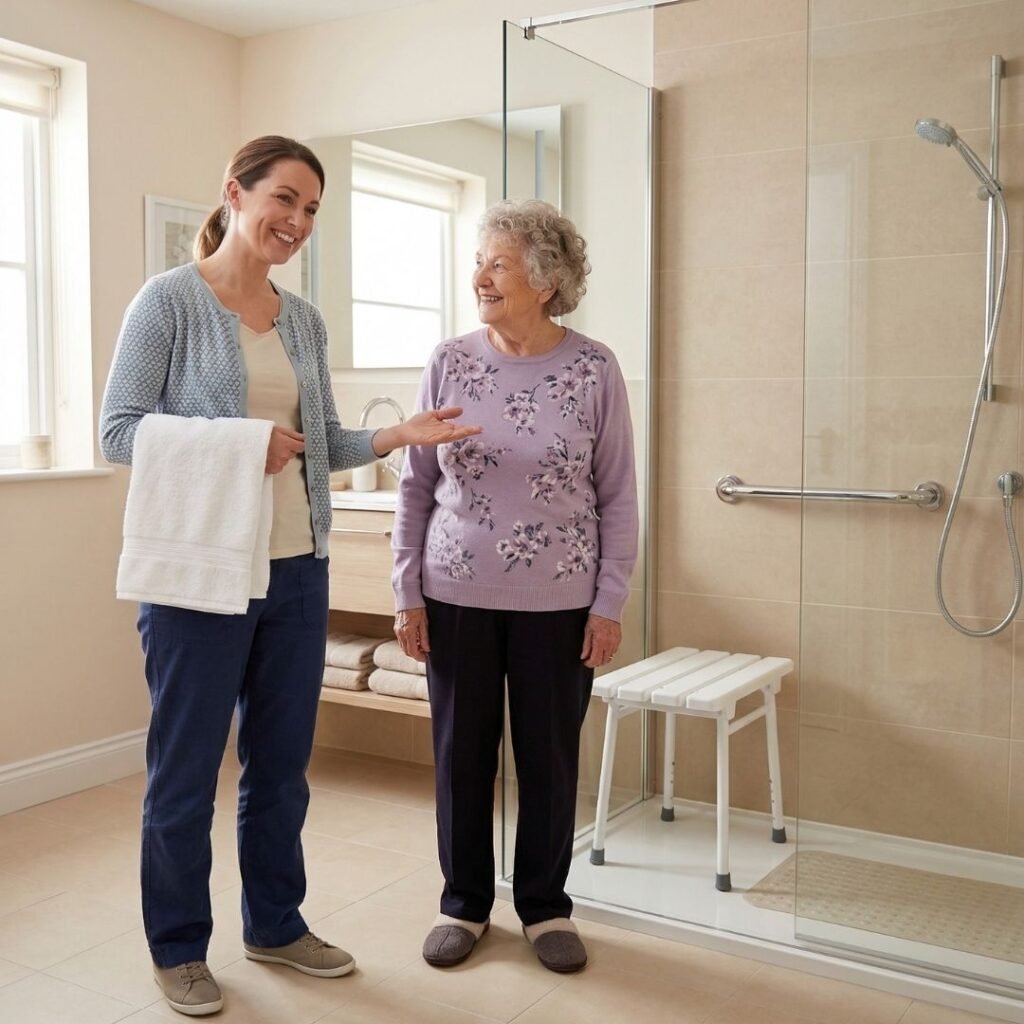
Environment. The physical bathroom setup is your first line of defense against falls and injuries. This means non-slip mats on the shower floor and just outside the shower, sturdy grab bars mounted to wall studs rather than suction cups that can fail, a shower bench or chair so the senior can sit while bathing, and a handheld showerhead that eliminates the need to stand under a fixed overhead stream. Adequate lighting is also essential — many bathrooms are dimmer than they should be, and shadows can make it harder for seniors with vision changes to see edges, steps, and wet spots. If you are thinking about a broader bathroom renovation, our guide on creating a senior-friendly bathroom covers the full range of modifications worth considering.
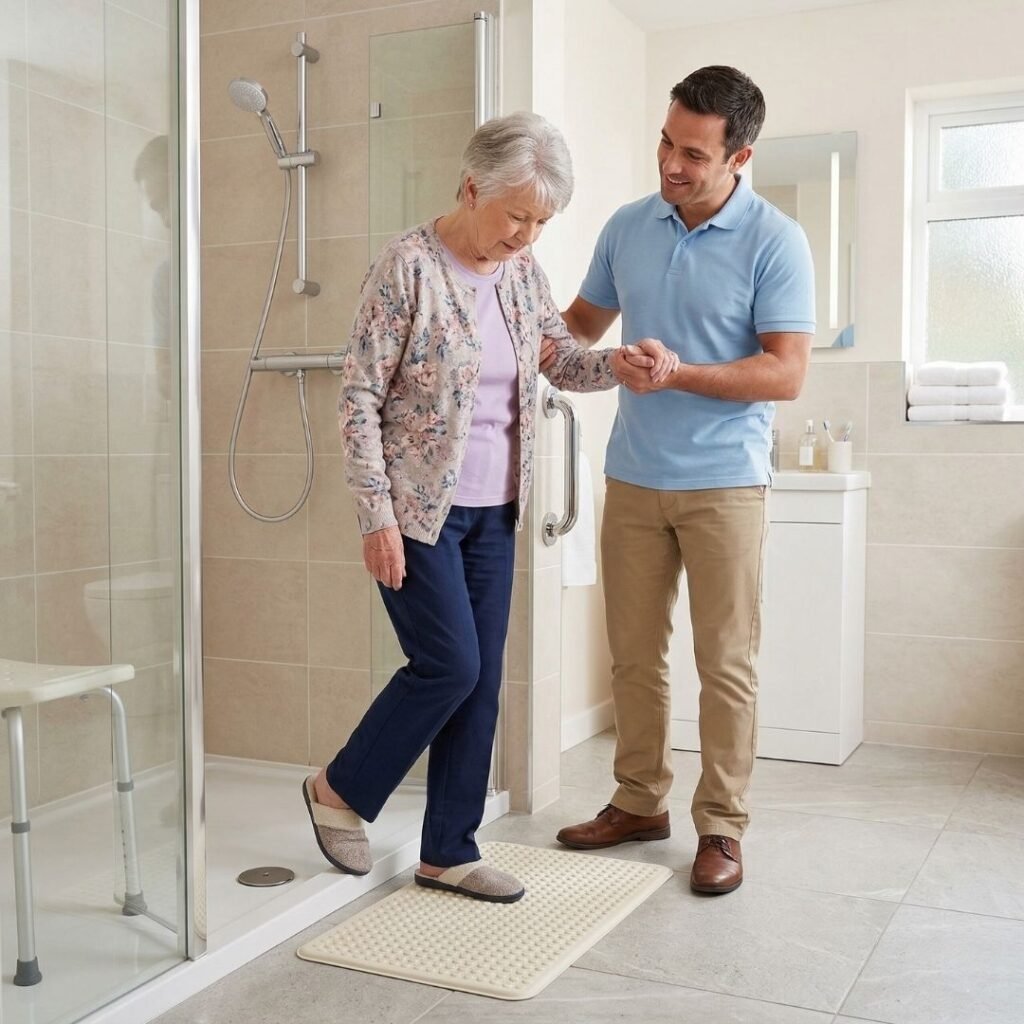
Technique. How you physically assist matters as much as what equipment you use. Always provide support from the side, not from behind or in front, when helping a senior step in or out of the shower. Guide them to sit on the shower bench before turning on the water. Use slow, predictable movements and narrate what you are doing — “I am going to turn on the water now” or “Let me help you rinse your back.” Rushing increases the risk of slips and makes the senior feel anxious. If the senior can wash certain areas independently, let them. Your role is to assist where needed and supervise for safety, not to take over entirely.
Dignity. Bathing is one of the most personal and private activities in daily life. Losing the ability to shower independently can feel humiliating, and a caregiver’s attitude can either ease that discomfort or make it worse. Always ask permission before touching or adjusting clothing. Use a towel or washcloth to cover areas not being actively washed — this simple step makes a significant difference in how exposed and vulnerable the senior feels. Speak in a calm, matter-of-fact tone — not a baby voice, and not with excessive cheerfulness that can feel patronizing. Offer choices whenever possible, such as “Would you like to wash your face first or your arms?” Small decisions give the senior a sense of control over their own body and routine. If the senior expresses frustration or embarrassment, acknowledge it honestly rather than dismissing it. Saying “I understand this is hard, and I want to make it as comfortable as possible” goes a long way toward building trust. If they become agitated or upset, it is always better to stop, wrap them in a towel, and try again later than to force the process.
Common Shower Hazards Caregivers Should Watch For
Even when you have a solid routine for shower assistance for elderly loved ones, certain hazards can catch caregivers off guard. Wet floors outside the shower area are a frequent culprit — water splashes and drips accumulate during the shower, and the senior may step onto a slippery tile surface when exiting. Placing a large non-slip bath mat outside the shower and having a dry towel ready for the floor reduces this risk significantly.
Water temperature fluctuations are another concern. In many homes, flushing a toilet or running a dishwasher while someone is showering can cause sudden temperature spikes. Ensure no one else uses water in the house during the senior’s shower if possible, and consider setting the hot water heater to a maximum of 120 degrees Fahrenheit to reduce burn risk. Seniors with reduced sensation in their hands or feet — common in those with diabetes or peripheral neuropathy — are especially vulnerable to scalding, so always test the water yourself before they enter.
Loose bath mats, soap residue buildup on the shower floor, and cluttered countertops with bottles that can fall into the shower area are all preventable hazards. Bar soap on the floor is a particularly common cause of slips that many caregivers overlook — switching to a pump-style liquid body wash eliminates this risk entirely. A quick two-minute safety check before turning on the water can prevent the majority of shower-related accidents. Walk through the space, clear any clutter, confirm the non-slip mat is flat and secure, and make sure the grab bars are firmly attached before the senior enters.
Preparing the Bathroom Before Each Shower
Preparation is the most underrated part of shower assistance for elderly adults. Before the senior enters the bathroom, gather everything you will need and place it within arm’s reach of the shower bench — shampoo, body wash, a washcloth, a towel, clean clothes, and any post-shower items like lotion or a comb. Having everything ready eliminates the need to leave the senior unattended to grab a forgotten item, which is when many accidents happen.
Check the water temperature before the senior gets in. Run the water for 15 to 20 seconds and test it with the inside of your wrist — it should feel warm but not hot. Water that feels comfortable on your hand may still be too hot for a senior with thin or sensitive skin, so err on the side of slightly cooler. If you are using a handheld showerhead, make sure it is within easy reach from the shower bench and that the hose is not kinked or tangled. Position the showerhead so the senior can reach it independently if they are able to — this small detail gives them a sense of control over the process.
Make sure the bathroom is warm enough. Older adults lose body heat more quickly than younger people, and stepping out of a warm shower into a cold bathroom can cause dizziness or shivering that makes movement unsteady. Run the shower with hot water for a minute before the senior enters to create some steam, or use a small portable space heater placed safely away from water sources. Having a warm, dry towel or bathrobe ready to wrap around them immediately after the shower also helps maintain body temperature during the drying and dressing process.
Step-by-Step: How to Assist an Elderly Person in the Shower
Once the bathroom is prepared and the water temperature is set, help the senior walk to the bathroom at their own pace. Do not rush them. If they use a walker or cane, let them use it until they reach the shower entrance. At the shower entrance, have them place one hand on the grab bar while you support them from the side. Guide them to turn around and lower themselves onto the shower bench before you direct any water toward them.
Start by wetting their body gently with the handheld showerhead, beginning at the feet and working upward. This avoids the shock of water hitting the head or chest first, which can be startling and may cause a senior to flinch or jerk suddenly on a wet surface. Let the senior wash what they can reach on their own — face, chest, arms, and front of the legs are often manageable independently, even for those with moderate mobility limitations. Encouraging self-washing wherever possible helps preserve their sense of independence and keeps muscles engaged. You can assist with harder-to-reach areas such as the back, shoulders, behind the ears, and feet.
For hair washing, use the handheld showerhead to wet and rinse while shielding their eyes with a dry washcloth across their forehead. Many seniors find it easier to lean their head back slightly while seated rather than bending forward, which can cause dizziness. Use a no-rinse shampoo on days when a full hair wash is too tiring.
When the shower is finished, turn off the water before the senior stands up. Hand them a towel to begin drying off while still seated on the bench. When ready to stand, have them grip the grab bar while you support them from the side. Help them step out onto the non-slip mat and assist with drying off and getting dressed. This transition is the highest-risk moment, so take it slowly and never let go until they are stable.
Essential Equipment for Safer Senior Showering
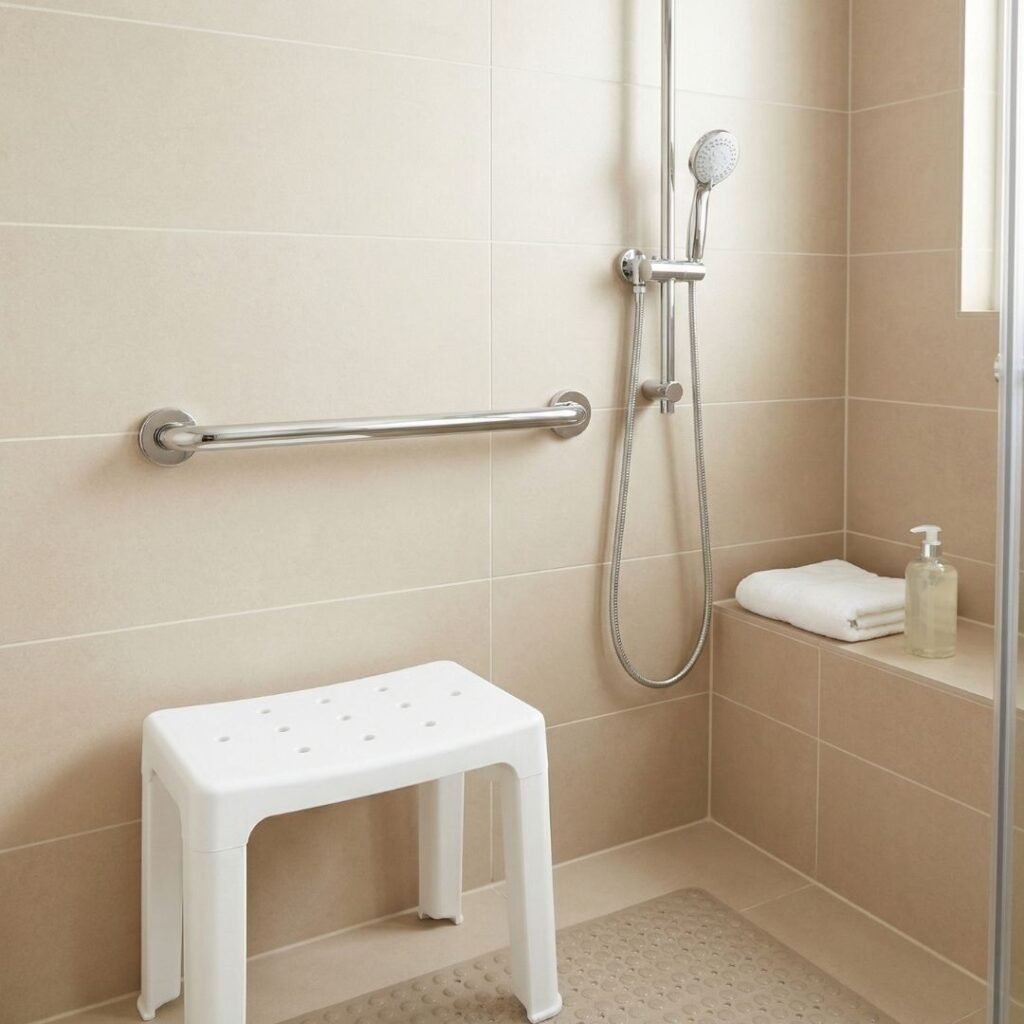
When it comes to shower assistance for elderly loved ones, the right equipment makes a significant difference in both safety and comfort. A shower seat for elderly users is the single most important piece of equipment — it eliminates the need to stand for the duration of the shower, reduces fatigue, and dramatically lowers fall risk. Look for a bench with non-slip rubber feet, drainage holes in the seat, and a backrest for seniors who need additional support.
A handheld showerhead with a long flexible hose allows the caregiver or the senior to direct water exactly where needed without requiring the person to stand under a fixed stream or twist their body. Grab bars — ideally mounted in two locations inside the shower and one outside — provide critical support during the most dangerous transitions: stepping in, standing up from the bench, and stepping out. Pairing these with toilet safety rails in the same bathroom creates a comprehensive safety setup for the entire room.
Non-slip mats are inexpensive and essential — place one inside the shower and one on the floor outside. A long-handled sponge extends reach for seniors who struggle to wash their back or feet independently. Liquid body wash in a pump bottle is easier to handle than a bar of soap, which can slip out of wet hands and create a fall hazard.
Special Considerations for Seniors with Dementia or Limited Mobility
Seniors with dementia may not understand why they need to shower or what is happening during the process. They may become frightened, combative, or deeply distressed. For these individuals, routine is essential — shower at the same time on the same days, use the same sequence of steps, and keep the environment as calm and familiar as possible. Avoid harsh overhead fluorescent lighting and use warm, soft lighting instead. Play quiet music if it helps the person relax. The National Institute on Aging’s guidance on bathing and grooming offers additional strategies specifically for caregivers of individuals with Alzheimer’s and related dementias.
For seniors with significant mobility limitations — such as those recovering from hip or knee replacement, stroke, or those who use a wheelchair — a roll-in shower or a transfer bench may be necessary. These individuals often cannot step over a tub edge or stand long enough to enter a standard shower stall. The caregiver may need to physically assist with transfers, and proper body mechanics become critical to prevent caregiver injury. Bend at the knees, keep your back straight, and never twist while supporting someone’s weight. If possible, practice the transfer motion without water first so both you and the senior feel confident before adding the complexity of a wet environment.
Post-surgical patients may have specific restrictions on how water can contact surgical sites or incisions. Always check with the senior’s physician about bathing restrictions before resuming a shower routine after surgery. Waterproof wound coverings, sponge baths as an interim solution, and no-rinse body wash products can all help maintain hygiene during recovery without compromising healing. For seniors who have recently been discharged from the hospital, the first shower at home can feel particularly intimidating — take extra time, go slowly, and reassure them throughout the process.
Frequently Asked Questions
1. How do you help an elderly person shower safely?
Safe shower assistance for elderly individuals starts with preparing the bathroom with all necessary supplies within reach, checking the water temperature, and ensuring non-slip mats and grab bars are in place. Help the senior walk to the shower, grip the grab bar, and sit on a shower bench before turning on the water. Use a handheld showerhead and let them wash what they can independently while you assist with harder-to-reach areas. Always support them when standing and stepping out of the shower.
2. What are the key steps to follow when assisting a senior with a shower?
The key steps are preparation, communication, and patience. Gather all supplies beforehand, test the water temperature, and warm the bathroom. Tell the senior what you are going to do before each step. Help them sit on the shower bench before starting the water, wash from feet upward, assist only where needed, and support them carefully during the transition out of the shower. Never rush the process.
3. What equipment do I need to help an elderly person bathe?
The essential items include a shower bench or shower chair with non-slip feet, a handheld showerhead with a long flexible hose, grab bars mounted to wall studs inside and outside the shower, non-slip bath mats, and a long-handled sponge for hard-to-reach areas. Liquid body wash in a pump bottle is also safer than bar soap, which can slip and create a hazard on the wet shower floor.
4. How do you maintain dignity while providing shower assistance?
Always ask permission before touching, cover areas not being actively washed with a towel, and speak in a calm, respectful tone. Offer choices about the order of washing to give the senior a sense of control. Narrate your actions before doing them so the senior is never startled by unexpected touch. If they become upset, stop and try again later rather than forcing the process.
5. How often should an elderly person shower?
Most dermatologists and geriatricians recommend that seniors shower two to three times per week unless a medical condition requires more frequent bathing. Daily showers can dry out aging skin and increase the risk of skin tears. On non-shower days, a sponge bath focusing on the face, underarms, and groin area is sufficient to maintain hygiene and comfort.
Final Thoughts on Providing Shower Assistance for Elderly Loved Ones
Providing shower assistance for elderly loved ones is one of the most personal and meaningful forms of caregiving. It requires preparation, patience, the right equipment, and above all, a deep respect for the person you are helping. Every senior’s needs are different, and what works well for one person may not work for another. The key is to stay flexible, communicate openly, and prioritize safety without sacrificing dignity.
As a caregiver, do not forget to take care of yourself as well. Bathing assistance is physically and emotionally demanding, and it is okay to ask for help, take breaks, or explore professional home care options when needed. Understanding the full role of caregivers in senior mobility can help you find support and avoid burnout. The fact that you are reading this guide means you care deeply — and that is the most important foundation of all.
Medical Disclaimer: The information provided on this website is for educational purposes only and should not replace professional medical advice. Always consult your physician or qualified healthcare provider regarding any medical condition or treatment decisions.Copy Entire Draft
