
Introduction
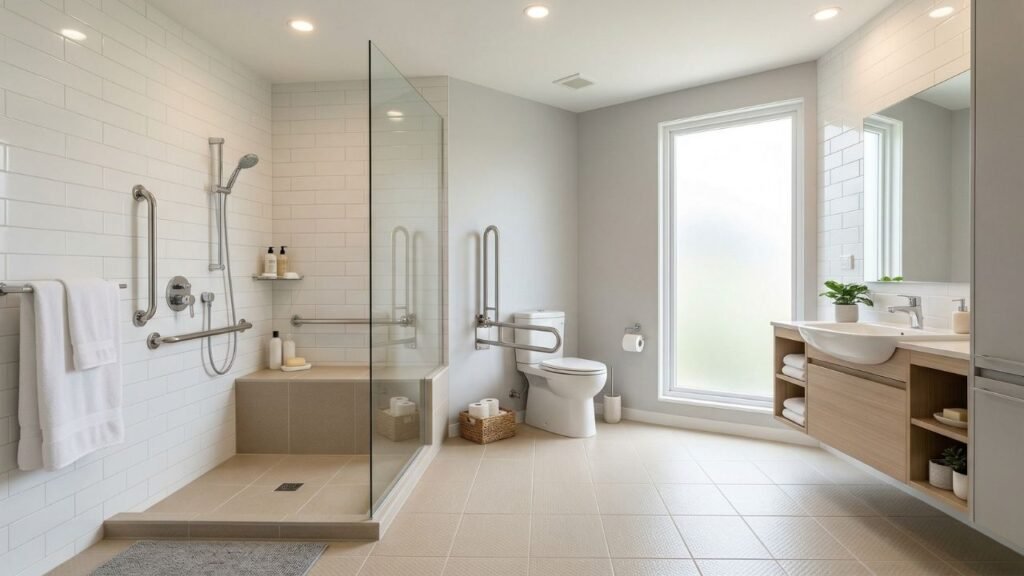
The bathroom is one of the most used rooms in any home, yet it is also one of the most dangerous for older adults. When it comes to bathroom safety for elderly family members, many households unknowingly make preventable mistakes that increase the risk of serious injury. Hard surfaces, wet floors, tight spaces, and poor lighting create a combination that can turn a routine trip to the bathroom into a medical emergency.
According to public health data, bathroom-related falls account for a significant portion of all in-home injuries among adults over the age of 65. Understanding bathroom safety for elderly household members can help prevent these incidents before they happen. What makes these injuries especially concerning is that most of them are avoidable. The problem is not that families do not care. The problem is that many of the most common hazards are easy to miss until it is too late.
This guide walks through the specific mistakes that appear again and again in senior households. More importantly, it explains what to do about each one. Whether you are helping a parent stay in their home or evaluating your own living space, knowing what to look for is the first step toward meaningful protection.
Why Bathroom Safety Matters More Than Most Families Realize
As a physician working with seniors, I’ve seen firsthand how quickly a simple bathroom slip can turn into a hospitalization.
Falls are the leading cause of injury among older adults in the United States. The Centers for Disease Control and Prevention (CDC) reports that one in four adults aged 65 and older experiences a fall each year, and a large number of those falls happen inside the home. The bathroom presents a unique concentration of risk factors: slippery surfaces, hard edges, limited space to recover balance, and the physical demands of sitting down and standing up all come together in a single room.
What many families do not realize is that a bathroom fall often leads to more severe outcomes than falls in other rooms. The enclosed space means there is less room to catch oneself, and porcelain and tile surfaces offer no cushion. A hip fracture, head laceration, or broken wrist can lead to hospitalization and a long recovery that permanently changes a senior’s independence. The emotional toll is just as real. Many seniors who fall develop a fear of falling that causes them to limit their activity, avoid bathing, or resist living alone. For families working to support a loved one, understanding fall risks in seniors is an essential first step.
The good news is that improving bathroom safety for elderly residents is one of the most practical home projects a family can take on. Most changes are affordable, straightforward, and do not require a full renovation. But before you can fix a problem, you need to know what to look for.
The Three Pillars of Bathroom Safety
When physicians and occupational therapists evaluate a bathroom for fall risk, they tend to focus on three broad categories. Thinking of these as pillars can help you organize your own assessment and make sure nothing important is overlooked.
The first pillar is surfaces. This includes everything a person stands on, steps into, or touches: floors, tub bottoms, shower bases, and countertop edges. The question to ask is whether each surface provides enough traction when wet. A glossy tile floor that feels fine when dry can become dangerously slick with just a small splash of water.
The second pillar is support. This refers to what a senior can hold onto when they need to stabilize themselves. Grab bars, shower seats, raised toilet seats, and handheld showerheads all serve this purpose. Support is not just about having something to grab in an emergency. It is about providing reliable contact points during routine movements like lowering onto the toilet or stepping over a tub ledge.
The third pillar is layout. This covers the overall design of the bathroom, including lighting, door clearance, and whether the path from the door to the toilet is clear. A bathroom can have the right products installed and still be unsafe if the layout forces awkward movements or long unsupported reaches.
When families approach bathroom safety for elderly loved ones through all three pillars together, the space becomes significantly safer. When even one is neglected, the risk stays high regardless of what else has been done. The sections that follow break down the most common mistakes families make within each of these areas.
What These Mistakes Look Like in Real Life
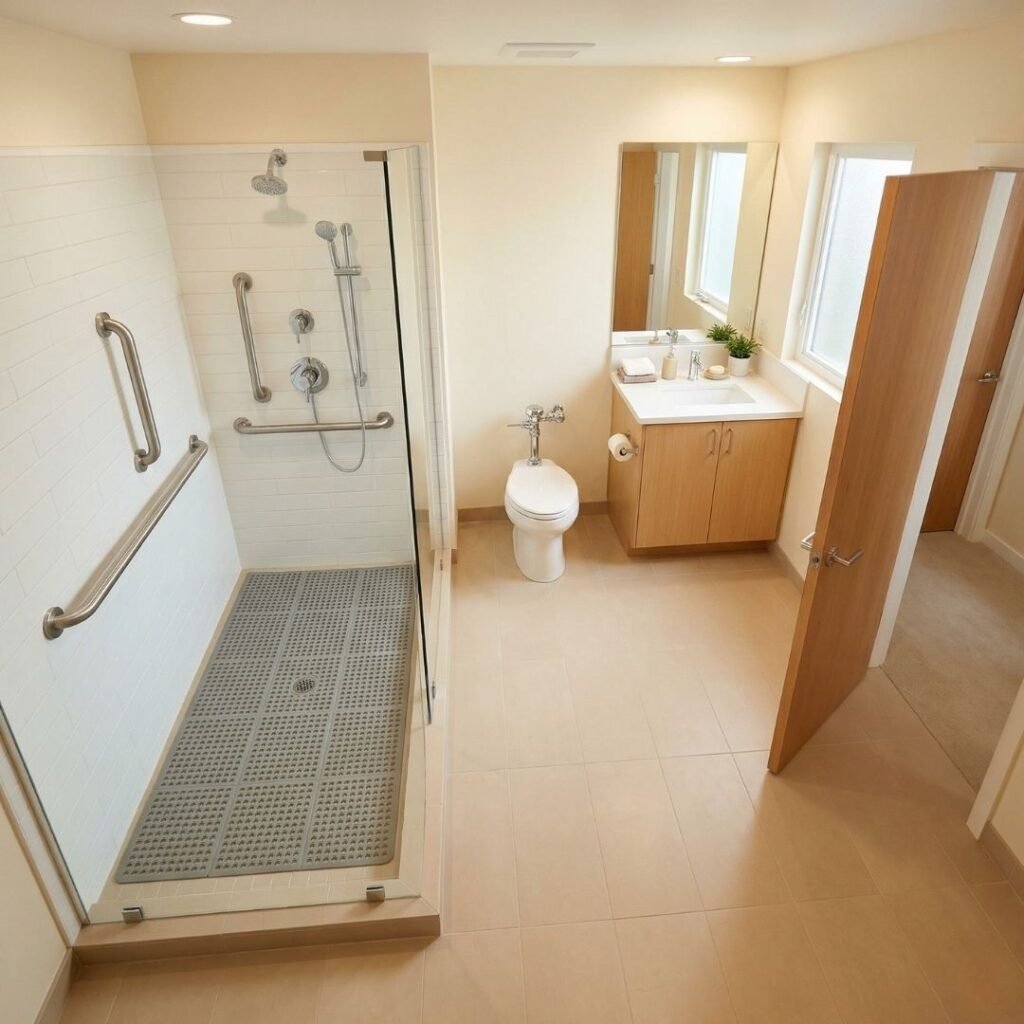
In theory, most people understand that bathrooms can be slippery. In practice, the mistakes that lead to injuries are subtle and deeply normalized. They look like everyday choices that no one has thought to question.
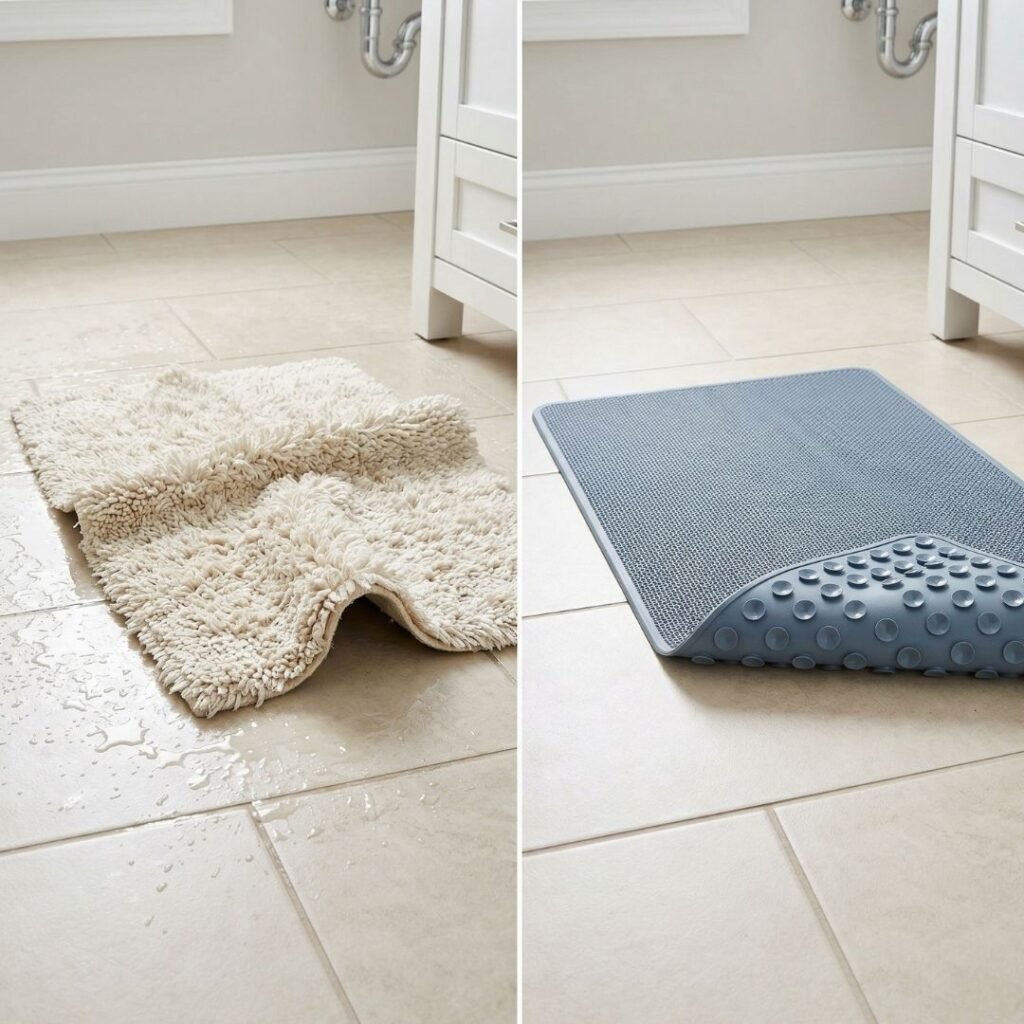
One of the most common scenarios involves a decorative bath rug placed in front of the tub or toilet. It may have been there for years and looks harmless, but it has no non-slip backing. When a senior steps on it with wet feet, it slides across the tile and takes them down. Loose bath mats are one of the most frequently cited hazards in home safety evaluations for older adults.
Another common scenario involves towel bars being used as grab bars. Towel bars are not engineered to bear weight. They are attached with small screws into drywall and can pull away from the wall without warning, sending a senior to the floor.
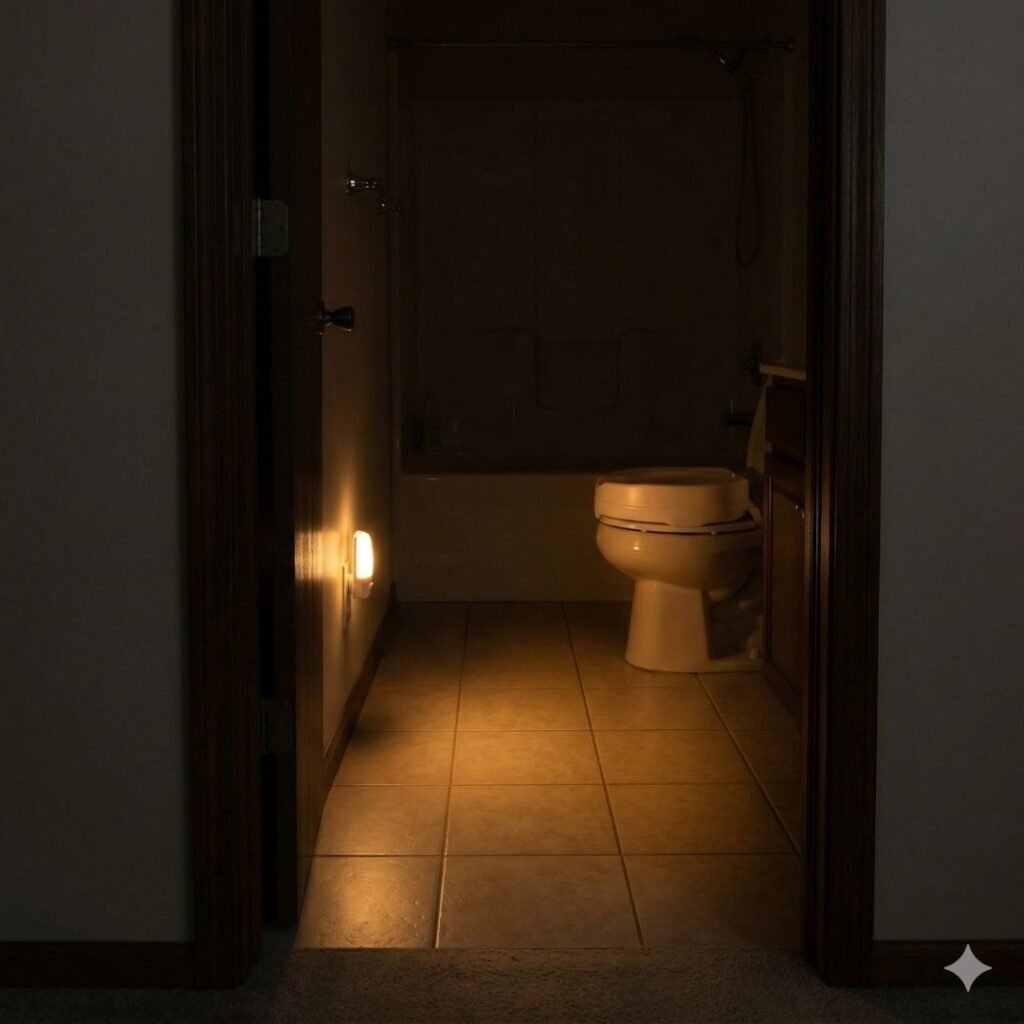
Poor lighting is another quiet contributor. Many older bathrooms have a single overhead fixture that casts shadows exactly where a senior needs to see clearly: the tub edge, the toilet base, or the step into the hallway. At night, the problem intensifies when a senior navigates a wet, hard-surfaced room with impaired vision.
These situations are not signs of neglect. They are signs that the bathroom was designed for a younger user and no one has revisited its setup since. Learning how to make a bathroom safe for elderly parents or grandparents starts with spotting exactly these kinds of overlooked hazards.
Flooring and Surface Mistakes to Avoid
Flooring is the foundation of bathroom safety for elderly individuals, and it is where some of the most impactful mistakes are made. The most common one is relying on standard bath mats without verifying that they have a non-slip backing. Many popular bath mats sold in home goods stores are designed for comfort and aesthetics rather than safety. They look attractive but provide almost no grip on a wet tile floor. Replacing these with rubber-backed mats or mats with suction-cup grips is one of the simplest and most effective changes a family can make.
Inside the tub or shower, many older bathtubs have a smooth porcelain finish that becomes extremely slippery when wet. Applying adhesive non-slip strips or placing a textured rubber shower mat inside the tub can dramatically reduce the risk. These products are inexpensive, but they do lose their grip over time and need to be replaced periodically.
Another overlooked issue is water that accumulates on the floor outside the tub. If the shower curtain does not extend far enough, water splashes onto the tile every time someone bathes. For a senior with reduced balance, even a thin film of water is a serious fall risk. Making sure the shower enclosure contains water effectively and wiping the floor after each use helps eliminate this hazard.
Finally, consider transitions between surfaces. The step from a hallway carpet onto a bathroom tile floor introduces a change in texture and friction. If there is a raised threshold at the door, it also introduces a tripping hazard. Low-profile transition strips and flush thresholds can reduce this risk. The goal is to make every step predictable and stable from the moment a senior approaches the bathroom door. These bathroom safety tips for seniors may seem small individually, but together they eliminate the most common surface-related risks.
Grab Bar and Support Mistakes
When it comes to bathroom safety features for elderly residents, grab bars are one of the most widely recommended measures, yet they are also one of the most commonly done incorrectly. The first and most dangerous mistake is not installing them at all. Many families resist grab bars because they associate them with a clinical or institutional appearance. This hesitation can delay a simple modification that could prevent a life-changing fall. Modern grab bars are available in a range of finishes and styles that blend naturally with most bathroom designs.
When grab bars are installed, placement matters as much as the bars themselves. In the shower or tub area, bars should be placed at a height and angle that allows the user to grip them comfortably while stepping in or out. Near the toilet, a grab bar should be within easy reach from a seated position so the senior can lower themselves down and push themselves back up without straining.
One of the most critical mistakes is treating a towel bar as a support device. Towel bars are mounted with lightweight hardware and are not designed to hold a person’s weight. When someone grabs a towel bar while off-balance, it can pull free from the wall instantly. If a senior is already using a towel bar for support, that is a clear signal that a properly anchored grab bar needs to be installed in that exact location.
Mounting technique also matters. Grab bars must be secured into wall studs or reinforced with appropriate anchors. A bar screwed only into drywall can fail under load, which is worse than having no bar at all because it creates a false sense of security. For families exploring their full range of options, creating a senior-friendly bathroom involves thinking about support from every angle.
Lighting, Layout, and Accessibility Oversights
Even when surfaces are safe and support is in place, a poorly lit or cluttered bathroom can still put a senior at risk. Lighting is one of the most underestimated aspects of bathroom safety for elderly individuals. As people age, their eyes require more light to see the same level of detail. A bathroom that seems adequately lit to a younger person may be uncomfortably dim for someone in their seventies or eighties.
The most important areas to light are the ones where a senior makes physical transitions: the step into the tub, the area around the toilet, and the path from the door to these fixtures. Overhead lighting alone often creates shadows in exactly these zones. At night, a motion-sensor night light near the bathroom entrance can prevent a senior from navigating in the dark. This one small addition addresses a surprisingly large portion of nighttime fall risk.
Layout-related mistakes are less obvious but equally important. A bathroom door that swings inward can become blocked if a senior falls against it, making it difficult for someone to provide help. Switching to an outward-swinging or sliding door can eliminate this risk. This is one of the most overlooked bathroom safety for elderly improvements, yet in small bathrooms the difference in emergency access can be significant.
Clutter is another quiet hazard. Cleaning supplies on the floor, bottles crowding the tub ledge, or a trash can in the walking path can all create obstacles. Keeping essentials within arm’s reach and removing anything that does not need to be on the floor makes the space safer. For a broader view of how room arrangement affects safety, the principles behind making your home safer for seniors apply directly to bathroom layout.
Special Considerations for Dementia, Arthritis, and Post-Surgery Recovery
The general principles of bathroom safety for elderly adults apply broadly, but certain health conditions introduce additional layers of risk that require more specific attention. Families caring for a senior with dementia, arthritis, or someone recovering from surgery should be aware of how these conditions change the equation.
For seniors living with dementia or cognitive decline, the bathroom presents challenges beyond physical hazards. A person with dementia may forget to test the water temperature, leading to scalding, or become confused by the layout at night. Installing anti-scald valves on faucets and showerheads is an important safeguard. Keeping the layout consistent and using high-contrast visual cues, such as a brightly colored toilet seat or a distinct shower mat, can help a person with cognitive challenges orient themselves more easily.
Arthritis affects the hands, wrists, and knees in ways that directly impact bathroom use. Lever-style faucet handles, pump-style dispensers mounted on the shower wall, and grab bars with textured grips can all make a meaningful difference. Knee and hip arthritis make toilet use and tub entry particularly painful. A raised toilet seat reduces the distance a senior needs to lower themselves, and a walk-in shower eliminates the need to step over a tub wall entirely.
Post-surgery recovery, especially after hip or knee replacement, introduces temporary but serious limitations. In many cases, the bathroom needs to be adapted before the senior returns home. Temporary grab bars, a shower chair, and a handheld showerhead are common recommendations from physical therapists. Planning these modifications ahead of time makes the recovery process safer and more comfortable. Shower safety for elderly adults recovering from surgery deserves special attention because the risk of re-injury is particularly high. The National Institute on Aging provides additional guidance on adapting home environments for older adults with changing physical needs.
Frequently Asked Questions
1. What is the most common cause of bathroom falls in seniors?
The most common cause is slippery surfaces combined with a lack of support. Wet tile floors, smooth tub bottoms, and the absence of grab bars create conditions where even a small loss of balance can lead to a fall. Many of these falls happen during routine activities like stepping out of the shower or lowering onto the toilet. Addressing both the surface traction and available support points is one of the most important steps in improving bathroom safety for elderly family members.
2. Where should grab bars be installed in a senior’s bathroom?
The most critical locations are inside the shower or tub area (both a vertical bar for entry and a horizontal bar for standing support), next to the toilet on at least one side within reach from a seated position, and near the bathroom entrance if there is a step or threshold. The exact height and angle should be tailored to the individual user’s height and mobility level.
3. Are bath mats enough to prevent slipping in the shower?
A properly designed bath mat helps, but it is not sufficient on its own. Inside the shower or tub, a textured rubber mat with suction cups provides traction on the standing surface. Outside the tub, a mat with a non-slip rubber backing prevents sliding on the tile floor. However, mats alone do not address the need for grab bars, adequate lighting, or secure footing during transitions. They are one important layer of a broader bathroom safety for elderly strategy, not a standalone solution.
4. How can I make a bathroom safer for a parent with dementia?
Start with standard modifications: grab bars, non-slip surfaces, and good lighting. Then add measures specific to cognitive challenges. Install anti-scald valves to prevent burns. Use high-contrast colors, such as a dark toilet seat against a white toilet, to help your parent distinguish between surfaces. Keep the layout simple, remove bathroom door locks, and add a motion-sensor light for nighttime trips.
5. Should the bathroom door swing inward or outward for elderly safety?
An outward-swinging door is generally safer. If a senior falls against the door, an inward-swinging door cannot be opened from the outside, which delays help. An outward-swinging or sliding barn-style door allows a caregiver to access the bathroom regardless of where the person has fallen. This is an often-overlooked modification that can make a critical difference in an emergency.
Final Thoughts
Most of the bathroom safety for elderly mistakes covered in this guide share one thing in common: they are invisible until something goes wrong. A loose bath mat, a missing grab bar, a dim hallway at night — none of these feel urgent in the moment. But each one represents a gap between the way a bathroom was originally designed and the way an older adult actually needs to use it.
The encouraging reality is that closing these gaps does not require a major renovation or a large budget. Many of the most effective changes, such as adding non-slip mats, installing grab bars, improving lighting, and removing clutter, can be completed in a single afternoon. What matters most is taking the time to walk through the bathroom with fresh eyes and a clear framework. Look at the surfaces. Check the support points. Evaluate the layout. Address what you find.
If you are helping a loved one age in place, prioritizing bathroom safety for elderly family members is one of the most meaningful steps you can take. It is the room where the stakes are highest and where small changes deliver the most protection. And if you are looking for a broader starting point, our guide on creating a senior-friendly bathroom provides a comprehensive approach to making this essential space work safely for the people who depend on it most.
Medical Disclaimer: The information provided on this website is for educational purposes only and should not replace professional medical advice. Always consult your physician or qualified healthcare provider regarding any medical condition or treatment decisions.
