
Introduction
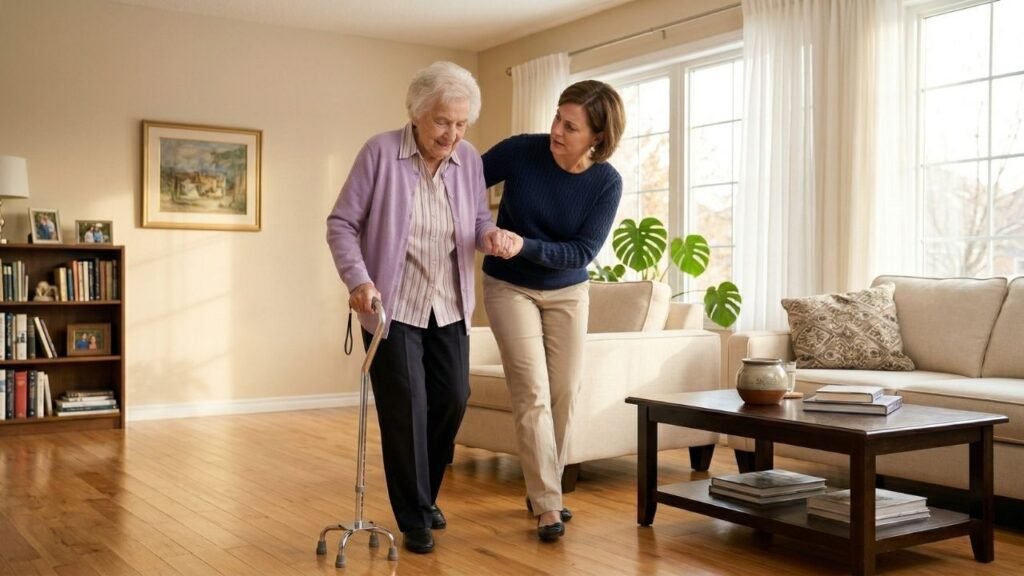
If you spend your days helping a loved one get out of bed, move to a chair, or simply get dressed, there is a good chance you already know what caregiver back pain feels like. That deep, persistent ache across your lower back is not just soreness from a long day. It is your body sending a clear message that something in the way you move, lift, or brace yourself needs to change.
Caregiving is physically demanding work, and the back takes the hardest hit. Studies show that informal caregivers experience musculoskeletal injuries at rates comparable to professional healthcare workers. The difference is that most family caregivers have never received formal training on how to protect their bodies while doing this work.
This guide will help you understand why back pain develops during caregiving, what you can do to prevent it, and how to adopt safer techniques that protect your spine. Whether you are new to caregiving or have been doing it for years, the information here can make a real difference.
Why Caregivers Are Especially Vulnerable to Back Injuries
Caregiving often involves repetitive physical tasks that most people are simply not conditioned for. Helping someone stand from a seated position, supporting them during a transfer from bed to wheelchair, assisting with bathing, and even bending down to put on shoes all place significant stress on the spine. When these tasks are repeated multiple times a day, week after week, caregiver back pain becomes almost inevitable without the right precautions.
One of the biggest risk factors for back pain from caregiving is the lack of preparation. The role often develops gradually after a fall, a diagnosis, or a hospital discharge. There is rarely time to learn proper technique before the physical demands begin, so many caregivers develop habits early on — like bending at the waist or twisting while lifting — that steadily wear down the muscles and discs of the lower back.
The emotional weight of caregiving also plays a role. Stress, anxiety, and sleep deprivation affect how the body handles physical strain. When you are mentally exhausted, your muscles tighten, your posture suffers, and your reaction time slows. Understanding the role caregivers play in senior mobility — and the physical toll it takes — can help break that cycle before it leads to serious injury.
The home environment itself plays a role as well. Unlike hospitals or assisted living facilities, most homes are not designed for patient care. Narrow hallways, low beds, slippery bathroom floors, and a lack of grab bars all force caregivers into awkward positions that put the back at risk. Even something as simple as reaching across a bed to adjust a pillow can strain the lower back if done repeatedly without proper support.
The Three Pillars of a Healthier Back: Mechanics, Environment, and Self-Care
Preventing caregiver back pain is not about doing one thing right. It is about building a foundation that supports your body across three key areas. Think of these as pillars — each one is important on its own, but together they create a structure that keeps you safer and more comfortable over the long term.
Body Mechanics. This refers to the way you position and move your body during physical tasks. Proper body mechanics means using your legs rather than your back to generate force, keeping loads close to your center of gravity, and avoiding twisting motions while bearing weight. Even small changes in how you stand, bend, and lift can dramatically reduce the pressure on your spine. Healthcare professionals are trained in these techniques from day one, and caregivers deserve the same foundation.
Environment. Your physical surroundings should support safe movement, not fight against it. This means adjusting bed heights where possible, creating a senior-friendly bathroom with grab bars and non-slip mats, clearing pathways of clutter, and ensuring that the spaces where you perform care tasks give you enough room to move without contorting your body. Small environmental changes can eliminate some of the most common causes of strain.
Self-Care. Your back cannot stay healthy if the rest of your body is neglected. Regular stretching, adequate sleep, proper hydration, and basic strengthening exercises all contribute to a more resilient spine. Self-care is not a luxury for caregivers — it is a practical necessity. A caregiver who is physically depleted is more likely to use poor form, rush through tasks, and ultimately get hurt. Taking care of yourself is part of taking care of someone else.
Common Scenarios Where Caregiver Back Pain Develops
Understanding the real-world situations that lead to injury can help you recognize risk before pain sets in. Most caregiver back injuries do not come from a single dramatic event. They develop slowly, through patterns that seem harmless until the damage accumulates.
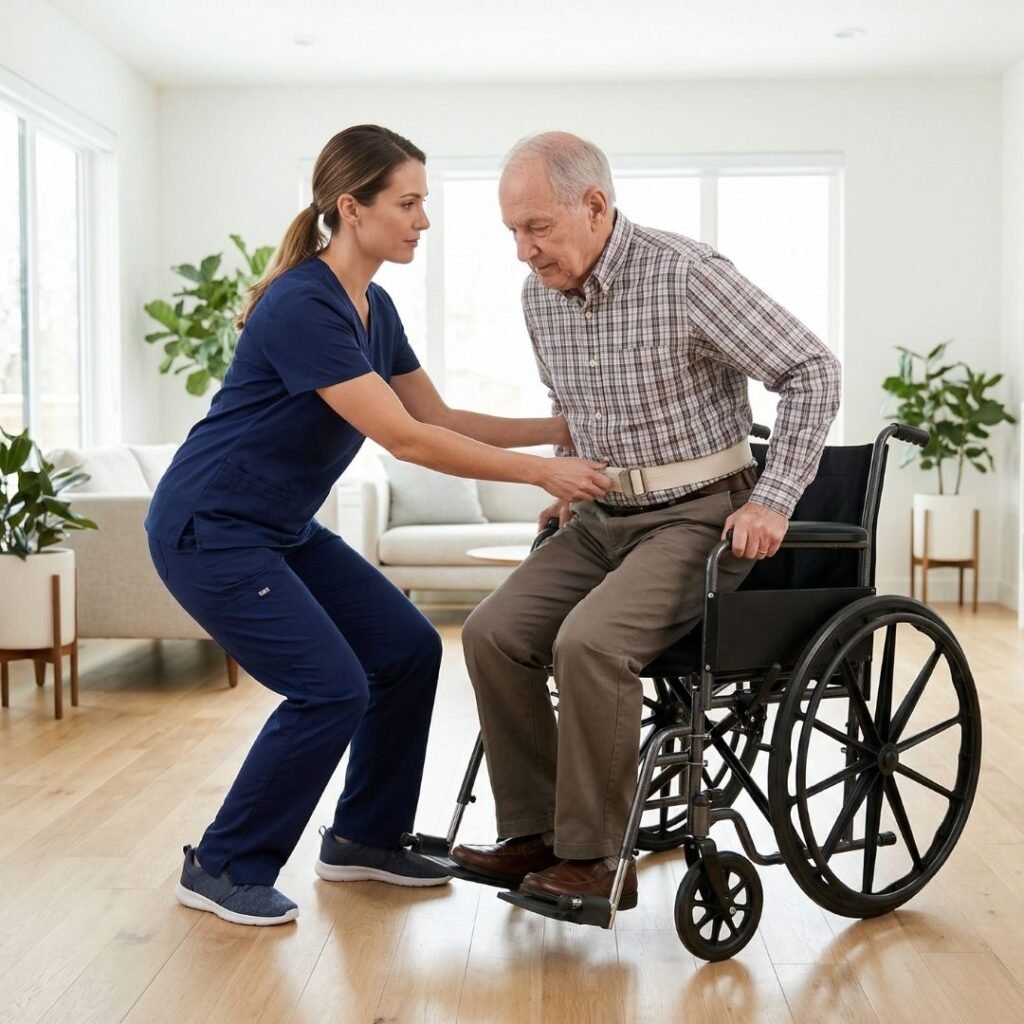
Bed-to-chair transfers. This is one of the most physically demanding tasks in home caregiving. Helping someone move from lying down to seated, and then from seated to standing, requires lifting, pivoting, and stabilizing — often all at once. When the person being cared for has limited mobility, the caregiver ends up absorbing most of the weight. Without proper technique, this places enormous strain on the lumbar spine.
Bathing and toileting assistance. Bathrooms are often the most dangerous room in the house for both the care recipient and the caregiver. The combination of wet surfaces, tight spaces, and the need to support someone in a bent or crouched position makes back injury highly likely.
Repositioning in bed. Turning someone who cannot turn themselves requires reaching across a surface while generating lateral force — a movement pattern that is particularly hard on the back. Many caregivers do this multiple times per night, often while tired and in poor lighting.
Extended time in awkward postures. Not all back pain comes from lifting. Sitting hunched over while feeding someone, kneeling to help with shoes, or standing bent while changing linens can all trigger pain when done repeatedly. These lower-intensity activities contribute to chronic discomfort just as much as heavy lifting.
Safer Lifting Techniques Every Caregiver Should Know
Learning how to lift and transfer safely is one of the most important things you can do to protect your back. The good news is that the core principles are straightforward, and once you practice them a few times, they start to feel natural. Beyond lifting form alone, a broader set or caregiver injury prevention techniques — covering bathing, dressing, and everyday transfers — helps keep you safe across all of your daily tasks.
The first rule is to always bend at the knees, not at the waist. When you bend forward from the waist, your lower back becomes the primary load-bearing structure, putting intense pressure on the lumbar discs and muscles. Instead, lower yourself by bending your knees and keeping your back as upright as possible. Your legs have much larger and stronger muscles and are designed to handle this kind of effort.
The second rule is to keep the person you are lifting as close to your body as possible. The farther a load is from your center of gravity, the more force your back generates to control it. When helping someone stand, step in close, place your feet shoulder-width apart, and bring their weight toward your core before initiating the lift.
The third rule is to never twist while lifting. Twisting under load is one of the fastest ways to injure a spinal disc. If you need to change direction during a transfer, move your feet first. Pivot your entire body as a unit rather than rotating at the waist.
Finally, communicate with the person you are caring for. Before any transfer, explain what you are going to do and count down together. If they can contribute any effort — pushing up with their arms, leaning forward, bearing partial weight — let them. Even a small contribution reduces the load on your back and makes every movement safer for both of you.
Daily Habits and Stretches That Protect Your Spine
Safe lifting technique matters enormously, but what you do between care tasks is just as important for preventing caregiver back pain long term. Your back needs consistent maintenance — not just crisis management after the pain has already started.
One of the simplest habits to adopt is a brief stretching routine in the morning and before bed. You do not need a gym or special equipment. A standing hamstring stretch, where you rest one foot on a low surface and gently lean forward with a flat back, loosens the muscles that connect to your lower spine. A cat-cow stretch on all fours — arching your back up and then letting it sink down — mobilizes the vertebrae and relieves tension that builds up overnight or during the day.

Walking is another powerful tool for back health. Even fifteen to twenty minutes of walking each day improves circulation to the spinal discs, strengthens the stabilizing muscles around the spine, and helps manage the stress that contributes to muscle tension. If you cannot leave the house, walking in place or doing gentle laps around the home still provides benefit.
Posture during rest periods deserves attention as well. When you sit down between tasks, choose a chair that supports the natural curve of your lower back. Avoid sinking into soft couches that round your spine forward. If your chair does not have built-in lumbar support, a rolled-up towel placed behind your lower back can fill the gap. These small adjustments prevent the postural strain that quietly contributes to chronic back pain from caregiving.
Hydration and nutrition also play a role. The discs between your vertebrae are largely made of water, and they depend on adequate hydration to maintain their cushioning ability. Eating foods rich in calcium, vitamin D, and anti-inflammatory nutrients supports the bones and tissues that keep your back strong. Neglecting basic nutrition while focused on someone else’s needs is a common pattern among caregivers, and it directly increases injury risk.
Assistive Devices and Equipment That Reduce Physical Strain
You do not have to rely solely on your own strength to manage caregiver back pain or provide safe care. There are a number of practical tools and assistive devices designed specifically to reduce the physical burden of caregiving. Many of these are affordable, widely available, and simple to use.
A gait belt (also called a transfer belt) is one of the most useful and underused tools in home caregiving. Our roundup of the best gait belts for caregivers covers how to choose one and use it safely during transfers. It wraps around the person’s waist and gives you a secure handhold during transfers. Instead of gripping clothing or reaching under arms — both of which put your back in a vulnerable position — you can hold the belt close to the person’s center of gravity and guide their movement with much less effort. Professional caregivers in clinical settings use gait belts routinely, and there is no reason home caregivers should go without one.
Caregivers can also protect their own spine directly: a well-fitted back support for caregivers adds lumbar stability during lifts and transfers, reducing strain on the lower back.
A sliding board or transfer board allows someone to slide from one surface to another — such as from a bed to a wheelchair — without the caregiver needing to lift their full weight. The board bridges the gap between surfaces and lets gravity do most of the work, reducing cumulative back strain dramatically.
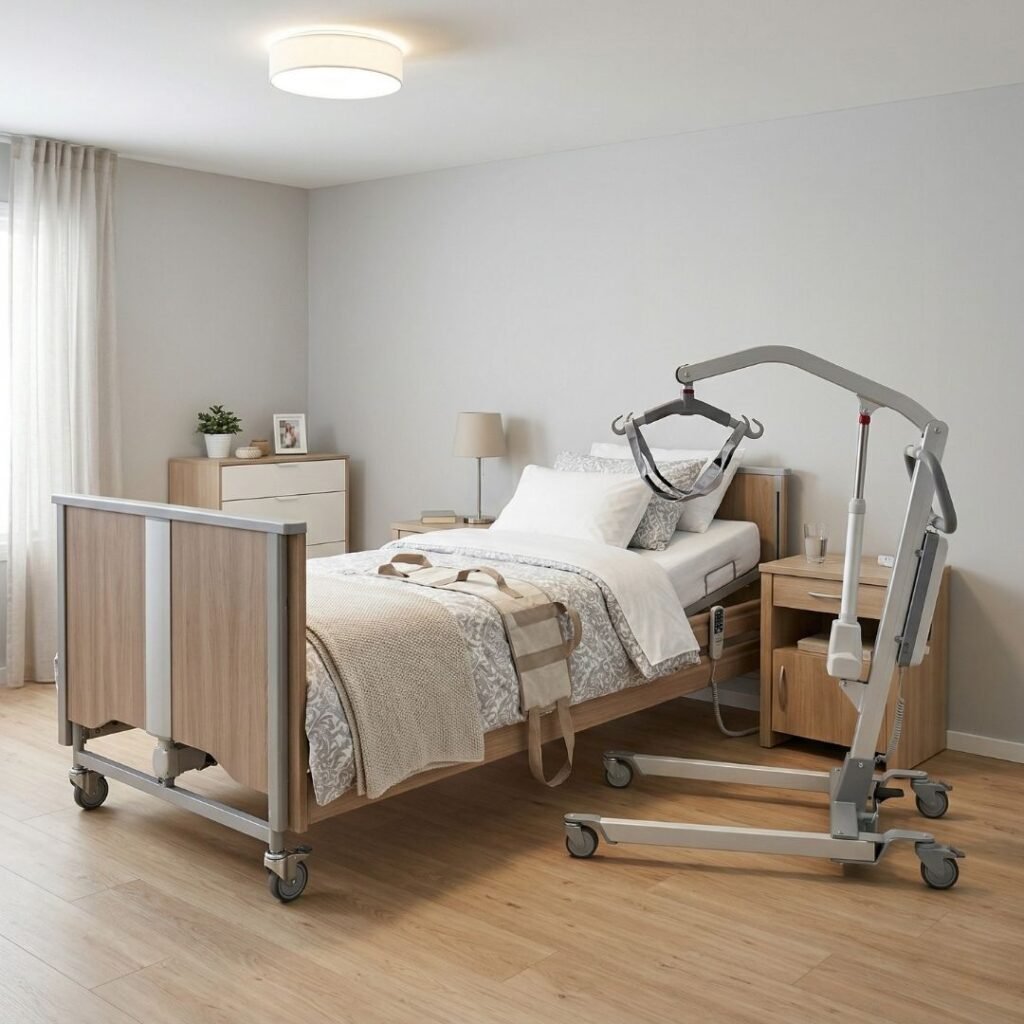
Adjustable-height beds are another worthwhile consideration. When a bed is too low, the caregiver bends further down, placing more stress on the lumbar spine. Hospital-style beds with adjustable height are available for home use, and even simple bed risers can make a meaningful difference for tasks like repositioning and dressing.
When it comes to understanding fall risks in seniors, grab bars in bathrooms, raised toilet seats, and shower chairs all reduce the amount of physical support the caregiver needs to provide. When the care environment does more of the work, your back is spared. Consulting with an occupational therapist, even for a single home assessment, can help you identify which tools and modifications will have the greatest impact for your specific situation. The guidelines from the National Institute for Occupational Safety and Health (NIOSH) on safe patient handling are also an excellent resource for learning which equipment is recommended for different care tasks.
Special Considerations: When Back Pain Needs More Than Prevention
While prevention is always the goal, it is important to recognize when caregiver back pain has moved beyond what stretching and better technique can fix. Some situations require professional medical attention, and delaying care can turn a manageable issue into a chronic one.
If you experience sharp, shooting pain that travels down one or both legs, this may indicate a herniated disc or nerve compression. This type of pain often worsens with bending, sitting, or coughing, and it should be evaluated by a physician. Similarly, if your back pain is accompanied by numbness, tingling, or weakness in the legs or feet, these are signs that a nerve may be involved and prompt attention is warranted.
Caregivers who have pre-existing conditions such as osteoporosis, degenerative disc disease, or arthritis face a higher risk of serious injury from the same tasks that might only cause soreness in someone without these conditions. If you fall into this category, it is worth having a conversation with your doctor about what types of physical activities are safe for you and whether specific precautions or equipment should be part of your routine.
Age is another factor. As we get older, spinal discs lose hydration, stabilizing muscles weaken, and recovery from strain takes longer. This does not mean older caregivers cannot provide physical care safely, but it does mean that technique, equipment, and rest become even more important.
The Centers for Disease Control and Prevention (CDC) caregiver health resources provide additional guidance on recognizing when the physical demands of caregiving may be exceeding what your body can safely handle. There is no weakness in asking for help, seeking professional guidance, or using devices that make the work easier. In fact, doing so is one of the most responsible things a caregiver can do — for themselves and for the person they are caring for.
Frequently Asked Questions
1. What is the most common cause of back pain in caregivers?
The most common cause is repeated improper lifting and bending during transfers and daily care tasks. When caregivers bend at the waist instead of the knees, or twist while supporting someone’s weight, the lower back absorbs force it is not designed to handle on a regular basis. Over time, this leads to muscle fatigue, disc compression, and chronic pain.
2. How should I lift someone safely without hurting my back?
Start by standing close to the person with your feet shoulder-width apart. Bend at the knees — not the waist — and keep your back as straight as possible. Hold the person close to your body, ideally using a gait belt for a secure grip. Lift by pushing up through your legs, and never twist your torso during the movement. If you need to change direction, move your feet first and pivot your whole body.
3. What stretches help relieve caregiver back pain?
Gentle hamstring stretches, cat-cow stretches on all fours, and child’s pose are all effective for relieving tension in the lower back. A pelvic tilt — lying on your back with knees bent and gently pressing your lower back into the floor — also helps. Aim to stretch for five to ten minutes in the morning and again before bed for the best results.
4. When should a caregiver see a doctor for back pain?
You should see a doctor if your back pain lasts more than two weeks without improvement, if you experience sharp or shooting pain down your legs, or if you notice numbness, tingling, or weakness in your lower body. Pain that disrupts your sleep or prevents you from performing basic daily activities also warrants professional evaluation.
5. Are there devices that can reduce the physical strain of caregiving?
Yes. Gait belts, transfer boards, adjustable-height beds, grab bars, raised toilet seats, and shower chairs all reduce the physical effort required during common care tasks. A portable patient lift can also be used for individuals with very limited mobility. Consulting with an occupational therapist can help you determine which devices are best suited for your specific caregiving situation.
Final Thoughts: Protecting Yourself Is Part of the Job
Caring for someone you love is one of the most meaningful things a person can do. But it should not come at the cost of your own health. Caregiver back pain is common, but it is not inevitable. With the right techniques, a supportive environment, and a commitment to taking care of your own body, you can continue providing excellent care while keeping your spine safe.
Start small. Pick one technique from this guide — whether it is adjusting your lifting posture, adding a daily stretch, or looking into a gait belt — and put it into practice this week. Small, consistent changes add up to major protection over time.
If you are already experiencing pain, do not wait for it to resolve on its own. Talk to your doctor, explore the assistive tools available to you, and know that asking for help is a sign of strength. You deserve the same level of care and attention that you give to others every single day.
Medical Disclaimer: The information provided on this website is for educational purposes only and should not replace professional medical advice. Always consult your physician or qualified healthcare provider regarding any medical condition or treatment decisions.
