
Introduction
When a senior loved one is ready to leave the hospital, the focus shifts quickly from medical treatment to what happens next at home. After hospital care for elderly family members begins well before the car pulls into the driveway. It starts with making the home safe, accessible, and organized for someone whose physical abilities may have changed significantly during their stay. Many families receive little guidance on how to manage this transition, and the consequences of being unprepared can be serious.
The first few weeks following a hospital discharge represent a window of heightened vulnerability. A senior returning home may be dealing with new medications, surgical restrictions, reduced strength, or impaired balance. The home they left days or weeks earlier can suddenly feel full of obstacles that were never a concern before. A bathroom without grab bars, a bed that sits too low, or a cluttered hallway can each become the source of a fall during recovery.
This guide walks through the practical steps families should take before a senior arrives home from the hospital. From clearing pathways and modifying the bathroom to organizing medications and scheduling follow-up care, each section helps you build a recovery-ready environment. The goal is not to renovate the entire house but to make the specific changes that matter most during the weeks when your loved one is most vulnerable. Most of this can be done without construction; our guide on making a senior’s home safer without major renovations covers the low-cost, high-impact upgrades to prioritize.
Most hospital discharges assume the home is ready. In reality, that is often not the case, and that gap is where many preventable complications begin.
Why the Transition Home Is a Critical Window
The period immediately following discharge is one of the most medically fragile times in an older adult’s life. The first thirty days after leaving the hospital carry the highest risk for complications, readmission, and falls. According to the Centers for Disease Control and Prevention (CDC), falls are the leading cause of injury among adults over 65, and the risk increases significantly when a person is recovering from illness or surgery.
There are several reasons this transition is so dangerous. Even a short hospital stay causes rapid muscle deconditioning. A senior who spent several days in bed may have lost meaningful strength and balance in ways that are not immediately obvious. New medications can cause dizziness, drowsiness, or confusion, all of which increase the chance of a fall. And the senior may be returning to a home that was never set up with their current limitations in mind.
Studies indicate that nearly one in five Medicare patients is readmitted within thirty days of discharge. Many of these readmissions are preventable and stem from medication errors, missed follow-up appointments, or falls at home. For families who want to understand why seniors fall at night, the discharge window demands special attention because the baseline risk is already elevated by the hospital stay itself.
The good news is that thoughtful planning significantly reduces these risks. Families who assess the home, set up medications, and coordinate follow-up care before the senior arrives give their loved one a much stronger foundation for recovery.
The Three Pillars of a Safe Hospital-to-Home Transition
In practice, most preventable complications and hospital readmissions after discharge fall into three core areas. Thinking of these as pillars helps families focus on what actually matters and ensures nothing critical is overlooked.
The first pillar is physical safety. This means removing tripping hazards, adding grab bars, improving lighting, and ensuring the senior can move between the bedroom, bathroom, and kitchen without navigating stairs or tight spaces. Physical safety is the most visible part of after hospital care for elderly family members, and it is often where small changes make the biggest difference in preventing falls and injuries.
The second pillar is medical readiness. A senior coming home almost always has new prescriptions, wound care instructions, and follow-up appointments. Medical readiness means medications are filled and organized, appointments are scheduled with transportation arranged, and someone clearly understands the discharge instructions and warning signs. This is where many preventable readmissions occur when details are missed or misunderstood.
The third pillar is emotional and practical support. A senior returning home may feel anxious about falling or overwhelmed by new limitations. Having a caregiver present during the first several days, maintaining a calm routine, and keeping open communication with the medical team all contribute to a smoother adjustment. Preparing home for elderly after hospital stay means addressing the whole person, not just their physical environment.
What Goes Wrong When Homes Are Not Prepared
Here’s what this actually looks like in real life.
A senior is discharged after hip surgery and returns home to an environment that hasn’t changed. The same area rugs sit on the hardwood floors. The bathroom has no grab bars or shower seat. The bed is still low, making it difficult to sit and stand without bending past ninety degrees. Within forty-eight hours, they try to use the bathroom independently, lose their balance, and end up back in the emergency room.
In another scenario, a senior comes home with five or six medications—some new, some adjusted. The discharge paperwork lists them all, but no one has organized them into a simple system. A dose is accidentally doubled because the change wasn’t understood, or a critical medication like a blood thinner is missed entirely. Within days, confusion leads to a preventable complication and a return to the hospital.
Sometimes the issue is less obvious but just as serious. A follow-up appointment is never scheduled. Physical therapy is delayed. The senior spends most of the day alone, moving less and losing strength quickly. Within two weeks, they are weaker than they were at discharge, and what should have been a recovery period turns into another setback.
Each of these situations is common, and each follows the same pattern. The problem is not complexity. The problem is timing. The steps that would have prevented these outcomes are straightforward—but they need to be in place before the senior walks through the door, not after something goes wrong.
Room-by-Room Home Preparation Checklist
The easiest way to apply these three pillars is to walk through the home one area at a time and evaluate each space through the lens of the senior’s current abilities, not the abilities they had before the hospital stay. What worked three weeks ago may not work today.
Entryway & Main Pathway
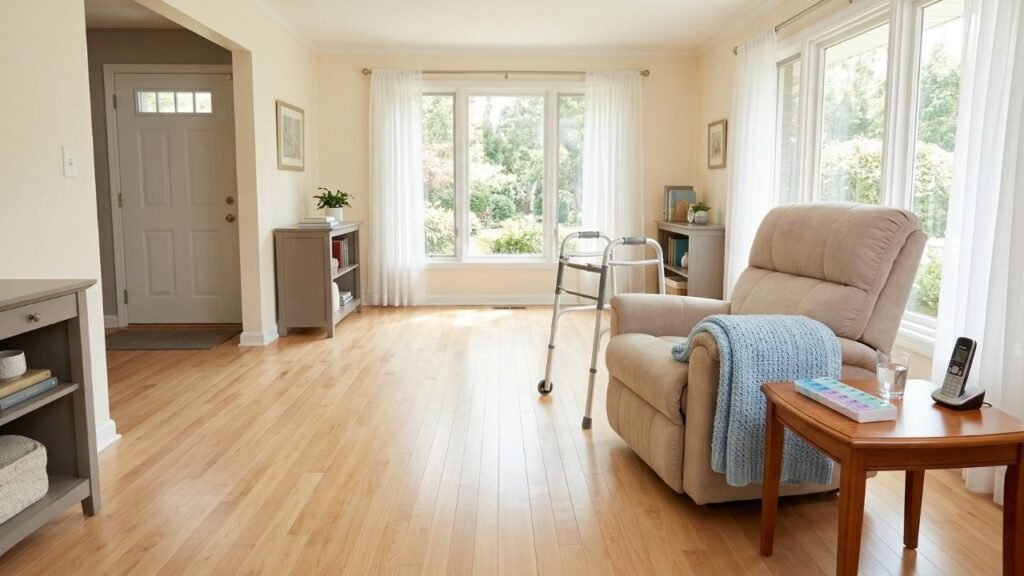
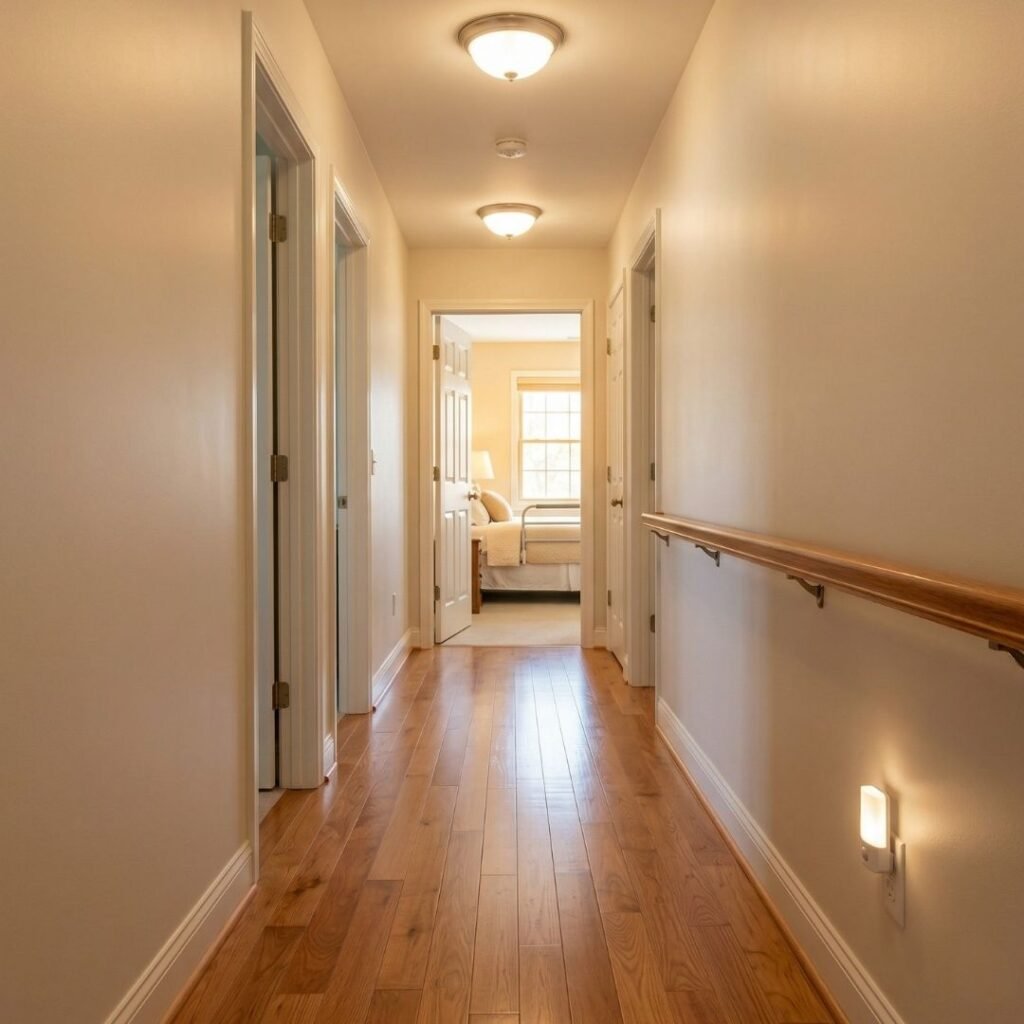
The route from the front door to the bedroom and bathroom should be completely clear of obstacles. Remove area rugs, extension cords, shoes, and any furniture that narrows the walking path. If the senior will use a walker or wheelchair, measure doorways to confirm they are wide enough. Make sure exterior steps have sturdy handrails on both sides and that the entryway is well lit, including at night. If there are stairs inside the home, evaluate honestly whether the senior can use them safely. If not, setting up a temporary bedroom on the main floor is one of the most important decisions a family can make.
Bedroom
The bed height should allow the senior to sit on the edge with their feet flat on the floor and their knees at roughly a ninety-degree angle. If the bed is too low, inexpensive bed risers can correct the problem. A nightstand should be within arm’s reach and hold essentials: a phone, water, medications, and a lamp that is easy to turn on. If the senior needs to get up at night, a motion-sensor night light between the bed and the bathroom significantly reduces fall risk. Our guide on how to help a senior get out of bed safely covers techniques for this specific challenge. Remove any clutter from the floor around the bed.
Kitchen
The kitchen often needs adjustment as well. Move frequently used items from high shelves down to counter level or low cabinets so the senior does not need to reach overhead or use a step stool. If they will be preparing their own meals, evaluate whether they can do so safely from a seated position and provide a sturdy chair or stool if needed. Check that stove controls are accessible. These same principles apply across every room in the house.
Bathroom Modifications and Mobility Adjustments
The bathroom is consistently the highest-risk room for a senior recovering at home, and it is often the space that requires the most immediate attention before discharge day. The combination of wet surfaces, hard fixtures, confined space, and the physical demands of toileting and bathing make it a priority for any family focused on post hospital care for seniors.
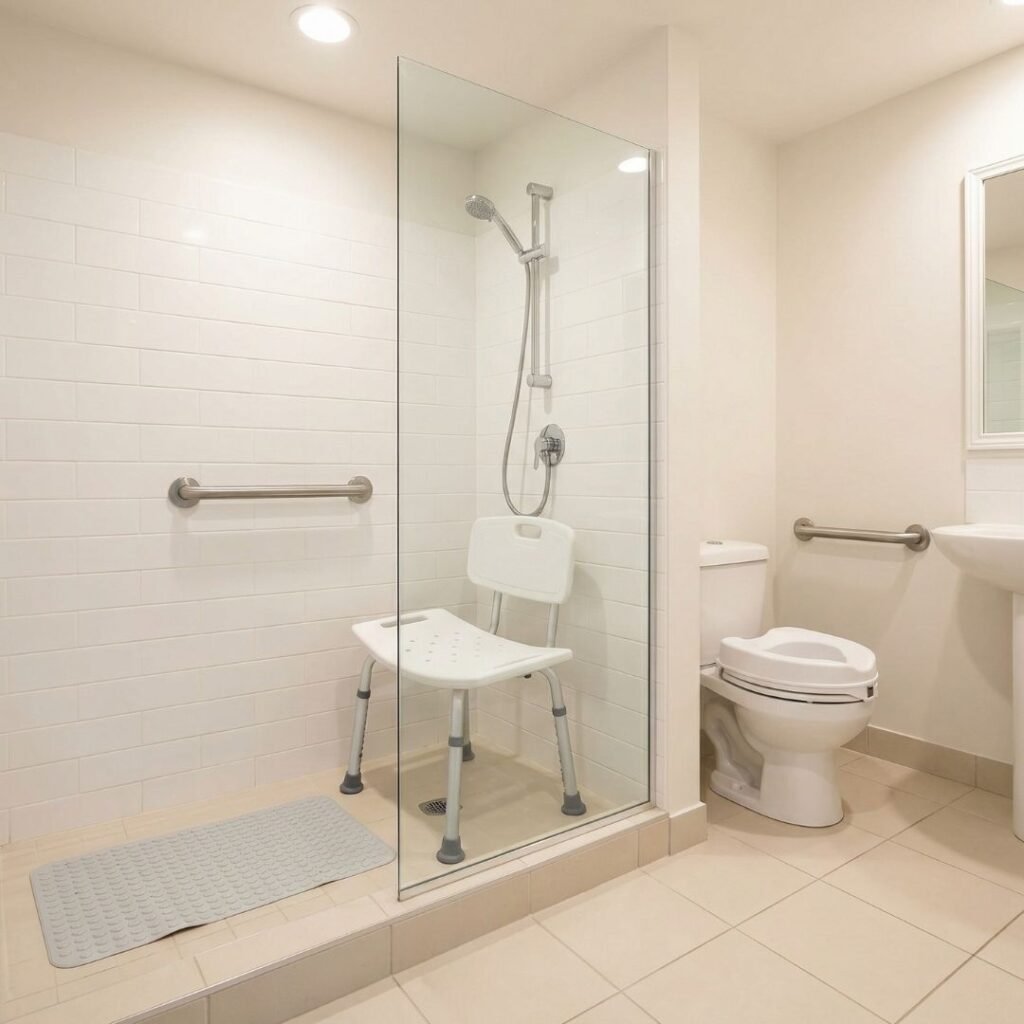
At a minimum, the bathroom should have grab bars installed next to the toilet and inside the shower or tub area. If the senior had surgery on a hip, knee, or leg, a raised toilet seat reduces the depth of the sitting motion and makes standing up significantly easier. Inside the shower, a sturdy shower chair or transfer bench allows the senior to bathe safely in a seated position rather than standing on a wet surface. A handheld showerhead on an adjustable slide bar gives them control over water direction without needing to reach or twist. Non-slip mats should be placed both inside the shower and on the floor directly outside of it. These are not optional accessories. For many post-hospital seniors, they are the difference between a safe bathing experience and a dangerous fall. Families looking for a comprehensive breakdown should review our guide on creating a senior-friendly bathroom.
Beyond the bathroom, ensure there is enough space for any mobility device in every room the senior will access. Rearrange furniture to widen pathways. Chairs and couches should be firm and high enough for easy sit-to-stand transfers. A recovery chair or recliner can make these transfers safer during the first weeks home. Pay attention to thresholds between rooms, as raised door frames and surface transitions can trip someone using a walker. If the home has stairs the senior must use daily, verify handrails are secure on both sides and add non-slip tape to step edges. For seniors who cannot manage stairs safely, relocating to a single floor is a critical decision that should not be delayed.
Setting Up Medications and Follow-Up Care
The safest way to manage medications after discharge is to build a simple, repeatable system from the start. This is one of the most important steps when bringing elderly parent home from hospital, and small breakdowns here are a common cause of preventable complications.
Before the senior comes home, fill all new prescriptions so they are ready on arrival. Do not wait until the next day. Compare the discharge medication list carefully against whatever the senior was taking before admission. If there are changes, such as a new blood thinner, an adjusted insulin dose, or a discontinued medication, make sure those changes are clearly documented and that old versions are physically removed to prevent confusion.
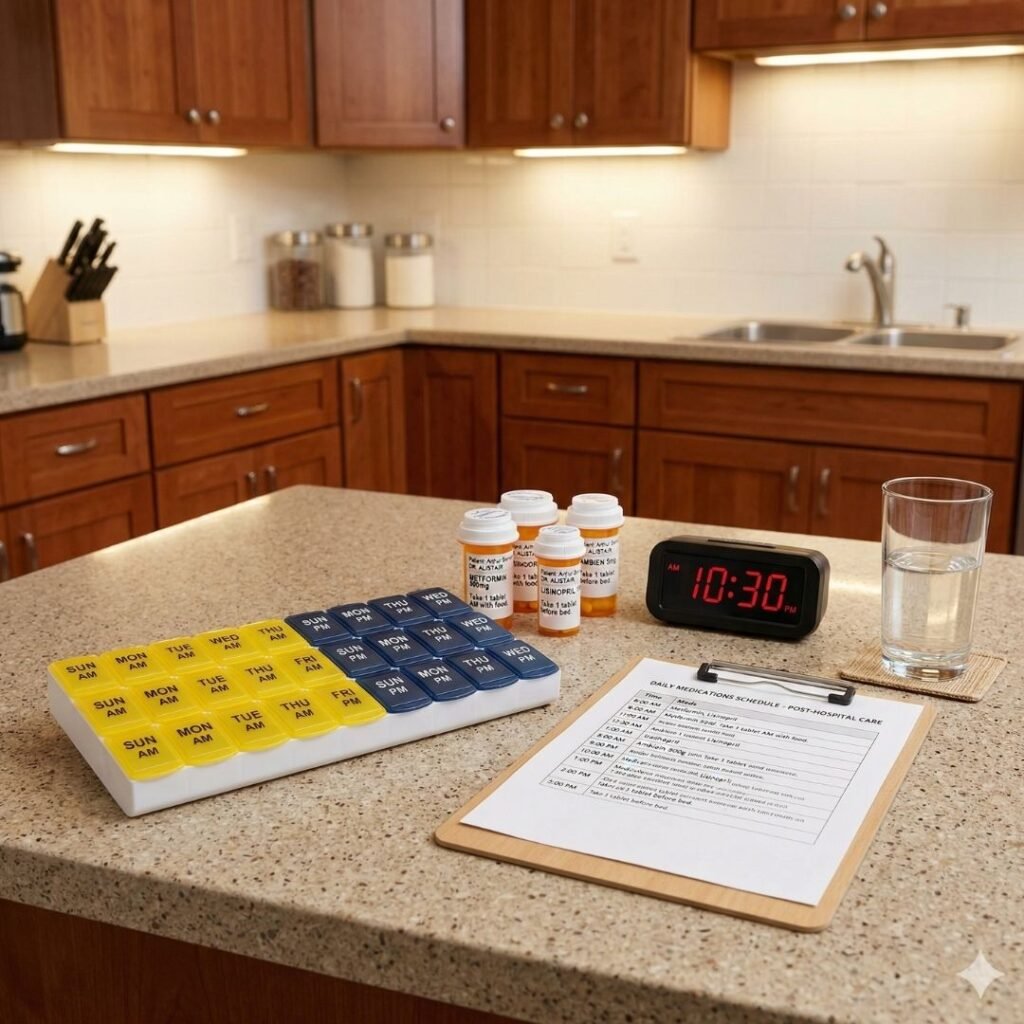
Set up a dedicated medication station in the home. This should be a single, well-lit location where all current medications, a weekly pill organizer, and a written schedule are kept together. The schedule should list each medication by name, the dose, and the exact time of day it should be taken. For seniors who manage their own medications, clearly labeled morning, midday, and evening compartments simplify the routine. For seniors with memory challenges, a caregiver should fill the organizer weekly and supervise each dose.
Follow-up appointments are equally important to build into this system. Before the senior leaves the hospital, confirm which visits are needed and schedule them before discharge if possible. Arrange transportation in advance so there are no barriers to attending. The Family Caregiver Alliance provides additional guidance on coordinating post hospital care for seniors, including how to work with the discharge planning team.
If physical therapy or occupational therapy was recommended, arrange for it to begin as soon as possible. Early rehabilitation helps the senior regain strength before deconditioning progresses further. In-home therapy sessions are available in most areas and can be arranged through the hospital’s discharge planner. The sooner therapy starts, the better the outcomes.
What to Do in the First 24–48 Hours After Discharge
The first one to two days at home set the tone for the entire recovery. This is when small oversights turn into bigger problems, and when the right preparation makes the biggest difference.
Start with medications. Confirm that every prescription listed on the discharge paperwork has been filled and matches exactly what the senior is taking at home. Do not rely on memory. Use the written list and double-check each medication, dose, and timing.
Next, test the home setup in real conditions. Walk the path from the bedroom to the bathroom and kitchen with the senior present. Watch for hesitation, imbalance, or areas where support is needed. Have them sit on the bed, use the bathroom, and move through key spaces so you can identify problems before they lead to a fall.
Pay close attention to the bathroom. This is where many early injuries occur. Make sure grab bars, shower seating, and non-slip surfaces are in place and actually being used correctly.
Confirm that follow-up care is fully arranged. Appointments should be scheduled, transportation planned, and any recommended home health or therapy services confirmed. Do not assume these details are already handled.
Finally, plan for consistent supervision during this window. Even seniors who are normally independent may need extra support in the first 24 to 48 hours. Having someone present to assist with mobility, medications, and daily routines can prevent small issues from becoming serious setbacks.
Special Considerations for Dementia, Post-Surgery, and Chronic Conditions
While the general principles of after hospital care for elderly adults apply broadly, certain conditions require additional planning.
For seniors with dementia or cognitive decline, the hospital experience itself can cause a temporary worsening of confusion, often called hospital-induced delirium. When these seniors arrive home, they may not remember the layout of rooms or may resist unfamiliar changes like a new shower chair. Maintain environmental familiarity as much as possible. Use visual cues like nightlights and brightly colored strips on stair edges. Remove bathroom door locks so help can be provided quickly. Close supervision during the first several days is essential, as a confused senior is at especially high risk of falling or taking medication incorrectly.
For seniors recovering from hip or knee surgery, the physical restrictions are typically very specific. Surgeons often prescribe movement limits such as not bending past ninety degrees or not crossing the legs. These restrictions directly affect how a person sits, stands, uses the toilet, and gets into bed. Equipment like a raised toilet seat, reacher grabber, long-handled shoehorn, and leg lifter should all be set up in the home before discharge day, not ordered afterward when the senior is already struggling. The hospital’s physical therapist can provide a detailed equipment list. For a fuller picture of what to have ready, see our guide on the mobility aids seniors may need after surgery.
Seniors managing chronic conditions such as heart failure, diabetes, or COPD may be discharged with specific daily monitoring requirements. This could include morning weight checks, blood sugar testing, oxygen level monitoring, or wound care. Make sure the home has the necessary equipment and supplies ready. Designate a consistent area where these tasks can be performed each day. If the family caregiver is not comfortable performing any required procedure, request hands-on training from hospital nursing staff before discharge. It is far easier to learn these techniques in the medical environment than to figure them out at home under pressure.
Frequently Asked Questions
1. How far in advance should you start preparing the home before a senior is discharged?
Ideally, preparation should begin as soon as a discharge date is discussed, which is typically two to three days before the senior leaves the hospital. If the hospital stay was planned, such as for an elective surgery, families can start weeks in advance. The most time-sensitive tasks include filling prescriptions, installing grab bars, and clearing walkways. Even a single focused day of preparation can make a meaningful difference.
2. What are the most important rooms to modify before bringing a senior home from the hospital?
The bathroom and the bedroom are the two highest-priority rooms. The bathroom requires non-slip surfaces, grab bars, and often a shower chair or raised toilet seat. The bedroom should have a bed at the right height, a clear path to the door, and essentials within arm’s reach on the nightstand. After these two rooms, turn your attention to the main pathway from the front door and the kitchen if the senior will be preparing any food independently.
3. How do you set up a medication management system after hospital discharge?
Start by comparing the discharge medication list with any medications the senior was taking before the hospital stay. Fill all new prescriptions before the senior comes home. Use a weekly pill organizer with clearly labeled compartments for different times of day. Create a written medication schedule listing each drug, the dose, and the time it should be taken. Place everything in a single well-lit location. If the senior cannot manage medications independently, a caregiver should fill the organizer weekly and oversee each dose.
4. Should you hire a home health aide after a senior is discharged from the hospital?
If the senior needs help with bathing, dressing, toileting, or medication management, a home health aide can provide essential support during the initial recovery weeks. Many insurance plans, including Medicare, cover a limited number of home health visits following a qualifying hospital stay. Speak with the hospital’s discharge planner about eligibility before the senior leaves.
5. What are the signs that a senior is not recovering well after coming home from the hospital?
Warning signs include increasing confusion, persistent uncontrolled pain, fever, wound redness or swelling, difficulty breathing, prolonged appetite loss, and falls or near-falls. Emotional changes like withdrawal or persistent sadness may indicate depression. Any of these should prompt an immediate call to the physician.
Final Thoughts
After hospital care for elderly loved ones is not about achieving perfection. It is about making the home safe enough, organized enough, and supportive enough to give the senior the best chance of healing without setbacks. The goal is not to fix everything at once, but to address the areas that carry the highest risk first.
If you feel unsure where to start, focus on the three pillars: physical safety, medical readiness, and emotional support. Walk through the home with your loved one’s current abilities in mind. Prioritize clear pathways, a safe bathroom setup, and a simple, reliable medication system. These are the changes that prevent the most common and most serious problems.
Remember that you do not have to navigate this alone. Home health agencies, occupational therapists, and community organizations exist to help families through exactly this kind of transition. With the right preparation, even small adjustments can make a meaningful difference in safety, confidence, and recovery at home.
Medical Disclaimer: The information provided on this website is for educational purposes only and should not replace professional medical advice. Always consult your physician or qualified healthcare provider regarding any medical condition or treatment decisions.
