
Introduction
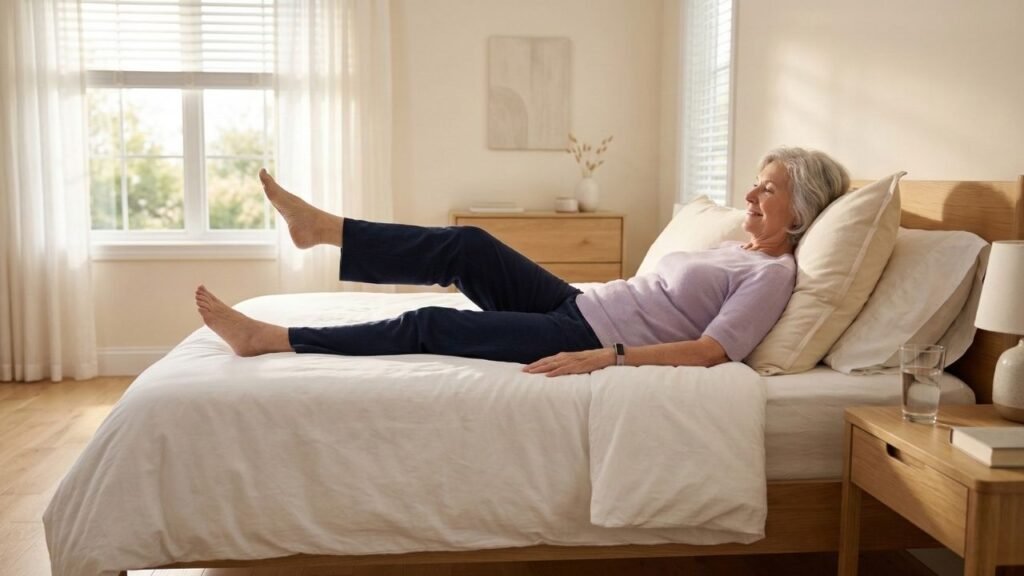
As we age, staying physically active becomes both more important and more challenging. For older adults who spend extended periods in bed — whether due to recovery from surgery, chronic illness, or limited mobility — the body can quickly lose strength, flexibility, and circulation. That is where bed exercises for elderly adults become a valuable part of daily life. These gentle, intentional movements can be done without standing, without equipment, and without leaving the comfort of a familiar bed.
Many families assume that a senior who is confined to bed has no real options for physical activity. That assumption, while understandable, is not accurate. In-bed exercises have been used in hospital and rehabilitation settings for decades precisely because they work. Physical therapists routinely prescribe them for post-surgical patients, stroke survivors, and individuals recovering from falls or fractures. The same principles apply at home. A senior lying in bed still has muscles that can contract, joints that can move, and a circulatory system that responds to even the smallest physical effort.
These exercises are not about intensity or endurance. They are about preserving what the body still has and slowly building on it. Even small, consistent movements performed while lying down can make a meaningful difference in how a senior feels throughout the day. A few ankle pumps in the morning can reduce swelling in the feet. A gentle knee bend after lunch can keep the hip joints from stiffening. A simple leg lift before bed can help maintain the quadricep strength needed to assist with transfers the next morning. None of these movements are dramatic on their own, but together they form a routine that quietly protects the body from the effects of prolonged inactivity.
This guide to bed exercises for elderly adults walks through the reasoning behind in-bed exercise, the types of movements that matter most, and how to approach them safely with physician-informed guidance. Whether you are a senior looking to maintain your own mobility or a caregiver supporting a loved one, the information here is designed to be practical, realistic, and grounded in what healthcare professionals actually recommend.
Why Bed-Based Movement Matters for Aging Adults
When a senior spends most of the day in bed, the body begins to change in ways that may not be immediately obvious. Muscles that are not used regularly start to weaken within just a few days. Joints stiffen. Blood flow slows, particularly in the legs and feet. Over time, these changes make it harder to perform even basic tasks like rolling over, sitting up, or transferring to a chair.
The consequences of prolonged bed rest go beyond physical discomfort. Reduced circulation can increase the risk of blood clots, particularly deep vein thrombosis. Weakened muscles around the hips and knees can make future falls more likely once a senior does attempt to stand or walk again. There is also the emotional toll — feeling physically stuck in bed often leads to frustration, anxiety, and a sense of lost independence.
What many families do not realize is that even very gentle movement performed while lying down can interrupt this cycle. A few minutes of intentional exercise each day helps maintain muscle tone, encourages blood flow, and supports joint health. It does not replace physical therapy or medical treatment, but it fills an important gap between doing nothing and doing too much. For seniors who are recovering, managing a chronic condition, or simply dealing with age-related mobility decline, simple daily habits to improve senior mobility can start right in bed.
The medical community has long recognized the value of early mobilization for hospitalized patients. The same principle applies at home. The sooner a senior begins gentle movement — even while still in bed — the better the long-term outcome tends to be. That is exactly why bed exercises for elderly adults are recommended so frequently by rehabilitation professionals.
Understanding the Three Pillars of In-Bed Exercise
Before jumping into specific movements, it helps to understand what bed-based exercises are actually trying to accomplish. Most programs designed for seniors who exercise in bed focus on three core areas: circulation, joint mobility, and functional strength.
Circulation refers to keeping blood moving effectively through the body. When someone lies flat for long stretches, blood tends to pool in the lower extremities. Simple movements like ankle pumps and foot circles encourage the calf muscles to act as a pump, pushing blood back toward the heart. This is one of the most basic and most important reasons to move while in bed, and organizations like the CDC’s physical activity guidelines for older adults emphasize the value of any movement that promotes blood flow, even at a very gentle level.
Joint mobility is about maintaining the range of motion in key areas like the ankles, knees, hips, shoulders, and wrists. When joints are not moved regularly, the surrounding tissues begin to tighten and shorten. This process, known as contracture, can happen surprisingly fast in elderly adults. Even slow, controlled bending and straightening of a joint several times a day can help prevent this stiffness from setting in.
Functional strength focuses on keeping the muscles strong enough to perform necessary daily tasks. For a bedridden or semi-bedridden senior, this might mean having enough leg strength to assist during a transfer from bed to wheelchair, or enough core stability to sit upright for meals. The goal is not to build large muscles but to maintain the baseline strength needed for safety and basic independence.
When these three pillars are addressed together — even in small doses — the overall effect on a senior’s physical wellbeing can be significant. Most bed exercises for elderly adults are designed to touch on all three areas within a single short routine.
How Inactivity Shows Up in Daily Life
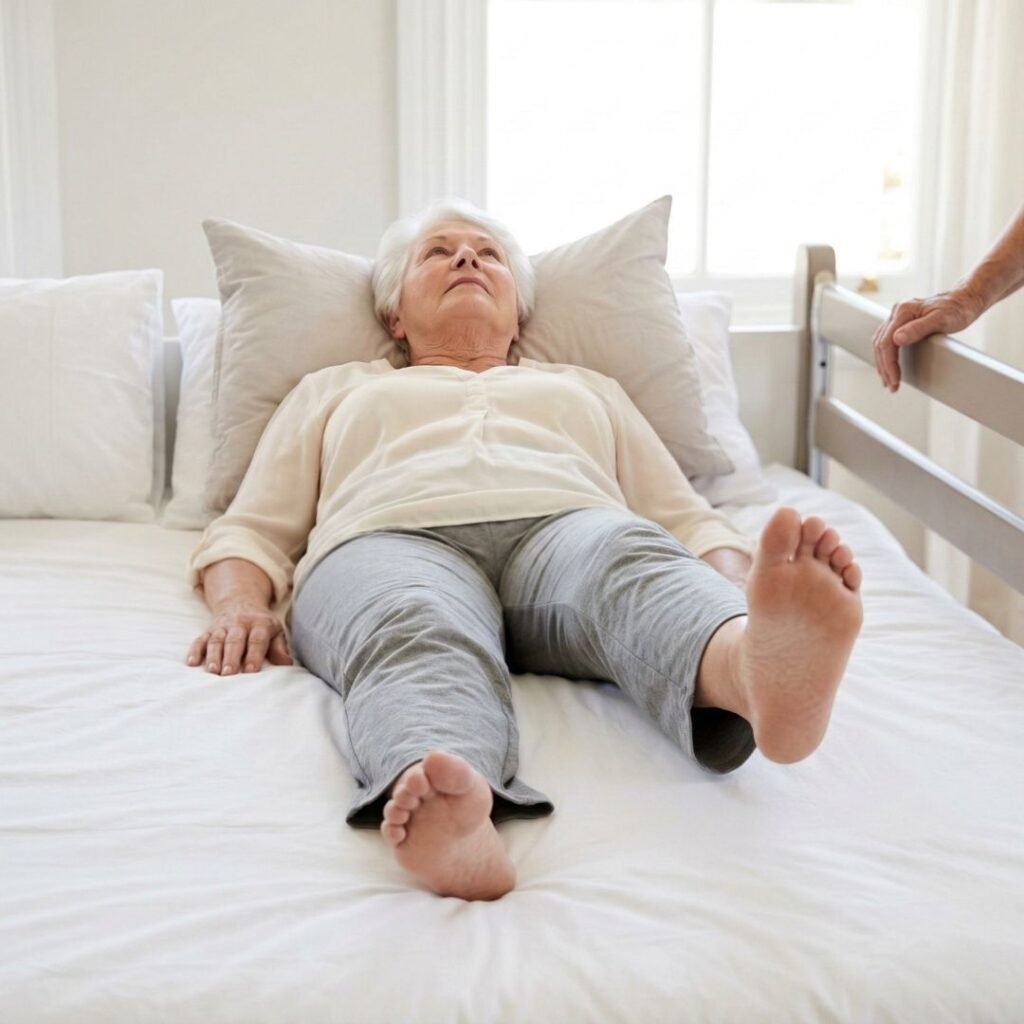
The effects of prolonged bed rest do not always announce themselves dramatically. More often, they show up gradually in small ways that family members or caregivers might overlook until the decline becomes difficult to reverse.
A senior who could previously roll from one side to the other without help may begin to struggle with that movement after just a week or two of inactivity. Sitting up on the edge of the bed might start requiring assistance. Legs that once felt steady during a short walk to the bathroom may begin to feel heavy or uncooperative. These are not just signs of aging — they are signs of deconditioning, and deconditioning is largely preventable with consistent gentle movement.
Stiffness is another common manifestation. A senior may notice that bending the knee or lifting the arm feels more restricted than it did a few weeks ago. Morning stiffness that used to resolve within a few minutes may linger for hours. Ankles and feet may swell more noticeably due to poor circulation. In more serious cases, skin breakdown can begin in areas where pressure is constant and blood flow is limited — a concern directly tied to how to prevent pressure ulcers in seniors.
The emotional impact is real as well. Seniors who feel physically unable to move often withdraw from conversation, meals, and activities they once enjoyed. The loss of even small physical abilities can feel like a loss of dignity. Recognizing these early signs and responding with gentle daily movement is one of the most effective things a family can do. Even the simplest bed exercises for elderly adults can help slow this decline before it becomes difficult to reverse.
What Can Happen When Seniors Stay Still Too Long
It is worth being direct about the risks, not to create fear, but to help families understand why even a few minutes of daily movement matters so much. Prolonged immobility in elderly adults is associated with a number of serious health complications.
Muscle atrophy can begin within 48 to 72 hours of complete bed rest. For an older adult who already has reduced muscle mass, this timeline is especially concerning. The legs tend to lose strength faster than the upper body, which is why so many bed-based exercise programs prioritize lower extremity movements.
Blood clots are another significant risk. When the muscles in the calves are not contracting and releasing — as they do during walking or even simple ankle pumps — blood flow in the deep veins of the legs slows down. This creates conditions where clots are more likely to form. A clot that travels to the lungs, known as a pulmonary embolism, can be life-threatening.
Respiratory function can also decline. Lying flat for extended periods reduces lung expansion, making it easier for fluid to accumulate and harder for the body to clear mucus. This increases the risk of pneumonia, which remains one of the leading complications for bedridden elderly patients.
Joint contractures, pressure injuries, constipation, and urinary complications round out the list of concerns. None of these outcomes are inevitable, and most can be significantly reduced with consistent bed exercises for elderly adults performed daily.
Getting Started: Safe and Simple Bed Exercises
Starting an in-bed exercise routine does not require special equipment, advanced fitness knowledge, or a significant time commitment. What it does require is consistency, patience, and attention to how the body responds. The movements described here are among the most commonly recommended by physical therapists and physicians for elderly adults with limited mobility.
Ankle pumps are often the first exercise recommended for anyone on bed rest. The senior lies flat and slowly points the toes downward toward the foot of the bed, then pulls them back up toward the shin. This simple motion activates the calf muscles and promotes circulation in the lower legs. Performing ten repetitions on each foot, two to three times per day, is a common starting point.
Heel slides involve lying on the back with both legs straight. The senior slowly bends one knee, sliding the heel along the surface of the mattress toward the buttock, then slides it back out to a straight position. This movement works the quadriceps and hip flexors while gently mobilizing the knee joint. It should be performed slowly and without forcing the knee beyond a comfortable range.
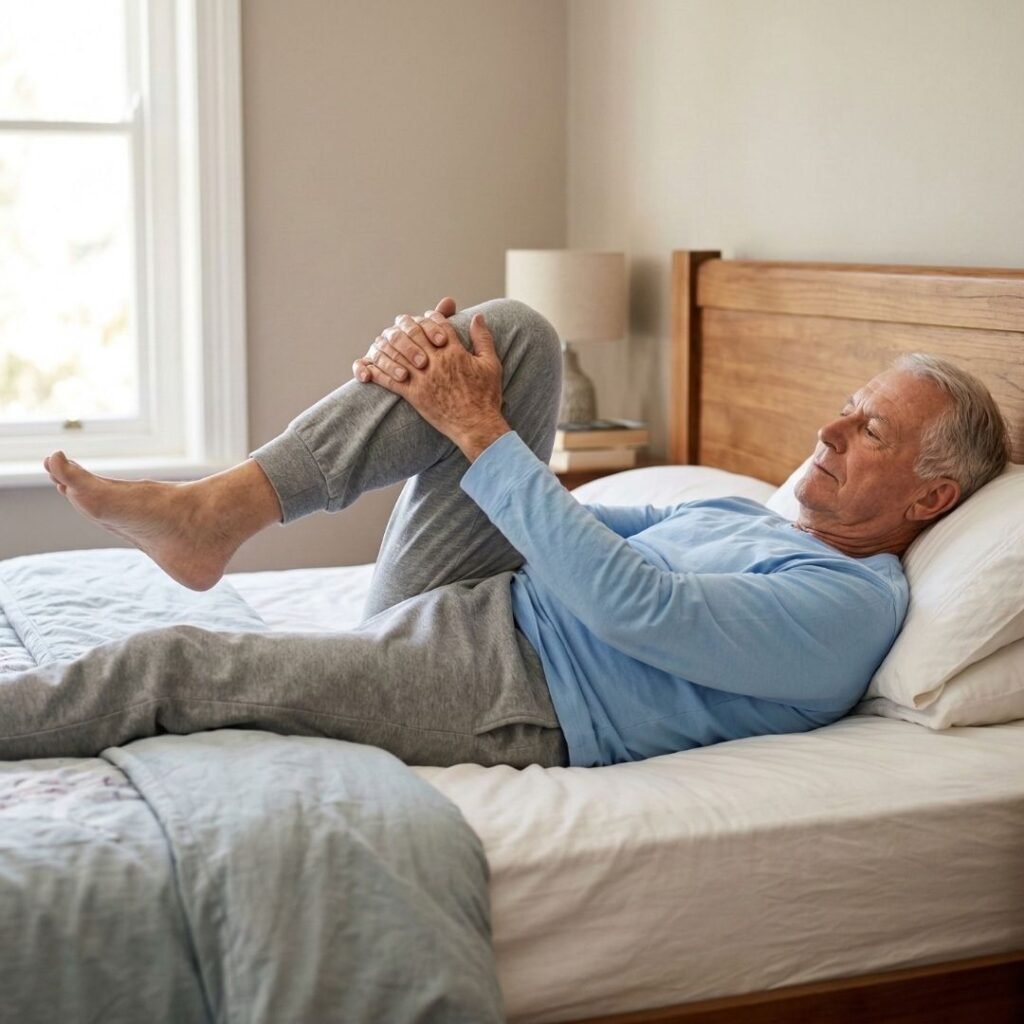
Knee-to-chest stretches are helpful for relieving lower back tension and maintaining hip flexibility. The senior bends one knee and gently uses both hands to pull it toward the chest, holding for a few seconds before releasing. The other leg remains flat on the bed. If reaching the knee is difficult, a small towel looped behind the thigh can provide assistance.
These three movements alone — ankle pumps, heel slides, and knee-to-chest stretches — form a solid foundation. Many seniors find that starting with just these three exercises for a week or two builds confidence before adding additional movements. The guidance from the NIH’s resource on exercise and physical activity for older adults reinforces that starting small and building gradually is the safest and most sustainable approach.
Building on the Basics: Additional Movements
Once a senior is comfortable with the foundational exercises, there are several additional movements that can further support strength, flexibility, and circulation without requiring the person to leave the bed.
Leg lifts involve lying flat on the back and slowly raising one straight leg a few inches off the mattress, holding briefly, and lowering it back down. This exercise targets the hip flexors and quadriceps. It is important that the movement is controlled and that the senior does not arch the lower back during the lift. If lifting the leg straight is too difficult, bending the knee slightly is a perfectly acceptable modification.
Bridging is a gentle core and hip strengthening exercise. The senior lies on their back with both knees bent and feet flat on the mattress. They then slowly lift the hips off the bed by squeezing the buttock muscles, hold for two to three seconds, and lower back down. This movement helps maintain the strength needed for transfers and repositioning. Caregivers familiar with how to safely reposition seniors in bed will recognize how this strength directly supports those tasks.
Arm raises can be added for upper body involvement. Lying flat, the senior slowly raises both arms straight up toward the ceiling, holds briefly, and lowers them back to the bed. If shoulder mobility is limited, raising one arm at a time or stopping at a comfortable height is recommended. This movement helps maintain shoulder range of motion and upper body circulation.
Seated marching is appropriate for seniors who can safely sit upright on the edge of the bed with feet on the floor. The senior alternates lifting one knee at a time in a slow marching motion. This exercise bridges the gap between bed-based and seated exercise and can help prepare a senior for standing activities when appropriate.
As with all bed exercises for elderly adults, the key with these movements is to never push through pain. Mild discomfort or a stretching sensation is normal and expected. Sharp pain, dizziness, or shortness of breath are signals to stop and consult a healthcare provider.
Special Considerations for Caregivers and Family Members
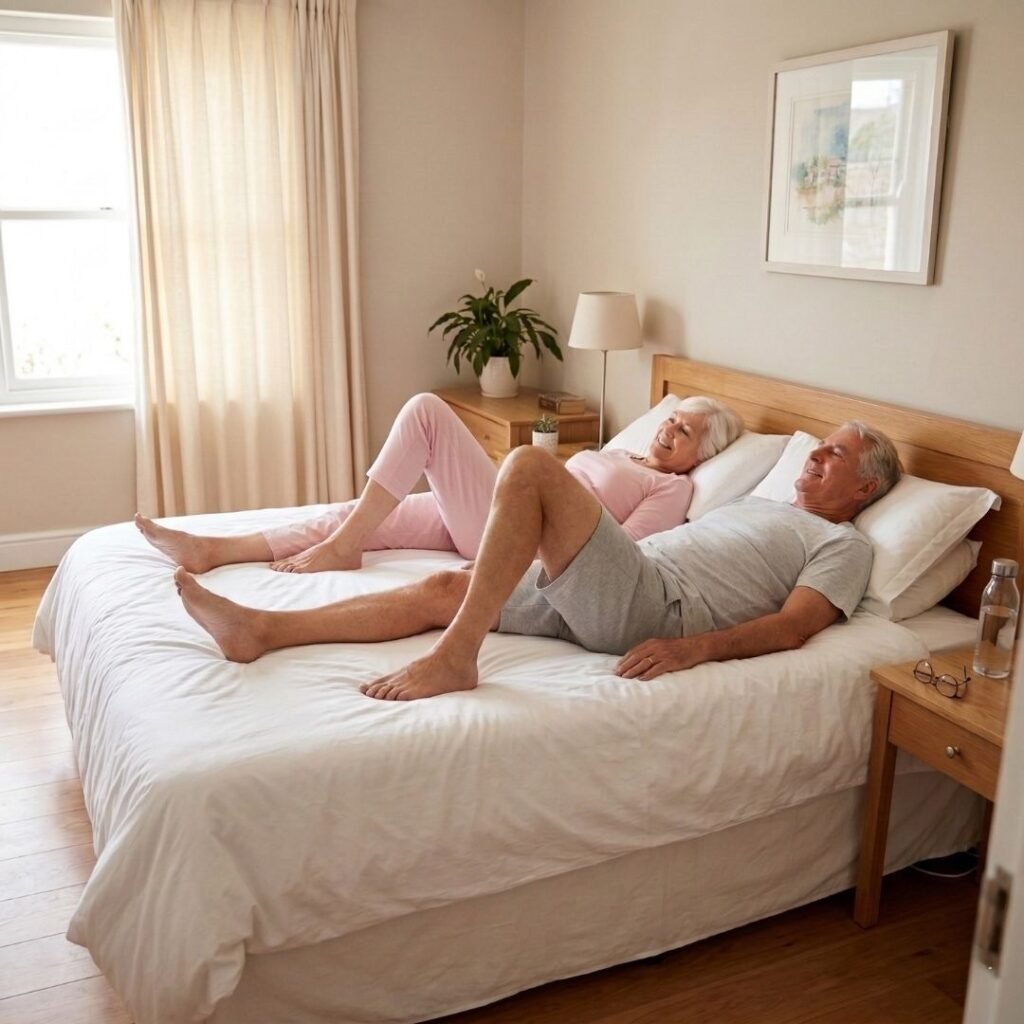
Not every senior will be able to perform bed exercises independently. Many will need verbal cueing, physical assistance, or simple encouragement from a caregiver or family member. Understanding how to support the process without taking over is an important balance.
For seniors with cognitive decline or dementia, verbal instructions may need to be simplified and repeated. Demonstrating the movement rather than describing it can sometimes be more effective. Keeping the routine short — five to ten minutes — and performing it at the same time each day helps build familiarity and reduces resistance.
Seniors recovering from stroke may have weakness or paralysis on one side of the body. In these cases, the unaffected side can perform exercises independently while the caregiver gently assists the affected limbs through passive range of motion. Passive range of motion means the caregiver moves the joint through its normal path while the senior relaxes. This helps prevent contracture even when the senior cannot actively move the limb.
For seniors with osteoporosis, exercises should avoid excessive spinal flexion — deep forward bending while seated or curling movements. Gentle leg and arm exercises while lying flat are generally safe, but it is always wise to confirm with the senior’s physician before starting.
Pain management also plays a role. If a senior is dealing with chronic pain from arthritis or a recent procedure, timing exercises to coincide with peak pain medication effectiveness can make the experience more tolerable. Morning routines may work better for some, while others find late morning or early afternoon more comfortable.
Above all, when helping with bed exercises for elderly family members, the caregiver’s role is to make the experience feel safe, supported, and positive. Seniors who feel pressured or judged are less likely to participate consistently. A calm, encouraging presence makes a significant difference.
Frequently Asked Questions
1. What exercises can elderly people do in bed?
Elderly adults can perform a variety of gentle exercises while lying in bed, including ankle pumps, heel slides, knee-to-chest stretches, straight leg raises, bridging, and arm raises. These movements target circulation, joint flexibility, and basic muscle strength. The specific exercises that are appropriate depend on the individual’s overall health, strength level, and any medical conditions. Starting with two or three simple movements and gradually adding more over time is the safest approach. A consistent routine of bed exercises for elderly adults can be tailored to fit nearly any comfort level.
2. Are bed exercises safe for bedridden seniors?
Yes, bed exercises are generally safe for bedridden seniors when performed gently and within the individual’s comfort range. They are specifically designed for people who cannot stand or walk and are commonly recommended by physical therapists and physicians. However, seniors with specific conditions such as recent fractures, blood clots, or unstable heart conditions should consult their doctor before beginning any exercise routine. A healthcare provider can recommend modifications based on the senior’s unique medical situation.
3. How often should seniors do exercises in bed?
Most healthcare professionals recommend performing bed exercises two to three times per day, with each session lasting five to fifteen minutes depending on the senior’s tolerance and energy level. Consistency is more important than duration. A short five-minute routine done every day will produce better results over time than a longer session done sporadically. Seniors should listen to their bodies and rest if they feel fatigued, dizzy, or experience any pain during the exercises.
4. What leg exercises can elderly adults do in bed?
The most commonly recommended leg exercises for elderly adults in bed include ankle pumps, heel slides, straight leg raises, and gentle knee bends. Ankle pumps help improve blood circulation in the lower legs and are often the first exercise recommended for seniors on bed rest. Heel slides and leg raises target the quadriceps, hip flexors, and knee joints. These exercises help maintain the leg strength needed for transfers, repositioning, and eventual return to standing or walking when possible.
5. Can bed exercises help improve mobility for seniors?
Yes, consistent bed exercises can meaningfully improve mobility for seniors over time. By maintaining joint flexibility, promoting blood flow, and preserving baseline muscle strength, these exercises help prevent the deconditioning that occurs with prolonged bed rest. Many seniors who begin a gentle in-bed exercise routine find that tasks like rolling over, sitting up, and assisting with transfers become easier within a few weeks. While bed exercises alone may not restore full mobility, they serve as an essential foundation that supports further rehabilitation and recovery.
Final Thoughts
Bed exercises for elderly adults may seem small in the moment — a few ankle pumps here, a gentle leg lift there. But for elderly adults dealing with limited mobility, recovery, or chronic conditions, these movements carry real weight. They help the body hold on to strength and flexibility that would otherwise fade quietly with each day of inactivity. They support circulation, protect joints, and give seniors a sense of agency over their own physical wellbeing even when leaving the bed is not yet an option.
The most important step is simply starting. A five-minute routine performed consistently each day is more valuable than a perfect plan that never gets used. With patience, gentle encouragement, and guidance from a healthcare provider, bed-based exercise can become a quiet but powerful part of a senior’s daily life.
Medical Disclaimer: The information provided on this website is for educational purposes only and should not replace professional medical advice. Always consult your physician or qualified healthcare provider regarding any medical condition or treatment decisions.