
Introduction
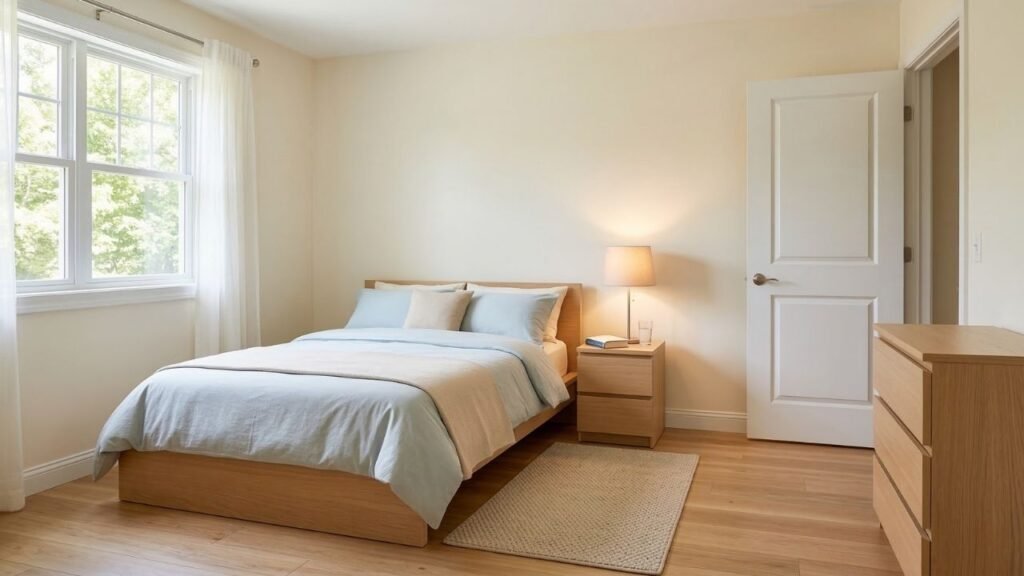
The bedroom should be the safest room in the house, but for many older adults it is quietly one of the most dangerous. A few thoughtful changes to bedroom layout can make a significant difference in reducing fall risk. Bedroom safety for seniors is not about turning a home into a hospital — it is about rearranging what is already there so the space works with an aging body instead of against it. Most nighttime falls happen within a few feet of the bed, in the dark, when a senior is groggy and unsteady. The good news is that many of these falls are preventable without major renovations or expensive equipment.
If you are a caregiver or family member, you have probably already felt the anxiety that comes with knowing your loved one gets up at night. This guide walks you through specific, practical bedroom layout changes that reduce fall risk, based on the same principles physicians and occupational therapists recommend every day.
Why the Bedroom Is a High-Risk Zone for Senior Falls
Falls are the leading cause of injury among adults aged 65 and older, and bedroom safety for seniors deserves more attention than it typically receives. The CDC reports that approximately 36 million falls occur among older adults every year, with many taking place during nighttime hours. The bedroom presents a unique combination of risk factors. It is where seniors transition from lying down to standing — a movement that causes a temporary drop in blood pressure known as orthostatic hypotension. It is where vision is most limited because of darkness. And it is the room most likely to contain obstacles hidden in shadow — slippers on the floor, an open dresser drawer, or a phone charger cord stretched across the walking path.
Age-related changes make these hazards more dangerous. Aging eyes need more time to adjust from darkness to light. Balance becomes less reliable as muscle strength declines. Medications taken at bedtime — including blood pressure drugs, sleep aids, and pain medications — can cause dizziness and slower reaction times. Understanding why seniors fall at night is the first step toward prevention, and the bedroom is where most of those nighttime risks begin.
The Three Pillars of a Fall-Safe Bedroom
When occupational therapists evaluate bedroom safety for seniors, they focus on three core areas: clear pathways, proper bed setup, and adequate lighting. These three pillars form the foundation of every safe bedroom layout, and addressing all three together is far more effective than fixing just one.
Clear pathways mean there is an unobstructed route from the bed to the bedroom door, and from the bed to the bathroom if it is attached. This path should be at least three feet wide — wide enough for a walker or for someone who shuffles when walking. Furniture that narrows the path, cords that cross it, and loose items on the floor are the most common obstacles that need to be removed or repositioned.
Proper bed setup includes the height of the mattress, the firmness of the bed edge, and what is immediately next to the bed. A bed that is too high forces a senior to slide off and land hard. A bed that is too low requires deep knee bending to stand, which many seniors cannot do safely. The ideal height allows the senior to sit on the edge with their feet flat on the floor and their knees at roughly a 90-degree angle.
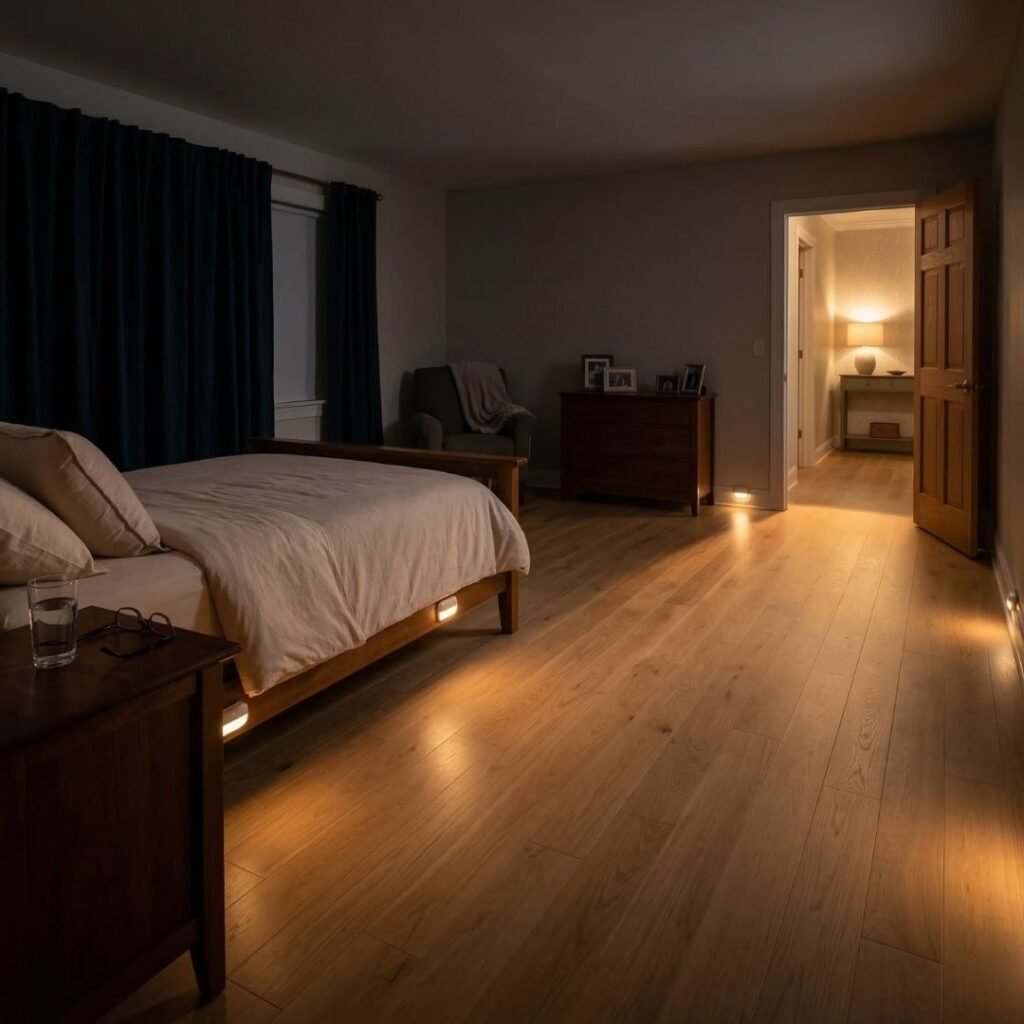
Adequate lighting is the third pillar, and it may be the most overlooked. Many seniors avoid turning on overhead lights at night because the brightness is disorienting. The solution is layered lighting — a motion-sensor night light near the floor, a touch-activated lamp on the nightstand, and enough ambient light in the hallway to guide the way to the bathroom.
What an Unsafe Bedroom Actually Looks Like
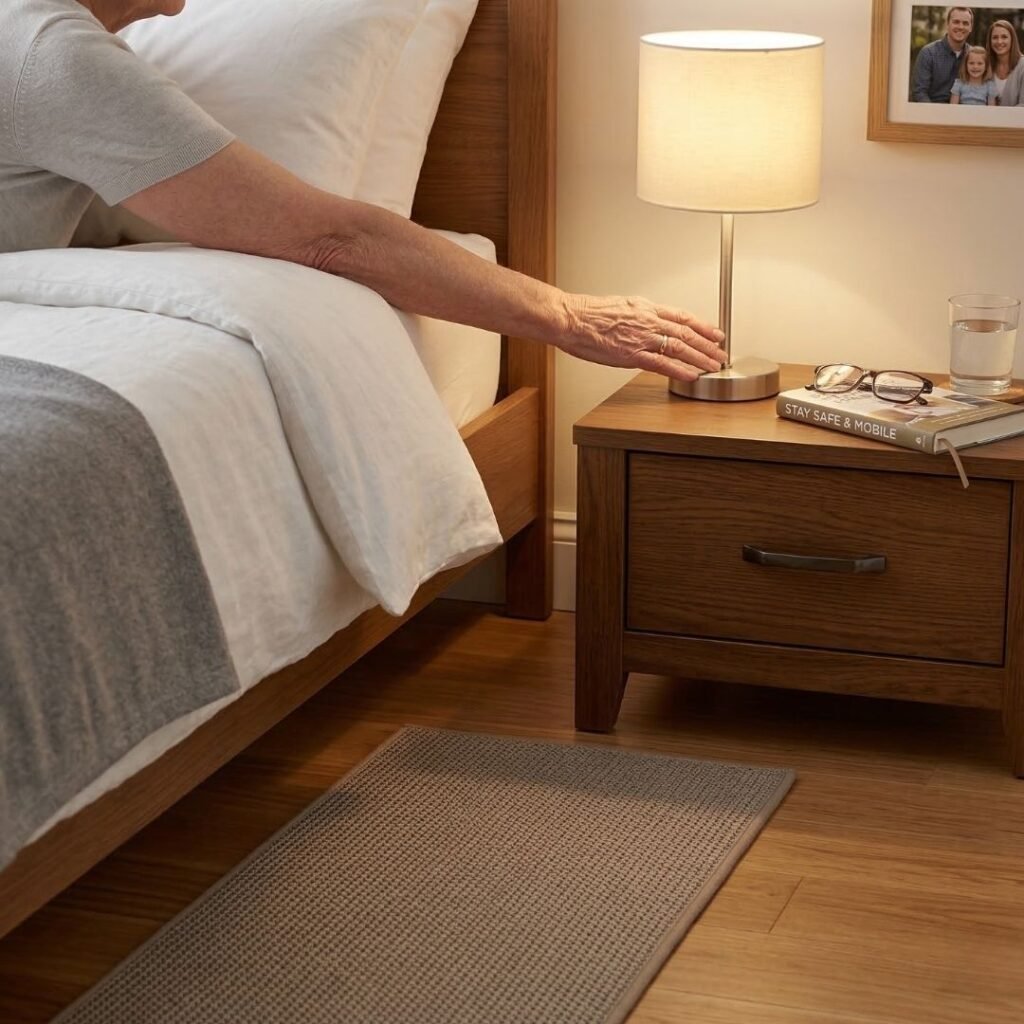
One of the biggest obstacles to improving bedroom safety for seniors is the assumption that a familiar room is safe simply because nothing bad has happened there yet. But fall hazards are cumulative. A typical unsafe bedroom might look perfectly normal during the day — dresser against the wall, lamp on the nightstand, rug beside the bed. But look through the lens of someone who gets up at 2 a.m. with stiff joints, blurry vision, and blood pressure that has not caught up with the fact that they are now vertical.
That dresser may have open drawers jutting into the walking path. The lamp may require twisting a small knob — nearly impossible with arthritic fingers in the dark. The rug may slide on the hardwood the moment weight is placed on it. The phone charger may drape across the floor. Each detail is a small risk on its own. Together, they create a dangerous room. The most revealing thing a caregiver can do is walk the bedroom path at night with the lights off and notice where the hazards are.
Furniture Placement and Creating Clear Pathways
The single most impactful change you can make for bedroom safety for seniors is rearranging furniture to create a wide, straight path from the bed to the door. Start by standing at the bedside — whichever side the senior gets out on — and looking toward the bedroom door. Every piece of furniture between those two points should either be moved to the side or removed entirely if it serves no essential purpose.
Dressers, chairs, and storage benches are the most common pathway blockers. A dresser with open drawers can narrow a three-foot path to less than two feet, which is not enough room for someone using a walker. If the dresser cannot be relocated, make sure it is pushed flush against the wall and that drawers are always closed at bedtime. Accent chairs, footstools, and decorative furniture should be moved to the far side of the room or removed entirely.
Cord management is another critical detail. Lamp cords, phone chargers, extension cords, and power strips are common trip hazards. Route all cords behind furniture or along baseboards and secure them with cord clips. A single cord across the floor is enough to cause a fall that changes everything.
Getting the Bed Setup Right
The bed itself is ground zero when it comes to bedroom safety for seniors. More seniors fall while getting into or out of bed than at any other point in the room, which is why bed setup deserves focused attention. Start with height — have the senior sit on the edge of the bed with their feet on the floor. Their knees should be at approximately a 90-degree angle, and their feet should be flat — not dangling and not tucked under. If the bed is too high, consider removing the bed frame and placing the mattress on a low-profile frame, or switching to an adjustable-height bed. If the bed is too low, bed risers can bring it up to the correct height. Getting this measurement right is one of the most effective single changes for fall prevention.
The mattress edge matters more than most people realize. A mattress that is too soft will compress under the senior’s weight when they sit on the edge, causing them to sink and making it harder to stand. A firmer mattress — or at least a firm edge — gives the senior a stable surface to push off from. If your loved one struggles to get out of bed safely, the mattress may be part of the problem.
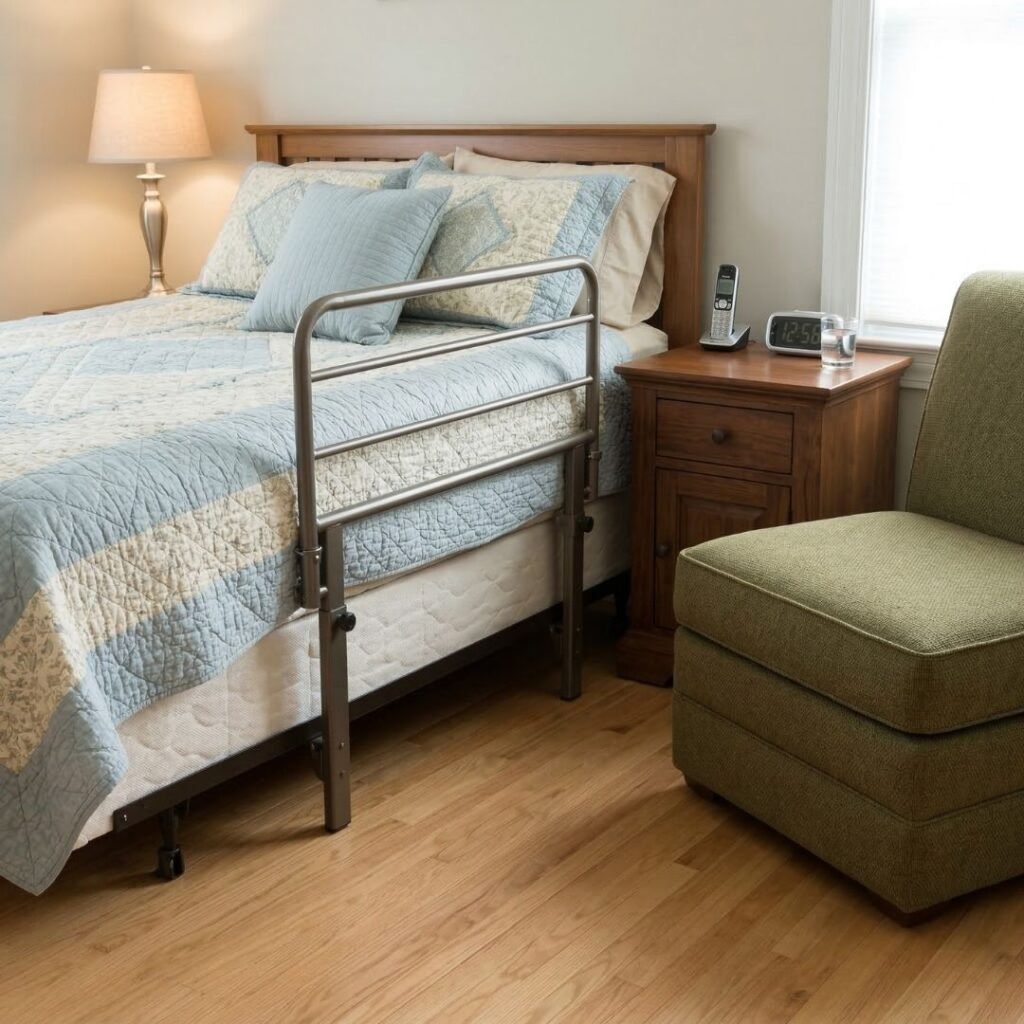
Bed rails can be helpful for some seniors but are not appropriate for everyone. A half-rail on the side where the senior gets up can provide a handhold for pulling themselves to a seated position and for stabilizing as they stand. However, bed rails can also be a trapping hazard for seniors with dementia or those who move unpredictably during sleep. Always consult with a healthcare provider before installing bed rails, and make sure the gap between the rail and the mattress is small enough that a limb cannot become wedged.
Place a bedside fall mat on the floor next to the bed on the side where the senior gets out. This provides a cushioned, non-slip surface that absorbs impact if a fall does occur and gives better traction than bare hardwood or tile. The mat should be large enough to cover the area where the senior’s feet land when they swing their legs off the bed, and it must lie completely flat with no curled edges.
Lighting and Flooring That Prevent Falls
Lighting is one of the most important and overlooked elements of bedroom safety for seniors. The most common mistake is relying entirely on an overhead light controlled by a switch near the door. This means the senior has to walk across a dark room to turn it on, or they skip the light entirely and walk in the dark. Neither option is safe.
The solution is a layered lighting approach that provides gentle illumination at every stage of getting up. A motion-sensor night light plugged into a low outlet near the bed activates the moment the senior moves, providing enough light to see the floor without being so bright that it causes glare or fully wakes them up. A touch-activated lamp on the nightstand — one that turns on with a simple tap rather than a twist or switch — gives the senior brighter light when they need it. And a second motion-sensor light in the hallway or near the bathroom door extends the illuminated path beyond the bedroom. The National Institute on Aging specifically recommends improving lighting in hallways, bedrooms, and bathrooms as a primary fall prevention measure.
Flooring is the other half of this equation. The safest bedroom floor for a senior is a smooth, flat surface with a non-slip finish. Hardwood and vinyl plank are both good options because they are even, easy to clean, and do not catch on shuffling feet the way thick carpet can. If carpet is already installed and cannot be replaced, make sure it is low-pile and firmly secured to the subfloor with no loose edges or bumps. Area rugs are one of the leading trip hazards in senior bedrooms. If a rug must stay, secure it with double-sided carpet tape or a non-slip rug pad, and make sure the edges lie completely flat. Better yet, remove area rugs entirely from the walking path.
Small Details That Make a Big Difference
When it comes to bedroom safety for seniors, the nightstand is one of the most important pieces of furniture in the room. It should be sturdy enough to bear weight if the senior pushes down on it while standing, and it should be the same height as the mattress top so the senior can reach items without leaning or stretching. A nightstand that wobbles, tips, or rolls is a serious hazard. Replace any lightweight or unstable nightstand with a solid, four-legged model that sits firmly on the floor.
Keep essential items within arm’s reach of the bed. A phone, a glass of water, eyeglasses, and any medications that may be needed during the night should all be on the nightstand. Every time a senior has to get out of bed to retrieve something, the fall risk increases. A small bedside caddy or organizer can keep these items contained so nothing rolls off the nightstand onto the floor.
Clothing and footwear habits also matter. Loose, long nightgowns or pajama pants that drag on the floor are trip hazards. Encourage well-fitting sleepwear that does not extend past the ankle. Keep a pair of non-slip slippers or gripper socks right beside the bed — on the mat, not under the bed where they have to be fished out in the dark. Standing on a cold, smooth floor in bare feet is both a slip risk and a discomfort that may cause a senior to rush, which increases the chance of a fall.
If the senior uses a walker, wheelchair, or cane, make sure the mobility aid is parked in the same spot every night — right beside the bed, within easy reach, with the brakes locked if applicable. A mobility aid that has been moved to the corner of the room or left in the hallway is useless when the senior needs it most.
Special Considerations: Dementia, Post-Surgery, and Shared Bedrooms
Bedroom safety for seniors living with dementia requires extra attention because of nighttime confusion, wandering, and impaired judgment. A condition called sundowning can cause increased agitation and disorientation after dark, leading a senior to get out of bed without remembering where they are or why. For these individuals, bedroom layout becomes even more critical. Keep the path from the bed to the bathroom as simple and direct as possible — ideally a straight line with no turns. Use motion-sensor lights that activate automatically, since a person with dementia may not remember to turn on a lamp. Consider placing a commode beside the bed to eliminate the need to walk to the bathroom entirely during the worst hours of confusion.
Seniors recovering from hip surgery, knee replacement, or a recent fall also need temporary bedroom modifications. The bed may need to be raised to make sitting and standing easier during recovery. A grab bar or transfer pole beside the bed can provide the extra support needed during the first weeks when balance and strength are most compromised. Clutter should be removed even more aggressively than usual, because post-surgical patients often have restricted range of motion and cannot step over or around objects they would normally avoid. If your loved one is returning home after a hospital stay, review our guide on how to care for seniors after a fall for a complete recovery checklist that includes bedroom modifications.
In shared bedrooms, both partners need to be considered. The walking path should be clear on both sides of the bed if both individuals get up at night. Avoid placing furniture between the two sides of the bed, and make sure lighting does not disturb the sleeping partner. A directional night light that points downward toward the floor, rather than outward into the room, provides enough visibility for the person who is up without flooding the room with light. Communication between partners is also important — if one person rearranges something during the day, the other needs to know before nightfall.
Frequently Asked Questions
1. What is the safest bedroom layout for an elderly person?
The safest layout features a wide, unobstructed path from the bed to the bedroom door and bathroom. The bed should be positioned so the senior gets out on the side closest to the door, with a sturdy nightstand within arm’s reach. All furniture should be pushed to the walls, cords should be routed behind furniture, and the floor should be free of loose rugs, clutter, and anything that could catch a shuffling foot. Layered lighting — including a motion-sensor night light and a touch-activated bedside lamp — ensures visibility without requiring the senior to walk in the dark.
2. How high should a bed be for a senior to prevent falls?
The ideal bed height allows the senior to sit on the edge with their feet flat on the floor and their knees bent at approximately 90 degrees. For most older adults, this means a mattress surface height of 20 to 23 inches from the floor, though the exact measurement depends on the individual’s leg length. A bed that is too high causes a jarring step down, while a bed that is too low requires deep bending to stand. Bed risers or a low-profile frame can help achieve the correct height.
3. What type of flooring is safest in a senior’s bedroom?
Smooth, flat flooring with a non-slip finish is safest. Hardwood, vinyl plank, and low-pile carpet that is firmly secured to the subfloor are all good options. Area rugs should be removed from walking paths or secured with double-sided carpet tape and non-slip pads. The most important factor is that the floor surface is even, with no raised edges, bumps, or transitions that could catch a foot. A non-slip bedside mat provides extra traction where the senior steps out of bed.
4. How can lighting reduce fall risk in the bedroom?
Proper lighting eliminates the dark gaps between the bed and the bathroom that cause most nighttime falls. A motion-sensor night light near the bed activates automatically when the senior moves, providing immediate floor-level visibility. A touch-activated lamp on the nightstand offers brighter light without requiring fine motor skills. A second motion-sensor light in the hallway extends the illuminated path. Together, these create a continuous chain of light so the senior never has to walk through a completely dark space.
5. Why do seniors fall out of bed at night?
Seniors fall out of bed for several reasons, including restless sleep, medication side effects, orthostatic hypotension (a sudden drop in blood pressure when changing position), and neurological conditions like Parkinson’s disease or dementia. A mattress that is too narrow, too high, or too soft at the edges can also contribute. Bed rails may help in some cases, but they must be used carefully and only after consulting a healthcare provider, as they can pose a trapping risk for certain individuals.
Final Thoughts on Creating a Safer Bedroom for Seniors
You do not need a renovation to improve bedroom safety for seniors. Most of the changes that matter most — rearranging furniture, adjusting bed height, adding a night light, removing loose rugs, and keeping the walking path clear — can be done in a single afternoon. The key is to think about the room the way your loved one experiences it at 2 a.m., not the way it looks during the day. A bedroom that feels comfortable and familiar in daylight can become an obstacle course in the dark for someone with reduced vision, slower reflexes, and unsteady balance.
Start with the highest-risk area: the space immediately beside the bed. Get the bed height right, place a non-slip mat on the floor, and put a motion-sensor light within reach. Then work outward — clear the path to the door, secure or remove rugs, manage cords, and add lighting along the route to the bathroom. Each change on its own reduces risk. Together, they create the kind of bedroom safety for seniors that supports safe, independent movement at any hour of the night. That peace of mind — for your loved one and for you — is worth every small adjustment.
Medical Disclaimer: The information provided on this website is for educational purposes only and should not replace professional medical advice. Always consult your physician or qualified healthcare provider regarding any medical condition or treatment decisions.