
Affiliate Disclaimer: This article contains affiliate links. As an Amazon Associate, Mobility With Ease may earn a small commission from qualifying purchases at no additional cost to you.
Introduction
For many seniors, the desire to walk outdoors doesn’t fade just because the ground gets rough. Whether it’s a gravel driveway, a grassy park, or a neighborhood sidewalk with cracks and uneven pavement, the right mobility aid makes all the difference. That’s where all-terrain walkers for seniors come in — purpose-built devices with larger wheels, sturdier frames, and enhanced stability that let older adults move confidently beyond smooth indoor floors. A standard walker simply isn’t designed to handle cracked sidewalks, gravel paths, or grassy parks safely, and that’s exactly the gap that all-terrain walkers for seniors are built to fill.
In this 2026 guide, we’ve reviewed the best all-terrain walkers for seniors currently available, drawing on real-world usability, physician insight, and the features that matter most for safety. Whether you’re shopping for yourself or helping a loved one stay active, you’ll find practical recommendations, honest pros and cons, and expert guidance to help you choose a walker that supports outdoor independence — not limits it. Every product on this list has been selected with stability, durability, and ease of use as the top priorities.
Why All-Terrain Walkers Matter for Seniors
Staying active outdoors is one of the most important things a senior can do for their physical and mental health. Research consistently shows that time spent outside reduces the risk of depression, improves cardiovascular function, and strengthens bones and muscles. The benefits of staying mobile extend well beyond physical fitness — they include emotional resilience and social connection. Yet for many older adults, the fear of falling on uneven ground keeps them indoors far more than they’d like. Standard walkers and basic rollators simply aren’t built for grass, gravel, cracked sidewalks, or park trails — and that’s exactly why all-terrain walkers for seniors have become such an important category of mobility aid.
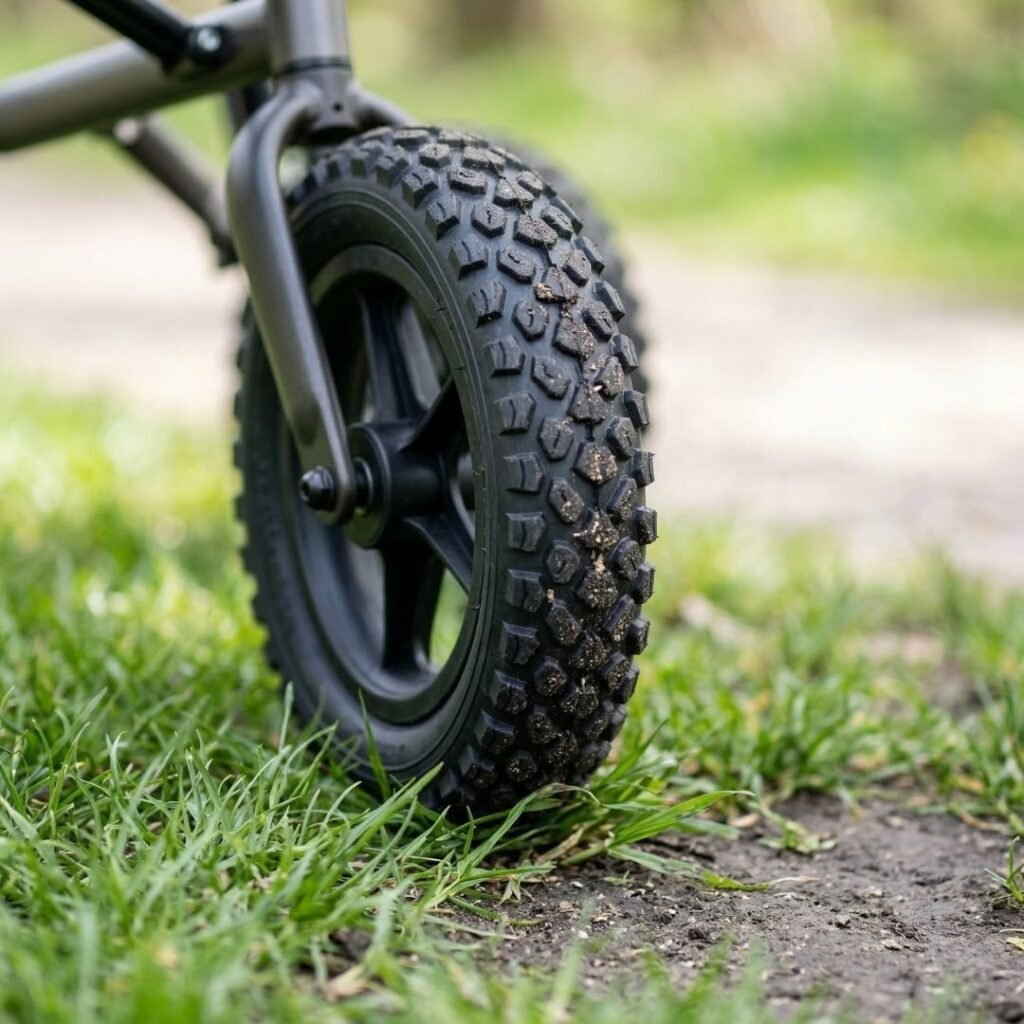
All-terrain walkers address this gap directly. They feature larger wheels — typically 8 to 10 inches — that roll smoothly over obstacles that would stop a standard 6-inch caster in its tracks. Many models include pneumatic (air-filled) tires for shock absorption, reinforced frames for added weight capacity, and hand-operated brakes that give users precise control on slopes and declines. According to the CDC, falls are the leading cause of injury among adults 65 and older — making the right outdoor walker a critical safety decision. These aren’t luxury features — they’re safety essentials for anyone who wants to walk outside with confidence. Understanding fall risks in seniors is the first step toward choosing the right outdoor mobility support.
Beyond fall prevention, all-terrain walkers for seniors also help combat social isolation. When a senior feels safe enough to walk to a neighbor’s house, join a group at the park, or attend an outdoor community event, they stay more engaged and connected. Independence isn’t just about mobility — it’s about maintaining the life and relationships that give each day meaning. Choosing the right walker for outdoor use is a small decision that can have a profound impact on quality of life. For a deeper look at the outdoor mobility challenges seniors face daily, including curbs, gravel, and weather, our dedicated guide covers it all.
Doctor’s Note: Choosing the Right All-Terrain Walker
I see patients every week who tell me they’ve stopped going outside because they don’t feel steady on their feet. It’s one of the most common concerns I hear, and it’s one of the most preventable. When I recommend an all-terrain walker for seniors, I’m not just prescribing a piece of equipment — I’m giving someone permission to reclaim a part of their life they thought was gone. The psychological shift that happens when a patient realizes they can walk on grass or gravel again is something I never get tired of seeing.
When I evaluate a patient for an outdoor walker, I look at several factors. First, I assess their balance and gait. Someone with mild instability may do well with a four-wheeled rollator with large casters, while a patient with more significant balance challenges might benefit from a model with wider tires that offer a lower center of gravity. I also consider grip strength — hand brakes are essential on uneven terrain, and if a patient can’t squeeze them reliably, we need to explore models with loop-lock brakes or alternative braking systems. Before settling on an all-terrain model, I always encourage patients to learn how to choose the right mobility aid for their specific situation.
I always tell my patients that the best walker is the one they’ll actually use. If it’s too heavy to lift into the car, too complicated to fold, or uncomfortable to grip, it’s going to sit in the garage. That’s why I encourage people to test walkers in person whenever possible, or at minimum to order from retailers with generous return policies. Weight capacity matters too — I recommend choosing a walker rated for at least 50 pounds above the user’s body weight to ensure long-term structural integrity. And please, talk to your physician or physical therapist before making a purchase. A quick conversation about your specific needs can save you from an expensive mistake and help you find the walker that truly fits your life.

Best All-Terrain Walkers for Seniors (Top Picks)
Best Overall
Drive Medical Nitro Sprint Foldable Rollator Walker
As one of the best all-terrain walkers for seniors on the market, the Drive Medical Nitro Sprint earns the top overall spot for those who want a dependable outdoor walker that doesn’t compromise on portability. Its large wheels handle grass, gravel, cracked sidewalks, and packed dirt with minimal effort from the user, while the compact folding design makes it one of the easiest all-terrain rollators to store in a car trunk or closet. The frame is lightweight yet sturdy, and the padded seat provides a comfortable resting spot during longer outings. What sets the Nitro Sprint apart is how well it balances outdoor capability with everyday convenience — it’s a walker you can use at the park in the morning and fold up for a doctor’s appointment in the afternoon.
Pros:
- Large wheels handle most outdoor surfaces smoothly
- Compact folding design — easy to store and transport
- Lightweight frame doesn’t sacrifice durability
- Padded seat and backrest for rest breaks
- Adjustable handle height for different users
Cons:
- Wheels are solid rubber, not pneumatic — less shock absorption on very rough trails
- Seat width may feel narrow for larger users
- Storage pouch is relatively small

- Stable Everyday Mobility: The Drive Medical Nitro Sprint Foldable Rollator Walker delivers secure, stable support with a strong aluminum frame and one-handed folding convenience
- Comfortable Resting Support: Designed for ergonomic comfort, this rollator includes a wide padded seat, contoured backrest, and adjustable height settings to enhance customization
- Controlled Braking Performance: The advanced braking system features free, park, and slowdown mode, which offers enhanced downhill control for smoother, more predictable handling
Best for Trails
byACRE Carbon Overland All-Terrain Rollator
The byACRE Overland is built specifically for seniors who want to walk on dirt trails, park paths, and natural surfaces that would stop most standard rollators. Its carbon fiber frame is remarkably light — just 14.8 pounds — which is exceptional for an all-terrain model. The big pneumatic tires absorb shock from roots, rocks, and rough patches, giving users a smoother ride than solid-rubber alternatives. The handlebar height adjusts easily to accommodate different user heights, and the hand brakes are responsive without requiring excessive grip strength. If your mobility needs go beyond a walker, our guide to the best all-terrain wheelchairs covers seated options for outdoor use. This is a premium walker with a premium price, but for active seniors who regularly walk on trails, the investment pays for itself in comfort and confidence.
Pros:
- Ultra-lightweight carbon fiber frame — only 14.8 lbs
- Pneumatic tires for superior shock absorption on rough terrain
- Designed specifically for trails and natural surfaces
- Responsive brakes with low grip-force requirement
- Sleek, modern design
Cons:
- Significantly more expensive than other options
- Pneumatic tires require occasional inflation
- Seat is minimal — less padded than competitors
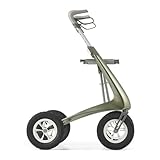
- 【GO ANYWHERE, FROM BEACH TO MOUNTAIN】Rediscover the joy of being out and about with our lightweight walker with a seat. The Carbon Overland lets you explore any terrain with ease—from sandy...
- 【LIGHTWEIGHT AND READY INSTANTLY】No tools, no assembly, no worries. This lightweight rollator walker with seat arrives fully assembled, so you can start moving with ease and confidence right away.
- 【STABLE, STRONG, SUPPORTIVE】Enjoy a smooth ride with shock-absorbent tires, a sturdy frame, and a comfortable built-in seat. This foldable walker is ready to support you whenever you need to pause...
Best Compact / Travel
HOMLAND Rollator Walkers for Seniors with Seat, 8″ All Terrain Wheels
The HOMLAND Rollator offers genuine all-terrain capability at a budget-friendly price. Its large 8-inch rubber wheels easily handle grass, gravel, and cracked sidewalks. Weighing just 17 pounds, the durable aluminum frame features an ergonomic memory foam seat for comfortable resting. It accommodates users from 4’7″ to 6’6″ and includes thoughtful safety details like anti-pinch joints and reflective strips. While not built for extreme trails, it is perfect for everyday outdoor walking in parks and neighborhoods.
Pros:
- 10-inch front wheels for excellent outdoor stability
- Slim side-fold design — fits easily in car trunks
- Padded seat and included storage bag
- Smooth, responsive hand brakes
- Attractive, modern design
Cons:
- Rear wheels are smaller than front wheels
- Higher price point than budget options
- Seat height may not suit shorter users

- Rolling Walker with Seat: The Drive Medical Foldable Rollator Walker provides premium comfort and safety with a padded seat, hand-activated brakes, and deluxe storage bag
- Deluxe Stability & Comfort: Durable aluminum frame and cross-brace design deliver superior stability, while the firm foam seat and storage bag offer comfort and convenience for daily use
- Superior Wheels for Maneuverability: Large 10-inch front casters glide smoothly over curbs and rough terrain, allowing easy steering and optimal control indoors and outdoors
Best Budget Option
NOVA Medical Products GetGo Classic Rollator Walker
Not everyone needs or wants to spend hundreds of dollars on an all-terrain walker. The NOVA GetGo Classic delivers solid outdoor performance at a fraction of the cost of premium models. Its wheels easily handle grass, light gravel, and uneven sidewalks. This stable, well-built walker features a flip-up padded seat, convenient under-seat storage, and adjustable handles for users between 5’4″ and 6′. While it lacks the shock absorption of high-end models, it is highly capable for everyday walks in neighborhoods and parks.
Pros:
- Affordable price point — excellent value for a true all-terrain walker
- 8-inch all-terrain wheels handle grass, gravel, and uneven pavement
- Memory foam ergonomic seat for comfortable rest breaks
- Wide height adjustment range — fits users from 4’7″ to 6’6″
- Reflective strips for added safety during low-light walks
Cons:
- Newer brand — fewer long-term user reviews than established names
- Solid rubber wheels — less shock absorption than pneumatic tires on rough trails
- Storage pouch is relatively small

- Ultra-Sturdy Aluminum Frame: Reinforced with dual support rods to support up to 350 lbs, this rollator walker with seat ensures lasting stability and safety, making it ideal for seniors seeking...
Best Lightweight
Henmnii Rollator Walker for Seniors — Lightweight Foldable All Terrain
The Henmnii All Terrain Rollator is a standout option for seniors who prioritize a lightweight, easy-to-handle walker that still delivers real outdoor capability. At just 16.5 pounds, it’s one of the lightest all-terrain walkers available — light enough for most seniors to lift into a car trunk without assistance. Despite the low weight, the seamless aluminum frame supports up to 300 pounds and feels stable on grass, gravel, cracked sidewalks, and packed dirt thanks to its 8-inch rubber wheels with built-in shock absorption. The 360-degree anti-slip swivel front wheels make steering smooth and responsive, while the extended wheelbase and low center of gravity help prevent tip-overs. The quick-fold design collapses in seconds — just pull the handle on the seat — and the wheels detach with a quick-release mechanism for even more compact storage. With a generous 19 x 10-inch padded seat, a supportive back belt, and dual brakes for both downhill control and locking, this walker punches well above its weight for seniors who want all-terrain performance without the bulk.
Pros:
- Ultra-lightweight at just 16.5 lbs — easy to lift and transport
- 8-inch all-terrain wheels with shock absorption for outdoor surfaces
- Quick-fold design with detachable wheels for compact storage
- 300 lb weight capacity despite the light frame
- Wide height adjustment — fits users from 5′ to 6’5″
Cons:
- Back support is a belt-style strap rather than a rigid backrest
- Solid rubber wheels — less cushioning than pneumatic tires on very rough trails
- Seat padding is thinner than some heavier competitors
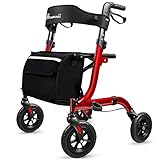
- Walkers for Seniors: Henmnii rollator walker have lightweight seamless sturdy aluminium frame with 16.5lbs, features 6 speed adjustable height (33"- 38") can fits users from 5 to 6.5ft. it's weight...
- 360 degrees anti slip swivel and Multi terrain Wheels: Henmnii Rollator walker features 8 inch all-terrain tires that has shock absorption function. 360 degrees anti slip swivel front wheel provide...
- Compact Folding Function for Transport and Storage Through pull up the handle positioned on the seat you fold it in a second ,easily to pass narrow passages. The frame folds very compact, the walker...
Educational Overview: What Are All-Terrain Walkers Used For?
All-terrain walkers for seniors are mobility aids specifically designed to handle outdoor surfaces that standard walkers and rollators cannot. While a typical indoor walker has small rubber tips or 6-inch casters that work well on smooth floors, those same features become liabilities on grass, gravel, sand, dirt, cracked pavement, or cobblestone. All-terrain models solve this problem with larger wheels, sturdier frames, and enhanced braking systems that let users walk safely on the kinds of surfaces they encounter outside their front door.
The most common use case is neighborhood walking. Many seniors live in areas where sidewalks are cracked, driveways are gravel, or paths through parks are unpaved. A standard rollator might catch on a crack or sink into soft ground, creating a sudden stop that can cause the user to lose balance. All-terrain walkers, with their larger wheel diameter and wider tire profiles, roll over these obstacles instead of getting stuck on them. This makes everyday activities like visiting a neighbor, walking to the mailbox, or taking a stroll through the park safer and more enjoyable.
Beyond daily walking, all-terrain walkers are also popular among seniors who enjoy light hiking, nature walks, or spending time at outdoor venues like farmers’ markets, botanical gardens, and campgrounds. Some models, like those with pneumatic tires, are capable of handling dirt trails and forest paths that would be completely impassable with a standard walker. For seniors recovering from surgery or managing conditions like arthritis, Parkinson’s, or post-stroke weakness, the right all-terrain walker for seniors can be the bridge between being confined to the house and maintaining an active, engaged lifestyle outdoors.
How to Use All-Terrain Walkers Safely
Adjust the walker height before your first outing. With all-terrain walkers for seniors, the handles should align with the crease of your wrist when your arms hang naturally at your sides. If the handles are too high, you’ll hunch your shoulders and tire quickly. If they’re too low, you’ll lean forward and put excessive pressure on your wrists. Most all-terrain walkers for seniors have adjustable-height handles — take the time to set them correctly, and ask a caregiver or physical therapist to verify the fit if you’re unsure. This single adjustment has a bigger impact on safety and comfort than almost any other factor.
Practice using the brakes on flat ground before tackling slopes. All-terrain walkers typically use hand-operated squeeze brakes, similar to bicycle brakes. You should be able to squeeze both brakes firmly and bring the walker to a complete stop without straining your hands. If the brakes feel too stiff, most models allow for tension adjustment — consult the owner’s manual or ask a family member to help. On slopes and declines, apply the brakes gradually rather than squeezing suddenly, which can cause the walker to jerk and destabilize you. Some walkers also have parking brakes or loop-lock brakes that hold the walker in place while you sit on the seat — learn how to engage these before you go out.
Choose your surfaces intentionally, especially at first. Start with well-maintained paths, flat grassy areas, and packed gravel before progressing to rougher terrain. Even the best all-terrain walker has limits, and deep sand, muddy trails, or steep hills with loose rock can overwhelm any wheeled device. Walk during daylight hours when you can clearly see the ground ahead. Avoid wet leaves, ice, and standing water, which reduce traction regardless of wheel size. If you’re walking on a slope, always approach it straight-on rather than at an angle, and use your brakes to control your descent speed.
Maintain your walker regularly to keep it safe. Check tire pressure weekly if your walker has pneumatic tires — underinflated tires reduce stability and make the walker harder to push. Inspect the brake cables and pads monthly for wear. Tighten any loose bolts on the frame, especially after walking on rough surfaces that cause vibration. Keep the wheel axles clean and free of debris, and store the walker in a dry location to prevent rust or corrosion. A well-maintained walker performs reliably for years, while a neglected one can develop problems that compromise safety at the worst possible moment.
Lifestyle Synergy: Making All-Terrain Walkers Work Better at Home
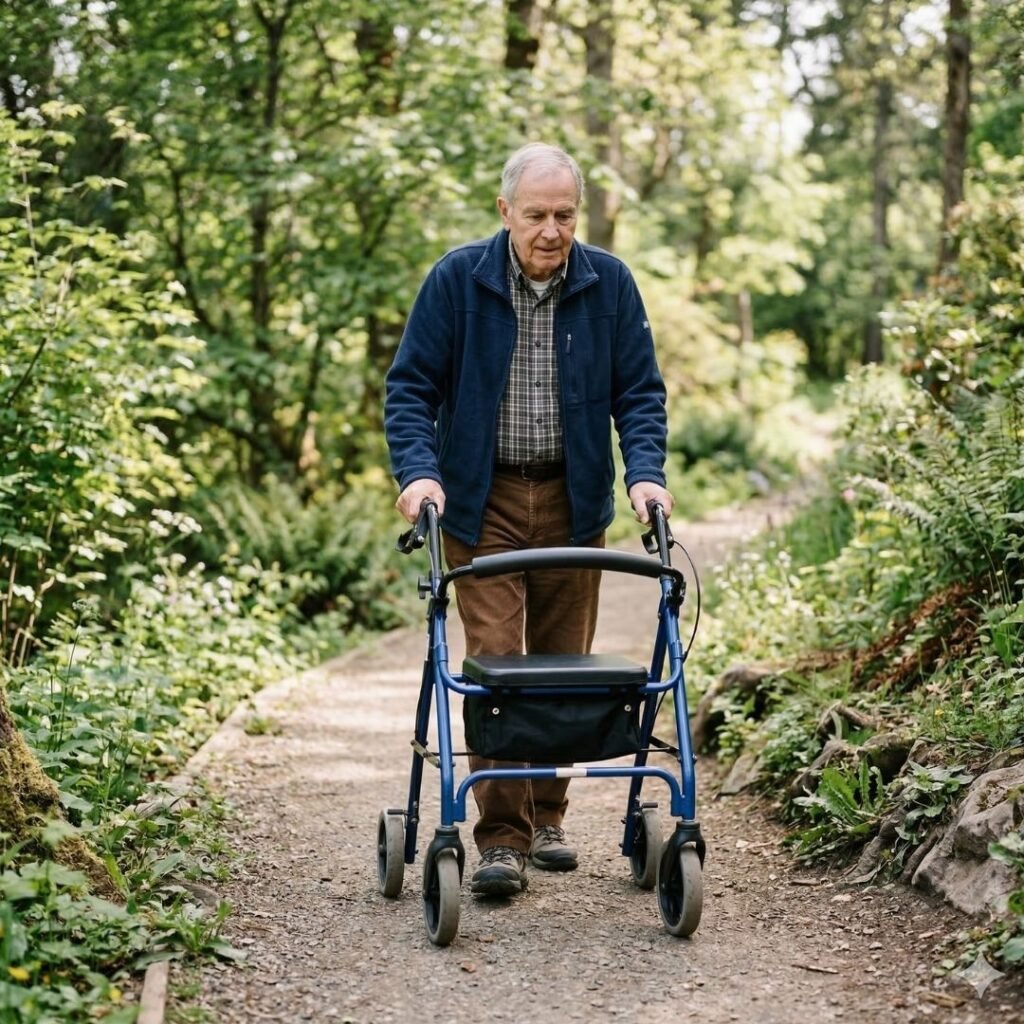
All-terrain walkers for seniors work best when they’re part of a broader approach to safe, independent living. If you’re investing in a walker for outdoor use, it’s worth taking a few additional steps to make the transition between indoors and outdoors as smooth as possible. Start with your entryway — make sure your front door area has a firm, level surface where you can safely set up your outdoor walker before heading out. A small bench or sturdy chair near the door gives you a place to sit while you adjust your grip or put on walking shoes. Making your home safer for seniors — especially entryways and door thresholds — ensures a smooth transition between indoor and outdoor walking. Remove any loose rugs, mats, or clutter from the path between your door and your outdoor walking route.
Many seniors find it helpful to pair their all-terrain walker with other supportive products throughout the home. Grab bars near exterior doors, motion-sensor lighting along walkways, and a ramp or threshold bridge over the door sill can all reduce the risk of a fall during those critical first and last steps of each outing. If you store your walker in the garage, keep it close to the door and easy to access — the harder it is to get to, the less likely you are to use it. Consider adding a small accessories kit to your walker’s storage pouch: a phone, a water bottle, sunscreen, and a list of emergency contacts. Being prepared makes every outing more enjoyable and less stressful for both you and your family.
Your walker can also encourage healthier daily routines. Setting a regular walking schedule — even just 15 to 20 minutes each morning — builds strength, improves balance, and supports cardiovascular health. Walking with a companion adds a social element and provides an extra layer of safety. Over time, consistent outdoor walking with a stable, well-fitted walker can actually improve your mobility to the point where other daily activities become easier too. The benefits compound, and the walker becomes not just a safety device but a tool for maintaining long-term independence and connection with the world around you.
Physician’s Tips for Long-Term Use
Long-term use of all-terrain walkers for seniors requires periodic reassessment, both of the walker itself and of the user’s needs. As a physician, I recommend that patients revisit their walker setup every six months or after any significant change in health — a new diagnosis, a fall, surgery, or noticeable changes in strength or balance. What worked six months ago may not be the best fit today, and a simple handle-height adjustment or a switch to a different braking style can make a meaningful difference in safety and comfort.
Weight-bearing exercise is essential for seniors, and walking outdoors with an all-terrain walker is one of the best forms available. The National Institute on Aging recommends regular physical activity — including walking — as one of the most effective ways for seniors to maintain strength and balance. However, it’s important to increase distance and difficulty gradually. Start with short, flat walks and add distance or terrain challenge over time. Listen to your body — if you feel fatigued, dizzy, or unsteady, stop and rest. Use the walker’s built-in seat for breaks, and never push through pain in your joints, back, or chest. If you experience new or worsening symptoms during walks, mention them to your healthcare provider promptly.
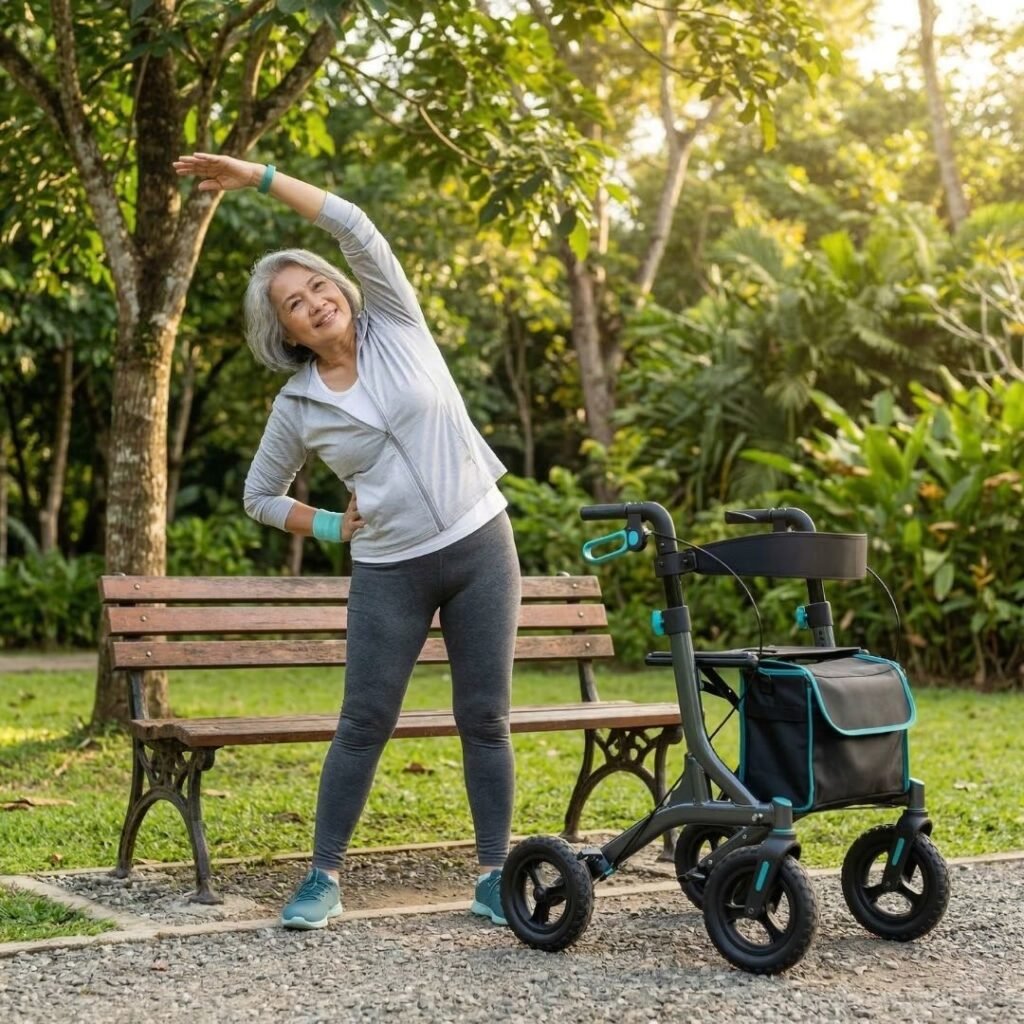
I also encourage patients to complement their walker use with gentle strengthening and balance exercises at home. Building simple daily habits to improve mobility — like balance holds and leg lifts — strengthens the muscles that make outdoor walking safer. Physical therapy can be invaluable here, especially for seniors recovering from injuries or managing progressive conditions. The goal isn’t to replace the walker, but to ensure that the walker remains a tool for active living rather than becoming a crutch that masks declining strength. Staying proactive about physical health means your all-terrain walker will serve you well for years to come.
All-Terrain Walker Comparison for Seniors (Features & Stability)
Frequently Asked Questions
1. What makes an all-terrain walker different from a regular walker?
All-terrain walkers are built with larger wheels — typically 8 to 10 inches compared to the standard 6 inches — and sturdier frames designed to handle outdoor surfaces like grass, gravel, dirt, and cracked sidewalks. Many models also include pneumatic tires for shock absorption, hand-operated brakes for slope control, and reinforced construction for added durability. These features work together to provide a stable, smooth walking experience on surfaces where a standard walker would catch, stall, or tip. If you plan to walk outdoors regularly, an all-terrain model is significantly safer than trying to use a standard indoor walker outside.
2. Can I use an all-terrain walker indoors too?
Most all-terrain walkers can be used indoors, but they may not be ideal for tight spaces. The larger wheels and wider frames that make them excellent outdoors can make them harder to maneuver in narrow hallways, small bathrooms, or cluttered rooms. Some seniors choose to have two walkers — an all-terrain model for outdoor use and a lighter, more compact rollator for indoors. If you can only have one walker, look for an all-terrain model with a narrower frame width and wheels that won’t scuff hardwood or tile floors. Test it in your home before committing to using it as your sole walker.
3. How do I choose the right wheel size for my needs?
Wheel size depends on where you plan to walk most often. For neighborhood sidewalks, paved park paths, and light gravel, standard wheels are usually sufficient and keep the walker lighter and more compact. For unpaved trails, thick grass, or rougher outdoor surfaces, 10-inch wheels offer a noticeable improvement in stability and ease of pushing. If you want to walk on forest paths or deep gravel, look for models with pneumatic tires for added shock absorption. Bigger wheels roll over obstacles more easily, but they also add weight and bulk, so match the wheel size to the surfaces you’ll actually encounter most often.
4. Are all-terrain walkers covered by Medicare or insurance?
Medicare Part B may cover a standard walker or rollator if it’s prescribed by a physician as medically necessary durable medical equipment (DME). However, coverage for all-terrain-specific features — like oversized wheels, pneumatic tires, or suspension systems — varies and is often limited. Many all-terrain walkers are classified as “upgrade” items, meaning Medicare may cover the base amount for a standard walker but you’d be responsible for the difference. Contact your insurance provider directly to ask about your specific plan’s coverage, and request a prescription from your doctor that details why an all-terrain model is medically necessary. For details on what qualifies as covered durable medical equipment, visit Medicare.gov’s DME coverage page.
5. How much weight can all-terrain walkers typically support?
Most all-terrain walkers support between 250 and 350 pounds, though heavy-duty models can go higher. Always check the manufacturer’s stated weight capacity before purchasing, and choose a walker rated for at least 50 pounds above the user’s body weight. This provides a safety margin and ensures the frame maintains its structural integrity over time, especially when walking on uneven ground where the walker absorbs additional stress from bumps and vibration. Exceeding the weight limit can cause frame fatigue, brake failure, or wheel damage — all of which are serious safety risks.
6. Do they make an all-terrain walker with a seat?
Yes — most all-terrain rollators include a built-in seat, and all five walkers recommended in this guide have one. The seat allows users to take rest breaks during longer walks without needing to find a bench or return home. Seat comfort varies by model, so look for padded seats with a backrest if you plan to sit frequently. Some models also include a seat that folds up when walking, which keeps it out of the way and reduces the overall width of the walker. When choosing a walker with a seat, check the seat height to make sure it’s appropriate for your leg length — sitting too high or too low can make it difficult to stand back up safely.
Final Thoughts on All-Terrain Walkers for Seniors
Choosing the right all-terrain walker for seniors is about more than finding a device that rolls over gravel — it’s about preserving the freedom to go where you want, when you want. The walkers in this guide represent the best options available in 2026, from the budget-friendly HOMLAND Rollator for everyday outdoor surfaces to the premium byACRE Overland for serious trail enthusiasts. No matter which one you choose, the most important factors are proper fit, reliable brakes, and wheels suited to the surfaces you’ll walk on most.
Talk to your physician or physical therapist before making a final decision. Try the walker on the surfaces you actually plan to use it on, and don’t hesitate to exchange it if the fit isn’t right. The goal is a walker that you reach for every day — one that makes going outside feel safe, natural, and enjoyable. Your outdoor life doesn’t have to shrink as you age. With the right all-terrain walker, it can stay as big as you want it to be.
Medical Disclaimer: This guide is for general educational purposes only and is not intended to serve as personalized medical advice. Always consult a qualified healthcare professional before making changes to medical equipment or care plans.
Last update on 2026-03-20 / Affiliate links / Images from Amazon Product Advertising API