
Affiliate Disclaimer: This article contains affiliate links. As an Amazon Associate, Mobility With Ease may earn a small commission from qualifying purchases at no additional cost to you.
Introduction
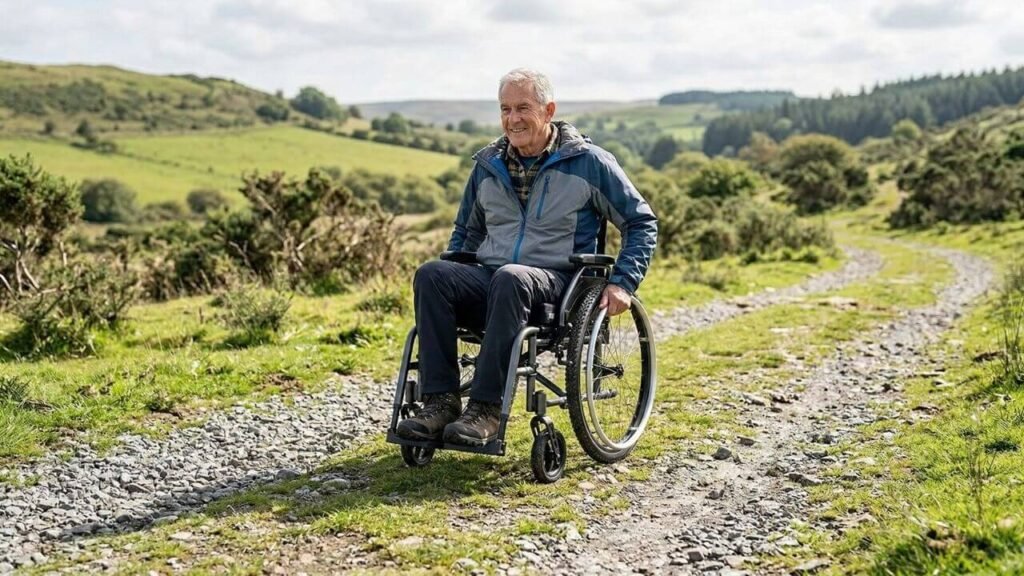
Outdoor mobility does not end at the edge of a sidewalk. Many older adults spend time on gravel driveways, grassy parks, beach paths, and uneven neighborhood streets. These are not uncommon surfaces — they are part of everyday life. Visiting a farmer’s market, attending an outdoor family gathering, or simply navigating a neighborhood with cracked sidewalks all require movement across terrain that standard wheelchairs were not designed to handle.
Standard wheelchairs often struggle on these surfaces, which can lead to frustration or genuine safety concerns. Narrow tires may sink into soft ground. Small front casters catch on stones and cracks. Lightweight frames may feel unstable when the surface shifts underfoot. For many seniors, this means choosing between staying home or accepting a higher level of risk when moving outdoors. Neither option supports long-term health or independence.
All-terrain wheelchairs are specifically built to address these challenges. They feature wider tires with more aggressive tread patterns to improve grip and stability. Reinforced frames help absorb vibration from rough surfaces. Some models include enhanced braking systems and lower centers of gravity to improve control on slopes. These features allow seniors to move more safely across outdoor environments without relying entirely on caregiver assistance.
In this 2026 buying guide, we compare practical models designed for outdoor use while keeping senior safety, stability, and independence at the center of every recommendation. We review manual options, powered models, foldable travel designs, sport-style chairs, and beach-specific builds. Each product is evaluated based on terrain capability, weight capacity, portability, and overall suitability for older adults. Choosing the right wheelchair for uneven terrain is not just about equipment features. It is about protecting confidence, reducing strain, and making sure outdoor spaces remain accessible and safe.
Why All-Terrain Wheelchairs Matter for Seniors
Standard indoor wheelchairs are designed for smooth, flat surfaces. When used on grass, gravel, sand, or uneven pavement, they can become difficult to control. Narrow tires may sink into soft ground, and lightweight frames may feel unstable on slopes. Without proper traction and wheel width, users may experience tipping, sliding, or increased strain on the shoulders and wrists. These limitations can discourage outdoor activity altogether.
All-terrain wheelchairs are built differently. They use wider, more rugged tires to improve grip and stability across variable surfaces. Stronger frames help absorb vibration from rough ground. These design features allow seniors to move more safely in parks, outdoor events, or neighborhood areas with uneven sidewalks. For many families, this translates to greater independence and less physical strain on caregivers who might otherwise need to push, steady, or redirect a standard chair.
Mobility plays a central role in physical and emotional well-being. According to the National Institute on Aging, maintaining regular movement and community involvement supports both strength and overall health. For seniors committed to staying mobile, outdoor access is not a luxury — it is part of daily life. Social engagement, physical activity, and mental stimulation all depend on the ability to move freely beyond the front door.
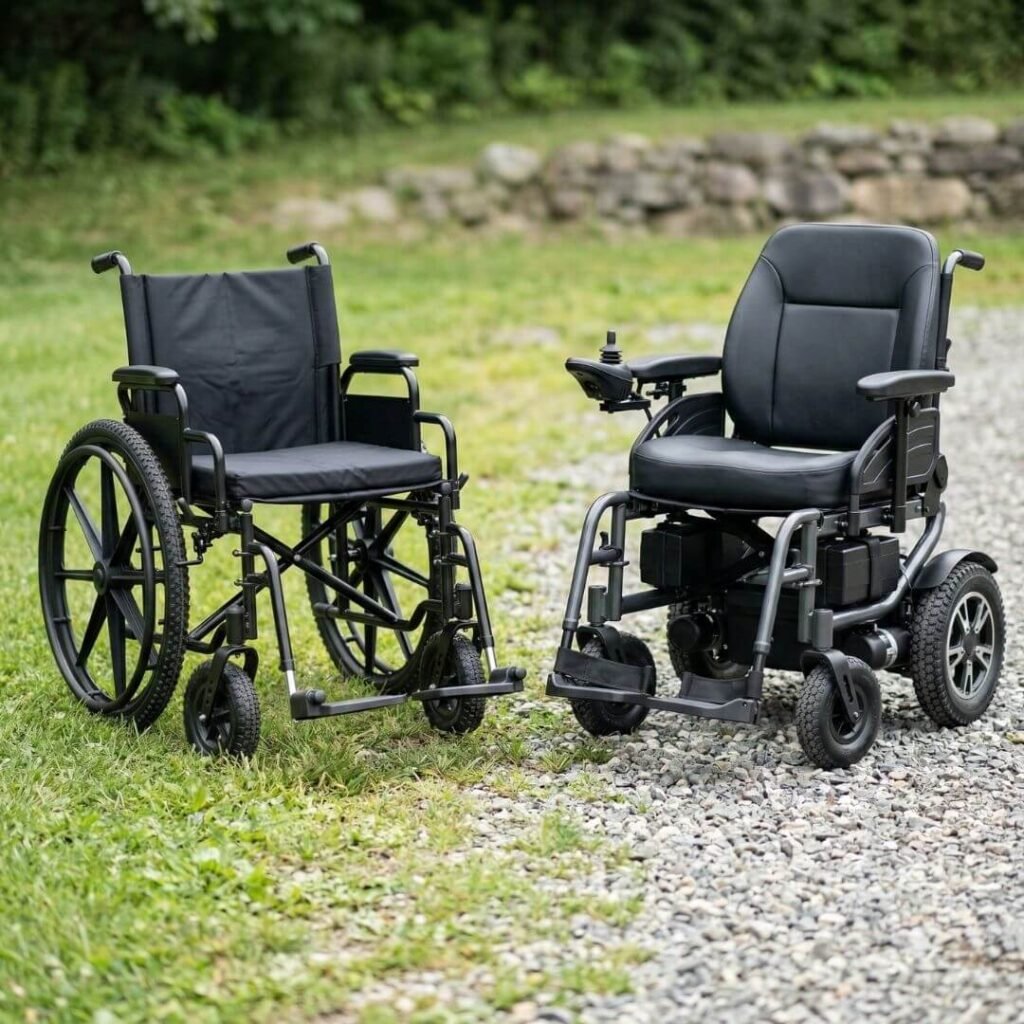
It is also important to compare options carefully. While mobility scooters and transport models serve specific purposes, they are not always designed for rugged outdoor terrain. Terrain capability is a specialized feature that should be chosen intentionally, not assumed. Scooters may handle paved paths well but struggle on loose gravel. Transport chairs may fold compactly but lack the tire width needed for grass or sand.
Outdoor movement also connects directly to safety. Uneven surfaces increase balance challenges, particularly for seniors with known fall risks. Choosing equipment that provides better traction and a wider base of support can reduce preventable accidents. When the right chair is matched to the right environment, outdoor movement becomes safer, more comfortable, and far more sustainable.
Doctor’s Note: Choosing the Right All-Terrain Wheelchairs
In my clinical practice, I see many patients who assume all wheelchairs perform the same outdoors. They do not. Standard models are engineered for smooth hospital corridors and flat home flooring, not for the variable resistance of dirt trails or gravel driveways. I recommend first evaluating upper body strength, endurance, and typical terrain exposure before selecting any outdoor wheelchair.
Someone with strong arm function and good coordination may do well with a manual all-terrain wheelchair, which provides exercise along with mobility. A person with limited stamina, shoulder pain, or declining grip strength may benefit more from a powered option that reduces physical strain. The decision should always be based on current ability rather than past capability.
I also advise patients to consider portability and lifestyle needs. If you frequently transport your chair in a car for appointments or family visits, weight and fold size matter significantly. You may want to compare models alongside our guide to lightweight wheelchairs or even travel wheelchairs. A chair that performs well outdoors but cannot be loaded into a vehicle without help may create a different barrier. Stability and safety should always outweigh cosmetic design.
When in doubt, I encourage patients to consult a physical therapist or orthopedic specialist, such as those affiliated with the American Academy of Orthopaedic Surgeons, to ensure proper fit and long-term joint protection. A professional evaluation can identify factors that are easy to overlook, such as posture misalignment or wrist strain that compounds over time.

Best All-Terrain Wheelchairs for Seniors (Top Picks)
Best Manual All-Terrain Wheelchair for Portable Outdoor Use
Lightweight Transport Wheelchair, Folding All-Terrain Wheelchair, Portable Self-Propelled Manual Wheelchair, Aluminum Alloy Frame (16.1″ Seat)
This manual all-terrain wheelchair offers a durable aluminum frame and wider outdoor-capable wheels. It balances portability with ruggedness, making it suitable for grass, compact gravel, and light trail surfaces. For users who maintain upper body strength and prefer an active role in their mobility, this model provides a cost-effective and low-maintenance option. Its folding mechanism also makes it practical for families who load and unload chairs frequently
Pros
- Lightweight aluminum frame
- Foldable for transport
- Self-propelled design
- Suitable for mixed outdoor surfaces
Cons
- Requires upper body strength
- Not ideal for steep inclines

- 1. Foldable Design: This sport wheelchair features a compact foldable design, making it easy to store and transport. Perfect for travel and everyday use.
- 2. Lightweight Aluminum Construction: Built with durable yet lightweight aluminum, this wheelchair ensures ease of movement and portability without compromising on strength.
- 3. Quick Release Wheels: Equipped with a one-touch mechanism for quick wheel removal, allowing for convenient setup and storage.
Best Lightweight Powered All-Terrain Wheelchair
All Terrain Lightweight Foldable Electric Wheelchair for Adults, 37LBS, Aluminium Magnesium Alloy Frame, 10.4AH Battery, 500W Motor (12+ Mile Range)
This powered model combines a lightweight frame with a 500W motor and extended battery range of over 12 miles on a full charge. It is particularly useful for seniors with limited endurance or those navigating longer outdoor distances such as parks, campgrounds, or neighborhood routes. When comparing with other power wheelchairs, this model stands out for terrain adaptability and foldable convenience. The dual-battery system allows for extended outings without range anxiety.
Pros
- Powerful motor for inclines
- Extended battery range
- Foldable for travel
- Lightweight for a powered model
Cons
- Higher price point
- Requires battery charging and maintenance

- 【500W Powerful Motor and 10.4AH Battery】This foldable electric wheelchair has detachable 2*5.2AH lithium battery extend up to 12+ miles in full charge. The 2*250W powerful brushless motors make...
- 【 Lightweight Electric Wheelchair for Adults】: This lightweight electric wheelchair is equipped with aluminium magnesium alloy frame, which is a ultra-lightweight material for solid, lightweight...
- 【360° Intelligent Control】The power electric wheelchair features a 5-level speed adjustment: levels 1-2 for smooth indoor driving and 3-5 for rapid outdoor movement. This allows for agile indoor...
Best Foldable All-Terrain Wheelchair for Travel
Aluminium Alloy All Terrain Folding Wheelchair with Adjustable Pedal (220 lb Capacity)
This foldable design is ideal for families who frequently transport the chair between locations. The adjustable footrests and lightweight construction improve usability while maintaining stability outdoors. It may be preferable to bulkier transport wheelchairs when terrain adaptability is needed alongside compact storage. The 220-pound weight capacity accommodates most users while keeping the frame manageable for caregivers.
Pros
- Easy folding mechanism
- Adjustable pedal support
- Lightweight design
- Suitable for moderate outdoor terrain
Cons
- Lower weight capacity than heavy-duty models
- Not specialized for sand

- LIGHTWEIGHT FOLDING WHEELCHAIR: Featuring a sturdy frame and durable materials, this versatile folding wheelchair is easy to use, has excellent weight-bearing capacity, is comfortable and durable, and...
- Dual Armrest Handbrake: Braking and stopping for stable caregiver. Parking brakes on both sides for easy access to the parking brake
- Convenient to fold: easy to store Humanized design, easy to fold, compact, space-saving, convenient for travel
Best Sports-Style All-Terrain Wheelchair for Active Use
Foldable Lightweight Sports Wheelchair All Terrain Aluminium Wheelchair (Blue, 16.5” Seat Width)
Designed for more active users, this sports-style chair emphasizes maneuverability and responsiveness. It features 24-inch rear wheels and 4-inch rotating front casters that handle paved trails, park paths, and moderate outdoor surfaces with greater agility. It is a strong option for individuals who enjoy parks or mixed-surface routes and need enhanced stability during movement without sacrificing speed or control.
Pros
- Durable aluminum build
- Sport-style responsiveness
- Foldable for transport
- Good for mixed terrain
Cons
- May not suit users needing high back support
- Limited padding compared to comfort models

- Lightweight Aluminum Structure: This sports wheelchair is made of durable and lightweight aluminum alloy, achieving a perfect balance between strength and portability, making it an ideal choice for...
- Comfortable backrest and seat: The backrest and seat design of this sports wheelchair are soft and supportive, providing excellent comfort during prolonged use, allowing you to focus on activities...
- 24 inch rear wheels: This wheelchair is equipped with 24 inch rear wheels and 4-inch rotating front wheels, providing excellent and stable maneuverability on various terrains, making it convenient for...
Best All-Terrain Wheelchair for Beach & Sand
Beach Wheelchair, 12″ Balloon Tires for Soft Sand, Easily Disassembles – WC-1
With oversized balloon tires, this wheelchair is specifically engineered for sand. Standard wheelchairs often sink into soft surfaces, but this design distributes weight evenly across a wider contact area to prevent sinking. The healthcare-grade PVC frame resists rust and corrosion, making it suitable for saltwater environments. It disassembles easily and includes a heavy-duty carry bag for transport.
Pros
- Large balloon tires
- Easy disassembly
- Designed for soft sand
Cons
- Not ideal for indoor use
- Bulkier than standard models

- ACCESSIBILITY: 12" Balloon Tires roll easily over soft sand or rough surfaces.
- PORTABLE & TRAVEL-READY: Includes a heavy-duty carry bag that fits all disassembled components — keeps parts together, protects your vehicle interior, and makes transport easier.
- QUALITY COMPONENTS: Made from Healthcare Grade PVC that will not rust or corrode, even in a saltwater environment. All hardare is stainless steel and aluminum.
Best All-Terrain Wheelchair for Trails & Mixed Surfaces
Lightweight Aluminium Wheelchair, All Terrain Outdoor Wheelchair, 4-Wheel Self-Propelled with Handbrakes (Model B)
This versatile model performs well on gravel, compact dirt, and uneven sidewalks. The addition of handbrakes provides improved control on slight inclines and supports safer outdoor navigation on surfaces where momentum can build unexpectedly. The double cross-brace frame design adds structural stability without excessive weight, making it practical for both self-propulsion and caregiver-assisted use.
Pros
- Handbrake system
- All-terrain wheels
- Lightweight frame
Cons
- Not fully powered
- May require moderate pushing effort

- EASY TO STORE / FOLD - This electric wheelchair can be folded in 5 seconds. It is very compact and neat when folded. It weighs only 12 kg / 26.4 lbs, folds quickly and can be lifted with one hand. It...
- ROBUST - the stylish wheelchair uses a high quality titanium steel frame that bends slightly. The double cross braces make the body more stable and have a long service life. Not easily deformed and...
- EASY TO USE DESIGN -Double brake and four braking system; the wheelchair is equipped with a safety belt that can be used to secure the body to prevent accidental rushing out of the car; comfortable...
What Are All-Terrain Wheelchairs Used For?
All-terrain wheelchairs are designed to handle surfaces that standard chairs cannot manage safely. Wider tires, reinforced frames, and enhanced traction allow them to move more smoothly across grass, gravel, sand, packed dirt, and uneven pavement. These features reduce the chance of wheels sinking or catching on small obstacles. As a result, movement feels more stable and controlled, even on surfaces that would stop or destabilize a standard indoor model.
These wheelchairs are commonly used for outdoor recreation, community events, travel, and daily activities in areas without smooth sidewalks. Seniors who visit parks, attend outdoor gatherings, or live in neighborhoods with rough pavement often benefit from this type of design. In rural settings, where driveways and pathways may be gravel or dirt, all-terrain models provide greater reliability than standard chairs. They are also helpful in places where weather conditions can change ground stability, such as wet grass after rain or loose soil during dry seasons.
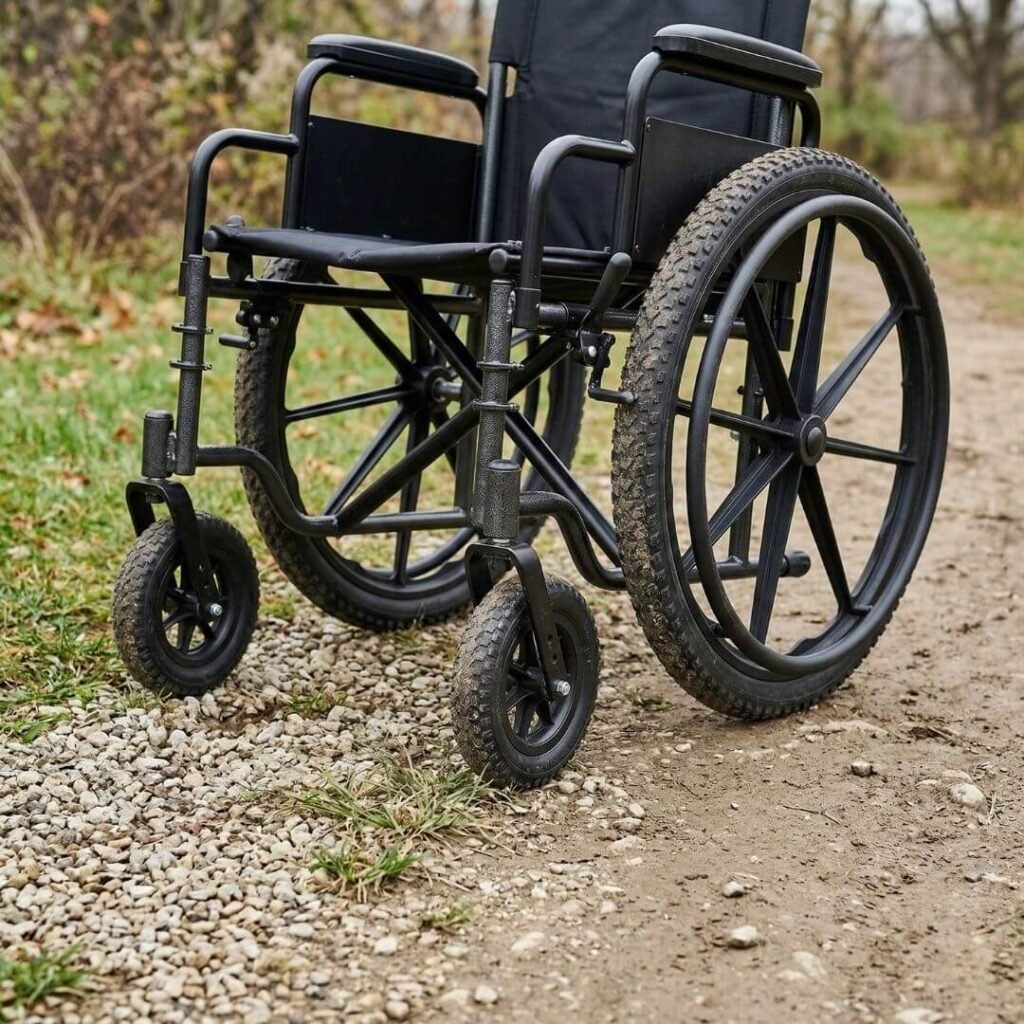
Unlike standard indoor models, off-road wheelchairs prioritize durability, grip, and balance over tight indoor turning ability. The tires are usually thicker and sometimes slightly wider to increase surface contact. Frames are built to handle vibration and small shocks from uneven ground without flexing or rattling. Some models also include stronger braking systems to improve control on gentle slopes, which is especially important for users who may not have the grip strength to slow themselves using tire friction alone.
It is important to understand that not every outdoor environment requires the same features. Sand requires very wide or balloon-style tires that distribute weight broadly to prevent sinking. Gravel demands strong traction and frame stability to maintain a straight path. Grass may require less width but still needs reliable grip to avoid spinning in place. Knowing the most common surface you will encounter helps narrow the right category and prevents overspending on features that will not be used regularly.
In practical terms, all-terrain wheelchairs expand where mobility can happen. They allow seniors to participate in outdoor life more comfortably and with fewer limitations. A grandparent who can join the family at a park picnic, a retiree who can roll through a garden path, or a veteran who can attend an outdoor ceremony — these are the everyday scenarios that all-terrain equipment supports. The right model matches both the environment and the user’s physical strength, making outdoor access safer and more practical.
How to Use All-Terrain Wheelchairs Safely
Check terrain conditions before moving forward. Even with enhanced wheels, very loose gravel, wet grass, deep sand, or steep inclines can increase tipping risk. Take a moment to scan the path ahead and look for holes, uneven edges, or sudden drops. If the surface appears unstable, choose a safer route when possible. Slowing down before reaching rough areas helps maintain better control and gives the user time to adjust posture or grip.
Maintain proper posture while moving. Sitting upright with hips positioned fully back in the seat improves balance and stability. Keep both feet properly supported on the footrests and avoid leaning too far forward when pushing uphill. Leaning excessively forward or backward can shift the center of gravity and increase tipping risk. Small posture adjustments make a significant difference in maintaining control, especially when the ground surface changes unexpectedly.
Use braking systems correctly. Engage wheel locks during transfers and whenever stopping on a slope. When descending an incline, move slowly and keep your hands ready to control speed. Sudden movements or sharp turns on uneven ground can reduce traction and lead to instability. If the wheelchair includes handbrakes, practice using them on flat ground first before relying on them during inclines.
Use assistive equipment when needed. For steep entries or raised doorways, a portable wheelchair ramp may provide additional safety and reduce strain on both the user and caregiver. If assistance is required, the caregiver should maintain a steady grip on the push handles and avoid sudden directional changes. Clear communication between the user and caregiver improves coordination and reduces the chance of unexpected movements.
Outdoor environments present unique challenges. According to the CDC, falls remain a leading cause of injury among older adults, and uneven outdoor surfaces can increase that risk. Planning routes ahead of time, checking weather conditions that affect ground stability, and using the right equipment for the specific terrain can significantly reduce preventable injuries. The goal is not to avoid the outdoors entirely, but to approach outdoor movement with preparation and appropriate caution while maintaining independence.

Making All-Terrain Wheelchairs Work Better at Home
All-terrain models work best when they are part of a larger mobility plan. Keeping outdoor walkways clear of loose objects, trimming grass along common paths, and improving lighting around entrances can make daily movement safer. Small home adjustments often improve wheelchair performance without changing the chair itself. Clear pathways reduce the need for sudden turns or stops, and consistent ground surfaces help maintain traction.
Transition areas deserve special attention. Door thresholds, small steps, and uneven driveway edges can create barriers that are difficult to navigate even with all-terrain tires. Adding stable ramp surfaces or using gradual entry solutions helps maintain smooth movement from indoors to outdoors. If the transition between flooring types causes the chair to catch or stall, a small threshold ramp can eliminate the obstacle entirely.
Families who frequently travel may benefit from reviewing tips for traveling with a wheelchair to improve loading, transport, and destination planning. Folding mechanisms, quick-release wheels, and vehicle trunk dimensions all play a role in whether a chair is practical for trips beyond the neighborhood. A chair that works well on gravel but cannot fit in the car trunk creates a different kind of mobility limitation.
Inside the home, pairing mobility tools can make a meaningful difference. Some users combine their all-terrain wheelchair with lift chairs to assist with safe standing transitions. Others benefit from bathroom safety upgrades such as grab bars or stable shower seating. Coordinating mobility equipment across indoor and outdoor settings reduces strain on the body and supports consistent daily independence.
Storage and maintenance also affect long-term usability. All-terrain tires should be checked regularly for proper inflation and tread wear. Frames should be inspected for loosened bolts or joints that may have rattled free on rough surfaces. Keeping the chair clean — particularly the axles and wheel bearings — extends its working life and preserves performance on difficult ground. When mobility tools work together and are properly maintained, movement becomes more predictable and less physically demanding.
Physician’s Tips for Long-Term Use
Long-term wheelchair use requires careful attention to joint health and posture. I advise patients to monitor shoulder strain, especially when using manual models on rough terrain. Repeated pushing against resistance can place stress on the rotator cuff and upper back muscles. If soreness lasts more than a few days or worsens over time, the wheelchair setup should be reviewed. Ignoring early shoulder symptoms can lead to chronic injury that limits mobility further.
Proper seating support is equally important. A seat that is too low or too high can change shoulder mechanics and increase strain during each push cycle. Footrests should support the legs comfortably without forcing the hips forward or creating pressure behind the knees. Handle height should allow elbows to bend at approximately 15 to 20 degrees during the push stroke. Small alignment adjustments often reduce fatigue and improve long-term comfort significantly.
Regular seat cushion evaluation can help prevent pressure injury. Cushions compress over time and may lose their protective support well before they appear visibly worn. Users should check the skin daily for redness, irritation, or early breakdown, especially after extended outdoor use when vibration and heat exposure are higher. Early detection allows for quick adjustments before minor irritation becomes a serious medical concern.
Nutrition and hydration also play a role in skin and muscle health. Adequate protein intake supports tissue repair, and proper hydration improves circulation — both of which matter for individuals who spend extended periods seated. For seniors managing multiple health conditions, it may be helpful to choose the right mobility aid based on a complete clinical picture rather than a single factor.
I recommend reassessing mobility equipment at least once a year, or sooner if strength, endurance, or body weight changes. A wheelchair that fit properly six months ago may need adjustments after a hospital stay, weight change, or decline in upper body strength. Ongoing evaluation by a healthcare provider helps ensure the wheelchair continues to match the user’s needs safely and effectively. The goal is always to support sustained independence without creating secondary health problems.

All-Terrain Wheelchairs Comparison for Seniors (Features & Stability)
Frequently Asked Questions
1. Are there all terrain wheelchairs?
Yes. All-terrain wheelchairs are specifically engineered with wider tires, reinforced frames, and improved traction to handle uneven outdoor surfaces such as grass, gravel, dirt paths, and sand. These design features help increase stability and reduce the risk of tipping or sinking. Unlike standard chairs built for smooth indoor surfaces, they are constructed with outdoor durability in mind. They are widely available in both manual and powered versions to suit different strength levels and mobility needs.
2. What is the best type of wheelchair for outdoor use?
The best type depends on the user’s strength, endurance, and typical terrain. Manual models work well for individuals with strong upper body control who travel short to moderate distances on relatively firm surfaces. Powered options are often better for longer distances, hilly terrain, or users with limited stamina. For sandy environments, balloon-tire models provide the best performance. The right choice should match both physical ability and the most common outdoor surface encountered.
3. What is the difference between all terrain and regular wheelchairs?
All-terrain models use wider, more rugged tires and stronger frame construction to handle uneven ground safely. They are built to provide better grip, improved balance, and vibration absorption that standard chairs do not offer. Regular wheelchairs are generally intended for smooth indoor flooring and paved sidewalks where traction and shock absorption are less critical. Using a standard chair on rough terrain can reduce stability, increase physical strain, and raise the risk of tipping.
4. How much does an all terrain wheelchair cost?
All-terrain wheelchair cost varies widely based on design, materials, and features. Manual models are typically more affordable because they do not include motor systems or batteries. Basic manual all-terrain chairs may start at a few hundred dollars. Electric models with extended range, stronger motors, and reinforced components are usually more expensive and can range into several thousand dollars. Price also depends on tire type, frame materials, weight capacity, and overall durability.
5. Are all terrain wheelchairs electric or manual?
They can be either. Manual versions rely on upper body strength for propulsion, which also provides a degree of physical exercise. Electric versions use motors and rechargeable batteries to reduce effort and extend range. The choice depends on mobility needs, endurance level, and the distance traveled outdoors. Both types are designed with wider tires and stronger frames than standard chairs to handle variable terrain.
6. Can you use a wheelchair on grass or gravel?
Yes, if the wheelchair is designed for outdoor terrain. Wider tires increase surface contact, which improves traction and reduces the chance of sinking into soft ground. Reinforced frames also help maintain balance and directional control on uneven surfaces. Standard indoor wheelchairs may struggle on grass or gravel and are not always stable enough for safe outdoor use. Choosing a model specifically rated for outdoor terrain significantly improves both safety and comfort.
7. What features should an off road wheelchair have?
Look for wide or treaded tires that improve grip on loose or uneven surfaces. A reinforced frame helps absorb vibration and maintain balance without flexing. Strong braking systems are important for control on slopes or rough ground where momentum can build unexpectedly. Stable seating support and properly positioned footrests improve safety and comfort during outdoor movement. Anti-tip casters and adjustable push handles are additional features that enhance overall safety.
8. Are all terrain wheelchairs covered by insurance or Medicare?
Coverage depends on medical necessity and proper documentation. Medicare outlines eligibility requirements for mobility devices, including wheelchairs, and approval typically requires a healthcare provider’s evaluation and written prescription. The wheelchair must be considered medically necessary for use inside the home, not just for outdoor recreation. Coverage details may vary based on individual health conditions and specific insurance plans. It is important to confirm eligibility directly with your insurance provider before purchasing.
Final Thoughts on All-Terrain Wheelchairs
All-terrain wheelchairs expand access beyond smooth pavement and indoor floors. They allow seniors to move confidently across grass, gravel, and other uneven surfaces that would normally limit mobility. With the right model, outdoor spaces become safer and more practical to navigate rather than environments to avoid.
The key is choosing a wheelchair that matches both the environment and the user’s physical needs. Tire design, frame strength, braking control, and weight capacity all matter. A thoughtful choice reduces strain, improves stability, and supports safer daily movement across the surfaces that are most common in a person’s daily routine.
Outdoor independence should not come at the cost of comfort or safety. When properly selected and maintained, an all-terrain wheelchair can support long-term mobility and help seniors remain active in the environments that matter most. Regular reassessment ensures the equipment continues to meet changing needs, and coordinated use with other mobility tools creates a more reliable and sustainable daily routine.
Medical Disclaimer: This guide is for general educational purposes only and is not intended to serve as personalized medical advice, diagnosis, or treatment. Always consult a licensed healthcare professional for recommendations tailored to your specific medical condition, mobility needs, or safety concerns.
Last update on 2026-03-10 / Affiliate links / Images from Amazon Product Advertising API