

Affiliate Disclaimer: This article contains affiliate links. As an Amazon Associate, Mobility With Ease may earn a small commission from qualifying purchases at no additional cost to you.
Introduction
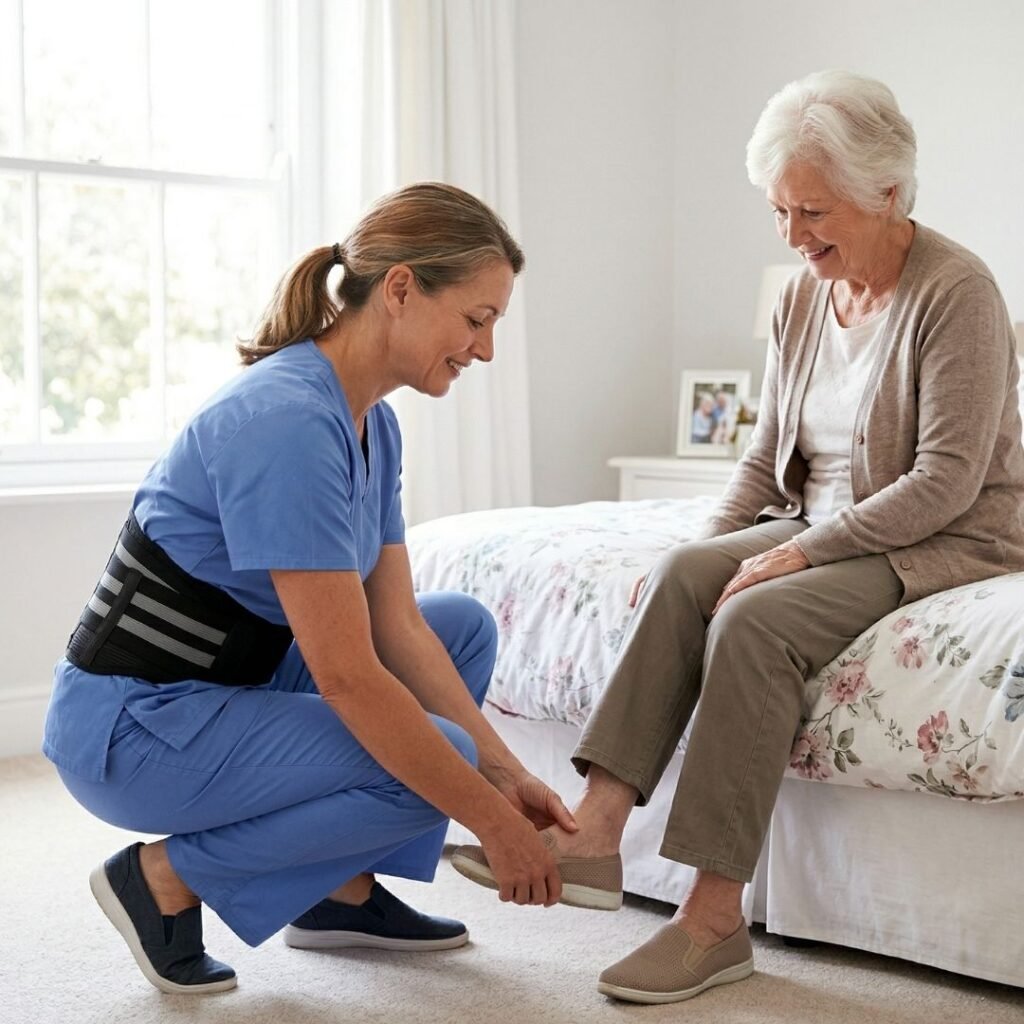
If you spend your days helping someone stand, transfer between surfaces, or move through their home, your back absorbs more stress than most people realize. Over time, that repeated strain leads to soreness, stiffness, and sometimes serious injury. The right back support braces for caregivers can make a meaningful difference — not by replacing good technique, but by giving your spine the reinforcement it needs during the most physically demanding parts of your day.
This guide breaks down the best back support braces for caregivers in 2026, including options built for heavy lifting, all-day comfort, posture correction, and budget-conscious buyers. We have researched and compared each option so you can make a confident choice based on your specific caregiving demands. Whether you are lifting a loved one out of bed every morning or spending long hours on your feet assisting with daily tasks, there is a brace here that fits both your body and your routine.
Below, you will find our top picks with detailed pros and cons, followed by practical guidance on how to use a back brace safely, how to integrate it into your daily life, and what physicians recommend for long-term spinal health.
Why Back Support Braces Matter for Caregivers
Caregiving is one of the most physically demanding roles a person can take on, and the lower back bears the brunt of it. Every time you help someone stand from a chair, reposition them in bed, or support them during a bathroom transfer, the muscles and discs in your lumbar region absorb significant force. Over weeks and months, that force accumulates. Without support, it leads to muscle fatigue, disc compression, and chronic pain that can sideline even the most dedicated caregiver.
The statistics reflect this reality. Studies from occupational health organizations show that informal caregivers experience back injuries at rates comparable to healthcare workers in clinical settings. The difference is that most home caregivers do not have access to the same training, equipment, or ergonomic support. A quality lumbar support brace helps bridge that gap by reinforcing proper spinal alignment during the movements that put your back at greatest risk. Understanding the role of caregivers in senior mobility — and the physical toll it takes — highlights why a brace can provide immediate relief while you work on building better habits and strengthening your core.
It is important to understand that a back brace is not a cure. It is a tool — one part of a broader strategy that includes proper body mechanics, regular stretching, and a supportive care environment. But as a tool, it is one of the most practical and accessible options available. You can put one on in seconds, wear it during the tasks that matter most, and remove it when you are done. That simplicity is what makes back support braces for caregivers so valuable in real-world home care settings.
Many caregivers hesitate to use a brace because they worry it signals weakness or that their body should be able to handle the work without help. That thinking is counterproductive. Professional nurses and physical therapists use lumbar support routinely — not because they are weak, but because they understand the mechanics of spinal stress. Choosing to wear one of the best back support braces for caregivers available is a practical, evidence-informed decision that protects your ability to keep providing care.

Doctor’s Note: Choosing the Right Back Support Brace
I see caregivers in my practice every week who are dealing with lower back pain, and one of the first questions they ask is whether a brace can help. The short answer is yes — but the right brace matters more than most people think. A brace that is too rigid can restrict your movement and actually weaken your core muscles over time. One that is too flimsy will not provide enough support to make a difference during heavy tasks like patient transfers.
What I recommend for most caregivers is a semi-rigid lumbar support brace with adjustable compression. This type gives you firm support during lifts and transfers while still allowing enough flexibility for everyday movement. Look for dual-strap systems that let you dial in the compression level, and make sure the brace sits squarely over the lumbar region — just above the hips and below the ribcage. The National Institute for Occupational Safety and Health (NIOSH) guidelines on safe patient handling support the use of ergonomic aids, including lumbar supports, as part of a comprehensive injury prevention strategy.
I also want to be clear about what a brace cannot do. It cannot fix poor lifting technique. If you are bending at the waist and twisting under load, a brace will reduce some of the strain, but it will not prevent an injury entirely. Think of it as a seatbelt — it provides protection, but it works best when you are also driving safely. Combine your brace with proper body mechanics and you will get the most benefit from it.
Best Back Support Braces for Caregivers (Top Picks)
Best Overall
Mueller Sports Medicine Lumbar Back Brace with Removable Pad
The Mueller Sports Medicine Lumbar Back Brace with Removable Pad is one of the most trusted names in affordable back support, and for good reason. It delivers consistent compression across the lower back with a dual-strap adjustment system that allows caregivers to fine-tune the level of support based on the task at hand. The removable lumbar pad lets you customize the firmness — add it for extra support during transfers, or remove it for lighter tasks. The breathable material keeps you comfortable during extended wear, and the slim profile fits easily under most clothing. For caregivers who need reliable, versatile support across a variety of daily tasks, this is the brace that checks every box.
Pros
- Removable lumbar pad for customizable support levels
- Adjustable dual straps for targeted compression
- Breathable material suitable for all-day wear
- Trusted Mueller Sports Medicine brand
Cons
- May feel too flexible for very heavy lifting tasks
- Sizing runs slightly large — measure carefully

- TARGETED COMPRESSION: 4 steel springs deliver firm, targeted, and supportive compression to help alleviate pain and discomfort. Perfect for those lifting heavy objects or needing extra back support...
- COMFORTABLE & REMOVABLE PAD: Support and comfortability combined into a versatile back brace with a removable lumbar pad. Ideal for adults dealing with back pain, sciatica, scoliosis, back strains...
- EASY TO USE: The adjustable closure straps allow for easy wraparound and tightening to your comfort level while ensuring our back brace stays in place during most types of activity
Best for Heavy Lifting
BraceUP Back Brace for Lower Back Pain with Dual Adjustable Straps
If your caregiving involves frequent patient transfers, bed-to-wheelchair movements, or supporting someone’s full body weight, the BraceUP brace is built for that level of demand. It features eight firm support stays that keep your lumbar spine aligned under load, and the dual adjustable straps let you lock in firm compression quickly before a lift. Four anti-slip silicone strips keep the brace from shifting during movement, which is critical when you are in the middle of a transfer. The breathable mesh construction prevents overheating despite the added rigidity, making it practical for caregivers who perform multiple heavy tasks throughout the day.
Pros
- Eight firm support stays for heavy-duty stabilization
- Anti-slip silicone strips prevent shifting during transfers
- Quick-adjust dual straps for task-specific compression
- Breathable mesh prevents overheating
Cons
- Slightly bulkier than slim-profile options
- May feel overly rigid for light daily tasks
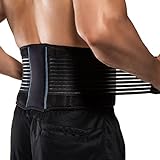
- 👍 CHOOSE THE RIGHT SIZE: Our back brace belt fits both men and women. Please make sure you measure circumference around the navel when choosing the right size. Also DO NOT use your pant size as...
- 👍 IMMEDIATE BACK PAIN RELIEF: BraceUP back support brace features dual adjustment straps to provide customized fit and compression. It gives you immediate pain relief from the lower back...
- 👍 FULL RANGE OF MOVEMENT: BraceUP Stabilizing Back Brace is the best option for comfortable lumbar support while still allowing for a full range of movement. Whether it is heavy lifting, gym...
Best for All-Day Wear
Modvel Back Brace for Lower Back Pain with 6 Stays
For caregivers who are on their feet from morning to night, comfort is just as important as support. The Modvel brace excels here with a breathable, adjustable design reinforced by six internal stays that provide more structure than a basic lumbar belt without the bulk of a heavy-duty brace. It offers steady compression that is sufficient for everyday caregiving tasks — bending, standing, walking, and light lifting — while remaining comfortable enough to wear for hours. This is the brace you can put on in the morning and forget you have on by midday.
Pros
- Six internal stays for added structure without bulk
- Breathable and comfortable for all-day wear
- Adjustable fit for men and women
- Excellent value for the price
Cons
- Not enough support for heavy patient lifts
- Velcro can wear down over several months of daily use

- ✔ SUPPORT YOUR LOWER BACK: This back brace for lower back pain relief features 6 reinforced stays, a breathable 16-hole mesh, and an adjustable Velcro design to deliver strong lumbar support for men...
- ✔ RELIEVE PAIN IN YOUR LUMBAR SPINE: Designed as a posture corrector and lower back support belt, this brace reduces pressure from daily sitting, bending, or lifting. It’s ideal for work, walking...
- ✔ ORTHOPEDIC DESIGN FOR POSTURE SUPPORT: Our orthopedic back brace provides targeted lumbar support and posture alignment. Great for sciatica support, disc issues, or soreness from work, it keeps...
Best for Heavy-Duty Work
NeoHealth Lower Back Support Belt with Suspenders
If your caregiving involves physically demanding tasks similar to what warehouse or construction workers face — repeated heavy lifting, extended time on your feet, and constant bending — the NeoHealth belt is built for that level of punishment. It features a wide lumbar support design with removable suspenders that keep the belt securely in place during active movement, so it never rides up or shifts when you need it most. The BPA-free, breathable materials are designed for all-day comfort even in demanding environments, and the adjustable compression lets you dial in the right level of support for each task.
Pros
- Removable suspenders keep the belt securely in place during active tasks
- Wide belt design distributes support evenly across the lower back
- Breathable, BPA-free materials for all-day wear
- Available in a wide range of sizes (M through 5XL)
Cons
- Suspenders add bulk and may be visible under clothing
- More industrial in design — less discreet than other options

- ☝Don't Select Based on Pant's Size: Use soft tape to measure circumference around your Belly not hip. If you fall within multiple size ranges, choose the largest. Size chart is provided below
- ✔ PLUS SIZE BACK BRACE FOR HEAVY WORK: This durable plus size back brace is designed to provide strong back support for larger body types during demanding tasks. Acting as a reinforced lower back...
- ✔ ENHANCED LUMBAR SUPPORT FOR BIGGER FRAMES: Built with reinforced lumbar support, this structured lumbar support belt helps stabilize the spine and improve posture during physical work. The brace...
Best for Posture Correction
Flexguard Posture Corrector Back Brace Support
Many caregivers develop a forward-hunching posture from bending over beds, wheelchairs, and low surfaces throughout the day. The Flexguard combines traditional lumbar support with upper-back posture correction, gently pulling the shoulders back while stabilizing the lower spine. This dual-function design makes it particularly useful for caregivers who notice their posture deteriorating over time. It is comfortable enough for extended wear and provides a constant reminder to maintain spinal alignment.
Pros
- Combines lumbar support with posture correction
- Helps counteract forward-hunching habits
- Comfortable shoulder straps
- Good for caregivers with upper and lower back issues
Cons
- Shoulder straps may feel restrictive for some users
- Less lumbar compression than dedicated lower-back braces
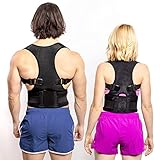
- Pain Relief: Our premium posture brace helps ease discomfort associated with alignment-related neck pain, slumped shoulders, and herniated discs.
- Body Correction: The posture corrector pulls back your shoulders to help re-train spinal alignment along with contributing to posture improvement with proper use over time.
- Comfortable and Discreet: Our back brace for posture sits comfortably under clothes to provide maximum support, while not drawing attention.
Best Budget-Friendly Support
Sparthos Back Brace for Lower Back Pain
Not every caregiver needs the most heavy-duty option on the market, and the Sparthos brace proves that reliable support does not have to be expensive. It features a breathable construction with an included lumbar support pad that provides steady compression across the lower back. The design is comfortable enough for extended daily wear while still offering meaningful relief for sciatica, herniated disc discomfort, and general lower back soreness. For caregivers who want a dependable everyday brace without a premium price tag, the Sparthos is a smart starting point.
Pros
- Affordable price makes it accessible for most budgets
- Included lumbar support pad for targeted compression
- Breathable material comfortable for daily wear
- Unisex design with multiple size options
Cons
- Less structural support than braces with rigid stays
- May not provide enough stabilization for very heavy lifting
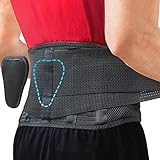
- ✅ FORGET ABOUT PAIN - Sparthos Back Brace gives you immediate & lasting relief from a herniated disc, sciatica, back pain, sore muscles and other back conditions. Wear it when you walk, bend or...
- ✅ SUPPORT YOU BADLY NEED! - Sparthos medical brace incorporates an adjustable lumbar pad to provide extra compression for your lower back. Vertical support stays stabilize your back and prevent...
- ✅ BE COMFORTABLE AND CONFIDENT AGAIN - Breathable fabrics used in the production of Sparthos along with its adjustable, perfect fit design makes it comfortable and easy to wear under any clothes...
Educational Overview: What Are Back Support Braces Used For?
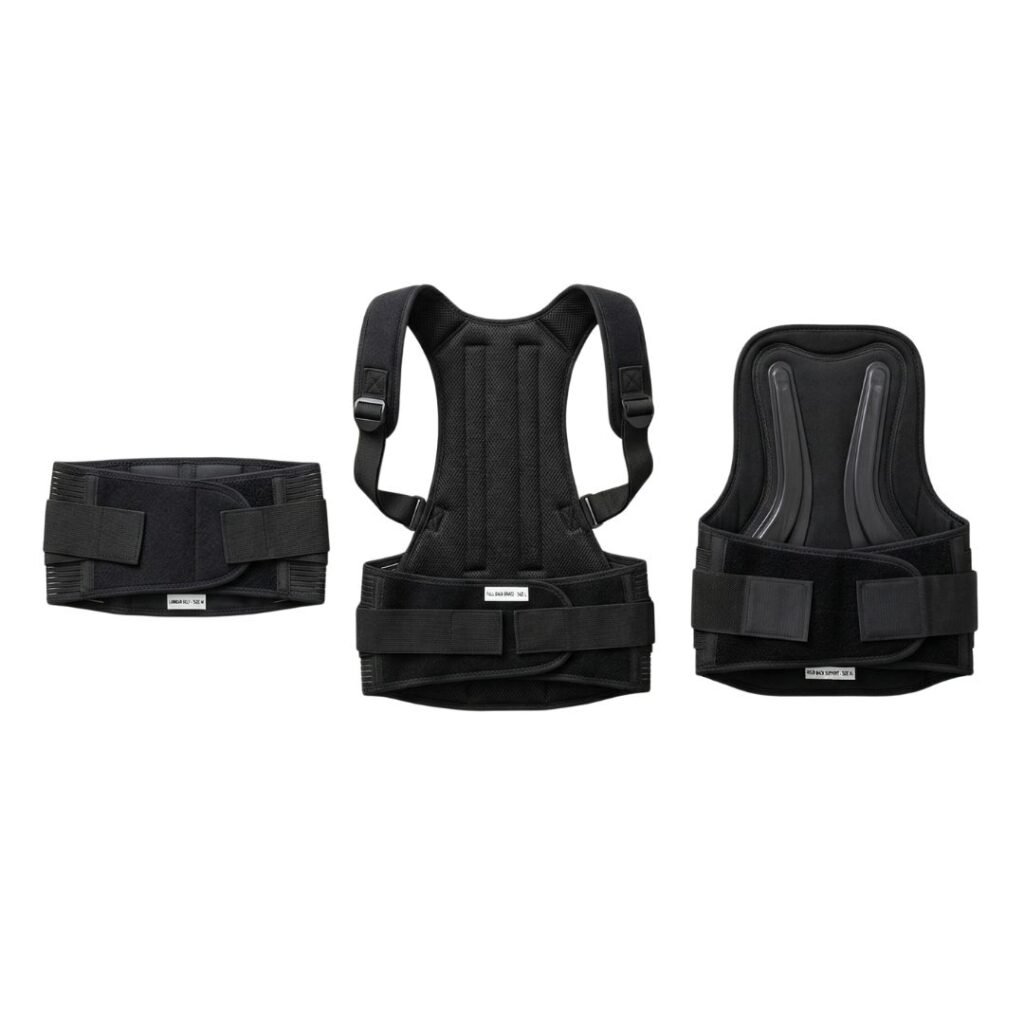
Back support braces are wearable devices designed to stabilize the lumbar region of the spine and limit movements that contribute to strain or injury. They work by applying compression around the lower torso, which reinforces the natural curvature of the spine and reminds the wearer to maintain proper posture. In clinical and occupational settings, lumbar support braces have been used for decades to help workers who perform repetitive lifting, bending, and twisting tasks — exactly the kinds of movements that define everyday caregiving.
For caregivers specifically, a back brace serves several practical purposes. During transfers and lifts, it provides an external layer of support that reduces the load on the muscles and discs of the lower back. During extended periods of standing or bending, it helps prevent the gradual postural collapse that leads to end-of-day soreness. And for caregivers who are recovering from a previous back injury, a brace can provide the confidence and stability needed to continue providing care without fear of re-injury.
When shopping for back support braces for caregivers, there are three main types to be aware of. A flexible lumbar belt provides light to moderate compression and is best suited for all-day wear and general tasks. A semi-rigid brace with built-in stabilizer panels offers firmer support for lifting and transfers. And a rigid back brace provides maximum stabilization, typically recommended for caregivers managing existing injuries or very heavy physical demands. Understanding which type matches your needs is the first step toward making a smart purchase.
How to Use Back Support Braces Safely
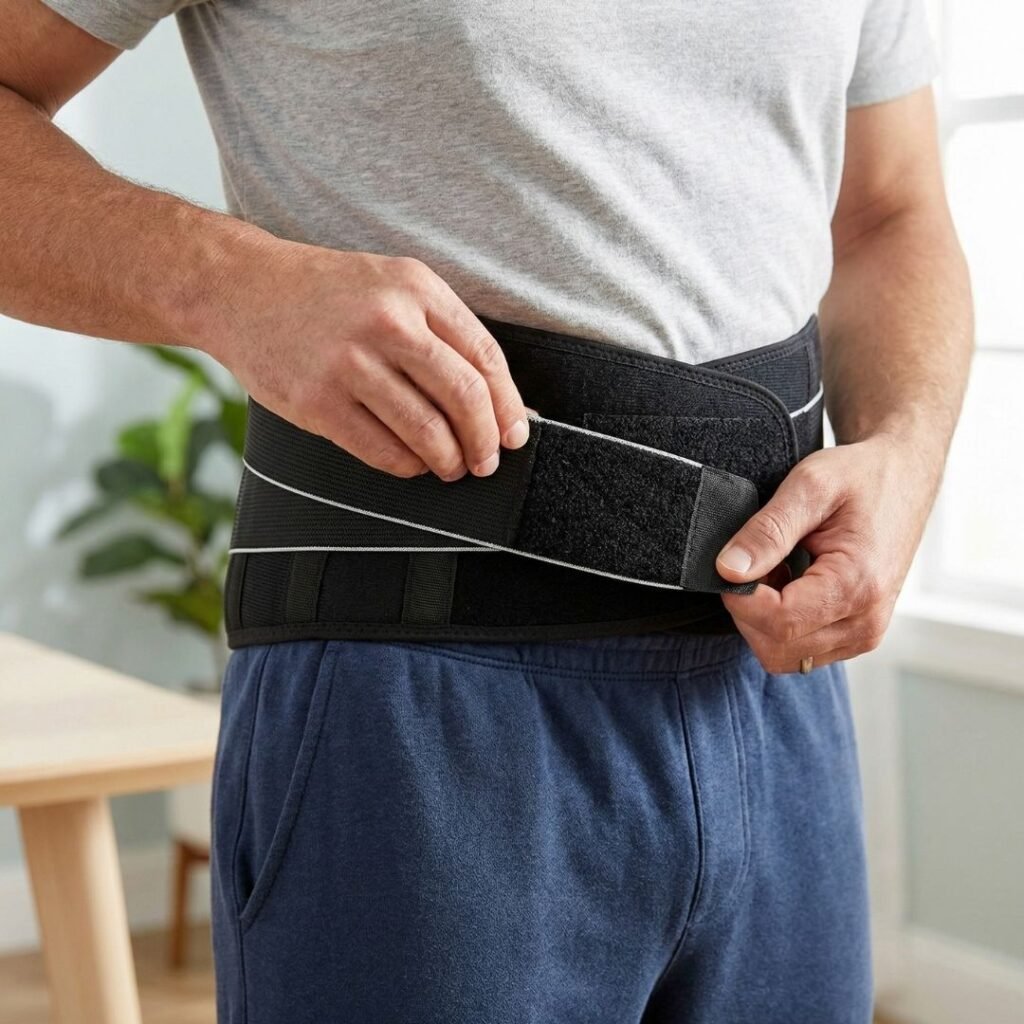
Fit is the foundation of safe brace use. Before you begin wearing a back brace during care tasks, take the time to adjust it properly. The brace should sit snugly around your lower torso, centered over the lumbar spine — just above the hip bones and below the bottom of the ribcage. If it rides up or shifts during movement, it is either too loose or the wrong size. A poorly fitted brace can create pressure points, restrict breathing, or fail to provide meaningful support exactly when you need it most.
Wear it during high-demand tasks, not all day every day. One of the most common mistakes caregivers make is wearing a rigid brace continuously. While it may feel reassuring, prolonged daily use of a firm brace can lead to core muscle weakening because the brace is doing the work your muscles should be doing during low-demand activities. The best approach is to put your brace on before transfers, lifts, and other physically demanding tasks, and remove it during periods of rest or light activity. For flexible lumbar belts with lighter compression, all-day wear is generally safe, but even then, your body benefits from periods without external support.
A brace supports good technique — it does not replace it. Always pair your brace with proper technique, like learning how to safely reposition seniors in bed, including bending at the knees, keeping the person close to your body, and avoiding twisting under load. The brace reinforces these mechanics by stabilizing your spine, but it cannot protect you from the consequences of consistently poor form. Think of the brace and proper technique as working together — each one is good on its own, but together they provide far greater protection for caregiver back protection.
Check for skin irritation regularly. Especially during warmer months, the combination of compression and perspiration can cause chafing or skin irritation. Look for braces made with breathable mesh panels, and consider wearing a thin moisture-wicking undershirt beneath the brace. If you notice redness, itching, or discomfort, adjust the fit or take a break from wearing it until the skin recovers.
Lifestyle Synergy: Making Back Support Braces Work Better at Home
Even the best back support braces for caregivers are most effective when they fit into a broader routine that supports your spinal health. This means looking beyond the brace itself and considering how your home environment, daily habits, and overall wellness contribute to or work against the protection the brace provides.
Start by evaluating the spaces where you perform care tasks most often. If the bed is too low, you are bending further down even with a brace on, which reduces its effectiveness. If the bathroom lacks grab bars, you are compensating with your back during transfers that could be supported by the environment instead. Simple modifications to your care spaces amplify the benefit of wearing a brace. When your surroundings do more of the work, your brace has less strain to manage.
Daily stretching is another essential complement. Even five minutes of gentle hamstring stretches, cat-cow movements, and pelvic tilts in the morning can prepare your muscles for the day ahead. When you remove your brace at the end of a caregiving session, a brief cooldown stretch helps release the tension that accumulates even with external support. Over time, this combination of bracing and stretching builds a back that is both supported and resilient.
Do not overlook the emotional side of caregiving either. Chronic stress tightens the muscles of the back and shoulders, making you more vulnerable to strain. Learning how to support a loved one with limited mobility without sacrificing your own well-being is essential. If you are noticing persistent exhaustion, irritability, or a sense of being overwhelmed, addressing those feelings is just as important for your back as wearing the right brace. Mental health and physical health are deeply connected, especially for caregivers.
Physician’s Tips for Long-Term Back Health
Back support braces for caregivers are valuable short-term and task-specific tools, but long-term spinal health requires more than external support. As a physician, I recommend that every caregiver incorporate core-strengthening exercises into their weekly routine. Exercises like planks, bridges, and bird-dogs strengthen the deep stabilizer muscles that protect the spine from the inside out. You do not need a gym membership — these exercises can be done on the floor at home in ten minutes a day, and the benefits compound significantly over weeks and months.
Weight management also plays a role that is often underestimated. Carrying excess weight, particularly around the midsection, shifts your center of gravity forward and places additional chronic stress on the lumbar discs. Even modest weight loss can meaningfully reduce the baseline load on your spine, which means your brace has to do less work and your muscles fatigue more slowly during care tasks.
If you are wearing a brace because of existing pain, I encourage you to see a physical therapist or your primary care physician for an evaluation. A brace can manage symptoms, but it does not address underlying conditions like herniated discs, spinal stenosis, or degenerative changes that may be contributing to your pain. The Mayo Clinic’s guidelines on back pain prevention recommend a combination of ergonomic support, exercise, and professional evaluation for anyone experiencing recurrent or worsening back symptoms. Getting ahead of the problem now is far easier than managing a chronic condition later.
Back Support Braces Comparison for Caregivers (Features & Support Levels)
Frequently Asked Questions
1. What type of back brace is best for caregivers who lift patients?
A semi-rigid lumbar brace with adjustable dual straps is the best option for caregivers who regularly lift or transfer patients. The semi-rigid design provides enough stabilization to protect your lower back under load while still allowing the flexibility you need to move naturally. Look for braces with reinforced panels across the lumbar region and compression straps that let you increase support before a lift and loosen it during lighter tasks.
2. How long can you safely wear a back support brace each day?
For flexible lumbar belts with light compression, most people can wear them comfortably for the majority of the day. For semi-rigid or rigid braces, it is best to limit continuous wear to the periods when you are performing physically demanding tasks — typically two to four hours at a time. Prolonged use of firm braces without breaks can weaken the core muscles that your spine depends on for natural support. Always remove the brace during rest periods to let your muscles engage.
3. Can a back brace actually prevent injuries during caregiving?
A back brace can significantly reduce the risk of injury by reinforcing proper spinal alignment and limiting the range of motion that leads to strain. However, it works best when combined with proper lifting technique, a supportive care environment, and regular stretching. A brace alone cannot compensate for consistently poor body mechanics. Think of it as one layer of protection in a multi-layered approach to caregiver back protection and injury prevention.
4. What is the difference between a lumbar belt and a full back brace?
A lumbar belt focuses specifically on the lower back, wrapping around the area between the hips and the lower ribs. It provides targeted compression and is the most common type for caregivers. A full back brace extends higher, sometimes incorporating shoulder straps or upper-back panels, and is designed for people who need posture correction or have issues in both the upper and lower back. For most caregiving tasks, a lumbar belt provides sufficient support, but caregivers with upper-back pain or hunching habits may benefit from a full brace.
5. Should I talk to a doctor before wearing a back brace for caregiving?
It is always a good idea to consult with a physician before starting regular brace use, especially if you have an existing back condition, recent injury, or chronic pain. A doctor can help determine the right type and rigidity level for your situation and ensure that the brace will complement rather than interfere with any treatment you are already receiving. For caregivers without existing conditions who simply want preventive support, starting with one of the back support braces for caregivers listed in this guide is generally safe without a prescription.
Final Thoughts on Back Support Braces for Caregivers
Choosing the right back support braces for caregivers is not a decision to overthink — but it is one worth getting right. The physical demands of caregiving are not going to decrease. If anything, they grow as the person you care for needs more help. Investing in the right back support brace is one of the simplest and most effective steps you can take to protect your spine and extend your ability to provide quality care over the long term. The best lumbar belt for home care is the one that matches your specific tasks, fits your body correctly, and becomes a natural part of your routine.
Whether you choose a lightweight belt for all-day comfort or a heavy-duty brace for demanding transfers, the key is to pair it with good habits — proper lifting form, daily stretching, and an environment that supports safe movement. Your back has to last as long as your commitment to caregiving does, and giving it the right tools is not an indulgence. It is a necessity.
Medical Disclaimer: This guide is for general educational purposes only and is not intended to serve as personalized medical advice. Always consult your physician or qualified healthcare provider regarding any medical condition, treatment plan, or before beginning use of any supportive device. Individual results may vary based on health status and proper usage.
Last update on 2026-03-28 / Affiliate links / Images from Amazon Product Advertising API