
Affiliate Disclaimer: This article contains affiliate links. As an Amazon Associate, Mobility With Ease may earn a small commission from qualifying purchases at no additional cost to you.
Introduction
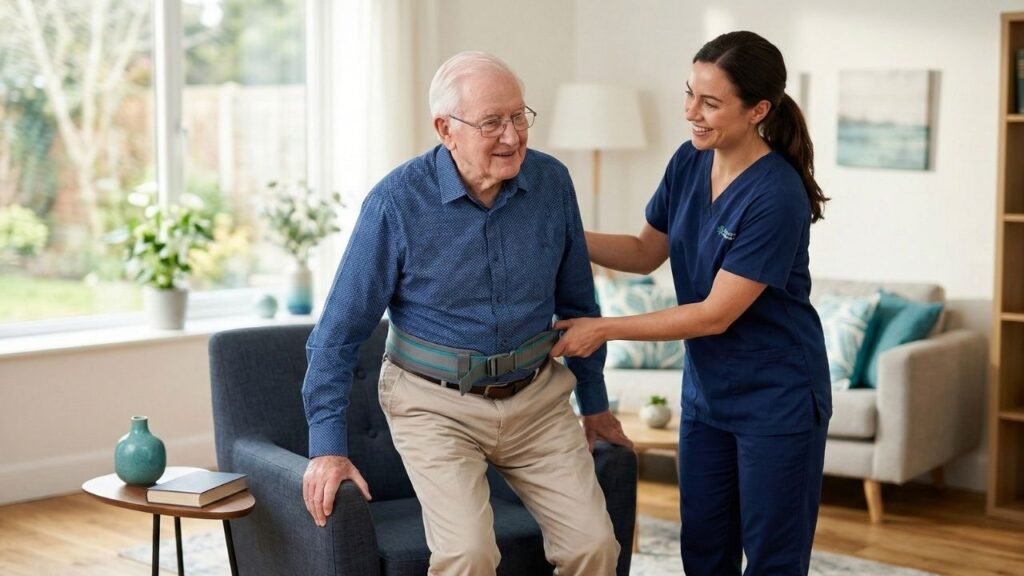
Helping a loved one stand up from a chair, walk to the bathroom, or transfer from a bed to a wheelchair can feel overwhelming — especially when you are worried about their safety and your own. For caregivers assisting elderly family members with limited mobility, one of the simplest and most effective tools available is a gait belt. Choosing the best gait belts for elderly patients can make the difference between a confident, stable transfer and a dangerous fall that leads to injury.
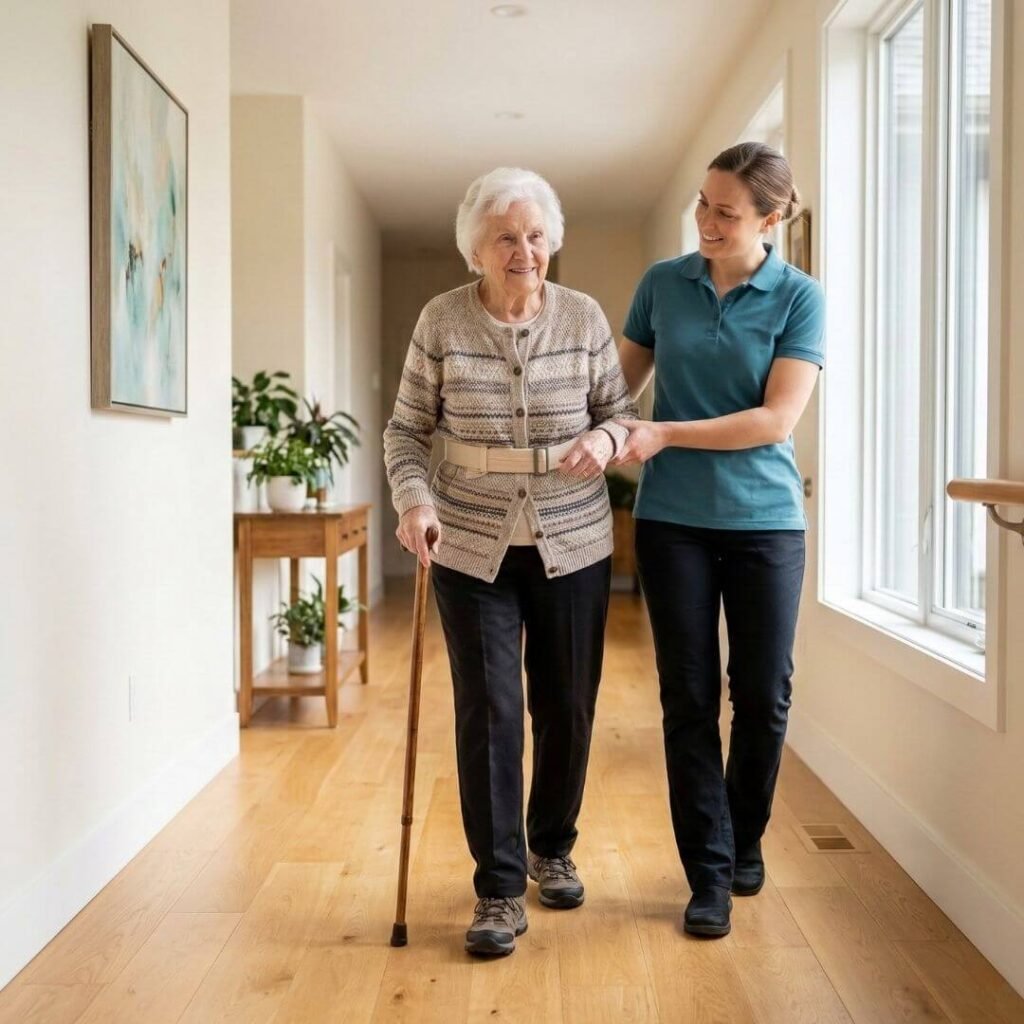
Gait belts — sometimes called transfer belts — wrap securely around a person’s waist to give caregivers a firm, reliable grip during walking, standing, and sitting transitions. They are used daily in hospitals, rehabilitation centers, and nursing homes, but they are just as valuable at home. Whether you are helping a parent recover from surgery or supporting a patient with Parkinson’s disease, a gait belt is an essential piece of your caregiving toolkit.
In this guide, we review the top options for 2026, explain how to use them safely, and help you choose the right one for your situation. We cover everything from padded belts for sensitive skin to heavy-duty options for bariatric patients, so no matter what your loved one’s needs are, you will find the best gait belts for elderly care in your home.
Why Gait Belts Matter for Seniors
Falls are the leading cause of injury among adults aged 65 and older, according to the Centers for Disease Control and Prevention (CDC). Every year, millions of seniors are treated in emergency rooms for fall-related injuries, and many of those falls happen during routine activities like getting out of bed, standing from a chair, or walking down a hallway. For seniors with weakened muscles, balance disorders, or conditions like arthritis and stroke recovery, even a short transfer can become a high-risk moment without the right support.
This is why finding the best gait belts for elderly family members is so important. A gait belt directly addresses this risk by giving the caregiver a secure, centralized handhold during every transfer. By wrapping around the patient’s midsection, the belt provides a stable grip point that is far safer than grabbing clothing, arms, or shoulders. This reduces the chance of losing hold and distributes effort more evenly, protecting both the caregiver’s back and the senior’s body from strain.
Beyond physical safety, gait belts support a senior’s independence. When used properly, a gait belt encourages the patient to engage their own muscles rather than being passively lifted. Over time, this helps maintain leg strength, core stability, and confidence. If you are caring for someone at risk of falling, understanding fall risks in seniors and how to prevent them is just as important as having the right equipment. Pairing knowledge with the right tools — like a standing aid or a gait belt — can significantly reduce the likelihood of a serious accident.
Doctor’s Note: Choosing the Right Gait Belt
I see patients every week who have experienced falls during what should have been simple, everyday movements — standing up from a toilet, turning to sit in a wheelchair, or walking a few steps to the kitchen. In many of these cases, the fall could have been prevented with proper transfer support. That is exactly why I recommend gait belts to nearly every caregiver I work with, whether they are a trained nurse or a family member caring for a parent at home.
When I advise patients and their families on choosing the best gait belts for elderly loved ones, I focus on three things: fit, grip, and ease of use. The belt needs to fit snugly around the waist without causing discomfort or restricting breathing. The handles need to be positioned where the caregiver can actually reach them during a transfer. And the buckle needs to be something the caregiver can fasten and release quickly, even under stress. A belt that is difficult to use will eventually stop being used, and that defeats the purpose entirely.
I also tell caregivers to think about the specific needs of their loved one. A senior recovering from hip surgery may need a padded belt to avoid pressure on a sensitive midsection. A larger patient may require an extended-length belt. And a caregiver performing multiple transfers per day will benefit from handles that reduce wrist fatigue and back strain over time. The role caregivers play in senior mobility is physically demanding, and having reliable equipment makes that role significantly easier and reduces the risk of burnout.

Best Gait Belts for Seniors (Top Picks)
Best Overall Gait Belt
NYOrtho Gait Belt with 6 Heavy Handles, Quick-Release Buckle (275 lbs)
The NYOrtho Gait Belt is a trusted all-around choice for both home caregivers and healthcare professionals. It features six heavy-duty handles positioned for multi-angle support, making transfers from bed, chair, or toilet easier and safer. The quick-release buckle simplifies fastening and removal, while the adjustable strap fits waists from 28″ to 55″. With a 275 lb weight capacity and a 4.6-star Amazon rating, this belt earns its spot as the best overall pick for everyday caregiving use.
Pros:
- 6 heavy handles provide support from multiple angles
- Quick-release buckle for fast, one-hand operation
- Adjustable sizing fits most body types (28″–55″)
- 4.6-star rating — highly reviewed by caregivers
Cons:
- 275 lb weight limit may not suit bariatric patients
- No padding — may feel stiff on prolonged use

- SAFELY MOVE AND TRANSFER: For those that need assistance walking, safely assist patients or loved ones while reducing the risk of caregiver injury in a hospital, hospice, ambulance or even at home...
- SIX ERGONOMIC HANDLES: Transferring a patient or loved one is different every time. Whether the angle, direction, or strength, four vertical handles and two horizontal handles around the circumference...
- EASY-ON, EASY-OFF: Quick-release buckle securely fastens around the waist with a click and is easily removed, as easy as pushing a button. Gait belt is adjustable to accommodate waists from 28” up...
Best Padded Gait Belt
COW&COW Padded Gait Belt with 4 Handles and Quick Release Buckle (5.5″)
For seniors who find standard gait belts uncomfortable, the COW&COW Padded Gait Belt offers a 5.5-inch wide design with a soft inner layer that distributes pressure evenly across the midsection. The four strategically placed handles — two on each side and two on the back — give caregivers reliable grip during walking and sit-to-stand transfers. The quick-release buckle makes it easy to put on and take off, and the breathable nylon construction keeps the belt comfortable even during longer sessions.
Pros:
- Extra-wide 5.5″ padded design reduces pressure on the waist
- Soft inner layer ideal for sensitive skin
- Quick-release buckle for easy on/off
- Breathable nylon — comfortable for extended wear
Cons:
- Only 4 handles (fewer angles than 6-handle options)
- Sizing runs specific — check size chart carefully

- Walking Belt: with 4 handles, medical gait belt allows you to assist patient to walk, transfer or have the occupational and physical therapy from different angle
- Widened And Comfortable: safety gait belt is about 5.5 inches wide,soft innerlayer which will disperse pressure effectively and won’t wrap waist too tightly, it’s more comfortable to use
- Sturdy And Durable: be made of breathable nylon and with the delicate and exquisite workmanship
Best Gait Belt with Handles
Vive Gait Belt with Handles (300 lbs) Transfer Belt
The Vive Gait Belt is one of the most popular transfer belts on Amazon for a reason. It combines a 4-inch wide nylon strap with six padded handles — both vertical and horizontal — giving caregivers secure grip from any angle. The metal buckle with grabbing teeth locks firmly in place, while the quick-release latch allows fast removal in any situation. Supporting up to 300 lbs and adjustable to fit waists up to 51″, this is the go-to handle-focused belt for home and clinical use alike.
Pros:
- 6 padded handles (vertical + horizontal) for multi-angle grip
- Metal buckle with grabbing teeth — extremely secure
- 300 lb capacity suits most users
- Widely trusted — one of Amazon’s top-selling gait belts
Cons:
- No padding on the belt itself — only on handles
- Metal buckle may feel bulky to some users

- EASY MOVEMENT & TRANSFERS FROM A TRUSTED BRAND: Safely assist patients or loved ones with ease using our transfer belt. The 7 padded handles allow for support from any angle, reducing the risk of...
- COMFORT FIRST: Our transfer belt features 7 padded handles for a comfortable yet secure grip, making it easy for caregivers to assist their patients or loved ones.
- FLEXIBLE & ADJUSTABLE: Our transfer belt is adjustable to fit waists up to 51”, with a durable metal buckle that locks in place and a quick-release latch for easy removal.
Best Heavy-Duty Gait Belt
Secure STWB-70A Padded Gait Belt with Handles and Push Button Buckle (70″)
When you need a gait belt that accommodates larger patients, the Secure STWB-70A delivers. At 70 inches long, this padded belt fits waists that most standard belts cannot reach. The soft padded construction reduces discomfort during extended use, while the push-button buckle offers quick, tool-free release. Seven caregiver grab handles — four vertical and three horizontal — provide sturdy support from every angle, making it well-suited for bariatric transfers and heavier patients who need reliable assistance.
Pros:
- 70″ length — fits larger and bariatric patients
- Padded belt construction for added comfort
- 7 handles (4 vertical + 3 horizontal) — maximum grip options
- Push-button buckle for quick release
Cons:
- Bulkier than standard belts — may be too large for smaller patients
- Higher price point than basic gait belts

- SAFER PATIENT TRANSFER & WALKING - The Secure STWB-70A Padded Transfer and Walking Gait Belt is an effective mobility aid that helps caregivers and nurses perform safe patient transfer, walking, and...
- PADDED FOR ULTIMATE COMFORT - The soft padded gait belt design increases patient comfort, while the quick release push button buckle allows the caregiver to attach and detached with ease
- SEVEN CAREGIVER GRAB HANDLES - Gait belt features four vertical and three horizontal hand grips allowing the caregiver to get a firm grasp in order to safely handle a patient, resident or loved one
Best Budget Gait Belt
NYOrtho Metal Buckle Gait Belt (54″)
Not every caregiver needs a feature-packed belt — sometimes a reliable, affordable option does the job. The NYOrtho Metal Buckle Gait Belt is a no-frills, cotton-webbing belt with a sturdy metal buckle that locks securely in place. It is machine washable, latex-free, and built to withstand daily use in both home and clinical settings. At 54 inches, it fits most standard body sizes. If you are a family caregiver on a budget or a facility purchasing in bulk, this belt offers dependable function at an unbeatable price.
Pros:
- Most affordable gait belt on this list
- Durable cotton webbing — machine washable
- Sturdy metal buckle with reliable hold
- Latex-free — safe for sensitive patients
Cons:
- No handles — caregiver must grip the belt itself
- No padding — not ideal for prolonged or sensitive use

- USE: NYOrtho Gait Belts allow for safe handling and mobility of elderly or weak jointed patients. Gait Belts help caregivers provide support and prevent falls. The NYOrtho gait belts also protect...
- MATERIAL: The NYOrtho Gait Belts are made of sturdy and comfortable 2 Inch cotton webbing. Offered in a variety of colors to fit all needs. Neutral colors are available for subtle use or bright...
- HEAVY DUTY BUCKLE: Nickel-plated buckles allow for superior hold and extra durability. Also available with an easy to slip on Delrin (plastic) buckle.
Best Gait Belt for Physical Therapy
Secure Gait Belt with 6 Handles and Metal Buckle (60″)
Built by Secure Safety Solutions — a brand trusted by healthcare facilities for over 30 years — this 60-inch gait belt is designed for gait training and rehabilitation settings. It features six ergonomic handles for multi-directional support during walking exercises, balance training, and sit-to-stand practice. The metal buckle provides a secure hold that clinicians can rely on during repetitive therapy sessions. Whether used in a rehab gym or at home for ongoing recovery, this belt delivers the clinical-grade durability that physical therapists expect.
Pros:
- Made by Secure Safety Solutions — 30+ year healthcare brand
- 6 handles for multi-directional rehab support
- Metal buckle — extremely durable for daily therapy sessions
- 60″ length fits most patients comfortably
Cons:
- No padding on belt or handles
- Metal buckle may require two hands to fasten

- Safe patient transfer and walking: The Secure STWBM-60G Transfer Gait Belt, featuring six handles and a quick-release, adjustable metal buckle, is an essential and highly effective mobility aid that...
- Designed for safety and comfort: Gait belt is made of durable yet comfortable nylon webbing with strong reinforced stitching that is guaranteed to withstand the rigors of daily use; The four inch belt...
- Sure grip from any angle: Features four vertical and two horizontal handles that allow the caregiver to choose the most effective leverage point to safely handle a patient, resident, or loved one...
Educational Overview: What Are Gait Belts Used For?
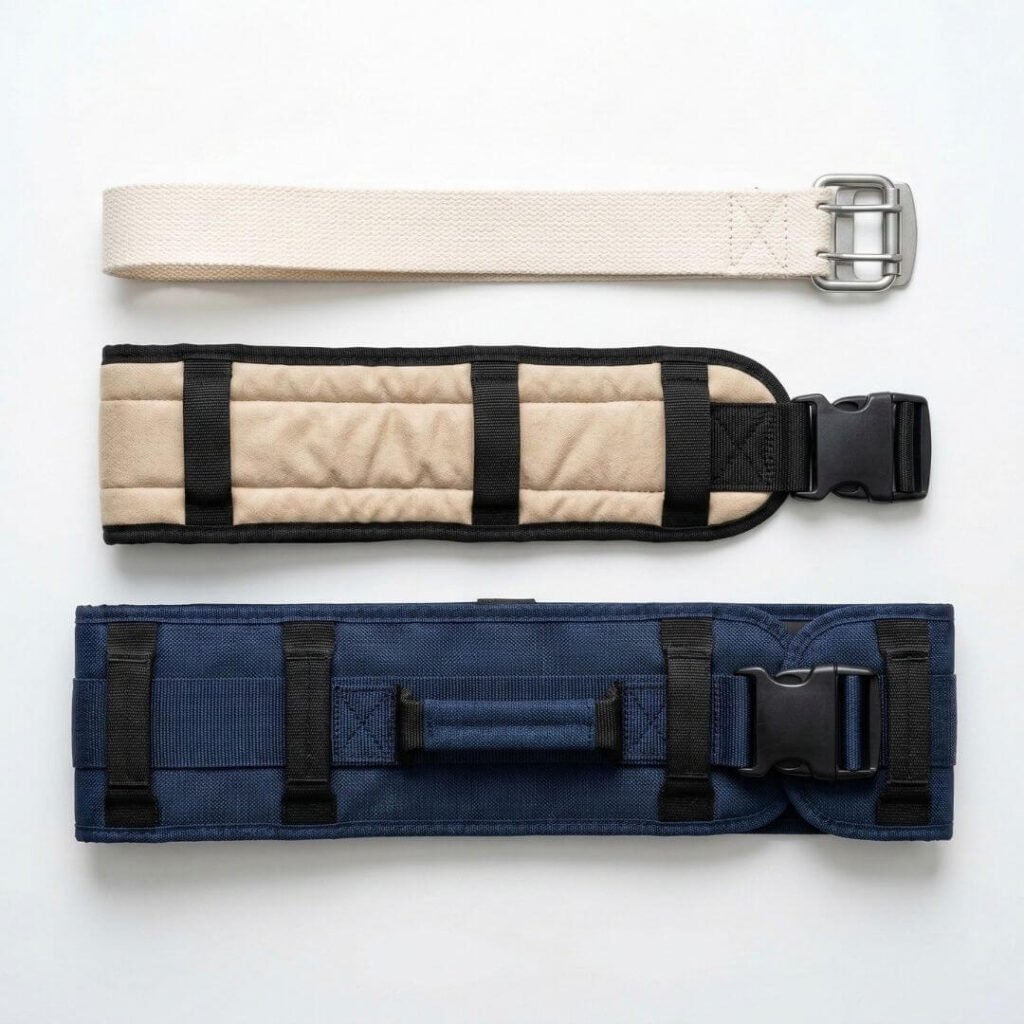
A gait belt is a sturdy fabric strap — typically made from cotton, nylon, or padded material — that wraps around a person’s waist and fastens with a buckle. It is designed to give caregivers a secure point of contact during physical transfers, walking assistance, and balance support. While the concept is straightforward, the impact on caregiver safety and patient confidence is significant. Gait belts are one of the most widely used assistive devices in healthcare, and understanding them is key to choosing the best gait belts for elderly patients at home.
In clinical environments, gait belts are standard equipment during physical therapy and occupational therapy sessions. Therapists use them to support patients learning to walk again after surgery, stroke, or prolonged bed rest. The belt gives the therapist a controlled grip point that allows them to guide movement without pulling on limbs or clothing. In nursing homes and hospitals, certified nursing assistants use gait belts during every shift to help patients move safely between beds, wheelchairs, toilets, and shower chairs.
At home, gait belts serve the same purpose with even greater importance. Family caregivers often lack formal training in safe transfer techniques, which means they may not realize how much risk they take on during each movement. A gait belt formalizes the transfer process and gives the caregiver an ergonomic grip that keeps the patient centered and balanced. They are commonly used alongside other transfer aids like transfer boards and slide sheets, especially for seniors who need help with multiple daily transitions. According to the National Institute on Aging, using proper assistive devices during transfers is one of the most effective ways to prevent falls and maintain independence in older adults.
How to Use Gait Belts Safely
Check the belt before every use. Before you fasten the gait belt on your loved one, take a moment to inspect the strap for fraying, loose stitching, or damaged buckles. A worn belt can fail at the worst possible moment — during an active transfer when both the caregiver and patient are off-balance. If any part of the belt looks compromised, replace it immediately rather than risking a failure. This quick visual check takes only a few seconds and should become a non-negotiable part of your routine before every single transfer throughout the day.
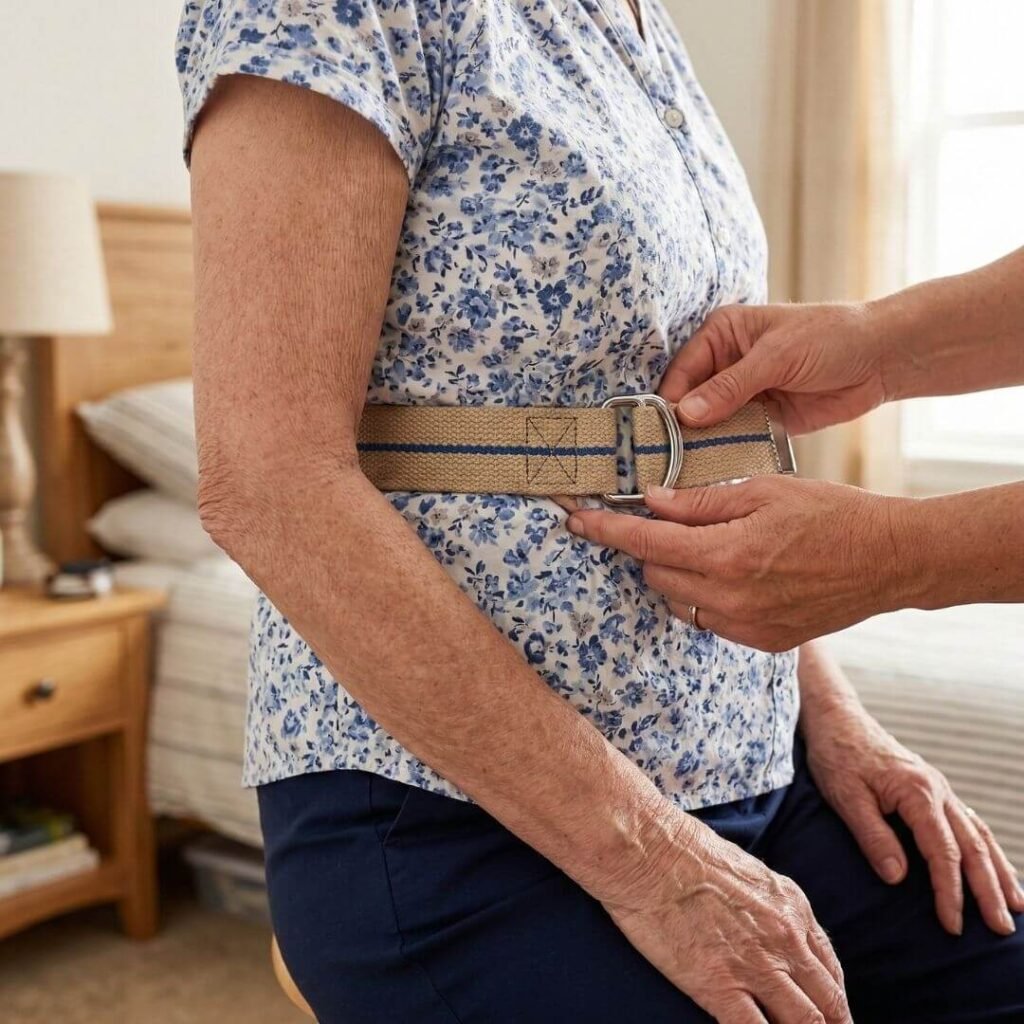
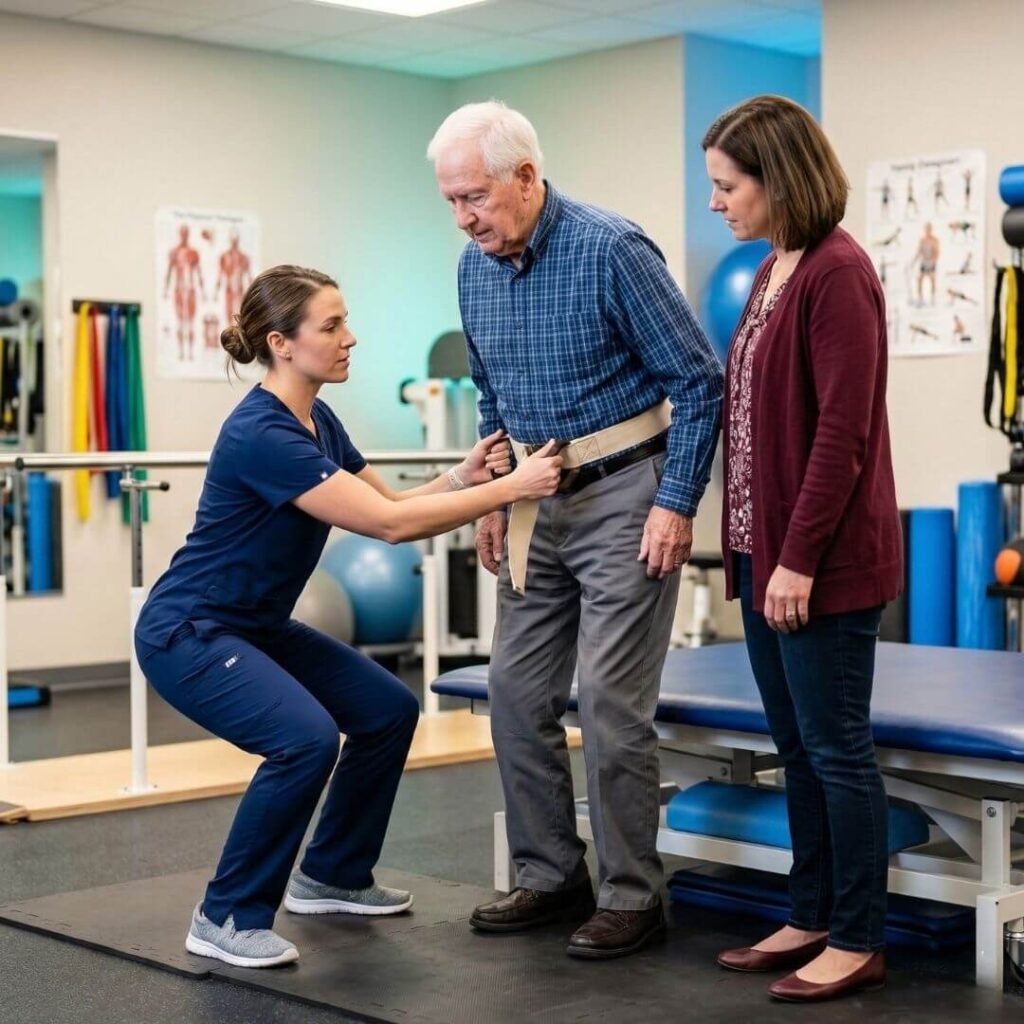
Position the belt correctly on the body. The gait belt should sit snugly around the patient’s natural waist, just above the hips. It should never be placed over the ribs, chest, or directly on bare skin, as this can cause discomfort, restrict breathing, or lead to skin irritation during movement. Once positioned, tighten the belt until it is firm but not restrictive — the standard clinical test is that you should be able to slide two flat fingers between the belt and the body. If the belt is too loose, it can ride up during a transfer and lose its grip point entirely. If it is too tight, it can cause pain, restrict breathing, or bruise fragile skin that is common in older adults.
Use proper body mechanics during the transfer. When assisting someone with a gait belt, always bend at your knees — not your waist — and keep your back straight throughout the entire movement. Grip the belt with an underhand hold, keeping your hands close to the patient’s center of gravity for maximum control. Communicate clearly before, during, and after the transfer: tell the person exactly what you are about to do, count together so you move in sync, and confirm they feel stable before letting go. Rushing through a transfer is one of the most common causes of caregiver back injuries, and it also increases the patient’s anxiety and fall risk. If you are also helping your loved one with bed mobility, learning how to safely reposition seniors in bed will complement your gait belt technique and reduce injury risk across all daily movements.
Know when not to use a gait belt. Even the best gait belts for elderly patients are not appropriate in every situation. Do not use a gait belt on someone who has had recent abdominal surgery, has an open wound in the midsection, has a colostomy or feeding tube, or has severe osteoporosis in the spine. In these cases, consult a healthcare provider about alternative transfer methods. If a patient cannot bear any weight on their legs, a mechanical lift may be needed instead. According to the Mayo Clinic, matching the right assistive device to the patient’s ability level is critical for preventing falls during transfers.
Lifestyle Synergy: Making Gait Belts Work Better at Home
A gait belt works best when it is part of a broader home safety strategy, not an isolated tool. Start by identifying the moments in your loved one’s day when they need the most support — getting out of bed, moving to the bathroom, standing from a chair, and getting in or out of a vehicle. Having the gait belt accessible at each of these locations rather than stored in a closet makes it far more likely to be used consistently. Even the best gait belts for elderly loved ones will not help if they stay in a drawer.
Pair the gait belt with other mobility aids to create a comprehensive support system. A senior who uses a walker or rollator for walking may still need a gait belt during the sit-to-stand transition. A grab bar near the toilet combined with a gait belt makes bathroom transfers significantly safer. Placing non-slip mats in key areas, removing loose rugs, and ensuring good lighting along walking paths all complement the security a gait belt provides.
Consistency is the single most important factor in making a gait belt effective over time. Many families purchase a gait belt after a fall or a hospital discharge, use it diligently for the first few weeks, and then gradually stop as the patient appears to improve. This pattern is understandable but dangerous. The risk of a second fall remains elevated for months after the first one, and many repeat falls happen precisely when the family has relaxed their precautions because things seemed to be getting better. Keep the gait belt as a permanent part of your daily routine, even as your loved one’s strength and confidence improve. It is always better to have it on and not need it than to need it and not have it ready.
Consider storing multiple belts in different rooms if your loved one needs frequent transfers throughout the day. One near the bed, one in the bathroom, and one by the main living area chair eliminates the need to carry a single belt back and forth, which often becomes the reason families stop using it. Gait belts are affordable enough that having two or three on hand is a practical investment that pays for itself the first time it prevents a fall.
Physician’s Tips for Long-Term Use
risk. Many seniors appear to improve after a hospital discharge, and that improvement is real — but it does not eliminate the underlying risk factors. Conditions like sarcopenia, neuropathy, and medication side effects continue to affect balance over time in ways that are not always visible. I recommend keeping the gait belt as a permanent part of your caregiving routine for any senior who has experienced a fall or has a progressive condition that affects mobility — and investing in one of the best gait belts for elderly patients makes that commitment easier.
It is also critically important to reassess the belt’s fit on a regular basis. Weight fluctuations, changes in clothing thickness with the seasons, progression of conditions like edema or fluid retention, and even shifts in posture can all affect how the belt sits on the body. A belt that fit perfectly in January may be uncomfortably tight or dangerously loose by June. Make it a habit to check the fit before each use, not just during the initial setup. If you notice that the belt consistently needs significant adjustment, it may be time to consider a different size or style altogether.
I also want to emphasize the importance of caregiver self-care. Transfer work is physically demanding, and doing it multiple times a day without proper technique or equipment takes a real toll on your body. Many of the caregivers I see in my practice develop chronic back pain, shoulder injuries, and wrist strain from performing transfers without adequate support. A gait belt with ergonomic handles is one of the most effective ways to protect your own body while helping your loved one. Do not wait until you are injured to invest in better equipment — prevention is always easier than recovery.
Finally, I encourage every caregiver to invest in their own education. Many hospitals and rehabilitation centers offer free or low-cost caregiver training sessions that cover proper gait belt technique, body mechanics, and fall prevention strategies. Even a single one-hour session can dramatically improve your confidence and significantly reduce your risk of injury. If your loved one is currently working with a physical therapist, ask to be included in a session so you can learn the correct techniques firsthand and practice them under professional supervision. Caring for seniors after a fall is not just about the immediate recovery — it is about building sustainable, safe habits that prevent the next fall from ever happening.
Gait Belt Comparison for Seniors (Features & Stability)
Frequently Asked Questions
1. How do you properly use a gait belt on an elderly person?
Wrap it around the person’s natural waist — just above the hips — and fasten the buckle so two flat fingers fit between the belt and the body. Grip the belt from underneath with both hands, bend your knees to protect your back, and communicate clearly before moving. Always move in a controlled, coordinated motion rather than pulling or jerking.
2. What is the difference between a gait belt and a transfer belt?
There is very little difference — the terms are used interchangeably. Both refer to a fabric strap that wraps around a patient’s waist to provide a secure grip during movement. Some professionals say “gait belt” for walking assistance and “transfer belt” for moving between surfaces, but most products are designed for both.
3. What size gait belt do I need for my loved one?
Most standard belts range from 54″ to 60″ and fit waists up to about 48″–52″. For larger or bariatric patients, look for extended-length belts in the 70″–72″ range. Always measure the waist at the point where the belt will sit — just above the hip bones — and compare it to the product’s sizing chart before purchasing.
4. Are gait belts with handles better than standard gait belts?
For most caregivers performing regular transfers, yes. Handles provide a more ergonomic and secure grip that reduces wrist strain and the risk of losing hold. Vertical handles help during sit-to-stand movements, while horizontal handles add stability during walking. If you transfer your loved one more than once or twice a day, a handled belt is worth the investment.
5. Can a gait belt be used by a family caregiver at home?
Absolutely. Gait belts require no special certification and are one of the most practical tools a family caregiver can own. They are commonly used for bathroom transfers, bed-to-chair movement, walking assistance, and car transfers. Learning proper technique through a quick tutorial or guidance from a physical therapist is recommended, and having one of the best gait belts for elderly family members makes every transfer safer.
6. What are the benefits of using a gait belt for elderly patients?
For the patient, a gait belt provides security during transfers, reduces fear of falling, and encourages active muscle use — which supports long-term strength and independence. For the caregiver, it offers a centralized grip point that reduces back strain and makes transfers more controlled and predictable. Overall, consistent use reduces fall risk and makes daily mobility routines safer for everyone involved.
Final Thoughts
A gait belt may be one of the simplest tools in a caregiver’s kit, but its impact on daily safety is anything but small. Whether you are helping your mother stand from a chair, assisting your father during a walk down the hallway, or supporting a patient through physical therapy, the right gait belt gives you the grip, control, and confidence to do it safely every time.
If you are unsure which belt is right for your situation, start with the NYOrtho Gait Belt with 6 Heavy Handles — it offers the best balance of support, adjustability, and ease of use for most caregiving scenarios. For seniors who need extra comfort, the COW&COW Padded Gait Belt is a standout. And if budget is a concern, the NYOrtho Metal Buckle Gait Belt delivers essential function at a price that works for any family. No matter which you choose, the most important step is having one ready and using it consistently — because when it comes to the best gait belts for elderly care, preparation is everything.
Medical Disclaimer: This guide is for general educational purposes only and is not intended to serve as personalized medical advice. Always consult a qualified healthcare professional before making changes to medical equipment or care plans.
Last update on 2026-03-10 / Affiliate links / Images from Amazon Product Advertising API