
Affiliate Disclaimer: This article contains affiliate links. As an Amazon Associate, Mobility With Ease may earn a small commission from qualifying purchases at no additional cost to you.
Introduction
Recovering from a foot or ankle injury can dramatically change the way a senior moves through their day, and even short distances can feel overwhelming without the right support. Knee scooters provide a safer, more stable alternative to crutches, giving seniors the ability to stay mobile while keeping weight off the injured leg. Designed with balance, comfort, and ease of use in mind, these devices help maintain independence during recovery and reduce the risk of falls or reinjury when moving around the home or outdoors.
Seniors often find that crutches require upper-body strength, coordination, and endurance that may not be practical during recovery. A knee scooter removes those challenges by offering a cushioned platform for the injured leg and a supportive frame that can be easily steered. This allows older adults to engage in daily activities with more confidence. Whether moving through tight indoor spaces, traveling across longer hallways, or navigating outdoor surfaces, knee scooters offer reliable support with far less physical strain.
Choosing the right knee scooter involves understanding how different features—like wheel size, platform padding, weight capacity, and braking systems—affect comfort and safety. Some models are designed specifically for indoor maneuverability, while others excel outdoors with large all-terrain wheels. Seniors recovering from surgery may need extra knee cushioning and stability, while taller or heavier adults might require reinforced frames with greater weight capacity. By matching the scooter’s design to the user’s needs, recovery becomes smoother, safer, and far more comfortable.
This guide breaks down the best knee scooters for seniors in 2025, including options for indoor use, outdoor terrain, foot or ankle surgery recovery, heavy or tall users, comfort-first designs, and lightweight folding models for easy travel. Along the way, we’ll cover how knee scooters support safer healing, how to use them properly, and how to choose the model that best fits your daily routine.
Why It Matters
Mobility plays a crucial role in senior health, especially during injury recovery. When a senior loses the ability to bear weight on one leg, the risk of falls increases significantly. A knee scooter provides controlled, stable movement, reducing the physical stress placed on the arms, shoulders, and uninjured leg. Seniors who use knee scooters often experience fewer secondary injuries because the device encourages better posture and distributes weight more evenly during movement.
Proper mobility also supports circulation, skin integrity, and energy levels—all essential components of healing. When a senior becomes sedentary due to pain or fear of strain, muscle deconditioning happens quickly. This not only slows recovery but can worsen balance issues. By contrast, seniors who stay safely active with the help of a knee scooter often maintain stronger leg muscles, steadier gait mechanics, and better cardiovascular stability. Minimizing excess pressure on vulnerable skin areas also reduces the risk of breakdown and irritation, which is especially important for adults with diabetes, fragile skin, or limited sensation.
Another reason knee scooters matter is the psychological impact of preserving independence. Injury often disrupts familiar routines—moving between rooms, managing self-care tasks, or participating in daily activities suddenly becomes challenging. A well-fitted knee scooter helps restore confidence, making day-to-day navigation predictable and less taxing. Instead of struggling to move short distances, seniors can preserve autonomy, maintain dignity, and remain engaged in their normal environments while recovering.
Seniors and caregivers often find that knee scooters offer meaningful benefits beyond basic mobility, including:
- Improved stability during recovery: Seniors have a wide, supportive base under them, reducing the likelihood of falls compared with crutches.
- Reduced upper-body strain: The scooter carries the weight, not the arms, shoulders, or wrists.
- Better posture and alignment: A properly adjusted scooter keeps the spine and hips in a more neutral position.
- Enhanced confidence and motivation: Many seniors feel safer moving independently, which helps with both physical progress and emotional resilience.
- More predictable energy levels: Unlike crutches, which can cause quick fatigue, knee scooters make longer movement sessions feasible.
Finally, choosing the right knee scooter helps seniors maintain a sense of control during recovery. While it can feel discouraging to lose mobility, having a reliable and comfortable aid offers a bridge back to normal activity. With the correct model—and proper setup—seniors can continue engaging in daily tasks, preserve strength, and recover with more dignity, stability, and peace of mind.
Doctor’s Notes
Seniors often ask whether a knee scooter is truly safer or more stable than crutches, and in most cases, it is—especially when balance or upper-body strength is limited. A well-designed scooter supports the injured leg without requiring continuous arm effort, reducing fatigue and compensatory strain on the wrists, shoulders, and back. It also helps maintain a neutral posture, which is important for both comfort and joint protection during recovery.
The best knee scooter for seniors is the one that fits the individual’s height, home setup, and recovery needs. A platform that is too high or too low can lead to hip or back discomfort, and scooters with poor turning capability may be difficult to manage in small spaces. Seniors living in homes with narrow hallways or tight corners often do best with an indoor-optimized design, while those who regularly go outdoors may need all-terrain wheels that absorb bumps and uneven surfaces.
Knee comfort is another critical factor. Seniors with sensitive skin, joint pain, or swelling often benefit from thicker padding or contoured knee platforms that distribute pressure more evenly. Proper positioning helps prevent pressure injuries, which is especially important for adults with diabetes or circulation issues. For reference, you can review additional prevention strategies in our guide on how to prevent pressure ulcers in seniors.
Best Knee Scooters for Seniors (2025 Top Picks)
Below are the seven top knee scooters for seniors this year, each chosen for quality, stability, comfort, and long-term reliability.
Best Overall Knee Scooter for Seniors
KneeRover Economy Steerable Knee Scooter – Foldable Mobility Aid & Knee Walker with Adjustable Handlebar and Comfortable Knee Pad for Adults (Black)
The KneeRover Economy Knee Scooter strikes the ideal balance of comfort, maneuverability, and value, making it an excellent choice for most seniors. Its lightweight frame folds easily for storage, and the cushioned knee platform supports comfortable extended use throughout the day.
Pros:
- The foldable frame makes transportation and storage simple, allowing seniors to take the scooter anywhere with minimal effort.
- Smooth steering and stable wheels make navigating both indoor and outdoor surfaces feel natural and controlled.
- The cushioned knee pad offers enough comfort for extended daily use, reducing pressure on sensitive areas.
Cons:
- The wheels are not designed for rough outdoor terrain, limiting its effectiveness on uneven surfaces.
- Taller seniors may find the handlebar height slightly limited compared to more adjustable models.

- KneeRover has been creating innovative, high performance mobility solutions for over 15 years. We are a family-oriented business based in Augusta, Georgia USA - dedicated to delivering the highest...
- EXCELLENT CRUTCH ALTERNATIVE: More comfortable and stable than crutches, this affordable knee walker is made for both indoor and outdoor use, and is designed for supporting either the right or left...
- EXCELLENT STABILITY & CONTROL: Easy to maneuver steerable knee scooter walkers feature four smooth 7.5" rubber wheels, rear on-wheel brakes, and an adjustable locking handbrake for excellent control...
Best Indoor Knee Scooter (Tight Spaces)
Drive Medical 796 Adjustable Height Steerable Knee Walker Knee Scooter, 350 lb Weight Capacity
The Drive Medical 796 excels indoors thanks to its compact turning radius and comfortable dual-pad knee platform. Its adjustable height and reliable hand brake system help seniors stay steady while navigating hallways, kitchens, and tight living spaces.
Pros:
- The narrow frame and excellent turning radius make it easy to maneuver through small rooms and doorways.
- The dual-pad knee cushion provides extra stability and comfort, especially during prolonged recovery.
- The included basket is convenient for carrying personal items without sacrificing balance or safety.
Cons:
- The scooter can feel less stable outdoors due to smaller wheels.
- Some seniors may find the knee pad firmer compared to models with thicker cushioning.
- Knee Walker Scooter: Our stylish and modern knee scooter features a durable steel frame, dual-padded comfortable cushions, and a spacious, removable basket
- Optimal Maneuverability: Drive knee scooters for foot injuries can be steered easily thanks to 8-inch casters that make them ideal for indoor/outdoor usage; the leg scooter is equipped with deluxe...
- Dimensions: 30 inch in length by 16 inch in width by 31 inch in height; knee-pad dimensions: 15 inch in length by 7 inch in width by 16.5-20.5 inch in height; handle height: 31-40 inch; 350 pound...
Best Outdoor / All-Terrain Knee Scooter
KneeRover Original Steerable All Terrain Knee Scooter for Adults, Heavy Duty Knee Walker for Foot Surgery or Broken Ankle & Foot Injury
The KneeRover All Terrain Knee Scooter is built for seniors who spend time outdoors. Its large pneumatic wheels absorb bumps and uneven surfaces, making it ideal for sidewalks, driveways, parks, and textured flooring.
Pros:
- Large all-terrain wheels roll smoothly over uneven surfaces, improving safety outdoors.
- The reinforced frame offers excellent stability for seniors who need dependable outdoor performance.
- Adjustable height and a comfortable knee platform support long periods of mobility without discomfort.
Cons:
- The scooter is bulkier than indoor-specific models, making it slightly harder to store.
- Its weight may require more effort when loading it into a car.
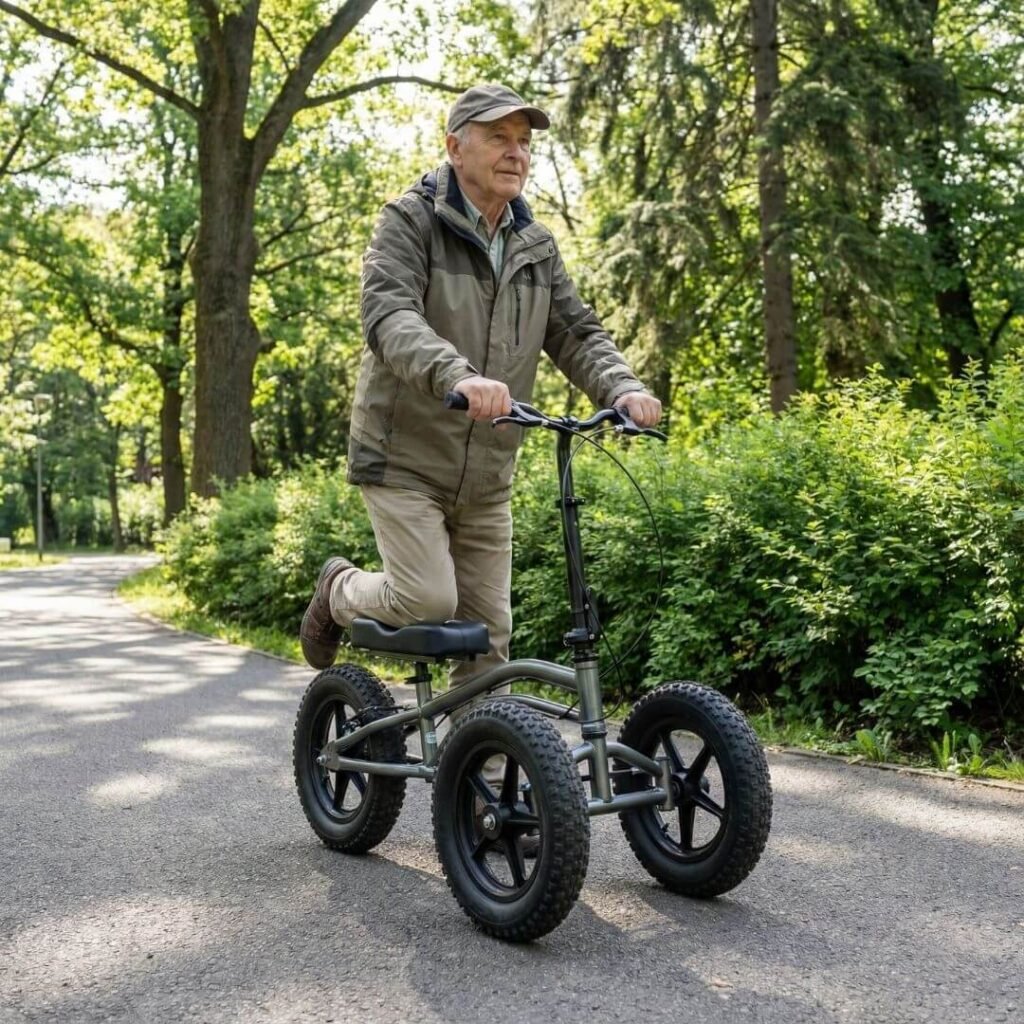

- THE PROVEN USA BRAND: KneeRover has been developing innovative mobility solutions in the USA for over 10 years. Our knee scooters have helped hundreds of thousands of customers safely recover with...
- ALL TERRAIN FREEDOM: This All Terrain KneeRover steerable knee scooter features three 12 inch air filled tires, providing freedom to navigate your home, work, and any terrain with ease - including...
- SUPERIOR STABILITY & CONTROL: KneeRover steerable knee scooter features an advanced tie-rod steering technology to provide superior stability while steering. The all terrain scooter walker has a...
Best Knee Scooter for Foot or Ankle Surgery Recovery
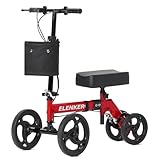
ELENKER Steerable Knee Walker Deluxe Medical Scooter for Foot Injuries, Compact Crutch Alternative (Bright Red)
Designed with comfort and stability in mind, this ELENKER model is a strong choice for seniors recovering from foot or ankle surgery. The supportive knee cushion and smooth steering help prevent strain while providing reliable day-to-day mobility.
Pros:
- Thick, supportive knee padding reduces pressure on sensitive skin and post-operative areas.
- The smooth steering mechanism allows safe movement through both open and narrow spaces.
- The lightweight frame is easy to maneuver for seniors with limited strength.
Cons:
- The basket is smaller than those on some competing models.
- The steering column may require occasional tightening for long-term use.
- Easy Help Recovery - Ideal for individuals recovering from injury or surgery to the foot, ankle or lower leg as well as below the knee amputees.
- Easily Moved to Anywhere - With our knee cart, your recovery won't slow you down or stop you from enjoying your day. You don't have to worry about not being able to get around, perfect for navigating...
- Comfortable - Using crutches requires extensive upper body strength, rubs under your armpits and is unstable. This knee walker is made for both indoor and outdoor use, it is a hands free / pain free...
Best Knee Scooter for Heavy or Tall Seniors (High Weight Capacity)
KneeRover HYBRID All Terrain Knee Scooter for Adults, Heavy Duty Knee Walker for Foot Surgery, Broken Ankle or Foot Injury Recovery
This HYBRID model provides a reinforced frame suitable for taller or heavier seniors who need maximum stability. Its large wheels and durable construction create a smoother experience across different surfaces.
Pros:
- The reinforced chassis offers greater stability and support for heavier users.
- Larger wheels handle small bumps and outdoor conditions better than standard designs.
- Height adjustments accommodate seniors who may struggle to fit comfortably on smaller models.
Cons:
- Taller users may need to ensure the knee pad height is optimized to avoid back discomfort.
- Heavier frame increases weight, which can make transport more challenging.

- THE PROVEN USA BRAND: KneeRover has been creating innovative, high performance mobility solutions for over 10 years, including the original All Terrain and Pediatric knee scooters. We are a...
- ALL TERRAIN FREEDOM: This All Terrain KneeRover steerable knee scooter features 9 inch air filled front tires to provide freedom to navigate most terrains.
- SUPERIOR STABILITY & CONTROL: KneeRover steerable knee scooter features advanced tie-rod steering technology to provide superior stability while steering. The Hybrid scooter walker offers air filled...
Most Comfortable Knee Scooter (Best Cushioning & Ergonomics)
Vive Mobility All Terrain Knee Scooter Walker for Foot Injuries
This Vive Mobility model prioritizes comfort with its thick, ergonomic knee cushion and smooth-rolling frame. Seniors who experience knee sensitivity or discomfort tend to prefer this scooter for daily use.
Pros:
- The thick, contoured knee cushion reduces pressure and improves comfort during prolonged mobility.
- The adjustable frame accommodates a variety of heights, allowing a custom fit.
- The stable wheelbase offers smoother movement indoors and outdoors.
Cons:
- Some users may find the wider base slightly harder to navigate in tight indoor spaces.
- The cushioned pad may compress slightly with prolonged daily use.

- GREAT ALTERNATIVE TO CRUTCHES: Regain your independence with our All-Terrain Quad Knee Walker. It provides comfortable support following injuries to your foot, ankle, or lower leg. It’s great post...
- MAXIMUM STABILITY AND CONTROL: Our walker’s 12-inch pneumatic wheels offer industry-leading stability. They keep the walker’s base stable, which allows for easy maneuverability on any surface...
- CONTOURED KNEE PAD: The walker’s comfortable foam knee cushion is uniquely contoured to cradle your lower leg, providing even more stability and support. Its resilient foam platform evenly...
Best Folding / Lightweight Knee Scooter for Travel & Storage
ELENKER Steerable Foldable Knee Scooter with Basket, Dual Braking System, Lightweight Knee Walker for Foot or Ankle Injuries (Black)
Ideal for seniors who need a portable option, this foldable ELENKER scooter is lightweight and easy to transport. The dual braking system enhances safety during travel or daily use.
Pros:
- The quick-fold design makes it easy to store in closets, car trunks, or small living spaces.
- Dual brakes offer additional safety for seniors concerned about speed control.
- Lightweight frame helps reduce fatigue when lifting or repositioning the scooter.
Cons:
- The lighter frame can feel less solid on uneven surfaces.
- Smaller wheels limit its effectiveness outdoors.

- Ideal Alternative: Perfect for individuals recovering from foot, ankle, or lower leg surgeries, as well as below-the-knee scooter, this knee walker provides a superior alternative to traditional...
- Comfortable Experience: Unlike crutches, which demand significant upper body strength and can cause discomfort under the arms, this knee walker is designed for both indoor and outdoor use. It offers a...
- Security and Stability: The scientifically designed frame ensures better support. With Front 10" Rear 8" Wheels, maneuverability is effortless. An ergonomic, adjustable, locking handbrake adds an...
Educational Overview
Understanding how knee scooters support mobility is key to choosing the right model. These devices allow seniors to offload weight from an injured foot or ankle by placing the knee on a cushioned platform while propelling themselves forward with the non-injured leg. This design reduces strain on the upper body and supports a smoother, safer recovery, especially for those who cannot tolerate crutches or have difficulty maintaining balance. Because knee scooters allow for more natural movement patterns, seniors can remain mobile without overworking their shoulders or wrists.
Different scooter designs serve different environments. Indoor models typically have smaller wheels, narrow frames, and excellent turning ability, making them ideal for tight spaces such as kitchens, hallways, and bathrooms. Outdoor or all-terrain scooters use larger pneumatic wheels that absorb bumps and uneven ground, preventing jolts that could aggravate healing tissues. Seniors who regularly move between indoor and outdoor spaces may benefit from hybrid designs that balance maneuverability with outdoor stability.
Padding and knee comfort also play a crucial role in protecting skin integrity. Seniors with circulation challenges, diabetes, sensitive skin, or existing pressure injuries should look for thick, contoured padding that distributes pressure evenly across the knee. Minimizing localized friction or shearing is essential for preventing skin breakdown during periods of limited mobility. Seniors and caregivers can also explore our educational guide on how to choose the right mobility aid for broader context and decision-making support.
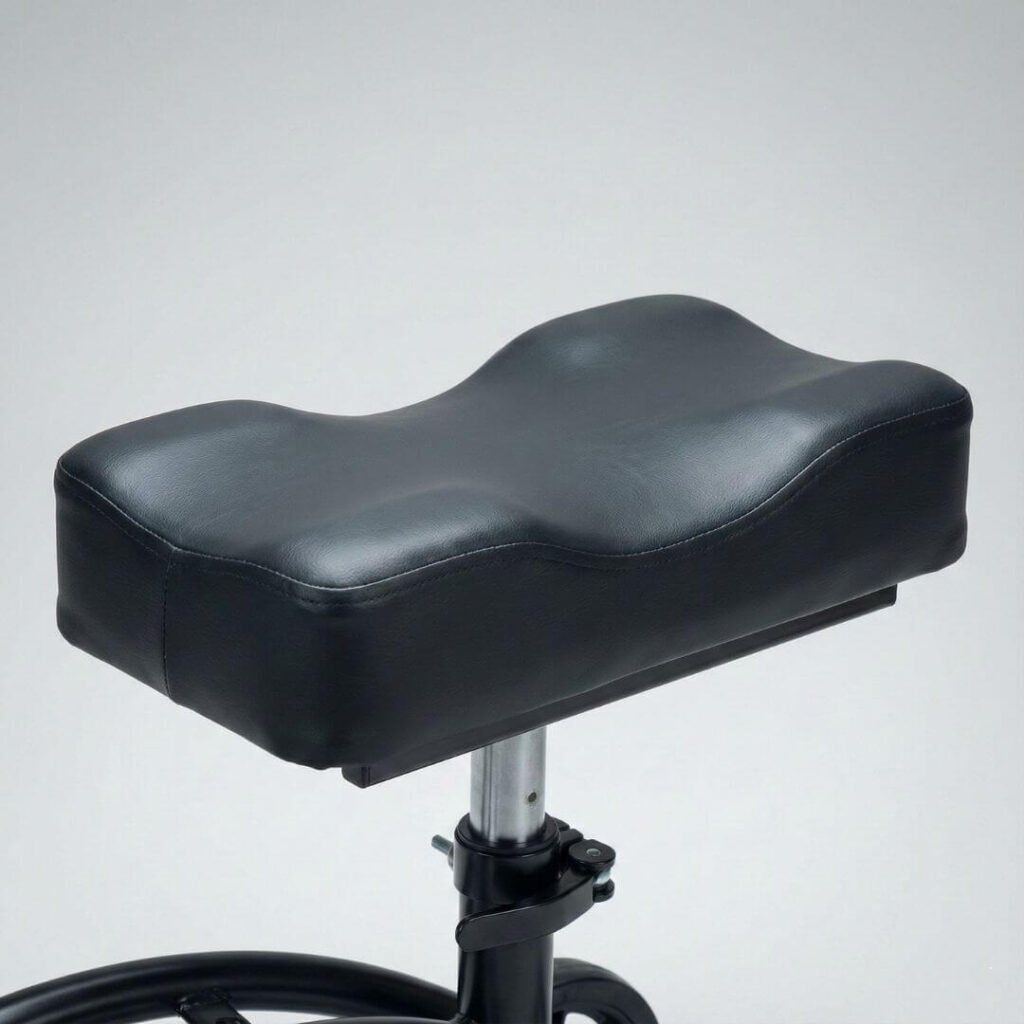
Choosing the right scooter height is another important factor. Height that is too low can cause hip tilting and back strain, while height that is too high encourages leaning, which compromises balance. Proper handlebar and knee platform alignment help maintain a more neutral spine and comfortable posture, reducing the risk of overuse injuries during recovery.
Key setup considerations for seniors include:
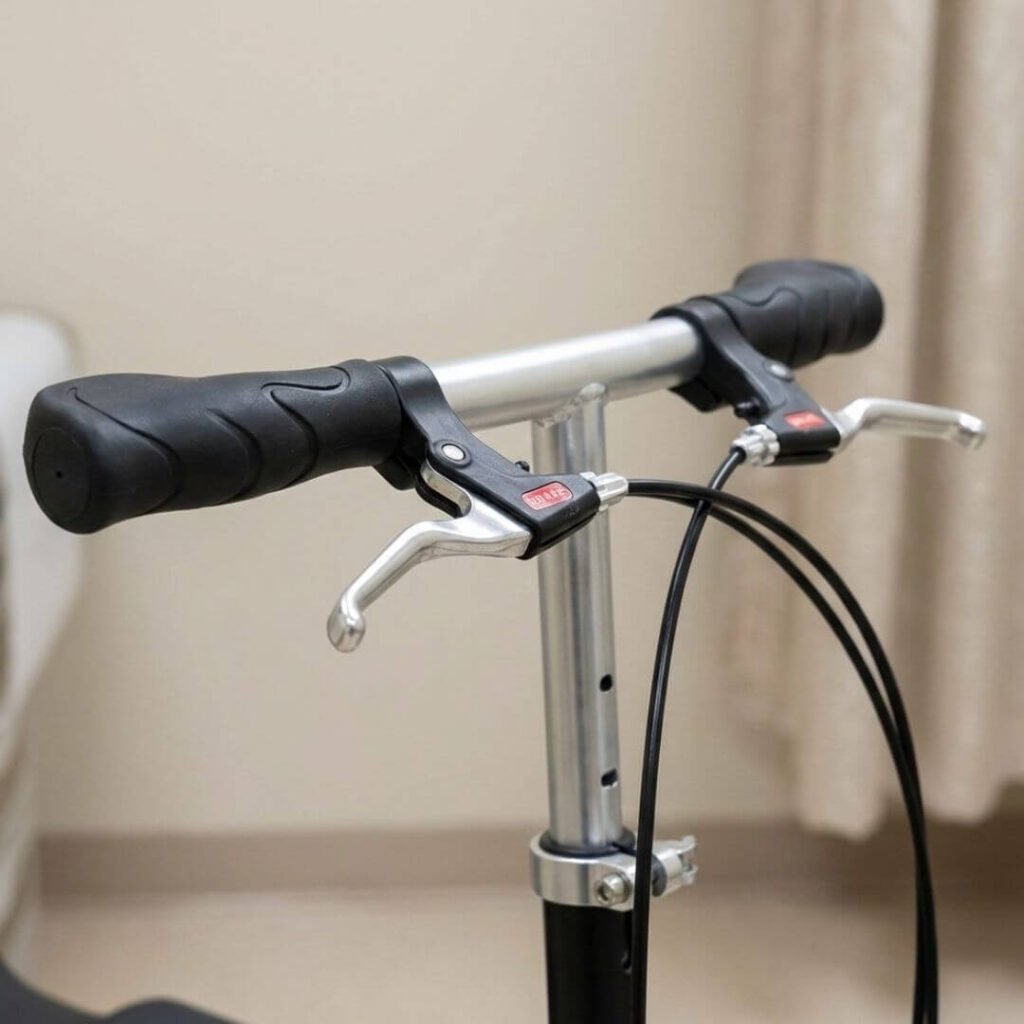
- Handlebar height: Should allow the elbows to rest comfortably with a slight bend—not locked, not reaching.
- Knee platform height: Must support the injured leg in a level, horizontal position without forcing the user to elevate or drop the hip.
- Wheel size: Smaller wheels for indoor precision; larger pneumatic wheels for uneven outdoor surfaces.
- Brake responsiveness: Brakes should engage evenly on both sides to maximize safety.
Additional features such as storage baskets, dual brakes, and folding mechanisms also play into ease of use. Seniors living independently may prefer scooters with larger baskets for personal belongings, while those who travel frequently or rely on small apartment storage may prioritize lightweight folding designs that collapse quickly for transport. Weight capacity and stability are also important—taller or heavier seniors may need reinforced frames to maintain safe posture and balance.
For day-to-day comfort and mobility, helpful secondary features to consider include:
- Ergonomic grips: Reduce hand fatigue during longer periods of use.
- Contoured or gel knee cushions: Provide pressure relief for sensitive skin.
- Wide wheelbase options: Offer added stability for seniors with balance concerns.
- Steering locks: Prevent accidental over-rotation and increase indoor safety.
Finally, seniors recovering from foot or ankle surgery may find valuable guidance in the postoperative mobility recommendations from AAOS/OrthoInfo, which emphasize weight-bearing restrictions, safe movement patterns, and gradual reintroduction of daily activities. These principles align closely with the safe use of knee scooters and can help guide expectations throughout recovery. Following medically recommended mobility guidelines—along with selecting the right scooter—ensures safer healing, better comfort, and fewer setbacks.
How to Use Safely
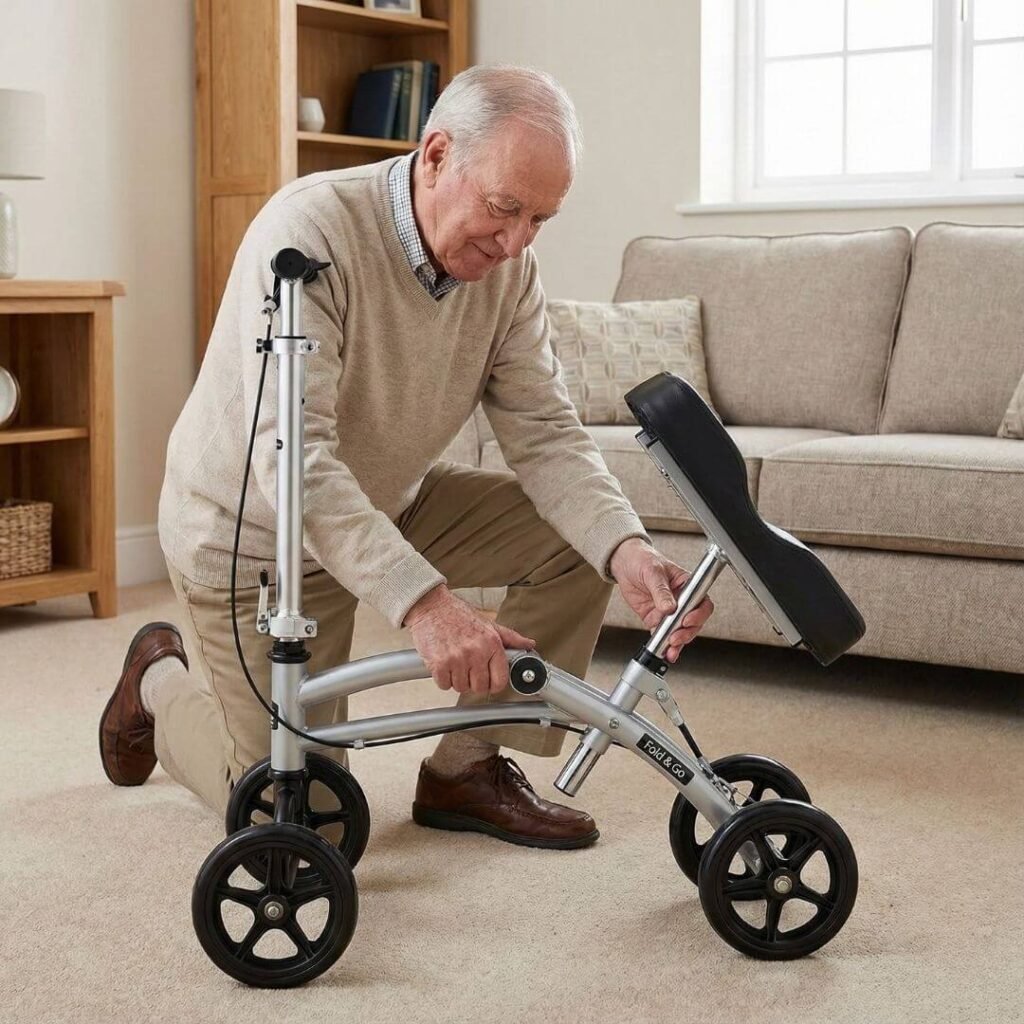
Using a knee scooter properly is essential to maximizing comfort and preventing reinjury. Before getting started, seniors should set the knee platform at a height that allows the injured leg to rest comfortably without strain, keeping the knee level and the hips aligned. The non-injured leg should extend naturally while pushing, and the handlebars should be adjusted so the arms rest at a relaxed angle rather than reaching or slouching. Seniors should test the brakes before moving to confirm that both sides engage smoothly and consistently.
Turning should always be done slowly to prevent tipping, especially on indoor flooring that may become slippery or uneven. Seniors with balance concerns should begin practicing in an open, unobstructed space before navigating tighter corners or moving through doorways. Walking surfaces should be checked regularly—rugs, cords, or clutter may interfere with the scooter’s wheels and pose tripping hazards. Removing small floor obstacles and ensuring clear pathways dramatically improves stability.
For outdoor use, larger-wheeled or all-terrain scooters offer better stability and shock absorption. Seniors should avoid steep inclines, loose gravel, wet grass, or uneven terrain that could destabilize the scooter. Even on even sidewalks or paved paths, transitions such as thresholds, curbs, and sidewalk cracks should be approached slowly and deliberately. Using the hand brakes before transitions can help maintain better control during changes in surface height.
Caregivers or family members can provide support by assisting with height adjustments, checking brake tension regularly, and ensuring that quick-release or folding mechanisms remain securely locked in place. They can also help seniors identify the safest indoor and outdoor routes based on lighting, flooring type, and general layout of the home. Seniors can review the Cleveland Clinic’s mobility safety recommendations, which emphasize proper setup, understanding device limitations, and using mobility aids in controlled, predictable ways to avoid falls.
Finally, seniors should monitor their comfort throughout the day. If the uninjured leg becomes fatigued, or if leaning begins to occur during movement, this may indicate the need for slight height adjustments or rest periods. Short, frequent mobility sessions are safer and more effective than prolonged use when fatigue sets in. Thoughtful use of a knee scooter can significantly enhance both safety and comfort during the recovery process.
Lifestyle Synergy
A well-chosen knee scooter can enhance day-to-day routines during recovery, allowing seniors to continue participating in familiar activities with far less strain. Many older adults find that using a knee scooter during household tasks—such as preparing meals, organizing personal items, tending to pets, or moving between rooms—helps maintain independence and reduces the need for constant caregiver assistance. This preservation of autonomy supports not only physical recovery but also emotional well-being, giving seniors a sense of control during a challenging period.
Integrating a knee scooter into daily routines also encourages consistent, safe movement throughout the day. Scheduling short mobility sessions helps maintain strength in the non-injured leg, supports circulation, reduces stiffness, and keeps energy levels more stable. Seniors who are accustomed to regular physical activity may find it easier to stay engaged with light movement routines while still honoring their recovery restrictions. The ability to keep moving—even in small increments—often makes the transition back to full mobility smoother and more predictable.
A knee scooter can also reduce logistical barriers at home. Seniors living in multi-level homes may need to reorganize daily activities to minimize stair use, keeping frequently used items—such as medications, water bottles, reading materials, and grooming supplies—on the main floor. This simple adjustment reduces unnecessary exertion and lowers the risk of reinjury. Some seniors choose to pair their knee scooter with a walker or a lightweight wheelchair to create a flexible mobility toolkit. Comparing these options through guides like our best lightweight wheelchairs for seniors can help identify the right combination of tools for various environments and comfort levels.
Building routines around safe mobility also promotes emotional resilience. Seniors who can move independently—without relying entirely on caregivers—often report better mood, higher confidence, and improved social engagement. A knee scooter enables small but meaningful interactions, such as answering the door, preparing a snack, or enjoying time on a patio or balcony. These activities help maintain a sense of normalcy and prevent social isolation during recovery.
Finally, knee scooters integrate seamlessly with broader lifestyle goals. Seniors who enjoy hobbies such as gardening (on flat walkways), cooking, reading in different rooms, or engaging in light household organization may find that having a stable mobility aid keeps these routines intact. Even small moments of independence contribute to a smoother healing process, improved quality of life, and greater confidence in navigating the recovery journey.
Physician Tips
Seniors should monitor for signs of discomfort or strain while using a knee scooter. If the non-injured leg becomes sore or fatigued, it may indicate that the scooter height is not properly adjusted. A balanced posture with minimal leaning reduces strain on the hips and lower back. Seniors who struggle with balance should choose a scooter with wider wheels or consider alternating with a walker—options can be compared in our guide to the best walkers and rollators for seniors.
Brakes should be checked regularly to ensure they engage fully and symmetrically. Wearing supportive footwear on the non-injured foot provides better traction and reduces fatigue during longer periods of movement. Seniors should also take note of skin integrity around the knee if using the platform for extended periods.
Those recovering from significant foot or ankle surgery should follow guidance from orthopedic specialists or resources such as AAOS/OrthoInfo, which emphasize gradual mobility reintroduction. Seniors should never exceed their provider’s recommended activity level even if the knee scooter feels comfortable and supportive.
Comparison Table
FAQs
What is the best knee scooter for seniors?
The best knee scooter for seniors is one that provides strong stability, adjustable comfort, and maneuverability that fits both the user’s height and home environment. Seniors who spend most of their time indoors usually do well with compact, tight-turning models, while those who navigate uneven surfaces may prefer an all-terrain design with larger wheels. The right choice balances comfort, support, and ease of daily use.
Is a knee scooter safe for elderly adults?
Yes, knee scooters are generally safe for elderly adults when fitted and used correctly. They offer more stability than crutches and reduce strain on the arms and shoulders, but seniors must use caution with turning, braking, and surface transitions. A properly adjusted scooter with functioning brakes and clear walking paths significantly reduces fall risk.
Are knee scooters better than crutches for seniors?
For many seniors, knee scooters are safer and easier to use than crutches because they require less balance, coordination, and upper-body strength. Crutches can place heavy stress on the shoulders and wrists, while knee scooters distribute weight more evenly and allow for smoother, more controlled mobility during recovery.
How do you choose the right knee scooter height?
The knee platform should support the injured leg in a level, horizontal position without tilting the hips. The handlebars should be adjusted so the elbows rest at a comfortable, slight bend, allowing the user to steer without leaning. Proper height alignment improves comfort, reduces fatigue, and helps prevent overuse injuries in the back or uninjured leg.
Can seniors use a knee scooter after foot or ankle surgery?
Yes, knee scooters are commonly recommended after foot or ankle surgery because they reduce weight-bearing pressure on healing tissues. Seniors should follow their surgeon’s mobility instructions—such as duration of use, safe activity levels, and weight-bearing restrictions—and incorporate guidance from orthopedic organizations like AAOS to ensure proper recovery.
Does Medicare cover knee scooters?
Medicare does not routinely cover knee scooters, as they are often classified as “comfort” or convenience mobility devices. However, some Medicare Advantage plans, supplemental insurance policies, or private insurers may offer partial reimbursement when the device is deemed medically necessary and appropriately documented.
Are knee scooters safe for indoor use?
Yes, indoor-specific models are designed for tight spaces and smooth flooring. Seniors should keep pathways clear, avoid loose rugs or cords, and take turns slowly to maintain stability. Proper setup and a clutter-free environment make indoor use safe for most older adults.
What is the difference between a knee walker and a knee scooter?
The terms are usually used interchangeably, though some manufacturers use “knee walker” to describe slightly larger or more supportive models with reinforced frames or wider wheelbases. Both devices serve the same purpose: allowing mobility without weight-bearing on the injured foot or ankle while supporting a comfortable recovery.
Final Thoughts
Recovering from a foot or ankle injury can disrupt a senior’s routine, but the right knee scooter can make that process significantly safer, smoother, and more comfortable. These devices offer dependable stability, reduce upper-body strain, and allow seniors to move with confidence while protecting healing tissues. By choosing a scooter that matches the home environment, activity level, and individual comfort needs, older adults can maintain independence and preserve their daily routines throughout recovery.
Whether a senior needs tight indoor maneuverability, strong outdoor performance, extra knee cushioning, or a lightweight folding design, today’s options provide reliable solutions for a wide range of recovery goals. Proper setup, thoughtful use, and periodic safety checks help ensure the best possible experience and reduce the likelihood of reinjury. Support from caregivers and adherence to medical guidance—especially after surgery—further enhance safety and comfort.
A well-fitted knee scooter is more than a mobility aid; it’s a bridge back to normalcy during a physically and emotionally challenging time. With the right model and smart usage, seniors can continue moving through their day with dignity, stability, and greater peace of mind as they work toward a full recovery.
Medical Disclaimer: This guide is for general educational purposes only and is not intended to serve as personalized medical advice, diagnosis, or treatment. Always consult a licensed healthcare professional for recommendations tailored to your specific medical condition, mobility needs, or safety concerns.
Last update on 2026-04-02 / Affiliate links / Images from Amazon Product Advertising API