
Affiliate Disclaimer: This article contains affiliate links. As an Amazon Associate, Mobility With Ease may earn a small commission from qualifying purchases at no additional cost to you.
Introduction
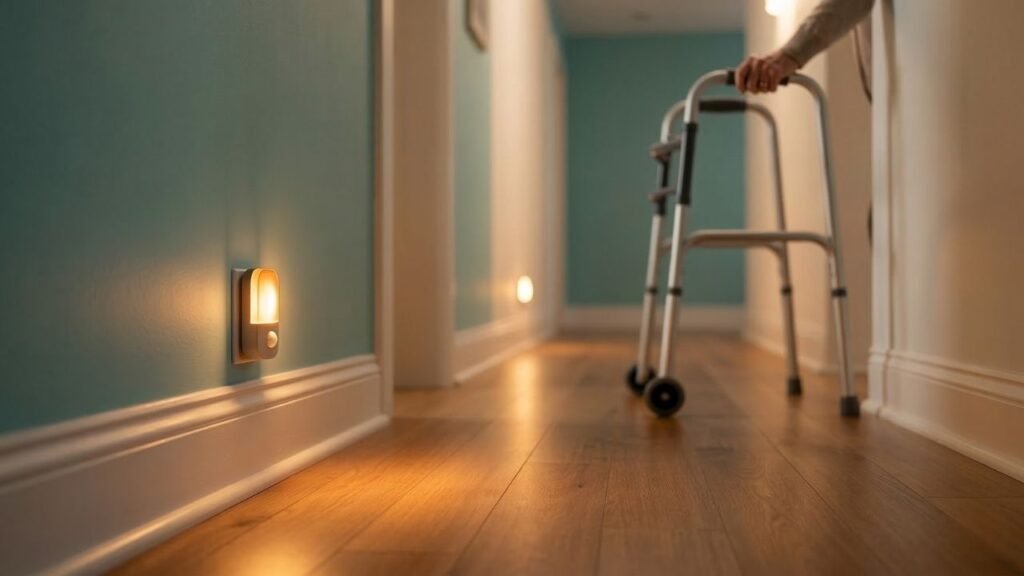
Getting up in the middle of the night shouldn’t feel dangerous — but for millions of seniors, it does. A motion sensor night light for elderly adults is one of the simplest and most effective ways to reduce nighttime fall risk at home. Whether it’s a trip to the bathroom or a glass of water from the kitchen, poor lighting is one of the leading contributors to falls after dark. The consequences can be serious — hip fractures, head injuries, and hospital stays that often lead to a lasting decline in independence. That’s why finding the right motion sensor night light for elderly adults has become a priority for so many families.
For caregivers, the worry doesn’t stop when the lights go out. You may find yourself lying awake wondering whether your loved one can safely make it to the bathroom and back. Motion sensor night lights are small, affordable devices that activate automatically the moment they detect movement, lighting up the path ahead without requiring anyone to reach for a switch. In this guide, we’ll break down the best motion sensor night lights for seniors, compare plug-in, rechargeable, and battery-operated options, and help you choose the right setup to keep your loved one safe.
Why Motion Sensor Night Lights Matter for Seniors
Falls are the leading cause of injury among older adults in the United States, and the risk increases significantly in low-light conditions. As we age, our eyes take longer to adjust to darkness, depth perception declines, and reaction time slows. The statistics are sobering — the CDC reports that approximately 36 million falls occur among older adults every year, resulting in more than 32,000 deaths. Many of these falls happen during nighttime hours when a senior gets up to use the bathroom. There are specific reasons why seniors fall at night, and most of them are preventable. Understanding fall risks in seniors and how to prevent them starts with addressing the most common hazards — and poor nighttime lighting is near the top of that list. A motion sensor night light for elderly adults directly targets this risk.
Motion sensor night lights provide automatic, hands-free illumination exactly when and where it’s needed. Unlike traditional night lights that stay on all night and can disrupt sleep quality, motion-activated models only turn on when they detect movement. This means less energy waste, less light pollution during sleep, and a reliable glow that appears the moment a senior gets out of bed or walks into a hallway. For caregivers, this provides peace of mind knowing a loved one won’t be fumbling for a light switch in the dark.
The placement of these lights matters just as much as the lights themselves. Key areas include stairways, hallways, bathrooms, and the kitchen — anywhere a senior might walk after dark. A pair of slippers left in the hallway, a pet lying on the floor, or a slightly raised rug edge can all become invisible hazards in the dark. When paired with other safety measures like non-slip rugs and mats, motion sensor night lights become part of a layered home safety strategy that significantly reduces nighttime risk.
Doctor’s Note: Choosing the Right Motion Sensor Night Light for Elderly Adults
I see patients every week who have experienced a fall at night, and the story is almost always the same — they got up to use the bathroom, didn’t want to turn on the overhead light because it felt too harsh, and tripped over something they couldn’t see. It’s a preventable scenario, and one of the first things I recommend is installing motion sensor night lights in key areas of the home. I consider it part of a standard fall prevention prescription, right alongside exercise, medication reviews, and vision checks.
When I talk with families about choosing the right night light, I focus on three things: brightness, placement, and reliability. You want a light that’s bright enough to clearly illuminate the floor and any obstacles, but not so bright that it disrupts sleep or causes glare. A light that’s too dim gives a false sense of security, while one that’s too bright can cause temporary glare blindness, especially in seniors with cataracts. Warm white light in the range of 3000K is ideal because it’s gentle on aging eyes while still providing adequate visibility. I also recommend lights with adjustable brightness when possible, because every home and every individual’s vision is different.
I always tell my patients that night lights are not a luxury — they’re a safety device. I’ve seen how something as simple as a well-placed bedside fall mat combined with a motion sensor night light for elderly patients can make a dramatic difference in fall prevention. One of my patients, an 82-year-old woman who had fallen three times in six months, went an entire year without a nighttime incident after her daughter installed motion sensor lights along the hallway and in the bathroom.
If you’re caring for an aging parent or spouse, I recommend doing a simple nighttime safety check. Pay special attention to transition points — doorways, the spot where carpet meets tile, the top and bottom of stairs. These are where falls are most likely to happen, and where a strategically placed night light makes the biggest impact.

Best Motion Sensor Night Lights for Seniors (Top Picks)
Best Overall
LOHAS LED Motion Sensor Night Light Plug-In (Warm White, 2-Pack)
The LOHAS LED is our top pick for the best motion sensor night light for elderly adults because it combines reliable motion detection with adjustable brightness in a simple plug-in design. It emits a warm 3000K white light that’s easy on the eyes and activates automatically when it senses movement in the dark. The compact design fits neatly into any standard outlet without blocking the second plug, and the two-pack covers both the bedroom and bathroom right out of the box.
Pros:
- Built-in motion sensor activates automatically
- Adjustable brightness for customized comfort
- Warm white 3000K light is gentle on aging eyes
- Compact design doesn’t block adjacent outlets
- Energy-efficient at just 1W per light
- Comes in a 2-pack for multi-room coverage
Cons:
- Requires an available wall outlet
- Motion sensor range may not cover very large rooms
- No color temperature options beyond warm white

- [Decorative night light] - With a sleek black and gold design, this modern night light complements various home decor styles, adding a touch of elegance while being highly functional
- [Motion Sensor Lights indoor] - Enjoy the convenience and energy savings of our Motion Sensor Plug-in Night Light. "On" mode - always on; "Off" mode - turns off the light; "Auto" mode - It lights up...
- [Dimmable Night Lights] - The button on the side of this modern motion sensor night light can adjust the brightness 0-100LM to meet your different brightness needs
Best Plug-In
MAZ-TEK Plug-In LED Night Light with Auto Dusk to Dawn Sensor (2-Pack)
The MAZ-TEK is an excellent plug-in option for seniors who want a light that works automatically without any buttons or switches. Its dusk-to-dawn sensor detects ambient light levels and turns on only when the room gets dark. The adjustable brightness slider lets caregivers dial in the perfect illumination for each room, making it a true set-it-and-forget-it solution.
Pros:
- Auto dusk-to-dawn sensor requires zero interaction
- Adjustable brightness slider for personalized comfort
- Warm white light doesn’t disrupt sleep
- Very low energy consumption
- Compact and unobtrusive design
- 2-pack included
Cons:
- No motion sensor — stays on throughout the night when dark
- Must be placed near an outlet
- Brightness slider is small and may be hard for arthritic hands to adjust
- BRIGHTNESS ADJUSTABLE - You can steplessly adjust the Warm white brightness from 0 lm to 15 lm with a slide switch.You’re able to set your desired brightness on different occasions to provide the...
- AUTOMATIC ILLUMINATION - With smart dusk to dawn sensor, the night light will auto turns on at night or when ambient lighting becomes insufficient.Emitting gentle light that is easy to your eyes...
- Pailun UNIQUE DESIGN - Well-designed by senior designer, this nightlight is small and exquisite to catch your eyes. When plugging into any standard outlet, it will not obstruct the second outlet.you...
Best Rechargeable
AUVON Rechargeable Battery Night Light with Motion Sensor (2-Pack)
The AUVON rechargeable night light is the best cordless option for seniors who need flexible placement without being tied to an outlet. It features both a motion sensor and a dusk-to-dawn sensor, so it only activates when it’s dark and movement is detected. The magnetic stick-on mount allows placement on walls, inside closets, or along staircases, and a single charge lasts for weeks under normal use.
Pros:
- Rechargeable — no battery replacement needed
- Magnetic stick-on mount for flexible placement
- Dual motion sensor and dusk-to-dawn sensor
- Adjustable brightness levels
- Completely cordless and portable
- Works in locations with no nearby outlet
Cons:
- Requires periodic recharging via USB
- Adhesive mount may lose grip on textured walls over time
- Lower maximum brightness compared to plug-in models
- Living Smart with Mini Motion Sensor Night Lights. Many AUVON customers use them as a visual aid for stairs and other potential obstacles or hazards. These mini led nightlights are also chosen for...
- 2nd Gen Rechargeable Night Light. No worries about buying and changing non-recyclable AAA batteries frequently. A two-hour charge for this rechargeable battery night light can last up to 180 days when...
- Passive Infrared Technology. It uses an expensive passive infrared motion sensor to detect movement within 3-5 meters for automatic turn-on, and will automatically turn off after 20 seconds of no...
Best for Hallways
Brilliant Evolution Wireless LED Stair Lights with Motion Sensor (3-Pack)
The Brilliant Evolution LED stair lights are purpose-built for hallways, staircases, and closets — the exact areas where seniors are most at risk of a nighttime fall. The 7×2-inch light bar design casts a wider beam than a standard round night light, providing better corridor coverage. They’re battery-operated and mount with adhesive strips, and the built-in motion sensor shuts off after 30 seconds of no movement. The 3-pack covers an entire hallway path.
Pros:
- Wide light bar design covers more floor area
- Motion sensor with auto-shutoff after 30 seconds
- Battery-operated with easy stick-on mounting
- 3-pack covers a full hallway or staircase
- Warm white 3000K light
- No outlet or wiring required
Cons:
- Requires AAA batteries (not rechargeable)
- Adhesive mount is not easily repositioned
- Bulkier profile than compact plug-in lights

- Bright Stair Lighting: 35 lumens of bright LED light suitable for stair lighting; provides a warm 3000K white glow ideal for safely illuminating indoor stairs, hallways, bathrooms, and closets
- Motion Sensor Activation: Automatically turns on when motion is detected within 10 feet; turns off after 30 seconds of no movement to conserve battery life; motion lights for stairs add convenience
- Easy Installation: Installs in seconds with included screws or heavy-duty adhesive tape; these lights for stairs indoor are quick and convenient to mount wherever extra lighting is needed
Best for Bathrooms
GE LED Motion Sensor Night Light, Plug-In (Soft White, 2-Pack)
The GE motion sensor night light is a trusted, no-nonsense option ideal for bathroom use. It delivers 40 lumens of soft white light — bright enough to clearly see the toilet, sink, and floor without being harsh. The motion sensor activates within seconds of detecting movement and shuts off automatically after the room is empty. GE’s UL certification adds extra safety assurance, which is especially important in a moisture-prone bathroom environment.
Pros:
- 40 lumens provides clear bathroom visibility
- Motion-activated with auto-shutoff
- UL-certified for safety
- Trusted GE brand
- Simple plug-in installation
- 2-pack for bathroom and hallway coverage
Cons:
- Soft white tone may feel slightly cooler than warm white
- Requires outlet placement near the floor
- No adjustable brightness

- Motion-Activated LED Light - The automatic night light turns on when motion is detected up to 25 feet away, and turns off after 90 seconds of no activity
- Cost Saving – Long-life LED is cool to the touch, greatly reduces energy consumption and there’s no need to replace a bulb
- Compact Design – Night light plugs into any standard outlet and leaves the 2nd outlet free for use
Best Budget Option
Emotionlite Plug-In Night Lights with Dusk to Dawn Sensor (6-Pack)
The Emotionlite 6-pack is the most cost-effective way to light up an entire home for nighttime safety. Each light features a dusk-to-dawn sensor and a 360-degree rotating head that lets you direct the light exactly where it’s needed. At six lights per pack, you can cover the bedroom, bathroom, hallway, kitchen, stairway, and living room without buying multiple products. For families on a budget who want whole-home coverage, this is the best value.
Pros:
- 6-pack provides whole-home coverage
- 360-degree swivel head for directional lighting
- Dusk-to-dawn auto sensor
- Warm white light
- Extremely affordable per unit
- Compact design fits any standard outlet
Cons:
- No motion sensor — stays on all night when dark
- Not rechargeable or portable
- Individual lights are not as bright as premium options

- [AUTOMATIC ON/OFF]: Build-in dusk to dawn sensor, automatically turns on only when ambient lighting becomes insufficient
- [SAFETY ILLUMINATION]: 2700K warm white glow, not too bright, not too dim, ideal light for night time safety, convenience and security
- [DESIRED DIRECTION]: Change illuminate with your convenient direction by 360° swiveling head
Educational Overview: What Is a Motion Sensor Night Light Used For?
A motion sensor night light is a small, low-power light that turns on automatically when it detects movement nearby and turns off after a set period of inactivity — usually between 15 and 60 seconds. Unlike standard night lights that stay on continuously, motion-activated models conserve energy and only provide light when someone is actually moving through a space. A motion sensor night light for elderly adults uses passive infrared (PIR) sensors to detect body heat and movement within a range of 10 to 15 feet depending on the model.
For seniors, these lights serve a very specific purpose: they eliminate the dangerous gap between getting out of bed and reaching a light switch. That gap — even if it’s only a few feet — is where a significant number of nighttime falls occur. Aging eyes need more time to adjust to darkness, and obstacles like rugs, furniture edges, or uneven flooring become invisible hazards in a pitch-dark room. A motion sensor light removes that risk by illuminating the path the instant movement is detected, without requiring the senior to do anything at all.
These lights are also valuable for seniors living with cognitive conditions like dementia or Alzheimer’s, where confusion and disorientation are common at night. A condition known as “sundowning” can cause increased agitation and wandering behavior after dark. A gentle light can help reorient someone who wakes up unsure of their surroundings and guide them back to familiar landmarks in the home. Combined with a senior-friendly bathroom setup and clear walkways, motion sensor night lights make a meaningful difference in reducing fall-related injuries.
Beyond fall prevention, motion sensor night lights support independence. Many seniors resist asking for help at night because they don’t want to be a burden. A reliable, automatic lighting system allows them to move through their home safely without needing to wake a caregiver. The National Institute on Aging recommends improving home lighting as one of the most important steps for fall-proofing a senior’s living space, and motion sensor night lights are one of the easiest and most affordable ways to follow that guidance.
How to Use Motion Sensor Night Lights Safely
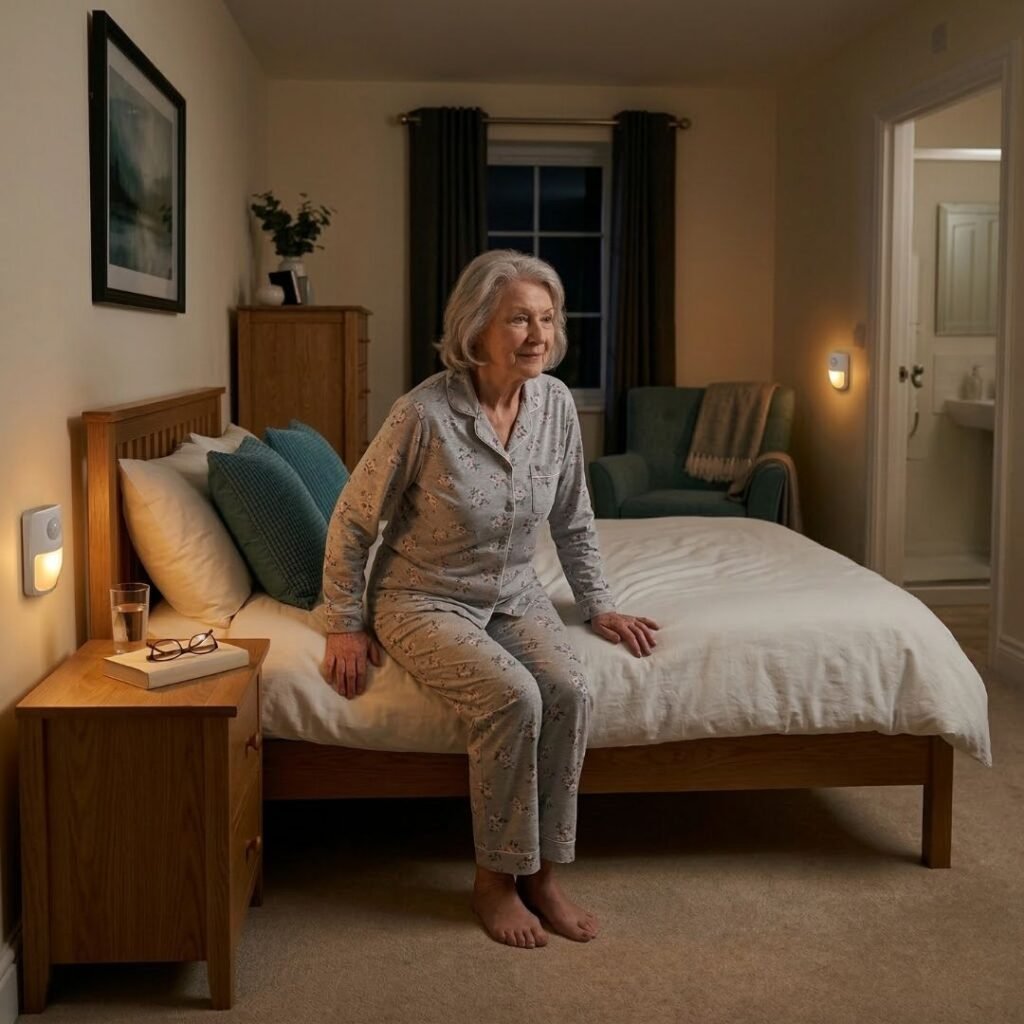
Start with the most critical path. When installing a motion sensor night light for elderly family members, the highest-risk route is from the bed to the bathroom. Place a motion sensor light near the bedside so it activates the moment the senior sits up or puts their feet on the floor. Add another in the hallway if the bathroom isn’t directly attached to the bedroom, and a third near the bathroom entrance. The goal is to create a continuous chain of light so there is never a dark gap between where the senior starts walking and where they’re going.
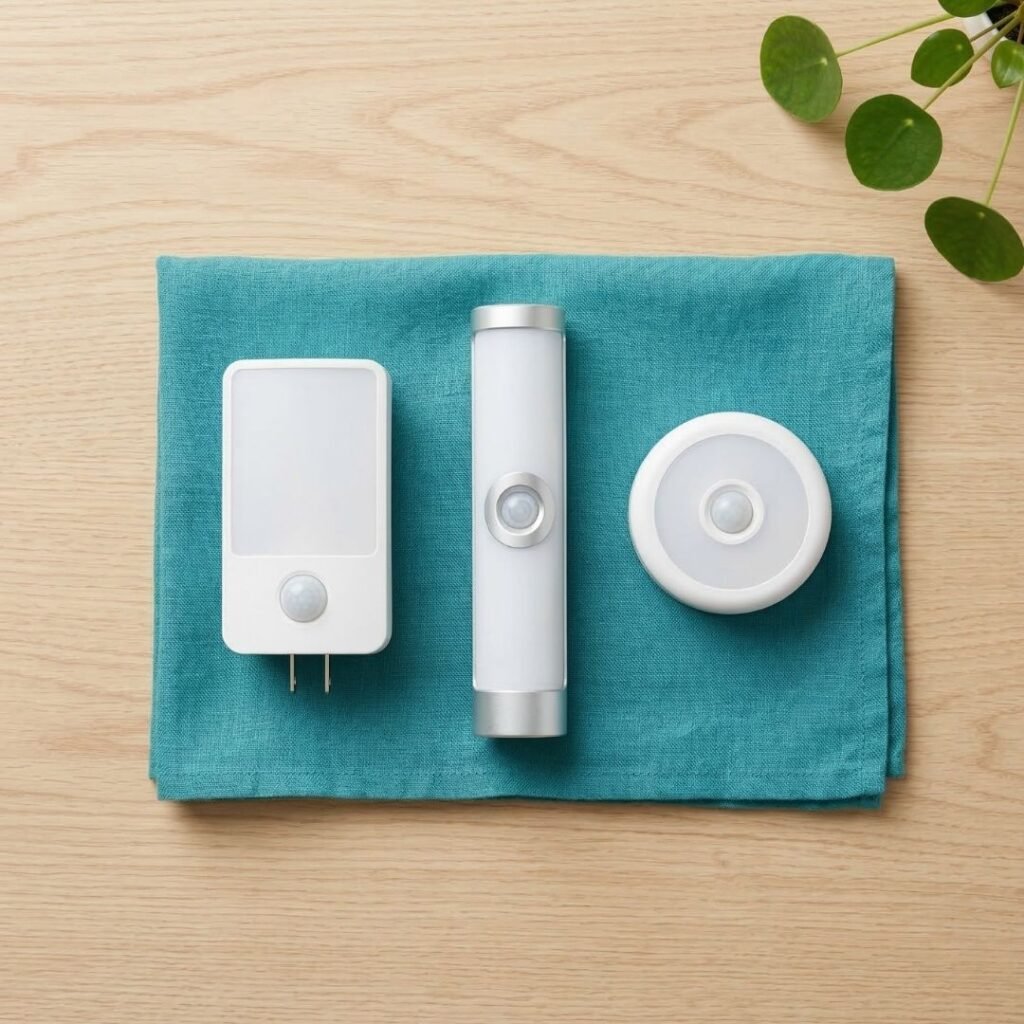
Choose the right height for each light. Plug-in models typically sit at outlet height, which is fine for hallways and bathrooms. For bedrooms, consider a rechargeable or stick-on model placed lower on the wall or at baseboard level. Low-placed lights reduce glare while still illuminating the floor surface, which is where obstacles actually are. Avoid placing lights at eye level near the bed, as the sudden brightness can be disorienting for a senior who has just woken up.
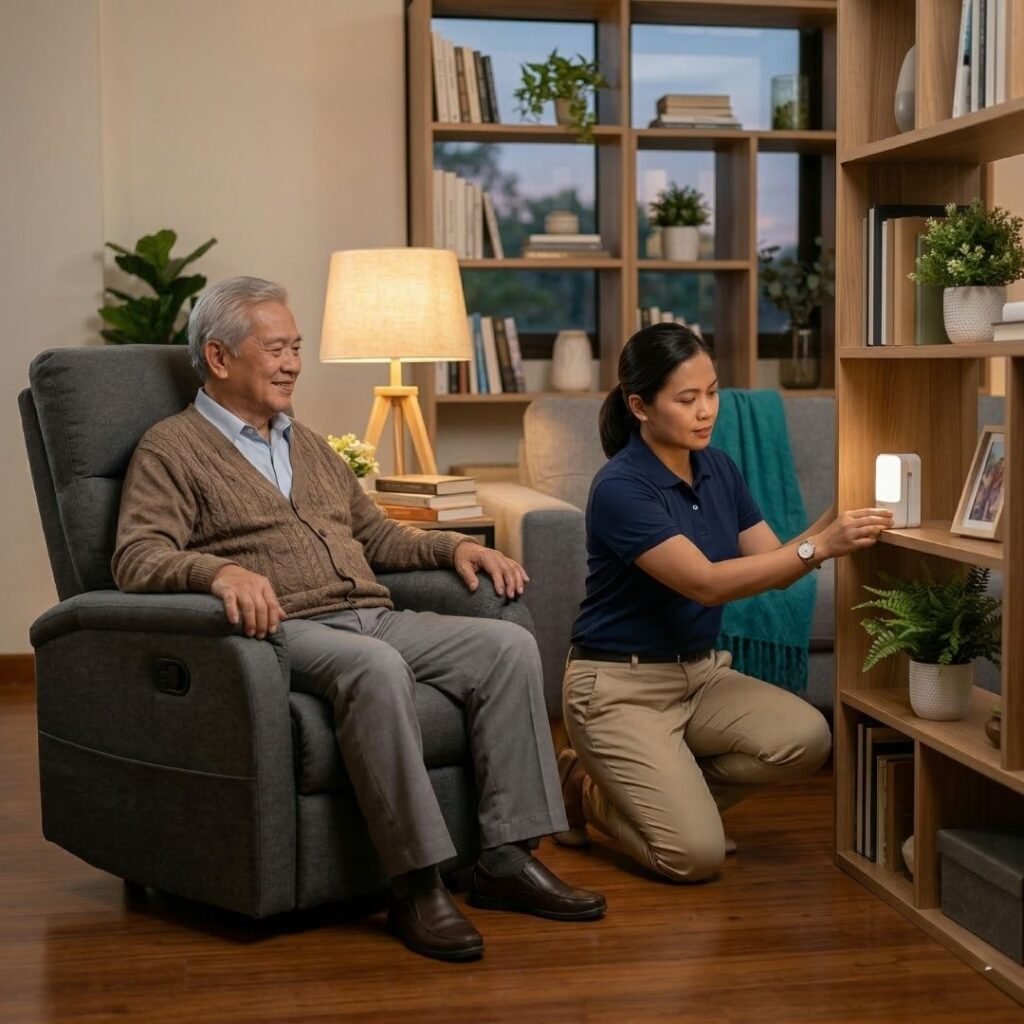
Test the sensor range before finalizing placement. Every motion sensor has a detection range and angle, and these vary significantly between models. Walk the nighttime path yourself and check that each sensor activates before you reach a dark spot. If there’s a gap, adjust the positioning or add an additional light to fill the dead zone. Also test from different angles — a sensor that works perfectly when you walk straight toward it may not detect someone approaching from the side. According to the Mayo Clinic, ensuring continuous visibility along walking paths is a key component of fall prevention at home.
Keep the area around each light clear. Night lights are only effective if the path they illuminate is free of tripping hazards. Make sure cords, shoes, rugs, and clutter are cleared from hallways and walkways. Pairing motion sensor lights with non-slip rugs and mats along the same path adds another important layer of protection. The combination of good lighting and stable, non-slip footing addresses the two biggest contributors to nighttime falls.
Check batteries and bulbs regularly. For battery-operated or rechargeable models, set a reminder to check power levels at least once a month. A dead night light is worse than no night light at all, because the senior may rely on it and walk confidently into a dark space expecting illumination that isn’t there. Plug-in models are more reliable since they draw continuous power, but it’s still worth confirming they function during routine home safety checks.
Lifestyle Synergy: Making Motion Sensor Night Lights Work Better at Home
Creating a safe nighttime environment goes beyond just installing a few lights. Motion sensor night lights work best when they’re part of a larger home safety plan that addresses flooring, furniture placement, bathroom access, and daily routines. A motion sensor night light for elderly adults is most effective when supported by complementary measures that let a senior move confidently after dark without relying on memory or guesswork.
Start by walking through the home at night with all the lights off. Take the same paths your loved one takes — bed to bathroom, bedroom to kitchen, bedroom to the front door. Note every dark spot, every piece of furniture that narrows the path, every rug edge that could catch a foot. You might be surprised by how different a familiar home looks in total darkness. For a complete checklist, our guide on tips for making your home safer for seniors covers room-by-room recommendations that go well beyond lighting.
In the bathroom, motion sensor lights pair well with other safety upgrades. A shower seat for elderly adults, grab bars near the toilet and shower, and non-slip bath mats all work together with good lighting to reduce fall risk in what is statistically the most dangerous room in the house for seniors. The floor transition between bedroom carpet and bathroom tile is another high-risk spot that benefits from direct illumination, as the change in surface texture can catch a shuffling foot.
In the bedroom, keep a clear path between the bed and the door. Remove furniture that forces a senior to navigate around obstacles in the dark, and make sure nightstands and dressers don’t narrow the walkway. A rechargeable motion sensor light mounted beside the bed provides immediate illumination the moment feet hit the floor. AARP recommends adequate lighting in every room as one of the top priorities for aging in place safely.
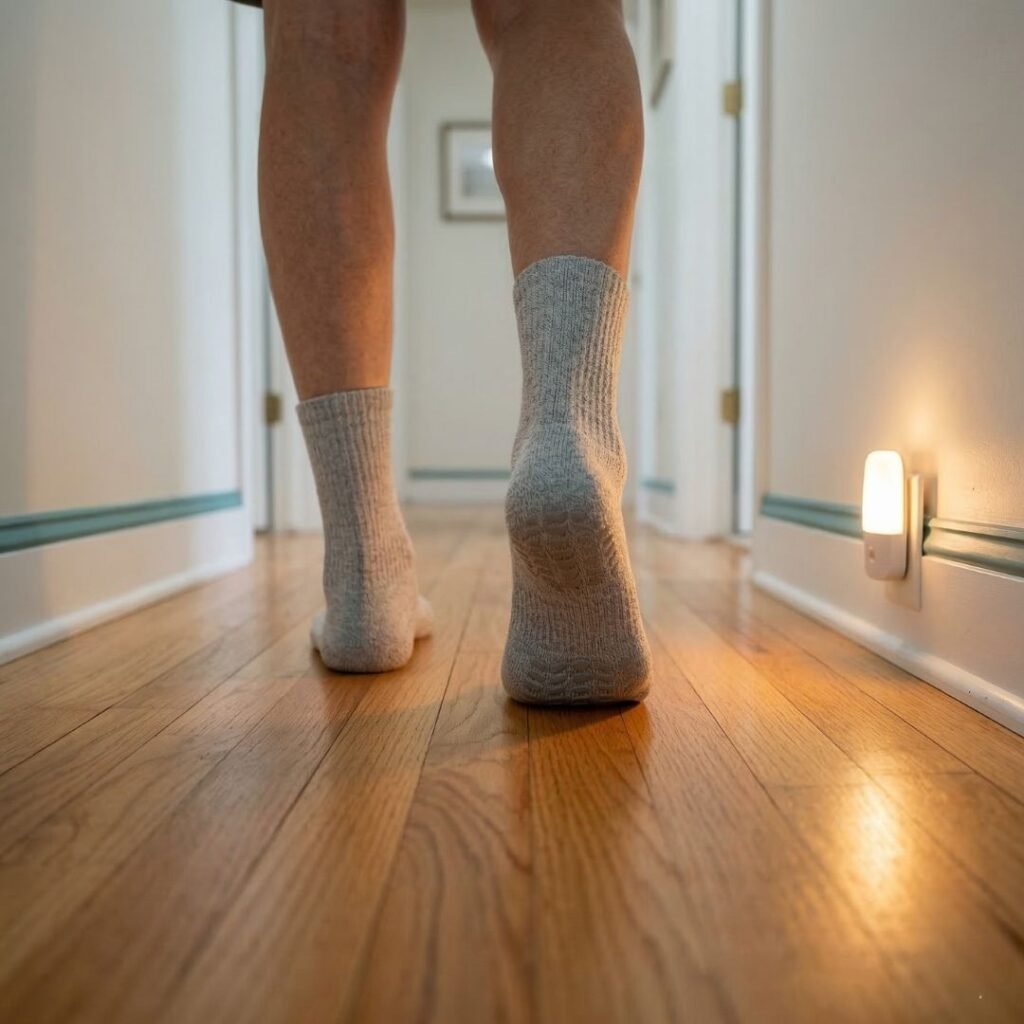
Think about daytime habits that affect nighttime safety too. Encourage a consistent bedtime routine, as regular sleep patterns reduce the grogginess that contributes to falls. Staying hydrated earlier in the evening can reduce late-night bathroom trips. Wearing non-slip socks or supportive slippers when getting out of bed adds one more layer of protection. These small daily habits, combined with good lighting and clear pathways, create a comprehensive safety net.
Physician’s Tips for Long-Term Use
Motion sensor night lights are not a one-time purchase that you set and forget forever. As a senior’s mobility, vision, and cognitive abilities change over time, their lighting needs change too. I encourage every caregiver to treat their motion sensor night light for elderly loved ones as a living system — one that should be reviewed and updated as conditions evolve.
Vision changes are one of the most common reasons to revisit night light setup. Conditions like cataracts, macular degeneration, and glaucoma all affect how much light a senior needs to see clearly, and they tend to progress gradually. If your loved one reports that their current lights don’t seem bright enough, it may be time to upgrade to a brighter model or add additional lights along key paths. Regular eye exams — at least once a year for seniors over 65 — are essential, and any vision changes should prompt an immediate home lighting review.
Mobility changes also affect lighting needs in ways that are easy to overlook. A senior who starts using a walker or cane may need wider paths and more floor-level illumination. If a hospital bed or overbed table is introduced into the bedroom, the nighttime path may shift entirely and require new light placement. After any change in mobility equipment, walk the nighttime route again with the senior and adjust lights accordingly.
For seniors recovering from a fall, lighting should be reassessed immediately as part of the recovery plan. A fall often creates a fear of falling again, which can lead to reduced movement and further physical decline. Our guide on how to care for seniors after a fall outlines the full post-fall safety checklist, and lighting is always on it. Increasing the number of night lights or upgrading to brighter models can help rebuild confidence and reduce the anxiety that keeps many seniors from getting up at night when they need to.
Finally, involve the senior in the process whenever possible. Ask them where they feel uncertain at night, which paths feel too dark, and whether any lights are too bright or too dim. Their feedback is the most valuable data you have for getting the setup right — no amount of online research can replace the perspective of the person who actually walks those paths every night.
Motion Sensor Night Light Comparison for Seniors (Features & Stability)
Frequently Asked Questions
1. What lighting is best for the elderly?
Warm white lighting in the 2700K to 3000K range is generally best for elderly adults because it provides a soft, comfortable glow that doesn’t cause glare or eye strain. A motion sensor night light for elderly adults with adjustable brightness is ideal because it lets caregivers customize the light level for each room. Consistent, gentle lighting along walking paths is far more effective than a single bright overhead light.
2. Are motion sensor night lights safe to leave plugged in all night?
Yes, modern LED motion sensor night lights are designed to be left plugged in continuously and are very safe. They consume minimal energy — typically 1 watt or less — and produce almost no heat compared to older incandescent night lights. Look for UL-certified models from reputable brands like GE, LOHAS, and MAZ-TEK, which are designed for 24/7 outlet use.
3. What is the best placement for a motion sensor night light?
The most important placement is along the path from the bedroom to the bathroom, since this is the route most seniors walk at night. Place one near the bedside, one in the hallway, and one at or near the bathroom entrance. Additional lights should go at the top and bottom of any staircase and near doorways used at night. The goal is a continuous chain of light with no dark gaps.
4. Do motion sensor night lights help prevent falls in seniors?
Absolutely. Poor lighting is one of the top contributing factors to nighttime falls among older adults. Motion sensor night lights address this directly by providing instant, automatic illumination the moment a senior begins moving. Organizations like the CDC and the National Institute on Aging consistently recommend improving home lighting as a key fall prevention strategy.
5. What is the difference between plug-in and battery-operated motion sensor night lights?
Plug-in night lights draw power directly from a wall outlet, so they never need charging or battery replacement, making them the most reliable option for fixed locations. Battery-operated and rechargeable models are portable and can be placed anywhere — including closets, staircases, and walls without nearby outlets. For most seniors, a combination of both types provides the best whole-home coverage.
6. How bright should a night light be for an elderly person?
A night light should be bright enough to clearly illuminate the floor and nearby obstacles, but not so bright that it disrupts sleep or causes glare. A range of 20 to 50 lumens is generally ideal — hallways and bathrooms benefit from the higher end, while bedrooms should stay on the lower end. Models with adjustable brightness give you the flexibility to fine-tune the light level for each room.
Final Thoughts on Motion Sensor Night Lights for Seniors
Choosing the right motion sensor night light for elderly loved ones doesn’t have to be complicated. The most important thing is to start — even a single well-placed light along the bedroom-to-bathroom path can significantly reduce nighttime fall risk. Whether you choose a plug-in model like the LOHAS or GE for reliable outlet-powered lighting, a rechargeable option like the AUVON for flexible placement, or a budget-friendly 6-pack from Emotionlite for whole-home coverage, every option on this list has been selected with senior safety in mind.
Take the time to walk through your loved one’s home at night, identify the dark spots, and build a lighting plan that covers every path they use. Pair the lights with non-slip flooring, clear walkways, and regular safety check-ins. Small changes like these add up to a safer, more confident nighttime routine — and that peace of mind is worth every penny.
Medical Disclaimer: This guide is for general educational purposes only and is not intended to serve as personalized medical advice. Always consult a qualified healthcare professional before making changes to medical equipment or care plans.
Last update on 2026-03-13 / Affiliate links / Images from Amazon Product Advertising API