

Affiliate Disclaimer: This article contains affiliate links. As an Amazon Associate, Mobility With Ease may earn a small commission from qualifying purchases at no additional cost to you.
Introduction
Transport wheelchairs play an essential role in helping seniors stay mobile, safe, and engaged with the world around them. Unlike standard wheelchairs, which are built for independent self-propulsion, transport wheelchairs are designed specifically for caregiver-assisted mobility. Their lightweight frames, compact folding design, and easy maneuverability make them ideal for appointments, family outings, travel, and navigating large indoor spaces like hospitals or assisted living facilities.
For many seniors, the biggest barriers to safe mobility are fatigue, balance limitations, and the physical strain of walking longer distances. As a wound-care physician, I routinely see how the right transport wheelchair can prevent falls, reduce pressure on joints, protect fragile skin, and greatly reduce caregiver burden. Choosing the right model isn’t just about comfort — it’s a matter of long-term safety and maintaining independence in everyday life.
In this guide, we’ll walk through the best transport wheelchairs for seniors in 2025, highlight the safest and most caregiver-friendly designs, and explore how to choose the right model based on where and how it will be used. We’ll also cover essential safety tips, physician-recommended accessories, and lifestyle guidance to help you make the most informed decision possible.
Why Transport Wheelchairs Matter for Seniors
Transport wheelchairs fill an important gap for older adults who can no longer safely self-propel a standard wheelchair or walk long distances. They’re lightweight, easy for caregivers to maneuver, and provide stable seating during appointments, errands, and transitions inside medical facilities or large buildings.
For seniors, especially those with fatigue, balance issues, or chronic illness, transport chairs help prevent avoidable falls, reduce joint strain, and make everyday outings more comfortable. According to the CDC, mobility-related instability is a major contributor to fall risk in older adults — and appropriate mobility support is one of the simplest ways to reduce that risk.
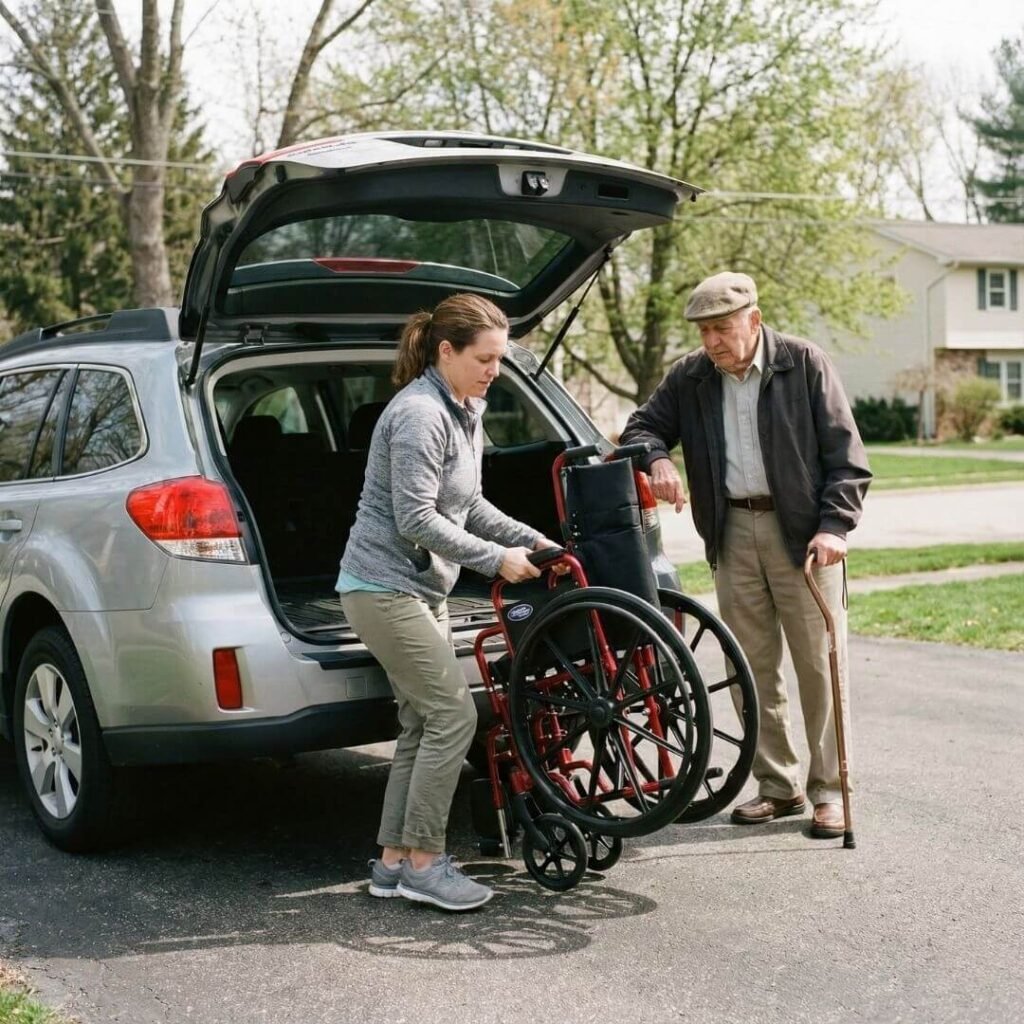
For caregivers, transport chairs are easier to lift into vehicles, navigate through hallways, and fold for storage compared to standard wheelchairs. They also make longer trips more manageable without exhausting either person.
Doctor’s Note: Choosing the Right Transport Chair
Transport wheelchairs are designed for short-to-moderate trips where a caregiver assists with mobility, not for all-day independent use. In practice, I often recommend them for seniors who can walk short distances but fatigue quickly, have balance limitations, or struggle with the long hallways commonly found in hospitals and medical facilities. The right model helps prevent avoidable falls, reduces strain on joints, and makes transitions between rooms or buildings far more manageable.
When selecting a transport chair, consider where it will be used most often and how much lifting the caregiver can comfortably manage. Seniors who need more continuous seating support tend to compare transport chairs with options like lightweight wheelchairs, while families who want an alternative for shorter community outings sometimes also consider walkers or rollators depending on the senior’s strength and stability.

Best Transport Wheelchairs for Seniors (Top Picks for 2025)
Choosing the right transport wheelchair depends on where it will be used, how often it will be lifted into a vehicle, and how much support the senior needs. Below are six highly vetted, physician-recommended picks selected for reliability, comfort, and caregiver ease.
Best Overall Transport Wheelchair
Medline Ultra Lightweight Transport Wheelchair — A well-balanced, easy-to-maneuver transport chair with a lightweight frame, comfortable seating, and dependable build quality that works well for most seniors and caregivers.
Pros
- The lightweight frame makes it much easier for caregivers to lift the chair in and out of a vehicle without strain.
- It offers smooth maneuverability through hallways, exam rooms, and tight indoor spaces, which improves safety during appointments.
- The 19-inch seat provides comfortable everyday seating for most adults without feeling cramped.
- The chair folds quickly and compactly, allowing fast transitions between home, car, and medical facilities.
Cons
- The smaller rear wheels do not handle uneven outdoor surfaces as well as larger-wheeled models.
- The design does not include caregiver hand brakes, which limits control on slopes or ramps.
- It is best suited for shorter outings rather than extended sitting due to minimal cushioning.

- LIGHTWEIGHT AND DURABLE: Ultra lightweight, 19 lb., folding transport chair for adults has a sturdy aluminum frame; 300 lb. weight capacity
- COMFORTABLE WITH EASY IN/OUT: Desk-length cushioned armrests for comfort; spacious 19” wide x 16” deep seat; swing-away footrests make it easy to get in and out of the seat; cup holder comes...
- FOLDS EASILY FOR TRANSPORT: Compact design folds easily with swing-away footrests that lock in place for convenient storage and transport in car trunk
Best Lightweight / Caregiver-Friendly
Drive Medical EXP19LTBL Expedition Lightweight Transport Chair with Hand Brakes — One of the lightest high-quality chairs available, offering excellent portability along with rear hand brakes that give caregivers better control on slopes and uneven terrain.
Pros
- The extremely lightweight design makes lifting, transporting, and unfolding significantly easier for caregivers.
- Rear hand brakes offer added control on ramps, curbs, and outdoor terrain, improving safety during outings.
- The chair folds into a compact profile that fits easily into car trunks and storage spaces.
- It provides smooth, predictable handling both indoors and outdoors, reducing the effort required to push.
Cons
- The narrower seat width may feel less comfortable for larger adults or those who prefer more space.
- The minimal cushioning makes it less suitable for longer outings where extended sitting is required.
- It does not accommodate bariatric users due to its lightweight frame and lower weight capacity.

- Lightweight Mobility Support: The Drive Medical Expedition Transport Wheelchair provides easy travel assistance with a lightweight design, padded armrests, and fold-down footrests for added comfort
- Effortless Pushing Performance: Built for smooth navigation, this chair uses 12-inch rear wheels to help users glide over bumps with curb assist for easier lifting
- Reliable Brake Safety: Designed for confident stopping, the companion-activated brakes offer stability with loop lock hand controls that secure the rear wheels without requiring the rider to bend
Best Travel / Folding Transport Wheelchair
Carex Transport Wheelchair with 19-Inch Seat — A compact, easy-folding chair that works well for quick outings, travel days, or occasional use without compromising stability or comfort.
Pros
- The chair folds down quickly and easily, making it ideal for travel days, appointments, and spontaneous outings.
- Its lightweight frame allows caregivers to push and maneuver it with minimal effort.
- The simple design works well for short trips where ease of use matters more than advanced features.
- It delivers strong value for the price without feeling overly flimsy or unstable.
Cons
- The small wheels make uneven outdoor terrain less comfortable and may limit stability.
- The chair does not include hand brakes, which can reduce control on slopes or uneven areas.
- Seat padding is limited, making it less comfortable for seniors who need prolonged sitting support.

- Lightweight wheelchair at 25lbs. The Carex Transport Wheelchair, a portable wheelchair that folds. The Transport Chair features adjustable swing away removable foot rests. The wheel chair has a sturdy...
- A leader in transport chairs. With a 19 inch seat, the transport wheelchair is a comfortable drive. Includes a secure belt for safety. Great for surgery recovery or those with a medical condition. Our...
- Transfer wheelchair folds up to fit into a trunk, a perfect medical transport chair for bringing someone home from the hospital. Transport wheelchair is great for those on the go or those in need of a...
Best Narrow / Small-Space Transport Chair
Medline Lightweight Transport Chair with 12-Inch Rear Wheels — A slim, maneuverable design that handles tight hallways and indoor spaces well while offering larger rear wheels for better stability on uneven surfaces.
Pros
- The larger 12-inch rear wheels provide smoother movement and better stability on outdoor surfaces.
- The narrow frame makes navigating hallways, tight corners, and indoor living spaces easier.
- Caregiver hand brakes allow precise control during descents and outdoor transitions.
- The lightweight build helps caregivers move, lift, and load the chair without excessive effort.
Cons
- The chair folds into a slightly bulkier profile compared to small-wheel models.
- It is more expensive than basic transport chairs due to the enhanced wheel design.
- The larger wheels may not fit well in very small car trunks or compact storage areas.

- LIGHTWEIGHT AND DURABLE: Lightweight, 26 lb., folding transport chair for adults has a sturdy aluminum frame; 300 lb. weight capacity
- ENHANCED SAFETY FEATURES: Easy-to-squeeze hand brakes and rear-wheel manual locking brakes allow for safe and secure transfers
- COMFORTABLE WITH EASY IN/OUT: Full-length cushioned armrests for comfort; spacious 19” wide x 16” deep seat; swing-away, detachable footrest make it easy to get in and out of the seat
Best Heavy-Duty / Bariatric Transport Wheelchair
Medline Heavy Duty Transport Chair (500-lb Capacity) — A reinforced bariatric transport chair designed for durability, stability, and comfort with an extra-wide seat and high weight capacity.
Pros
- The reinforced steel frame supports up to 500 lbs, providing exceptional stability and safety for larger adults.
- The wide seat offers improved comfort and reduces pressure points during longer outings.
- The durable wheel and frame design performs reliably on both indoor flooring and outdoor surfaces.
- The chair’s sturdy construction increases long-term reliability and reduces wear from frequent use.
Cons
- The heavier build can be challenging for caregivers to lift into a car trunk without assistance.
- It folds into a bulkier footprint, making transport and storage more difficult.
- The weight and size may be difficult to manage for caregivers with limited upper-body strength.

- Medline Heavy Duty Transport Chair has a large 22"W x 18"D seat with breathable nylon upholstery for maximum comfort
- Sturdy steel transport wheelchair frame supports up to 500 lbs
- Transport wheelchair with removable desk-length arms and detachable swing-away footrests
Best Budget Steel-Frame Option
Medline Durable Folding Steel Transport Wheelchair — A sturdy, budget-friendly steel-frame chair that provides dependable mobility for short trips, indoor use, or facility transitions.
Pros
- The strong steel frame provides a stable, secure feel that many families prefer for short trips.
- Swing-away footrests make transfers safer and easier by preventing tripping hazards.
- The chair offers excellent durability for the price, making it a dependable budget choice.
- It works well for occasional outings, indoor mobility, and facility-to-facility transport.
Cons
- The steel frame is noticeably heavier than aluminum alternatives and requires more lifting effort.
- Its weight makes frequent trunk loading and unloading less convenient for caregivers.
- The design is not ideal for rough outdoor terrain due to smaller wheels and reduced suspension.

- DURABLE STEEL FRAME: This sturdy steel transport chair supports up to 250 lbs.; weighs 30 lbs. No assembly required with easy-clean nylon seat, armrests and backrest
- REAR WHEEL LOCK: Manual locking brakes allow for safe and secure transfers
- COMFORTABLE WITH EASY IN/OUT: Full-length cushioned armrests for comfort; spacious 19” wide x 16” deep seat; swing-away, detachable footrest make it easy to get in and out of the chair
Educational Overview

Transport wheelchairs serve a different purpose than standard wheelchairs, and understanding that difference makes it much easier to choose the right device. Transport chairs are built for caregiver-assisted mobility, meaning a senior does not need the strength or endurance to self-propel. Their lightweight frames and compact folding design make them ideal for short-to-moderate outings, medical appointments, and navigating large buildings without unnecessary fatigue.
For seniors who tire easily, have limited balance, or cannot safely walk long distances, a transport wheelchair helps reduce strain, prevent instability, and provide a secure seating option during transitions. These chairs are also easier for caregivers to push and maneuver, especially in tight hallways, waiting rooms, and hospital corridors.
Falls remain one of the most common preventable injuries among older adults, and mobility-related fatigue plays a major role. The Centers for Disease Control and Prevention (CDC) outlines the significant risks associated with mobility limitations and balance challenges.
Transport chairs help bridge this gap by offering stability, comfort, and efficiency during everyday tasks and short outings.
How to Use a Transport Wheelchair Safely

Safe use of a transport wheelchair comes down to a few reliable habits that protect both the senior and the caregiver. The most important step is to always engage the brakes before any transfer. A chair that shifts even slightly as a senior begins to sit or stand can create an avoidable fall risk, especially for those with balance or endurance limitations.
During transfers, the footrests should always be moved fully out of the way to prevent tripping and to allow the senior space to pivot securely. After the senior is comfortably seated, the footrests can be readjusted to provide proper leg support. For caregivers who routinely assist with transfers, practicing body mechanics and positioning — such as the techniques described in our guide on how to safely reposition seniors in bed — can make transitions smoother and reduce strain.
When navigating indoors, transport wheelchairs work best on smooth, predictable surfaces. Outdoors, chairs with small wheels may feel less stable on uneven terrain, so choosing outings that match the chair’s capabilities is important. If the goal is to make daily movements around the home safer and reduce fall risks during standing or walking transitions, the strategies described in our guide on making your home safer for seniors can help support the entire mobility routine.
Practicing braking, turning, backing up, and maneuvering in tight areas before real-world outings can also make day-to-day use much safer and less stressful for everyone involved.
Lifestyle Synergy
Transport wheelchairs can dramatically expand what daily life looks like for seniors by removing the physical barriers that often limit participation in meaningful activities. When walking long distances becomes unsafe or exhausting, outings that should feel routine—like a doctor’s appointment, a trip through a large hospital, or a family gathering—can feel overwhelming. A transport chair allows seniors to conserve energy for the moments that matter most, reducing the stress, anxiety, and hesitation that commonly accompany mobility challenges.
Many caregivers find that simply having a transport wheelchair available changes how confidently they can plan the day. Instead of worrying about fatigue, unstable balance, or the risk of a fall partway through an outing, the chair becomes a dependable fallback that supports smoother transitions. This relief is especially important during periods of recovery, medical treatments, or fluctuating strength levels.
Transport wheelchairs also make navigating large or complex environments significantly easier:
- Hospitals and medical centers with long hallways or departmental distances
- Airports, which often require extensive walking between check-in, security, and boarding
- Shopping centers and large stores where pacing and stability vary
- Assisted living or senior communities with spread-out buildings or common areas
- Event spaces such as theaters, museums, or sports venues
For families who travel, a lightweight transport chair can transform airport days into manageable experiences. It simplifies boarding and connections and reduces the physical stress of long corridors, especially when paired with practical strategies from our guide on traveling with a wheelchair for safe trips.
Beyond the logistical convenience, transport wheelchairs offer meaningful emotional and social benefits. Seniors often feel more comfortable participating in activities when they know they won’t be pushed beyond their physical limits. Caregivers feel more confident planning outings, which leads to:
- More spontaneous plans instead of canceled activities
- Greater opportunities for social connection
- Less fear of “overdoing it”
- More consistent participation in family routines
- A healthier sense of independence and dignity
When integrated into weekly routines, a transport wheelchair becomes a tool that supports not only mobility but also freedom, engagement, and quality of life. It allows seniors to stay active in ways that feel safe and sustainable, helping them focus on connection rather than physical limitations.
Physician’s Tips for Caregivers

Caregivers often ask how to make transport wheelchair outings safer and more comfortable, especially during longer appointments or transitions through large buildings. Small adjustments often make the biggest difference. The first is to slow the pace of every transfer — seniors with fatigue or balance changes benefit tremendously from simple verbal cues and steady hand placement.
You can also improve comfort by addressing pressure points and posture. A supportive cushion can help distribute weight more evenly and reduce strain during longer seating periods, especially for seniors with fragile skin or a history of discomfort. Our guide on wheelchair cushions for seniors covers which types offer the best combination of support and pressure relief.
Home environments matter as well. If transfers to and from the wheelchair happen near a bed, it’s often helpful to incorporate additional stability tools. Features like armrests, lift assistance, or reclining positions — similar to what’s outlined in our guide on lift chairs for seniors — can complement wheelchair use by making transitions smoother and reducing caregiver strain.
A few additional tips that consistently help in real-world practice include:
- Check brake engagement before every transfer to prevent unexpected movement.
- Remove or swing away the footrests fully before standing or sitting.
- Monitor posture during outings, especially if the senior tends to lean or shift.
- Choose routes with predictable surfaces when possible to reduce jarring movements.
- Do a quick pre-outing equipment check (brakes, footrests, wheel stability).
These small habits build confidence for both the senior and the caregiver and make day-to-day outings far smoother and safer.
Best Transport Wheelchair Comparison Table
Frequently Asked Questions
1. What is the difference between a transport wheelchair and a standard wheelchair?
A transport wheelchair is designed for caregiver-assisted mobility and uses smaller wheels, making it lighter and easier to maneuver in tight spaces. A standard wheelchair has large rear wheels for independent self-propulsion and is intended for longer periods of sitting. Most seniors who struggle with balance or fatigue benefit more from the lighter, caregiver-driven design of a transport chair.
2. How do I choose the right seat width?
Most adults fit comfortably in an 18–19 inch seat, which offers enough room for natural posture without being too wide to maneuver through hallways or doorways. Bariatric users or seniors who prefer a more spacious feel may benefit from wider seating to improve comfort and stability. Seat width should always match the senior’s body size and household environment.
3. Are transport wheelchairs safe to use outdoors?
Transport chairs can be used outdoors, but stability depends heavily on wheel size and frame design. Larger rear wheels—such as 12-inch models—handle uneven sidewalks, parking lots, and outdoor terrain much better than chairs with smaller wheels. Caregivers should always test braking and balance before navigating slopes or rough surfaces.
4. Can seniors sit in a transport wheelchair for long periods?
Transport chairs are designed for shorter to moderate outings rather than all-day seating. Seniors may become uncomfortable after extended periods because these chairs offer minimal padding and postural support. For longer trips, caregivers should plan periodic breaks or adjust posture to prevent stiffness and pressure buildup.
5. Do transport wheelchairs fit in a car trunk?
Yes, most transport wheelchairs fold compactly and fit into standard sedans, SUVs, and crossovers. Lightweight aluminum frames are significantly easier for caregivers to lift into vehicle trunks compared to steel-frame models. It’s helpful to test the folding mechanism at home before the first outing to ensure a smooth routine.
6. Are transport wheelchairs allowed on airplanes?
Airlines typically allow transport wheelchairs to be checked free of charge as mobility equipment, and they are often brought to the aircraft door to assist with boarding. Many families use them to navigate long airport corridors and crowded terminals. Policies may vary slightly by airline, so checking ahead can help avoid delays.
7. What safety features should caregivers prioritize?
The most important safety features include reliable brakes, stable footrests, and a secure seating position that prevents sliding. Caregivers should also choose chairs with hand brakes if they expect to navigate ramps or uneven terrain. The right combination of features reduces strain and improves overall control during outings.
8. Are hand brakes necessary?
Hand brakes are not mandatory for indoor use, but they become extremely valuable on slopes, ramps, and unpredictable surfaces. They give caregivers more control over speed and stability, especially when going downhill or turning in crowded areas. For families who frequently go outdoors, hand brakes are a significant safety advantage.
9. How do I know if my senior needs a transport chair or a standard wheelchair?
A transport chair is usually the better option for seniors who cannot self-propel reliably or who fatigue quickly during walking. A standard wheelchair is more appropriate when a senior needs long-term seating or wishes to move independently indoors. Evaluating daily routines and mobility limitations helps determine which style provides the most safety and comfort.
10. Does Medicare cover transport wheelchairs?
Medicare coverage varies based on medical necessity and documentation, and approvals often depend on whether the device is needed for mobility inside the home. Transport chairs are sometimes considered supplemental rather than essential for home-based mobility, which can impact eligibility. It’s best to review coverage details with a primary care provider or DME specialist before purchasing.
Final Thoughts
Transport wheelchairs make everyday outings safer, smoother, and more manageable for seniors who cannot consistently walk long distances or navigate large buildings. The right model can ease fatigue, reduce fall risk, and give caregivers more confidence during transitions or medical appointments. When matched appropriately to a senior’s needs, a transport chair becomes a practical tool that supports independence, comfort, and participation in daily activities. A well-chosen chair doesn’t just improve mobility—it improves quality of life.
Medical Disclaimer: This guide is for general educational purposes only and is not intended to serve as personalized medical advice, diagnosis, or treatment. Always consult a licensed healthcare professional for recommendations tailored to your specific medical condition, mobility needs, or safety concerns.
Last update on 2026-02-12 / Affiliate links / Images from Amazon Product Advertising API