

Affiliate Disclaimer: This article contains affiliate links. As an Amazon Associate, Mobility With Ease may earn a small commission from qualifying purchases at no additional cost to you.
INTRO
Travel becomes significantly easier — and far less stressful — when you have the right type of wheelchair designed for portability, comfort, and hassle-free transportation. Seniors who enjoy family trips, cruises, flights, medical appointments, or even local outings often benefit tremendously from a wheelchair that folds compactly, weighs less, maneuvers smoothly, and meets airline guidelines. A well-chosen travel wheelchair preserves independence, reduces strain on caregivers, and helps create enjoyable, low-stress travel experiences.
Whether you’re planning a vacation, navigating a busy airport, or simply need something lightweight that fits easily in a trunk, this guide walks you through the very best options available today, hand-selected to match real-world senior needs.
WHY TRAVEL WHEELCHAIRS MATTER
Travel introduces a unique set of mobility challenges — from long airport terminals and cruise ship hallways to tight vehicle spaces and uneven sidewalks. A travel wheelchair is specifically engineered to solve these challenges through a combination of lightweight design, fast folding mechanisms, and portable dimensions that make moving a senior from place to place easier and far safer. These models help seniors preserve independence and reduce physical strain, especially during trips that involve long walking distances or frequent transfers.
Travel wheelchairs are also an important category because they serve a different purpose than other mobility devices many families may already be familiar with. For example, a lightweight wheelchair is designed primarily for daily mobility and ease of propulsion, making it a great option for regular home and community use. Travel wheelchairs, on the other hand, prioritize portability and compact storage over all-day seating comfort, which makes them ideal for vacation travel, medical appointments, sightseeing, and airport navigation. (If you need a deeper breakdown of lightweight models for everyday use, our guide to the Best Lightweight Wheelchairs for Seniors (2025 Guide) explores that category in detail.)
Travel wheelchairs also differ meaningfully from transport chairs, which are designed to be pushed by a caregiver and lack the larger rear wheels needed for self-propulsion. Transport chairs are excellent for quick outings or indoor navigation, and our Best Transport Wheelchairs for Seniors (2025 Guide) covers those options in detail, but they may not offer the flexibility, cushioning, or stability required for longer travel days. Travel wheelchairs strike a helpful balance between portability and function, folding down smaller than most standard chairs while still providing enough support for seniors to remain comfortable and mobile throughout a full day away from home.
Because seniors often experience fatigue, joint pain, or balance issues during travel, having a chair designed expressly for portability makes outings more accessible and enjoyable. A well-chosen travel wheelchair becomes a tool of independence — one that opens the door to stress-free vacations, easier medical travel, and more fulfilling time with family.
DOCTOR’S NOTE
As a wound-care physician, I often see how mobility challenges impact overall health. Seniors who maintain some level of independence — even when mobility isn’t perfect — consistently experience better energy levels, stronger muscle retention, and more stable mood. Travel wheelchairs play a meaningful role here because they allow seniors to participate in activities that might otherwise feel impossible.
From a medical standpoint, choosing the right chair also reduces pressure injury risk, especially during longer outings. Chairs with ergonomic seating, breathable materials, and adjustable leg supports help reduce strain on joints and soft tissue. And when traveling by air, it’s important to understand screening procedures to prevent unnecessary stress. The TSA’s official guidance for travelers with mobility devices offers clarity on expectations and supports smoother navigation through security.

TOP PICKS — BEST TRAVEL WHEELCHAIRS FOR SENIORS (2025)
🟦 Best Overall Travel Wheelchair (Ultralight Manual)
Karman S-115 25 lbs Ultra Light Ergonomic Wheelchair
A lightweight, ergonomic design that provides excellent pressure relief and reduces shoulder fatigue for seniors and caregivers.
Pros:
- The ergonomic S-shape seat helps distribute pressure evenly, which reduces discomfort during extended outings or long travel days.
- At only 25 lbs, it offers one of the lightest manual wheelchair frames in its category, making transfers and loading significantly easier.
- High-quality rear wheels and hand rims provide smoother propulsion and excellent maneuverability on both indoor and outdoor surfaces.
Cons:
- The ergonomic frame is premium quality, meaning it falls at a higher price point than basic travel chairs.
- The fixed back height may not be ideal for seniors who prefer adjustable lumbar or thoracic support.

🟦 Best Airline-Approved / Airport-Friendly Wheelchair
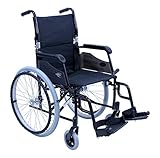
Karman Healthcare LT-980 24 lbs Ultra Light Wheelchair, Gen 2 – K Model (ASIN: B099LWZMZN)
A compact, airline-friendly manual wheelchair designed for smooth airport navigation and easy storage in flight-approved dimensions.
Pros:
- Its narrow footprint and ultralight frame allow for effortless maneuvering through TSA checkpoints and crowded terminals.
- The quick-release wheels and folding backrest dramatically reduce the chair’s overall size, making it simple to store in overhead-style compartments on some aircraft or gate-check.
- The Gen 2 model uses improved materials that increase durability without adding weight.
Cons:
- While excellent for airports, the seat width options may feel limited for seniors who prefer more spacious seating.
- Cushioning is minimal and may require an added seat pad for extended comfort.
🟦 Best Folding Travel Wheelchair (Ultra-Compact Fold)
WHLICKS Lightweight Transport Chair with Telescopic Handle, 17″ Width
An impressively compact folding design with a telescopic handle, ideal for caregivers who need fast, effortless transport.
Pros:
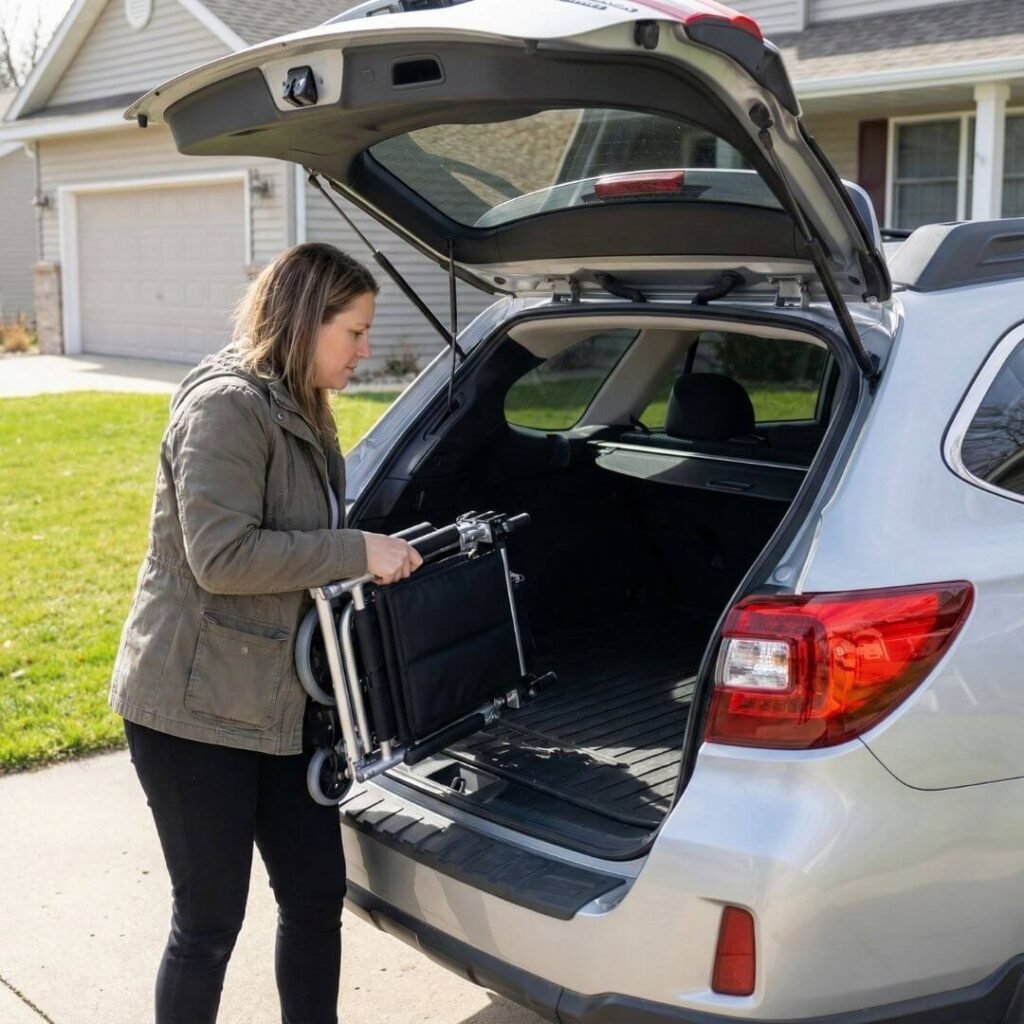
- Telescopic travel handle allows caregivers to roll the folded chair like a suitcase, reducing lifting strain and improving convenience.
- Its ultra-compact folding mechanism fits easily into small trunks, closets, and cruise ship cabins, making it perfect for on-the-go lifestyles.
- The lightweight frame supports quick deployment and easy navigation in tight spaces.
Cons:
- The narrow 17″ seat width may feel small for larger seniors or individuals who prefer more sitting room.
- The compact design limits cushioning, making it less ideal for long periods without breaks.

🟦 Best Long-Distance Travel Wheelchair (Comfort & Seating)
Karman S-305 Ergonomic Wheelchair, 18” Pearl Silver
Ergonomic engineering and premium cushioning make this chair ideal for longer outings, tours, and travel days.
Pros:
- The S-shaped ergonomic seat dramatically reduces pressure points, improving long-term comfort and decreasing risk for aching hips or lower back strain.
- Adjustable footrests, armrests, and tension back straps offer customizable comfort tailored for extended daily use.
- The durable frame and high-quality wheels provide a smooth ride on varied terrain, from airport carpets to outdoor sidewalks.
Cons:
- Weighs slightly more than ultralight transport chairs, requiring a bit more caregiver strength for loading.
- The premium ergonomic system increases cost compared to budget travel options.

🟦 Best Travel Wheelchair for Caregivers (Easy Pushing)
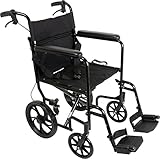
ProBasics Aluminum Transport Chair, 19” Seat
Designed for caregiver ease, featuring 12” rear wheels for improved control and reduced push effort.
Pros:
- Larger rear wheels improve grip and stability, especially on inclines, uneven surfaces, or longer airport walkways.
- The lightweight aluminum frame folds quickly and includes dependable swing-away footrests for safe transfers.
- The padded armrests provide extra comfort for seniors during extended outings.
Cons:
- This model is a transport chair, so seniors cannot self-propel; it requires a caregiver to push.
- Seat cushioning is modest, and long outings may require an upgraded seat pad.
🟦 Best Heavy-Duty Travel Wheelchair (High Weight Capacity)
Vive Mobility Bariatric Transport Wheelchair, 450 lb Capacity
A strong, supportive bariatric transport wheelchair built for stability and safe travel with higher weight limits.
Pros:
- The reinforced steel frame supports up to 450 lbs while maintaining smooth maneuverability for caregivers.
- Wide 22” seating improves comfort, pressure distribution, and stability for larger seniors.
- Swing-away leg rests and folding design allow for easy transfers and compact storage.
Cons:
- Heavier frame may require more effort when loading into vehicles.
- Not designed for self-propelling, which limits independence for some users.

🟦 Best Budget Travel Wheelchair
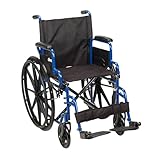
Drive Medical Blue Streak Lightweight Wheelchair, 18” Seat
A highly affordable yet reliable wheelchair for short trips, appointments, or occasional travel.
Pros:
- Offers exceptional value for families seeking quality and stability at a lower price point.
- Swing-away footrests and a flip-back armrest design improve transfer safety and caregiver convenience.
- The 18” seat strikes a good balance between comfort and compact portability.
Cons:
- Slightly heavier than ultralight models, making it less ideal for seniors who travel frequently.
- Cushioning is minimal and may need an upgraded pad for long outings.
EDUCATIONAL OVERVIEW
Travel wheelchairs differ significantly from standard wheelchairs because they are engineered with portability, efficiency, and caregiver ease as primary goals. While traditional wheelchairs focus on daily mobility and long-term seating comfort, travel models emphasize features such as quick-folding frames, lightweight materials, compact storage profiles, and smooth maneuverability in crowded or unfamiliar environments. These design priorities make them especially useful for seniors who travel by car, airplane, cruise ship, or simply enjoy outings that require longer walking distances than they can comfortably manage.
For seniors, the right travel wheelchair improves both safety and independence. A properly fitted chair helps prevent sliding, reduces pressure on the hips and lower back, and offers stability on uneven terrain like sidewalks, airports, or hotel corridors. For caregivers, a lighter and more portable chair minimizes lifting strain and reduces the effort required to push over long distances. Features such as telescopic handles, large rear wheels, or ergonomic hand grips help maintain control and reduce fatigue during extended outings.
Choosing the correct travel wheelchair also begins with understanding how it compares to other mobility options. Some seniors may benefit more from lightweight self-propelled wheelchairs for everyday use, while others may prefer transport chairs for shorter, caregiver-assisted outings. Families who are unsure which device is the best fit may find it helpful to review broader mobility considerations in our guide on How to Choose the Right Mobility Aid for Your Needs, which explains how to match mobility equipment to strength, endurance, balance, and lifestyle needs.
Ultimately, understanding the differences between these mobility devices empowers families to select a travel wheelchair that enhances comfort, protects joint health, and makes both short trips and full-day excursions easier and more enjoyable.

HOW TO USE TRAVEL WHEELCHAIRS SAFELY
Using a travel wheelchair safely requires a combination of proper fit, environmental awareness, and thoughtful planning before each outing. Seniors and caregivers should start by ensuring the chair is correctly adjusted: elbows should rest naturally at the sides, footrests should support the legs without causing the knees to hyperextend, and the seat width should allow one to two inches of space for comfortable arm movement. A well-fitted travel wheelchair reduces strain, improves posture, and makes longer outings significantly safer.
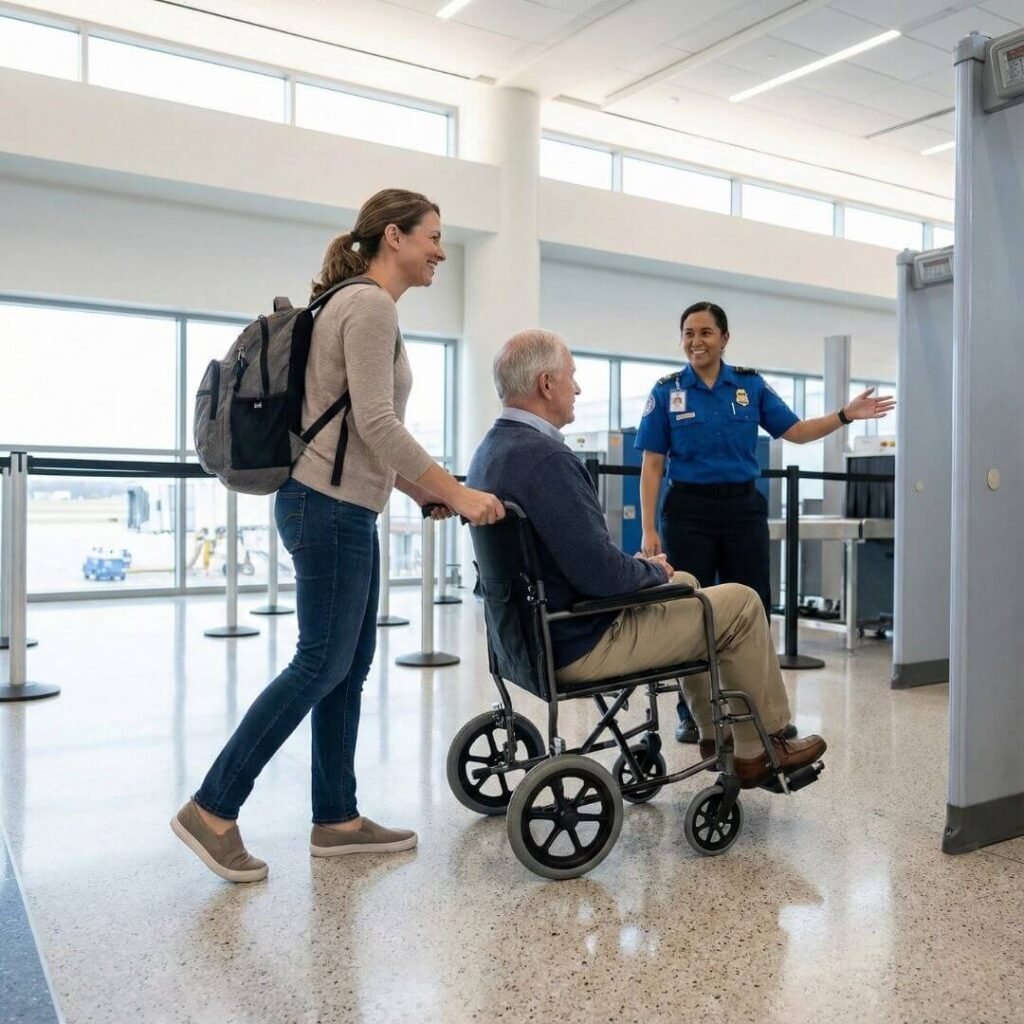
For airline travel, understanding the screening process can dramatically reduce stress. Seniors and caregivers can review the TSA’s mobility-device procedures, which outline how wheelchairs are screened, what components may be inspected, and what travelers can expect during the security process. Being familiar with these steps helps prevent delays and reassures seniors who may feel anxious about navigating TSA checkpoints, especially when mobility is limited or time is tight.
Caregivers should also pay attention to surface transitions and incline safety during travel. When approaching ramps, thresholds, or uneven sidewalks, the wheelchair should always be aligned straight rather than at an angle to prevent tipping. Families who encounter steep or irregular surfaces frequently may find additional support by reviewing the Portable Wheelchair Ramp (2025 Guide for Seniors), which explains how portable ramps can improve safety during transfers in home, vehicle, and travel environments.
Finally, regular maintenance is essential for safe travel. Caregivers should check wheels for debris, tighten loose screws, ensure brakes are responsive, and verify that folding joints operate smoothly. These simple inspections help prevent unexpected issues during busy travel days and support safer, more enjoyable experiences for both seniors and caregivers.
LIFESTYLE SYNERGY
A well-chosen travel wheelchair opens up opportunities that might otherwise feel out of reach for many seniors. Families often share that these chairs make vacations, nature trails, museums, shopping trips, and long medical visits far more enjoyable because they remove the physical barriers that limit participation. Their lightweight, compact design also helps caregivers move more freely—quickly loading the chair into a trunk, maneuvering through crowded spaces, or navigating uneven terrain without excessive effort or strain.
For airline travel, the U.S. Department of Transportation provides clear guidelines outlining how airlines must accommodate wheelchairs and assistive devices. Understanding these rights helps seniors and caregivers feel more confident during check-in, gate transfers, and boarding, especially when navigating busy airports or tight travel schedules. A travel wheelchair’s portability often makes these transitions smoother, reducing the stress associated with unfamiliar environments.
In daily life, a travel wheelchair integrates surprisingly well into home routines. Many seniors use them to move comfortably between rooms, especially in homes with long hallways or limited turning space. For families improving home safety, resources such as Tips for Making Your Home Safer for Seniors can help create an environment that supports smooth wheelchair movement and reduces fall risks around thresholds, bathrooms, and entryways.
Travel wheelchairs also support a broader lifestyle of mobility, independence, and activity. Seniors who enjoy longer outings—or who need more versatile solutions for outdoor recreation—may find it helpful to explore additional mobility tools such as those highlighted in our Best Mobility Scooters for Seniors (2025 Guide). Combining the portability of a travel wheelchair with the stamina-supporting convenience of a mobility scooter gives many older adults the freedom to choose the right device for each outing, balancing comfort, distance, and terrain.

PHYSICIAN TIPS
- Optimize posture to protect the spine. Seniors should sit with their hips positioned fully back in the seat, with the pelvis supported and the shoulders aligned directly above it. This neutral posture reduces lumbar strain, prevents sliding, and minimizes shear forces on fragile skin. Even small adjustments—such as repositioning the pelvis or slightly elevating the legs—can significantly improve spinal comfort during longer travel days.
- Use a lightweight cushion for pressure reduction. Even a thin gel, air, or foam cushion can dramatically decrease pressure on the sacrum, hips, and tailbone. This is especially valuable for seniors with reduced muscle mass, chronic back pain, or a history of skin breakdown. A travel-friendly cushion adds almost no bulk but offers substantial protection during long outings or flights.
- Encourage periodic movement and weight shifting. Long, uninterrupted sitting increases stiffness, swelling, and circulation challenges. Whenever possible, caregivers should help seniors stand for brief intervals, reposition in the chair, or lean slightly forward to release pressure from the sacral area. These small micro-movements help prevent edema and improve overall comfort during travel.
- Train caregivers in safe and efficient pushing technique. Caregivers should maintain slightly bent elbows, keep the shoulders relaxed, and use their body weight—not just arm strength—to propel the chair. Smooth, controlled movements are especially important on ramps, inclines, and uneven surfaces. Sudden directional changes should be avoided, as they can destabilize the chair or startle seniors who rely heavily on predictable balance cues.
- Support comfort and independence with appropriate transfer equipment. Many seniors find that using the right transfer tools—like lift chairs—helps reduce strain during standing, repositioning, or transitioning from bed to wheelchair before travel. Our Best Lift Chairs for Seniors (2025 Guide) covers options that promote safer transfers and help maintain joint health, especially for seniors with limited leg strength or chronic pain.
COMPARISON TABLE
FAQ
1. What is the difference between a transport wheelchair and a standard wheelchair?
A transport wheelchair has smaller rear wheels and requires a caregiver to push, making it lighter and more compact for travel. Standard wheelchairs have larger rear wheels that allow the user to self-propel, but they tend to be heavier and less convenient for frequent loading and unloading.
2. Are travel wheelchairs allowed on airplanes?
Yes, all travel wheelchairs are allowed on airplanes, including manual, folding, and transport models. Airlines must accommodate them, and many models can be gate-checked or stored onboard depending on aircraft size. Reviewing airline and DOT guidelines before flying ensures smooth preparation.
3. How do I choose the correct seat width for my senior loved one?
Seat width should allow 1–2 inches of space between the hips and armrests for comfort and stability. Too narrow a seat may cause pressure points, while too wide a seat increases sliding or leaning, which impacts safety and posture.
4. Is a lightweight wheelchair strong enough for everyday use?
Modern lightweight wheelchairs use advanced aluminum or reinforced materials that provide excellent durability. Many ultralight models withstand daily use, though heavy-duty or bariatric chairs may be better for larger individuals or frequent long-distance travel.
5. Do travel wheelchairs work well on uneven surfaces?
Transport chairs with 12” rear wheels and reinforced frames handle uneven pavement better than ultralight compact chairs. Larger wheels reduce vibration and make propulsion smoother for caregivers.
6. Can seniors self-propel in a travel wheelchair?
Most travel wheelchairs are transport chairs requiring caregiver assistance, but some lightweight manual models allow seniors to self-propel. The best option depends on the senior’s shoulder strength, mobility, and comfort with manual propulsion.
7. How do I clean and maintain a travel wheelchair?
Wipe down the frame regularly, clean wheels to remove debris, and inspect screws and brakes after trips. For long-distance travel, ensure all folding components move smoothly and check for any loose parts after airline handling.
FINAL THOUGHTS
A good travel wheelchair can transform the way seniors experience the world. Whether heading to the airport, exploring a cruise ship, or simply visiting family, these chairs provide freedom, support, and comfort in ways that significantly improve overall quality of life. With the right model — matched to the senior’s needs, caregiver preferences, and travel plans — mobility becomes smoother, safer, and far more enjoyable.
Medical Disclaimer: This guide is for general educational purposes only and is not intended to serve as personalized medical advice, diagnosis, or treatment. Always consult a licensed healthcare professional for recommendations tailored to your specific medical condition, mobility needs, or safety concerns.
Last update on 2026-04-02 / Affiliate links / Images from Amazon Product Advertising API