

Introduction
Caring for an aging loved one is one of the most selfless things a person can do, but it comes with physical demands that many families underestimate until the damage is already done. Caregiver injury prevention is a topic that rarely comes up until a back gives out, a shoulder tears, or chronic pain makes it impossible to continue providing care. The truth is that helping a senior with everyday tasks like getting out of bed, using the bathroom, or getting dressed places real strain on the caregiver’s body, and without the right techniques and tools, that strain compounds over time.
The data is consistent across studies. Research shows that over half of all family caregivers experience physical injuries related to lifting, transferring, or repositioning an older adult. Back injuries are the most common, followed by shoulder, neck, and knee problems. Many of these injuries are not the result of a single dramatic event. They build gradually through repeated movements performed with poor body mechanics.
This guide covers the most common ways caregivers get hurt, the body mechanics and techniques that reduce risk, the equipment that makes a real difference, and the self-care habits that keep you physically capable of continuing the care your loved one needs. Protecting yourself is not a secondary concern. It is a prerequisite for being able to protect them.
Why Caregiver Injuries Are More Common Than You Think
Most family caregivers step into the role without formal training in body mechanics or safe lifting. Unlike nurses in clinical settings, they work alone, without assistive equipment, in homes with narrow hallways, low beds, and bathrooms never built for two people. According to the Centers for Disease Control and Prevention (CDC), as many as 94 percent of caregivers report physical pain they attribute to caregiving, and over 50 percent say those injuries significantly affect their wellbeing.
The most common situations that lead to injury include pulling a person in bed into a sitting position, transferring someone from bed to wheelchair, helping a senior in and out of a bathtub, and catching a senior during a fall. Each involves lifting, twisting, or holding weight in positions that stress the spine, shoulders, and knees. For a deeper look at the physical toll this takes, our article on caregiver back pain covers the causes, warning signs, and safer techniques in detail.
Many caregivers push through pain because they feel they have no choice. They do not realize that an alternative technique or a simple piece of equipment could eliminate the strain. Caregiver injury prevention is not about doing less. It is about doing it in a way that keeps both of you safe.
The Three Pillars of Caregiver Physical Safety
Professional caregiver training organizes physical safety around three core areas that apply directly to family caregivers at home.
The first pillar is body mechanics. This means keeping your back straight, bending at the knees instead of the waist, holding the person close to your center of gravity, and avoiding twisting while bearing weight. Most caregiver back injuries happen not because the task is too heavy, but because posture put all the load on the wrong muscles. Correct body mechanics is the foundation of caregiver injury prevention, and it costs nothing to implement.
The second pillar is equipment and environment. Gait belts, transfer boards, shower chairs, bed rails, raised toilet seats, and adjustable beds all reduce strain on the caregiver. The home environment matters too. A cluttered room, a low bed, or a bathroom without grab bars forces the caregiver into positions that increase injury risk.
The third pillar is physical conditioning and self-care. Caregivers who stretch regularly, maintain core strength, and get adequate rest are significantly less likely to sustain injuries. Self-care is not a luxury. Skipping it accelerates the timeline toward an injury that could take you out of the caregiving role entirely.
How Caregiver Injuries Happen in Everyday Situations
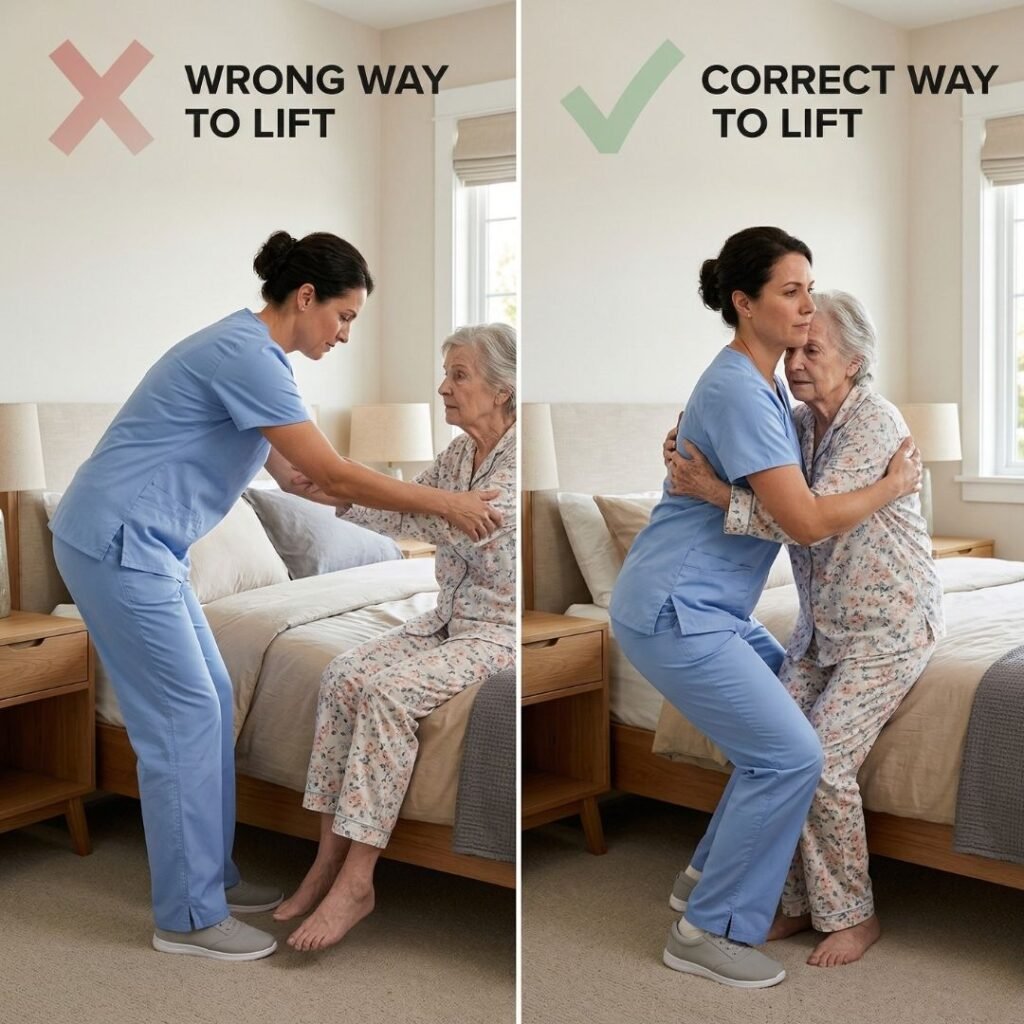
Caregiver injuries rarely happen in dramatic, obvious ways. They build during the ordinary, repetitive tasks that make up the daily routine. One of the most common scenarios involves getting a senior out of bed in the morning. The caregiver leans forward over the mattress, reaches across the person’s body, and pulls them into a sitting position using their arms and back. This motion forces the lumbar spine into a flexed, loaded position, which is the single most damaging posture for the lower back. Done once, it may cause no noticeable harm. Done every morning and evening for weeks or months, it gradually damages the discs and muscles until a sudden sharp pain makes the caregiver unable to continue.
Wheelchair transfers are another high-risk task. The caregiver stands in front of the senior, grips them under the arms, and pulls them upward and across into the wheelchair. This places enormous strain on the shoulders and lower back simultaneously, especially if the senior cannot bear much of their own weight. If the senior’s foot catches on the footrest, the caregiver may twist suddenly under load, which is one of the fastest ways to herniate a disc.
Bathroom assistance combines physical strain with environmental hazards in a way that makes it one of the most dangerous rooms for both the senior and the caregiver. Helping a senior step over a tub ledge, lowering them onto a toilet, or supporting them during a shower all involve bending, bracing, and holding weight in confined, slippery spaces.
Finally, many caregivers injure themselves trying to catch a senior who is falling. The instinct to grab and hold is natural, but the sudden, unpredictable load of another person’s full body weight can cause immediate injury. Safe lifting techniques for caregivers include knowing how to guide a controlled descent to the ground rather than trying to stop a fall in progress, which protects both people from more serious harm.
Safe Lifting and Transfer Techniques
The single most effective step in caregiver injury prevention is learning correct lifting technique. Stand with feet shoulder-width apart, one foot slightly ahead. Bend your knees, not your waist. Keep your back straight and core engaged. Bring the senior as close to your body as possible before lifting. The farther the weight is from your center of gravity, the more force your spine absorbs.
When helping a senior stand from a chair or bed, have them scoot to the edge first. Place a gait belt around their waist and grip it with an underhand hold. On a count of three, the senior pushes up with their arms while you guide them by lifting the belt. Your job is to stabilize and guide, not haul them to their feet. If they cannot push up at all, they likely need a mechanical lift.
For bed-to-wheelchair transfers, position the wheelchair at a slight angle with brakes locked. Using the gait belt, pivot the senior by turning your feet, not your torso. Twisting under load is one of the most dangerous movements a caregiver can make. The American Academy of Orthopaedic Surgeons (AAOS) provides additional step-by-step guidance designed for home caregivers.
If a senior begins to fall, do not try to catch their full weight. Step close, brace their body against yours, bend your knees, and guide them slowly to the ground. Once they are safe, call for help rather than attempting to lift them alone from the floor.
Reducing Strain During Bathing, Dressing, and Daily Care
Lifting and transfers get the most attention in discussions about caregiver safety, but the smaller, more repetitive tasks of daily care are just as capable of causing injury over time. Bathing, dressing, grooming, and toileting all involve sustained bending, reaching, and holding positions that wear down the back, shoulders, and knees gradually.
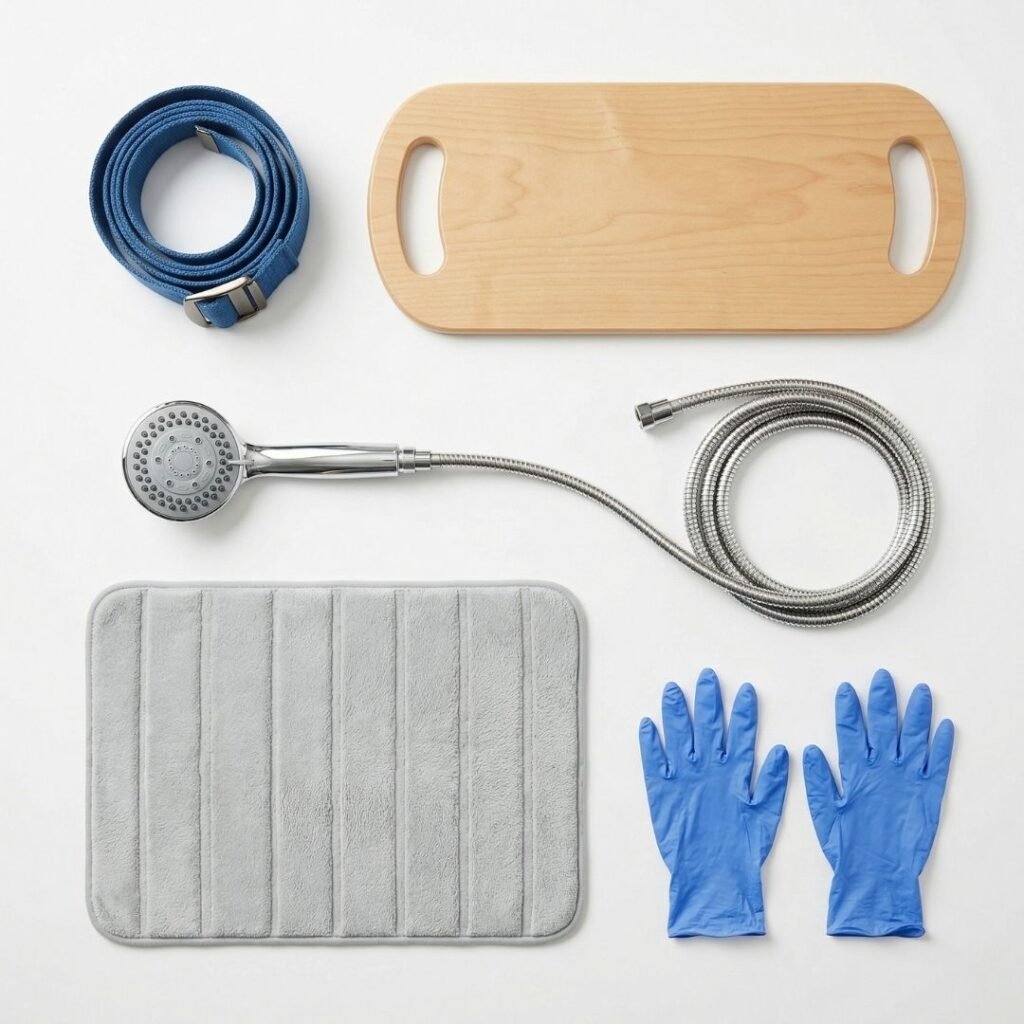
In the bathroom, the most effective change a caregiver can make is to eliminate the need to support the senior’s weight manually during bathing. A sturdy shower chair or transfer bench allows the senior to sit while bathing, which means the caregiver is no longer bracing against a standing person on a wet surface. A handheld showerhead on a slide bar gives the caregiver control over water direction without needing to lean across the tub. Grab bars placed at the right height allow the senior to assist with their own transfers, which reduces the caregiver’s load. For a complete guide to these modifications, our guide on how to help a senior shower safely covers the full range of modifications and techniques.
When helping a senior dress, have them sit on the bed edge or a sturdy chair rather than standing. Front-opening shirts and elastic-waist pants reduce the physical manipulation needed. A long-handled shoehorn and sock aid eliminate the deep bending that strains the lower back during footwear assistance.
For toileting, a raised toilet seat reduces the sit-to-stand depth for both the senior and caregiver. Toilet safety frames or grab bars give the senior something to push against. Across all daily tasks, the same caregiver safety tips apply: reduce the distance between you and the person, avoid bending at the waist, use equipment wherever possible, and never twist your torso while bearing weight.
Physical Conditioning and Self-Care for Caregivers
Even with perfect body mechanics and good equipment, caregiving places sustained physical demand on the body that requires maintenance. A caregiver who is physically deconditioned, chronically fatigued, or dealing with untreated pain is at dramatically higher risk of injury than one who invests even a small amount of time in their own wellbeing.
Core strength is the most important physical asset a caregiver can develop. The muscles of the abdomen, lower back, and hips work together to stabilize the spine during every lift, transfer, and bending motion. A weak core forces the lower back to absorb loads it was not designed to handle alone. Simple exercises like planks, bridges, and bird-dogs performed ten to fifteen minutes a day can meaningfully strengthen the core within a few weeks. These exercises require no equipment and can be done in a small space.
Stretching is equally important, particularly for the muscles that tighten during caregiving activities. The hip flexors, hamstrings, chest muscles, and upper back all tend to shorten and stiffen when a person spends extended time bending and leaning forward. A brief daily stretching routine targeting these areas reduces the chronic stiffness many caregivers mistake for normal aging rather than occupational strain.
Rest is not optional. Fatigue degrades body mechanics faster than anything else. A caregiver who is exhausted will instinctively cut corners on lifting technique because their muscles cannot sustain the correct posture. If you are consistently too tired to maintain proper form during transfers, that is a signal you need more help, not more effort. Asking a family member or respite care service to cover even a few hours a week gives your body the recovery time it needs.
Finally, do not ignore pain. A sore back after caregiving is not a badge of honor. It is an early warning sign. If pain persists beyond a day or two, or worsens during specific tasks, consult a physician or physical therapist. Early intervention is far less costly than treating a chronic injury that has been ignored for months.

Special Considerations for Heavier Seniors, Dementia, and Solo Caregiving
The general principles of caregiver injury prevention apply broadly, but certain circumstances require additional strategies.
When caring for a heavier or larger senior, the margin for error in body mechanics shrinks significantly. A 200-pound person requires substantially more force to transfer than a 130-pound person, and the consequences of poor posture are more immediate and severe. For seniors above a certain weight or with very limited mobility, manual lifting should be replaced entirely by mechanical assistance. A Hoyer lift or sit-to-stand lift transfers a person safely without requiring the caregiver to bear any of the senior’s weight. These devices are available for home use and are often covered by insurance with a physician’s order. If you are consistently straining to move a heavier senior, that is a clear signal the current approach has crossed from difficult to unsafe.
Caring for a senior with dementia or cognitive decline introduces unpredictability into every physical interaction. A person with dementia may resist transfers, grab the caregiver unexpectedly, shift their weight without warning, or become agitated mid-lift. These sudden, uncontrolled movements are a major source of caregiver injuries because they force the caregiver to react with muscle groups that were not braced for the load. Move slowly and communicate each step before you do it. Use a calm, steady voice and give the person time to process. Avoid rushing, even when the person is resistant, because hurrying almost always leads to an abrupt movement that puts both of you at risk.
Solo caregivers who have no regular help face the highest risk for chronic overuse injuries because they perform every transfer, every lift, and every assist without a partner. If you are caregiving alone, invest in equipment aggressively. A gait belt, transfer board, and shower chair are not conveniences. They are necessities. Build a network of people you can call for help with heavier tasks. Prioritize your own rest and conditioning even more deliberately than a caregiver who has support. Our step-by-step guide on how to safely reposition seniors in bed covers specific techniques that protect both the caregiver and the senior during one of the most physically demanding daily tasks.
Frequently Asked Questions
1. What is the most common injury caregivers experience when helping seniors?
Lower back injury is by far the most common. It typically results from repeated lifting, bending, and twisting motions performed with poor body mechanics over weeks or months. The lumbar spine absorbs the majority of the force during transfers, especially when the caregiver bends at the waist instead of the knees or holds the senior too far from their body. Shoulder injuries and knee problems are the next most common.
2. How should a caregiver safely lift or transfer an elderly person?
Start by standing with your feet shoulder-width apart and one foot slightly ahead. Bend at the knees, keep your back straight, and engage your core. Bring the senior as close to your body as possible before lifting. Use a gait belt around their waist for a secure grip. Have the senior assist by pushing up with their arms if they are able. Pivot your feet to turn rather than twisting your torso. If the senior cannot bear any of their own weight, use a mechanical lift instead of attempting a manual transfer.
3. What assistive devices can help caregivers avoid injury?
The most impactful devices include a gait belt for secure grip during transfers, a transfer board for sliding a person between surfaces without lifting, a shower chair or transfer bench for seated bathing, a raised toilet seat to reduce sit-to-stand depth, grab bars to give the senior independent support, and a mechanical lift for seniors who cannot bear weight. Each of these reduces or eliminates the need for the caregiver to manually bear the senior’s weight.
4. How can caregivers protect their back while bathing or dressing a senior?
Use a shower chair for seated bathing and a handheld showerhead to avoid leaning. During dressing, have the senior sit so you are not supporting their balance simultaneously. Use adaptive clothing and long-handled tools to eliminate deep bending.
5. When should a caregiver stop lifting a senior and get professional help instead?
If you consistently experience pain during transfers, the senior cannot assist with their own weight, or they have unpredictable movements due to dementia, it is time for professional support. This could mean a home health aide, physical therapist consultation, or a mechanical lift.
Final Thoughts
Caregiver injury prevention is not a secondary topic that can wait until something goes wrong. It is a daily practice that should be built into the way care is provided from the beginning. Learn to bend at the knees instead of the waist. Use a gait belt during every transfer. Set up the bathroom with a shower chair and grab bars. Stretch for ten minutes a day. Ask for help before your body forces you to.
You cannot safely care for someone else if your own body is breaking down. Protecting yourself is the most responsible thing you can do for the person who depends on you. The techniques, equipment, and habits in this guide are all within reach, and your loved one needs you healthy, strong, and present for the long road ahead.
Medical Disclaimer: The information provided on this website is for educational purposes only and should not replace professional medical advice. Always consult your physician or qualified healthcare provider regarding any medical condition or treatment decisions.