

Introduction
Helping an older adult move from lying down to standing may seem simple, but it carries real risks. Falls often occur during transitions, especially when someone is weak, dizzy, or recovering from illness. Many serious injuries, including hip fractures and head trauma, happen during routine movements inside the bedroom. Even a short loss of balance while sitting up can lead to a fall if the floor is hard or cluttered. Proper technique reduces injury for both the senior and the caregiver. Understanding safe methods for help getting out of bed for elderly adults is essential in preventing fractures, muscle strain, and loss of confidence.
Bed transfers require coordination between muscles, joints, blood pressure regulation, and balance. For example, when a person sits up too quickly, blood pressure may drop suddenly. This can cause lightheadedness or blurred vision. A senior who recently had surgery, has arthritis, or takes blood pressure medication may be at even higher risk. Muscle weakness in the hips and thighs can also make standing difficult, leading to rocking motions or pulling on unstable furniture.
Caregivers are also at risk. Lifting incorrectly can cause back strain, shoulder injuries, or long-term spine problems. A common mistake is pulling under the arms, which can injure the senior’s shoulders and does not provide stable support. Safe transfers protect both people involved.
This guide explains how bed transfers work, why they matter, and how to perform them safely. It includes clear steps, practical examples, and medical reasoning behind each recommendation. The goal is not just movement, but stability, dignity, and independence. When done correctly, daily bed transfers can strengthen confidence rather than create fear.
Why Bed Transfers Are High-Risk Moments
Most falls do not happen during walking long distances. They happen during transitions. Moving from bed to standing involves balance, coordination, strength, blood pressure adjustment, and spatial awareness. Several body systems must work together in a short period of time. When any of these systems are impaired, the risk increases.
For example, when a person lies flat for several hours, blood pools more evenly in the body. When they suddenly sit or stand, gravity pulls blood toward the legs. If the heart and blood vessels do not respond quickly, the brain may briefly receive less blood flow. This can cause dizziness, blurred vision, or a feeling of “blacking out.” Even a few seconds of imbalance can lead to a fall.
Research from the CDC fall prevention guidance shows that one in four adults over age 65 experiences a fall each year. Many of these incidents occur in the bedroom. Early morning and nighttime are especially risky because muscles are stiff, lighting is low, and individuals may feel groggy.
Older adults may struggle during bed transfers for several reasons. Muscle strength decreases with age, especially in the hips and thighs. These muscles are essential for standing. If they are weak, the person may rock back and forth several times before rising. That rocking motion can shift weight unevenly and cause loss of balance.
Joint stiffness can also limit smooth movement. Arthritis in the knees or hips may cause pain when bending. As a result, the person may move slowly or avoid placing full weight on one leg. This uneven weight distribution increases instability.
Vision changes affect depth perception and contrast sensitivity. In dim lighting, it may be difficult to judge how far the floor is from the bed. A dark rug on a dark floor may blend in, increasing the chance of tripping.
Blood pressure medications can cause lightheadedness when standing too quickly. Diuretics may increase nighttime bathroom trips, which means more transfers in low light. Even mild dehydration may increase dizziness and fatigue. For example, a senior who has had a stomach illness or has not been drinking enough fluids may feel weak upon sitting up.
Chronic conditions further increase risk. Parkinson’s disease may cause delayed movement initiation. After a stroke, one side of the body may be weaker. Individuals with diabetes may have reduced sensation in their feet, affecting balance feedback.
If a senior has recently experienced a fall, understanding broader understanding fall risks in seniors is important. A previous fall significantly raises the chance of another one. Bed transfers are often the starting point for prevention planning because they happen daily and involve multiple risk factors at once. Addressing this moment carefully can prevent more serious injuries later.
The 3 Pillars of Safety
Safe bed transfers rest on three pillars: preparation, body mechanics, and environmental safety. When all three are addressed together, the risk of falling decreases significantly.
Preparation begins before any movement happens. The senior should be fully awake and oriented. For example, if someone has just woken up from deep sleep, give them a few moments to adjust before asking them to sit up. Sudden movement while groggy can lead to confusion or dizziness. Encourage them to take a few slow, deep breaths. Ask simple questions such as, “Do you feel steady?” or “Are you dizzy?” This brief pause allows the body to adjust from a lying position. If the person takes medications that affect blood pressure, waiting 30 to 60 seconds before sitting upright can prevent lightheadedness. Preparation also includes making sure glasses or hearing aids are within reach so the person is fully aware of their surroundings.
Body mechanics apply to both the older adult and the caregiver. The senior should move in controlled stages. For example, instead of trying to sit straight up, they should roll onto their side first. Then, they can push up with their arms while lowering their legs off the bed. This divides the effort across multiple muscle groups. Standing should also be gradual. Leaning slightly forward with feet flat on the floor helps shift weight safely.
The caregiver must protect their own spine while assisting. Bending at the knees rather than the waist keeps the back aligned. Standing close to the person provides better stability than reaching from a distance. Avoid pulling under the arms, as this can strain shoulder joints. Instead, provide light support at the upper back or forearm while allowing the senior to do as much of the movement as they safely can. If the caregiver feels they are lifting too much weight, the task may require additional assistance or adaptive equipment.
Environmental safety includes bed height, lighting, and floor conditions. The bed should be roughly knee-height when the senior stands. If the bed is too high, feet may not touch the floor firmly, leading to instability. If too low, extra strain is placed on the hips and knees. Lighting should be bright enough to clearly see the floor and nearby furniture. Nightlights can reduce risk during early morning hours. Floors must be clear of cords, rugs, and clutter. For example, a small area rug near the bed can slide unexpectedly, even if it appears stable. Footwear should have non-slip soles rather than smooth socks.
These pillars are consistent with recommendations from the National Institute on Aging fall prevention advice, which emphasizes balance, environmental awareness, and safe movement strategies. Addressing preparation, movement technique, and surroundings together creates a safer transfer process and supports long-term independence.
What Actually Happens During a Bed Transfer
Understanding the mechanics of standing helps explain why careful technique matters. A bed transfer may look simple, but inside the body, several systems are adjusting at the same time.
When a person lies flat, blood is evenly distributed throughout the body. When they sit up suddenly, gravity pulls blood toward the legs. If the heart and blood vessels do not adjust quickly, the brain receives slightly less blood flow for a brief moment. Dizziness, blurred vision, or a “floating” sensation may occur. This is called orthostatic hypotension. For example, a senior who quickly sits upright after waking may suddenly feel lightheaded and reach for unstable furniture. That brief imbalance can lead to a fall.
At the same time, muscles must coordinate movement. The hip flexors help bring the torso forward. The abdominal muscles stabilize the trunk. The arms push against the mattress to lift the upper body. If these muscles are weak, the person may struggle to sit upright smoothly. They may lean too far forward, shift sideways, or use quick jerking movements. Each of these increases the risk of losing balance.
Once seated, balance shifts again when transitioning to standing. The quadriceps in the thighs and the gluteal muscles in the hips must activate to lift the body. If these muscles are weak, the person may rock back and forth several times before standing. Rocking changes weight distribution and can cause the feet to slide. If footwear is unstable or the floor is slippery, traction is lost. For example, smooth socks on tile flooring create very little grip.
These small physiological shifts explain why step-by-step progression is safer than quick movement. Slowing down allows the cardiovascular and muscular systems to adjust gradually.
Step-by-Step Technique for Sitting Up
Safe movement begins with repositioning in bed. If you are unfamiliar with repositioning, review our guide on safely reposition seniors in bed before attempting transfers.
The first step is rolling to the side. Encourage the senior to bend their knees slightly and turn toward the edge of the bed. This position shortens the lever arm of the torso, making it easier to move. Rolling reduces strain compared to trying to sit straight up from a flat position. For example, asking someone to perform a full sit-up requires significant abdominal strength, which many older adults do not have.
Once on their side, they should lower their legs gently off the bed while pushing up with their arms. The downward weight of the legs helps counterbalance the upward movement of the torso. This creates a smoother motion. If one arm is weaker due to arthritis or prior injury, allow the stronger arm to take more of the load.
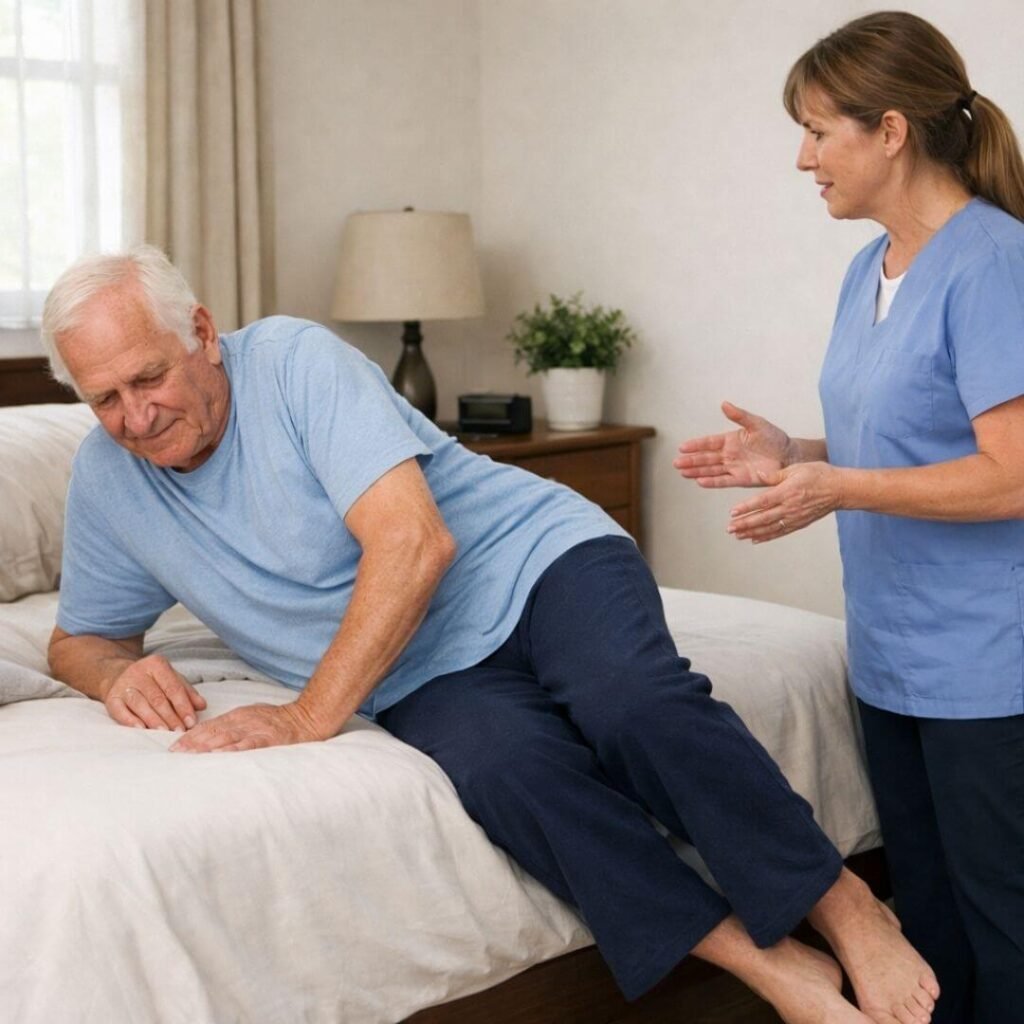
Pause once seated. Let the senior sit for 30 to 60 seconds. Ask how they feel. Watch for pale skin, slowed speech, or swaying. Encourage slow breathing. If dizziness occurs, remain seated longer before attempting to stand.
Feet should be flat on the floor, shoulder-width apart. Knees should be bent at roughly a right angle. Shoes with non-slip soles provide better traction than socks. For example, rubber-soled walking shoes are safer than loose slippers.
If assistance is needed, stand close but avoid pulling under the arms. Pulling can injure the shoulders and does not provide stable support. Instead, offer light contact at the upper back and forearm. Keep your knees slightly bent and your spine neutral. Stay close enough that you can stabilize quickly if balance shifts.
Assisting to Stand Safely
Standing should be deliberate and coordinated. Ask the senior to lean slightly forward, bringing their nose over their toes. This shifts the center of gravity forward, making standing easier. Without this forward lean, the body remains too far back, requiring more effort to rise.
Encourage them to push through their legs rather than pulling on you. If they tend to grab nearby furniture, ensure that surface is stable. For example, a lightweight bedside table may tip if used for support.
If strength is limited, devices may help. For example, our review of standing aids for seniors explains options that provide mechanical leverage without requiring heavy lifting. These tools allow the person to use their own strength more effectively.
The caregiver should avoid lifting. Instead, guide and stabilize. If the senior cannot bear weight through their legs at all, a full lift by an untrained caregiver may cause injury. In such cases, professional evaluation is recommended.
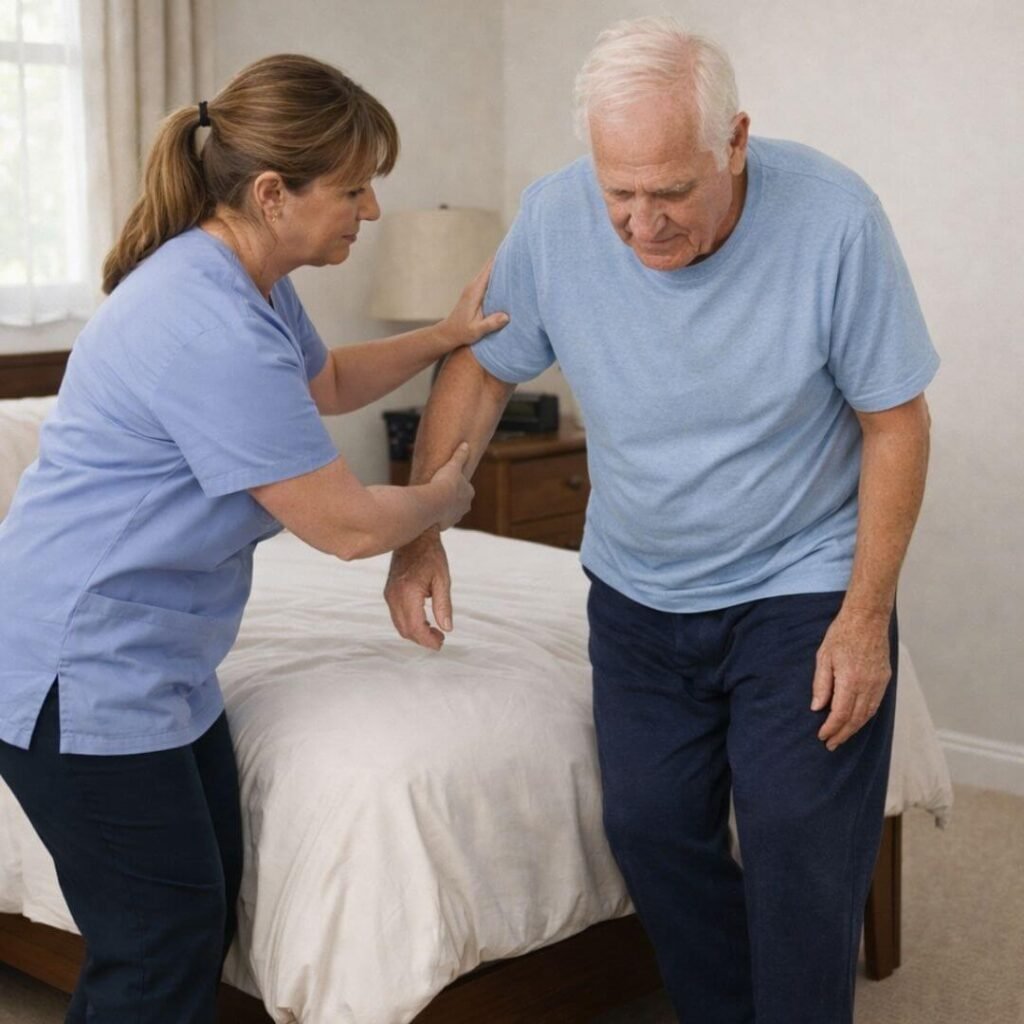
Once upright, pause again. Allow the body to adjust. Many falls happen in the first few seconds after standing. The person may feel steady at first, then experience delayed dizziness. Holding a stable surface for several moments can prevent sudden imbalance.
Encourage the senior to focus on a stable object at eye level, such as a wall or doorway. This visual reference helps maintain equilibrium.
Environmental Setup and Prevention
A safe environment reduces risk significantly. Bed height is critical. Ideally, when seated at the edge of the bed, the senior’s feet should rest flat with knees at roughly 90 degrees. If the bed is too high, the feet may dangle, reducing stability. If too low, extra force is required from the hips and knees, which may cause pain.
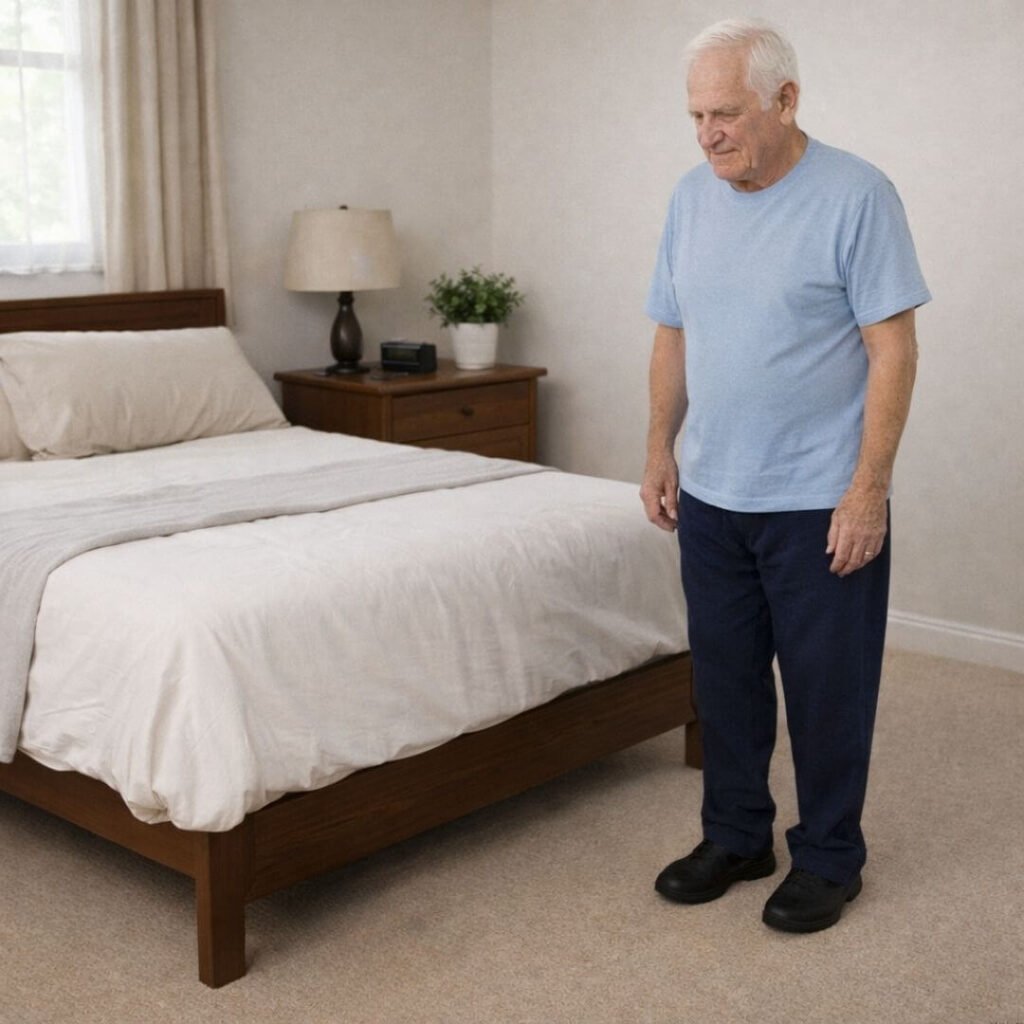
Loose rugs should be removed. Even rugs with non-slip backing can shift over time. Adequate lighting, especially during nighttime bathroom trips, prevents missteps. Consider nightlights with soft illumination along the path to the bathroom.
Non-slip mats can improve traction near the bedside. Reviewing broader home modifications in Tips for Making Your Home Safer for Seniors may offer additional insights.
Cluttered floors increase risk. Shoes should be stable and supportive, with firm soles and good grip. Avoid backless slippers, which can slide off during movement. Keep commonly used items, such as walkers or canes, within easy reach before the person attempts to stand.
Environmental adjustments may seem small, but they contribute meaningfully to fall prevention. Consistency in setup is also important. Moving furniture frequently can disrupt familiar walking paths.
Medical and Functional Factors
Certain medical conditions require extra caution.
Arthritis limits joint flexibility and can make pushing up from the mattress painful. In this case, allowing extra time and using firmer mattress surfaces may help. Gentle stretching before rising may reduce stiffness.
Parkinson’s disease may cause freezing episodes, where the body feels stuck during movement. Counting aloud or using rhythmic cues can sometimes help initiate motion. Stroke survivors may have one-sided weakness. Position the stronger side toward the edge of the bed when possible to allow better leverage.
Cardiovascular conditions may increase dizziness when standing. Encourage slow transitions and hydration. Dehydration reduces blood volume and may worsen orthostatic symptoms. For example, a senior who has not consumed enough fluids overnight may feel more lightheaded in the morning.
Cognitive impairment adds another layer of complexity. Clear, simple instructions are essential. Break tasks into single steps, such as “Roll onto your side,” then “Sit up slowly.” Demonstrate movements slowly and maintain eye contact to reinforce understanding.
After a fall, it is important to assess recovery carefully. Our article on How to Care for Seniors After a Fall explains safe monitoring strategies, including when to seek medical attention.
If weakness is severe or transfers remain unsafe despite adjustments, physical therapy evaluation may be appropriate. Therapists can teach tailored exercises that improve leg strength, balance, and coordination. Strengthening the quadriceps and hip muscles often leads to safer standing over time.
Addressing medical, physical, and cognitive factors together ensures safer daily movement and supports long-term independence.
Frequently Asked Questions
1. How do you help an elderly person get out of bed safely?
Begin by rolling them onto their side, lowering their legs off the bed, and allowing them to push up with their arms. Pause once seated, then assist them to stand using stable support without lifting under the arms. Controlled, gradual movement reduces fall risk.
2. What device helps elderly get out of bed?
Transfer handles, standing aids, and properly positioned bed rails may assist individuals who can bear weight but need leverage. Devices should match the person’s strength and mobility level.
3. What is the safest way to lift a senior from bed?
Manual lifting should be avoided when possible. Encourage weight-bearing and guided assistance rather than lifting. If full lifting is necessary, seek professional instruction to avoid injury.
4. Why do elderly people struggle getting out of bed?
Muscle weakness, joint stiffness, dizziness, medication side effects, and balance changes all contribute. Transitions challenge multiple systems at once.
5. How high should a bed be for elderly safety?
The bed should allow feet to rest flat on the floor with knees at approximately 90 degrees. Too high increases fall risk; too low increases strain.
Final Thoughts: Supporting Safety and Independence
Helping a senior move safely from bed to standing is more than a physical task. It protects dignity, preserves independence, and reduces injury risk. Small adjustments in technique and environment make a meaningful difference.
Fall prevention requires awareness, patience, and consistency. By applying gradual movement, proper body mechanics, and environmental safety, caregivers create a stable foundation for mobility.
Bed transfers are daily events. When done safely, they build confidence rather than fear.
Understanding safe methods for bed transitions empowers both caregivers and older adults. Thoughtful, steady support fosters long-term mobility and reduces preventable harm.
Medical Disclaimer: The information provided on this website is for educational purposes only and should not replace professional medical advice. Always consult your physician or qualified healthcare provider regarding any medical condition or treatment decisions.