
Introduction
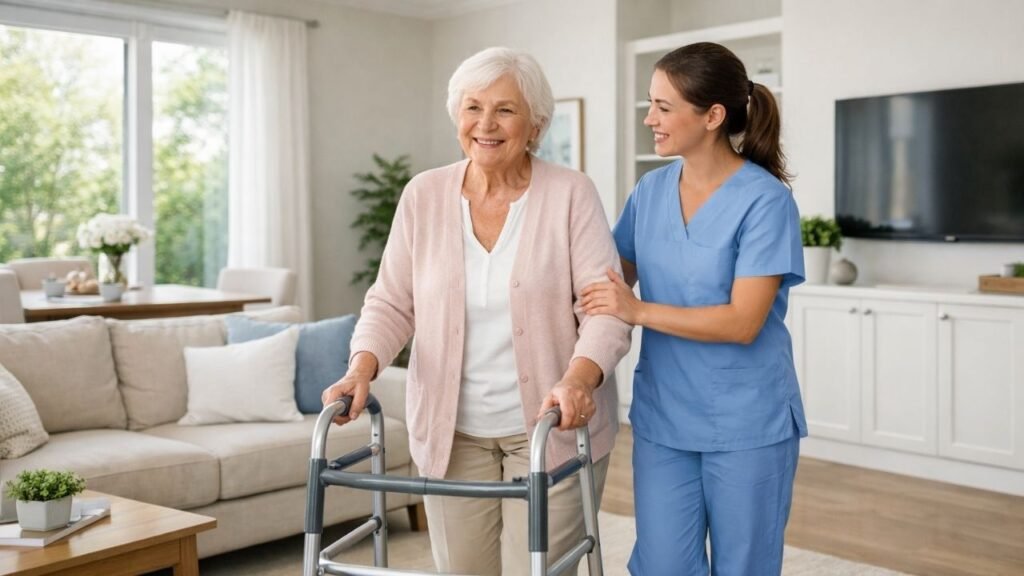
Mobility is one of the strongest predictors of independence in older adults. The ability to stand, walk, turn, and safely move through the home determines whether a person can continue bathing independently, preparing meals, and participating in family life. As the body ages, natural changes occur in muscle strength, joint flexibility, reflexes, and balance. These changes do not happen overnight. They develop gradually, often unnoticed, until a fall or near-fall signals that something has shifted.
Helping elderly with mobility requires more than physical assistance. It requires awareness, planning, and prevention. Caregivers play a critical role in identifying subtle warning signs and adjusting the environment before an injury occurs. A senior who begins holding onto furniture while walking, hesitates before stepping into the shower, or avoids stairs is often communicating that movement feels less secure.
Medical research consistently shows that falls are one of the leading causes of injury in adults over 65. Many of these incidents occur at home and are preventable. When caregivers understand how strength, vision, and environment interact, they can reduce risk while preserving dignity. The goal is not to restrict movement, but to create conditions where safe movement is possible.
This guide explores the caregiver’s role in maintaining mobility, common risks to watch for, and practical strategies that support safer daily routines.
The Caregiver’s Role in Supporting Senior Mobility
Caregivers serve as observers, supporters, and safety planners. Their role is not simply to assist when asked, but to anticipate risks and reduce them before harm occurs. Mobility support begins with careful observation. A caregiver may notice that a loved one takes longer to rise from a chair or appears unsteady when turning quickly. These small changes are early indicators that strength or balance may be declining.
In many cases, older adults do not report mobility concerns because they fear losing independence. They may downplay near-falls or brush off dizziness. A calm and supportive conversation can uncover important details. Asking open-ended questions such as, “Do you ever feel unsteady when walking to the bathroom at night?” often reveals concerns that might otherwise remain hidden.
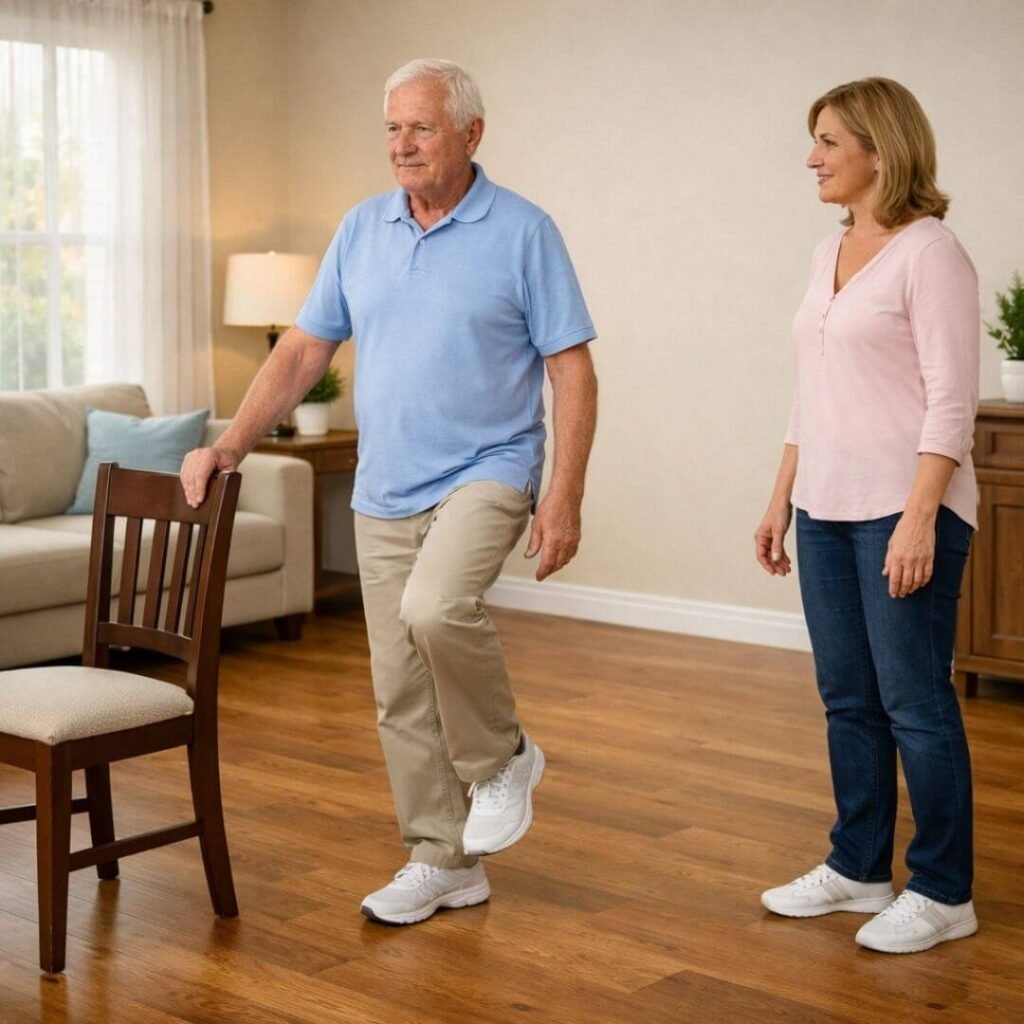
Supporting mobility also involves encouraging safe physical activity. Muscles weaken quickly when unused. Even short periods of inactivity can reduce strength and increase fall risk. Caregivers can help by promoting simple daily habits to improve senior mobility such as supervised walking, light resistance exercises, or chair-based movements. These activities preserve muscle mass and joint flexibility. Over time, consistent movement improves confidence.
Environmental assessment is another essential responsibility. A caregiver should walk through the home and view it from the perspective of someone with slower reflexes and reduced balance. Are there cords across walkways? Is lighting dim in hallways? Does the bathroom lack grab bars? Small adjustments can prevent major injuries. Reviewing guidance on understanding fall risks in seniors can also help caregivers recognize common environmental dangers.
Emotional support is equally important. Fear of falling often leads seniors to move less, which weakens muscles further. This cycle can accelerate decline. Encouragement and reassurance help break that pattern. When older adults feel supported rather than controlled, they are more likely to participate in mobility-preserving activities.
The caregiver’s role is proactive. It combines medical awareness, environmental planning, and compassionate communication.
Understanding Why the Bathroom Is a High-Risk Area
The bathroom is one of the most dangerous rooms in the home for older adults. Several factors converge in this space. Hard surfaces such as tile and porcelain provide no cushioning in the event of a fall. Water reduces friction, making floors slippery. Steam can cloud vision, and space is often limited.
Transitions are frequent in the bathroom. A person must move from standing to sitting on the toilet, then back to standing. In the shower, they may step over a tub wall, shift weight to wash, and turn on wet surfaces. Each of these actions challenges balance.
Consider a common scenario. An older adult wakes during the night and walks to the bathroom in dim light. Their blood pressure may drop slightly when standing, causing brief dizziness. They rush due to urgency. The floor near the sink is slightly damp from earlier use. In that moment, a minor slip can lead to a fracture.
Low toilet seats present another risk. Deep bending requires strong thigh muscles. If strength has declined, rising becomes difficult. The individual may push off unstable surfaces, increasing the chance of imbalance.
Bathrooms also present privacy concerns. Many seniors resist assistance in this space, even when they need it. Caregivers must approach bathroom safety with sensitivity, offering support without undermining dignity. Learning about creating a senior-friendly bathroom can help reduce many of these risks.
Because of these combined risks, improving bathroom safety is often the single most effective intervention for reducing falls at home. National safety recommendations from the Centers for Disease Control and Prevention (CDC) and the National Institute on Aging emphasize environmental modifications in fall prevention.
The Three Pillars of Safe Mobility: Stability, Visibility, and Accessibility
Safe movement depends on three interacting elements: physical stability, clear visibility, and environmental accessibility.
Stability begins with muscle strength and balance control. Aging naturally reduces muscle mass, particularly in the legs. Reaction time slows, and joint stiffness may increase. When muscles are weak, even small obstacles become hazardous. For example, stepping onto a slightly uneven surface may cause a stumble if the leg cannot respond quickly.
Caregivers can support stability by encouraging regular activity. A senior who performs chair stands each day strengthens the muscles used to rise from the toilet. Gentle heel raises improve ankle stability, which is critical for balance. Walking short distances with supervision maintains endurance. These exercises do not require specialized equipment. What matters is consistency.
Visibility is equally important. Vision changes reduce depth perception and contrast sensitivity. Dim lighting can make a slight elevation change appear flat. Glare from polished floors can obscure hazards. Caregivers should evaluate lighting in hallways, bathrooms, and stairways. Increasing brightness and reducing glare improves safety significantly.
Accessibility involves modifying the environment so that it supports movement. This includes installing grab bars where weight transfer occurs, widening walking paths, and removing clutter. Accessibility reduces the physical demand placed on the body. When the environment compensates for natural aging changes, movement becomes safer and less stressful.
These three pillars work together. Strong muscles help, but without adequate lighting, risk remains. Grab bars provide support, but without balance training, instability persists. Comprehensive mobility support addresses all three areas.
Common Mobility Mistakes Caregivers Should Watch For
Caregivers often focus on obvious hazards but may overlook behavioral patterns that increase risk. One common mistake is using unstable objects for support. Towel racks, shower doors, and lightweight chairs are not designed to bear weight. When used for balance, they can detach or tip, leading to falls.
Another frequent issue is improper footwear. Slippers with smooth soles may feel comfortable but provide little traction on tile or hardwood. Walking in socks on polished floors is especially dangerous. Caregivers should encourage shoes with non-slip soles inside the home.
Rushing is a significant contributor to falls. Nighttime bathroom trips often involve urgency. An older adult may move quickly in dim light without pausing to steady themselves. Installing night lights and encouraging slow, deliberate movement can reduce this risk.
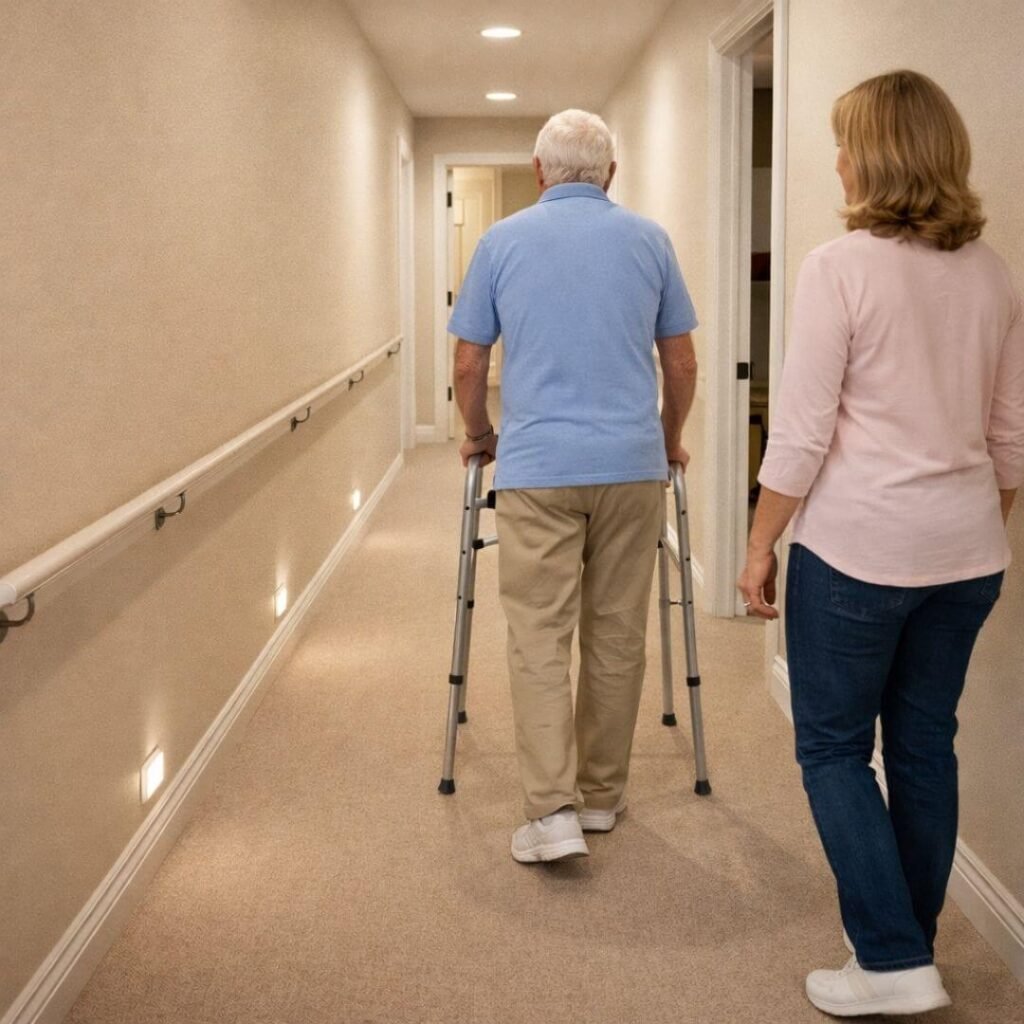
Avoidance of mobility aids is another concern. Some seniors resist canes or walkers due to pride or fear of appearing dependent. However, when properly fitted and used correctly, these devices enhance independence rather than diminish it. A caregiver’s calm explanation and demonstration can help overcome resistance.
Ignoring early warning signs is perhaps the most serious mistake. Frequent near-falls, new complaints of dizziness, or increased fatigue should prompt medical evaluation. If a fall does occur, reviewing guidance on how to care for seniors after a fall can help reduce complications and prevent recurrence.
Practical Caregiver Strategies for Safer Home Flooring
Floor surfaces influence stability more than many caregivers realize. Even strong older adults can lose balance if traction is reduced. The goal is to create predictable, slip-resistant walking paths throughout the home.
Loose rugs are one of the most common causes of falls. A small rug placed near the sink may shift slightly each time it is stepped on. Over time, the edges curl upward. An older adult who shuffles their feet may catch a toe on the edge and trip. If rugs are necessary for comfort or warmth, they should have strong non-slip backing and lie completely flat. In many cases, removing them entirely is the safest option.
Bathroom and kitchen floors should remain dry at all times. After showers, water often drips onto the floor and may go unnoticed. Caregivers should make it routine to inspect the floor after bathing. A simple towel placed within reach can allow immediate drying of small puddles.
Highly polished or waxed floors reduce friction. While they may look clean and bright, they can increase slipping risk, especially when socks are worn. Matte finishes provide better traction. If refinishing is not possible, encouraging proper indoor footwear with non-slip soles can compensate.
Transitions between flooring types also deserve attention. For example, moving from carpet to tile creates a subtle height change. If the carpet edge is loose or frayed, it can catch a foot. Securing transitions with proper edging reduces this hazard.
Clutter is another major contributor to falls. Electrical cords stretched across walkways, stacks of newspapers, or small decorative furniture narrow walking paths. An older adult who uses a walker needs additional width to maneuver safely. Caregivers should aim for clear, wide pathways between rooms.
Stair surfaces require special care. Steps should be dry, well-secured, and clearly visible. If carpeting is present, it must be firmly attached. Loose stair runners are particularly dangerous.
These flooring adjustments may appear minor, but they create a stable foundation for safe movement throughout the home.
Supporting Safe Toileting and Bathing Routines
Toileting and bathing are physically demanding activities. They require strength, coordination, and balance in a confined space. For many seniors, these tasks represent the highest fall risk of the day.
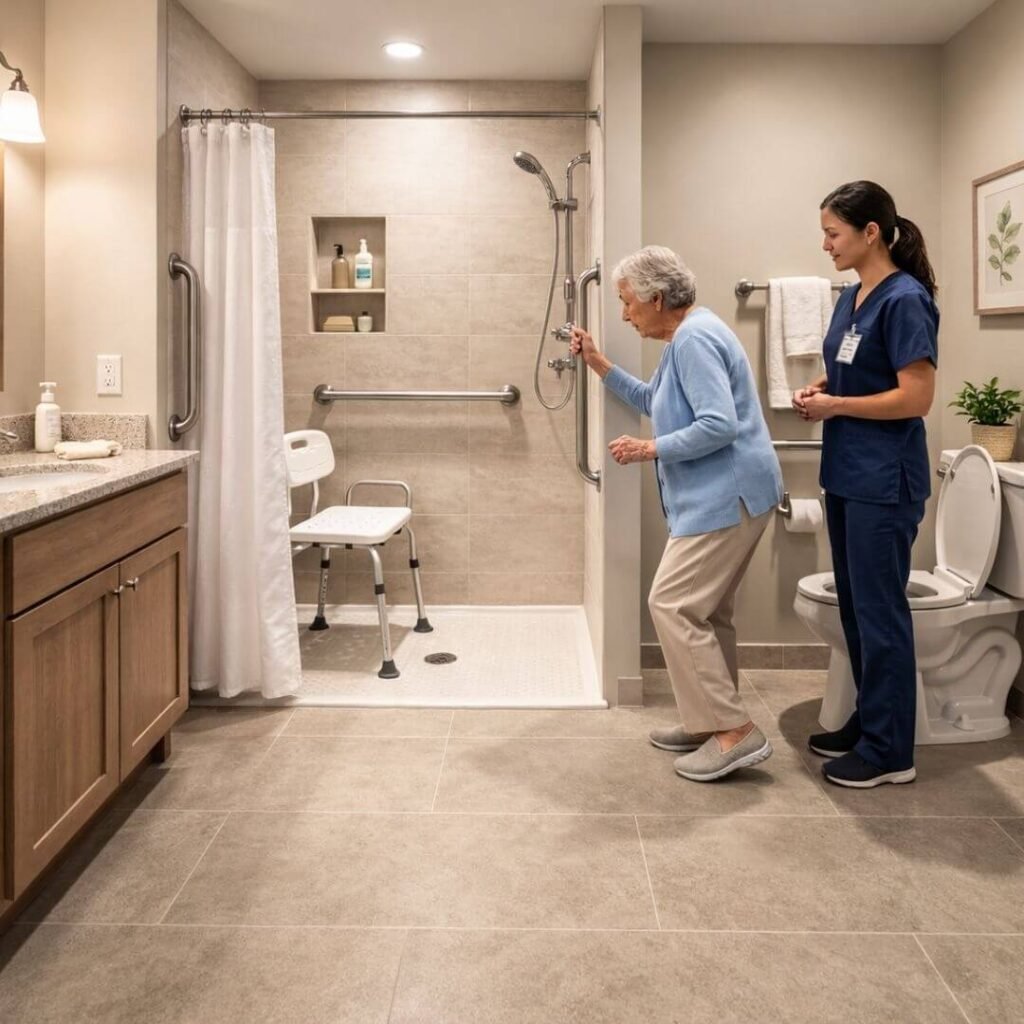
Toilet height plays a significant role. Standard toilets are often low, requiring deep bending at the knees and hips. For someone with reduced thigh strength or arthritis, rising from this position can be difficult. A raised toilet seat reduces the distance the body must travel when standing. This lowers strain and decreases instability.
Secure grab bars provide stable support during transitions. Placement is critical. One bar should be positioned beside the toilet for pushing up. In showers, bars should be mounted on the wall where weight transfer occurs, not on the glass door or towel rack. Grab bars must be anchored into wall studs to support full body weight. Suction devices are not reliable for heavy pressure.
Shower chairs are particularly useful for individuals who fatigue easily. Standing on a wet surface while shifting weight to wash the lower body increases fall risk. Sitting reduces strain and allows more controlled movement. A handheld shower head also minimizes twisting and reaching, which can disturb balance.
Caregivers assisting during bathing should focus on positioning. Standing slightly to the side allows support without blocking movement. Pulling forward on the arms can cause imbalance. Instead, offering a steady forearm or using a gait belt if properly trained provides safer assistance.
Temperature changes also affect safety. Very hot water can cause lightheadedness due to blood vessel dilation. Encouraging moderate water temperatures reduces dizziness.
Another important consideration is timing. Many falls occur when individuals rush to the bathroom due to urgency. Encouraging scheduled toileting, especially for those with bladder issues, reduces the need to hurry.
Privacy remains essential. Seniors may feel embarrassed accepting help in the bathroom. Caregivers should communicate clearly, explain each step before assisting, and maintain respectful boundaries. Safety and dignity must be balanced carefully.
Enhancing Lighting to Reduce Fall Risk
Vision changes are common with aging. The eye requires more light to perceive contrast, and glare becomes more disruptive. Poor lighting significantly increases fall risk.
Hallways and bathrooms should be brightly lit, especially at night. Night lights placed along baseboards create a visible pathway without causing glare. Motion-sensor lighting can activate automatically when movement is detected, eliminating the need to search for switches in the dark.
Stairways require special attention. Each step should be clearly visible. Adding high-contrast strips along the edge of each step improves depth perception. For example, a light-colored strip on a dark stair makes the edge easier to identify.
Glare should be minimized. Shiny floors and exposed bulbs can create visual confusion. Using diffused light covers softens illumination while maintaining brightness.
Light switches should be accessible at both ends of hallways and staircases. In some homes, switches are only located at one end, requiring movement in darkness. Installing additional switches or smart lighting systems improves safety.
Bathrooms benefit from layered lighting. Overhead lighting should be bright enough to illuminate the entire space. Task lighting near mirrors reduces shadows that can distort perception.
Outdoor lighting is equally important. If seniors walk outside to collect mail or take out trash, pathways and steps must be well-lit. A single porch light may not be sufficient.
Improved lighting reduces hesitation and misjudgment. When older adults can clearly see their surroundings, they move with greater confidence and stability.
Special Considerations for Dementia and Advanced Mobility Limitations
Cognitive impairment adds complexity to mobility support. Individuals with dementia may forget to use grab bars or may attempt to stand quickly without assistance. Impulsivity and reduced judgment increase fall risk.
Clear visual cues help reduce confusion. For example, a toilet seat in a contrasting color makes it easier to identify. Removing patterned flooring reduces visual overstimulation, which can be disorienting.
Consistent routines are protective. When toileting and bathing occur at predictable times, anxiety decreases. Sudden changes in environment or schedule may trigger agitation or unsafe movement.
Nighttime wandering is common in dementia. Hallway lighting should remain softly illuminated overnight to reduce disorientation. Bedroom-to-bathroom pathways must be completely clear.
For individuals with advanced mobility limitations, transfers may require mechanical assistance. Standing aids, transfer boards, or lift devices can reduce strain on both the senior and caregiver. Improper lifting technique places caregivers at risk for back injury. Professional instruction from a physical therapist or occupational therapist is strongly recommended.
Weakness in one side of the body, such as after a stroke, requires additional planning. The stronger side should be positioned toward support surfaces. For example, if the right leg is weaker, grab bars should be positioned to allow pushing with the left side.
Fatigue is another concern. Seniors with chronic illness may appear stable in the morning but become unsteady later in the day. Caregivers should observe patterns and adjust assistance accordingly.
Preserving dignity remains central. Even when physical support is necessary, offering choices and explaining each step promotes emotional well-being. Safe mobility support should protect both physical health and self-respect.
Frequently Asked Questions
1. How can elderly improve mobility?
Older adults can improve mobility through consistent strength training, balance exercises, walking practice, and maintaining adequate nutrition. Supervision and encouragement increase confidence and adherence.
2. How to help elderly with mobility issues?
Start by identifying environmental hazards, improving lighting, and considering supportive equipment. Encourage gentle exercise and monitor for changes in balance or walking ability. Consult a healthcare provider if mobility declines rapidly.
3. What are the best mobility aids for seniors?
The best mobility aid depends on individual needs. Canes provide mild support, while walkers offer greater stability. Proper fitting and instruction are important to prevent misuse.
4. How can caregivers safely assist elderly walking?
Stand slightly to the side and behind the individual. Offer a steady arm without pulling forward. Move at a comfortable pace. If balance is significantly impaired, use a gait belt if trained. Encourage the person to take slow, deliberate steps. Avoid rushing, especially during nighttime trips.
5. What exercises help improve mobility in older adults?
Chair stands, supported balance exercises, gentle leg lifts, and stretching are commonly recommended. Exercises should match the person’s health status and comfort level.
Final Thoughts
The role of caregivers in senior mobility extends beyond physical assistance. It includes observation, encouragement, environmental planning, and emotional support.
Helping elderly with mobility is not about limiting independence. It is about creating safe conditions where independence can continue.
With thoughtful home adjustments, regular strengthening habits, and compassionate supervision, seniors can maintain movement and confidence well into later life.
Small, consistent actions make the greatest difference. When caregivers focus on stability, visibility, and accessibility, they protect not only physical safety but also dignity and quality of life.
Medical Disclaimer: The information provided on this website is for educational purposes only and should not replace professional medical advice. Always consult your physician or qualified healthcare provider regarding any medical condition or treatment decisions.