

Introduction
Surgery is a significant event at any age, but for older adults it often brings an added challenge that younger patients rarely face: the steep road back to independent movement. Whether the procedure involves a hip replacement, a knee repair, or even abdominal surgery, the body needs extra support while tissues heal and strength returns. That is exactly where mobility aids for seniors become essential. The right device at the right time can mean the difference between a smooth, confident recovery and one marked by setbacks or falls.
For many families, the biggest concern isn’t the surgery itself—it’s how safely a loved one will move once they return home.
This guide walks through the most common assistive devices elderly adults may need after an operation, explains when each one is typically introduced, and offers practical advice for families and caregivers who want to make the transition home as safe as possible. The goal is to help you understand what to expect so you can prepare the home, ask the right questions at discharge, and support your loved one every step of the way.
Why Mobility Matters So Much After Surgery
Doctors and physical therapists stress one message above all others after a procedure: get moving as soon as it is safe to do so. Prolonged bed rest can lead to muscle loss, blood clots, pneumonia, pressure sores, and a general decline in cardiovascular fitness that makes every subsequent day of recovery harder. According to fall prevention guidelines from the CDC, older adults who have been hospitalized are up to three times more likely to fall in the first month after discharge compared to those who were not hospitalized. That statistic alone underscores why the right walking aid or support device matters from day one.
Early mobilization is now a core principle in enhanced recovery after surgery programs used at hospitals across the United States. The sooner a patient begins bearing weight and moving through space, even if only a few steps at a time, the sooner the body rebuilds the strength and balance it needs for everyday tasks. Mobility aids for seniors bridge the gap between dependence and independence, helping rebuild strength, reduce fall risk, and restore the confidence needed to actively participate in recovery rather than remaining confined to a bed or chair.
Immobility affects more than the body. Seniors who feel stuck or helpless after surgery are more likely to experience anxiety, depression, and a loss of motivation. Providing the right assistive devices for elderly patients is not just a physical intervention but an emotional one as well.
The Three Pillars of Post-Surgery Mobility
When physical therapists and rehabilitation teams evaluate a senior after surgery, they typically assess three core areas before recommending a device. Understanding these pillars can help families grasp why a particular aid was chosen and how recovery is expected to progress.
Weight-Bearing Status. The surgeon will specify how much weight a patient is allowed to place on the affected limb or area. Some procedures require non-weight-bearing status for several weeks, while others allow partial or full weight-bearing almost immediately. This classification dictates whether the patient starts with a wheelchair, crutches, a walker, or a cane. Getting this wrong can compromise the surgical repair, so it is critical to follow the surgeon’s orders precisely.
Balance and Coordination. Even when weight-bearing is permitted, many seniors struggle with balance after a hospital stay. Anesthesia, pain medication, fatigue, and deconditioning all affect how steady a person feels on their feet. A patient who walked independently before surgery may need a walker for the first few weeks simply because their balance has been disrupted. The therapist will test standing balance, gait stability, and reaction time before recommending a device.
Upper Body Strength. Most walking aids transfer some of the body’s weight to the arms and hands. Crutches demand the most upper body strength, followed by standard walkers, then rollators, and finally canes. If a senior has limited grip strength or shoulder problems, the therapist may steer toward a wheeled walker or a device with ergonomic handles. This is one reason why senior mobility equipment is not one-size-fits-all. The device must match the patient’s full physical profile, not just the surgical site.
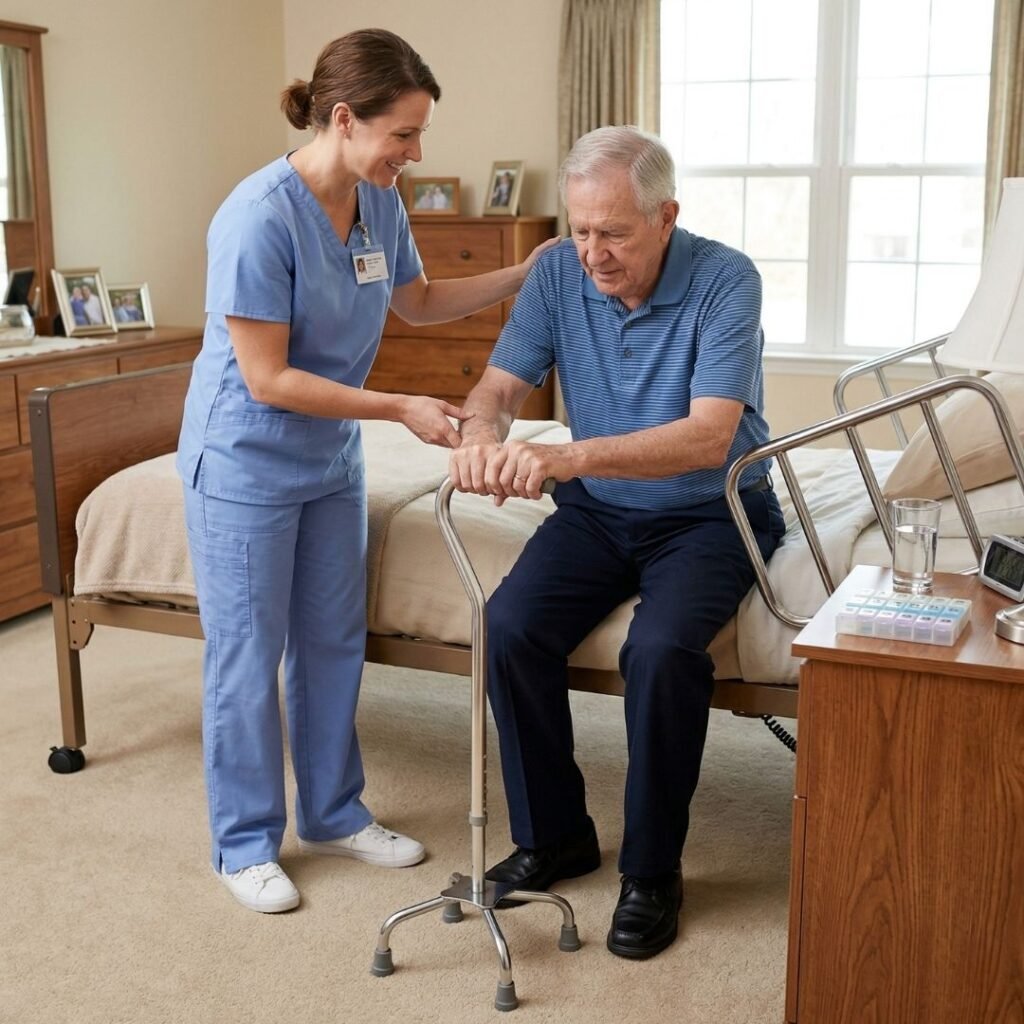
Common Surgeries That Change How Seniors Move
Not every operation affects mobility in the same way, which is why mobility aids for seniors must be matched to the specific procedure. Hip replacement surgery is one of the most common operations among older adults. Patients typically begin with a walker within a day of the procedure and may use it for four to six weeks before transitioning to a cane. During this period, they must follow hip precautions that limit bending and twisting. Equipment such as raised toilet seats, long-handled reachers, and shower chairs becomes necessary to avoid movements that could dislocate the new joint.
Knee replacement surgery follows a similar trajectory, with the initial focus on regaining range of motion while protecting the surgical repair. A walker is the standard starting device, and physical therapy sessions tend to be more frequent because the knee must be actively bent and straightened to prevent scar tissue from limiting movement. Many patients transition to a cane within three to four weeks.
Spinal surgery, including laminectomy and spinal fusion, often requires a walker with no wheels on the front legs to provide maximum stability. Patients may also need a back brace and must avoid bending, lifting, or twisting for several weeks. The walker may remain necessary for two months or more.
Cardiac and abdominal surgeries affect mobility differently. Although the legs are not directly involved, the incision site limits core strength. Standing up, getting out of bed, and walking all engage the abdominal and chest muscles. A lift chair, bed rail, or transfer pole can be invaluable during the first few weeks, and a rolling walker can reduce the effort required to move from room to room.
Walkers, Rollators, and Canes: Choosing the Right Walking Aid
Walking aids are the most visible category of mobility aids for seniors and are almost always the first devices introduced during post-surgery recovery. The differences between them matter more than most people realize.
A standard walker, sometimes called a pickup walker, has four legs with rubber tips and no wheels. The patient lifts the walker, places it ahead, and then steps forward. This design provides maximum stability and is the safest option for seniors who are unsteady or only allowed partial weight-bearing. The downside is that it requires upper body strength to lift the frame repeatedly and forces a stop-and-go pattern that can be tiring. If your loved one needs this level of support, explore walkers and rollators designed for seniors to find a model that fits their height and grip comfortably.
A two-wheel walker splits the difference. The front legs have small wheels while the rear legs retain rubber tips, allowing the patient to push the walker forward without lifting it. This reduces fatigue while the rear tips provide braking friction. Two-wheel walkers are a popular choice after hip and knee surgery because they encourage a more natural walking rhythm.
A rollator has four wheels, hand brakes, and usually a built-in seat. Rollators are best suited for seniors who have good balance but need a device for endurance and occasional rest. They are typically introduced later in recovery, once the patient has progressed beyond a standard walker. Because rollators roll freely, they are not appropriate for patients who cannot control forward momentum or who lean heavily on the device.
Canes are the final step in the progression for many seniors. A single-point cane works well for minor balance assistance, while a quad cane with a four-pronged base offers more stability. The transition from walker to cane is a milestone in recovery and should only happen with the approval of a physical therapist. For more guidance, read our article on choosing the right mobility aid.
Bathroom and Bedroom Aids for Safe Recovery
Falls are most likely to happen in two places inside the home: the bathroom and the bedroom. Both environments involve transitions, such as sitting down, standing up, stepping over a threshold, or moving on a wet surface, that demand balance and coordination a recovering senior may not yet have. Beyond walking aids after surgery, preparing these rooms before the patient comes home from the hospital is one of the most impactful things a family can do.

In the bathroom, a raised toilet seat reduces how far a senior must lower and raise their body, which is especially important after hip or knee surgery. Toilet safety rails provide sturdy handles for pushing up. A shower chair or transfer bench allows seated bathing, eliminating the risk of slipping on a wet surface. Grab bars near the toilet and inside the shower give the patient something solid to hold during transitions, and a handheld showerhead on a flexible hose makes it possible to bathe while seated.
In the bedroom, a bed rail or transfer pole gives the patient something to grip when sitting up or swinging their legs off the mattress. An overbed table keeps essentials within arm’s reach so the patient does not have to get up unnecessarily. Bed risers can raise the mattress height so that standing requires less effort, and a bedside commode is worth considering if nighttime bathroom trips would be unsafe. A non-slip rug or fall mat beside the bed adds another layer of protection.
These modifications do not need to be permanent. Many families rent or borrow equipment for the duration of recovery and return it once the senior regains independence. The key is having everything installed and tested before the patient arrives home after discharge.
When and How to Transition Between Mobility Aids
One of the most common questions families ask is how long a senior will need a particular device and when it is safe to move to the next one. Choosing the right mobility aids for seniors is only the first step. The timeline for each device depends on the type of surgery, the patient’s overall health, how consistently they participate in physical therapy, and whether complications arise during healing.
For most lower-body surgeries, there is a general progression. In the first days after the operation, the patient may rely on a wheelchair for longer distances and a walker for short trips. Once discharged home, the walker typically remains the primary device for two to six weeks while a physical therapist monitors progress and assesses readiness for the next step.
When balance, strength, and weight-bearing status have improved sufficiently, the therapist will introduce a cane. Some patients skip the cane stage entirely, while others use one for several additional weeks. The important thing is that the transition is guided by a professional. Abandoning a walker too early is one of the leading causes of post-surgical falls in older adults.
For seniors recovering from upper-body or abdominal procedures, the progression may look different, focusing on moving from a lift chair to a regular chair, or from a bedside commode back to the main bathroom. Each transition should be gradual, supervised, and based on measurable improvement. Research published by the National Institutes of Health confirms that structured, progressive research on mobility interventions after surgery leads to better functional outcomes than unsupervised recovery.
Special Considerations for Caregivers and Family Members
Post surgery recovery for seniors is physically and emotionally demanding for caregivers as well. They often underestimate how much hands-on assistance is required in the first few weeks, and without the right mobility aids for seniors, they risk injuring their own backs, shoulders, and knees.

A gait belt is one of the most underrated tools in post-surgery care. This simple strap wraps around the patient’s waist and gives the caregiver a secure handhold during transfers and walking. It is far safer than gripping clothing or holding the patient’s arm, and it allows the caregiver to guide the patient’s movement without bearing their full weight. If your loved one needs a non-weight-bearing device for one leg, consider looking into knee scooters built for older adults, which can reduce the physical burden on both the patient and the caregiver compared to traditional crutches.
Transfer boards and slide sheets are helpful when moving a patient from a bed to a wheelchair or from a wheelchair to a car seat. These devices reduce friction and eliminate the need for heavy lifting, which protects the caregiver’s spine. If the patient will be spending significant time in a wheelchair or recliner, a quality cushion helps prevent pressure sores and improves comfort during the weeks when sitting is the primary position.
Caregivers should also pay attention to the home environment. Remove loose rugs, secure electrical cords along walls, ensure hallways are well lit, and clear pathways wide enough for a walker or wheelchair. These small adjustments cost almost nothing but dramatically reduce the chance of a fall.
Finally, do not overlook your own well-being. Caregiver fatigue leads to mistakes, injuries, and burnout. Accept help from other family members, look into respite care options, and speak with the care team about community resources. A healthy caregiver is the most important piece of senior mobility equipment in the house.
Frequently Asked Questions
1. What mobility aid is best after hip replacement surgery?
Among all mobility aids for seniors, most orthopedic surgeons recommend starting with a standard walker immediately after hip replacement surgery. The walker provides four points of contact with the ground and allows the patient to control how much weight they place on the surgical leg. After four to six weeks, many patients transition to a cane as their strength and balance improve. Your surgeon and physical therapist will guide this progression based on how the hip is healing.
2. How long will a senior need a walker after surgery?
The typical timeline ranges from two to six weeks, depending on the type of surgery and the patient’s overall health. Hip and knee replacement patients often use a walker for about four weeks before moving to a cane. Spinal surgery patients may need a walker for six to eight weeks or longer. The physical therapist will assess walking stability, balance, and endurance before recommending a change.
3. Does Medicare cover mobility aids after surgery?
Medicare Part B generally covers durable medical equipment, including walkers, canes, wheelchairs, and hospital beds, when a doctor prescribes them as medically necessary. The patient is typically responsible for 20 percent of the Medicare-approved amount after meeting the annual deductible. Coverage details can vary, so it is best to contact Medicare directly or speak with the hospital’s discharge planner to confirm what is covered for your specific situation.
4. When can a senior stop using a mobility aid after surgery?
There is no universal deadline. The decision to stop using an assistive device should be made in consultation with a physical therapist, not based on a calendar date. The therapist will evaluate standing balance, walking speed, the ability to navigate obstacles, and confidence level before clearing the patient to walk without a device. Stopping too early increases the risk of falls and re-injury.
5. How do I choose the right mobility aid for post-surgery recovery?
Start with the recommendation from the surgical team and physical therapist, as they will factor in the specific procedure, weight-bearing restrictions, and the patient’s strength and balance. Key considerations include upper body strength, grip ability, the layout of the home, and whether the patient will use the device indoors, outdoors, or both. Adjustable height, ergonomic handles, and appropriate wheel size all affect comfort and safety.
Final Thoughts
Recovering from surgery is rarely easy, and for seniors the process demands patience, planning, and the right tools. Mobility aids for seniors are not signs of weakness or permanent dependence. They are medical tools designed to protect the body while it heals and to give older adults the confidence to move safely through their own homes.
Having the right mobility aids for seniors in place before discharge day, from walkers and canes to bathroom and bedroom equipment, removes uncertainty and lets the patient focus on healing. Work closely with the surgical team and physical therapist to understand which devices are needed, how long they will be needed, and when it is safe to move to the next stage.
If you are a caregiver, remember that your role is just as important as any device. Take the time to learn how each piece of equipment works, practice transfers before they are needed, and do not hesitate to ask for help when the workload becomes too much. Every step forward, no matter how small, is progress. With the right support, most seniors can return to the level of independence they had before surgery.
Medical Disclaimer: The information provided on this website is for educational purposes only and should not replace professional medical advice. Always consult your physician or qualified healthcare provider regarding any medical condition or treatment decisions.