

Introduction
Mobility devices for the elderly play a central role in helping older adults remain safe, active, and independent. As the body ages, muscle strength naturally declines, joints may stiffen, reflexes slow, and balance becomes less steady. These changes can make simple activities—such as walking across the living room, stepping into the shower, or getting out of bed—more physically demanding. When movement becomes difficult, fall risk increases.
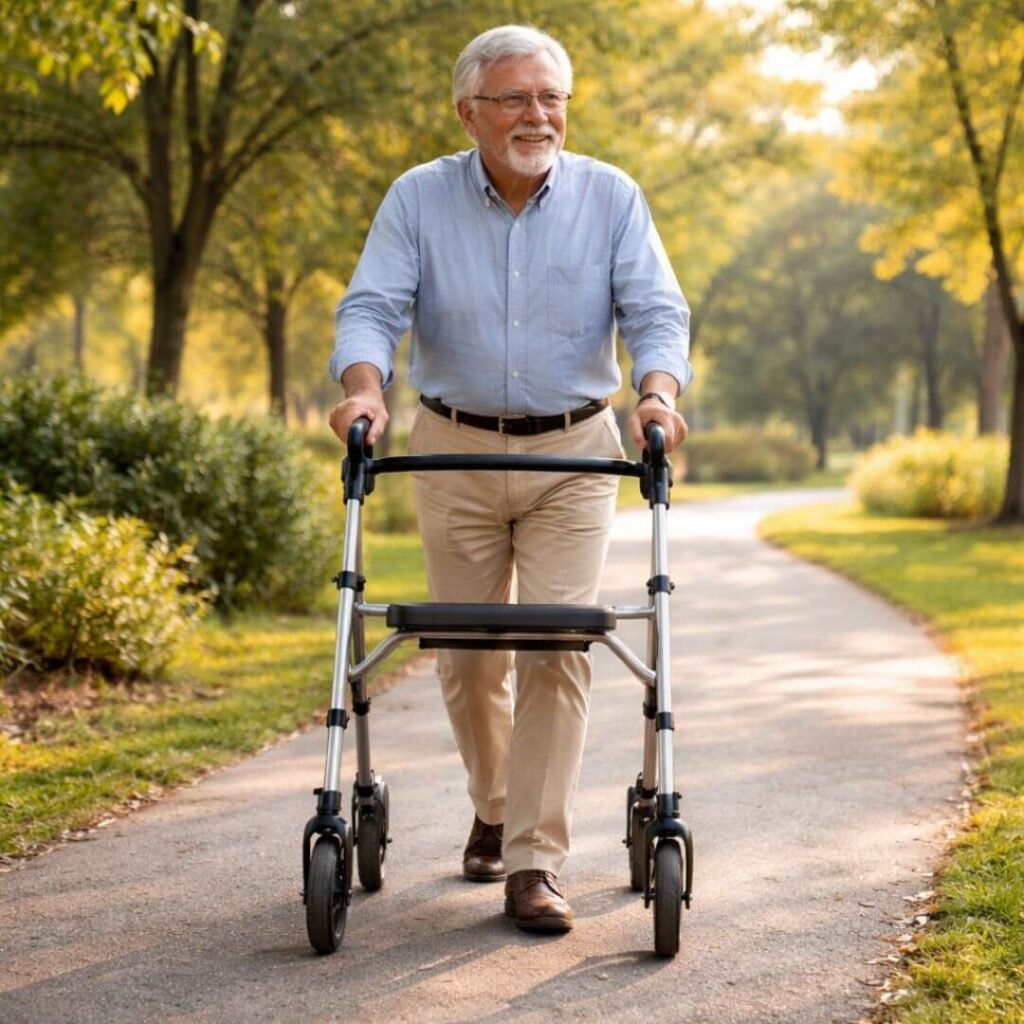
Technology has expanded the options available to support safe movement. Today’s solutions go beyond traditional walking aids. Modern tools include ergonomic walkers designed to reduce strain on the wrists and shoulders, rollators with built-in seats for rest breaks, motion-sensor lighting that activates at night, and wearable alert systems that detect sudden falls. These tools are designed to preserve dignity while improving safety.
Mobility support is not only about preventing injury. It is also about maintaining daily routines. A senior who can safely move from the bedroom to the kitchen is more likely to prepare meals independently. Someone who feels steady while bathing is less likely to avoid hygiene due to fear. Small improvements in safety often lead to meaningful improvements in confidence.
Research consistently shows that falls are a major health concern in later life and a leading cause of injury in older adults, which highlights the importance of preventive planning rather than waiting for an accident to occur. Early introduction of supportive equipment can reduce the likelihood of fractures, head injuries, and hospital admissions.
This article explains how mobility tools and assistive technology function in real homes, how they improve safety, and how families can make informed decisions based on medical guidance.
Why Mobility Support Matters More Than Ever
Mobility is one of the strongest predictors of independence in older adults. When someone can move safely from room to room, stand from a seated position, and navigate stairs or bathrooms without fear, they maintain greater control over daily life.
Research consistently shows that falls are a leading cause of injury in adults over 65. According to the CDC, falls are a leading cause of injury in older adults, highlighting the importance of preventive planning rather than reactive care. Falls often occur at home, during routine activities such as bathing, walking to the kitchen, or getting up at night.
In clinical practice, I often see subtle balance decline and reduced step confidence months before a first fall occurs, which is why early intervention is so important.
Mobility challenges rarely appear suddenly. They often begin with subtle warning signs. An older adult may start holding onto furniture while walking. They may hesitate before stepping onto uneven ground. They may avoid stairs or limit outings because movement feels less stable. These behaviors are early indicators that additional support may be helpful.
Supportive tools reduce physical strain and improve confidence. Confidence is not a minor factor. Fear of falling can lead to decreased activity, muscle loss, and greater isolation. When a person avoids movement due to fear, their strength declines further. This cycle increases risk. Properly selected assistive equipment interrupts that cycle by restoring a sense of control.
Mobility support also protects caregivers. Safe transfer aids, grab bars, and stable walking devices reduce the likelihood of caregiver injury. In many households, a spouse or adult child provides daily assistance. Proper equipment ensures both individuals remain safe.
The 3 Pillars of Safe Mobility Support
Safe movement in later life rests on three essential pillars: stability, environmental safety, and monitoring.
1. Stability and Balance
The first pillar is physical stability. Walkers, rollators, canes, and support bars improve base of support and reduce weight-bearing stress on joints. These tools help compensate for weakened muscles or reduced coordination. They are most effective when introduced before a serious fall occurs.
Balance training also plays an important role. Structured exercises supervised by a physical therapist improve core strength and posture. A stable support bar in the home can allow practice without high risk. Equipment and exercise work best together.
2. Environmental Safety
The second pillar involves the physical environment. Many falls occur not because of weakness, but because of hazards. Loose rugs, poor lighting, slippery tiles, and narrow walkways increase risk.
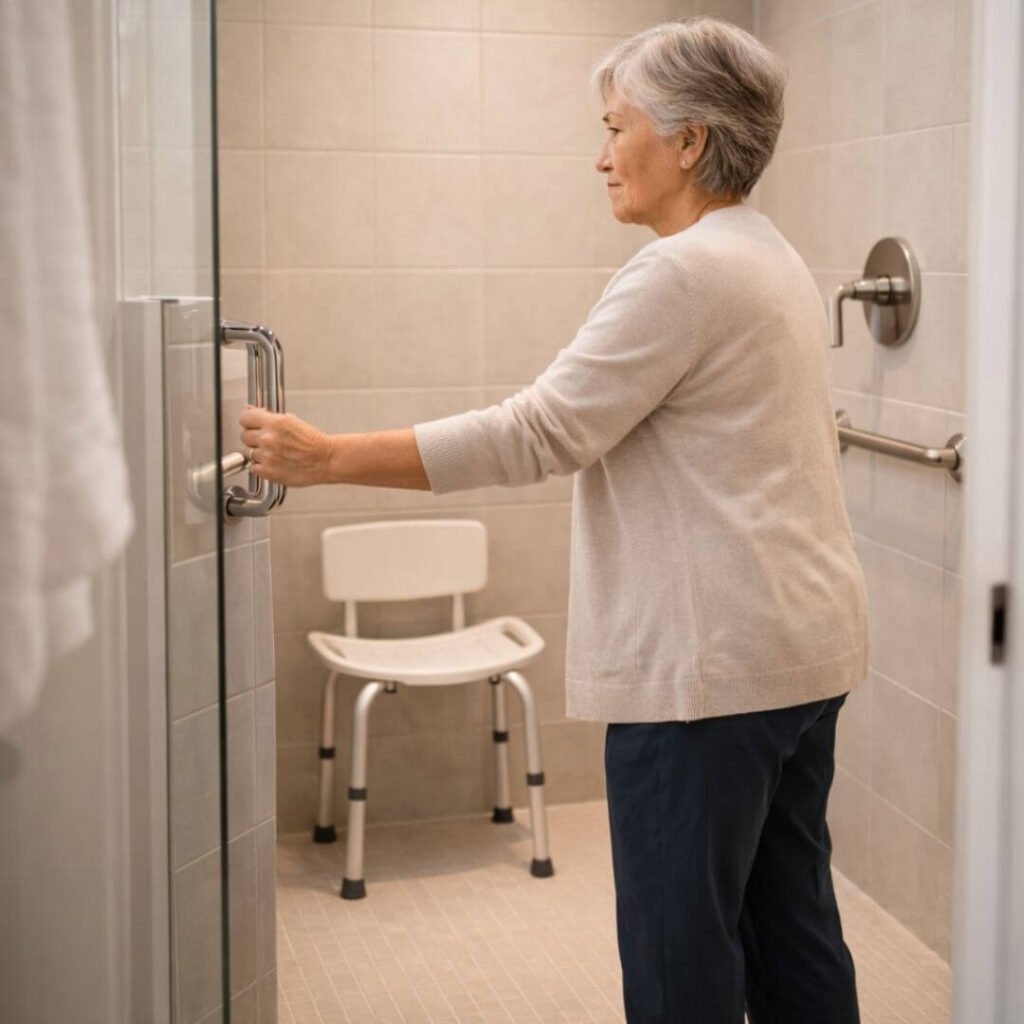
Bathroom safety deserves special attention. Wet surfaces significantly raise the chance of slipping. The National Institute on Aging recommends installing grab bars and improving lighting in areas where balance is challenged, such as showers and stairways. Non-slip flooring and shower seating further reduce strain during bathing.
Many falls I evaluate are not caused by weakness alone, but by preventable environmental factors such as poor lighting or unsecured rugs.
Environmental safety also includes doorway width, stair railings, and night lighting. Small design improvements produce meaningful risk reduction.
3. Monitoring and Rapid Response
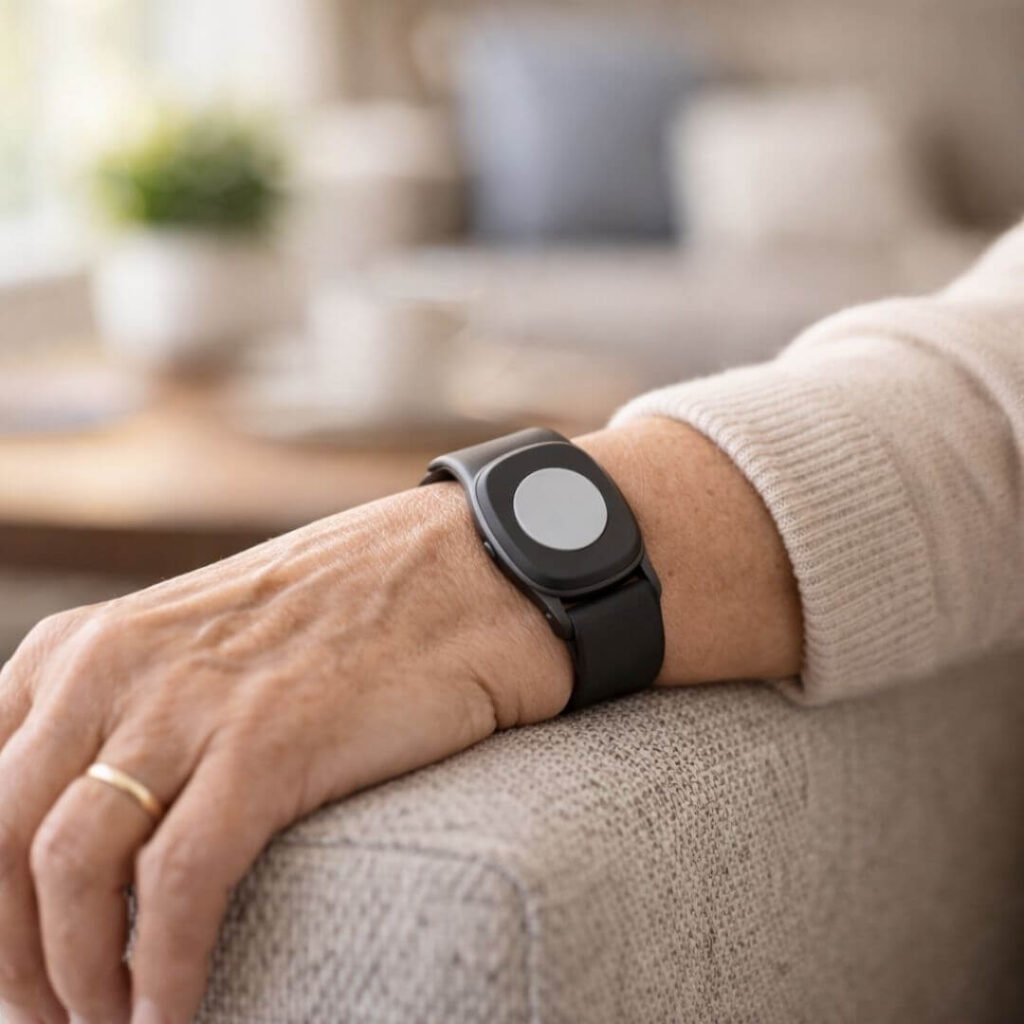
The third pillar focuses on monitoring and emergency response. Wearable alert devices, fall detection watches, and home sensor systems provide reassurance. These technologies do not prevent falls directly, but they shorten the time between an incident and assistance.
This rapid response capability reduces complications associated with long periods on the floor after a fall, such as dehydration or pressure injuries. In many cases, knowing that help is available reduces anxiety, which supports more natural movement.
How Technology Improves Daily Life
Technology works best when it becomes part of normal daily routines rather than feeling like medical equipment. In real homes, supportive tools are often subtle and practical.
For example, a modern bathroom may include a walk-in shower with securely mounted grab bars placed at shoulder height. A stable shower chair allows a senior to sit while bathing, reducing fatigue and lowering the risk of slipping. Non-slip flooring provides traction even when wet. These adjustments make hygiene safer without requiring constant assistance.
In the bedroom, a bed rail can provide support during nighttime transfers. Motion-sensor lights under the bed or along the hallway floor automatically illuminate when feet touch the ground. This reduces the risk of missteps in the dark. Clear pathways without loose rugs allow a walker or cane to move smoothly.
In the kitchen, a senior using a rollator can prepare meals while seated during rest breaks. Ergonomic handles reduce wrist strain for individuals with arthritis. Lightweight frames allow easier turning around counters and tables.
Outside the home, foldable walkers can be stored in a car for medical appointments or social visits. Some individuals use wearable alert watches that detect sudden drops in height. If a fall occurs, the device can notify a family member immediately. This type of system does not prevent the fall, but it reduces the time a person remains without assistance.
Lighting technology also plays a role. Bright, evenly distributed lighting improves depth perception. High-contrast stair edges help identify steps clearly. These environmental changes reinforce the principle that thoughtful design and proper lighting are key components of effective fall prevention.
Families planning these adjustments should consider how layout, flooring, and lighting choices work together to influence overall safety outcomes.
When equipment is integrated thoughtfully, it supports independence instead of replacing it. The goal is not to restrict movement, but to make everyday activities safer and more manageable.
Choosing the Right Support
Selecting appropriate equipment requires careful evaluation. A healthcare provider or physical therapist can assess gait, balance, strength, and reaction time. Professional guidance ensures the device matches the individual’s physical needs.
The wrong device may increase risk. For example, a cane requires sufficient upper body strength and coordination. A walker provides more stability but may not fit through narrow hallways. Rollators offer wheels and seating but require controlled braking ability.
Fit matters. Handle height should allow elbows to bend slightly at approximately 15 degrees. Posture should remain upright rather than leaning forward excessively. Ill-fitting equipment may strain the back or shoulders.
Families should also consider cognitive status. Complex braking systems or digital interfaces may not suit individuals with memory impairment. Simplicity often enhances safety.
Cost and insurance coverage may influence decisions. Some seniors ask whether assistance programs help with expenses. Medicare coverage depends on medical necessity and physician documentation. It is important to confirm eligibility directly with providers.
Equipment should be introduced calmly. Framing the device as a tool for independence rather than weakness improves acceptance. Language matters. Instead of saying, “You need this because you are unsteady,” it may be more effective to say, “This will help you move safely and keep doing what you enjoy.”
Home Modifications That Strengthen Safety
Mobility tools function best within a supportive environment. Families looking to make your home safer for seniors should begin with a structured walk-through of the property.
Lighting should be bright and evenly distributed. Shadows distort depth perception. Motion-sensor nightlights reduce the risk of missteps during nighttime bathroom visits.
Flooring should remain consistent between rooms. Changes in height, even small ones, increase tripping risk. Removing loose rugs and securing cords against walls creates clear pathways.
Stairways require sturdy handrails on both sides. High-contrast stair edges improve visibility. Bathrooms should include grab bars anchored into wall studs.
For additional context, families may also review understanding fall risks in seniors to better recognize warning signs and environmental hazards.
Home adjustments are preventive investments that support safer aging in place.
Integrating Assistive Technology Thoughtfully
Technology should support safe movement without creating confusion or dependence. The goal is to enhance independence while reducing risk. Assistive systems work best when they are simple, reliable, and matched to the individual’s abilities.
For example, wearable alert devices can detect sudden changes in body position that may indicate a fall. If a fall is detected, the device can automatically contact a caregiver or emergency service. This is especially helpful for seniors who live alone or spend part of the day without supervision. However, the device must be comfortable enough to wear consistently. A system that is frequently removed or forgotten will not provide protection.
Motion sensors are another useful tool. These devices can be placed in hallways or bathrooms to track movement patterns. If no movement is detected for an unusual period of time, a family member may receive a notification. This can be helpful in identifying early changes in activity levels, which sometimes signal illness or weakness. However, privacy should be discussed openly before installation. Clear communication prevents misunderstandings.
Smart lighting systems are often one of the simplest and most effective upgrades. Motion-activated lights under beds or along staircases reduce the need to search for switches in the dark. Bright, evenly distributed lighting improves depth perception and contrast sensitivity, which naturally decline with age. These systems require minimal training and usually do not interfere with daily routines.
Digital medication reminders can also reduce risk. Missed or incorrect medications may cause dizziness or low blood pressure, increasing fall likelihood. Automated pill dispensers with alarms help maintain consistent schedules. For individuals with mild memory changes, this type of support may prevent complications.
When selecting assistive technology, cognitive ability must be considered. Devices with multiple buttons, complex menus, or smartphone integration may not be appropriate for someone with moderate memory impairment. In those cases, simpler systems with automatic features are safer.
Charging and maintenance must also be planned. Wearable devices require regular charging. Families should establish a consistent routine, such as charging the device during meals or overnight. A neglected battery renders the system ineffective.
Assistive technology should always complement physical safety measures. A fall detection watch does not replace the need for stable grab bars or proper footwear. Instead, it adds a layer of protection. When combined with strength training, environmental adjustments, and appropriate walking aids, technology forms part of a broader safety strategy.
Individual Health, Environment, and Long-Term Safety Planning
Mobility planning must be individualized. Age alone does not determine risk. Health conditions, vision changes, home layout, and emotional readiness all influence decisions. Understanding these factors is essential when considering how to choose the right mobility aid for long-term safety and independence.
Chronic medical conditions require careful evaluation. For example, a person with arthritis in the hands may struggle to grip narrow cane handles. In this case, padded or ergonomic grips reduce joint strain. Someone with Parkinson’s disease may experience freezing episodes during walking. A walker with visual cue lines or laser guidance may improve step initiation. Individuals recovering from stroke may need devices designed for one-sided weakness.
Cardiovascular conditions also influence safety planning. Blood pressure medications may cause dizziness when standing quickly. In these cases, installing support rails near the bed or toilet can prevent sudden loss of balance during transfers.
Vision impairment is another important factor. Reduced contrast sensitivity makes it difficult to distinguish between similar colors. High-contrast stair edges and clearly marked step transitions improve visibility. Bright but glare-free lighting reduces shadow distortion. These changes are often simple but highly effective.
Hearing impairment may limit the usefulness of alarm-based systems. Devices that vibrate rather than rely on sound may be more appropriate. Matching the alert type to sensory ability ensures reliable communication.
Weight-bearing restrictions after surgery require temporary adjustments. For example, after hip replacement, a raised toilet seat reduces excessive bending. Temporary use of a walker may protect healing joints. Equipment should be reassessed once recovery progresses.
Home design also affects planning. Narrow hallways or tight bathroom spaces may not accommodate larger walking frames. In these cases, rearranging furniture or installing wall-mounted supports may be more practical.
Emotional response should not be overlooked. Some older adults resist visible equipment because it feels like a loss of independence. A calm discussion focused on safety rather than limitation can ease this transition. Emphasizing that the goal is continued independence often improves acceptance.
Caregiver capability is another consideration. If a spouse has limited strength, transfer aids may reduce physical strain. Protecting caregiver health is essential to maintaining long-term support at home.
Finally, mobility needs change over time. Regular reassessment by a healthcare provider ensures that equipment remains appropriate. A device that once provided enough support may no longer be sufficient if strength declines. Ongoing evaluation helps prevent future injury.
Thoughtful planning, tailored to medical conditions and living environments, creates a safer and more sustainable path toward independent living.
Frequently Asked Questions
1. What are the most common mobility devices used by older adults?
Common supports include canes, walkers, rollators, grab bars, shower chairs, raised toilet seats, and transfer aids. Each serves a specific function. Canes assist with mild balance issues. Walkers provide broader stability. Bathroom modifications reduce slipping risk. The appropriate choice depends on physical strength, coordination, and environment.
2. What is the difference between mobility aids and assistive devices?
Mobility aids primarily support walking and transfers. Assistive devices is a broader term that includes tools helping with dressing, bathing, eating, and communication. While all mobility aids are assistive devices, not all assistive devices relate directly to walking.
3. Does Medicare cover mobility devices for seniors?
Coverage depends on medical necessity. A physician must document that the equipment is required for safe movement inside the home. Medicare may cover certain walkers or wheelchairs under durable medical equipment guidelines. It is important to verify current policy details directly with Medicare or a healthcare provider.
4. What mobility equipment helps seniors stay independent at home?
Equipment that improves stability and reduces fall risk supports independence. This may include walkers, rollators, bathroom grab bars, shower seating, raised toilet frames, and adequate lighting systems. Combining physical support with environmental modification yields the strongest safety outcomes.
5. How does assistive technology improve mobility in older adults?
Assistive technology enhances safety through monitoring, alerts, and ergonomic design. Fall detection watches, motion sensors, and improved lighting systems reduce risk and shorten emergency response time. When paired with strength training and environmental adjustments, these tools promote safer daily movement.
Final Thoughts
Mobility changes are a natural part of aging, but loss of independence is not inevitable. With thoughtful planning, modern tools, and supportive home design, older adults can continue to move safely and confidently.
The key is early action. Introducing stability support before a major fall occurs protects health and dignity. Environmental adjustments reduce preventable hazards. Monitoring technology offers reassurance without restricting freedom.
Families and caregivers should approach mobility planning as an ongoing conversation rather than a single decision. Regular reassessment ensures equipment continues to match changing needs.
When stability, environment, and monitoring work together, aging in place becomes safer and more sustainable. Mobility support is not about limitation. It is about preserving independence through informed, preventive care.
Medical Disclaimer: The information provided on this website is for educational purposes only and should not replace professional medical advice. Always consult your physician or qualified healthcare provider regarding any medical condition or treatment decisions.