

Introduction
Reduced mobility can change daily life in quiet but powerful ways. A person who once moved freely may begin to hesitate before standing, walking, or climbing stairs. Simple routines such as bathing, cooking, or going outside can feel more demanding. Over time, this shift affects not only physical safety but also confidence and emotional well-being.
These changes often begin gradually. A loved one may start using both hands to push up from a chair. They may pause before stepping off a curb. They might avoid carrying laundry up the stairs or decline invitations that require walking longer distances. At first, these adjustments seem small. However, they often signal decreased strength, balance changes, or joint discomfort.
Mobility decline does not only affect large movements like walking. It also influences smaller tasks. Turning in bed may require more effort. Reaching overhead to get a dish from a cabinet may feel unstable. Standing at the sink to wash dishes may cause fatigue in the legs or lower back. Even getting in and out of a car may become challenging if hip flexibility decreases.
When movement becomes harder, people may begin limiting activity to avoid discomfort or fear of falling. This reduction in activity can lead to further muscle weakness. Muscles that are not used regularly lose strength quickly, especially in older adults. As strength declines, balance becomes less stable. This cycle increases fall risk and may lead to greater dependence if not addressed early.
For families, coping with reduced mobility requires patience, planning, and clear information. It is not simply about preventing falls. It is about preserving dignity, maintaining independence where possible, and knowing when to step in with support. Families must balance safety with respect. Providing too much assistance too soon can reduce confidence. Providing too little can increase risk.
Clear communication is essential. A loved one may feel frustrated or embarrassed by physical changes. Some may deny difficulty because they fear losing independence. Others may withdraw socially because movement feels exhausting or unsafe. Recognising these emotional responses helps families respond calmly rather than react out of worry.
Early attention makes a meaningful difference. Simple steps such as reviewing medications, improving lighting, encouraging gentle exercise, and adjusting furniture placement can reduce risk and improve confidence. When changes are addressed promptly, many people maintain independence longer.
This guide explains what mobility decline means, why it happens, and how families can respond in a thoughtful, structured way. By understanding both the physical and emotional aspects of movement changes, families can create a safer environment while supporting long-term well-being.
What Reduced Mobility Really Means
Mobility refers to a person’s ability to move safely and independently. This includes standing up from a chair, walking across a room, turning without losing balance, and navigating stairs. When movement becomes slower, weaker, or less stable, daily activities can become harder to perform.
Reduced mobility may develop gradually due to aging. Muscle mass naturally decreases over time. Joints may become stiff from arthritis. Reflexes slow. Vision changes can make depth perception less accurate. In other cases, mobility decline happens more suddenly after illness, surgery, stroke, or injury.
It is important to understand that mobility loss is not a diagnosis by itself. It is usually a symptom of another condition. Common contributors include:
- Arthritis and joint degeneration
- Neurological disorders such as Parkinson’s disease
- Stroke or brain injury
- Muscle weakness from prolonged bed rest
- Chronic pain
- Balance disorders
- Medication side effects
As movement becomes more difficult, people may begin to limit activity. This creates a cycle. Less movement leads to further muscle weakness. Weakness increases fall risk. Fear of falling may cause further withdrawal. Families often notice subtle warning signs before a fall occurs. A loved one may begin holding onto furniture, avoiding stairs, or refusing to leave home.
Understanding these early changes is critical. Education and prevention are more effective than reacting after an injury.
The 3 Pillars of Safety
When addressing mobility challenges at home, families should focus on three core pillars: physical strength, environmental safety, and emotional stability. These pillars work together. Ignoring one weakens the others.
1. Physical Strength and Stability
Muscle strength and balance are foundational. Even small improvements in leg strength can reduce fall risk. Regular, gentle exercise tailored to ability helps preserve joint flexibility and coordination.
Research consistently shows that mobility decline increases fall risk. Reviewing understanding fall risks in seniors helps families recognise patterns that lead to injury. Falls are not random events. They often occur when muscle weakness combines with environmental hazards.
2. Environmental Safety
The home environment can either protect or endanger someone with mobility challenges. Loose rugs, poor lighting, uneven flooring, and cluttered walkways increase risk. Bathrooms and stairways are particularly vulnerable areas.
Learning about making your home safer for seniors allows families to make targeted changes. Safety adjustments do not have to feel institutional. Simple changes such as brighter lighting, stable handrails, and non-slip flooring can make a meaningful difference.
The CDC fall prevention guidelines provide evidence-based recommendations for reducing injury in older adults. These recommendations emphasise strength training, medication review, and home modifications.
3. Emotional and Psychological Stability
Mobility loss affects identity. A person who once drove independently or managed household tasks may struggle with feelings of frustration or embarrassment. Loss of control can lead to sadness or withdrawal.
Depression and isolation often follow mobility decline. Open communication and reassurance help reduce emotional strain. Maintaining meaningful activities within safe limits supports dignity.
The National Institute on Aging fall prevention advice highlights the importance of both physical and emotional well-being in maintaining independence.
When these three pillars are addressed together, families create a safer and more supportive environment.
How Mobility Changes Appear in Daily Life
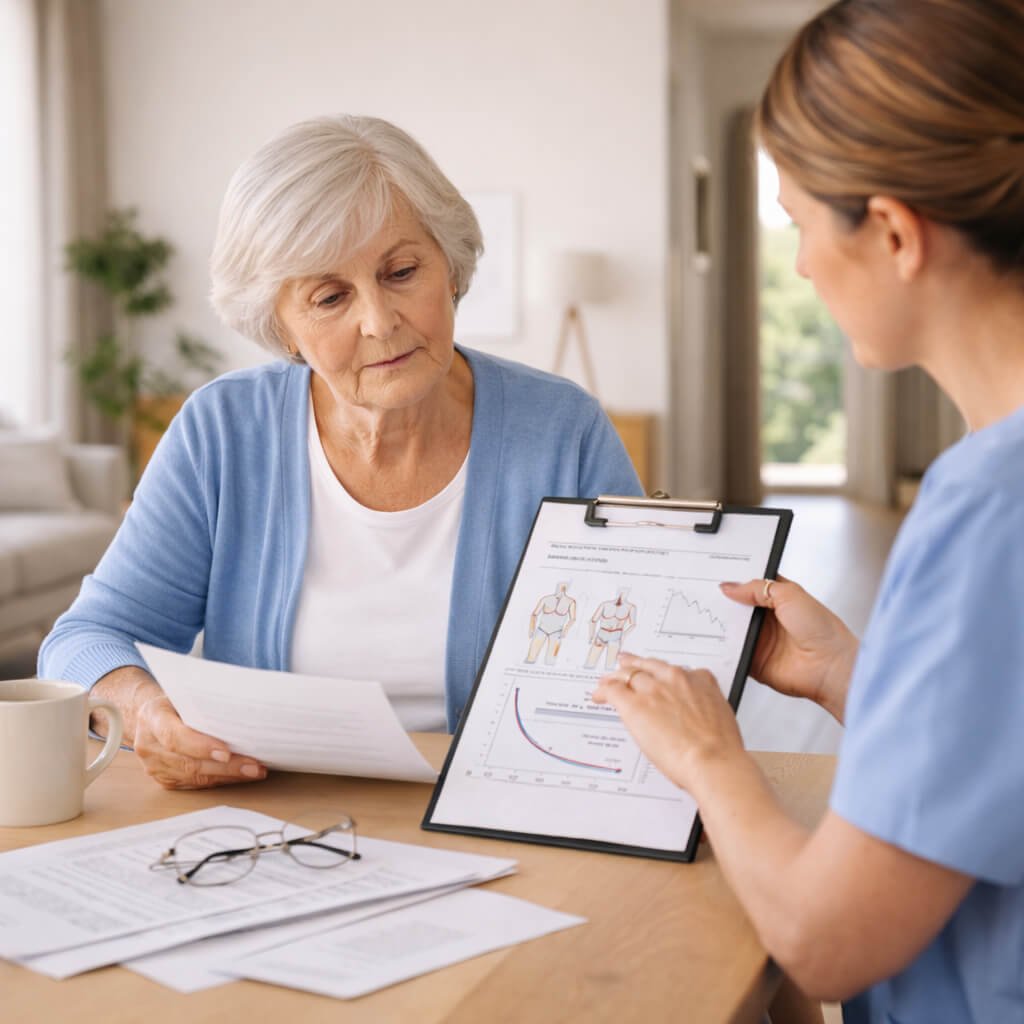
Mobility changes rarely appear overnight. Families usually notice small differences first. A parent may push off the armrests to stand instead of rising smoothly. They may steady themselves against a wall while walking down a hallway. Stepping into the shower may take longer because lifting one leg feels unstable. Walking speed may slow, and turning quickly may cause brief imbalance.
Daily routines often reveal these changes more clearly than formal medical tests. For example, someone who once carried groceries in one trip may now need several smaller trips. Climbing stairs may require a pause halfway up. Getting in and out of a car may involve gripping the door frame for support. Even standing long enough to cook a meal may lead to leg fatigue.
Over time, these adjustments affect participation in normal activities. Grocery trips may feel exhausting because of the walking and standing involved. Church services, family gatherings, or community events may feel overwhelming if there are stairs or long distances to cover. Fatigue may increase by the afternoon, leading to more time spent sitting. Gradually, the person may begin avoiding situations that once felt routine.
In some cases, the first clear warning sign is a near-fall. A stumble on a rug. A slip on a wet bathroom floor. A sudden loss of balance while turning. These events should not be dismissed as accidents. They often indicate reduced strength, slower reflexes, or environmental hazards that need attention. A near-fall is an opportunity to reassess safety before a serious injury occurs.
Mobility limitations also affect health in indirect ways. Reduced activity can slow circulation in the legs, increasing swelling. Sitting for long periods may worsen constipation. Bones may weaken when weight-bearing activity decreases. If preparing meals becomes difficult, nutrition may suffer. Over time, these secondary effects can compound physical decline.
It is important to understand that these changes may fluctuate. Movement may worsen during illness and improve with recovery. After a hospital stay, strength may decline quickly but improve with rehabilitation. Families should view mobility challenges as a dynamic process rather than a fixed state. Early attention, regular reassessment, and small adjustments can prevent minor difficulties from becoming major complications.
Building Daily Strength Safely
Improving strength does not require intense exercise or special equipment. Small, consistent efforts produce meaningful change over time. The goal is to maintain muscle activity safely and prevent further decline. Daily movement should match the individual’s current ability and medical condition.
Chair exercises are often a safe starting point. Sitting upright in a firm chair and slowly standing up without rushing strengthens the thighs and hips. Begin with five repetitions and increase gradually as tolerated. If standing without using hands is too difficult, use the armrests at first and reduce support over time. This exercise improves the muscles needed for safe transfers from chairs and toilets.
Holding a kitchen counter while slowly marching in place strengthens the hips and improves balance. The movement should be controlled, not fast. Ankle rotations and gentle heel raises while holding a stable surface help maintain joint flexibility and circulation. These small exercises reduce stiffness and improve stability during walking.
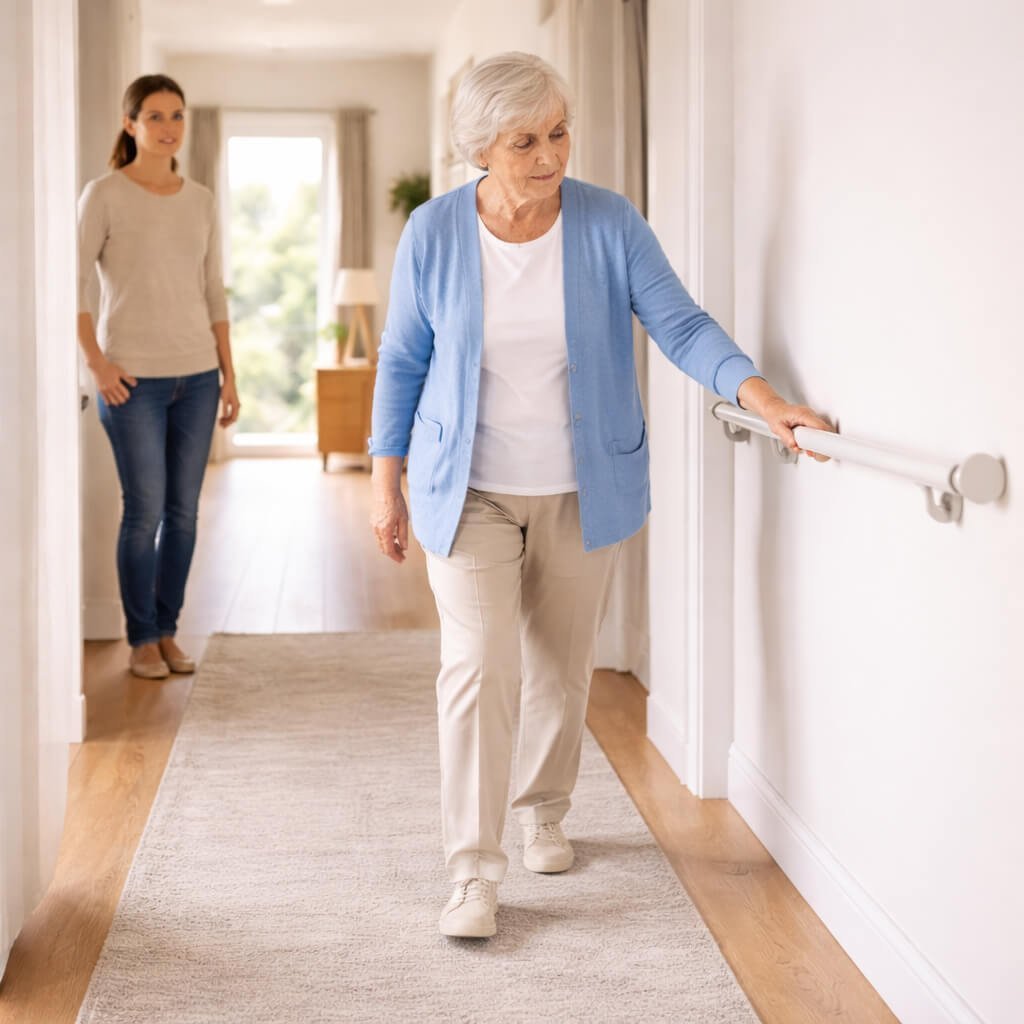
Walking inside the home is one of the simplest ways to preserve endurance. Even short hallway walks twice daily can prevent deconditioning. Before walking, ensure the pathway is clear of rugs or objects. Shoes should have firm soles and non-slip bottoms. Slippers without back support increase the risk of slipping. Encourage rest breaks before fatigue sets in, not after.
Breathing should remain steady during activity. If the person becomes short of breath, dizzy, or unusually fatigued, stop and allow recovery. Sudden symptoms should be discussed with a healthcare provider.
Hydration plays an important role in stability. Dehydration can lower blood pressure and cause dizziness when standing. Keep water easily accessible throughout the day unless fluid intake is medically restricted. Clear urine and regular urination are simple signs of adequate hydration.
Nutrition also supports muscle preservation. Adequate protein intake helps maintain strength. Examples include eggs, fish, beans, yogurt, and lean meats. If appetite is reduced, offering smaller meals more frequently may improve intake. Weakness often worsens when nutrition declines.
Medication review is essential. Some blood pressure medicines, sleep aids, or anxiety medications can cause lightheadedness or slowed reaction time. A healthcare provider can determine whether adjustments are needed.
Consistency matters more than intensity. Short daily sessions are safer and more effective than occasional strenuous effort. Regular movement supports strength, balance, and confidence.
Creating a Safer Home Environment
Home safety adjustments reduce injury risk without limiting independence. Begin with a slow walkthrough of the home while observing how your loved one moves. Notice where they pause, reach for support, or appear unsteady.
Hallways should remain wide and uncluttered. Remove loose cords, small tables, and unstable chairs. Rugs should either be secured with non-slip backing or removed entirely. Lighting should be bright but not glaring. Shadows can make depth perception difficult, especially in the evening.
Bathrooms are high-risk areas due to water and smooth surfaces. Install grab bars securely into wall studs near the toilet and inside the shower. Suction-mounted bars are unreliable. Non-slip mats or adhesive strips inside the tub improve traction. A shower chair may help if standing for long periods causes fatigue. Towels should be placed within easy reach to prevent stretching or twisting.
In bedrooms, ensure a clear path from the bed to the bathroom. A bedside lamp or motion-sensor nightlight reduces the risk of walking in darkness. Frequently used items such as glasses or phones should remain within arm’s reach.
In kitchens, store commonly used dishes and food at waist to shoulder height. Avoid step stools. Standing for long periods may cause fatigue, so encourage sitting while preparing food if needed.
Stairs require sturdy handrails on at least one side, ideally both. High-contrast tape on stair edges improves visibility, especially for those with visual changes.
Learning from how to support a loved one with limited mobility can provide additional caregiver strategies. Support should encourage safe independence rather than constant supervision.
When a home feels safe, fear decreases. Confidence often improves when environmental hazards are reduced.
Communication and Emotional Support
Physical safety alone is not enough. Emotional well-being strongly influences how a person responds to movement changes. Frustration, embarrassment, or fear may appear before physical decline is openly discussed.
Begin conversations with empathy. Instead of pointing out limitations, focus on shared goals such as staying independent or preventing injury. For example, say, “Let’s make this easier,” rather than “You can’t do this anymore.” Calm language reduces defensiveness.
Encourage involvement in decisions. Ask where grab bars would feel most helpful. Discuss exercise preferences. When individuals participate in planning, they are more likely to cooperate and feel respected.
Social connection protects mental health. If walking long distances is difficult, invite friends to visit at home. Short, seated social activities can maintain engagement without causing exhaustion. Video calls can help maintain family contact when travel feels unsafe.
Monitor for signs of depression. Persistent sadness, changes in appetite, sleep disturbances, or withdrawal from activities should be discussed with a healthcare provider. Emotional health directly affects physical recovery and motivation.
Maintaining purpose supports resilience. Small tasks such as sorting mail, watering plants, or folding laundry reinforce independence. These activities should match current ability and not cause strain.
Compassionate communication reduces tension between family members. A supportive tone encourages cooperation and helps preserve dignity.

Individual Health Factors That Affect Mobility Safety
Mobility planning must be individualised. Age alone does not determine risk. Medical history, vision, hearing, home layout, and emotional readiness all influence safety decisions.
Chronic conditions require specific adjustments. A person with arthritis may struggle with grip strength and joint stiffness. Larger, padded handles on walking aids reduce strain on the hands. Rising from low seating may be difficult, so firmer chairs with armrests provide safer support.
Someone recovering from stroke may have weakness on one side of the body. Transfers should be directed toward the stronger side when possible. Clear instructions and slow movements reduce confusion and imbalance.
Neurological conditions such as Parkinson’s disease can cause shuffling steps or freezing episodes. Clear floor pathways and visual markers may assist with step initiation. Turning slowly rather than pivoting quickly reduces fall risk.
Cardiovascular conditions may cause fatigue or dizziness. Blood pressure medications sometimes lower pressure too quickly when standing. Rising slowly from bed, pausing before walking, and installing support rails near the bed can prevent sudden imbalance.
Vision changes affect depth perception and contrast sensitivity. Bright but indirect lighting improves visibility. Avoid glossy floors that create glare. High-contrast markings on stair edges and thresholds reduce missteps.
Hearing impairment may limit awareness of alarms or approaching hazards. Visual alert systems, flashing doorbells, or vibrating devices can improve safety.
Temporary mobility decline also requires attention. Illness, surgery, or hospital stays can cause rapid muscle loss. Early rehabilitation and gradual return to activity prevent long-term weakness.
Each situation is unique. Collaboration with a healthcare provider ensures that exercise plans, medication adjustments, and home modifications match the individual’s needs. Regular reassessment allows changes to be addressed promptly and safely.
Frequently Asked Questions
1. What is reduced mobility?
Reduced mobility refers to difficulty moving safely and independently. It may involve slower walking, balance problems, or trouble standing from a seated position. It often results from aging, illness, injury, or chronic medical conditions.
2. What does decreased mobility mean?
Decreased mobility describes a decline in physical movement ability compared to a previous level. This may include reduced strength, endurance, or coordination that limits daily activities.
3. What does low mobility mean?
Low mobility generally indicates limited ability to move freely. It may require assistance, support devices, or environmental modifications to maintain safety.
4. How do you assist a patient with mobility problems?
Assistance begins with assessing safety. Clear pathways, provide stable support, and encourage gradual strength-building exercises. Support should promote independence rather than replace it whenever possible.
5. What are the effects of reduced mobility in older adults?
Mobility decline increases fall risk, muscle weakness, bone loss, and social isolation. Without intervention, it may also contribute to depression and reduced quality of life.
Final Thoughts
Mobility changes can feel overwhelming at first. However, many aspects of daily life can be adapted safely and thoughtfully. The goal is not to eliminate all risk but to manage it wisely.
Families who understand the physical, environmental, and emotional dimensions of mobility challenges are better prepared to respond calmly. Prevention is more effective than reaction. Small adjustments made early prevent larger problems later.
With education, communication, and practical planning, independence can be preserved. Dignity can remain intact. Safety and confidence can coexist.
Supporting a loved one through mobility changes is not simply about preventing falls. It is about protecting identity, strengthening relationships, and building an environment where movement—at any level—remains possible and respected.
Medical Disclaimer: The information provided on this website is for educational purposes only and should not replace professional medical advice. Always consult your physician or qualified healthcare provider regarding any medical condition or treatment decisions.