
Introduction
For many families, the decision to modify a home typically begins with a single, specific realization. It might be noticing a loved one gripping the towel rack for support, or a comment about feeling “unsteady” after a hot shower. Suddenly, the environment that felt safe for decades presents hidden challenges.
As we age, our bodies undergo natural physiological changes. Our balance (vestibular system) may become less sharp, our reaction times slow down, and our depth perception fades. Conditions like arthritis or neuropathy can make simple tasks, like turning a doorknob or stepping over a bathtub rim, painful or difficult. These changes can make standard household layouts—particularly in the bathroom—hazardous to navigate.
Creating a safe environment is not just about renovation; it is about preserving independence. From a medical standpoint, the fear of falling can be just as damaging as a fall itself. When seniors feel unsafe, they often limit their movement and hygiene routines, which can lead to faster physical decline.
Implementing senior friendly bathroom designs is one of the most impactful clinical interventions you can make to support aging in place. The goal is to transform the bathroom from a place of potential anxiety into a sanctuary of safety. This does not mean your home must look like a hospital. Whether you are planning a full remodel (such as installing a curbless shower) or looking for immediate, practical adjustments (like high-contrast non-slip mats), understanding the ergonomic principles of senior friendly bathroom designs is essential. This guide will walk you through the critical elements of a safe bathroom, helping you make informed decisions that blend functionality with dignity.
Why the Bathroom is the Danger Zone
From a medical perspective, the bathroom represents a unique convergence of environmental hazards. Unlike a bedroom with soft bedding or a living room with carpet, the bathroom is lined with unforgiving materials like ceramic tile, cast iron, and porcelain. If a fall occurs here, the impact energy is not absorbed by the floor; it is absorbed by the body—specifically the hip, wrist, or head.
The risk multiplies when you introduce water, soap residue, and steam to these non-porous surfaces. A floor that is safe when dry can become as slippery as ice the moment it gets wet, causing friction to drop instantly. This is why standard layouts often fail compared to specialized senior friendly bathroom designs that prioritize texture and stability.
Statistics from health organizations consistently identify the bathroom as the most common location for both non-fatal and fatal falls in the home. For older adults, a fall is rarely “just a fall”; it often acts as a precipitating event that changes a person’s life trajectory. A hip fracture, for example, can lead to immediate surgery, long-term immobility, and significant muscle atrophy.
This physical trauma is frequently followed by “post-fall syndrome,” a deep-seated fear of falling again. This psychological barrier causes seniors to limit their daily activity to avoid risk. Unfortunately, this lack of movement leads to joint stiffness and further physical weakness, creating a dangerous cycle of decline.
The danger typically lies in the “transitions,” or the moments when the body must change position or cross a threshold. Stepping over a high bathtub wall requires a person to balance on one wet foot while lifting the other leg high in the air. Similarly, lowering oneself onto a standard-height toilet forces the knees above the hips, creating a deep squat that requires significant quadriceps strength to exit.
Without proper support, a senior may lunge forward or grab an unstable towel bar to stand up. Even the simple act of walking from a carpeted hallway onto a slick tile floor creates a sudden change in footing that can catch a shuffling gait off guard. By proactively addressing these risks with senior friendly bathroom designs, we can significantly reduce the likelihood of injury. For a comprehensive assessment, you can refer to the Check for Safety: A Home Fall Prevention Checklist to identify potential risks in your own home.
The 3 Pillars of Safety
When evaluating senior friendly bathroom designs, it is helpful to think in terms of three core medical pillars: Stability, Visibility, and Accessibility. A truly safe bathroom addresses all three.
1. Stability
Stability refers to the physical support the environment provides. In a standard bathroom, we often rely on precarious objects for balance without realizing it—leaning on a sink edge or grabbing a towel bar. Effective senior friendly bathroom designs replace these unreliable supports with dedicated, weight-bearing fixtures. This ensures that at any point of transition (sitting, standing, stepping), there is a secure handhold available.
2. Visibility
As eyes age, they require more light to see clearly, and they struggle more with glare and contrast. A dimly lit bathroom hides tripping hazards like bathmats or water puddles. Visibility is about more than just brighter bulbs; it is about even distribution of light to reduce shadows and using contrasting colors to define edges, such as the edge of the shower or the toilet seat.
3. Accessibility
Accessibility means removing physical barriers that require effort to overcome. This includes widening doorways for walkers, removing curbs that require stepping up, and lowering or raising fixtures to ergonomic heights. The goal of all senior friendly bathroom designs is to minimize the physical exertion required to perform daily hygiene tasks.
Common Mistakes Seniors Make
In our effort to “make do” with existing spaces, many seniors and caregivers unintentionally introduce new risks. We often assume that because a bathroom has worked for years, it is still safe today. However, relying on habit rather than design can lead to dangerous workarounds. It is important to recognize these common pitfalls so they can be corrected with proper senior friendly bathroom designs.
- The “Towel Bar” Trap: Perhaps the most dangerous habit is using a towel bar for support. Towel bars are glued or lightly screwed into drywall; they are designed to hold a few pounds of fabric, not the body weight of an adult. When a person slips and grabs a towel bar, it often rips out of the wall, compounding the fall.
- The Rug Hazard: Another frequent error is the use of decorative “throw” rugs or mats without non-slip backing. While they may look nice, these loose textiles are major tripping hazards for anyone with a shuffling gait or a walker. The edges can easily curl up over time, creating a lip that catches a toe or a walker wheel. In a safe bathroom, every surface must be secured to the floor to prevent sliding or bunching underfoot.
- Over-Cluttering: Storing too many items on the vanity, toilet tank, or floor significantly reduces maneuvering space. When a senior loses their balance, their brain instinctively commands a “recovery step” to regain stability. If the floor is cluttered with hampers, scales, or wastebaskets, there is no clear space to plant that foot safely. This lack of open floor space turns a minor stumble into a full-impact fall.
- Ignoring “Near Misses”: Finally, families often overlook or dismiss “near misses” as harmless clumsiness. If a loved one mentions they “almost slipped” or appears physically exhausted after a simple bath, this is a critical red flag. From a medical standpoint, these incidents are often precursors to actual, traumatic falls. These warning signs should never be ignored; instead, they should trigger an immediate safety review to identify which senior friendly bathroom designs are needed.
Flooring: Non-slip Solutions
The foundation of any safe bathroom is the floor. Standard high-gloss bathroom tiles are essentially glass sheets when wet. In senior friendly bathroom designs, friction is your friend.
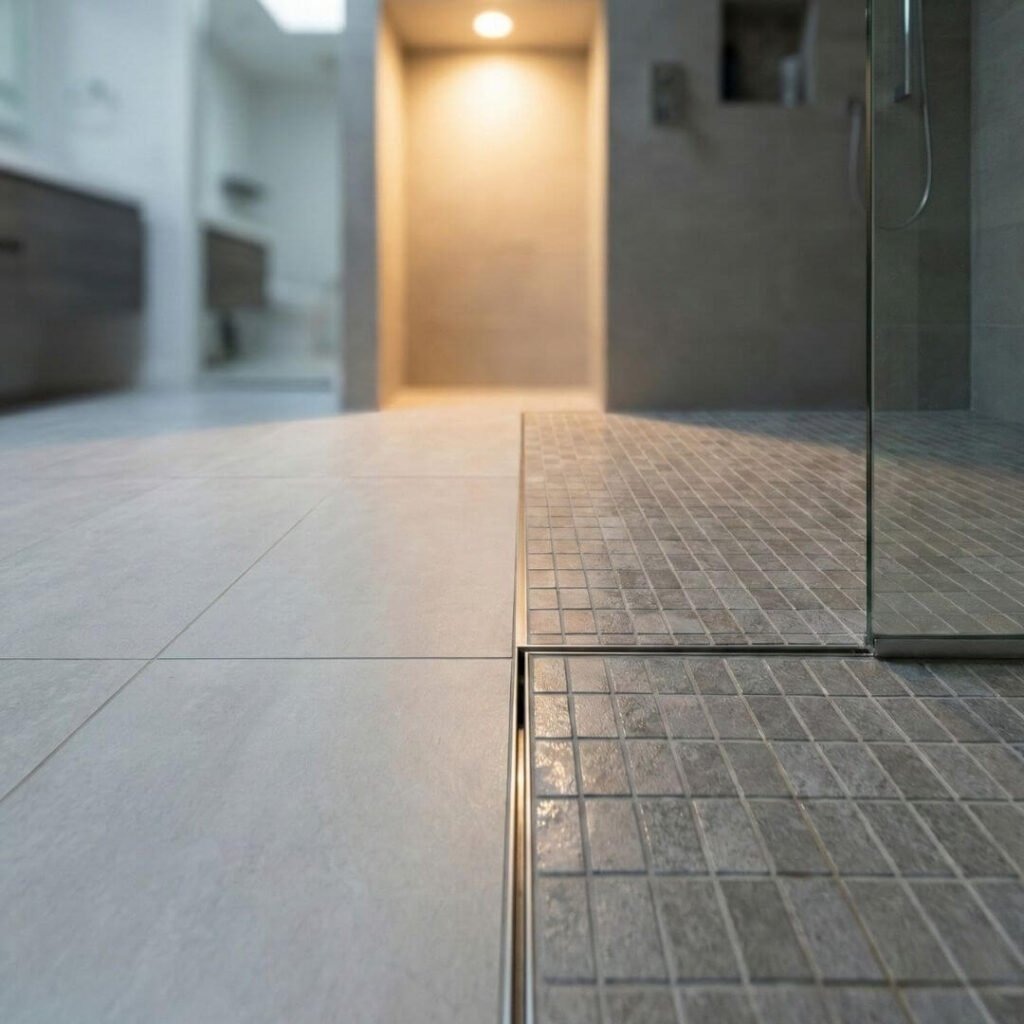
If you are renovating, prioritize the “coefficient of friction” (COF) when selecting tiles. Look for tiles rated specifically for wet areas. Smaller tiles (like mosaics) are often safer because the increased number of grout lines provides more texture and grip for the foot. Matte or honed finishes are far superior to polished ones.
If a renovation is not currently possible, you must address the existing surface.
- Treatments: There are anti-slip chemical treatments available that etch the surface of the tile microscopically to increase grip without changing the look.
- Mats: If you use mats, they must be specialized. Never use a standard towel on the floor. You need low-profile, rubber-backed mats that do not slide. We recommend placing non-slip rugs and mats specifically designed for seniors to ensure stable footing in high-moisture areas.
Toilets & Showers: Equipment Types
The toilet and the shower are the two areas where the most complex movements occur. Sitting down and standing up requires quadriceps strength, and stepping into a tub requires single-leg balance. Senior friendly bathroom designs focus heavily on optimizing these zones.
Optimizing the Toilet
Standard toilets are often too low (around 15 inches), making it difficult for seniors with knee or hip pain to stand up.
- Comfort Height Toilets: These are 17 to 19 inches high, similar to a dining chair. This added height significantly reduces the effort needed to sit and stand.
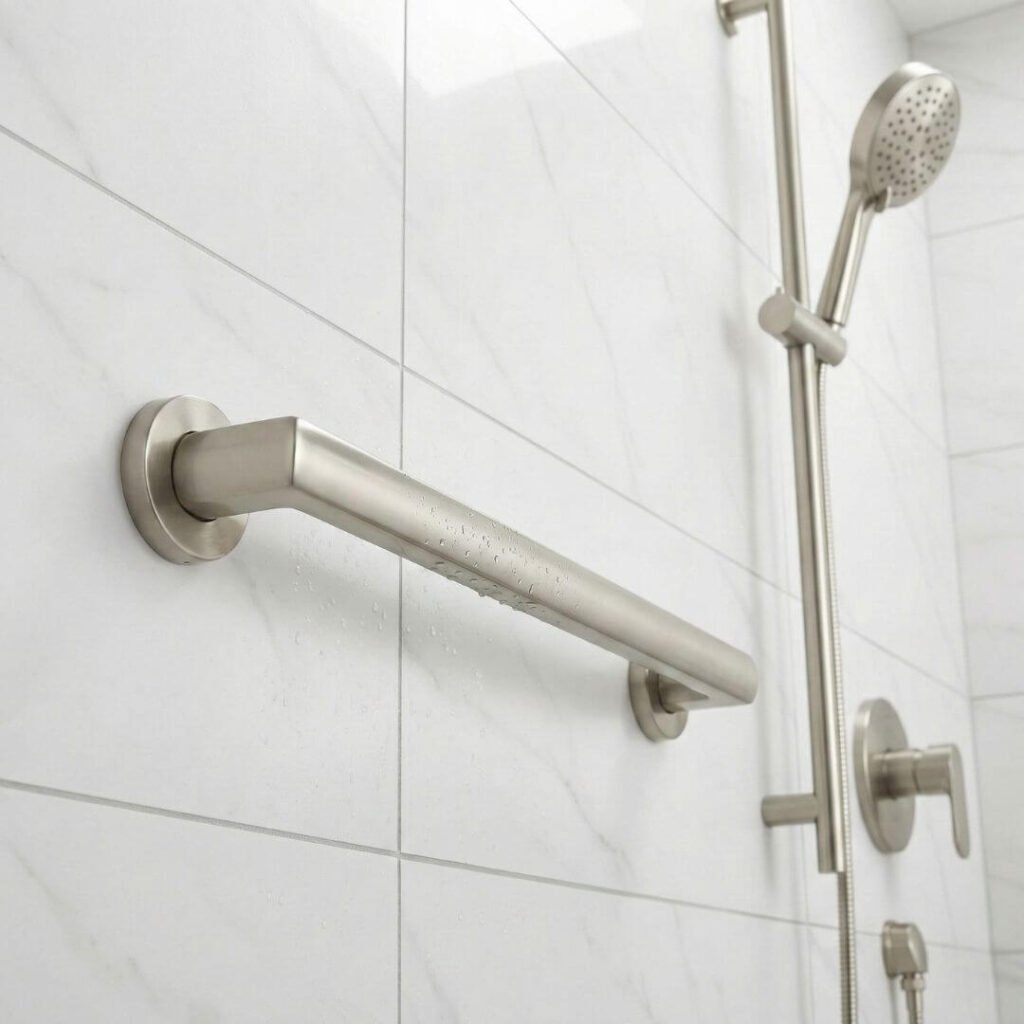
- Support Rails: Regardless of the toilet height, upper body support is crucial. This can be achieved with wall-mounted grab bars next to the toilet or by adding toilet safety rails that surround the unit, providing a sturdy frame to push up from.
Rethinking the Shower
The traditional tub-shower combination is one of the least accessible designs for seniors. The high wall of the tub requires a high step while balancing on a wet surface.
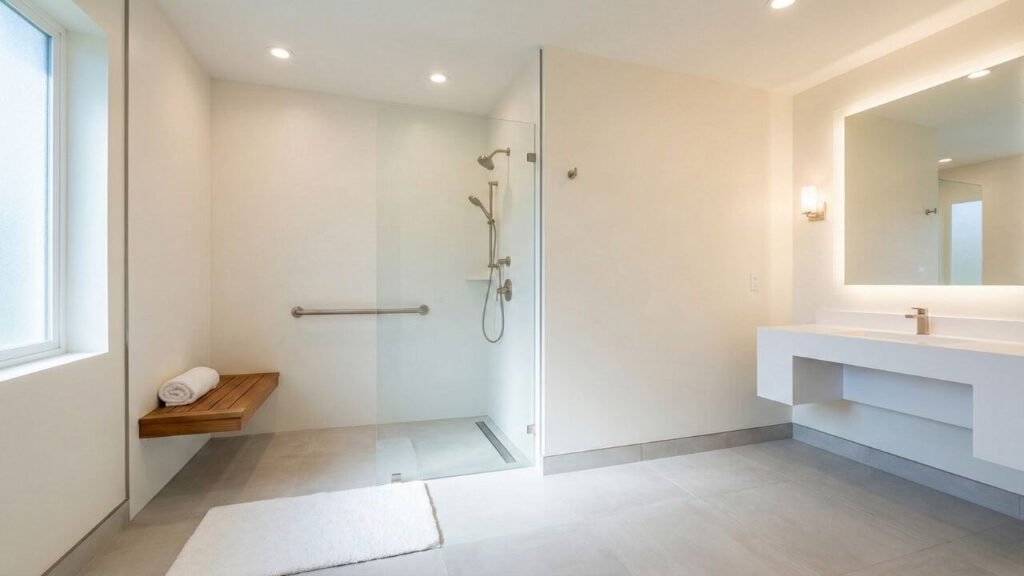
- Curbless Showers: As shown in our image plan, a walk-in shower with no curb is the gold standard in senior friendly bathroom designs. It allows a user to walk (or roll) straight in without lifting their feet.
- Seating: A shower is not safe unless there is a place to sit. A built-in bench or a sturdy, medical-grade shower chair allows the user to bathe without the fatigue of standing.
- Handheld Showerheads: Fixed showerheads force the user to move around the water. A handheld unit allows the user to sit safely and bring the water to them.
- Walk-In Tubs: For those who require the therapeutic benefits of soaking but cannot step over a standard tub wall, consider installing a walk-in tub with a watertight door as a valid medical alternative.
Lighting: Visibility Strategies
Lighting in senior friendly bathroom designs is often overlooked, yet it is critical for preventing falls and medication errors. As we age, our eyes need two to three times more light to see as well as they did in our 20s.
- Ambient Lighting: A single ceiling fixture is usually insufficient. Aim for uniform brightness that reaches into the corners of the room.
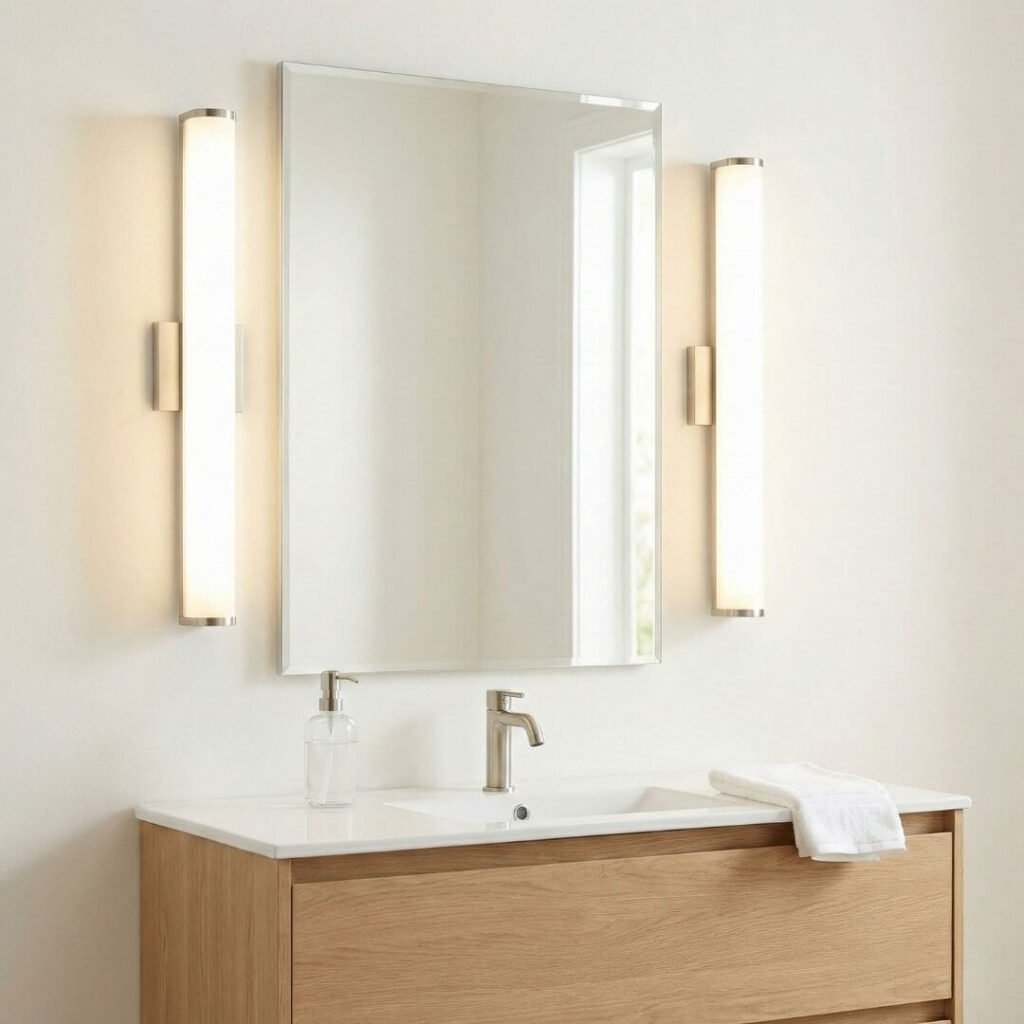
- Task Lighting: Vanity lighting should be placed at eye level on either side of the mirror. Overhead lights can cast deep shadows on the face, making it hard to shave or apply makeup.
- Night Lighting: The path from the bedroom to the bathroom must be illuminated. Motion-sensor night lights are an excellent, low-cost solution that prevents seniors from navigating in the dark.
- Glare Reduction: Avoid exposed bulbs. Use frosted shades or recessed lighting with diffusers to soften the light, preventing the “dazzle” effect that can temporarily blind aging eyes.
Special Considerations: Dementia or Severe Mobility Issues
When creating senior friendly bathroom designs for seniors with specific conditions like dementia or severe mobility restrictions (such as wheelchair use), the approach must be more specialized.
Cognitive Considerations (Dementia/Alzheimer’s)
For seniors with cognitive decline, safety is also about perception.
- Contrast is Key: A white toilet on a white floor against a white wall can essentially disappear. Use a colored toilet seat (like blue or grey) to create visual contrast so the user can clearly see the target.
- Simplify: Reduce visual clutter. Mirrors can sometimes cause confusion or distress; in some stages of dementia, covering or removing large mirrors is recommended.
- Locking Hazards: Ensure that medication cabinets are secure and that the door lock can be opened from the outside in case of an emergency.
Mobility Considerations (Wheelchairs)
If a wheelchair is needed, space becomes the priority in senior friendly bathroom designs.
- Turning Radius: A standard wheelchair requires a 5-foot turning radius (60 inches) to turn around completely. This often requires removing vanity cabinets to create open space under the sink.
- Lever Handles: Replace round door knobs and faucet handles with levers. Levers are much easier to operate for those with arthritis or limited grip strength.
Frequently Asked Questions
1. How to design a bathroom for seniors?
Designing a bathroom for seniors starts with an assessment of their specific physical needs. Begin by removing immediate hazards like throw rugs and installing grab bars in the shower and near the toilet. For complete senior friendly bathroom designs, focus on a curbless shower entry, non-slip flooring, adequate lighting, and a comfort-height toilet. The goal is to minimize the need for stepping, bending, and reaching.
2. What are the best small bathroom ideas for seniors?
In a small bathroom, maximizing space is crucial. Use a pedestal sink or a wall-mounted vanity to create more floor space for maneuvering a walker. Install a sliding pocket door instead of a swinging door to free up usable room. Vertical storage can keep clutter off the floor, and strategically placed grab bars can double as towel holders (if they are rated for weight) to save space.
3. How can I make my bathroom senior friendly?
You can make a bathroom senior-friendly immediately by improving lighting with brighter LED bulbs and adding night lights. Install a raised toilet seat or safety frame, place a sturdy shower chair in the bathing area, and apply non-slip strips to the tub floor. Replace traditional twist knobs on faucets with lever handles for easier operation.
4. What is the best elderly friendly bathroom layout?
The best layout places the most frequently used items in the most accessible locations. The toilet should be near the entrance so the senior does not have to cross the entire room to reach it, especially at night. The shower should be curbless with controls that are reachable from outside the water stream or from a seated position.
5. What should I consider for a senior friendly bathroom remodel?
For a remodel, consider the “future-proofing” of the home. Reinforce the walls behind the shower and toilet areas with blocking (wood supports) so that grab bars can be installed anywhere in the future. Widen the doorway to at least 32-36 inches to accommodate wheelchairs. Choose durable, non-slip materials that require low maintenance, reducing the physical burden of cleaning.
Final Thoughts
Creating a safe home environment is an investment in peace of mind. Implementing senior friendly bathroom designs allows our loved ones to maintain their dignity and independence for as long as possible. While the list of modifications may seem extensive, you do not have to do everything at once. Start with the most critical safety features—grab bars, lighting, and non-slip surfaces—and work your way through the list.
Remember, the best time to make these changes is before a fall occurs, not after. By taking proactive steps today, you are building a safer, more supportive home for tomorrow. For more resources on long-term planning, the National Institute on Aging offers excellent guidance on Aging in Place.