
Introduction
Falls that happen after dark are among the most common and most preventable injuries in older adults. Every year, millions of seniors experience a fall in their own home, and a significant number of those falls happen at night — often during something as routine as getting up to use the bathroom. The problem of seniors falling at night is one that many families do not think about until it happens. By then, the consequences can be serious.
What makes nighttime falls particularly concerning is that they often occur when no one else is awake to help. A senior who falls at two in the morning may lie on the floor for hours before being found. The injury itself may be compounded by cold, fear, and the physical stress of being unable to get up. For families and caregivers, understanding why seniors falling at night happens so often and what can be done to prevent it is not just helpful — it is essential.
This guide walks through the most common reasons older adults fall after dark, the physical and environmental factors that increase the risk, and the practical steps families can take to make nighttime safer. Whether you are a senior looking to protect yourself or a family member supporting a loved one, the information here is grounded in what physicians and rehabilitation professionals routinely recommend.
Why Nighttime Is the Most Dangerous Time for Senior Falls
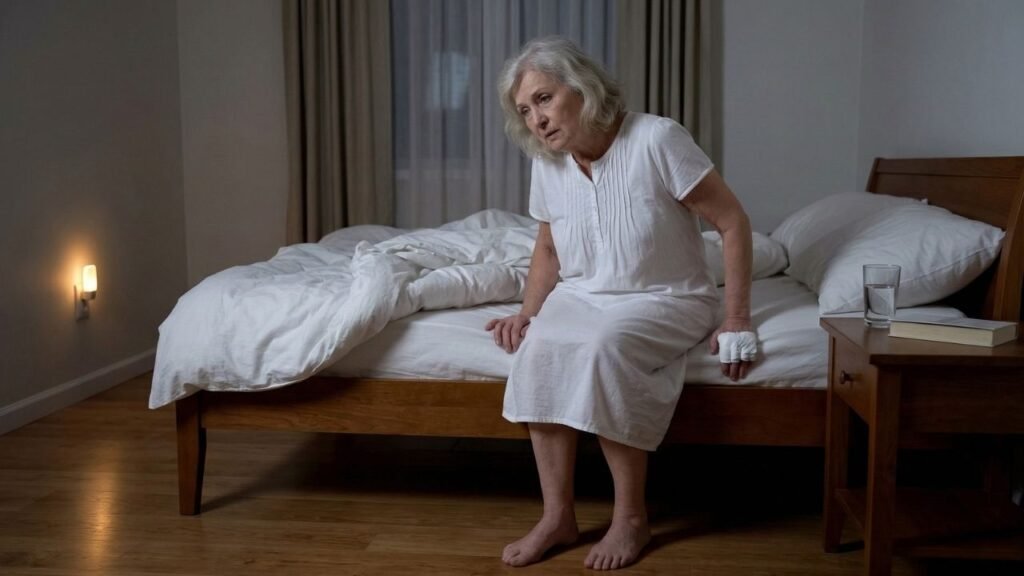
There is a reason falls happen more often after dark. During the day, a senior has the benefit of natural light, alertness, and often the presence of another person nearby. At night, all of those advantages disappear. The bedroom is dark. The body is groggy. Balance is compromised by the transition from lying down to standing. And in most cases, the senior is alone.
Age-related changes in vision make it harder to see in low light. The pupils become less responsive, the lens filters more light, and the contrast sensitivity that helps distinguish a dark rug from a dark floor fades with age. For many older adults, walking in a dim room is closer to walking blindfolded than most families realize.
There is also a physiological factor that many families overlook. When a person who has been lying flat sits up or stands quickly, blood pressure can drop temporarily. This is called orthostatic hypotension, and it is especially common in older adults taking blood pressure medication. The result is a brief moment of dizziness — sometimes just enough to cause a loss of balance. Combined with a dark room and an urgent need to reach the bathroom, this is exactly why seniors falling at night is not just possible but likely.
Sleep itself also plays a role. The transition from deep sleep to full wakefulness is not instant, particularly in older adults. During those first few seconds after waking, reaction time is slower, spatial awareness is reduced, and the brain may not fully register hazards in the environment. A senior who is half-awake and moving quickly toward the bathroom is operating with significantly diminished physical and cognitive resources compared to the same person walking the same path during the afternoon.
Families who are focused on understanding fall risks in seniors and how to prevent them often discover that nighttime is where the greatest vulnerability lies.
The Three Main Factors Behind Nighttime Falls
Most nighttime falls can be traced back to three overlapping categories: physical changes, environmental hazards, and medication effects. Understanding how these areas interact helps explain why seniors falling at night is so common and where prevention should be focused.
Physical changes include the gradual loss of muscle strength, reduced balance, slower reflexes, and impaired vision that come with aging. Conditions like arthritis, neuropathy, and inner ear disorders further compromise stability. Neuropathy is particularly relevant — when the nerves in the feet cannot accurately sense the floor, the brain receives incomplete spatial information. During the day vision compensates, but in a dark room that compensation disappears. According to the CDC’s research on facts about falls in older adults, more than one in four adults aged 65 and older falls each year, and the risk increases with age.
Environmental hazards are the physical features of the home that become dangerous in the dark. Loose rugs, cluttered walkways, poor lighting, high bed frames, and slippery bathroom floors are all common contributors. During the day, a senior may navigate around shoes left near the bed without thinking. At night, those same shoes become an invisible tripping hazard. Power cords along the floor, a pet’s water bowl, or a bathroom scale near the toilet can become the difference between a safe trip and a fall.
Medication effects round out the picture. Many medications prescribed to older adults — including sleep aids, sedatives, blood pressure medications, and certain antidepressants — can cause drowsiness, dizziness, or impaired coordination. When a senior takes one of these before bed and then wakes to use the bathroom, the drug’s effects may still be active at the worst possible moment. Even over-the-counter sleep aids can have a significant impact on balance in an older adult.
When all three factors converge, the result is a fall risk significantly higher than anything the senior faces during waking hours.
How Nighttime Falls Typically Happen
Seniors falling at night is not random. These incidents follow predictable patterns that, once recognized, can often be interrupted.
The most frequent scenario involves getting up to use the bathroom. The senior wakes from sleep, feels the urgency to go, and moves quickly from lying to standing. The room is dark. Blood pressure has not yet adjusted. The senior takes a few unsteady steps, misjudges the distance to a doorframe or piece of furniture, and loses balance. In many cases the fall happens within the first few steps away from the bed. The urgency that comes with needing to use the bathroom overrides caution — a senior who would normally take their time during the day may rush at night simply because the body is telling them to hurry.
Another common scenario involves reaching for something — a glass of water, a phone, or a remote control that has slipped out of reach. The senior leans too far over the edge of the mattress, shifts their center of gravity beyond the point of recovery, and falls to the floor. This is a particular concern for seniors who sleep in beds without rails.
A third pattern involves confusion or disorientation. Seniors with cognitive decline may wake up unsure of where they are. They may attempt to get out of bed on the wrong side or walk toward a wall instead of the door. For these individuals, the fall risk is compounded by an inability to assess the environment accurately. Even a room they have slept in for decades can feel unfamiliar during a moment of nighttime confusion.
A less discussed scenario involves the return trip. A senior may successfully reach the bathroom but fall on the way back. By this point the urgency has passed, fatigue has deepened, and the brief exertion may have caused additional lightheadedness. The return trip is often made with less caution and more haste.
In each case, the fall results from several small risks combining at the same time. That is why prevention works best when it addresses multiple factors simultaneously.
What Can Happen When a Senior Falls at Night
The consequences of seniors falling at night can be far more serious than a daytime fall, largely because of the delay in getting help. At night, a senior who falls may not be discovered for hours. This delay — sometimes called a “long lie” — is associated with significantly worse outcomes.
Hip fractures are one of the most common serious injuries. A broken hip almost always requires surgery followed by months of rehabilitation. For many seniors, a hip fracture marks a permanent decline in independence. Head injuries are another significant concern, particularly if the senior strikes a nightstand or hard floor surface. Even a fall from standing height can cause a subdural hematoma that may not produce symptoms for hours or days.
Beyond the physical injury, lying on the floor unable to get up can lead to hypothermia, dehydration, and skin breakdown that begins in as little as two hours on a hard surface. Many seniors who experience a nighttime fall develop a deep fear of falling again, leading them to restrict their own movement — a response that ironically accelerates the decline that made them vulnerable in the first place. This cycle of reduced activity, increased weakness, and higher fall risk is one of the most harmful long-term consequences of a single fall.
The emotional toll extends to family members as well. Discovering a loved one on the floor triggers urgent conversations about safety, living arrangements, and the level of care needed. Many of these difficult decisions can be avoided by taking preventive action before the first fall occurs.

Practical Steps to Reduce Nighttime Fall Risk
Preventing seniors falling at night does not require expensive equipment or dramatic changes. A combination of small, practical adjustments applied consistently can make a meaningful difference.
Reviewing medications with the senior’s physician is one of the most important steps. Any drug that causes drowsiness, dizziness, or low blood pressure should be evaluated for timing and necessity. Families should bring a complete list of all medications, including over-the-counter drugs and supplements, since interactions between multiple substances are a common contributor to balance problems. This is a conversation worth having at every routine appointment.
Encouraging the senior to sit on the edge of the bed for thirty seconds before standing is simple but effective. This pause allows blood pressure to stabilize. Some physical therapists recommend a three-step process: sit up slowly, pause and breathe, then stand while holding something stable. This deliberate approach directly addresses the orthostatic hypotension that contributes to so many nighttime falls.
Limiting fluid intake in the two hours before bedtime can reduce nighttime bathroom trips. This should be balanced with adequate daytime hydration and discussed with a healthcare provider. Shifting the majority of fluid intake to the morning and early afternoon is often an effective compromise.
Regular vision checks are also essential. Outdated prescriptions or untreated cataracts can significantly impair low-light vision. Ensuring that glasses are kept on the nightstand within easy reach is a small detail that matters more than most families realize. If a senior wears bifocals or progressive lenses, looking down through these while walking can distort depth perception — a particular concern during nighttime movement.
Strength and balance exercises, even gentle ones performed while seated or lying down, can improve a senior’s physical resilience over time. Stronger legs and better balance mean that even if a moment of dizziness occurs, the senior is more likely to recover without falling.
The National Institute on Aging’s guidance on falls and fractures in older adults reinforces that even modest interventions, when applied consistently, can reduce fall risk by a significant margin.
Making the Bedroom and Bathroom Safer at Night
The physical environment plays an enormous role in why seniors falling at night happens as often as it does. A bedroom and bathroom that feel safe during the day can become obstacle courses in the dark.
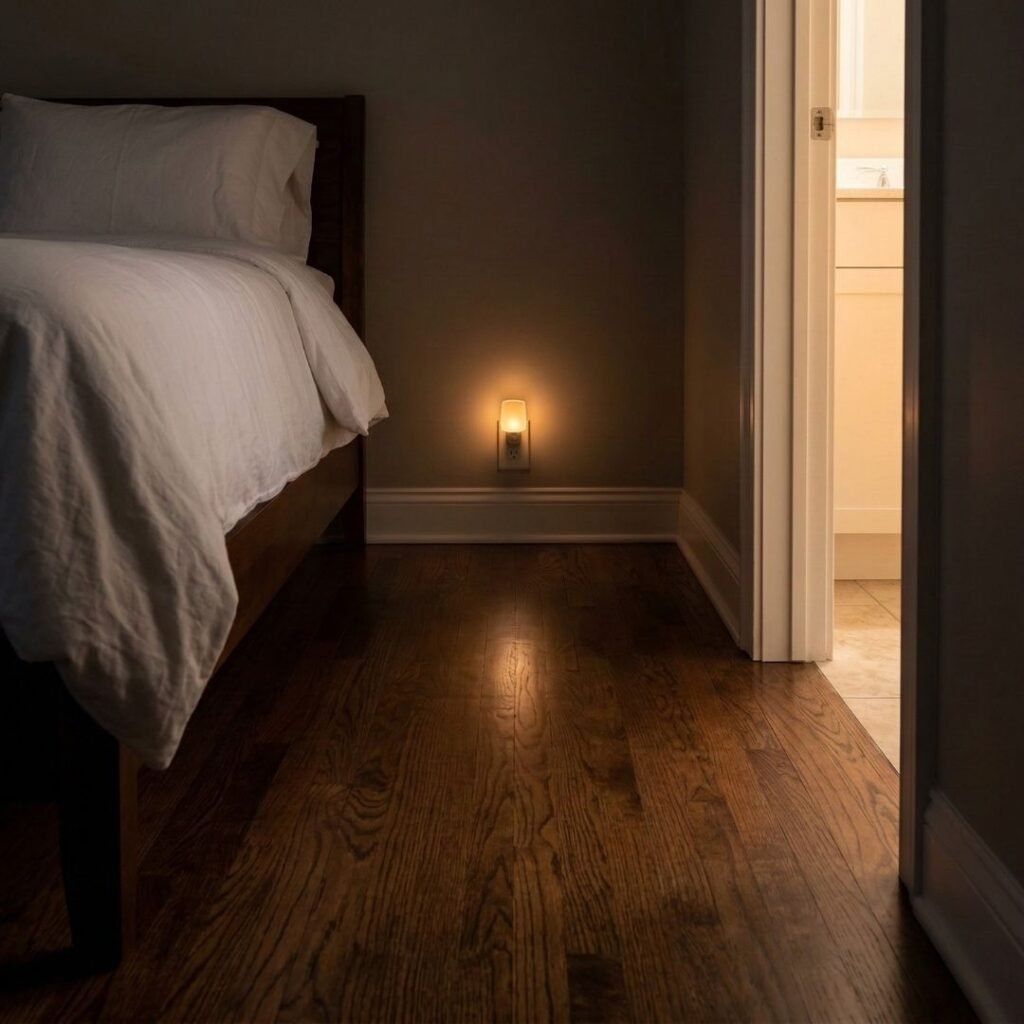
Lighting is the single most important change. Plug-in nightlights along the path from bed to bathroom create a visible route without requiring the senior to fumble for a switch. Motion-activated lights are even better — they turn on automatically when the senior’s feet hit the floor. Warm-toned lights are preferred because they provide enough visibility without being so harsh that they disrupt sleep.
The path between bed and bathroom should be completely clear. Remove loose rugs, relocate furniture that narrows the walkway, and keep shoes, cords, and other items off the floor. If a rug is absolutely necessary, it should be secured with double-sided tape or a non-slip backing so it cannot bunch or slide. Families working on making their home safer for seniors often find that this corridor is the highest-priority area to address.
In the bathroom, grab bars near the toilet and inside the shower provide critical support. These should be installed into wall studs, not attached with suction cups or adhesive. Non-slip mats reduce the risk of slipping on wet tile. A raised toilet seat can reduce the effort required to sit and stand when a senior is groggy. Leaving a dim nightlight on in the bathroom at all times ensures the senior never enters a dark room.
The bed itself matters too. A mattress that is too high forces the senior to drop farther when getting out. Bed rails provide a stable handhold during the transition from lying to standing. Keeping a phone, flashlight, and water within arm’s reach on the nightstand eliminates the need to lean or get up for basic needs. Some families also place a cushioned bedside fall mat on the floor next to the bed to reduce injury severity if a fall does occur.
Special Considerations for Caregivers and Family Members
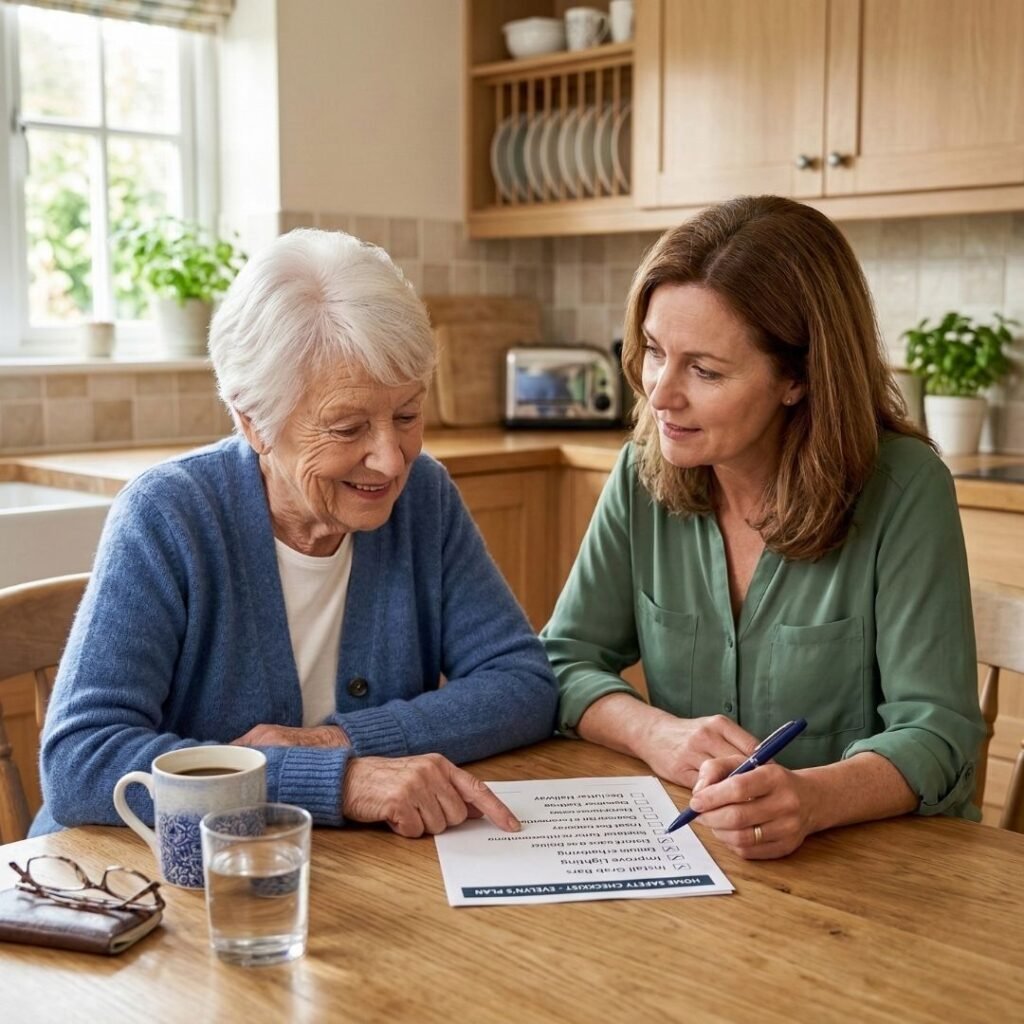
Caregivers play a central role in preventing seniors falling at night, but the approach needs to be tailored to each situation.
For seniors with dementia, nighttime wandering is a significant concern. Bed alarms or motion sensors that alert a caregiver when the senior gets up can provide an early warning system. The goal is not to restrict movement but to ensure someone is aware when the senior is moving in the dark. Some families find that placing a commode chair next to the bed eliminates the need for nighttime bathroom trips entirely, which is especially helpful for individuals who become disoriented.
For seniors recovering from surgery or hospitalization, the first few weeks at home are the highest-risk period. Muscles may have weakened, medications may have changed, and the senior may be adjusting to new limitations. A caregiver may need to assist with nighttime bathroom trips until the senior regains strength. Temporary modifications — such as moving the senior closer to the bathroom or placing a portable urinal within reach — can reduce risk during recovery.
For seniors who live alone, a medical alert system can be lifesaving. The senior should wear the device at all times, including during sleep, since it does not require locating and dialing a phone while injured on the floor.
Knowing how to care for a senior after a fall is equally important. Staying calm, checking for injuries before helping the senior up, and knowing when to call for emergency assistance are skills that should be reviewed before they are needed. Having a plan in place removes the panic from the moment and allows the caregiver to respond effectively.
It is also worth having an honest conversation with the senior about nighttime safety. Many older adults resist changes because they feel it threatens their independence. Framing the conversation around safety rather than limitation — and involving the senior in decisions — tends to produce better long-term cooperation. A senior who helps choose the nightlight and agrees to the grab bar placement is far more likely to follow through than one who feels changes have been imposed without their input.
Frequently Asked Questions
1. Why does my elderly parent keep falling at night?
The most common reasons include poor lighting, medication side effects, orthostatic hypotension, weakened muscles, and the urgent need to use the bathroom. Many seniors experience several of these factors at the same time, which is why seniors falling at night is more frequent than daytime falls. A physician evaluation can help identify which specific factors are contributing.
2. How can I prevent a senior from falling at night?
Install nightlights along the path from bed to bathroom, remove tripping hazards, and add grab bars in the bathroom. Encourage the senior to sit on the edge of the bed for thirty seconds before standing. Review all medications with their doctor to identify any that cause dizziness or drowsiness. These changes, applied consistently, can significantly reduce risk.
3. Should an elderly person go to the hospital after a fall?
Any fall that results in a head injury, loss of consciousness, inability to bear weight, visible swelling, or significant pain should be evaluated in an emergency department. Even if the senior appears fine, delayed symptoms such as confusion or increasing pain in the hours that follow warrant medical attention. When in doubt, seek evaluation.
4. What are the most common causes of nighttime falls in seniors?
The three main categories are physical factors (muscle weakness, poor balance, blood pressure drops), environmental factors (dark rooms, clutter, slippery floors, high beds), and medication effects (drowsiness or impaired coordination from prescription drugs). Most nighttime falls result from a combination of these rather than a single cause, which is why effective prevention addresses all three areas.
5. Can home modifications help prevent nighttime falls?
Yes. Key changes include adding nightlights or motion-activated lights, installing grab bars near the toilet and shower, removing loose rugs and clutter, using non-slip mats, and ensuring the bed is at an appropriate height. These modifications create a safer path for nighttime movement and are one of the most effective strategies for reducing seniors falling at night.
Final Thoughts
Seniors falling at night is not an inevitable part of aging. It is the result of identifiable risk factors — most of which can be managed with the right combination of awareness, environmental changes, and medical guidance. The fact that so many of these falls happen during predictable activities, in predictable locations, means that prevention is not only possible but practical.
The most effective approach is also the simplest: address the lighting, clear the path, review the medications, and give the senior the tools they need to move safely. These are not dramatic interventions. They are quiet, consistent adjustments that protect a senior’s safety without taking away their independence. For families and caregivers, the time to act is before the first fall — not after.
Medical Disclaimer: The information provided on this website is for educational purposes only and should not replace professional medical advice. Always consult your physician or qualified healthcare provider regarding any medical condition or treatment decisions.