
Affiliate Disclaimer: This article contains affiliate links. As an Amazon Associate, Mobility With Ease may earn a small commission from qualifying purchases at no additional cost to you.
Introduction
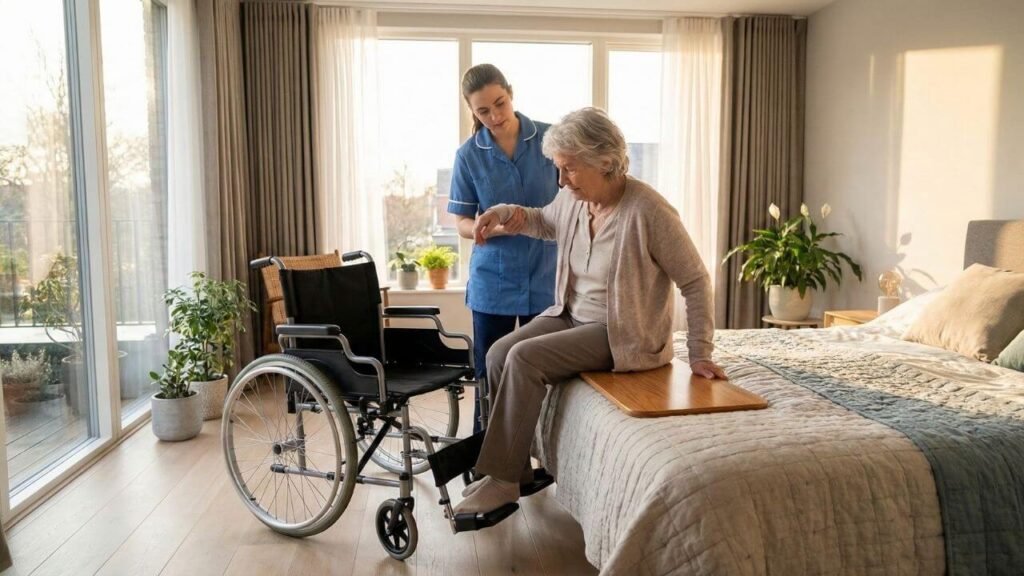
Transferring from a bed to a wheelchair, from a wheelchair to a chair, or from a wheelchair into a car is one of the most physically vulnerable moments for many older adults. These movements require balance, coordination, and lower-body strength—abilities that often decline gradually with age, illness, or injury. Even seniors who walk independently or feel “steady enough” can struggle during transfers, especially when surfaces are uneven, heights don’t align perfectly, or fatigue sets in.
For caregivers, transfers are equally risky. Sudden shifts in weight, loss of balance, or improper lifting technique can result in back strain, shoulder injuries, or falls for both the caregiver and the senior. In home care settings, many injuries occur not during walking, but during everyday transfers that seem routine—until something goes wrong.
Properly chosen transfer boards for elderly adults can significantly reduce these risks. Transfer boards and slide sheets are designed to create a stable, controlled pathway between surfaces, minimizing the need for lifting and allowing movement to occur gradually and safely. When used correctly, these tools improve confidence, protect fragile skin, reduce caregiver strain, and make daily transfers more predictable and manageable.
However, not all transfer aids are interchangeable—and not every option is appropriate for every senior. Factors such as upper-body strength, sitting balance, cognitive function, caregiver availability, and transfer environment all play an important role in determining whether a transfer board, a slide sheet, or another mobility solution is safest.
This guide reviews the best transfer boards and slide sheets for seniors in 2026, explains how each option works, outlines who they’re most appropriate for, and provides practical, doctor-reviewed guidance on using them safely at home. Whether you’re caring for a loved one or planning ahead to age more safely in place, the goal is the same: fewer injuries, less strain, and more confidence during everyday movement.
Why Transfer Boards Matter for Seniors and Caregivers
Transfers are a common source of injuries for both older adults and the people helping them. Slips, sudden loss of balance, or improper lifting teTransfers are one of the most injury-prone activities in home caregiving, and they’re often underestimated because they happen multiple times a day. Moving from a bed to a wheelchair, from a wheelchair to a chair, or from a wheelchair into a car requires a coordinated shift of body weight while balance is temporarily compromised. For older adults, even small missteps during this moment can result in falls, fractures, or soft-tissue injuries.
From a medical perspective, transfers place stress on the exact systems that tend to weaken with age: lower-extremity strength, core stability, reaction time, and joint flexibility. Conditions such as arthritis, neuropathy, prior strokes, or generalized deconditioning can make it difficult for seniors to bear weight evenly or correct themselves if balance is lost. When transfers rely on “holding on” or being lifted manually, the risk escalates quickly.
Caregivers face their own set of risks. Sudden shifts in a senior’s weight, unexpected loss of balance, or awkward positioning can lead to acute back strain, shoulder injuries, or chronic musculoskeletal problems. Many caregiver injuries occur not from heavy lifting, but from twisting while supporting weight, reaching at an awkward angle, or trying to “save” a transfer mid-movement when something goes wrong.
Transfer boards address these risks by changing how movement occurs. Instead of relying on lifting or pivoting, they allow the senior to slide laterally across a stable surface, keeping body weight supported throughout the transfer. This reduces vertical loading on joints, minimizes sudden weight shifts, and allows movement to happen in a controlled, step-by-step manner rather than all at once.
Specifically, transfer boards help by:
- Creating a secure bridge between two surfaces, reducing gaps that can cause slips
- Minimizing the need for lifting, twisting, or sudden force from caregivers
- Allowing transfers to occur at a consistent pace rather than rushed movements
- Providing a predictable pathway that improves confidence and coordination
Beyond physical safety, transfer boards also play an important psychological role. Many seniors develop fear around transfers after a near-fall or injury, which can lead to hesitation, stiffness, or freezing during movement—ironically increasing fall risk. Using a transfer board can restore a sense of control and predictability, making transfers feel safer and less intimidating.
Transfer boards are particularly valuable for seniors who:
- Use a wheelchair for part or all of the day
- Have limited leg strength but reasonable upper-body function
- Are recovering from surgery, injury, or hospitalization
- Experience fatigue that worsens balance later in the day
When chosen appropriately and used correctly, transfer boards reduce injury risk, preserve independence, and make daily care routines safer and more sustainable for both seniors and caregivers.
Doctor’s Note: When Transfer Boards Are (and Aren’t) Appropriate

Transfer boards can be extremely effective when used in the right clinical context, but they are not a universal solution for all seniors with mobility limitations. From a medical standpoint, the key question is not whether a transfer board exists—but whether the senior can use one safely and predictably.
Transfer boards are most appropriate for seniors who have adequate sitting balance and some upper-body control, even if lower-body strength is limited. The individual does not need to be fully independent, but they should be able to remain upright while seated and participate in the transfer process. In these cases, a transfer board allows weight to remain supported throughout the movement rather than relying on standing or pivoting, which significantly reduces fall risk.
They are especially useful for lateral transfers, such as wheelchair to bed, wheelchair to chair, or wheelchair to car, where surfaces are relatively close in height and can be aligned securely. When a caregiver is present, transfer boards can also reduce caregiver strain by replacing lifting with guided movement.
However, transfer boards are not appropriate for every situation, and misuse can actually increase risk. Seniors with poor trunk control, significant asymmetry from prior strokes, or inability to maintain sitting balance may slide unpredictably or collapse forward during a transfer. In these cases, the transfer board does not provide sufficient stability to compensate for the underlying deficit.
Cognitive factors matter as well. Seniors with advanced dementia, impaired judgment, or difficulty following instructions may not understand how to remain positioned on the board or may attempt to stand or move suddenly mid-transfer. This unpredictability can make transfer boards unsafe even if physical strength appears adequate.
There are also medical and situational red flags where transfer boards should generally be avoided:
- Severe generalized weakness or inability to assist at all
- Uncontrolled pain that limits participation
- Recent fractures or unstable orthopedic injuries
- Severe spasticity or involuntary movements
- Very large height differences between surfaces
In these scenarios, mechanical lift devices—such as sit-to-stand lifts or full-body lifts—often provide a safer alternative by fully supporting body weight and eliminating the need for active participation.
When there is uncertainty, a physical therapist or occupational therapist assessment is invaluable. These professionals evaluate strength, balance, coordination, cognition, and environment together, helping determine whether a transfer board is appropriate—or whether another transfer method would reduce risk more effectively.
Used in the right context, transfer boards can be a powerful tool for preserving independence and safety. Used in the wrong one, they can create a false sense of security. Careful selection matters.
Best Transfer Boards and Slide Sheets for Seniors (2026)
Best Overall Transfer Board for Elderly Adults
Drive Medical Bariatric Transfer Board with Hand Holes is a heavy-duty wooden board designed for stable, everyday transfers.
This board features smooth laminated wood and built-in hand holes that allow caregivers to maintain better control during movement, making it a reliable option for bed-to-wheelchair and chair-to-chair transfers.
Pros
- High weight capacity and solid wooden construction make this board suitable for repeated daily use without flexing or instability
- Integrated hand holes provide caregivers with better leverage and control, especially during slower, assisted transfers
- Smooth laminated surface allows controlled sliding without excessive friction that could strain joints or skin
- Widely used in home care and rehabilitation settings, which speaks to its reliability and familiarity among clinicians
Cons
- Heavier and less portable than lightweight or travel-focused boards, making it less convenient to move between rooms or take outside the home
- Not ideal for fully independent transfers, as most seniors will still require caregiver assistance for safe positioning

Best Lightweight Transfer Board for Independent or Assisted Use
BeasyTrans Easy Transfer System (Beasy II Transfer Board) uses a unique rolling disc system rather than a traditional sliding surface.
This design significantly reduces friction and shear, making transfers easier for seniors with limited strength or joint pain.
Pros
- Rolling disc system significantly reduces friction and shear, which can be especially helpful for seniors with joint pain or limited upper-body strength
- Requires less physical effort than traditional slide boards, making transfers smoother and less fatiguing
- Frequently recommended by physical and occupational therapists for patients who struggle with standard boards but are not lift-dependent
- Helps preserve independence for seniors who can assist with transfers but need mechanical support
Cons
- Higher cost than standard wooden transfer boards, which may not fit all budgets
- Requires proper setup and user understanding, as incorrect positioning can reduce effectiveness or increase risk
Best Budget-Friendly Transfer Board
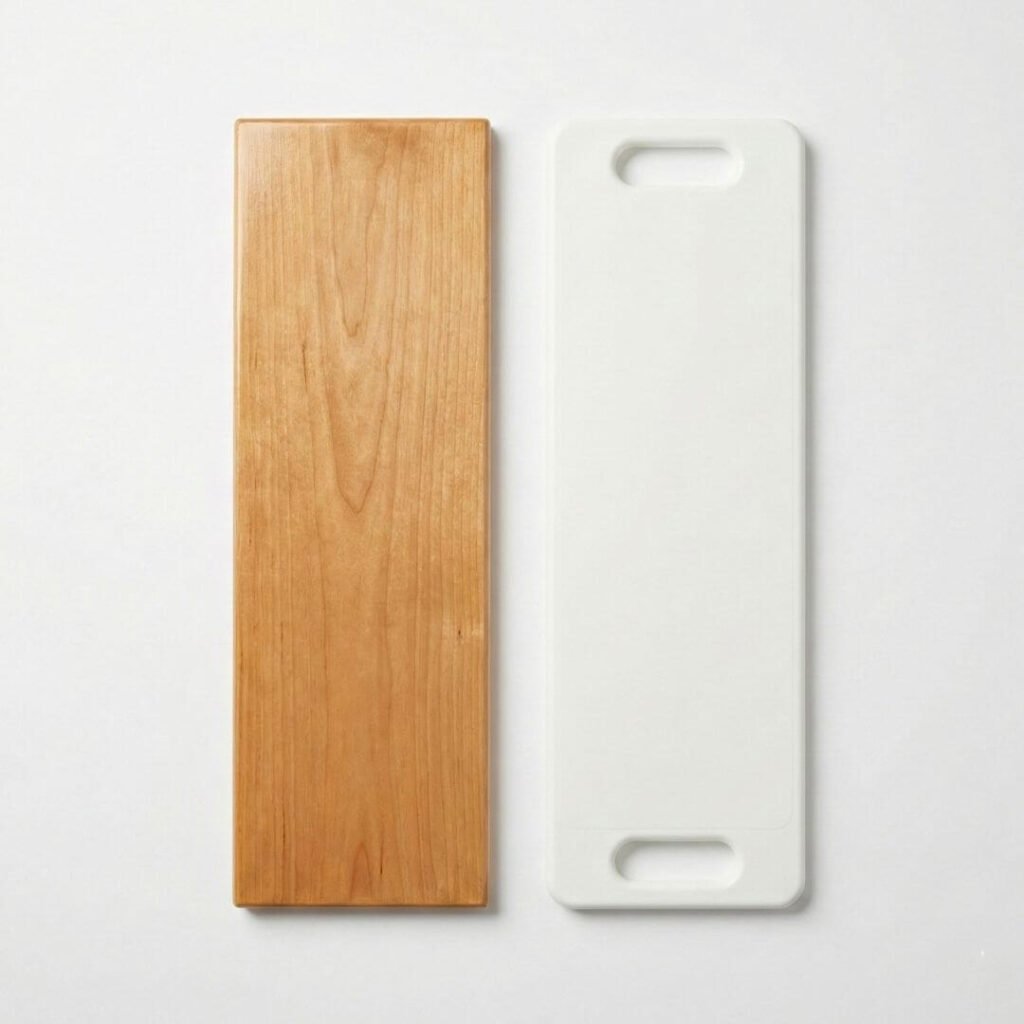
Vive Transfer Board – Patient Slide Assist Device offers a practical solution for families looking for an affordable option.
It provides solid support for common transfers such as wheelchair to bed, toilet, or car without unnecessary extras.
Pros
- Affordable entry-level option for families who need a functional transfer board without premium pricing
- Solid wooden construction provides reliable support for common transfers such as wheelchair to bed or toilet
- Lightweight enough for occasional use and easy to store when not in use
- Good choice for short-term needs, such as post-surgical recovery or temporary mobility limitations
Cons
- Fewer ergonomic features compared to higher-end boards, which may affect comfort during longer or frequent transfers
- Finish and design are more basic, offering less grip control for caregivers than premium models

Best Transfer Board for Wheelchair to Car Transfers
DMI Transfer Board and Slide Board with Cut-Out Handles is designed to bridge wider gaps, such as from a wheelchair into a vehicle seat.
Its longer length and rounded edges allow for smoother transitions in tighter or uneven spaces.
Pros
- Longer length bridges wider gaps, making it particularly useful for wheelchair-to-car transfers
- Rounded edges promote smoother transitions, reducing the risk of snagging clothing or skin
- Durable construction provides stability during higher-risk vehicle transfers
- Cut-out handles improve caregiver control when positioning and removing the board
Cons
- Bulkier size can make storage and transport more challenging, especially in smaller vehicles
- Requires careful alignment between wheelchair and car seat to ensure safe use

Best Slide Sheet for Bed Repositioning & Assisted Transfers
Medline Sofnit 300 Reusable Underpad functions as a low-friction slide sheet for bed repositioning.
It’s especially helpful for caregivers assisting with turning, boosting, or minor lateral transfers in bed.
Pros
- Low-friction surface allows caregivers to reposition seniors in bed with less effort, reducing strain
- Protects bedding and skin simultaneously, which is helpful for seniors with incontinence or fragile skin
- Reusable and washable, making it cost-effective for ongoing home use
- Commonly used in clinical settings, offering familiar performance and reliability
Cons
- Not designed for wheelchair or chair transfers, limiting its use to bed-based repositioning
- Requires caregiver assistance, as it does not support independent movement

Best Reusable Slide Sheet for Home Care
Improvia Positioning Bed Pad with Reinforced Handles combines a low-friction surface with multiple handles for caregiver control.
This makes it a strong option for ongoing home care where frequent repositioning is needed.
Pros
- Multiple reinforced handles allow caregivers to reposition or turn seniors with better control and body mechanics
- Waterproof and washable design supports frequent use in home care environments
- Low-friction surface reduces effort during turning and boosting in bed
- Well-suited for long-term caregiving situations where repositioning occurs multiple times per day
Cons
- Not a substitute for a rigid transfer board, as it cannot bridge gaps between surfaces
- Proper technique is essential, especially when assisting heavier or less mobile seniors

Educational Overview: Transfer Boards vs Slide Sheets
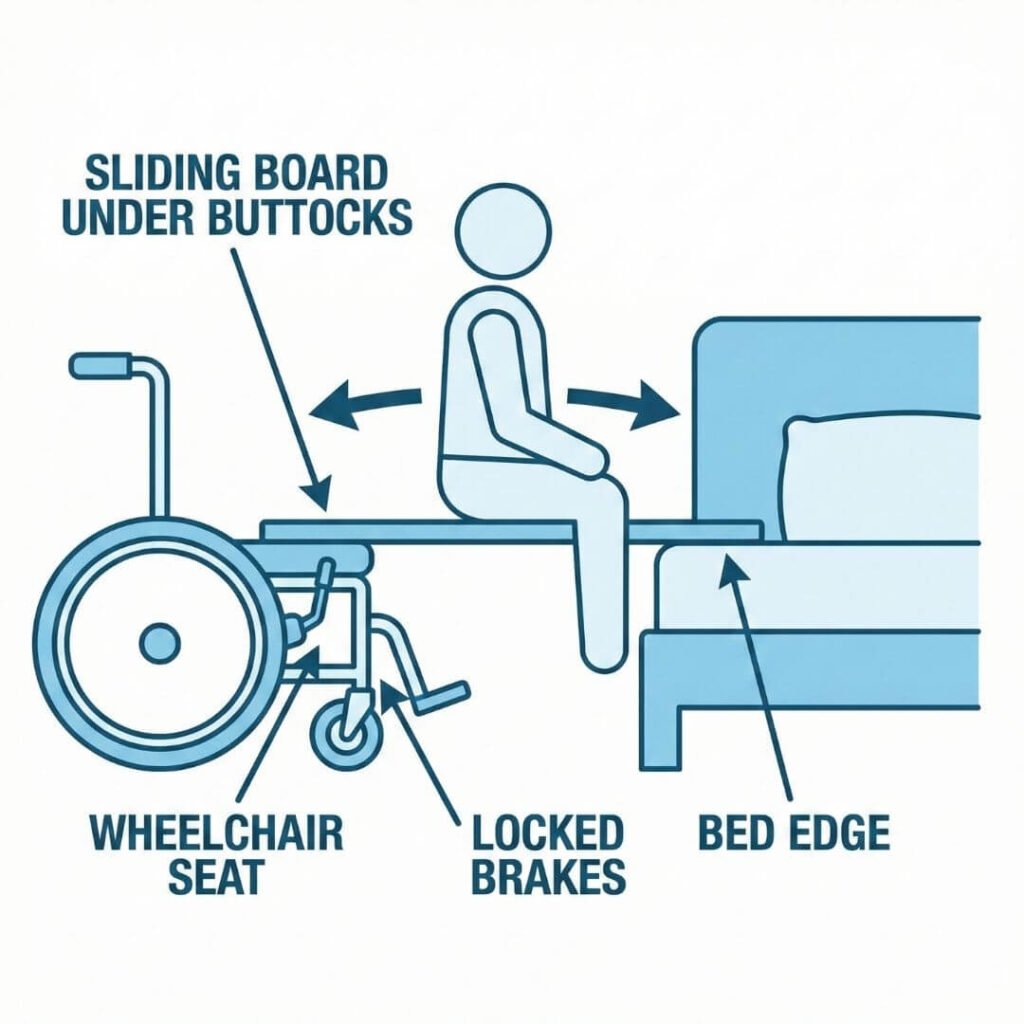
Transfer boards and slide sheets are often discussed together, but they are designed to solve different mobility problems. Confusing their roles—or using one in place of the other—can increase risk rather than reduce it. Understanding how each device functions helps caregivers choose the right tool for the right situation.
Transfer boards are rigid devices intended to support lateral movement between two separate surfaces. Their primary purpose is to bridge a gap—such as between a wheelchair and a bed—so the senior can slide across while remaining seated. Because transfer boards maintain a fixed shape, they provide structural support during movement and help keep body weight evenly distributed throughout the transfer.
In contrast, slide sheets are flexible, low-friction fabrics designed for repositioning on a single surface, most commonly a bed. They are not meant to bridge gaps or support unsupported weight. Instead, slide sheets reduce friction between the body and the mattress, making it easier to turn, boost, or reposition a senior without lifting. Their value lies in minimizing shear forces on the skin and reducing caregiver strain during bed-based movements.
The distinction matters because each device addresses a different type of risk:
- Transfer boards reduce fall risk during surface-to-surface movement
- Slide sheets reduce skin injury, caregiver strain, and friction-related injuries during repositioning
Problems arise when devices are used outside their intended role. Using a slide sheet to attempt a wheelchair transfer offers no structural support and can lead to sudden slipping. Likewise, using a transfer board for bed repositioning can be awkward, ineffective, and unnecessarily risky.
Choosing between these tools requires looking at the movement being performed, not just the mobility limitation. Questions such as whether the senior needs to cross a gap, remain seated, or simply be repositioned in bed often determine the safer option. This broader decision-making framework is outlined in our guide on how to choose the right mobility aid for your needs, which places transfer tools within the larger context of mobility, balance, and home safety.
From a safety standpoint, both tools align with caregiver injury prevention principles emphasized by organizations such as the Cleveland Clinic and NIOSH, which consistently stress minimizing lifting, avoiding twisting under load, and using assistive devices to control movement rather than relying on strength alone.
When used as intended, transfer boards and slide sheets complement each other rather than compete. Understanding their distinct roles allows caregivers to build a safer, more complete transfer and repositioning strategy—one that protects both the senior and the person assisting them.
How to Use a Transfer Board Safely
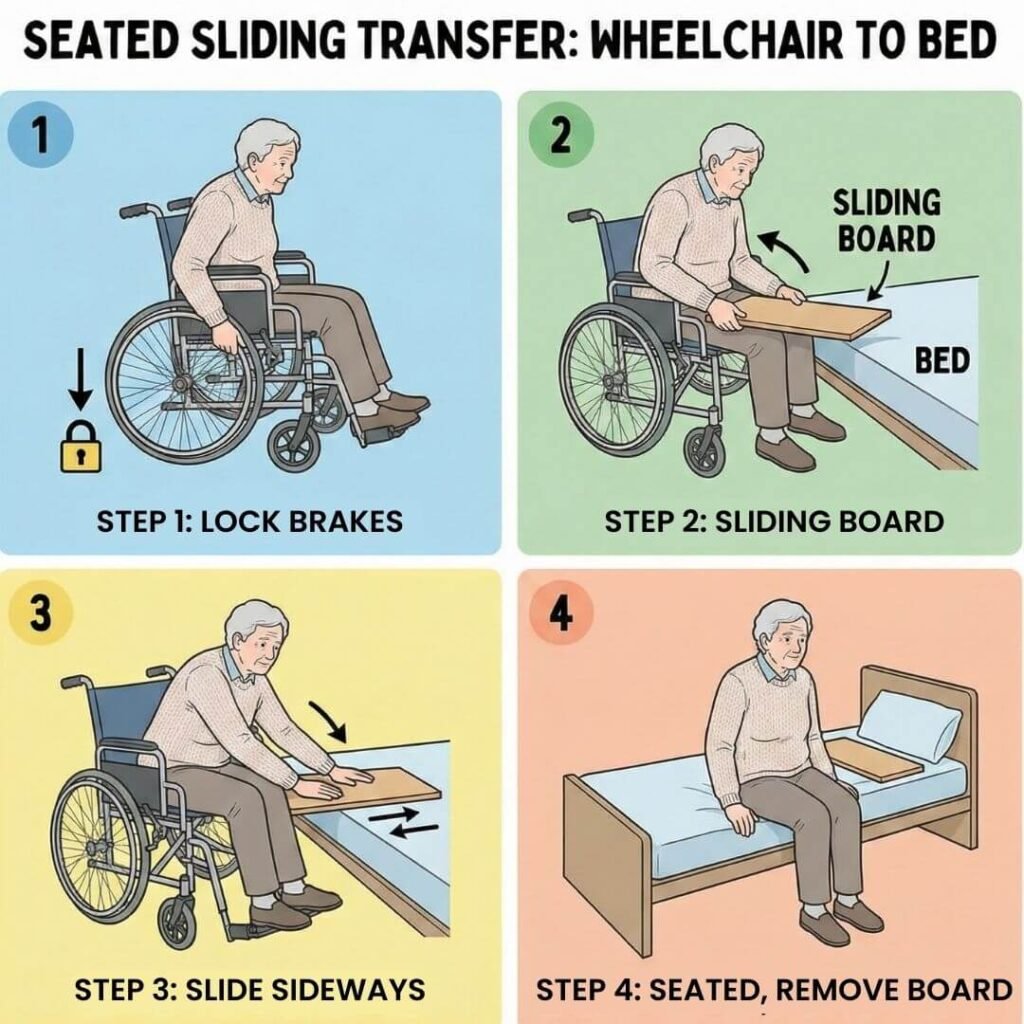
SUsing a transfer board safely is less about strength and more about preparation, alignment, and control. Most transfer-related injuries occur when steps are skipped, surfaces shift unexpectedly, or movement happens too quickly.
Safe use begins before the senior moves at all.
First, ensure the environment is stable. Wheelchair brakes should always be locked, and any removable wheelchair components—such as armrests or footrests—should be moved out of the way. Both transfer surfaces should be as close in height as possible, as even small height differences can increase sliding speed and loss of control.
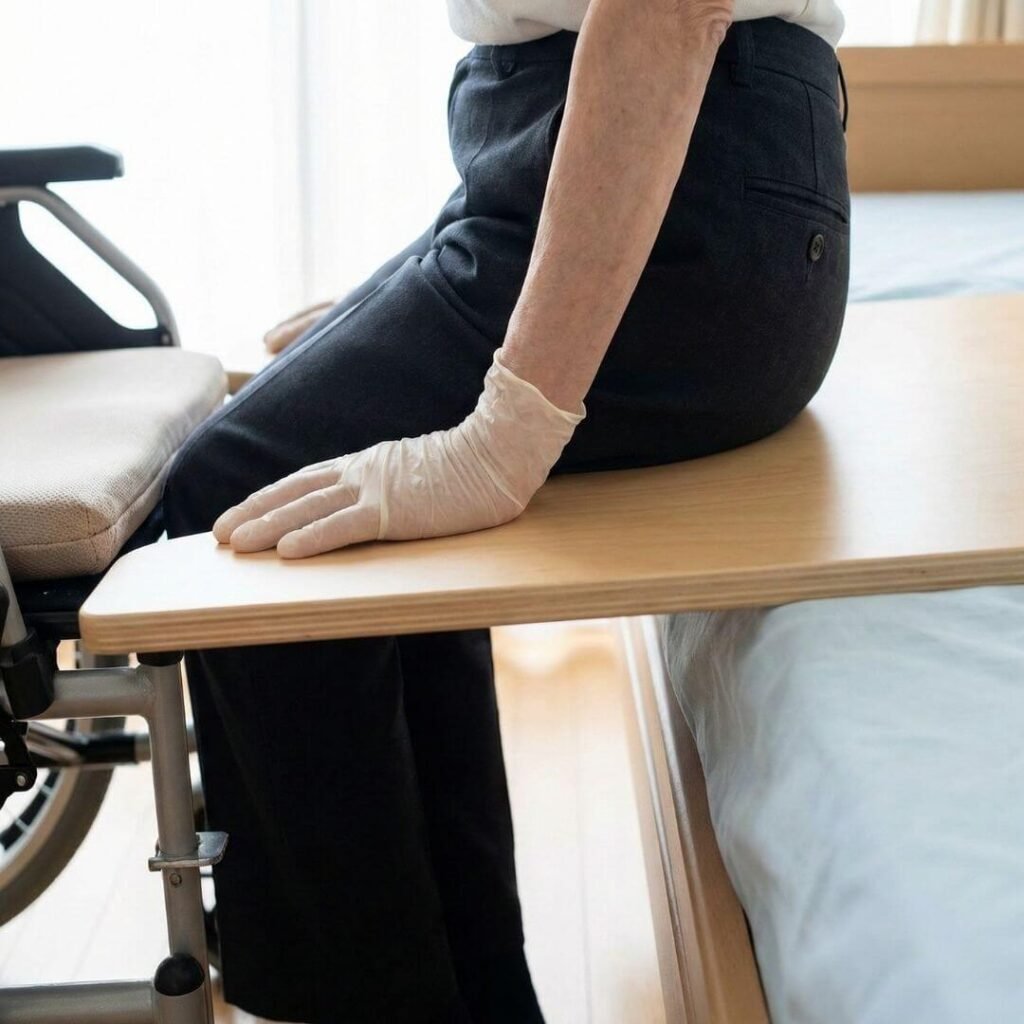
Next, the transfer board must be positioned correctly. One end should extend securely beneath the senior’s thigh or hip, while the other end rests fully on the destination surface. The board should sit flat without wobbling or flexing. If the board shifts when light pressure is applied, it is not positioned safely.
During the transfer itself, movement should be slow and deliberate. Seniors should be encouraged to move in small increments rather than attempting to slide all at once. Caregivers should guide the motion rather than pull, keeping hands positioned for balance and control rather than lifting. Rushing the transfer is one of the most common causes of loss of balance.
Throughout the process, communication matters. Seniors should know when movement is starting, when to pause, and when the transfer is complete. Clear cues reduce sudden movements and help both parties stay coordinated.
After the transfer, the board should be removed carefully to avoid sudden shifts in position. Take a moment to ensure the senior is fully supported and comfortable before proceeding with the next activity.
For transfers involving a bed—especially when repositioning or adjusting posture—combining transfer board use with proper bed-mobility techniques can further reduce strain and skin injury. Our guide on how to safely reposition seniors in bed expands on strategies that complement transfer boards and help protect fragile skin during movement.
Safe transfer board use is not about speed or force. It’s about controlled setup, steady movement, and minimizing surprises—every time the transfer is performed.
Lifestyle Synergy: Supporting Safe Transfers at Home
Transfer boards are most effective when they’re part of a broader safety ecosystem, not used in isolation. Even a well-designed transfer board can’t compensate for unstable furniture, poor positioning, or surfaces that shift during movement. Small environmental upgrades often make a meaningful difference in how safe and predictable transfers feel for both seniors and caregivers.
One of the most overlooked factors is seating stability. Chairs, wheelchairs, and beds that shift, compress unevenly, or lack firm support can cause sudden changes in body position during a transfer. Stable seating surfaces reduce unexpected movement and allow the transfer board to function as intended—bridging a controlled gap rather than compensating for instability.
Pressure management also plays an important role. Transfers involve sliding, weight shifting, and brief moments of concentrated pressure. Using a supportive cushion from our best wheelchair cushions for seniors guide can help reduce shear forces and pressure buildup during transfers, especially for seniors with fragile skin or a history of pressure injuries. Better pressure distribution makes movement smoother and more comfortable, which can reduce hesitation and stiffness during transfers.
Bed setup matters as well. Proper bed height, firm mattress support, and the presence of bed rails can significantly improve safety when transferring in and out of bed. Bed rails provide a stable handhold that allows seniors to reposition themselves gradually rather than relying on momentum. They also give caregivers a predictable point of control during assisted transfers.
Lighting, floor surfaces, and footwear contribute to transfer safety in less obvious ways. Poor lighting can make alignment difficult, while slippery floors or ill-fitting footwear can increase the risk of missteps during transitions. Addressing these details helps create an environment where transfer boards can be used consistently and confidently.
When these elements work together—stable seating, pressure support, secure handholds, and a predictable environment—transfers become less physically demanding and far less stressful. The goal isn’t just to make transfers possible, but to make them repeatably safe, day after day, without relying on strength or luck.
This kind of lifestyle synergy turns transfer boards from a single assistive device into part of a sustainable home safety strategy that supports aging in place.
Physician Tips for Safer Transfers
- Avoid rushing transfers, even when the senior feels confident.
Confidence can fluctuate from day to day and even hour to hour, especially with fatigue, pain, or medication effects. Transfers that feel easy in the morning may be significantly riskier later in the day. Slowing the process reduces sudden shifts in balance and allows time to correct positioning before problems occur. - Watch closely for skin friction, particularly in seniors with fragile or thin skin.
Sliding movements—even when done correctly—can create shear forces that increase the risk of skin tears or pressure injuries. This is especially important for older adults with weight loss, poor circulation, or a history of skin breakdown. If redness or discomfort appears after transfers, reassess the setup before continuing. - Reassess transfer methods regularly as mobility and health change.
A transfer board that worked well months ago may no longer be appropriate after illness, surgery, or general deconditioning. Declines in strength, balance, or cognition often happen gradually, making it easy to overlook increasing risk. Periodic reassessment helps prevent injuries that occur when mobility tools lag behind functional changes. - Pay attention to consistency and predictability, not just strength.
Transfers become unsafe not only when strength declines, but when movement becomes unpredictable. Sudden hesitations, freezing, or unexpected shifts during transfers are warning signs that the current approach may no longer be reliable—even if the senior appears physically capable. - When transfers become inconsistent or unpredictable, consider mechanical lifts instead.
Mechanical lifts are not a failure or a last resort—they are often the safest progression when manual or board-assisted transfers no longer provide dependable control. Transitioning earlier rather than later can prevent serious injuries to both seniors and caregivers. - From a medical standpoint, the safest transfer is the one that remains controlled, repeatable, and predictable over time. When any of those elements begin to slip, it’s a signal to reassess—not push through.
Transfer Board Comparison Table for Elderly Adults
Frequently Asked Questions
1. What is the best transfer board for elderly adults?
The best transfer board depends on the senior’s upper-body strength, sitting balance, and the type of transfers being performed. Some seniors benefit from a traditional rigid board that provides strong structural support, while others do better with low-friction or rolling systems that reduce effort. The safest option is the one that matches both the individual’s abilities and the transfer environment.
2. Are transfer boards safe for seniors to use alone?
Most seniors require at least some assistance when using a transfer board, even if they are relatively strong. Independent use may be appropriate for select individuals with good balance, coordination, and experience, but it carries higher risk. For many older adults, having a caregiver present improves safety and reduces the chance of sudden loss of balance.
3. What is the difference between a transfer board and a slide sheet?
Transfer boards are rigid devices designed to bridge a gap between two surfaces, such as a wheelchair and a bed. Slide sheets are flexible fabrics used to reposition someone on the same surface, typically in bed. Using one in place of the other can increase risk, so choosing the correct tool for the task is important.
4. How do you use a transfer board from bed to wheelchair safely?
Safe use involves locking wheelchair brakes, aligning surfaces closely, and positioning the board securely under the senior before any movement begins. Transfers should be slow and controlled, with movement occurring in small steps rather than all at once. Clear communication between the senior and caregiver helps reduce sudden shifts.
5. Can a transfer board be used for wheelchair to car transfers?
Yes, certain transfer boards are well suited for wheelchair-to-car transfers, especially longer boards designed to bridge wider gaps. Proper positioning and surface alignment are critical in vehicle transfers due to uneven heights. These transfers typically require caregiver assistance to maintain control and safety.
6. Do transfer boards reduce fall risk for seniors?
When used appropriately, transfer boards can significantly reduce fall risk by eliminating the need to stand or pivot during transfers. They allow weight to remain supported throughout the movement, which improves stability. However, improper use or selecting the wrong type of board can negate these benefits.
7. Does Medicare or insurance cover transfer boards?
Medicare and many insurance plans do not routinely cover transfer boards for home use, though coverage can vary by plan and circumstance. Some seniors may qualify for coverage through specific durable medical equipment benefits or supplemental plans. It’s often helpful to check directly with the insurer or a medical equipment provider.
8. When is a mechanical lift safer than a transfer board?
Mechanical lifts are typically safer when a senior has poor sitting balance, significant weakness, or unpredictable movement during transfers. They provide full body support and reduce the need for active participation. Transitioning to a lift earlier can prevent injuries to both seniors and caregivers.
Final Thoughts
A well-chosen transfer board can make everyday movements safer, easier, and far less stressful for both seniors and caregivers. Transfers are moments where small changes in balance or positioning can have outsized consequences, and the right assistive device helps turn these moments into controlled, predictable movements rather than risky ones. When selected thoughtfully, transfer boards support independence while reducing the physical and emotional strain that often accompanies daily caregiving.
Just as important is understanding when and how these tools fit into a broader safety plan. Transfer boards and slide sheets serve different roles, and using the right one for the right task helps prevent injuries, protect fragile skin, and maintain confidence during movement. As mobility needs evolve over time, reassessing transfer methods and making adjustments early can help seniors remain safer at home and caregivers avoid preventable injuries. The goal isn’t just to move from one place to another—it’s to do so consistently, comfortably, and with dignity.
Medical Disclaimer: This guide is for general educational purposes only and is not intended to serve as personalized medical advice, diagnosis, or treatment. Always consult a licensed healthcare professional for recommendations tailored to your specific medical condition, mobility needs, or safety concerns.
Last update on 2026-03-21 / Affiliate links / Images from Amazon Product Advertising API