

Introduction
For a parent or grandparent who has used a cane for years, that simple wooden support has been more than a tool. It has been a companion through morning walks, trips to the grocery store, and the slow rhythm of everyday life at home. But canes are not designed to keep up with every change in an older body. There comes a moment when the same cane that once kept them steady starts to feel inadequate. Recognizing the signs a senior needs a walker is one of the most important shifts a family can make in protecting an older loved one’s independence and safety.
Many older adults resist the idea of giving up a cane. The cane represents control, mobility, and a quiet kind of dignity. Suggesting a walker can feel like an admission that something has gotten worse. But waiting too long carries real consequences. Falls become more likely, confidence erodes, and the home itself begins to feel less manageable. The right mobility aid at the right time is what allows seniors to keep moving safely.
This guide walks through the most common signs that a cane is no longer enough. It covers what families and caregivers can watch for in daily movement, how the body itself signals the need for more support, and what practical steps to take once those signs appear. The aim is not to rush the transition but to recognize it when it arrives, gently and with care.
Why the Right Mobility Aid Matters at Every Stage
When a cane is providing less support than a senior actually needs, every walk through the house becomes a small risk. Older adults already face a high baseline risk of falls. According to the National Institute on Aging, more than one in four Americans over the age of 65 falls each year, and falls are the leading cause of injury and injury-related deaths in this age group. A cane offers limited stability. It supports only one side of the body and can safely bear roughly twenty-five percent of a person’s weight. When balance, strength, or endurance has changed, that level of support can quietly fall short.
The signs a senior needs a walker often appear gradually, over weeks or months. A near-trip in the kitchen. A longer pause at the top of the stairs. A reach for the wall on the way to the bathroom. Each event on its own may not seem urgent, but together they describe a body that is asking for more help.
There is also an emotional dimension to this transition. Seniors who feel unsteady may begin to walk less, avoid certain rooms, or stop going outside altogether. This loss of activity speeds up muscle deconditioning, which makes the underlying instability worse. A more supportive mobility aid for seniors is not a step backward in independence. It is often the only thing that allows independence to continue.
The Three Pillars of Safe Mobility Support
Healthcare providers who assess mobility think in terms of three foundational areas. Understanding these pillars helps families notice the signs a senior needs a walker before a fall forces the issue, and it gives a clearer language for talking with the senior’s doctor or physical therapist.
The first pillar is balance and stability. A cane corrects mild imbalance, particularly when one side of the body is weaker than the other. But when balance loss is general — affecting both sides, intensifying with fatigue, or appearing without warning — a cane is no longer the right tool. Walkers and rollators provide a wider, four-point base of support that compensates for unsteady steps in any direction.
The second pillar is weight-bearing capacity. Canes are designed to handle around twenty-five percent of a user’s body weight. Walkers can support roughly half. When a senior begins leaning heavily on a cane, gripping with white-knuckled effort, or feeling pain in the wrist or shoulder after short walks, they are asking the cane to do work it cannot safely do. When leg strength is fading rather than balance alone, it is worth reviewing the best transition mobility aids for seniors losing strength so the device matches how much support the body actually needs. Sustained overuse leads to upper-body injury, particularly in older adults with arthritis or osteoporosis.
The third pillar is endurance and confidence. Even when balance and strength remain functional, fatigue can change everything. A senior who manages well on a cane in the morning may be unsteady by late afternoon. A walker offers something a cane cannot: a stable resting point. Many rollators include a built-in seat, which lets a senior pause without losing balance. This combination of physical support and reassurance is often what allows an older adult to keep going to church, the grocery store, or the front porch.
Real-World Patterns: How Families Notice the Shift Too Late
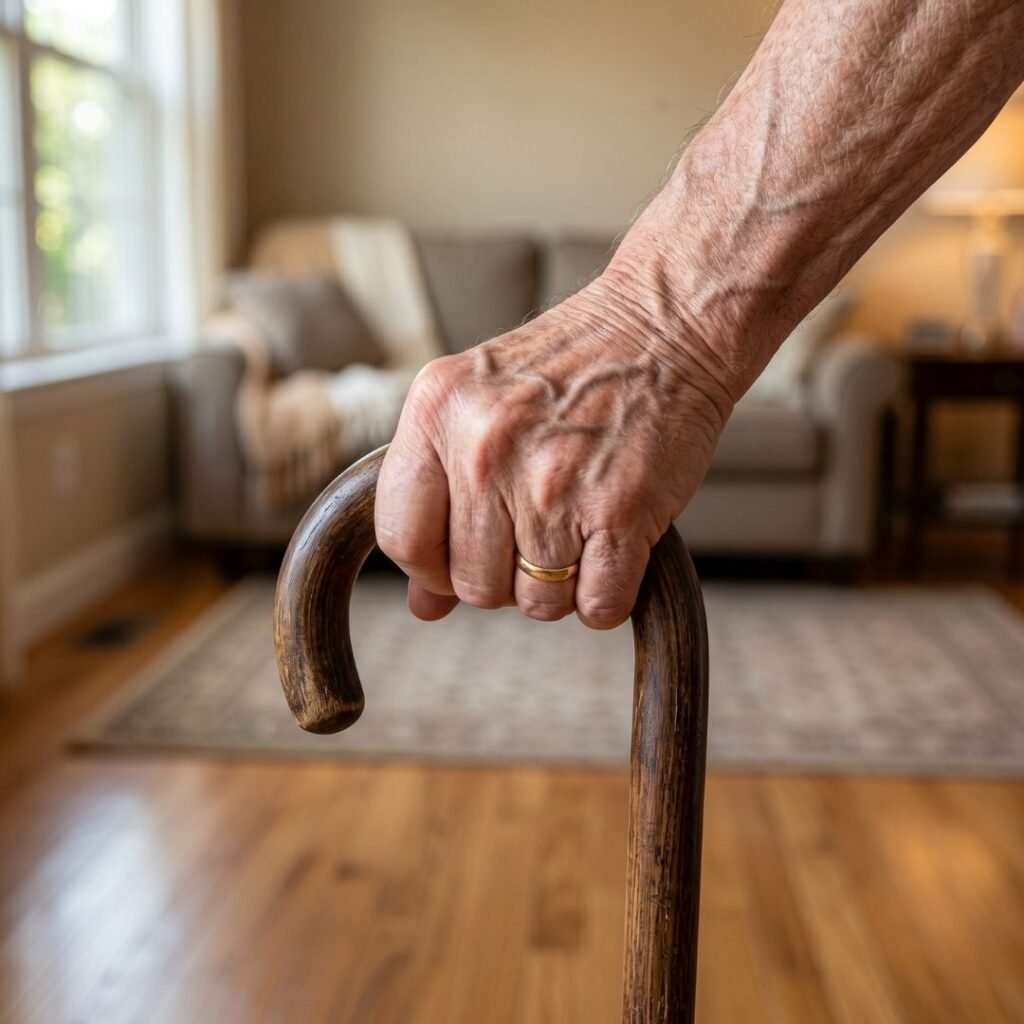
These patterns are visible long before action is taken. One family describes a grandfather who insisted his cane was fine, even after three near-falls in the kitchen. He brushed off each event as clumsiness, then fell hard against the dishwasher and broke his hip. In hindsight, the family had been watching him grip countertops, slow down at every doorway, and avoid certain rooms for nearly a year. Knowing when to switch from cane to walker would have changed the entire arc of his recovery.
Another common pattern involves seniors who pass the obvious checks. They can stand from a chair and use the cane in the doctor’s office without trouble. But at home, where rugs, pets, and uneven thresholds add complexity, they become hesitant or unsteady. Office assessments often miss this gap. Sometimes the cane itself is part of the problem. A device that is the wrong height, has a worn rubber tip, or is poorly suited to the user can quietly add to instability. Reviewing a guide like best canes for seniors can help families confirm whether the device itself is the issue or whether the body has truly outpaced what any cane can do.
A third pattern involves seniors who use the cane correctly but compensate with everything around them. They lean on furniture, hold tightly to handrails, and time their movements to arrive at something to grab. This behavior, often called “furniture surfing,” is one of the clearest indicators that a single-point cane is no longer providing enough security. The home itself has quietly become the second mobility aid, and that arrangement only works until the day it doesn’t.
Physical Signs in Daily Movement to Watch For
The earliest signs a senior needs a walker often show up in the body itself, not in dramatic events. Watching how an older loved one moves during ordinary daily activities offers a more honest picture than asking them how they feel. People naturally underestimate their own decline, especially when admitting it would mean changing a familiar routine.
Look first at how the cane is being used. A correctly used cane is held in the hand opposite the weaker leg, lightly tapped with each step, and carries about a quarter of the body’s weight. If the senior is now planting the cane firmly, leaning heavily into it, or pausing to redistribute balance, the cane is being asked to do too much. White-knuckled grip, visible forearm tension, aching hands, or wrists that swell at the end of the day are all quiet warnings.
Watch their gait. As mobility declines, steps become shorter, more shuffling, and uneven. The senior may freeze briefly when changing direction or hesitate at thresholds between rooms. Foot drag is another warning. When the toe brushes the floor instead of clearing it cleanly, the risk of catching on a rug rises sharply. These are exactly the moments a walker would absorb safely.
Pay attention to balance during pauses. Standing still while opening the refrigerator, reaching for an item, or removing a coat all require small balance adjustments. A senior who sways noticeably, grabs the counter for a moment, or has to reset their footing is showing diminished postural control. Reviewing our broader breakdown on how to choose the right mobility aid for your needs alongside these observations helps families connect what they are seeing to the right next device. Knowing when to switch from cane to walker becomes clearer once these specific behaviors are named.
Functional Signs Around the Home
Beyond the body itself, the home tells a clear story when the signs a senior needs a walker have begun to appear. Caregivers who walk through their loved one’s daily routine often see patterns that the senior has stopped noticing.

Furniture surfing is the most obvious. If your loved one moves from the bed to the dresser to the door by hand-walking along furniture, they are unconsciously using the room as a safety net. Watch for fingerprints on walls along common pathways, or a chair moved closer to a doorway so they can grab it on the way through. When other surfaces are filling in, the cane is no longer enough on its own.
Slowing routines is another signal. Tasks that used to take minutes — getting dressed, walking to the mailbox, carrying laundry — now take far longer or do not happen at all. Some seniors give up favorite activities without explanation. They stop attending church, skip family events, or refuse outings that involve uneven sidewalks. They may not say, “My cane isn’t working anymore.” They will simply do less. These are some of the clearest signs you need a walker instead of a cane, even though no one in the family will phrase them that way.
The bathroom is a particularly revealing room. Seniors who cling to the sink, sit longer than necessary, or avoid the shower entirely are often signaling that their balance and weight-bearing capacity have crossed a line. Even with grab bars in place, a cane offers no support during a turn or transfer. A walker, with a stable base and sometimes a built-in seat, often becomes the bridge that lets a senior continue safe daily routines. Stairs deserve the same scrutiny. A senior who used to manage stairs casually and now grips the rail with both hands or avoids the second floor altogether is telling you that single-side support has reached its limit.
What to Do Once the Signs Appear
Once the signs a senior needs a walker have become visible, the next step is to act calmly rather than wait for a crisis. Most families find this transition goes smoothly when it is treated as a normal stage of mobility care, not a sudden alarm.
Start with a professional assessment. A primary care physician can refer the senior to a physical therapist or occupational therapist who specializes in older adults. These clinicians evaluate gait, balance, strength, and home environment, and they recommend the device that fits the person, not just the diagnosis. The right tool may not be a standard walker at all. A rollator with hand brakes and a seat, an upright walker that supports a more natural posture, or a hemi-walker for those who cannot use both hands equally are all options. The American Geriatrics Society’s HealthInAging.org publishes a free tip sheet on sizing and choosing between canes and walkers that families can review before the appointment.
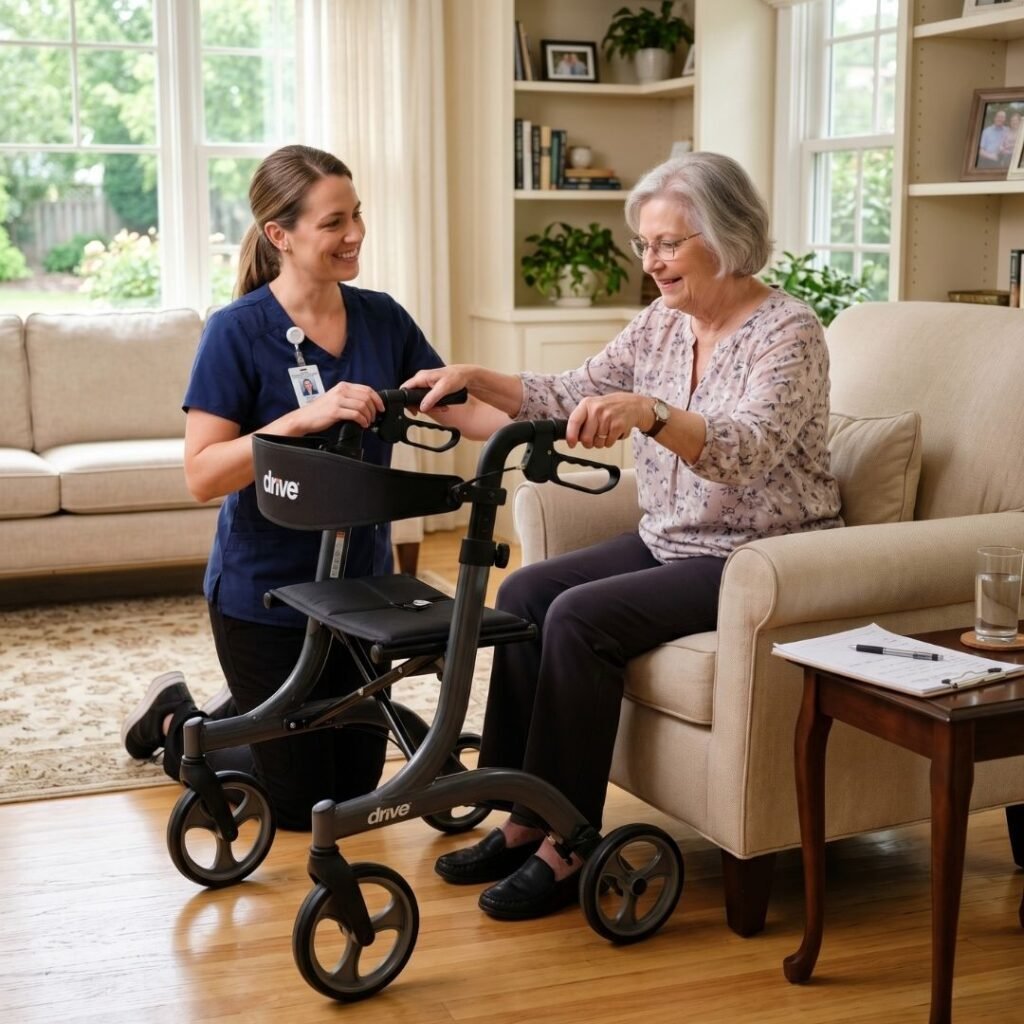
Once a device type has been recommended, take the time to choose a model that fits the senior’s actual life. A walker that lives in the house all day has different requirements than one used outdoors on uneven sidewalks. Wheel size, brake style, frame weight, and storage features all matter. Our roundup of the best walkers and rollators for seniors walks through these specifics and the tradeoffs between popular models.
The transition itself works best when it is gradual. Many seniors keep the cane for short, familiar trips around the bedroom while introducing the walker for longer distances and outdoor use. A few in-home practice sessions with the therapist help establish good technique from the start. Within a couple of weeks, most seniors recognize the difference in stability and stop questioning the change.
Finally, modify the home to support the new mobility aid. Walkers need wider pathways than canes, so move side tables and clear narrow hallways. Remove area rugs that catch on walker feet or wheels. These adjustments are small but meaningful, and they protect the investment of choosing a more supportive device.
Special Considerations: Dementia, Surgery Recovery, and Chronic Conditions
While the general signs a senior needs a walker apply broadly, certain conditions deserve additional thought.
For seniors with dementia or significant cognitive decline, transitioning from cane to walker is more delicate. A new device can feel disorienting, and a senior who forgets why they have the walker may set it aside or use it incorrectly. Simpler walkers without complex brakes or folding mechanisms tend to work better. Caregivers may also need to physically place the walker in front of the senior at each transition. If the cognitive impairment is advanced enough that the senior cannot reliably use any walker, a wheelchair with caregiver assistance may be the safer next step.
For seniors recovering from recent surgery, particularly hip or knee replacement, the move from cane to walker is often determined by the surgeon’s protocol. Most patients use a walker first, then a cane as strength returns. A senior who was previously on a cane may need to step back to a walker for several weeks after surgery before transitioning forward again. This is normal and temporary.
Seniors managing chronic conditions such as Parkinson’s disease, neuropathy, or significant arthritis may experience day-to-day variability that makes a single device insufficient. Some keep both a cane and a walker in the home and choose based on how they feel each morning. There is no rule against using more than one mobility aid for seniors who legitimately need them. The goal is to match the support to the moment, and never force the body to perform without the help it actually requires.
Frequently Asked Questions
1. How do you know when a cane is no longer enough for a senior?
The clearest indicators are physical and behavioral. Physically, watch for white-knuckled gripping, leaning heavily into the cane, shuffling steps, foot drag, or visible swaying when standing still. Behaviorally, watch for furniture surfing, slowing routines, and avoiding stairs or favorite outings. If two or three are present together, schedule a professional assessment with a physical therapist or physician.
2. Is it better to use a walker or a rollator after a cane?
It depends on the senior’s strength, balance, and endurance. A standard four-leg walker offers the most stability because it must be lifted and placed with each step. A rollator has wheels, brakes, and usually a seat, which makes it faster and useful for outdoor walks and longer distances. Because each of these devices suits a different stage of decline, it helps to see how they stack up side by side in our full guide to choosing a walker vs. rollator vs. wheelchair over time. Seniors with significant balance issues often benefit from a standard walker first, while seniors who tire easily but maintain balance often do better with a rollator. A therapist can match the right model to the user.
3. Can a senior go straight from a cane to a wheelchair, or should they try a walker first?
In most cases, a walker is the appropriate intermediate step. Skipping straight to a wheelchair can accelerate muscle loss, since the senior loses the daily walking practice that maintains strength and bone density. Wheelchairs are most appropriate when a senior cannot safely bear weight or has a condition that prevents standing. For most seniors, transitioning from cane to walker is the more protective path.
4. How do you talk to a parent who refuses to use a walker instead of a cane?
Lead with respect and listen first. Many seniors associate walkers with a permanent loss of independence, and that fear is real. Frame the walker as a tool that protects what they value most: staying in their own home and doing the things they love. Avoid surprise interventions. Involve the senior’s doctor or physical therapist, since clinical recommendations carry weight that family conversations often do not. A brief in-office demonstration is often what shifts the conversation.
5. Does Medicare cover a walker if a senior already has a cane?
Yes, in most cases. Medicare Part B classifies walkers as durable medical equipment and typically covers them when prescribed by a physician as medically necessary, regardless of whether the senior has previously used a cane. The senior is usually responsible for twenty percent of the Medicare-approved amount after the deductible. Coverage details vary by plan, especially for Medicare Advantage. Check with the prescribing physician’s office or the equipment supplier to verify benefits before the order is placed.
Final Thoughts
Recognizing the signs a senior needs a walker is rarely a single moment. It is a quiet accumulation of small observations — a tighter grip on the cane, a longer pause at the doorway, a hand on the wall that was not there a year ago. The families who handle this transition best notice early, gather professional input, and approach the change with patience rather than alarm.
The goal is never to take something away from a senior. It is to make sure their body has the support it needs, so that the routines they love stay possible. A walker is not a replacement for independence. For the right person at the right time, it is what makes independence sustainable. If you are seeing the signs in someone you love, start the conversation and schedule the assessment.
Medical Disclaimer: The information provided on this website is for educational purposes only and should not replace professional medical advice. Always consult your physician or qualified healthcare provider regarding any medical condition or treatment decisions.
