
Affiliate Disclaimer: This article contains affiliate links. As an Amazon Associate, Mobility With Ease may earn a small commission from qualifying purchases at no additional cost to you.
Introduction
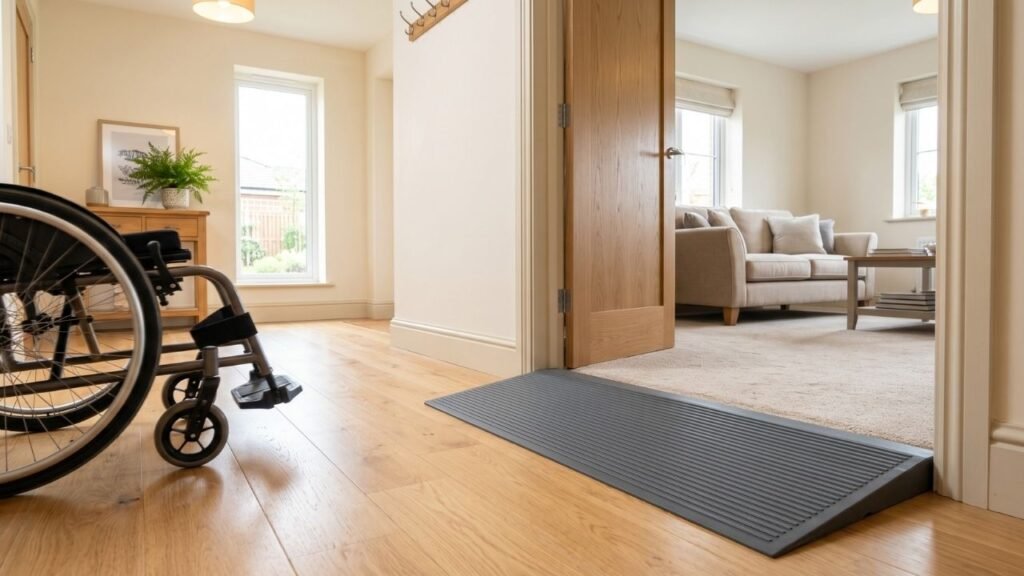
A raised door sill might seem like a small obstacle, but for anyone using a wheelchair, walker, or mobility scooter, even a half-inch lip can bring movement to a full stop. Threshold ramps for doorways solve this problem by creating a smooth, gradual incline over the raised edge so that wheels roll across freely and feet don’t catch on the lip. Whether the barrier is an interior door frame separating two rooms or an exterior entry with a weatherstrip ledge, the right ramp turns a frustrating daily hazard into a surface you barely notice.
In this guide, we compare the best threshold ramps for doorways available in 2026. Each pick has been evaluated for build quality, weight capacity, surface grip, and ease of installation so you can find a ramp that fits your specific doorway, flooring type, and mobility device. We cover rubber, aluminum, and modular polymer options across six categories to help you choose with confidence.
If you already know what you need and want to see all six picks side by side, use the button below to jump straight to the comparison table.
Why Threshold Ramps Matter for Seniors
Falls are the leading cause of injury-related death among adults age 65 and older in the United States, and the CDC reports that more than one in four older adults falls at least once every year. Many of these falls happen inside the home — not on stairs or in bathtubs, but on the small, overlooked transitions between rooms. A raised door sill, a metal weatherstrip, or even the slight height difference between hardwood and tile can catch a shoe, a cane tip, or a wheelchair caster and cause a serious fall.
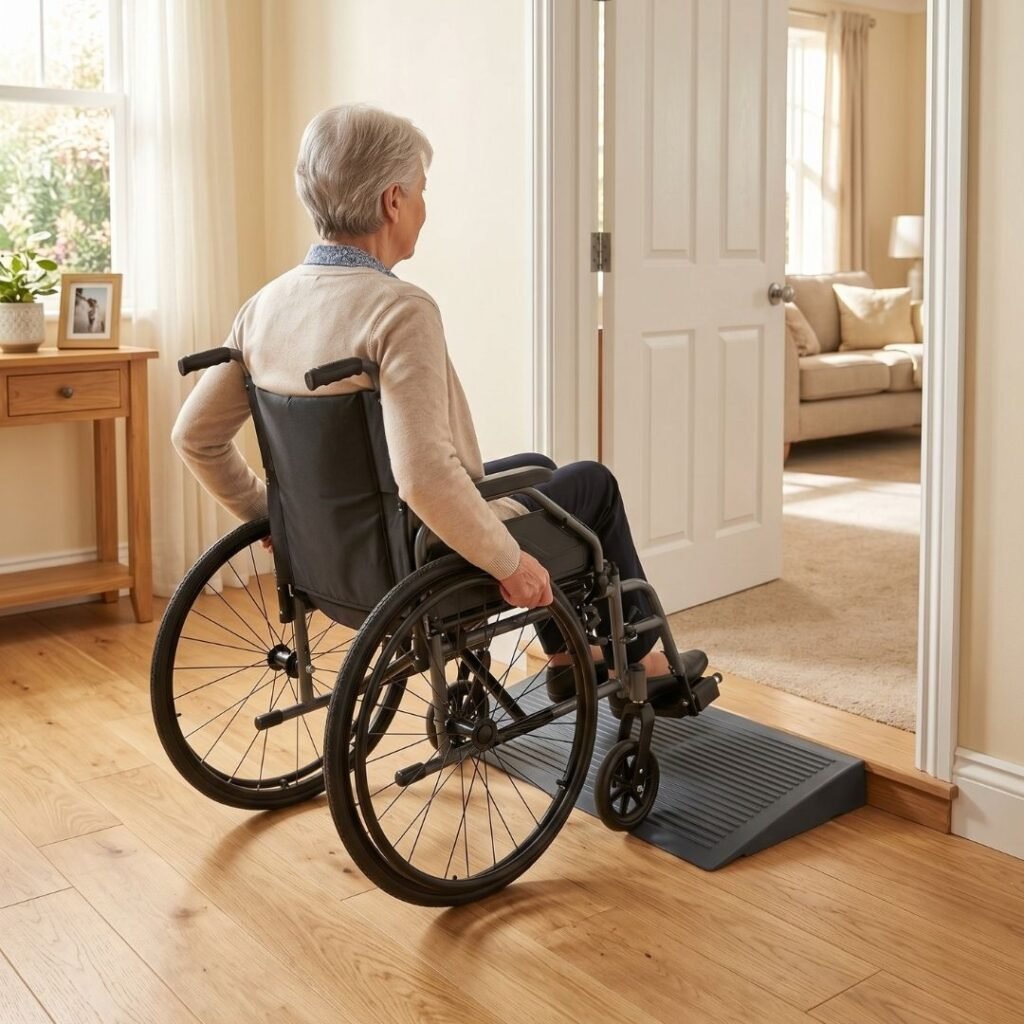
Threshold ramps for doorways eliminate these transitions by replacing the abrupt edge with a gentle slope. For wheelchair and scooter users, this means uninterrupted movement through every room in the house without having to rely on a caregiver to lift the front casters over the lip. For seniors who walk with a cane or rollator, a smooth ramp surface reduces the risk of tripping that comes with lifting the feet over a raised sill dozens of times per day. The result is greater independence, fewer falls, and less physical strain on both the senior and anyone assisting them.
Beyond safety, threshold ramps for doorways also play a practical role in making your home safer for seniors as part of a broader aging-in-place strategy. Removing barriers between rooms allows seniors to access bathrooms, kitchens, and bedrooms without assistance, which supports daily independence and reduces caregiver workload. For many families, installing threshold ramps is one of the simplest and most cost-effective home modifications available — most ramps require no tools, no construction, and no permanent changes to the door frame.
Doctor’s Note: Choosing the Right Threshold Ramp
I see patients every week who have fallen inside their own homes, and a surprising number of those falls happen at doorways. The raised sill catches a toe, the wheelchair caster locks against the lip, or the walker legs get stuck mid-transition. These are entirely preventable injuries, and threshold ramps for doorways are one of the easiest interventions I recommend in my practice. They cost far less than a single emergency room visit and can be installed in minutes.
When I help families choose a ramp, I always start with the threshold height and the mobility device being used. A ramp that is too steep for the rise will create a new hazard instead of solving the old one. The general guideline I follow is a 1:12 slope ratio — for every inch of rise, the ramp should extend at least 12 inches in length. This ratio keeps the incline gentle enough for a wheelchair user to roll up without tipping and for a walker user to step onto without losing balance. For patients who are at elevated fall risks in seniors, I sometimes recommend an even gentler slope.
I also pay attention to the ramp surface. Smooth metal without a textured finish can become dangerously slick when wet, which matters for doorways near bathrooms, laundry rooms, or exterior entries. A ramp with a non-slip surface — whether built into the rubber material or applied as a tread coating — is always the safer choice. The goal is to make the doorway transition so seamless that the person using it doesn’t even think about it. That’s when you know the ramp is doing its job.
Best Threshold Ramps for Seniors (Top Picks)
Best Overall
EZ-ACCESS TRANSITIONS 1″ Portable Self-Supporting Aluminum Modular Entry Ramp
The EZ-ACCESS TRANSITIONS Modular Entry Ramp is one of the most versatile threshold ramps for doorways on the market. This 1-inch rise listing is part of EZ-ACCESS’s modular TRANSITIONS line, which offers companion units in 1.5, 2, 3, 4, 5, and 6-inch heights so the same proven design can be matched to virtually any residential doorway. The ramp is built from high-strength aluminum that will never rust or corrode, and the surface features an extruded slip-resistant texture for traction in any weather. At 34 inches wide with a 700-pound weight capacity, it suits standard interior doorways for manual wheelchairs, rollators, scooters, and walker users. It is fully self-supporting, requires no tools to install, and is light enough to lift with one hand and reposition between rooms when needed.
Pros
- Aluminum construction never rusts or corrodes — works indoors and outdoors
- No tools required for installation; fully self-supporting
- Extruded slip-resistant surface for all-weather traction
- 34-inch width fits most standard doorways
Cons
- Each model variant covers a single rise height — match to your threshold
- 700 lb capacity is sufficient for most users but lower than some heavy-duty rubber ramps

- VERSATILE THRESHOLD RAMPS FOR DOORWAYS: This threshold ramp provides smooth transitions for wheelchair, walker, scooter, and mobility aid users. Our modular aluminum wheelchair ramp is perfect for...
- PREMIUM DOORWAY THRESHOLD RAMP: Constructed of high-strength, rust-proof aluminum that withstands all weather conditions for years of reliable service. The specially designed extruded surface provides...
- ADJUSTABLE DOOR THRESHOLD RAMP: Available in multiple height options (1", 1.5", 2", 3", 4", 5", and 6") with an innovative pivoting flap providing an additional 0.25" of adjustability. Perfect for...
Best Rubber
Ruedamann 1-3/8″ Rise Threshold Ramp for Doorways
The Ruedamann 1-3/8″ Rise Threshold Ramp is a single-piece solid natural rubber ramp built specifically for the most common range of residential door sills. With a load capacity of up to 2,200 pounds, it easily handles manual and power wheelchairs, rollators, scooters, and even small motorized carts. The rubber grips hardwood, tile, vinyl, and concrete through friction alone, so there are no screws, adhesives, or double-sided tapes needed for installation — set it down and it stays put. The textured non-slip top surface keeps wheels and feet from sliding, while the dense rubber base absorbs the vibration and noise of rolling wheels. The ramp can be trimmed with a utility knife for non-standard widths, which is a useful feature for older homes with irregular door frames.
Pros
- 2,200 lb load capacity handles power wheelchairs and scooters
- Stays in place by friction alone — no adhesives or fasteners
- Non-slip on both the top surface and the underside
- Can be trimmed with a utility knife for custom width
Cons
- Heavier than aluminum alternatives — not ideal for daily relocation
- Fixed 1-3/8″ rise — measure your threshold first
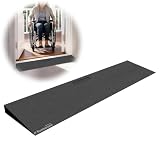
- Easy Mobility Access: Designed with a 1.4" rise, Ruedamann threshold ramp for doorways is lightweight and easy to handle, providing smooth access for wheelchairs, carts, strollers, trolleys, walkers...
- Heavy-Duty Load Capacity: Supporting up to 3300 lbs, our door threshold ramp delivers strong, stable performance for home and commercial use. Built with a solid rubber body, internal reinforced frame...
- Textured Anti-Slip Surface: Grooved design enhances traction in wet or dry conditions. This rubber ramps for door threshold provides stable grip for indoor and outdoor use in doorways, home entryways...

Best Adjustable
Prairie View Industries ATH3636 Adjustable Threshold Ramp, 36″ x 36″
The Prairie View Industries (PVI) ATH3636 is a 36-inch by 36-inch adjustable aluminum threshold ramp engineered for doorways with non-standard or higher rises. The two casters underneath adjust to accommodate threshold heights from 2.5 to 5 inches, which covers most residential exterior door sills, sliding glass door tracks, and patio thresholds. The ramp surface is grooved aluminum that provides grip in wet and dry conditions, and the frame is rated for an 800-pound weight capacity that handles power wheelchairs and bariatric scooters comfortably. At about 21 pounds, it remains light enough to slide into position without help. PVI backs the ATH3636 with a Limited Lifetime Warranty, which is one of the strongest warranty positions in the threshold ramp category.
Pros
- Adjustable height from 2.5 to 5 inches fits most exterior door sills
- 800 lb capacity supports power wheelchairs and bariatric scooters
- Slip-resistant grooved aluminum surface
- Limited Lifetime Warranty from the manufacturer
Cons
- Aluminum can sound loud under heavy wheels on hard floors
- Adjustable casters need an occasional re-check for tightness

- Maximum 3-in to 6-in rise for occupied wheelchair or scooter passage
- Great for transitioning doorways that swing in or out and thresholds
- Adjustable self-supporting design fits range of threshold rises
Best for Wheelchairs
Candockway 3″ Rise Solid Rubber Threshold Ramp, 4400 LBS Capacity
The Candockway 3″ Rise Threshold Ramp is purpose-built for the heaviest mobility devices, with a load rating of 4,400 pounds — far beyond what any residential power wheelchair, bariatric scooter, or heavy-duty rollator will ever require. The ramp is a solid one-piece rubber unit measuring 35.5 inches long by 18.3 inches wide by 3 inches high, weighing about 31 pounds. There are no joints, no hardware, and no moving parts that can loosen, so it requires zero maintenance once placed. The top features a line-by-line anti-slip pattern for grip, and the underside has a mesh-style structure that increases traction against the floor. The beveled edges allow safe passage from any direction, which is useful for doorways approached at an angle or by users who need extra clearance to pivot. For households where a heavy power wheelchair, scooter, or bariatric device is the primary mobility tool, this is one of the most rugged threshold ramps for doorways available.
Pros
- Massive 4,400 lb load capacity — built for the heaviest power chairs
- Solid one-piece rubber — no assembly, no hardware, no maintenance
- Beveled edges allow safe approach from any direction
- Anti-slip top and high-friction mesh underside
Cons
- At 31 pounds, it is heavy to reposition
- Fixed 3-inch rise — verify your threshold height before ordering

- 【Rubber Material】: This straight-grained rubber ramp is made of good rubber, which is durable, has good compression resistance and is not affected by the weather. No pungent smell, but a slight...
- 【All-Around Access】: 3" rise ramp Overall size: 35.5"L x 18.3"W x 3"H. The beveled edge design allows you to pass safely from all directions. The wide panel is conducive to the passage of large...
- 【Anti-slip Surface Design】: The ramp surface adopts a line-by-line anti-slip design, which can enhance friction without slipping easily. At the same time, the mesh structure on the bottom enhances...
Best Budget
FACHNUO 2 Feet Portable Folding Aluminum Wheelchair Ramp with Handle
The FACHNUO 2 Feet Portable Wheelchair Ramp is a folding aluminum ramp that delivers strong performance at one of the lowest price points in this guide. Measuring roughly 24 inches long by 31.3 inches wide when unfolded, it folds in half for compact storage and includes an integrated carry handle so it can be moved between doorways with one hand. The non-skid surface coating provides reliable traction for wheelchairs, transport chairs, walkers, and scooters. Despite its budget pricing, the ramp carries an 800-pound weight capacity, which is well above what most manual wheelchairs and rollators will demand. It is best suited for low-rise thresholds, single steps, and short transitions where portability and affordability matter more than a permanent install.
Pros
- Most affordable pick in this guide
- Folds in half with integrated carry handle
- 800 lb weight capacity
- Lightweight aluminum — easy to carry one-handed
Cons
- Non-skid coating may show wear over time with heavy daily use
- Folding hinge creates a slight flex point underfoot

- ⚠【2FT WHEELCHAIR RAMP】 (Unfolded Size: 24" x 29.2" x 2", Folded Size: 24" x 13.2" x 3.2", Weighs 10.9 pounds.) – Ideal for height adjustments from 2 to 6 inches(When used as a ramp for...
- ✅【SAFETY FIRST】 Upgraded threshold ramp with baffles and reflective strips for visibility and safety, especially in low light. Extended guide rails at both ends prevent falls, making it perfect...
- ✅【NON-SLIP DESIGN】 The wheelchair ramp has a textured, non-slip aluminum surface for secure, stable use on home steps, stairs, and doorways.
Best for Outdoor Use
EZ-ACCESS TRANSITIONS 36″ Portable Self-Supporting Aluminum Angled Entry Ramp
The EZ-ACCESS TRANSITIONS 36″ Angled Entry Ramp is built for exterior doorways where weather exposure and uneven ground are constant factors. The ramp is constructed from high-strength aluminum that will not rust, rot, or warp in rain, snow, or prolonged sun, making it well suited for front doors, patio entries, and garage thresholds. Its standout feature is the set of independently adjustable legs with swivel feet, which let you compensate for sloped concrete, settled walkways, or thresholds that meet uneven outdoor surfaces — a common reality at older homes. The surface is slip-resistant for traction in any weather, and the 36-inch width comfortably accommodates wheelchairs, scooters, and rollators. For families who need year-round accessibility at an exterior doorway, this is one of the most durable threshold ramps for doorways on the market.
Pros
- Aluminum construction — will not rust, rot, or warp outdoors
- Independently adjustable legs with swivel feet for uneven surfaces
- Slip-resistant surface maintains grip in rain and snow
- Self-supporting — no separate frame or anchoring required
Cons
- 700 lb capacity may be limiting for the heaviest bariatric devices
- Aluminum can sound louder than rubber under heavy wheels
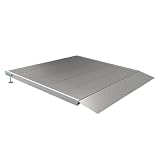
- PORTABLE WHEELCHAIR RAMP: Our standalone 36" entry ramp features adjustable legs with swivel feet, allowing height adjustment from 3-5/16" to 5-7/8". This threshold ramp for doorways is lightweight...
- THRESHOLD RAMP: This wheelchair ramp for home steps provides secure access over thresholds and small rises. Made of lightweight, durable aluminum with slip-resistant tread, our threshold ramps for...
- ACCESS RAMP SOLUTIONS: Make your living space easier and safer with our selection of threshold ramps for doorways, wheelchair ramps for home steps, and portable ramps for temporary needs. This...
Educational Overview: What Are Threshold Ramps Used For?
Threshold ramps for doorways are small inclined platforms designed to bridge the height difference at a door sill, weatherstrip, or floor transition. Unlike full-length wheelchair ramps that cover steps or porches, threshold ramps address rises that are typically between half an inch and four inches — the kind of small but stubborn barriers found at nearly every interior and exterior doorway in a typical home. They are used by wheelchair users, scooter riders, rollator and walker users, and anyone who has difficulty lifting their feet over raised surfaces due to arthritis, stroke recovery, or general age-related mobility loss.
Threshold ramps come in two primary materials. Rubber ramps are the quietest and most stable, gripping floors through friction alone and absorbing the vibration of rolling wheels — they also tend to carry the highest weight ratings, with some heavy-duty solid rubber ramps rated for 2,200 to 4,400 pounds. Aluminum ramps are the lightest and most portable, often featuring modular designs, folding hinges, or adjustable legs that let one ramp serve multiple doorways or accommodate uneven outdoor surfaces. Each material has trade-offs in weight, noise, grip, and price, which is why matching the ramp to the specific doorway and mobility device matters.
These ramps also differ from portable wheelchair ramps in both scale and purpose. Portable ramps are designed for steps, curbs, and vehicle access — they are longer, heavier, and built for larger elevation changes. Threshold ramps, by contrast, are compact, low-profile, and meant to stay in place at a single doorway. Many homeowners install threshold ramps at every interior doorway as part of a whole-home accessibility plan, especially when a senior transitions from occasional walker use to full-time wheelchair use.
How to Use Threshold Ramps Safely
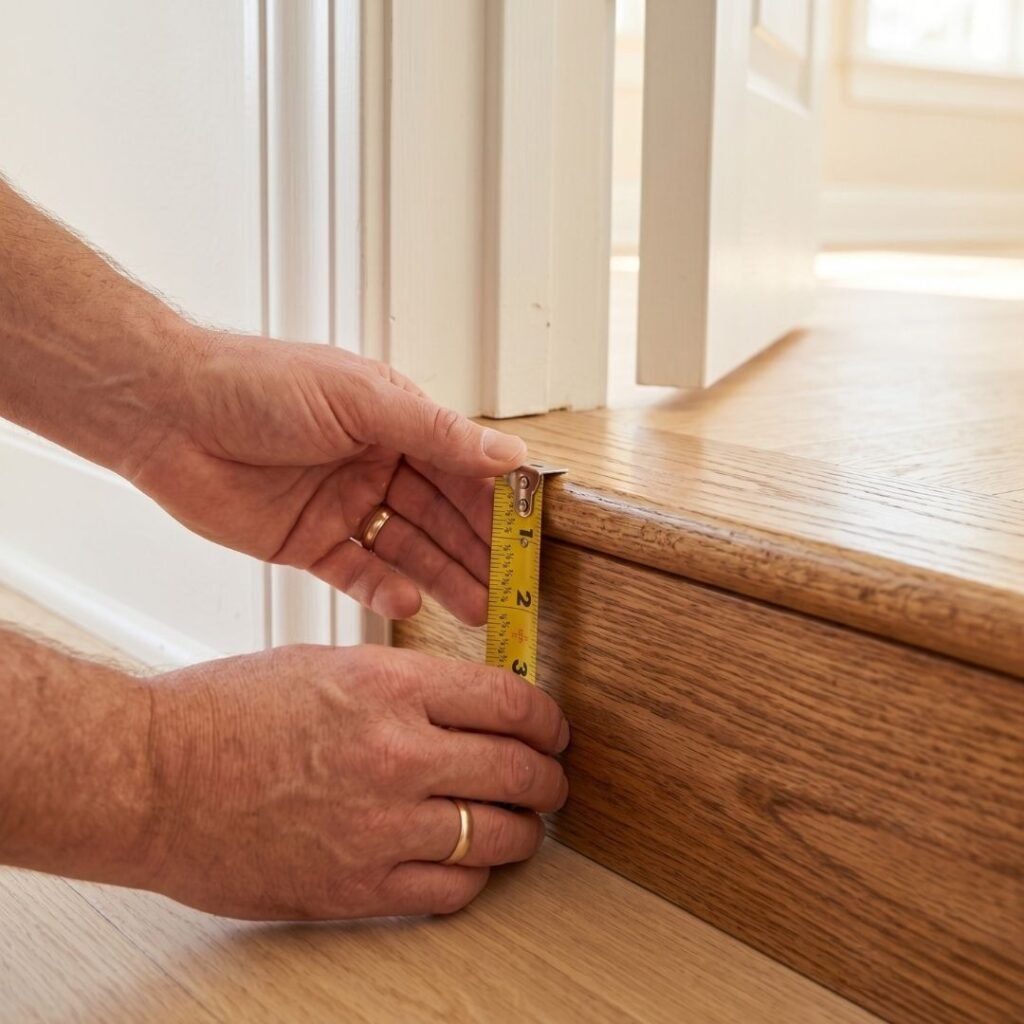
Measure the threshold height accurately before purchasing. The single most common mistake families make with threshold ramps for doorways is ordering the wrong height. Use a tape measure or a ruler to measure the exact height of the raised sill from the lower floor surface to the top of the lip. Round up to the nearest quarter inch. If the ramp height does not match the threshold, the transition will either leave a gap at the top or create a bump that defeats the purpose of the ramp. Most manufacturers list the exact rise each ramp accommodates, so matching the measurement to the product specifications is straightforward.
Check the ramp width against the door opening. The ramp should span the full width of the doorway so that wheels never roll off the side edge. For standard interior doors, a 32- to 36-inch ramp is usually sufficient. For wider patio doors, sliding doors, or double-entry doors, you may need a wider ramp or two ramps placed side by side. Some rubber ramps can be trimmed with a utility knife to fit non-standard widths, which is a useful feature for older homes with irregular door frames.
Secure the ramp to the floor if it will be permanent. Rubber ramps often stay in place through friction alone, but aluminum ramps may shift over time under heavy or repeated traffic. If the ramp moves even slightly out of alignment, it creates a trip hazard. For permanent installations, use the manufacturer’s recommended fasteners — typically double-sided adhesive strips, screws, or anchor bolts. The U.S. Access Board’s guide to ADA ramp standards specifies that ramp surfaces must be firm, stable, and slip-resistant to meet federal accessibility requirements.
Inspect the ramp regularly for wear and movement. Over time, rubber ramps can compress under heavy loads, aluminum ramps can develop loose hardware, and adhesive strips can weaken. A quick visual check once a month — looking for cracks, shifts, or surface wear — takes less than a minute and prevents the kind of gradual deterioration that leads to falls. Replace any ramp that shows visible damage or no longer sits flat against both the threshold and the floor.
Lifestyle Synergy: Making Threshold Ramps Work Better at Home
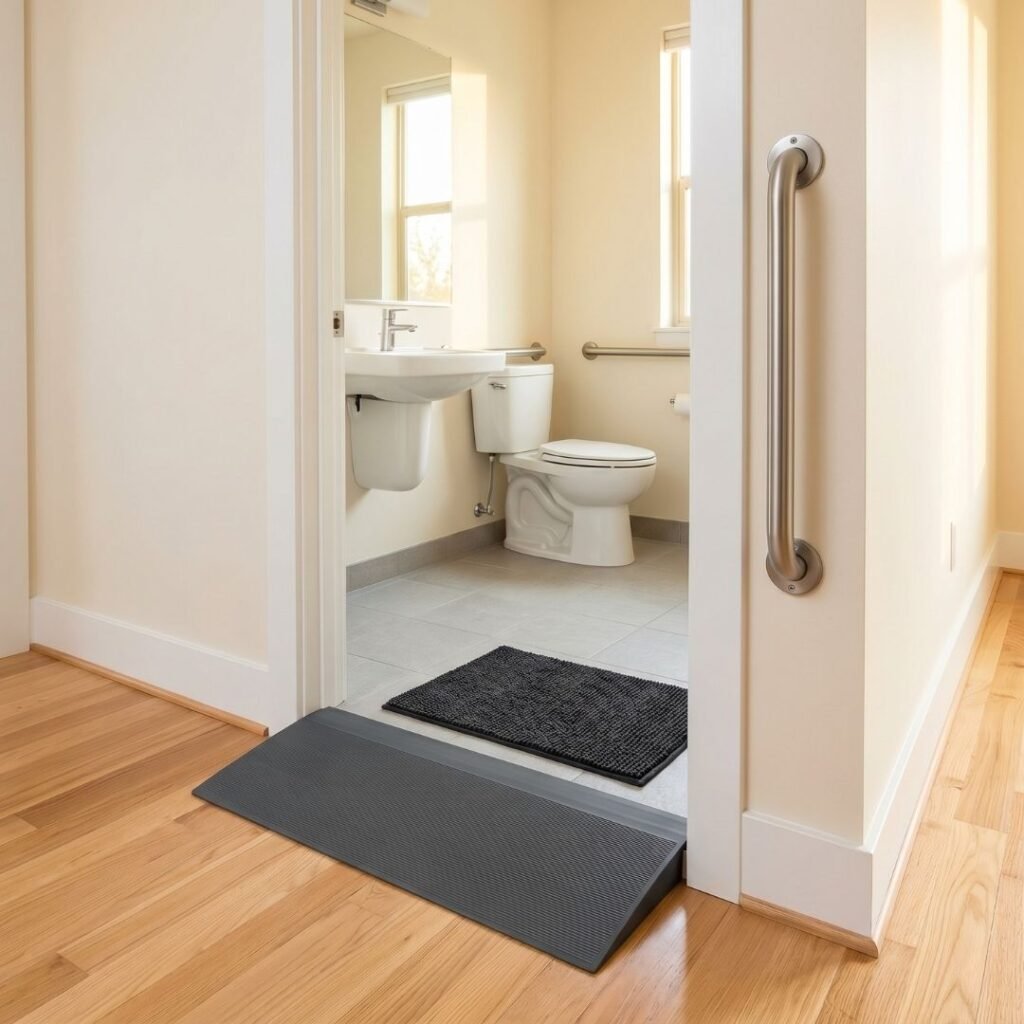
A threshold ramp does its best work when it is part of a coordinated accessibility setup at each doorway rather than an isolated fix. Pairing the ramp with a grab bar mounted beside the door frame gives walker and cane users a handhold during the transition, which is especially helpful at bathroom and bedroom entries where the floor surface changes. Adding non-slip mats on both sides of the ramp provides additional traction on hardwood or tile floors that can become slippery with socks or wet shoes. Together, these three elements — ramp, grab bar, and non-slip surface — create a complete transition zone that addresses slope, balance, and traction in a single pass.
Think about the full path a wheelchair or walker takes through the home, not just one doorway. Most homes have threshold transitions at every interior door, plus the main entry, patio door, and garage entry. Installing ramps at all of these points creates an uninterrupted path of travel from room to room. This is particularly important for seniors who use power wheelchairs or heavy scooters, since stopping to be lifted over a sill multiple times per day wears on both the user and the caregiver. A complete set of threshold ramps for doorways throughout the home can eliminate that friction entirely.
For outdoor doorways, consider the drainage and weather conditions around the entry. A ramp at a front door that collects rainwater will become a slip hazard unless the ramp surface channels water away. Aluminum ramps with perforated or grooved surfaces handle this better than smooth rubber. If the outdoor threshold is exposed to snow or ice, a ramp with a slightly rougher surface texture will maintain grip in cold conditions. Positioning a rubber doormat at the top of the ramp also helps trap moisture before it reaches indoor flooring.
Physician’s Tips for Long-Term Use
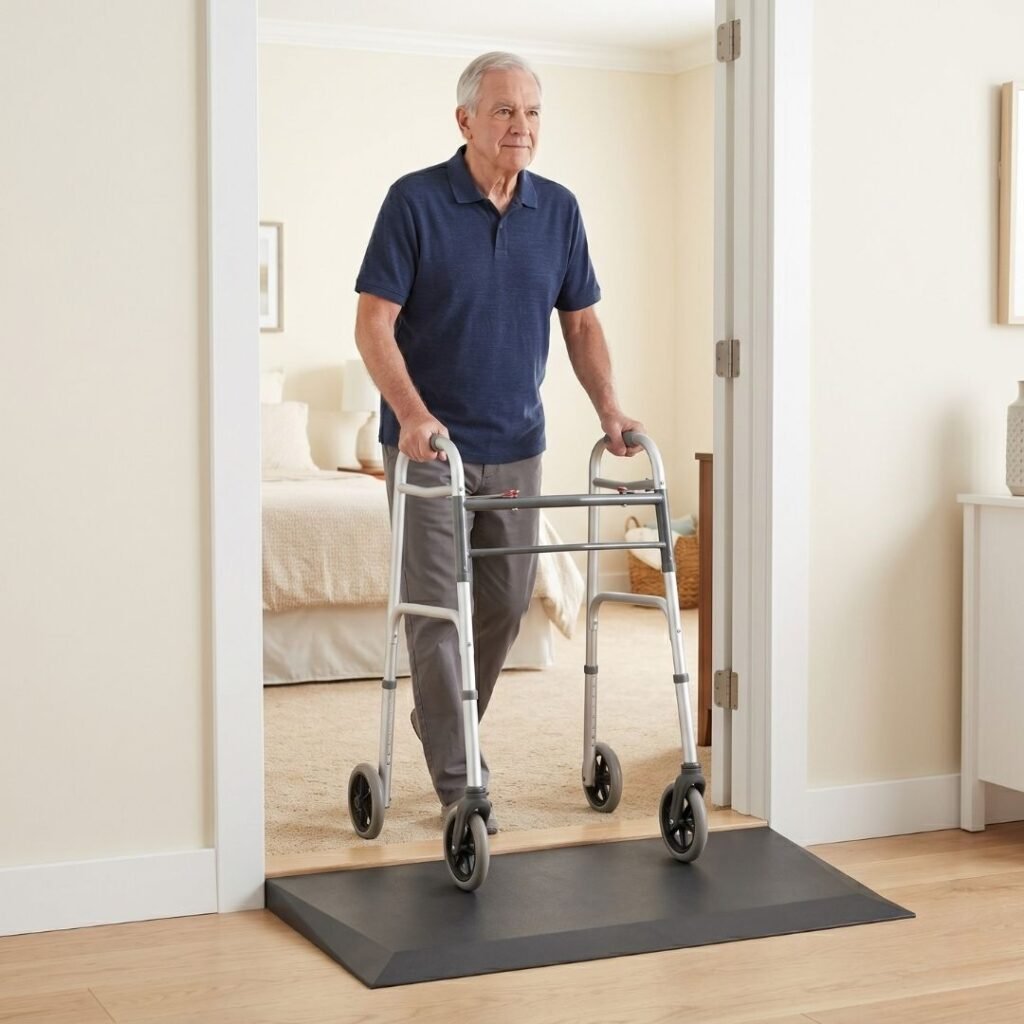
When I recommend threshold ramps for doorways to my patients, I always frame them as a long-term investment in independent living rather than a temporary fix. Mobility needs tend to progress — a senior who uses a cane today may transition to a walker in six months and a wheelchair within a year or two. Installing ramps at all doorway transitions early, before they become urgent, means the home is already prepared for each stage of that progression. Waiting until after a fall to install ramps is reactive. Setting them up while the senior is still mobile is proactive, and it is significantly safer.
I also remind families to match the ramp to the heaviest device that might use it, not the current one. If a senior currently uses a manual wheelchair but may eventually need a power chair, the ramp should be rated for the weight of the power chair from the start. Replacing undersized ramps after a device upgrade is an unnecessary expense and an unnecessary risk during the transition period. Choosing a ramp with a higher weight capacity upfront — even if the current device doesn’t require it — provides a margin of safety that becomes valuable over time.
Finally, I encourage my patients to walk or roll over the ramp during a supervised trial before relying on it independently. This gives both the patient and the caregiver a chance to check the slope angle, the surface grip, and the alignment with the door swing. If the door swings inward over the ramp, make sure there is enough clearance for the door to open fully without catching on the ramp edge. A ramp that interferes with the door is a ramp that will be removed — and removing it reintroduces the exact hazard it was meant to eliminate. Get the placement right the first time, and the ramp becomes an invisible part of the home.
Threshold Ramp Comparison for Seniors (Features & Stability)
Frequently Asked Questions
1. What is the best threshold ramp material for wheelchairs?
For most wheelchair users, solid rubber is the best threshold ramp material because it provides a non-slip surface on top, grips the floor on the bottom, and absorbs the vibration and noise of rolling wheels. Rubber threshold ramps for doorways stay in place through friction alone, which means they don’t shift when a heavy wheelchair crosses them repeatedly throughout the day. For power wheelchairs or bariatric devices that weigh more than 300 pounds, look for ramps specifically rated for 800 pounds or more. Aluminum ramps are a good alternative when portability and adjustability matter more than noise dampening.
2. How do I measure for a threshold ramp?
Place a ruler or tape measure at the base of the lower floor surface and measure vertically to the highest point of the door sill or threshold lip. Record the measurement to the nearest quarter inch. Then measure the width of the doorway opening from one side of the frame to the other. You need both numbers to select the correct ramp — the height determines the ramp model, and the width determines whether the ramp will span the full opening. If the threshold height is uneven from one side to the other, use the taller measurement. Most threshold ramps for doorways list their compatible rise range in the product specifications.
3. Can threshold ramps be used outdoors?
Yes, many threshold ramps are designed specifically for outdoor use at front doors, patio entries, and garage thresholds. Look for ramps made from weather-resistant materials like recycled polymer or coated aluminum that will not rust, rot, or crack under rain, snow, or UV exposure. Outdoor ramps should have a textured or deep-tread surface to maintain grip in wet conditions. Solid rubber ramps can also work outdoors, but they may absorb water over time in climates with prolonged rain or standing puddles. For permanent outdoor installations, secure the ramp with screws or anchor bolts to prevent shifting from wind or heavy foot traffic.
4. Are threshold ramps covered by Medicare or insurance?
Threshold ramps are generally not covered by Medicare under standard durable medical equipment (DME) benefits, because Medicare classifies them as home modifications rather than medical devices. However, some Medicaid waiver programs, Veterans Affairs (VA) home modification grants, and private long-term care insurance policies may cover part or all of the cost. If you or a family member is a veteran, the VA’s Home Improvements and Structural Alterations (HISA) grant can help fund accessibility modifications including threshold ramps for doorways. It is worth contacting your state Medicaid office or insurance provider to ask about coverage before purchasing.
5. Do threshold ramps work with door sweeps and weatherstripping?
In most cases, yes. Threshold ramps are designed to sit against or over the raised sill that the door sweep or weatherstrip attaches to. However, if the door sweep hangs low enough to drag across the top of the ramp, it may catch or prevent the door from opening fully. Before installing the ramp permanently, open and close the door several times to check for clearance. If the sweep drags, you may need to trim the sweep slightly or adjust its mounting height. For sliding doors with bottom-mounted weatherstripping, place the ramp on the room side of the track so it does not interfere with the door’s sliding path.
Final Thoughts on Threshold Ramps for Doorways
Threshold ramps for doorways are one of the simplest and most effective home accessibility modifications available. They require no construction, no permits, and in many cases no tools at all. A single ramp can turn a daily struggle into a seamless transition, and a set of ramps installed throughout the home can restore room-to-room independence for wheelchair, walker, and scooter users alike. The key is choosing the right ramp for each doorway — matching the threshold height, the mobility device weight, and the indoor or outdoor conditions.
Every product in this guide has been selected for its build quality, safety features, and suitability for seniors and caregivers. Whether you need a heavy-duty rubber ramp for a power wheelchair or a lightweight folding ramp for occasional use, the right threshold ramp is a small investment that delivers daily returns in safety and independence.
Medical Disclaimer: This guide is for general educational purposes only and is not intended to serve as personalized medical advice. Always consult a qualified healthcare professional before making changes to medical equipment or care plans.
Last update on 2026-09-15 / Affiliate links / Images from Amazon Product Advertising API
