
Affiliate Disclaimer: This article contains affiliate links. As an Amazon Associate, Mobility With Ease may earn a small commission from qualifying purchases at no additional cost to you.
Introduction
By the time a senior reaches their late eighties or early nineties, the conversation about mobility shifts in a quiet but important way. When that shift is driven by a serious or progressive diagnosis, our guide to mobility support for seniors with advanced illness explains how to adapt these same comfort priorities to declining health. Steady balance and long walks are no longer the priority. What matters is whether a walker is gentle on tired hands, whether a cushion lets them sit comfortably for an afternoon, whether a wheelchair feels supportive after thirty minutes instead of digging in. Comfort mobility aids for seniors are the category of products built around exactly this question. They are designed not to push performance, but to make daily life easier for someone whose body deserves a softer landing.
Picking the right device at this stage is rarely about brand names or specifications. It is about the small touches: padded armrests that don’t bruise thin skin, lightweight frames that an aging spouse can lift into the car, brakes that work with arthritic hands, cushioning that prevents pressure injuries during long hours seated by the window. Comfort mobility aids for seniors of advanced age have to thread several needles at once, and most off-the-shelf products fall short on at least one of them.
This 2026 guide reviews the five comfort-focused picks our team recommends most often for frail and advanced-age users, organized by the specific need they solve. We also walk through how to choose between categories, how to set up the home around the device, and the practical realities of using these aids day after day. Whether you are buying for a parent, a spouse, or yourself, the goal is the same: a mobility aid that supports daily life without becoming one more thing to wrestle with.
Why Comfort Mobility Aids Matter at Advanced Age
For seniors in their late eighties, nineties, and beyond, the trade-offs around mobility look very different than they do for active retirees. Muscle mass has declined. Joint pain is common. Energy is a limited resource that has to be spent carefully. The National Institute on Aging notes that mobility — the ability to move or walk freely and easily — is critical for functioning well and living independently. But the kind of mobility that matters at advanced age is not about going farther. It is about preserving the small, daily movements that protect dignity and quality of life.
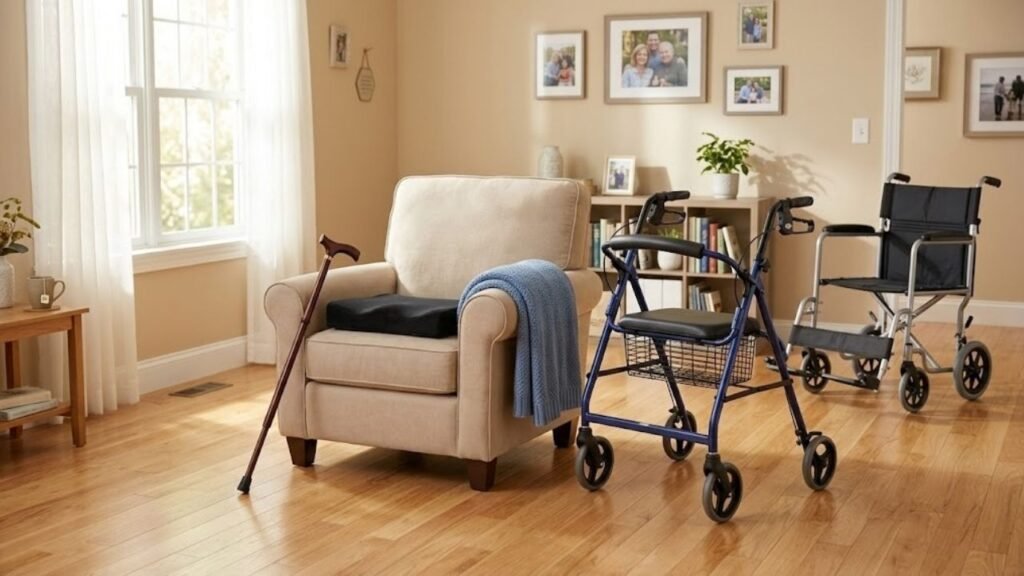
That is where comfort mobility aids for seniors come in. A rollator with a padded seat is not just a walking aid; it is a place to rest mid-trip without sitting on a hard surface. A lightweight transport wheelchair is not just transportation; it is a way to spend an afternoon at the park when walking the full distance is no longer realistic. A memory foam cushion is not just an accessory; it is the difference between an hour seated comfortably and a pressure sore that takes months to heal. Each of these products is built to lower the cost of movement so the senior can keep doing the things that matter to them.
Families also have to factor in their own experience. A heavy steel walker that is technically sturdy enough may be impossible for an adult daughter to fold and lift into the trunk. A wheelchair without padded armrests may dig into a senior’s skin during a forty-minute medical appointment. Comfort, in this category, is not a luxury feature. It is what makes the device usable over months and years. If you are still weighing whether a walker or rollator is the right starting point, our roundup of the best walkers & rollators for seniors compares the main categories in detail.
Doctor’s Note: Choosing the Right Comfort Mobility Aid
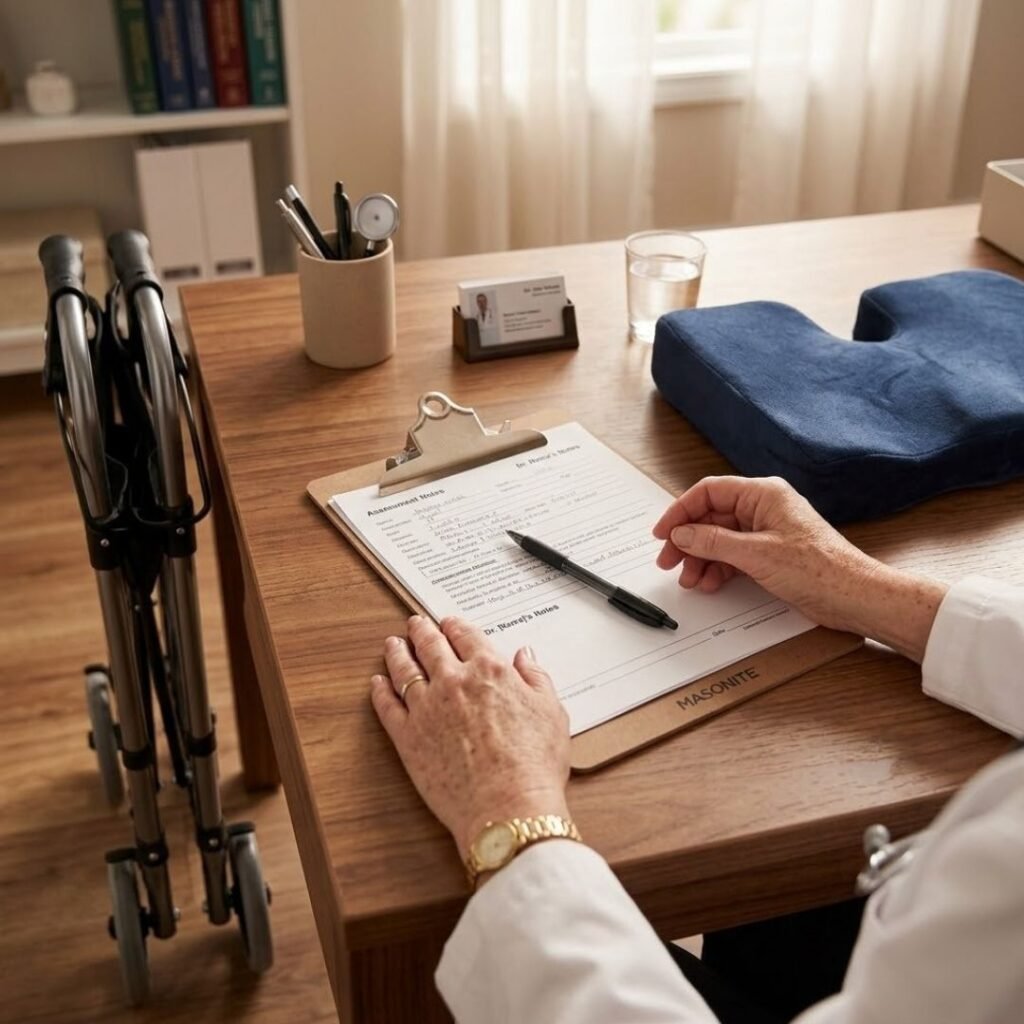
I see a lot of families come into the clinic carrying a device that is technically appropriate for their loved one but is making daily life harder, not easier. The wheelchair was prescribed correctly, but the armrests are uncomfortable after twenty minutes. The walker is the right height, but it is too heavy for the spouse to push when the senior leans on it. When I prescribe comfort mobility aids for seniors of advanced age, I am looking at three things before I look at anything else.
First, I ask what the senior actually does on a typical day. How many transfers are they making? How long are they seated? Where do they want to be in the room, in the house, in the neighborhood? The answer tells me whether we need a daily rollator with a seat, a lightweight wheelchair for outings, or a combination of devices for different parts of the day.
Second, I look at the caregiver. A comfort mobility aid that requires a strong adult child to lift it in and out of an SUV is not a good fit if that child lives two states away. I want a device that fits the family’s reality, not an idealized one. Lightweight frames, simple folding mechanisms, and intuitive brakes matter as much as anything on the spec sheet.
Third, I look at the skin. Seniors of advanced age often have thin, fragile skin that injures easily. Padded armrests, soft seat cushions, and well-finished frames matter not because they are nicer to look at, but because they prevent skin tears, bruises, and pressure injuries. Good comfort mobility aids for seniors think about the body that will actually use them, not an idealized user.
Best Comfort Mobility Aids for Seniors (Top Picks)
Best Overall — Cushioned Rollator
Drive Medical Nitro Euro Style Rollator Walker
The Nitro Euro is the rollator I recommend most often for seniors of advanced age who can still walk short distances but need frequent rest stops. The padded ergonomic seat is wide enough to be genuinely comfortable, not just adequate. The front wheels are larger than a standard rollator, which smooths out cracks and thresholds that would jolt a thinner-wheeled model. The frame is aluminum, so it lifts easily into the trunk of a sedan. Brakes are loop-style and require less hand strength than older cable systems. For a senior who treats a rollator as their daily walking partner and resting bench, this is the most balanced choice on the market in 2026.
Pros
- Wide, padded seat for genuine mid-walk rest
- Large front wheels handle thresholds and uneven floors
- Loop-style brakes are easier for arthritic hands
- Aluminum frame folds compact for car transport
Cons
- Higher price point than basic rollators
- Larger footprint may be tight in narrow hallways

- Rolling Walker with Seat: The Nitro walker combines larger wheels and advanced features with a sleek design for a safe, smooth experience; great walker for seniors and adults seeking advanced...
- Superior Wheels: Large 10-inch front casters glide the 4-wheeled walker over curbs and rough terrain while offering the rollator walker optimal maneuvering around furniture and corners
- Adjustable Fit: Handles feature push-button height adjustment; the backrest of the height-adjustable rollator can be moved up or down via a tool-free thumb screw
Best Lightweight Transport Chair
Medline Ultralight Transport Wheelchair with Padded Armrests
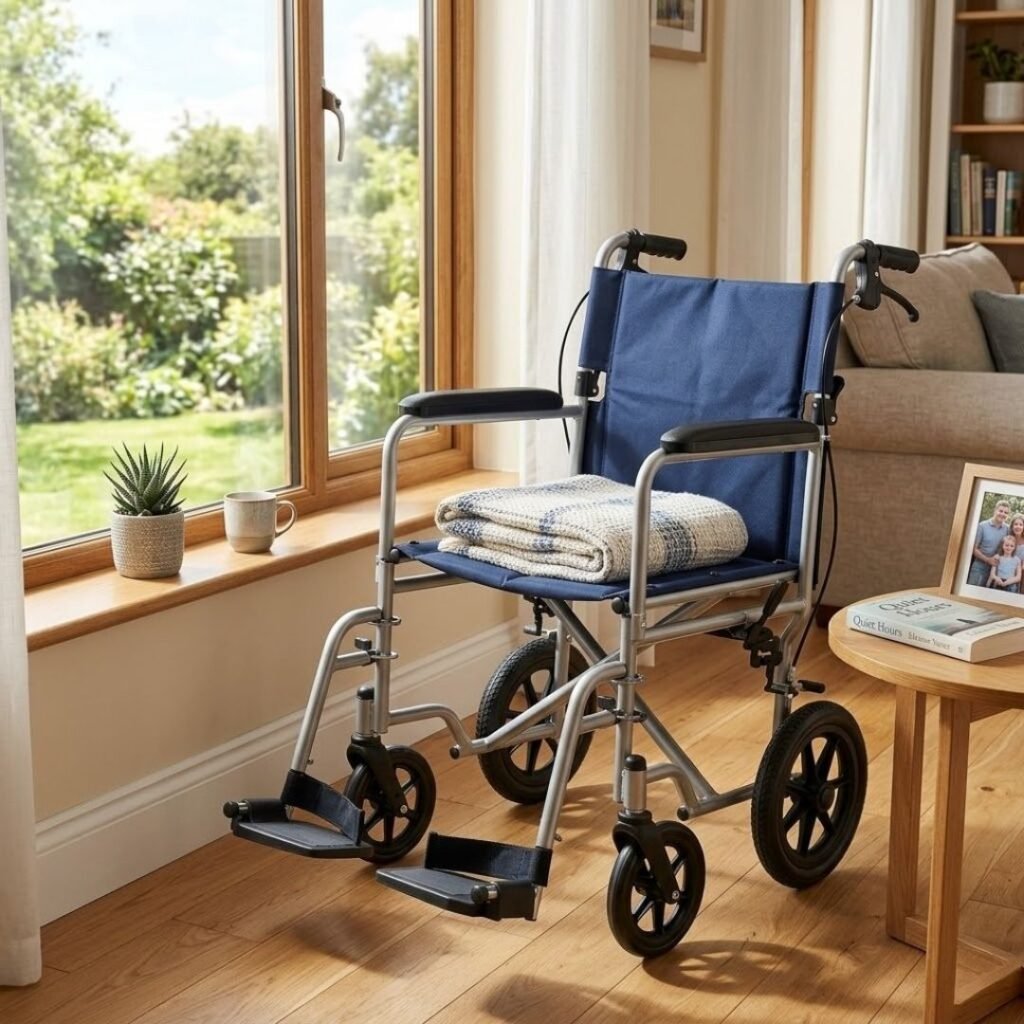
For seniors who can no longer walk long distances but still want to go on outings, a transport wheelchair is often the single most life-changing purchase a family makes. The Medline Ultralight version is the one I keep recommending because it weighs under twenty pounds and folds compact enough to fit in most car trunks. The padded armrests matter more than they sound. Thin senior skin sitting against a hard plastic armrest for forty minutes during a medical appointment is a recipe for bruising and discomfort. The padded design solves that problem. The chair is meant to be pushed by a family member or aide, not self-propelled, which keeps the frame light and the wheels compact.
Body Image 2: MWE_comfort-mobility-aids-for-seniors_body2.jpg
Pros
- Under 20 pounds for easy car loading
- Padded armrests prevent bruising on thin skin
- Compact folded footprint fits sedan trunks
- Smooth-rolling wheels for indoor and paved-outdoor use
Cons
- Not self-propelled — requires a caregiver to push
- Smaller wheels struggle on gravel or grass
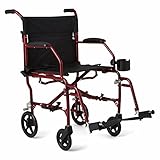
- LIGHTWEIGHT AND DURABLE: Ultra lightweight, 15 lbs., folding transport chair for adults has a sturdy aluminum frame; 300 lb. weight capacity
- COMFORTABLE WITH EASY IN/OUT: Desk-length cushioned armrests for comfort; spacious 19” wide x 16” deep seat; swing-away footrests make it easy to get in and out of the seat; cup holder comes...
- FOLDS EASILY FOR TRANSPORT: Compact design folds easily with swing-away footrests that lock in place for convenient storage and transport in car trunk

Best Pressure-Relieving Cushion
Vive Memory Foam Seat Cushion for Wheelchairs and Chairs
When a senior spends most of their day seated, the cushion they sit on matters more than the chair itself. The Vive Memory Foam Cushion is the one I recommend for general-purpose pressure relief because it works on a recliner, a wheelchair, or a kitchen chair without modification. The two-layer construction has a firmer base for support and a softer memory foam top that distributes weight. The cover is removable and machine washable, which matters more than people expect during long-term use. For seniors at risk of pressure injuries, a good cushion is one of the lowest-cost, highest-impact comfort mobility aids for seniors that exists.
Pros
- Two-layer design balances support and softness
- Fits most chairs and wheelchairs
- Removable washable cover
- Affordable compared to medical-grade alternatives
Cons
- Not a substitute for medical-grade air cushions in high-risk cases
- Memory foam softens over time and may need replacement after 12–18 months
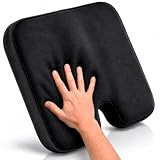
- DUAL-LAYER COMFORT: Experience superior pressure relief with a dual-layer memory foam design that combines a soft, comfortable layer and a firm, high-density base. This balanced support prevents...
- ERGONOMIC TAILBONE RELIEF: Designed with a U-shaped coccyx cutout, this cushion reduces tailbone pressure and encourages healthy spinal alignment. The contoured sides promote proper posture, making it...
- BREATHABLE AND COOL DESIGN: Stay cool and comfortable with 20 built-in ventilation holes that enhance airflow through both foam layers. This breathable design prevents heat buildup, keeping you fresh...
Best Cushioned Cane
HurryCane Freedom Edition Folding Cane with Pivoting Base
For seniors who only need light walking support and find a rollator too bulky for tight indoor spaces, the HurryCane Freedom Edition is my regular recommendation. The pivoting tripod base provides stability that a single-point cane cannot match, without the awkwardness of a quad cane. The cushion-grip handle reduces wrist strain over long walks, which matters for seniors with arthritis. The cane folds compact enough to fit in a small bag or beside a chair, which encourages consistent use. Cushioned canes are often dismissed as basic, but at advanced age, the right cane is sometimes the only mobility aid a senior actually wants to use.
Pros
- Pivoting base improves balance without quad-cane bulk
- Cushion grip reduces wrist and hand strain
- Folds compact for travel and storage
- Stands on its own when folded
Cons
- Not sufficient support for seniors with significant balance impairment
- Heavier than a basic single-point cane
- Enhanced Stability: The HurryCane Foldable Walking Cane provides balance support for confident mobility, featuring a patented SteadiGrip base and a WhisperFlex pivoting design
- Improved Mobility: Enjoy ergonomic comfort with a walking cane built to boost balance and ease of movement, offering a three-point contact base for everyday use
- Customizable Fit: Designed for user adjustability, this cane adapts to your height needs with a 30.5"–37.5 inch range and includes a compact 4.25 inch SteadiGrip base
Best Caregiver Transfer Aid
NYOrtho Gait Belt with 6 Padded Handles
For seniors who need a hand moving between the bed, the wheelchair, and the bathroom, a padded transfer belt is one of the most underrated comfort mobility aids for seniors in the entire category. The NYOrtho Gait Belt is the one I recommend to families who are taking on more of the daily lifting themselves at home. Six reinforced padded handles distributed around the belt give the caregiver multiple leverage points to choose from, so they can find the grip that protects their own back while keeping the senior stable. The metal quick-release buckle holds securely under load but unfastens in a single motion, which matters when the transfer is done and the senior wants to sit comfortably again. The 28 to 55 inch adjustable range fits most advanced-age users, and the 275-pound capacity covers the majority of frail seniors. For families doing several transfers a day, this belt turns a tense, awkward maneuver into a controlled, predictable one — and it spares the senior the underarm grabs that bruise thin skin and dislocate fragile shoulders.
Pros
- Six padded handles let the caregiver pick the safest leverage point
- Quick-release metal buckle holds firmly but releases instantly
- Adjustable from 28 to 55 inches to fit most seniors
- Spares thin skin and fragile shoulders from underarm-grab transfers
Cons
- 275 lb capacity may be tight for larger users
- Requires an able-bodied caregiver — not a self-transfer device

- SAFELY MOVE AND TRANSFER: For those that need assistance walking, safely assist patients or loved ones while reducing the risk of caregiver injury in a hospital, hospice, ambulance or even at home...
- SIX ERGONOMIC HANDLES: Transferring a patient or loved one is different every time. Whether the angle, direction, or strength, four vertical handles and two horizontal handles around the circumference...
- EASY-ON, EASY-OFF: Quick-release buckle securely fastens around the waist with a click and is easily removed, as easy as pushing a button. Gait belt is adjustable to accommodate waists from 28” up...
Best Bedside Support Aid
Stander BedCane Adjustable Bed Rail with Padded Grip
One of the most underused categories of comfort mobility aids for seniors is bedside support. The Stander BedCane mounts to the bedframe and gives the senior a padded vertical handle to grip when sitting up, pivoting to the edge of the bed, or rising to standing. For seniors with weak shoulders or arthritis, pushing off a mattress is far more painful than pulling on a stable handle. The padded grip prevents the same skin friction that hard plastic or metal rails would cause. Adjustable height settings let the family fit it to the senior’s actual reach, not a one-size-fits-all default.
Pros
- Padded grip is gentle on arthritic hands
- Adjustable height fits different bed and user combinations
- Easy to install on most home beds
- Folds down when not in use
Cons
- Not suitable for adjustable beds where the frame moves
- Requires a stable mattress and base to anchor securely
No products found.
Educational Overview: What “Comfort-Focused” Really Means
The phrase “comfort-focused mobility aids” gets used loosely. To make it useful, it helps to be specific about what that label actually changes in a product. A comfort-focused mobility aid is one where design decisions tilt away from durability-at-all-costs and toward the user’s daily experience. The frame might be aluminum instead of steel to make it lighter, even if that means a slightly lower weight capacity. The seat might be wider and softer, even if it adds a few ounces. The brakes might be loop-style instead of cable-pull, even if that costs more to manufacture. Every decision starts from the question: will an aging body find this easier or harder to use?
According to MedlinePlus, assistive devices include tools, products, or equipment that help a person perform tasks and activities. The comfort category is a subset of that broader space. It includes rollators with padded seats, wheelchairs with cushioned armrests, canes with ergonomic grips, pressure-relieving cushions, padded transfer aids, and adaptive accessories that soften the contact points between body and equipment.
One of the most overlooked comfort categories is cushions. Even the best wheelchair becomes uncomfortable after an hour without a proper cushion. Our companion roundup of the best wheelchair cushions for seniors covers this in more detail and is worth reading alongside this guide. Families often spend hundreds of dollars on a wheelchair and then balk at thirty dollars for a cushion, which is exactly backward. The cushion is what determines whether the chair is usable for thirty minutes or three hours.
How to Use Comfort Mobility Aids Safely
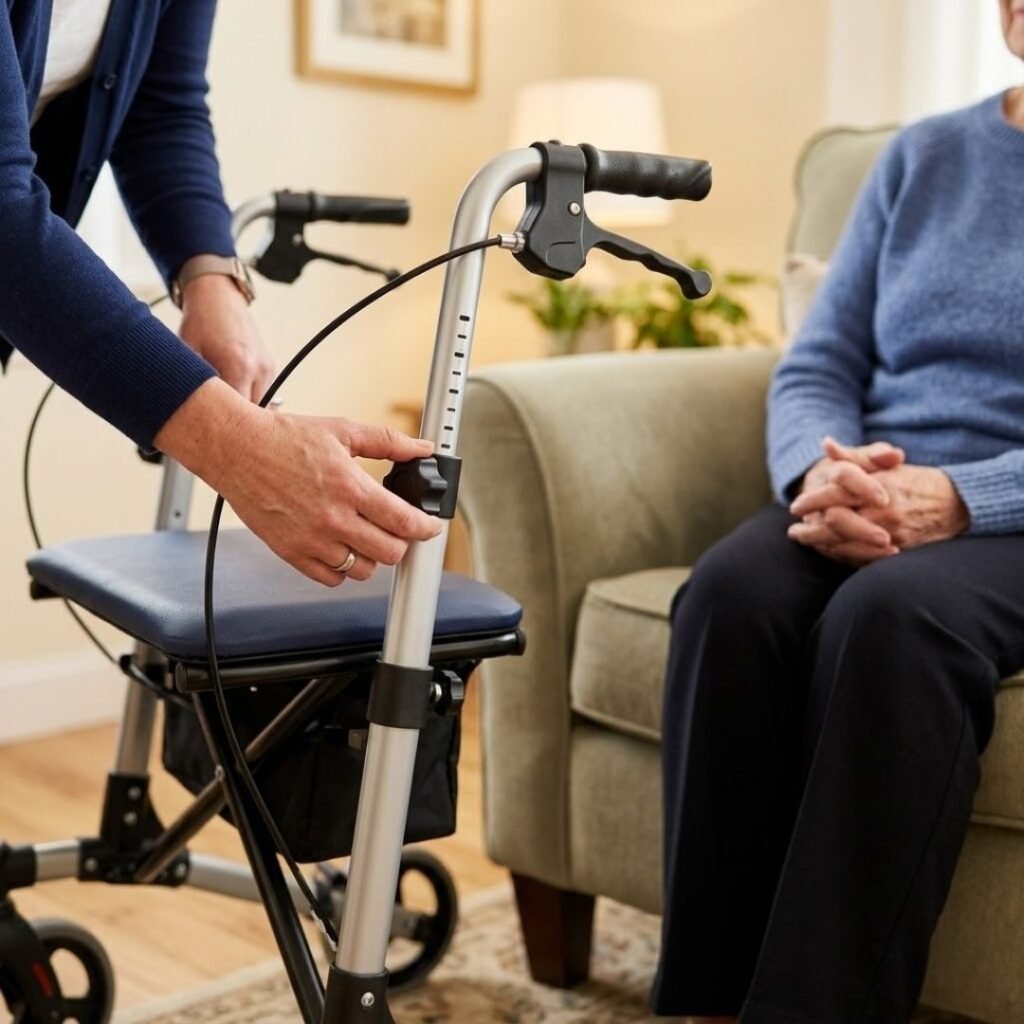
Check the height before the first use. Every rollator, walker, and cane has an adjustable height setting, and getting it wrong is one of the most common causes of discomfort and falls. With the senior standing upright in their normal shoes, the handle should reach the crease of the wrist when the arm hangs naturally at their side. A handle that is too high forces the shoulder up and tires the user quickly. A handle that is too low causes a stoop that ages the gait and stresses the lower back. Adjust this once, then re-check every few months as posture changes.
Engage the brakes before sitting. One of the most common injuries in seniors using a rollator is sitting down before locking the wheels. The seat rolls forward, the senior loses balance, and the fall happens in less than a second. Make engaging the brakes part of the routine: stop, turn, lock, then sit. Practice this with the senior several times until it becomes automatic. The same rule applies to wheelchairs during transfers.
Use the right surface for the wheels. Smaller wheels on transport wheelchairs and many rollators handle smooth indoor surfaces well but struggle on grass, gravel, or thick carpet. Plan outings around surfaces the device can handle. A push that becomes a struggle is a fall risk for the senior and a back injury risk for the caregiver. If the senior wants outdoor access on uneven terrain, that is a conversation about a different category of equipment.
Inspect cushions and padding regularly. Memory foam cushions compress over time and lose their pressure-relieving properties after roughly twelve to eighteen months of daily use. Padded armrests and grips wear down. Check these once a month and replace them before they fail. A worn cushion that no longer supports the senior is more dangerous than no cushion at all because it gives a false sense of comfort while the underlying tissue is being compressed.
Match the device to the day. Some days the senior has energy for a rollator-assisted walk. Other days they need the wheelchair from the moment they leave the bedroom. Comfort mobility aids for seniors of advanced age are most useful when families allow flexibility. Owning more than one device, and rotating based on how the senior feels, is often the practical answer.

Lifestyle Synergy: Making Comfort Mobility Aids Work Better at Home
A mobility aid is only as good as the environment it lives in. Comfort mobility aids for seniors do their best work when the home is set up to support them. That starts with clearing pathways. Every device in this guide assumes the senior can move between rooms without navigating around clutter, area rugs, or low furniture. Spend an afternoon walking the route from bedroom to bathroom to living room and remove anything that creates a tight squeeze or a tripping hazard.
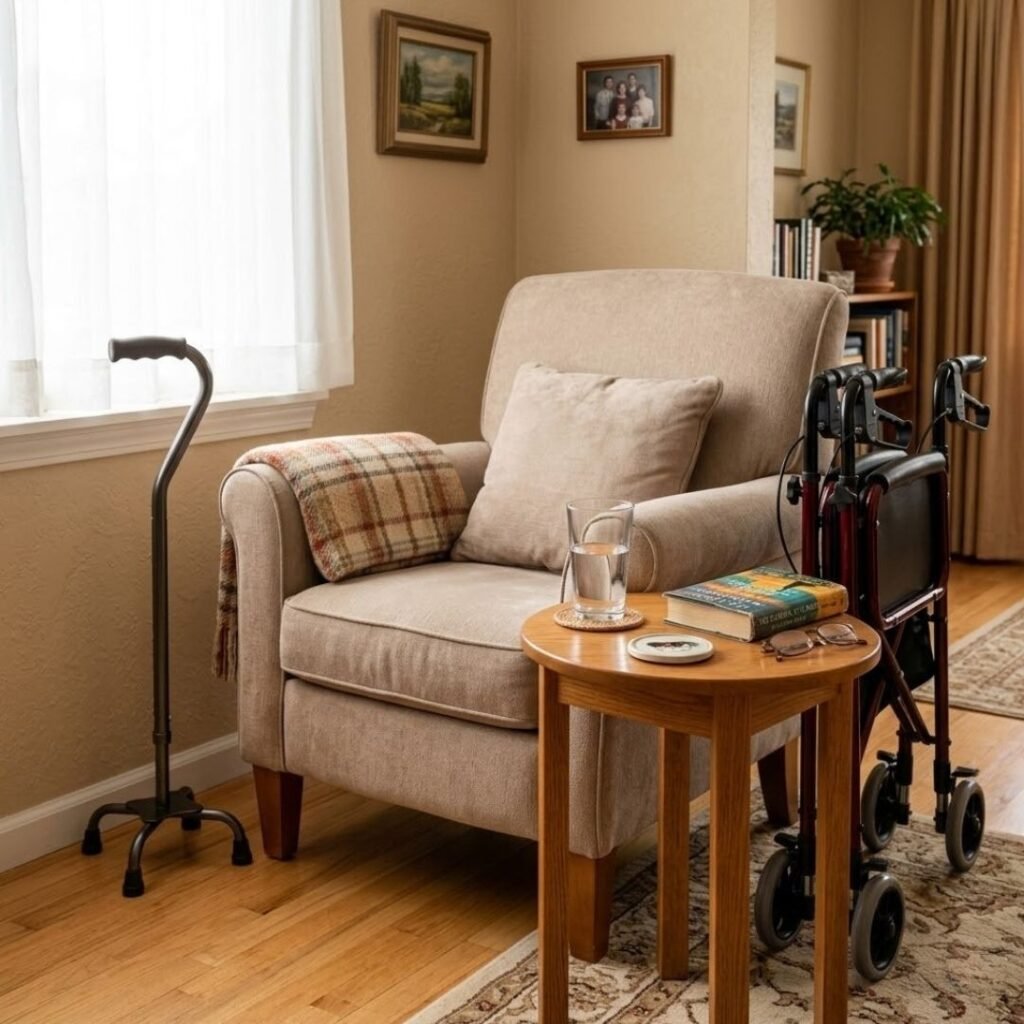
The next step is consistent storage. A rollator that lives in a different spot every day is one the senior may not reach in time when they need to stand up. A cane that gets left in the car is not helping anyone. Assign each device a fixed home: the rollator beside the recliner, the cane in a holder by the bed, the transport wheelchair folded and stored in a hall closet. Consistency turns the mobility aid into a reflex rather than a decision.
Pay attention to lighting. Many falls happen at night, on the way to the bathroom, and the lighting that worked fine a decade ago may not be enough for tired eyes and a slower gait. Plug-in motion-sensor night lights along the route, brighter lamps near the bed and bathroom, and a clear path with no obstacles all extend the safe range of every mobility aid in the house.
Family routines matter just as much as physical setup. If the senior knows their daughter will help them transfer to the recliner after dinner, that ritual becomes a small daily anchor. If the rollator is always parked where it is needed, it becomes part of the room rather than a piece of medical equipment. For families navigating this stage for the first time, our guide on how to support a loved one with limited mobility walks through how to build these routines without turning the home into a hospital.
Physician’s Tips for Long-Term Use
Re-measure every six months. Posture changes with age, and a handle height that was right at the time of purchase may no longer be right a year later. A small height check twice a year prevents shoulder pain, lower back strain, and the gradual stooping that follows a poorly-fit walker.
Replace cushions on schedule. Memory foam, gel, and air cushions all lose effectiveness over time. Calendar the replacement so it happens before the senior starts complaining. Waiting for a complaint usually means waiting for a pressure injury.
Watch the hands and wrists. Comfort mobility aids for seniors should make daily life easier, but if the senior is developing wrist pain from a particular cane or red marks from a rollator handle, the device may not be the right match. Talk to an occupational therapist about adjustments before assuming the issue is the user.
Don’t graduate the device just because the senior is having a good week. A good week is a wonderful thing, but it does not mean the senior no longer needs the rollator or wheelchair. Comfort devices are tools that prevent the bad week from becoming a hospital admission. Keep the equipment in place even when the senior feels strong.
Bring the device to medical appointments. Therapists and physicians can see things in five minutes of watching the senior use the device that the family may have missed. If something is uncomfortable, bring the device to the appointment and ask for an adjustment in real time.
Comfort Mobility Aids Comparison for Seniors (Features & Support)
Frequently Asked Questions
1. What makes a mobility aid “comfort-focused” for seniors of advanced age?
A comfort-focused mobility aid prioritizes the user’s day-to-day experience over raw durability or maximum capacity. Common features include padded seats and armrests, lightweight aluminum frames, ergonomic grips, loop-style brakes that need less hand strength, and pressure-relieving cushions. The goal is to lower the physical cost of every transfer, walk, or seated hour so the senior can use the device for longer without fatigue, skin injury, or pain.
2. Are rollators or wheelchairs better for frail elderly people?
It depends on how much the senior can safely walk. Rollators with padded seats are the right choice when the senior can still walk short distances and just needs frequent rest stops along the way. A transport wheelchair becomes the better fit when walking the full distance is no longer realistic, especially for outings to medical appointments, family events, or the grocery store. Many families end up using both — a rollator for indoor daily life and a wheelchair for longer trips.
3. How heavy should a mobility aid be for a very elderly user?
For most seniors of advanced age, lighter is better, with a caveat. A walker or rollator should be sturdy enough to fully support the senior’s weight without flex, but light enough that the senior or their caregiver can fold and lift it. Aluminum-frame rollators in the eleven-to-fifteen pound range and transport wheelchairs under twenty pounds are usually the sweet spot. Anything heavier tends to end up unused because it is too cumbersome to take in the car.
4. Can comfort mobility aids for seniors help prevent pressure sores?
Yes, particularly when cushions and padded surfaces are part of the setup. Pressure injuries develop when an aging body sits or lies in the same position for too long without relief. A good memory foam or gel cushion redistributes weight, padded armrests prevent friction on thin skin, and rolling devices that allow more frequent position changes reduce continuous pressure on any one area. Cushions need to be replaced on a regular schedule, since a worn cushion provides a false sense of protection.
5. Does Medicare cover comfort-focused mobility aids?
Medicare Part B typically covers durable medical equipment such as walkers, rollators, and standard wheelchairs when a physician documents medical necessity. Coverage for comfort-specific upgrades — premium cushions, padded armrests, or specialty handles — varies widely and is often not included. Many families end up paying out of pocket for the comfort features that matter most to them. Talk to the prescribing physician about a Letter of Medical Necessity if you believe a particular upgrade is essential, and check with the supplier about which features are covered before purchase.
Final Thoughts on Comfort Mobility Aids for Seniors
The right mobility aid at advanced age is rarely the most sophisticated one. It is the one the senior actually uses, every day, without resistance. That outcome usually comes down to comfort: handles that don’t hurt the hands, seats that don’t bruise thin skin, frames light enough that the device is brought along instead of left behind. The picks in this 2026 guide were chosen with exactly that lens in mind. Comfort mobility aids for seniors are not luxury items. They are the practical answer to the question of how to make the next decade easier than the last one, for both the senior and the people who love them.
Medical Disclaimer: This guide is for general educational purposes only and is not intended to serve as personalized medical advice. Always consult a qualified healthcare professional before making changes to medical equipment or care plans.
Last update on 2026-09-15 / Affiliate links / Images from Amazon Product Advertising API
