
Introduction
When a family member starts showing signs of unsteadiness or has trouble navigating their own house, the instinct is often to consider a major remodel. But improving home safety for seniors rarely requires tearing out walls, ripping up floors, or hiring a general contractor. In most cases, the changes that make the biggest difference are small, affordable, and something a family can complete over a single weekend.
Falls are the leading cause of injury among adults over 65 in the United States, and most happen inside the home. The underlying causes are often surprisingly simple: a loose rug, a dim light over the stairs, a bathtub with no grab bar. These are not problems that require construction permits to solve. They require attention, a trip to the hardware store, and an hour of hands-on effort per room.
This guide walks through room-by-room changes that reduce risk and improve independence without structural renovation. Whether you are helping a parent who lives alone or adjusting your own space as you age, the strategies here focus on what works and what families can realistically accomplish on their own.
Why Home Safety Matters More Than Most Families Realize
Most families do not think seriously about the safety of a senior’s living environment until something goes wrong. A fall, a close call in the shower, or a night spent on the floor waiting for help is usually the event that triggers the conversation. By that point, the injury has already happened, and the recovery often brings additional complications like reduced confidence, fear of moving, and a reluctance to live independently.
The National Institute on Aging identifies the home as the most common site for senior injuries and recommends regular safety audits as a core part of aging in place. Yet most households never conduct one. When it comes to home safety for seniors, the assumption is that if the home has always been fine, it will continue to be fine. That assumption breaks down as balance, vision, grip strength, and reaction time change with age.
What makes this challenge different from other health concerns is that the environment itself is the risk factor. A home designed for a healthy adult in their forties may present genuine hazards for that same person at seventy-five. Stairs become risky. Bathtubs become obstacles. Lighting becomes insufficient. The home does not change, but the person living in it does, and that gap between the environment and the person’s abilities is where falls occur.
For families focused on understanding fall risks in seniors, the home environment is a controllable variable. Unlike medical conditions that require professional treatment, most household hazards can be addressed directly by the family. That makes senior home safety modifications one of the most accessible and cost-effective forms of injury prevention available.
The Three Pillars of a Safer Home
When professionals assess a home for senior safety, they generally evaluate three overlapping areas: visibility, stability, and accessibility. Understanding these pillars helps families prioritize which changes to make first and explains why a thoughtful approach to home safety for seniors has a greater impact than random fixes.
Visibility refers to how well a person can see where they are going, what they are stepping on, and where obstacles are located. Poor lighting is one of the most underestimated hazards in older adults’ homes. A hallway that appears adequately lit to a forty-year-old may be dangerously dim for someone with age-related vision changes. According to the Centers for Disease Control and Prevention (CDC), improving lighting is one of the simplest and most effective steps in fall prevention at home for seniors. Nighttime visibility is especially important because a large portion of falls happen during trips to the bathroom after dark.
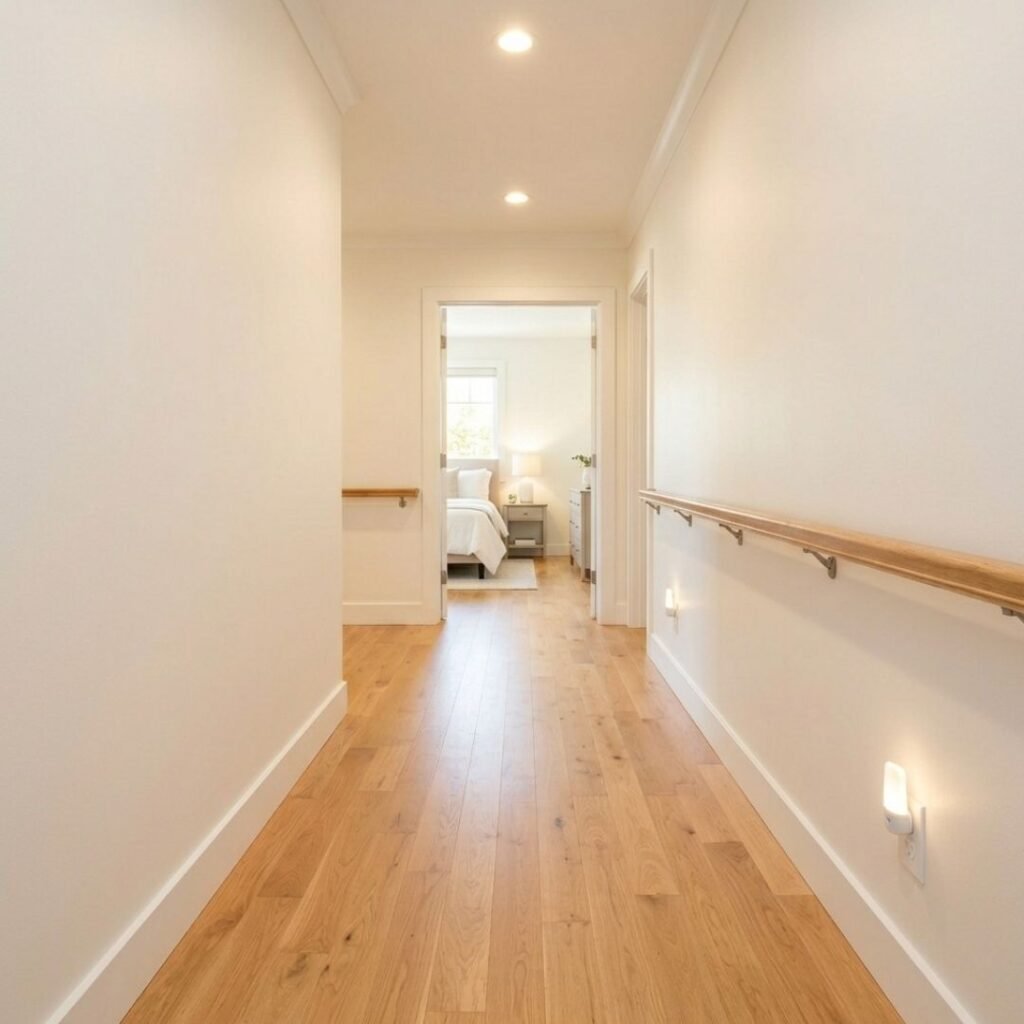
Stability refers to the physical supports a person can rely on when standing, walking, or transitioning between positions. Grab bars in the bathroom, sturdy furniture that does not slide, and handrails along hallways all contribute to stability. Our guide to handrails without major renovation covers wall-mounted rails that add this support without any structural work. The goal is to make sure that every time a senior reaches for support, something solid and secure is there. Furniture that rolls, towel bars that pull away from the wall, and wobbly chairs are stability failures that show up frequently in fall reports.
Accessibility refers to how easily a senior can reach the things they need without overextending, bending, or climbing. Keeping everyday items at waist-to-shoulder height, eliminating step stools, and making pathways wide enough for walkers or canes are all accessibility improvements. When these three pillars are addressed together, the home becomes significantly safer without any structural work.
Where Falls and Injuries Actually Happen: A Room-by-Room Look
Understanding where accidents occur most frequently helps families focus their efforts where they will matter most. Research consistently identifies three primary danger zones inside the home: the bathroom, the bedroom, and stairways or transitions between rooms.
The bathroom is the single most dangerous room in the house for older adults. Wet surfaces, hard fixtures, and the physical demands of getting in and out of a tub or on and off a toilet combine to create a high-risk environment. Nearly eighty percent of bathroom falls involve slipping on a wet floor or losing balance during a transfer. The encouraging part is that most of these falls are preventable with grab bars, non-slip mats, and a shower seat — all core components of home safety for seniors that require no renovation.
The bedroom is the second most common location for senior falls, particularly during the night. Getting out of bed in the dark, navigating to the bathroom without adequate light, and tripping over items left on the floor all contribute to nighttime falls. Beds that are too high or too low, loose bedding that trails onto the floor, and nightstands placed too far from the bed are common hazards that families often overlook.
Stairways and room transitions present the third major risk area. A single step between rooms, a raised threshold, or a staircase without a handrail on both sides can cause serious injuries. These transition points are especially dangerous for seniors using mobility aids because walkers and canes do not navigate level changes well.
Kitchens round out the list. Reaching for items on high shelves, bending to access low cabinets, and standing on wet tile near the sink are common scenarios that lead to falls or strains in older adults.
Lighting and Visibility Fixes That Take Minutes
Improving lighting is one of the fastest and least expensive ways to enhance home safety for seniors. Age-related changes to the eyes mean that older adults need significantly more light than younger people to see the same level of detail. A sixty-year-old needs roughly three times more ambient light than a twenty-year-old, and by age eighty that number can be even higher. Most homes are simply not lit well enough for aging eyes, especially hallways, stairways, and bathrooms at night.
The most impactful change is adding motion-sensor nightlights in every area between the bedroom and the bathroom. These inexpensive plug-in lights activate automatically when someone gets up at night, eliminating the need to fumble for a switch in the dark. For families looking into why seniors fall at night, poor lighting is almost always a contributing factor, and motion-sensor lights directly address that problem.
Beyond nightlights, upgrading existing bulbs to higher-lumen LEDs throughout the home makes a noticeable difference. Focus on areas where tasks require visual accuracy: kitchen counters, medicine cabinets, stairways, and reading areas. Stairways should have light switches at both the top and bottom, and if they do not, battery-operated stick-on lights provide an easy workaround.
Light switches themselves can be a barrier for seniors with arthritis or reduced grip strength. Replacing toggle switches with rocker-style switches or installing voice-controlled smart bulbs removes that obstacle entirely.
Bathroom Safety Without Tearing Out Tile
The bathroom demands more attention than any other room when it comes to making home safe for elderly family members. The combination of hard surfaces, water, and the physical movements required for bathing and toileting makes this space uniquely dangerous. Fortunately, the most effective bathroom safety improvements are also the simplest to install.
Grab bars are the single most important addition. Suction-cup grab bars are available for renters or anyone who prefers not to drill into tile, though wall-mounted bars anchored into studs provide the most reliable support. The key locations are beside the toilet, on the wall inside the shower or tub, and at the entry point of the shower. Each bar should be positioned where the senior naturally reaches for support when sitting, standing, or stepping over a threshold. For a deeper guide on this room specifically, our resource on creating a senior-friendly bathroom covers every detail from layout to product selection.
A shower chair or transfer bench transforms the showering experience for seniors who struggle with standing balance. These seats sit inside the tub or shower stall and allow the person to bathe while seated, which dramatically reduces the risk of slipping. Paired with a handheld showerhead on an adjustable slide bar, a shower chair gives the senior full control over their bathing routine without needing to stand on a wet surface.
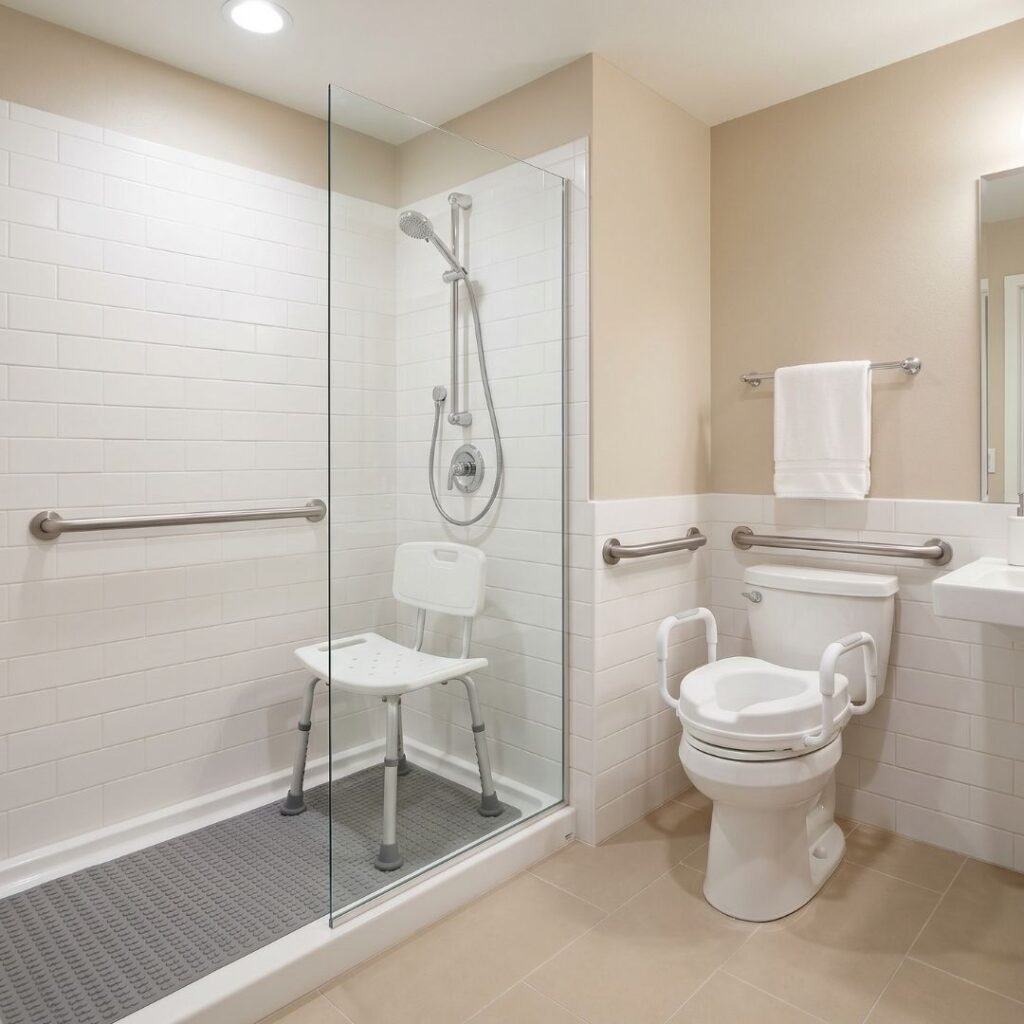
Raised toilet seats are another low-cost modification with high impact. A standard toilet sits about fifteen inches from the floor, which requires significant leg strength to lower onto and rise from. A raised seat adds three to five inches of height, reducing the effort needed and decreasing the strain on knees and hips. Models with armrests provide additional support and stability during transfers.
Non-slip mats deserve a specific mention. Rubber-backed bath mats outside the shower and textured non-slip adhesive strips inside the tub or shower floor address the most common cause of bathroom falls: wet, slippery surfaces. Avoid fluffy bath rugs without non-slip backing because they slide on tile and become hazards themselves. Every surface where water touches the floor should have some form of traction.
Decluttering, Furniture, and Floor-Level Changes
Clutter is one of the most common and most overlooked hazards in a senior’s home. Stacks of newspapers beside a chair, shoes left near a doorway, extension cords running across a walking path, and furniture crowded into narrow spaces all create tripping risks. The challenge is that clutter accumulates gradually, so the person living in the home may not recognize the danger because they have adapted to it over time.
A decluttering walkthrough should follow the paths the senior uses most: from the bed to the bathroom, from the bedroom to the kitchen, and from the living area to the front door. Every item on or near the floor along those routes is a potential hazard.
Loose rugs and mats are a leading contributor to indoor falls and one of the most frequently cited issues in home safety for seniors assessments. The safest approach is to remove all throw rugs entirely. If the senior prefers to keep them, every rug must have non-slip backing or be secured with double-sided carpet tape. Raised door thresholds deserve the same attention, and a set of the best threshold ramps for doorways can smooth those floor-level transitions so they no longer catch a foot or a walker wheel. Even with these precautions, rugs remain riskier than bare floors, particularly for seniors who shuffle their feet or use walkers.
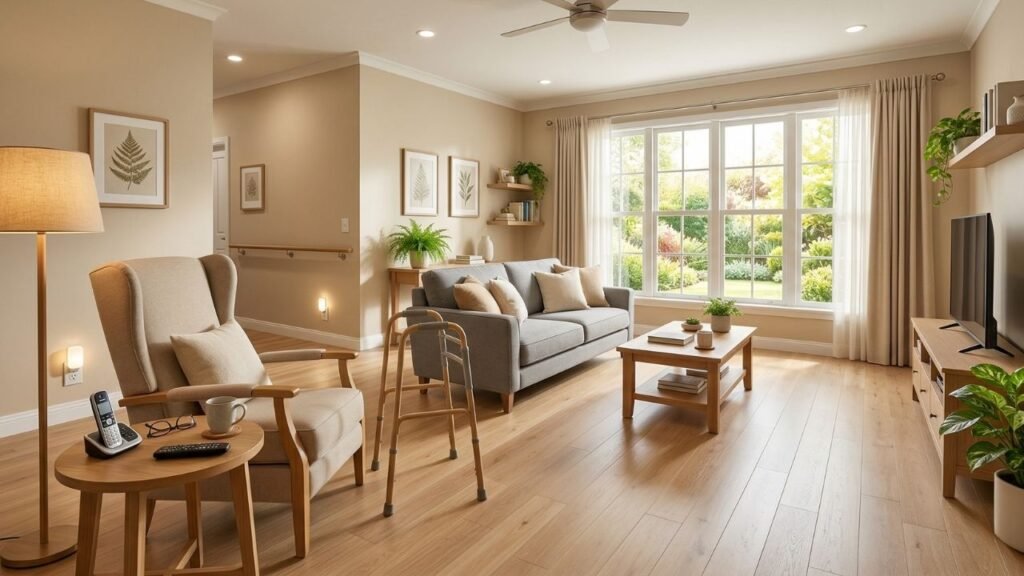
Furniture placement is equally important. Every chair and sofa the senior uses should have armrests sturdy enough to push off of when standing. Lightweight furniture that slides when leaned on should be replaced or repositioned away from walking paths. Coffee tables with sharp corners should be padded or moved.
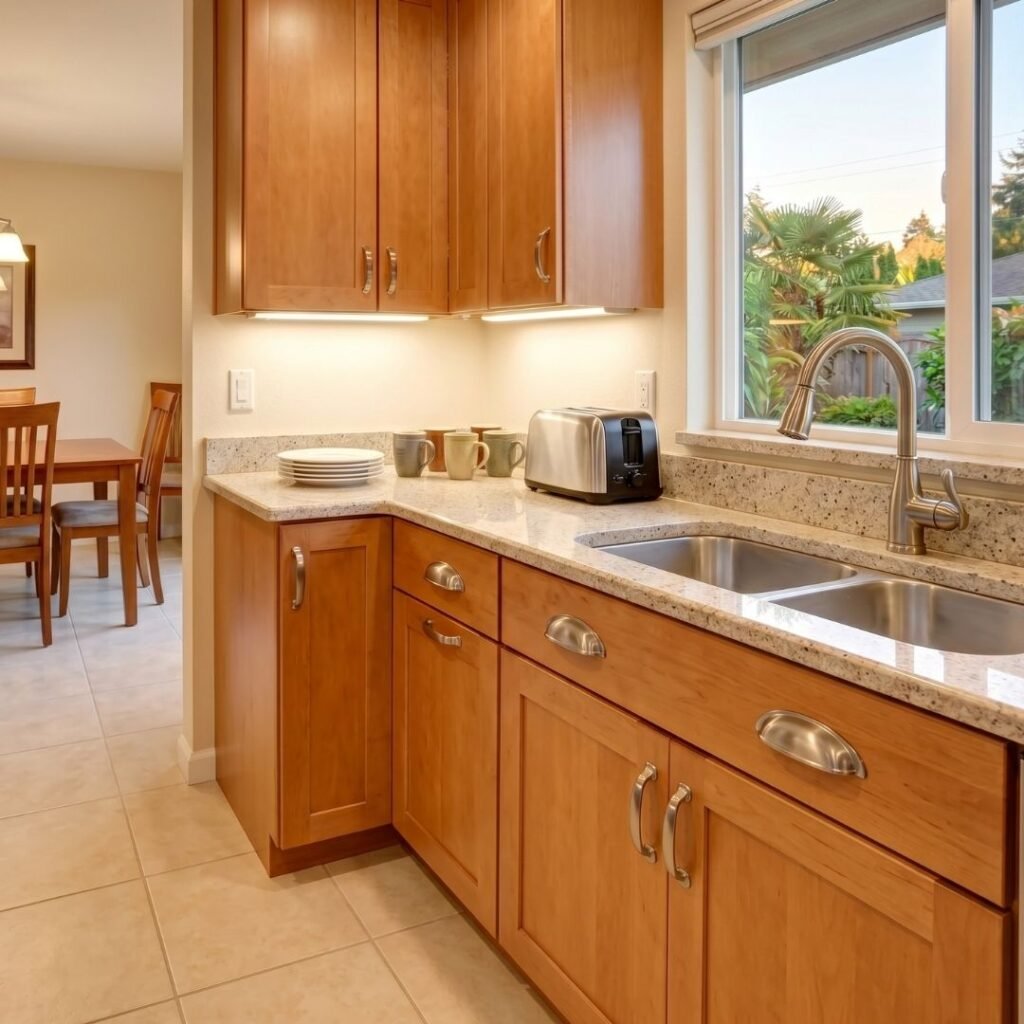
In the kitchen, reorganize cabinets so that frequently used items sit between waist and shoulder height. Heavy pots, dinner plates, and everyday glasses should never require a step stool or deep bending to retrieve. These changes take an hour at most and eliminate common reaching and bending injuries in aging in place home safety.
When to Consider Assistive Devices and Smart Technology
Some home safety for seniors improvements go beyond physical modifications and into the category of assistive devices and technology. Knowing when these tools are appropriate — and when they are unnecessary — helps families invest wisely.
Handrails and grab bars, covered earlier, sit at the boundary between home modification and assistive device. Beyond those, the most commonly recommended devices include bedside assist rails that help seniors get in and out of bed, toilet safety frames that provide armrest support without replacing the toilet, and threshold ramps that cover small step-ups between rooms. Each of these costs under one hundred dollars and installs without professional help. In the same vein, reachers and grabbers without renovation are among the simplest aids to add — they help a senior pick up dropped items or reach a shelf without bending, stretching, or installing anything.
Medical alert systems are worth considering for seniors who live alone or spend significant time at home without supervision. Modern systems range from simple pendant-style devices with a single button to smartwatch-based platforms that detect falls automatically and call for help. The decision depends on the senior’s level of independence, their comfort with technology, and the specific risks present in their daily routine.
Smart home technology has also become a practical tool in senior safety. Voice-controlled lighting means a senior never has to cross a dark room to flip a switch. Smart locks eliminate fumbling with keys, automated stove shut-off devices address kitchen fire risk, and video doorbells let the senior see who is at the door without getting up. None of these require structural changes.
The key is to match the technology to the senior’s actual needs and abilities. A gadget that the senior does not understand or cannot operate comfortably provides no benefit. Simplicity should guide every recommendation. Effective home safety for seniors depends on solutions the person will actually use, and the best assistive devices are the ones that work reliably, require minimal learning, and integrate into the senior’s existing routine without disruption.
Frequently Asked Questions
1. What are the most common home hazards for seniors?
The most common hazards include loose rugs and mats, poor lighting in hallways and stairways, lack of grab bars in bathrooms, cluttered walkways, and furniture that is too low or unstable. Wet bathroom floors and high cabinet shelves that require reaching or climbing also contribute to a significant number of falls and injuries each year.
2. How can I make my bathroom safer for an elderly parent?
Start with grab bars beside the toilet and inside the shower or tub. Add a shower chair or transfer bench, a handheld showerhead, non-slip mats on wet surfaces, and a raised toilet seat if your parent has difficulty sitting and standing. These changes address the most common causes of bathroom falls and can all be installed without a contractor.
3. Do I need a contractor to make a home safer for a senior?
In most cases, no. The majority of effective home safety for seniors modifications — including grab bars, nightlights, non-slip mats, raised toilet seats, and furniture rearrangement — can be completed by a family member with basic tools. Wall-mounted grab bars anchored into studs are the only common modification that may benefit from professional installation if you are not comfortable with a drill.
4. What is the most important room to modify for senior safety?
The bathroom is consistently the highest-risk room for falls in older adults due to wet surfaces, hard fixtures, and the physical demands of bathing and toileting. Starting with bathroom safety modifications gives families the greatest return on effort. The bedroom and hallways between the bedroom and bathroom are close behind, especially for preventing nighttime falls.
5. How much does it cost to make a home senior-safe without renovations?
Most families can make meaningful safety improvements for under three hundred dollars. Grab bars typically cost fifteen to forty dollars each. A shower chair runs thirty to sixty dollars. Non-slip mats, motion-sensor nightlights, raised toilet seats, and LED bulbs each cost under thirty dollars. The total depends on how many rooms need attention, but even a comprehensive room-by-room upgrade rarely exceeds five hundred dollars when renovation is not involved.
Final Thoughts
The idea that a home needs a major overhaul to become safe for an aging adult is one of the most persistent and unhelpful myths in senior care. The reality is that most of the changes that prevent falls and support independence are simple, affordable, and achievable in a single afternoon. A grab bar in the shower, a nightlight in the hallway, a raised toilet seat, and a cleared walking path represent the kind of practical home safety for seniors adjustments that research consistently identifies as effective.
The best time to make these changes is before they become urgent. Waiting until after a fall means dealing with the injury, the emotional impact, and the home modification all at once. Families who walk through the home proactively and address the obvious hazards give their loved one a meaningful advantage — no renovation budget or contractor’s schedule required, just awareness and a few hours of effort.
Start with the bathroom. Move on to lighting. Clear the pathways. Replace what is unstable. And know that each small change you make is not a small thing — it is a barrier removed between your loved one and a serious, preventable injury.
Medical Disclaimer: The information provided on this website is for educational purposes only and should not replace professional medical advice. Always consult your physician or qualified healthcare provider regarding any medical condition or treatment decisions.
