
Affiliate Disclaimer: This article contains affiliate links. As an Amazon Associate, Mobility With Ease may earn a small commission from qualifying purchases at no additional cost to you.
Introduction
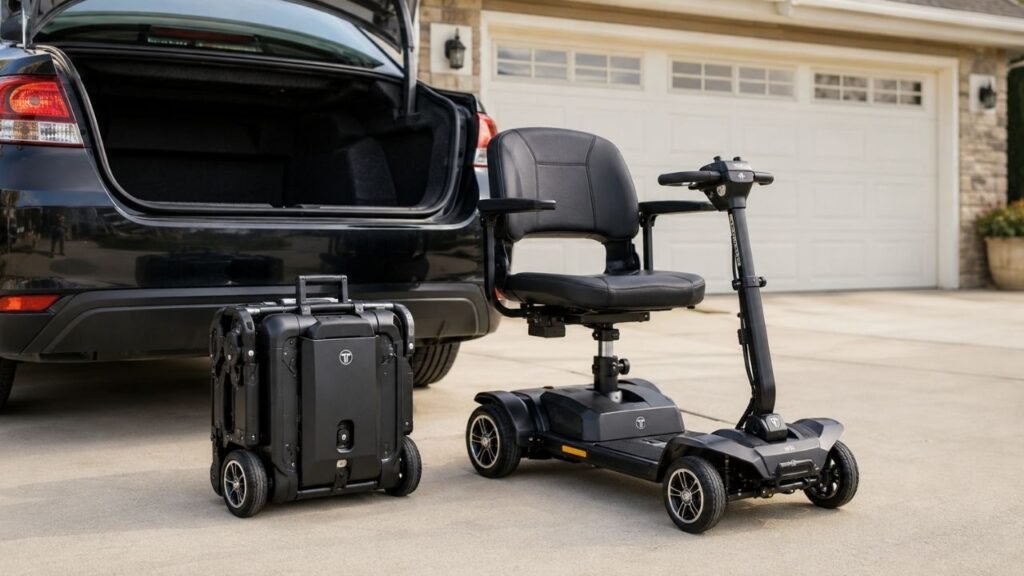
For many seniors, the question is no longer whether a mobility scooter could help — it is whether the scooter will actually get used. A heavy, bulky model that lives in the garage because no one can lift it into the car is not a mobility aid; it is an expensive piece of furniture. Lightweight folding mobility scooters solve that problem by collapsing into a compact, liftable form that fits in a sedan trunk, rides in the cargo hold of an airplane, and rolls into a hotel room when the trip is over.
The difference matters more than spec sheets suggest. A senior who knows the scooter can come along on a weekend trip to see the grandchildren is a senior who actually goes. A spouse who can deploy the scooter alone, without calling a neighbor for help, uses it daily instead of weekly. The right lightweight folding mobility scooters quietly remove the friction that keeps full-size scooters parked at home.
This 2026 guide reviews our top five picks across the categories families actually shop in: a balanced everyday model, an ultra-light auto-folder, an airline-friendly travel option, a stable four-wheel folder, and a heavier-duty folder for larger users. Each pick was chosen for a specific use case, not as a generic recommendation. By the end you should know not just which folding scooter is best, but which one is best for your situation.
Why Lightweight Folding Mobility Scooters Matter for Seniors
A mobility scooter only delivers on its promise when the senior who needs it can leave the house with it. That sounds obvious, but the practical math is brutal: a 200-pound full-size scooter requires a vehicle lift, a trailer hitch, or a converted van. None of those exist in the average suburban driveway. Families end up borrowing a lift, renting one for a weekend, or simply not bringing the scooter. The senior stays home. Lightweight folding mobility scooters shift that math by making the scooter portable enough to ride in the trunk of a normal car.
The freedom that comes with portability is hard to overstate. A grandparent who can come to the grandkids’ soccer game, walk the boardwalk on vacation, or push themselves through a farmers’ market without exhaustion experiences a measurable change in quality of life. The CDC reports that older adults who stay socially active have lower rates of cognitive decline and depression. A scooter that gets used regularly contributes to that activity in a way a scooter parked in the garage never will.
Portability also reduces caregiver strain. A spouse who can lift a 50-pound folded scooter into the trunk is a spouse who is not waiting for an adult child to drive over. A son or daughter visiting from out of town does not need to coordinate accessible transportation around their parent. Lightweight folding mobility scooters give the caregiver back ordinary errands — the pharmacy run, the grocery store, the coffee shop — without turning each trip into a logistics project.
There is also a category question to address up front. If you have not yet decided whether a full-size scooter, a folding scooter, or a travel-class scooter fits the situation, our broader roundup of the best mobility scooters for seniors compares the full landscape side by side. This guide focuses specifically on the folding sub-category, which is the right pick for seniors who travel, drive themselves, or live with a caregiver who handles the loading.
Doctor’s Note: Choosing the Right Lightweight Folding Mobility Scooter
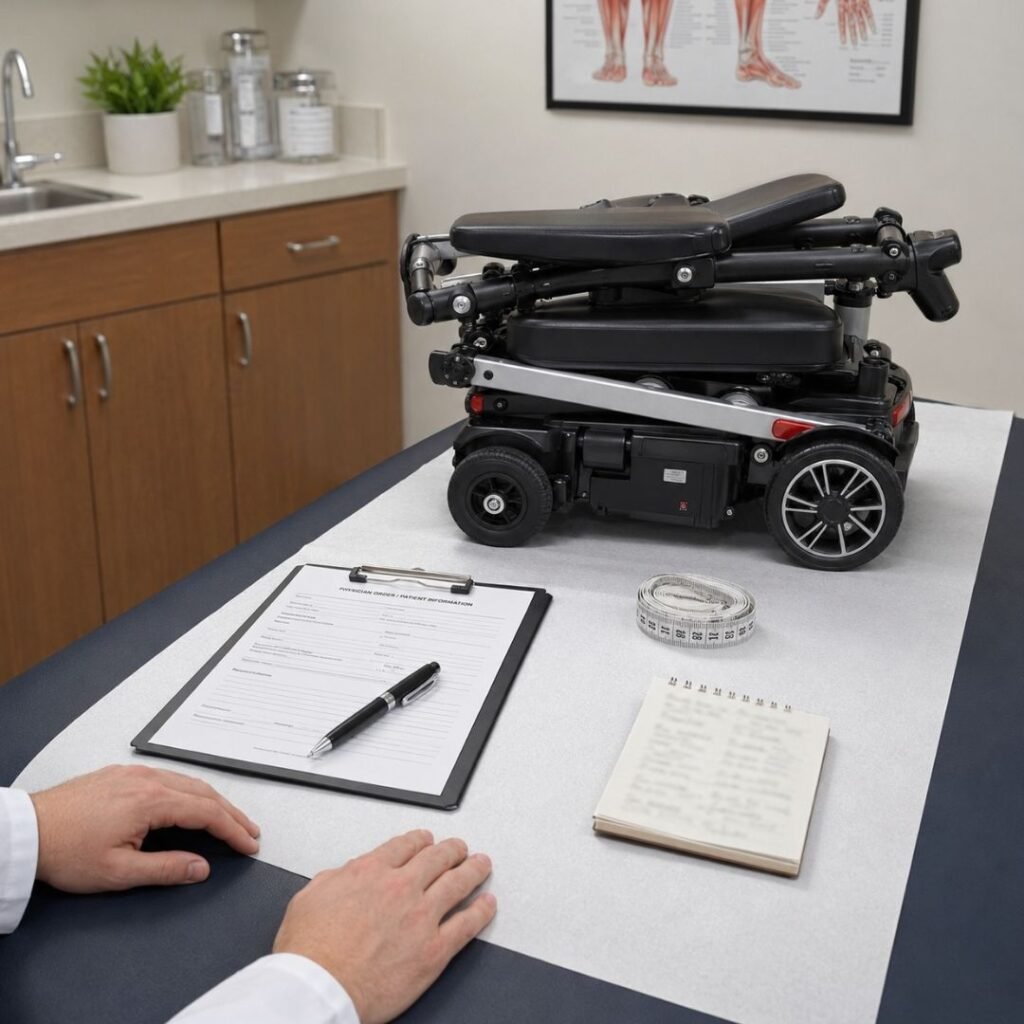
When families come to me asking about lightweight folding mobility scooters, the first question I ask is who lifts the scooter into the car. I have seen too many couples buy a 60-pound scooter that the husband can manage easily and the wife cannot lift at all. If both spouses need to be able to load it independently, weigh the folded scooter at the showroom or check the manufacturer’s spec sheet against your own honest lifting capacity. A scooter that requires two people to load is not portable; it is a scheduled event.
The second question I ask is where the scooter will actually ride. Lightweight folding mobility scooters are not all built for the same terrain. A three-wheel model with small front wheels handles smooth sidewalks and indoor shopping centers beautifully, but it can bog down on grass, gravel, or even rough pavement. If the senior plans to use the scooter at outdoor events, parks, or in older neighborhoods with cracked sidewalks, a four-wheel model with slightly larger wheels is a better fit even though it folds into a slightly larger package.
The third question is range. Manufacturers list maximum range under ideal conditions: smooth surface, light user, flat terrain, fresh battery. In real-world use, many seniors see closer to about 60–70% of the advertised maximum depending on terrain, user weight, speed, temperature, and battery age. A scooter listed at 15 miles will reliably do 9 to 11 miles on real sidewalks with a real user. If the senior plans long days at amusement parks, conventions, or extended downtown outings, build in a margin and consider a model with a spare battery option.
The fourth question is the user’s transfer ability. A folding scooter has a small footprint, which means the seat sits lower than a full-size model. A senior with significant hip or knee limitations may find the lower seat harder to stand up from. For that reason I sometimes recommend a slightly heavier folder with an elevated seat post over a true ultra-lightweight model, even at the cost of a few extra pounds at loading.
Finally, ask about the battery. Lithium-ion batteries are lighter, last longer per charge, and travel on airplanes when removed. Sealed lead-acid batteries are heavier, do not travel by air, and lose capacity faster over time. For lightweight folding mobility scooters, lithium-ion is almost always the right answer unless the price difference is prohibitive.
Best Lightweight Folding Mobility Scooters (Top Picks)
Best Overall — Three-Wheel Folding
Pride Mobility i-Go SC20 3-Wheel Folding Travel Scooter
The Pride i-Go SC20 is the model I recommend most often for seniors buying their first folding mobility aid. Pride is a long-established brand with a strong service network, which matters when a battery eventually needs replacement or a wiring issue needs warranty repair. The three-wheel design gives a tight turning radius that handles indoor environments — restaurants, retail stores, hotel hallways — without feeling oversized. The scooter separates into two pieces of roughly 32 pounds each for car loading, supports users in a typical adult weight range, and runs about 4 mph with a 7 to 9 mile range per charge. Among lightweight folding mobility scooters, this is the most consistently capable all-purpose pick.
Pros
- Strong brand reputation and service network for warranty and parts
- Tight indoor turning radius for restaurants, stores, and hallways
- 59-pound base weight is manageable for most adult caregivers
- Removable lithium battery travels on commercial airlines
Cons
- Three-wheel design is less stable on uneven outdoor terrain
- Mid-tier price point is higher than budget travel scooters

- CONVENIENT AND SAFE: Airline-compliant lithium-ion battery loaded in the right side of the floor deck ensures safety and convenience during travel.
- COMPACT AND PORTABLE: Less than 12" high when separated and with the seat back removed, our mobility scooter has a compact design for easy storage and transportation.
- EASY TO HANDLE: Disassembles into two pieces, with the heaviest piece weighing only 32.8 lbs, making it easy to handle and transport.
Best Ultra-Lightweight — Auto-Folding
EV Rider TranSport AF+ Auto-Folding Scooter
For seniors who want true one-button portability, the EV Rider TranSport AF+ is the auto-folding model I recommend. A press on the remote unfolds or folds the scooter automatically — no manual lever to pull, no awkward lifting on hinges. The base weight with the lithium battery is 53 pounds, light enough for most adult caregivers and many independent seniors to lift into a sedan trunk. The auto-fold mechanism is the genuine differentiator: a spouse who would struggle with a manual fold can still deploy this scooter alone. It is the right choice for couples where one partner has limited shoulder or back strength.
Pros
- One-button auto-fold removes manual lifting and lever work
- 53-pound base weight is among the lightest in the category
- Lithium battery is airline-approved when removed
- Travels well in sedans, SUVs, and on cruise ships
Cons
- Auto-fold mechanism is a second potential point of failure
- Lower weight capacity than heavy-duty folders (250-pound limit)
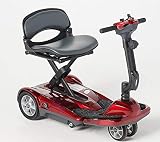
- Automatic folding and unfolding with one touch on a remote control
- Use at home, shopping and traveling in hotels, cruises and or airports
- Can be stowed upright in any closet or corner
Best for Airline Travel
Solax Mobie Plus Folding Power Scooter
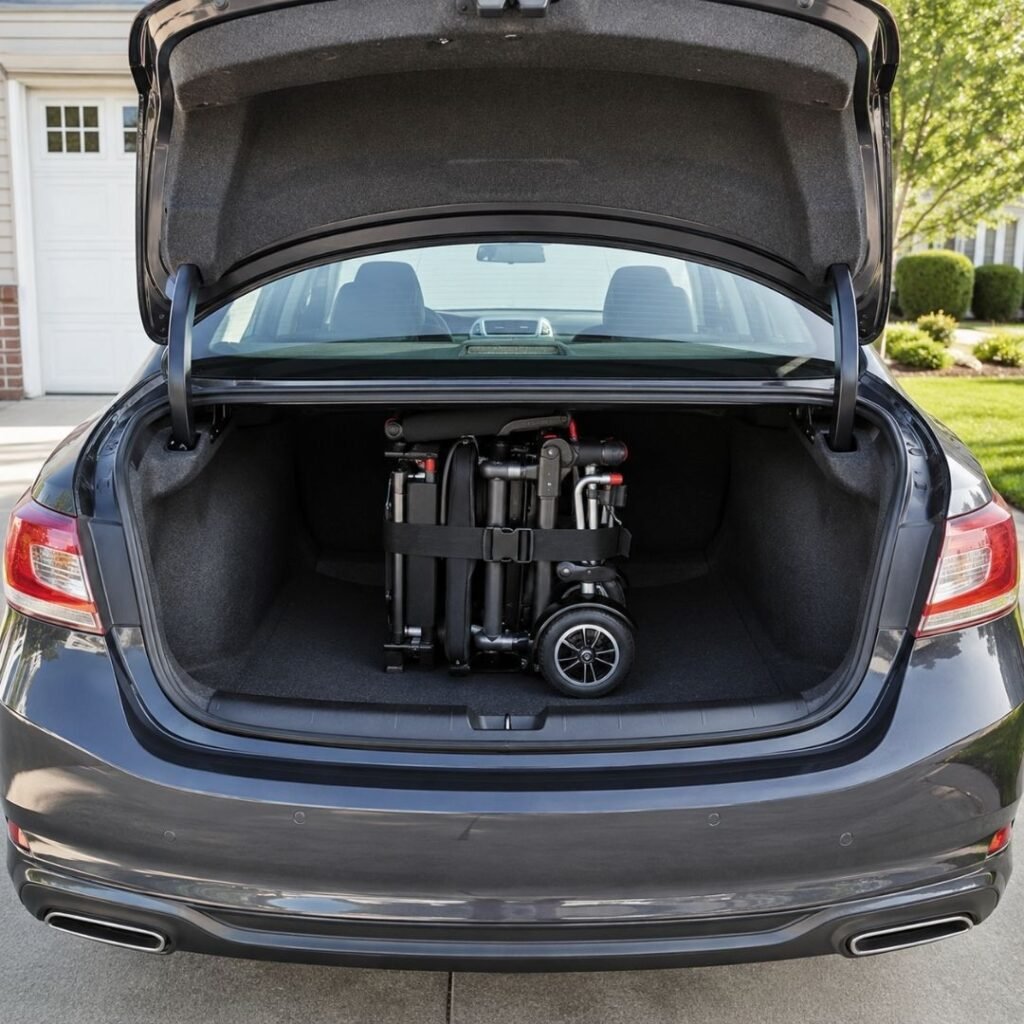
For seniors whose primary use case is air travel, the Solax Mobie Plus is the most airline-friendly of the lightweight folding mobility scooters I recommend. The detachable lithium-ion battery is sized below the FAA’s 300 watt-hour limit and pops off in seconds, which is exactly what TSA expects to see at the gate. The scooter itself folds quickly into a compact suitcase profile that gate agents can stow as oversized luggage. The battery rides in carry-on with the passenger. Build quality is solid for a travel-class scooter, with a comfortable seat and a 250-pound user limit. Range on a single battery is about 12 miles — enough for a full day at most airports, conferences, or cruise ports.
Pros
- Battery detaches quickly and meets FAA/TSA carry-on requirements
- Folded form fits most aircraft cargo hold dimensions
- Comfortable padded seat for long travel days
- Quick-release design simplifies cruise and hotel stowage
Cons
- Travel-focused build feels less robust than home-use scooters
- Maximum range is shorter than full-size folding alternatives

- Top Speed: 3.75 Mph
- Drive Range: 13.50 Miles
- Wheel Type: 4-wheel
Best 4-Wheel Folding
Drive Medical ZooMe Auto-Flex Folding Scooter
For seniors who feel unstable on three-wheel models or who plan to ride on uneven outdoor surfaces, the Drive Medical ZooMe Auto-Flex is the right pick. The four-wheel base gives a noticeably wider stance and a steadier ride on grass, gravel, brick walkways, and the kind of slightly cracked sidewalks common in older neighborhoods. The auto-fold mechanism activates with a single remote click, similar to the TranSport AF+, but the four-wheel base trades a few inches of turning radius for a meaningful stability gain. Among lightweight folding mobility scooters, this is the model I recommend most often for seniors with balance concerns.
Pros
- Four-wheel base is more stable than three-wheel alternatives
- Auto-fold mechanism with single-button remote operation
- Larger wheels handle outdoor terrain more confidently
- Comfortable padded seat with armrests for longer rides
Cons
- Wider turning radius than three-wheel folders for indoor use
- Folded footprint is slightly larger than ultra-lightweight options

- Electronic Folding & Unfolding: Wireless key fob for quick, effortless operation in 15 seconds or less
- Lightweight Frame: Aluminum alloy construction for enhanced portability
- Airline-Safe Battery: Lithium battery for travel-friendly use
Best Heavy-Duty Travel
Golden Technologies Buzzaround EX Extreme GB148
For seniors who need a higher weight capacity or longer range than standard travel scooters offer, the Golden Buzzaround EX Extreme is the heavy-duty option I recommend. The Buzzaround EX Extreme supports up to 350 pounds — a meaningful step up from the typical 250 to 300 pound ceiling on most lightweight folding mobility scooters — and offers a wider, better-padded 20-inch seat for larger users. The scooter disassembles for trunk loading, with the heaviest single piece at about 53 pounds, so a stronger caregiver or a transfer assist is helpful. An 18-mile range is also well above the 8 to 12 miles most folders manage on a charge. Golden Technologies is a long-established American brand with strong dealer support for warranty and repair, which matters more on a higher-investment scooter. For larger seniors who refuse to give up travel, this is the model that makes travel-class scootering possible.
Pros
- 350-pound weight capacity supports heavier seniors above the typical 250–300 lb ceiling
- Wider 20-inch padded seat for larger seniors
- 18-mile range outpaces most travel scooters on a single charge
- Strong American brand reputation and dealer service network
- Disassembles for sedan trunk loading despite the heavier-duty frame
Cons
- Higher price point than entry-level travel models
- Individual pieces are heavier than smaller travel scooters

- Ultra-bright LED headlight is designed for maximum safety and visibility, allowing you to travel confidently in low-light conditions while improving awareness for both you and others around you.
- Extended 18-mile drive range on a single charge provides reliable performance for errands, appointments, and daily outings without the constant worry of recharging.
- Weight capacity up to 350 lbs. offers strong, dependable support for a wide range of users while maintaining stability, durability, and comfort.
Best Lightest Weight — Cruise & Tight Spaces
FeatherMobility Lightweight 4-Wheel Folding Mobility Scooter (37 lb frame)
For seniors who travel by cruise ship, stay in compact hotel rooms, or simply cannot lift a 50-pound scooter into the trunk alone, the FeatherMobility folding scooter is the lightest option I recommend. At a 37-pound frame weight, it is among the lightest folding scooters on the market and genuinely portable by a single elderly user — a meaningful distinction from the heavier picks in this guide. The trade-off is ride feel: the smaller frame feels less planted on uneven outdoor surfaces. For cruise ports, museum visits, and indoor outings where weight is the dominant constraint, this is the right pick. For daily outdoor errands, the heavier picks above ride better.
Pros
- 37-pound frame weight is among the lightest folding scooters on Amazon
- Truly liftable by a single elderly user without straining
- Fits in cruise ship cabins, hotel closets, and tight trunk corners
- Long-range battery and basket included for daily outings
Cons
- Shorter range than heavier folding alternatives
- Less stable on uneven outdoor surfaces
- 265 lb weight capacity is lower than mid-tier folders

- SAFE NAVIGATION - Easily maneuver around an indoor room or outdoor space with the durable 4-Wheel Feather Scooter. The mobility scooter has 6" front wheels and 10" rear wheels giving it a turning...
- COMFORTABLE SAFE SUPPORT - The Feather Mobility Scooter supports up to 265 lbs and comes with a seat and back cushion for the user to comfortably operate the scooter. It is designed with anti-tippers...
- EASY TO TRANSPORT - The Feather electric scooter weighs only 37 lbs and can fold down into a compact size while remaining in one piece. It comes with a carrying basket at the rear end of the scooter...
Educational Overview: What Lightweight Folding Mobility Scooters Actually Do
A folding mobility scooter does what a full-size scooter does — it gives a seated user motorized mobility — with one critical addition: it collapses for transport. That single capability changes the use case completely. A non-folding scooter is a piece of equipment that lives at home. A folding scooter is a piece of equipment that goes with the user.
Lightweight folding mobility scooters typically fall into three folding mechanisms. Manual fold models use a lever, latch, or release that the user pulls to collapse the frame. They are the lightest and most affordable but require some hand strength and shoulder mobility. Auto-fold models use a small motor and a remote button to collapse the frame automatically. They cost more but eliminate the manual lifting step entirely. Quick-disconnect models break into four or five lightweight pieces that load separately into the trunk. They are not technically “folding” but they accomplish the same portability goal for users with limited lifting capacity.
The number of wheels is the second design fork. Three-wheel models have a single front wheel and a tighter turning radius. They thread through indoor environments easily and feel more agile, but they are slightly less stable on uneven outdoor terrain. Four-wheel models have a wider front stance with two front wheels and trade a few inches of turning radius for noticeably better stability on grass, gravel, and broken sidewalks. Most lightweight folding mobility scooters are sold in both configurations of the same model line.
Range and speed live on a single trade-off curve. A lighter battery means a lighter scooter but a shorter range. A faster top speed means a quicker discharge per mile. Most folding scooters land in the 4 to 5 mph range — about the same as a brisk walking speed — with a real-world range of 8 to 12 miles per charge. Heavier-duty models offer up to 15 miles. For seniors who also use a wheelchair for shorter movements — airport gates, hotel rooms, medical waiting areas — our roundup of the best travel wheelchairs for seniors pairs naturally with a folding scooter for trips that involve both.
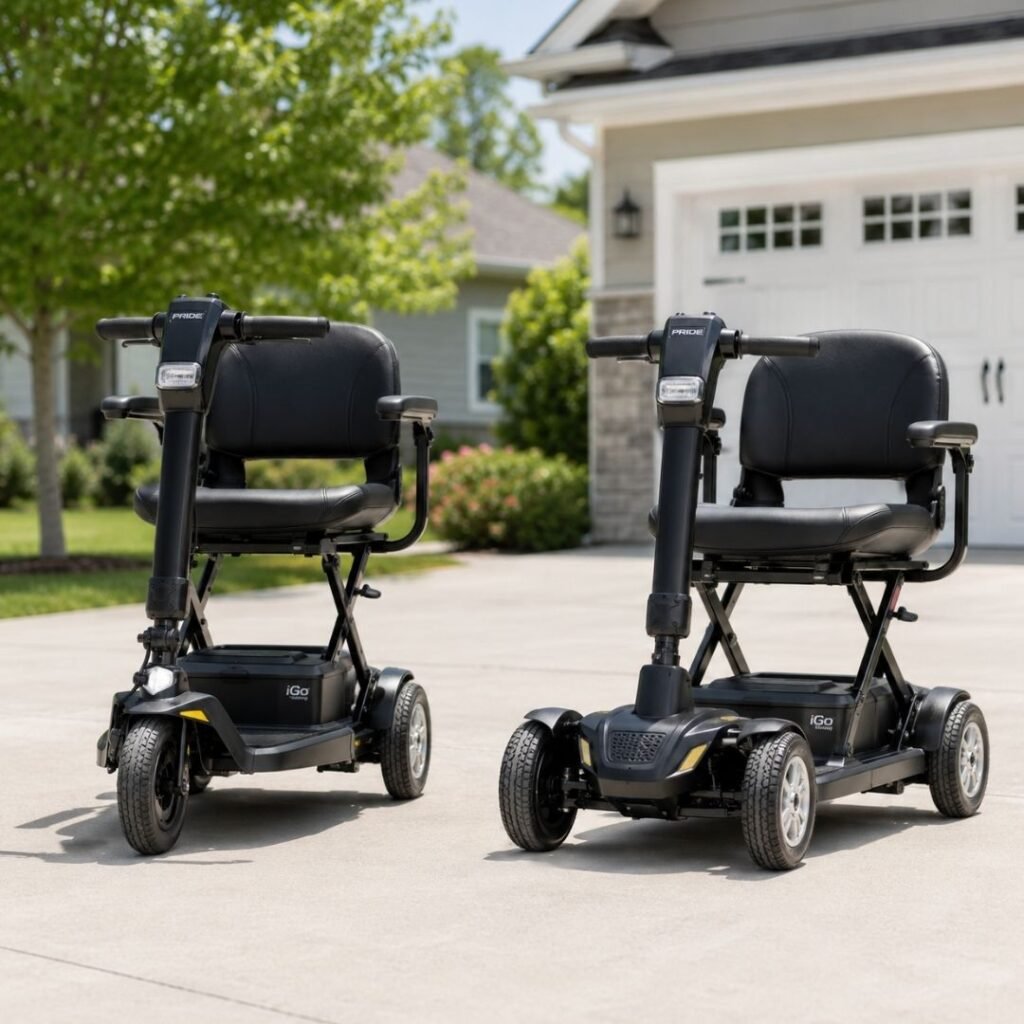
How to Use Lightweight Folding Mobility Scooters Safely
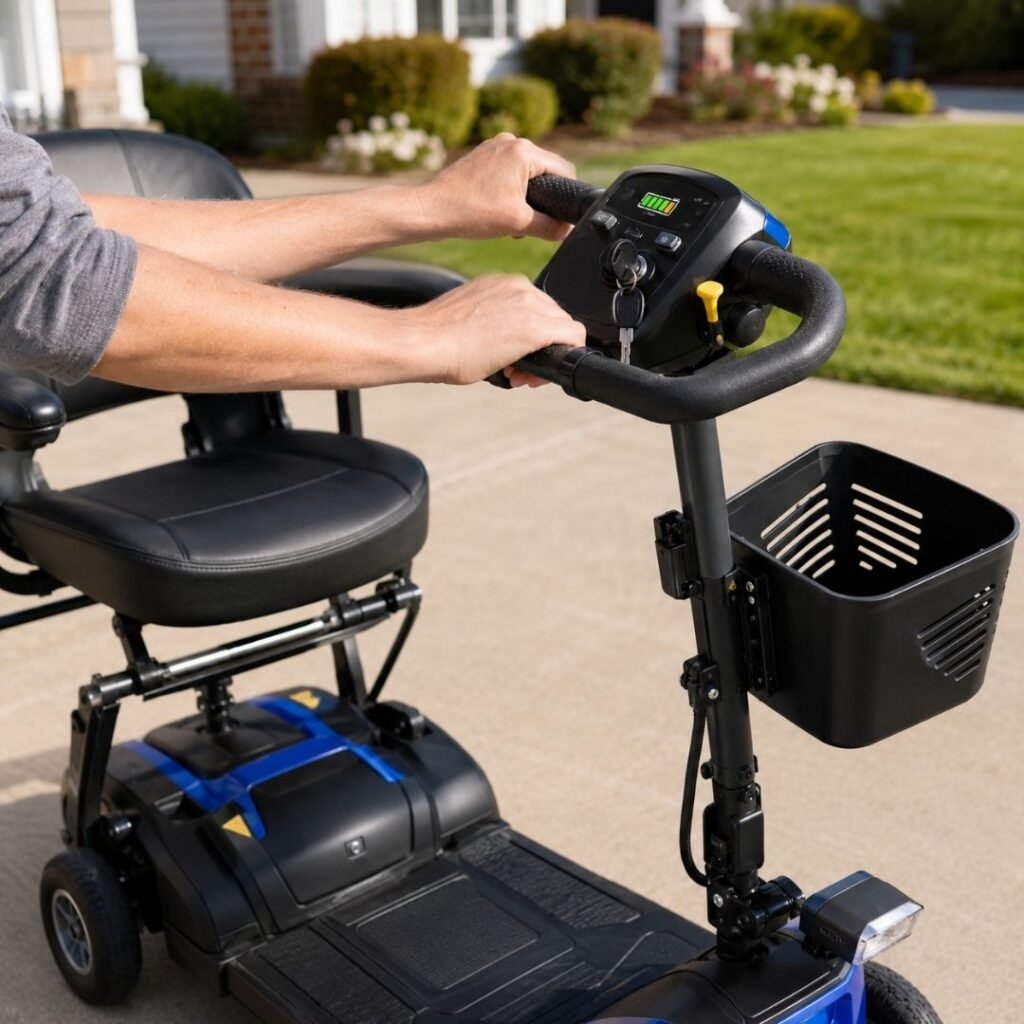
Check the battery and the brake before every ride. The single most common cause of a scooter incident is a senior who set off on a long outing without confirming the battery had a useful charge. A green light on the dash is not a substitute for a quick test ride at home before leaving. Verify the throttle responds, the parking brake holds on a slight slope, and the battery indicator does not drop suddenly under load. Two minutes of pre-flight checks at the driveway prevents the much longer problem of a dead scooter at a parking lot.
Mount and dismount with the brake engaged. Lightweight folding mobility scooters are less stable when getting on or off than full-size scooters because the wheelbase is shorter. Engage the parking brake every time the senior transfers in or out of the seat. The seat swivels on most folding models — rotate it to face the user before sitting rather than twisting in place after sitting down. A controlled transfer with the brake set is the single best fall prevention habit a new scooter user can develop.
Approach curbs and ramps head-on. Folding scooters with smaller wheels can catch on the lip of a curb cut if approached at an angle. Square up to any vertical transition — a sidewalk ramp, a doorway threshold, a building entrance — and cross it perpendicular to the edge. Never attempt a curb without a curb cut; the small front wheel on most folding models can tip the scooter forward if it drops more than a couple of inches.
Mind the slope. Most folding scooters are rated for a maximum incline of about 6 to 8 degrees, which sounds gentle but is steeper than most casual observers expect. Wheelchair ramps, accessible parking ramps, and most curb cuts fall well within that limit. Steep driveways, parking garage helixes, and certain hotel ramps do not. When in doubt, ask the manufacturer for the exact rated slope and look at the gradient before committing the scooter to the climb.
Stay visible. Lightweight folding mobility scooters are smaller than full-size scooters and harder to see in parking lots and crosswalks. Most models include a flag or reflective strip; use them. A simple battery-powered LED clipped to the tiller adds visibility at dusk. The smaller profile that makes folding scooters portable is the same profile that makes them easy for drivers to miss.
Practice the fold before the first trip. A scooter that auto-folds reliably in the showroom can still trip up a new owner at the airport. Run the fold and unfold cycle ten times in the driveway before the first real trip. Time it. Identify which side the carry handle deploys on. Know exactly where the battery release is. The first time a senior or caregiver attempts the fold should never be at a gate or in a hotel lobby.
Lifestyle Synergy: Making Lightweight Folding Mobility Scooters Work Better at Home
A folding scooter earns its keep when it gets used. That sounds tautological, but plenty of families buy a scooter, take it on one trip, and then leave it in the garage. The difference between a scooter that gets used weekly and one that gets used twice is usually storage location. A scooter folded in the trunk is a scooter that is always ready. A scooter dragged in and out of the garage every weekend slowly stops getting dragged out.
Build the scooter into one specific vehicle’s routine. If the family has more than one car, pick the “scooter car” and keep the folded scooter in the trunk full-time. This works particularly well for couples where one spouse drives the senior to appointments, errands, and family events; the scooter is already there before the senior even thinks about it. A second vehicle for occasional use means deciding at each trip whether to bring the scooter, and that small decision is what slowly kills consistent use.
Pair the scooter with accessories that match the actual use pattern. A cup holder, a small basket, a phone mount, a weatherproof cover — these are not luxuries; they are what turn a single-purpose mobility device into something the senior actually wants to ride. Our roundup of the best mobility scooter accessories covers the add-ons that real users find indispensable: weather covers for outdoor storage, padded armrests for long days, and lockable storage compartments for daily errands.
Plan the charging routine. Lithium-ion batteries last longest when kept between 20 and 80 percent of capacity rather than fully charged and discharged repeatedly. Build a charging spot into the home — ideally inside, not in a cold garage — and treat the scooter battery the way a homeowner treats a phone: plug it in when convenient, unplug it when the indicator says it is ready. Topping off after each outing instead of running the battery to empty extends its useful life by years.
Finally, think about the trip you most want to take. Lightweight folding mobility scooters earn their full value at the specific outing — the wedding, the museum, the vacation — that previously felt out of reach. Talk to the senior about that one trip first, and pick the scooter that solves for it. A model chosen around a clear destination is a model that comes out of the trunk.
Physician’s Tips for Long-Term Use of Lightweight Folding Mobility Scooters
Inspect the folding hinges quarterly. A folding scooter lives or dies by its hinges. Any cracked weld, loose pin, or sticky joint is a safety issue, not a cosmetic one. Quarterly inspection takes about five minutes: open and close the fold cycle slowly, look at every pivot, and feel for any roughness in the motion. Catch the small issues before they become the moment the scooter refuses to fold at an airport gate.
Cycle the battery, do not deep-discharge it. Lithium-ion batteries prefer shallow daily cycles to deep discharges. Charge after every outing rather than waiting for the battery to drop below 20 percent. A battery treated this way commonly lasts three to four years; the same battery deep-cycled hard lasts 18 months. Replacement batteries are not cheap. Battery care is the single most cost-effective long-term habit a scooter owner can develop.
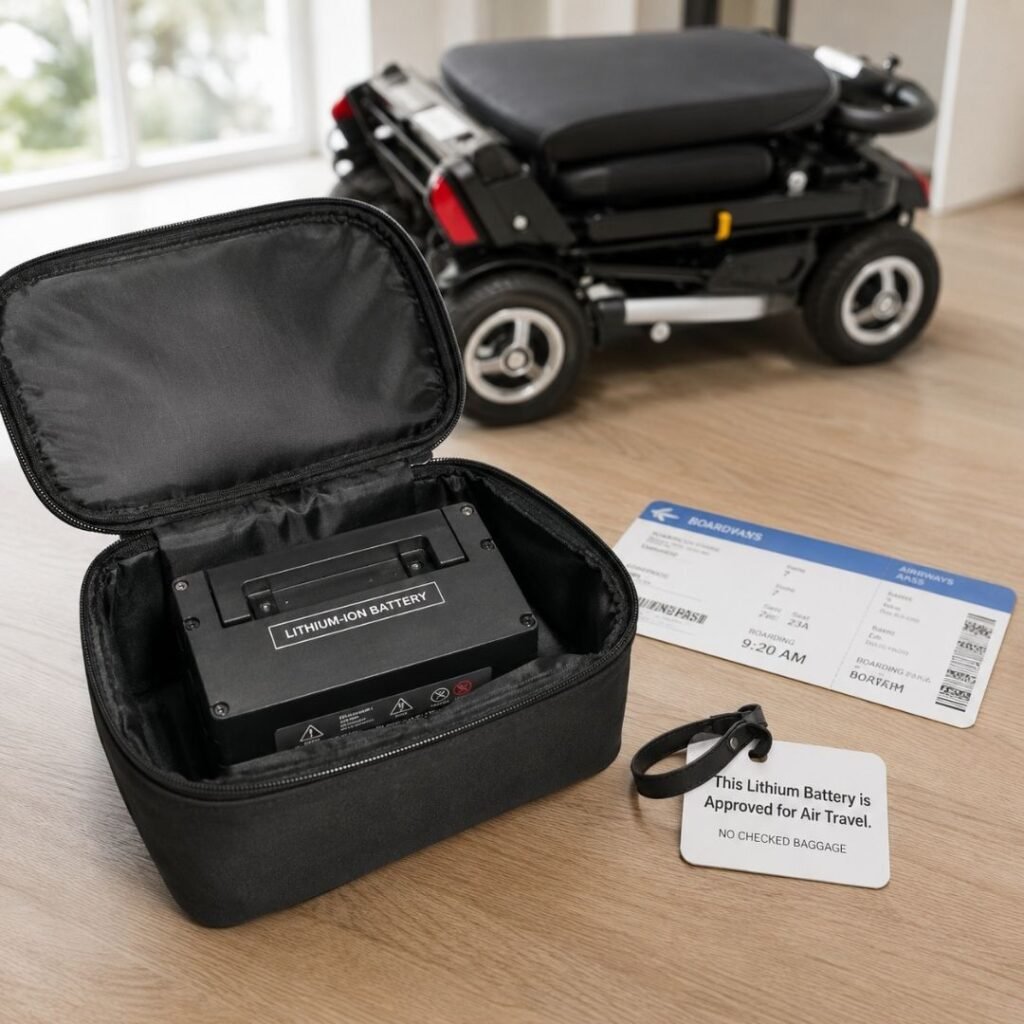
Know your airline rules before you book. TSA guidance on battery-powered mobility devices requires the lithium-ion battery to be removed and carried in the cabin, with terminals protected. The scooter itself rides as oversized luggage in the cargo hold. Individual airlines also have battery watt-hour limits — most allow up to 300 Wh per battery, which covers virtually all lightweight folding mobility scooters on the market. Call the airline 48 hours before the trip and confirm. The scooter that worked on one carrier may face different rules on another.
Rotate the tires under storage. A scooter parked in the same position for weeks develops flat spots on the tires. If the scooter sits unused between trips, roll it forward or backward a few feet every couple of weeks. Tires with flat spots ride rough and wear unevenly once back in use.
Re-evaluate the fit every two years. A senior’s strength, balance, and travel pattern shift over time. The scooter that fit beautifully at 70 may feel too low or too narrow at 75. A simple annual conversation with the user’s primary care doctor or physical therapist is enough to flag when a different model would be a better match.
Replace the seat cushion when it compresses. Stock cushions on most lightweight folding mobility scooters are adequate at purchase but flatten with daily use. A compressed cushion shifts the user’s pelvis forward and increases pressure on the lower back. A replacement cushion or a gel overlay costs little and adds years of comfortable riding.
Lightweight Folding Mobility Scooters Comparison (Features & Capacity)

Frequently Asked Questions
1. How much do lightweight folding mobility scooters typically weigh?
Most lightweight folding mobility scooters weigh between 50 and 75 pounds with the battery installed. Ultra-lightweight auto-folding models can drop as low as 50 pounds, while heavier-duty folders with higher weight capacities run closer to 70 or 75 pounds. The single most useful number is the weight of the heaviest single piece a caregiver has to lift, which is usually the main body of the scooter after the battery is removed. Always check the spec sheet for both the total weight and the heaviest individual piece before buying.
2. Are folding mobility scooters allowed on airplanes?
Yes, folding mobility scooters with lithium-ion batteries below 300 watt-hours are allowed on commercial flights in the United States. The TSA requires the battery to be removed from the scooter and carried in the cabin with terminals protected against short-circuit. The scooter itself rides as oversized luggage in the cargo hold and is typically returned to the senior at the gate. Always notify the airline at least 48 hours before the flight, and check the carrier’s specific battery rules, since some international airlines have lower watt-hour limits.
3. What is the difference between a 3-wheel and 4-wheel folding scooter?
A three-wheel folding scooter has a single front wheel and a tighter turning radius, which makes it more agile indoors and in tight spaces like restaurants, stores, and hotel hallways. A four-wheel folding scooter has two front wheels and a wider stance, which gives it better stability on uneven outdoor surfaces like grass, gravel, and cracked sidewalks. For seniors who use the scooter primarily indoors or in well-paved environments, a three-wheel model is usually the better choice. For seniors who plan to ride on uneven outdoor terrain or have balance concerns, a four-wheel model is the safer pick even at a small cost in maneuverability.
4. How far can a lightweight folding mobility scooter travel on one charge?
Real-world range for most lightweight folding mobility scooters falls between 8 and 12 miles per charge, even when manufacturers advertise higher numbers. Maximum range figures assume a smooth surface, a lighter user, flat terrain, and a fresh battery, none of which match typical real use. Heavier users, hilly routes, and cold weather all reduce range. For long days at parks, conventions, or vacations, plan around the 60 to 70 percent of advertised range figure and consider models that accept a spare battery for backup.
5. Does Medicare cover lightweight folding mobility scooters?
Medicare Part B may cover a power mobility scooter if a physician documents that the senior cannot safely complete activities of daily living within the home using a cane, walker, or manual wheelchair. The scooter must be deemed medically necessary for in-home use rather than for outdoor or travel purposes, which is the key restriction. Most lightweight folding mobility scooters are marketed for travel and outdoor use, so families purchasing primarily for vacations or errands typically pay out of pocket. Out-of-pocket cost commonly ranges from $1,200 to $3,000 depending on the model and battery type.
Final Thoughts on Lightweight Folding Mobility Scooters
The right folding scooter does not look like much sitting collapsed in the trunk. It is a few pounds of aluminum, a battery, a seat, and a tiller. But for the senior who uses it, that small piece of equipment is the difference between coming along on the family weekend trip and staying home. Lightweight folding mobility scooters are quietly one of the highest-impact mobility purchases a family can make, because they are the only motorized option that fits in an ordinary car driven by an ordinary person. The picks in this 2026 guide were chosen to match real users and real vehicles, not idealized ones. Whichever model fits your situation, the right folding scooter is the one that gets used — not the one that gets stored.
Medical Disclaimer: This guide is for general educational purposes only and is not intended to serve as personalized medical advice. Always consult a qualified healthcare professional before making changes to medical equipment or care plans.
Last update on 2026-09-15 / Affiliate links / Images from Amazon Product Advertising API
