
Introduction
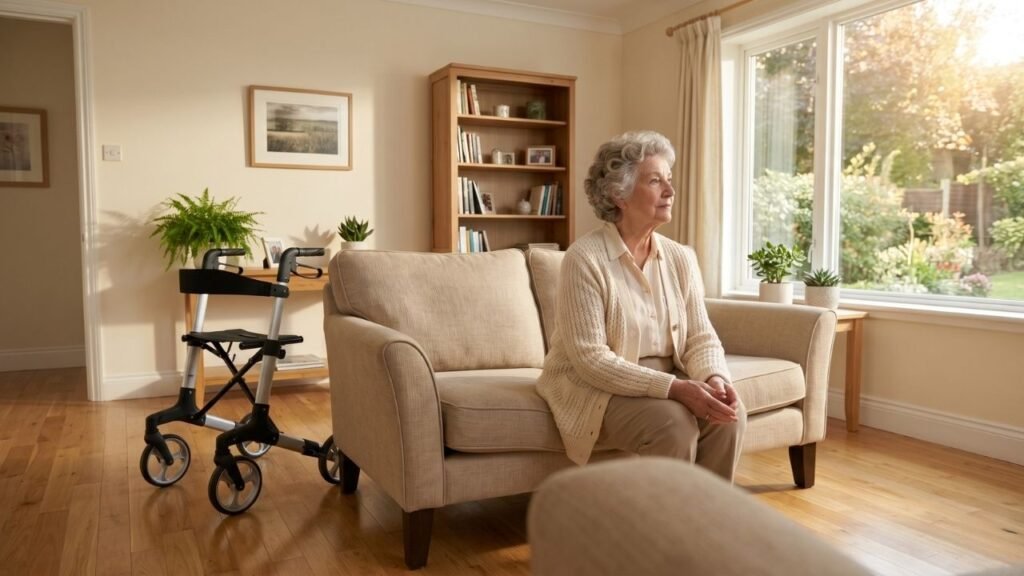
When seniors resist mobility devices, family members usually assume the issue is the device itself — the look of the walker, the weight of the cane, the inconvenience of folding a rollator into the trunk. Almost always, the surface object is not the real problem. What seniors resist mobility devices over is what those devices represent: visible proof of a body that no longer works the way it used to, and the first public signal that the long arc of independence is starting to bend the other direction. Understanding the deeper resistance is what separates families who help their loved one accept a mobility device from families who spend years circling the same argument.
This guide unpacks the real psychology behind the refusal — identity, fear of dependency, social stigma, and a few patterns most adult children have never named — and lays out the practical, doctor-informed strategies that actually work to move a senior from resistance toward acceptance. The goal is never to override your parent’s wishes. The goal is to give them the room and the right information to choose the device freely, before a fall makes the choice for them.
The Hidden Costs of Refusal
Refusing a mobility device is rarely a neutral choice. Every month a senior waits to use a needed cane or walker carries quiet costs. The first is exposure to falls. The CDC reports that more than one in four adults aged sixty-five and older fall every year, and falls remain the leading cause of injury for that age group. A correctly fitted mobility aid measurably lowers that risk — particularly when the senior is also losing leg strength, balance, or visual contrast at night.
The second cost is the steady shrinking of the senior’s world. Without a walker or rollator, a senior who is uncertain on their feet quietly starts avoiding the places that used to fill their week: the grocery store, the church social hour, the grandchildren’s school events. The avoidance does not announce itself. It hides behind reasonable-sounding excuses — “I’m tired today,” “the parking is awful there” — until months later the family realizes their parent has barely left the house. A mobility device, used willingly, often gives those weeks back. When seniors resist mobility devices, the cost is paid in cancelled outings, not just in headline injuries.
The third cost is the slow erosion of confidence. The longer a senior moves through their day in fear of a stumble, the more cautious every motion becomes, and cautious motion itself starts to feel like decline. The right mobility device interrupts that loop by giving the body a reliable third point of contact, which lets the brain relax and the gait return to something closer to normal.
The Three Core Reasons Seniors Resist Mobility Devices
The first and largest reason is identity. Most aging parents have spent six or seven decades building a sense of self around being capable, independent, and useful. A walker can feel like the family is asking them to swap that identity for a smaller one. The internal voice asks, “If I use this, am I still me?” That question rarely gets spoken aloud, but it shapes everything about how the device feels to hold. Our piece on the emotional benefits of staying independent covers how deeply this self-image is wired into senior wellbeing — which is why threats to it land so hard.
The second reason is social stigma. Peer-reviewed research published in the journal Generations and indexed at PMC found that seniors across diverse populations describe a pervasive sense that mobility-aid use marks them as old in ways they do not want to be marked. Participants in the study reported worrying about being laughed at, pitied, or quietly excluded from group activities once they appeared in public with a cane or walker. The fear is not paranoid — it reflects a real cultural pattern. When seniors resist mobility devices, that anticipated stigma is often what they are actually pushing back against, even if they cannot name it.
The third reason is fear of dependency. Many seniors believe, often without basis, that using a mobility aid will rapidly weaken the muscles that still work. They expect to be drawn down a slope: cane this year, walker next year, wheelchair the year after, full-time care the year after that. The slope is not actually that steep for most users, but the fear is real, and it leads seniors to refuse the very tool that would have preserved their walking ability the longest. Understanding all three reasons — identity, stigma, and fear of dependency — is the foundation for every effective response.

What Resistance Looks Like in Daily Life
Resistance rarely arrives as a flat refusal. It shows up as a thousand small workarounds spread across the week. A senior might keep a walker in the bedroom but always leave the house without it. They might agree to use a cane “outside the house” but never put it in the car. They might pick it up in front of the family on Sunday and leave it folded against the wall every other day. To watchers, this looks like inconsistency. To the senior, it is a careful negotiation between what they have agreed to and what they can emotionally tolerate using.
Some seniors who resist mobility devices express it through humor or deflection. Jokes about “old people walkers,” sudden subject changes, comparisons to a relative who refused a cane and “did just fine” — these are soft no’s in different costumes. A senior who jokes loudest about walkers is often the one feeling the loss most sharply, and gentleness lands far better than logic.
Watch also for the subtle shift in vocabulary. A senior who used to say “I’m going to the store” may start saying “Could one of you pick this up for me?” A parent who hosted Thanksgiving may start asking the family to “do it at your house this year.” These quiet handoffs of independence are often the cost of unspoken refusal — the senior is paying for resistance by surrendering activities they actually loved. Naming that pattern privately can be one of the most clarifying conversations a family ever has.
Reframing the Device as a Tool for Independence
The most reliable way to soften resistance is to change what the device represents. Instead of presenting the cane or walker as evidence of decline, frame it as a piece of equipment that protects independence — the same way reading glasses protect the ability to read or hearing aids protect conversation. None of those tools mean their user is broken. They are simply the right tool for a body that has changed in a specific, manageable way. The framing matters. Seniors who resist mobility devices framed as “compensation for failing legs” almost always accept the same devices framed as “what lets me keep going to the farmers’ market on Saturdays.”
Concrete activity matters more than abstract argument. Tie the device to an activity the senior values and is at risk of losing — gardening, attending church, watching grandchildren, traveling to see siblings. The conversation shifts from “you need a walker because you might fall” to “a walker is what gets you back to the garden this spring.” Now the device is a key, not a verdict. Most seniors will pick up a key. Far fewer will pick up a verdict.
Education about the actual physiology helps as well. Many seniors fear that using a mobility aid will accelerate muscle loss. The opposite is closer to the truth: a properly used cane or walker takes only a fraction of the senior’s body weight, leaving the legs to do most of the work, while making movement safe enough that the senior actually moves more — which preserves muscle. Our guide on the benefits of staying mobile as you age walks through how this reinforcing loop actually works in practice. Knowing the science changes the emotional calculation behind acceptance.
Working With the Doctor and Care Team
When seniors resist mobility devices despite repeated family conversations, the doctor and care team are usually the most powerful next step. Most seniors reserve a level of trust for their primary care physician that family members simply cannot match. A casual recommendation from a doctor — “I’d really like to see you using a cane outside the house, just for the next few months while we work on your strength” — often accomplishes in three minutes what a son or daughter has been unable to do in three years. That is not a failure on the family’s part; it is just how authority works inside many households.
Before the next appointment, send a private note to the doctor’s office summarizing what you have observed at home. Most clinics are happy to add a fall-risk screening or a mobility assessment to the visit if they know the family is worried. The screening lets the recommendation arise naturally from a clinical finding rather than appearing to come from family pressure, which keeps the senior’s autonomy intact and removes the sense that anyone is “ganging up” on them.
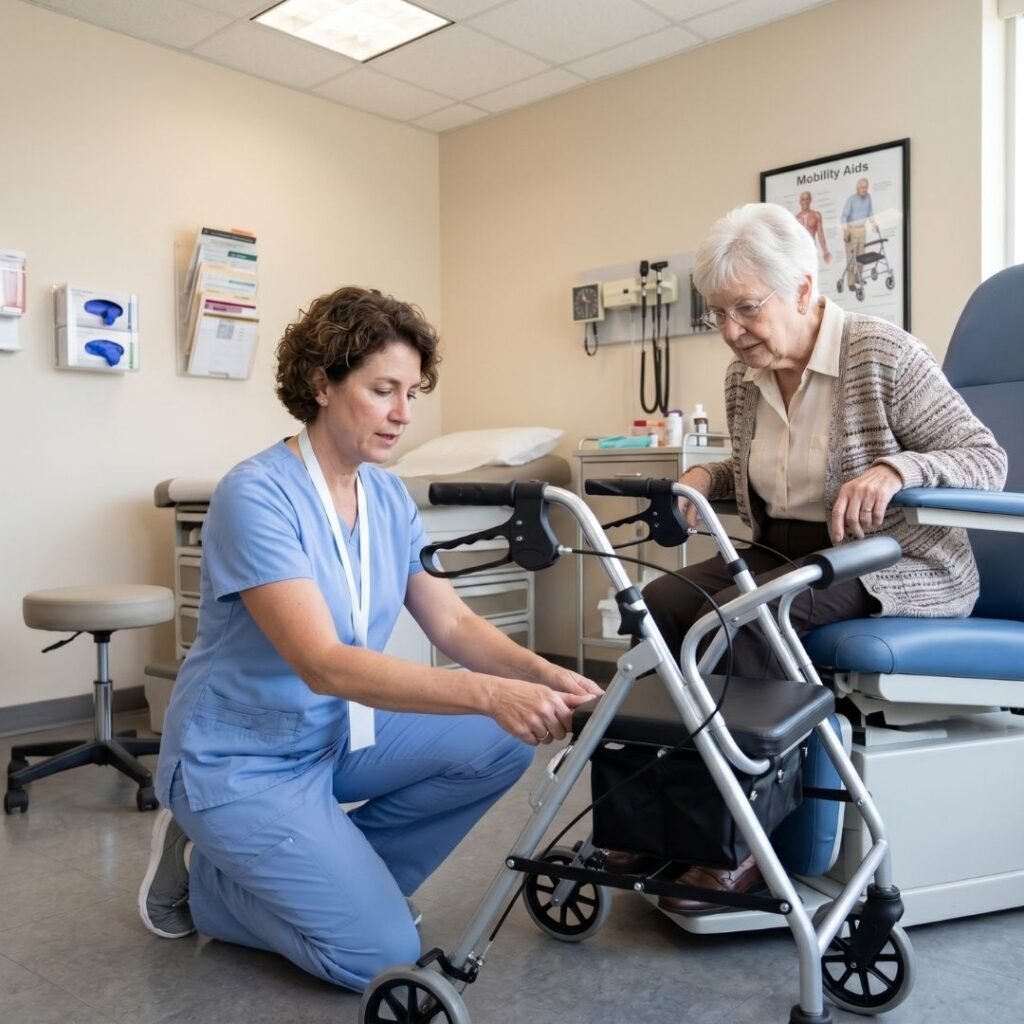
Physical and occupational therapists are equally valuable, sometimes more so. Therapists can demonstrate the device in motion, show the senior the difference between a poorly fitted cane and a correctly sized one, and walk them through specific real-world moments where the aid will help. That hands-on experience defuses two of the three core reasons seniors resist mobility devices — fear of dependency, by showing the user how much work their own legs still do, and identity threat, by reframing the rollator as a piece of athletic equipment rather than a medical surrender.
Helping Without Pressuring
The line between supporting a senior toward acceptance and pressuring them into it is real, and crossing it usually backfires. Pressure produces compliance in the moment and quiet rebellion afterward — the device gets agreed to and then never used. State your concerns clearly once or twice, then step back and let the senior carry the question themselves. Most acceptance happens between conversations, not during them. Choosing the right words for those few direct conversations matters, and our step-by-step guide on how to talk to a parent about using mobility aids walks you through exactly what to say.
Practical support helps far more than emotional escalation. Offer to drive your parent to a medical-supply store to look at devices in person. Bring home two or three options at different price points so they can hold them, fold them, and feel the difference. Encourage them to pick the color or finish they actually like rather than the cheapest one in the catalogue — ownership of the choice is a major predictor of long-term use. For the broader frame on supporting an aging parent through this transition, our guide on coping with reduced mobility is a useful companion piece for the whole family to read.
Resist the urge to bring up the topic at every visit. Repetition turns a conversation into a campaign, and seniors stop hearing the words. Aim for one direct conversation every few weeks, with smaller observational comments scattered between. Praise actual use generously: “I noticed you took the cane to the mailbox today — great call with the wet leaves.” Positive reinforcement of small wins beats critique of the larger refusal every time.

Special Considerations: Cognitive Decline, Cultural Factors, and Mixed Households
Some resistance is not really about the device at all. A senior with early dementia may forget the conversation entirely between visits, or may genuinely not remember the recent stumble that prompted it. In that case, written reminders — a small note on the bedside table, a sticky on the front door — sometimes work better than another conversation. Late-stage cognitive decline often shifts the question from “how do we get them to accept it” to “how do we make the safe option the easiest one to reach.” Placing the walker directly between the bed and the bathroom is more effective than any argument when memory is impaired.
Cultural and family-history factors also shape why seniors resist mobility devices. Some cultures attach particular shame to visible aging in public. Some families have a parent or grandparent who used a wheelchair toward the end of life, and the senior associates any mobility device with that final chapter. Naming these patterns out loud, with care, often releases pressure: “I know Grandpa used a walker the last few years of his life. This is a different situation, and I don’t want you to think you’re starting that same road.” Acknowledgment beats avoidance when family history is in the room.
Mixed-household situations add another layer. A senior may resist a walker because they do not want to be tripped over by the toddler, or because their spouse is already using one and they cannot bear to be the second in the house. These are practical objections with practical answers: storage solutions, side-by-side device choice, dedicated travel paths. The objection is rarely as immovable as it looks once the family treats it as a logistical question rather than a moral one.
Frequently Asked Questions
1. Why do seniors resist mobility devices even after a fall?
A fall is often the most expected moment for acceptance, but it can actually deepen resistance. The fall confirms the senior’s worst fear about decline, and the natural psychological response is to push back against the symbol of that decline rather than embrace it. Recovery time also reduces strength further, which makes the device feel even more like a permanent surrender. Allow some emotional processing time after a fall before reopening the conversation, and lean heavily on the physical therapy team during recovery — they can reframe the device as a temporary support during rehabilitation rather than a permanent verdict.
2. Is it ever okay to let a senior refuse a mobility device?
A cognitively intact adult has the legal and moral right to make their own choices, even risky ones. The family’s job is not to override that right but to ensure the senior is making the choice with full information — the actual fall risk, the actual impact on independence, the actual options available. Once the senior has heard the information from a physician, has been offered a fitting session, and still chooses to refuse, the family’s role shifts to harm reduction: removing trip hazards at home, adding nightlights, keeping a phone within reach, and gently revisiting the topic if circumstances change.
3. How long does it usually take for a senior to accept a walker or cane?
Most families report between three months and a year between the first serious conversation and willing daily use. Faster acceptance is possible when a clear medical event — a fall, a hospitalization, a clinician recommendation — provides a turning point. Slower acceptance is normal in seniors with strong identities tied to physical capability. Patience usually wins.
4. What role does the doctor play when a senior refuses a mobility aid?
The doctor is often the highest-leverage voice in the entire conversation. A formal mobility or fall-risk assessment, a written prescription, and a referral to physical therapy together carry institutional weight that family conversation cannot match. Many seniors who flatly refuse a child’s suggestion will accept the same recommendation from a physician within a single appointment. Quietly coordinating with the primary care office before the senior’s next visit is one of the most effective things a family can do.
5. Can a senior with dementia be expected to use a mobility device safely?
It depends on the stage. A senior with mild cognitive impairment can usually learn to use a cane or walker reliably, especially with consistent placement cues and short daily reminders. By moderate dementia, independent safe use becomes harder — the senior may forget the device, leave it behind, or use it incorrectly. At that stage, the strategy shifts from teaching independent use to environmental design: keeping the device on the path the senior actually walks, removing tempting alternative supports like rolling chairs, and adjusting the home so the safest path is also the easiest path.
Final Thoughts on Helping a Senior Accept a Mobility Device
When seniors resist mobility devices, the resistance almost never lifts because someone wins an argument. It lifts because the device starts to mean something different in the senior’s mind — a key to the garden instead of a verdict on the body. That meaning shift takes time, the right voices, and a family patient with a process that does not move on a schedule. The slow approach feels frustrating, but it produces a senior who actually uses the device every day, which is the only outcome that matters.
Acceptance, when it comes, often surprises everyone. A parent who refused a walker for two years suddenly takes it to the farmers’ market without comment. A father who scoffed at every cane picks one with a black wood handle and starts using it daily. The change usually arrives quietly, after the family has stopped pushing and the senior has had room to choose. Celebrate quietly, without fanfare, because attention can sometimes undo it. The device is in their hand. The world is open again. That is the goal.
Medical Disclaimer: The information provided on this website is for educational purposes only and should not replace professional medical advice. Always consult your physician or qualified healthcare provider regarding any medical condition or treatment decisions.
