
Affiliate Disclaimer: This article contains affiliate links. As an Amazon Associate, Mobility With Ease may earn a small commission from qualifying purchases at no additional cost to you.
Introduction
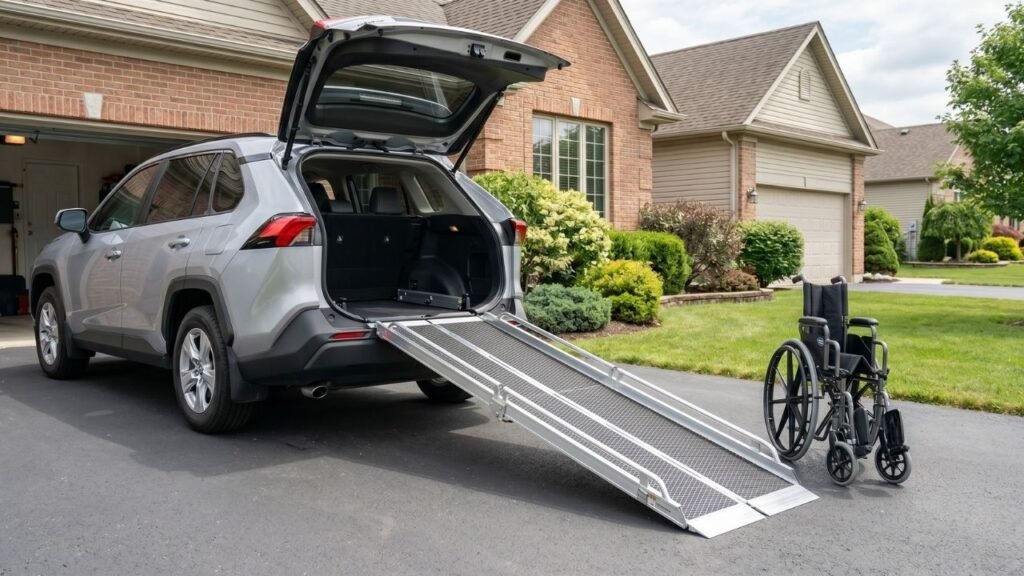
For families who care for a senior or a loved one who uses a wheelchair, the family car is sometimes the deciding factor in whether a doctor’s appointment, a grandchild’s birthday, or a quiet trip to the park actually happens. Wheelchair ramps for cars and SUVs are the small piece of equipment that quietly turns a stuck-at-home day into a normal outing. They do not look like much when folded in the trunk, but they are often the difference between independence and isolation.
The challenge is that not all ramps are built for vehicles. Many of the ramps sold under the same broad “wheelchair ramp” label are designed for doorway thresholds or porch steps, where the rise is short and the load is straightforward. Wheelchair ramps for cars and SUVs have a harder job. They have to bridge a higher floor height, fit in a folded vehicle trunk, withstand outdoor weather, and be light enough that a spouse or adult child can set them up alone. The right pick depends on the specific car, the wheelchair, and who is doing the work.
This 2026 guide reviews our top five vehicle ramp picks, organized by the use case they solve best. We cover folding suitcase ramps, telescoping track ramps, heavy-duty SUV ramps, compact threshold options, and modular roll-up systems. The goal is to give caregivers and families a clear comparison so the ramp that arrives at the door actually fits the vehicle and the situation it is meant for.
This guide is best for families looking for a portable ramp for a wheelchair, transport chair, or mobility scooter that needs to work specifically with a car, SUV, minivan, or hatchback.
Why Wheelchair Ramps for Cars and SUVs Matter for Seniors
For an aging adult who uses a wheelchair, the path from front door to passenger seat is often the single biggest obstacle to leaving the house. Transferring a senior in and out of a car without a ramp typically requires two people, a lift, or a series of awkward bend-and-pivot movements that put both the senior and the caregiver at risk. The CDC reports that falls are the leading cause of injury for adults over 65, and a botched transfer at the curb is one of the most common ways a fall happens during a family outing.
A good portable ramp changes that math. Instead of lifting the senior, the caregiver rolls them up a stable incline. Instead of bending and pivoting in a tight space, the senior remains seated in their wheelchair throughout the transfer. Wheelchair ramps for cars and SUVs reduce the physical strain on the caregiver, lower the fall risk for the senior, and make outings possible that would otherwise be canceled. Families who invest in a quality ramp often describe it as the single piece of equipment that gave them their weekends back.
It also matters where the ramp can be used. A ramp built for a sedan trunk may not reach the higher floor of a full-size SUV. A ramp designed for a minivan side door may sit at a steep angle against the back of a hatchback. Choosing wheelchair ramps for cars and SUVs is rarely about finding the “best” ramp in the abstract. It is about finding the ramp that fits the specific vehicle the family already owns. If you have not yet narrowed down the broader category of portable ramps, our best portable wheelchair ramp guide covers the full landscape of folding, threshold, and door-frame options in one place.
Doctor’s Note: Choosing the Right Vehicle Ramp
When families come to me asking about wheelchair ramps for cars and SUVs, the first question I ask is which vehicle they actually drive. The same ramp that works beautifully for a low-floor minivan can be dangerous against a lifted pickup or full-size SUV. The rise from ground to vehicle floor changes the math on slope, and slope is what determines whether the ramp is safe.
The second question I ask is who is going to be using it. A caregiver pushing a manual wheelchair up the ramp can manage a steeper slope than a power chair driving itself up. A senior who self-propels needs an even gentler slope, often a 1:12 ratio, to avoid tipping backward. The family that buys based on the cheapest folded length without thinking about the slope is the family that ends up with a ramp they don’t trust.
The third thing I look at is who is setting up the ramp. A folded ramp that weighs forty pounds may be perfectly fine for an adult son but unmanageable for an elderly spouse. Wheelchair ramps for cars and SUVs are only useful when the person who actually drives the vehicle can deploy them without help. I tell families to weigh the ramp in their own hands before they buy. If it feels heavy in the store, it will be impossible at a parking garage on a rainy day.
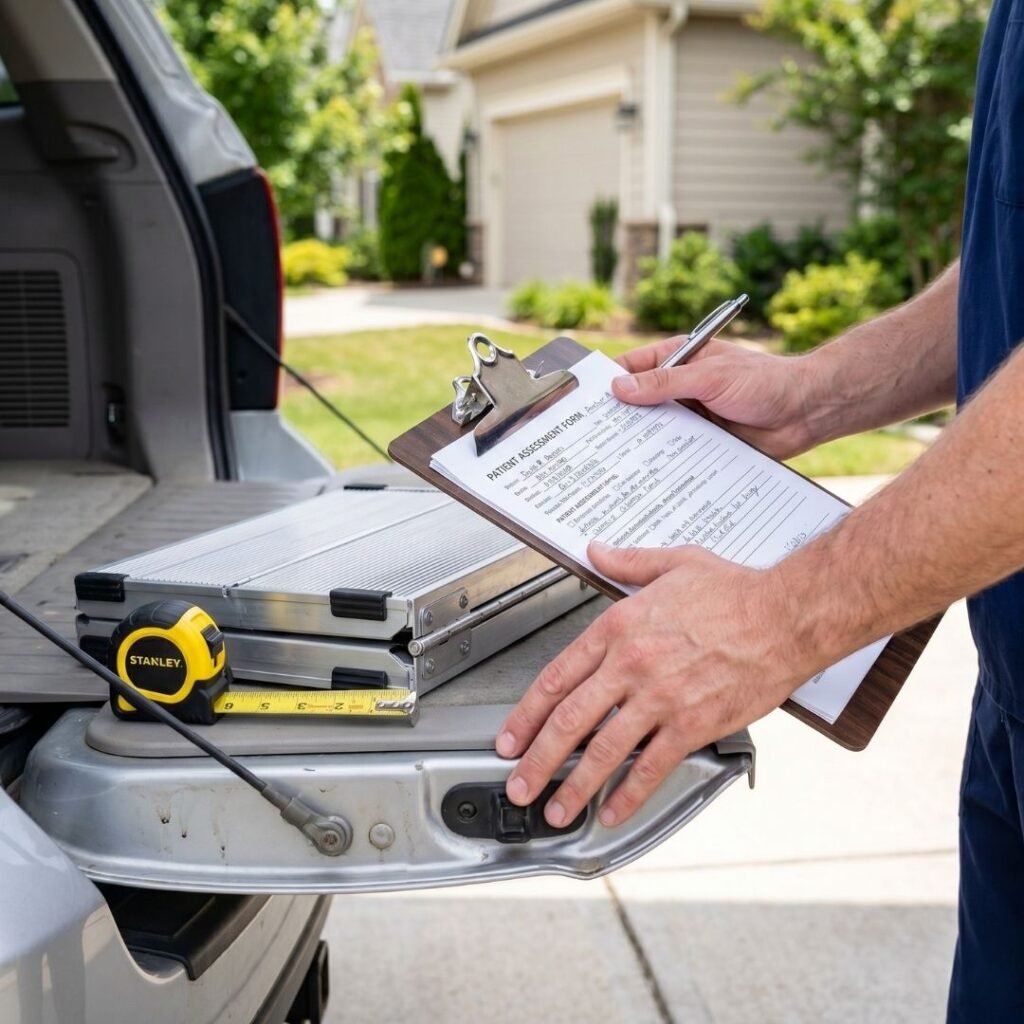
Finally, I look at the wheelchair itself. The width between the wheels has to match the ramp width, whether the family is choosing a single full-width ramp or a pair of separated track ramps. Measure twice. Returning a ramp that does not fit the wheelchair is a common, avoidable headache.
Families using heavier mobility scooters should pay especially close attention to ramp weight limits and slope requirements, since scooter weight can change the equation significantly.
Best Wheelchair Ramps for Cars and SUVs (Top Picks)
Best Overall — Folding Suitcase Ramp
PVI Multifold Reach Wheelchair Ramp (Aluminum)
The PVI Multifold Reach is the ramp I recommend most often for families with an SUV or minivan. It folds in half lengthwise and again widthwise into a suitcase-style package with a built-in carry handle, which makes setup a one-person job. The aluminum construction supports up to 800 pounds, comfortably handling both manual and most power wheelchairs. The surface has a non-slip texture that holds up in rain and light snow. The full-width single-piece design is more forgiving than separated track ramps because the wheelchair user does not need to line up two narrow channels with the front and rear wheels.
Pros
- 800 pound capacity handles manual and most power wheelchairs
- Folds suitcase-style with carry handle for one-person setup
- Full-width surface avoids the alignment challenge of two-track designs
- Non-slip surface works in light weather
Cons
- Folded form is still bulky in a small trunk
- Heavier than telescoping track alternatives

- Maximum 6" - 12" rise for occupied wheelchair or scooter passage
- For UNOCCUPIED loading and unloading of wheelchair or scooter has a maximum of 18" rise
- Folds down to 38 1/4"L x 16"W for storage.
Best Telescoping Ramp
DMI Telescoping Adjustable Aluminum Wheelchair Ramp
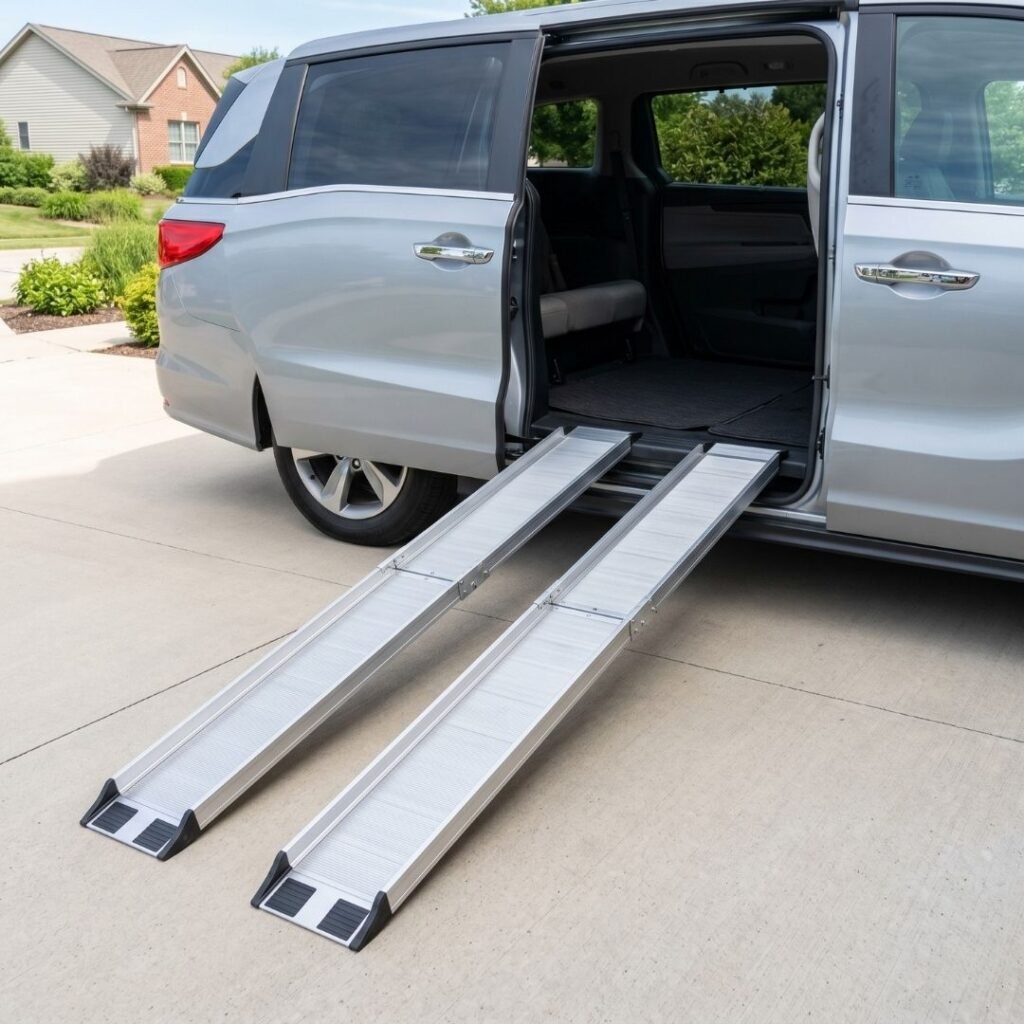
For families who switch between vehicles, or who use the ramp for both a car trunk and an occasional porch step, the DMI Telescoping Ramp is the more flexible option. The pair of aluminum track ramps adjusts from three feet to five feet, letting the user match ramp length to vehicle height on the spot. Each track has a non-skid U-channel that guides the wheelchair’s wheels. The trade-off is alignment: the caregiver has to set each track under the correct wheel, which adds a few seconds to setup compared to a single-piece ramp. For a family that needs flexibility more than they need speed, this is a solid choice.
Pros
- Adjustable length matches different vehicle heights
- Lightweight, with each track easier to lift than a one-piece ramp
- U-channels guide the wheelchair wheels into place
- Compact when retracted for storage
Cons
- Requires aligning two separate tracks each time
- Lower weight capacity than full-width suitcase ramps
- Not ideal for self-propelled use without a spotter

- PORTABLE RAMPS FOR WHEELCHAIRS: Our metal ramps for wheelchairs and wheelchair ramp 4ft has a safe and non-skid surface and is portable for indoor or outdoor use either at home or on the go. Ramp is...
- RAMP FOR STAIRS: HAS A SAFE AND DURABLE NON SKID SURFACE and is the perfect portable ramp for stairs outside house steps. Ramp for indoor or outdoor use either at home or on the go. Ramp is perfect...
- DOUBLE NON-SKID: RUST RESISTANT, durable and lightweight stair ramps for walker. Each ramp supports up to 300 pounds for a total of 600 pounds. High quality handicap ramps for home entry for moving...
Best Heavy-Duty SUV Ramp
Ruedamann Aluminum Folding Wheelchair Ramp (6 ft)
Full-size SUVs and minivans sit higher off the ground than sedans, and a three-foot ramp at that height creates a slope steep enough to be unsafe. The Ruedamann six-foot folding ramp solves this by providing extra length without giving up portability. The single-piece design folds in half for storage and offers a 600-pound capacity, sufficient for the vast majority of wheelchair-and-user combinations. The longer length means a gentler slope at the same vehicle height, which is the single most important safety factor for ramps used with taller vehicles. Among wheelchair ramps for cars and SUVs, this is the model I default to for families with full-size SUVs.
Pros
- Six-foot length keeps the slope gentle on tall SUVs
- 600 pound capacity covers most users
- Folds in half for storage despite the length
- Solid one-piece surface forgives wheelchair alignment
Cons
- Heavier than shorter ramps when carrying
- Folded length is longer than a suitcase-style ramp

- 6FT Ramps for Wheelchairs for Home: Ruedamann wheelchair ramp is measuring 72" (L) x 28" (W), it features 2" high safety side rails for added stability and security. Our wheel chair ramp is suitable...
- One-Piece Hinge: Constructed with high-quality aluminum and corrosion-resistant stainless steel hinges, our portable wheelchair ramp is built to last. The upgraded one-piece hinge provides enhanced...
- Lightweight and Easy to Move: Ruedamann threshold ramp for doorways is lightweight and easy to move. Despite its larger size, it can be separated into two pieces for more manageable use. Its foldable...
Best Compact / Short Threshold Option
Silver Spring Folding Aluminum Threshold Ramp
Not every ramp situation calls for six feet of aluminum. For sedan trunk loading, low-clearance vehicles, or family members who use a ramp mostly to bridge curb-to-vehicle gaps, the Silver Spring Folding Threshold Ramp is the right pick. It is compact, lightweight enough for an elderly spouse to handle, and folds flat for easy storage in a trunk. The non-slip surface and reinforced edges keep small wheels stable. This is also a useful secondary ramp to keep in the car alongside a longer one for situations where the senior just needs to clear a small lip rather than a full vehicle floor.
Pros
- Lightweight enough for elderly caregivers to manage
- Folds flat for minimal storage footprint
- Reinforced edges and non-slip surface for small wheels
- Affordable secondary ramp option
Cons
- Too short for use with most SUV tailgates
- Lower weight capacity than larger folding ramps

- 18.5 lb Ramp is easy to carry: Lightweight aluminum construction makes this 4' ramp very strong; suitable for users with reduced mobility to pick up, place, and carry for transport or storage
- High weight capacity design: Supports mobility scooters and power chairs up to 800 lb; sized to provide stable transitions over common residential step heights up to 4" (1:12 ADA recommended ramp...
- Punch plate transition for extra grip: The heavy-duty traction surface reduces chance of slipping in icy condition; keeps footing secure at all times on the ramp
Best Modular Roll-Up
Roll-A-Ramp Portable Modular Aluminum Vehicle Ramp
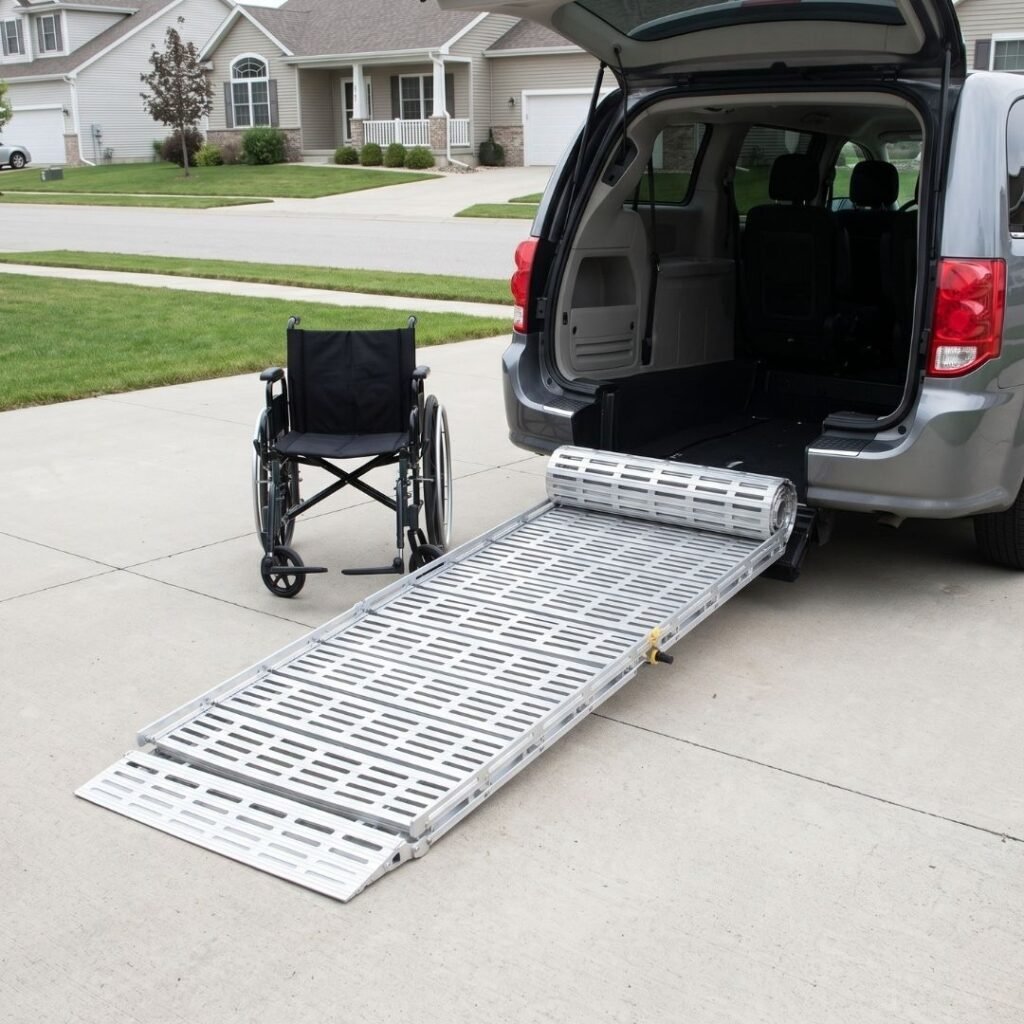
For families with limited trunk space, the Roll-A-Ramp modular design folds up like a garage door into a compact roll rather than a flat folded form. Sections clip together so the same ramp can be made longer for an SUV or shorter for a sedan. The aluminum construction is light per foot, and the rolled storage shape fits in narrow trunk gaps where a flat ramp would not. The trade-off is setup time: unrolling and locking the modular sections takes longer than flipping open a suitcase ramp. For families who need flexibility and have tight storage, that trade is often worth it.
Pros
- Rolls up for storage in narrow trunk spaces
- Modular sections allow adjustable length
- Lightweight per foot of ramp
- Versatile across cars, SUVs, and home thresholds
Cons
- Slower to set up than a one-piece folding ramp
- Higher per-foot cost than basic folding ramps

- Holds up to 1000 lbs
- Package Dimensions: 32.0" X 15.0" X 35.0" (LxWxH)
- Simply remove from the box, set it on its side, unroll, lay flat on the ground and place the end plate and on interior link on the top surface and use
Educational Overview: What Vehicle Ramps Actually Do
A vehicle ramp does one thing well: it converts a vertical lift into a manageable incline. Without a ramp, getting a wheelchair into a car requires lifting both the chair and the person sitting in it through a vertical gap that may be anywhere from twelve to thirty inches. With a ramp, that vertical gap becomes a controlled roll. The longer the ramp, the gentler the slope, and the easier the transfer becomes.
Wheelchair ramps for cars and SUVs typically fall into four design categories. Single-piece folding ramps open like a clamshell and present one continuous surface. Multi-fold suitcase ramps fold in two directions for compact storage. Track ramps, sometimes called channel ramps, are sold as a pair of narrow rails that the wheelchair wheels ride along separately. Modular roll-up ramps use hinged sections that roll up into a compact cylinder. Each design solves a slightly different storage and use-case problem.
Most car ramp uses fall into one of two scenarios: loading the empty wheelchair into the trunk for transport, and rolling the senior up the ramp while they remain seated. These two use cases have different slope requirements. Loading an empty chair tolerates a steeper slope because there is no balance risk. Rolling a seated user up the ramp demands a gentler slope to prevent tipping. Families who use the same ramp for both purposes should size the ramp around the seated-user scenario, since that is the safety-critical case. If you also need to handle interior thresholds — door frames, raised transitions between rooms — our roundup of the best threshold ramps for doorways is a useful companion piece.
Vehicle floor heights cluster into three broad zones that drive ramp length decisions. Sedans, hatchbacks, and most crossovers sit roughly fifteen to twenty inches off the pavement and tolerate shorter three- to four-foot ramps. Standard SUVs and minivans land in the twenty-two to twenty-eight inch range, which usually calls for a five- to six-foot ramp to keep the slope safe for a seated user. Lifted SUVs, full-size trucks, and high-roof passenger vans can clear thirty inches and reasonably need seven- to eight-foot ramps for caregiver-assisted use. Measuring the actual load floor before buying — tape measure against the pavement, not a guess from the spec sheet — prevents the most expensive sizing mistake families make with vehicle ramps.
How to Use Wheelchair Ramps for Cars and SUVs Safely
Mind the slope. The single most common mistake families make is buying a ramp that is too short for the vehicle, which creates a slope steep enough to make the user tip backward during the climb. The US Access Board ADA guidance on ramps sets a running slope maximum of 1:12, which means one inch of rise for every twelve inches of ramp length. That ratio is the gold standard for independent wheelchair users. For caregiver-assisted use, slopes up to 1:8 are sometimes practical, but only with a confident caregiver and a controlled environment.
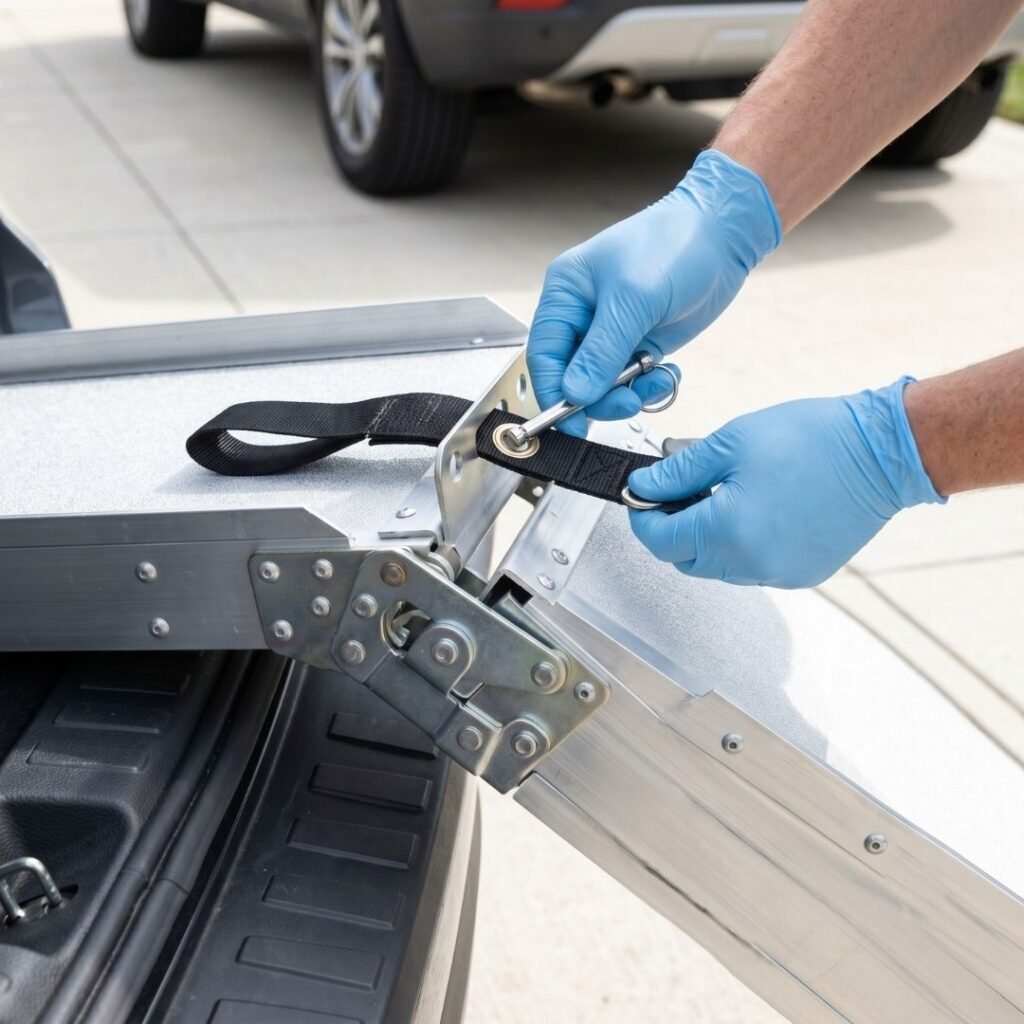
Set the upper end first. When deploying any folding ramp at a vehicle, place the upper edge against the vehicle floor before lowering the bottom to the pavement. This keeps the ramp from slipping during setup. Engage any safety hooks, pins, or straps before allowing any weight on the ramp. Skipping this step is one of the most common causes of ramp injuries.
Lock the wheelchair before loading. If the wheelchair is being loaded empty, fold it and engage any locking mechanism before starting up the ramp. If the user is seated, engage the wheel locks at the bottom of the ramp before the caregiver begins pushing. Once on the ramp, never let go of the wheelchair handles until it is fully on level ground.
Push from below, not pull from above. When loading a seated user, the caregiver should always be behind and below the wheelchair on the ramp, pushing upward. Pulling the chair from above creates a risk of the chair rolling backward into the caregiver if grip is lost. Take small, steady steps and pause halfway if you need to reset your grip.
Check the surface conditions. Rain, ice, and dust on the ramp surface make every slope steeper in practical terms. Wipe the ramp dry before use and avoid deploying it on icy driveways. A non-slip ramp surface helps, but it is not a substitute for dry conditions.
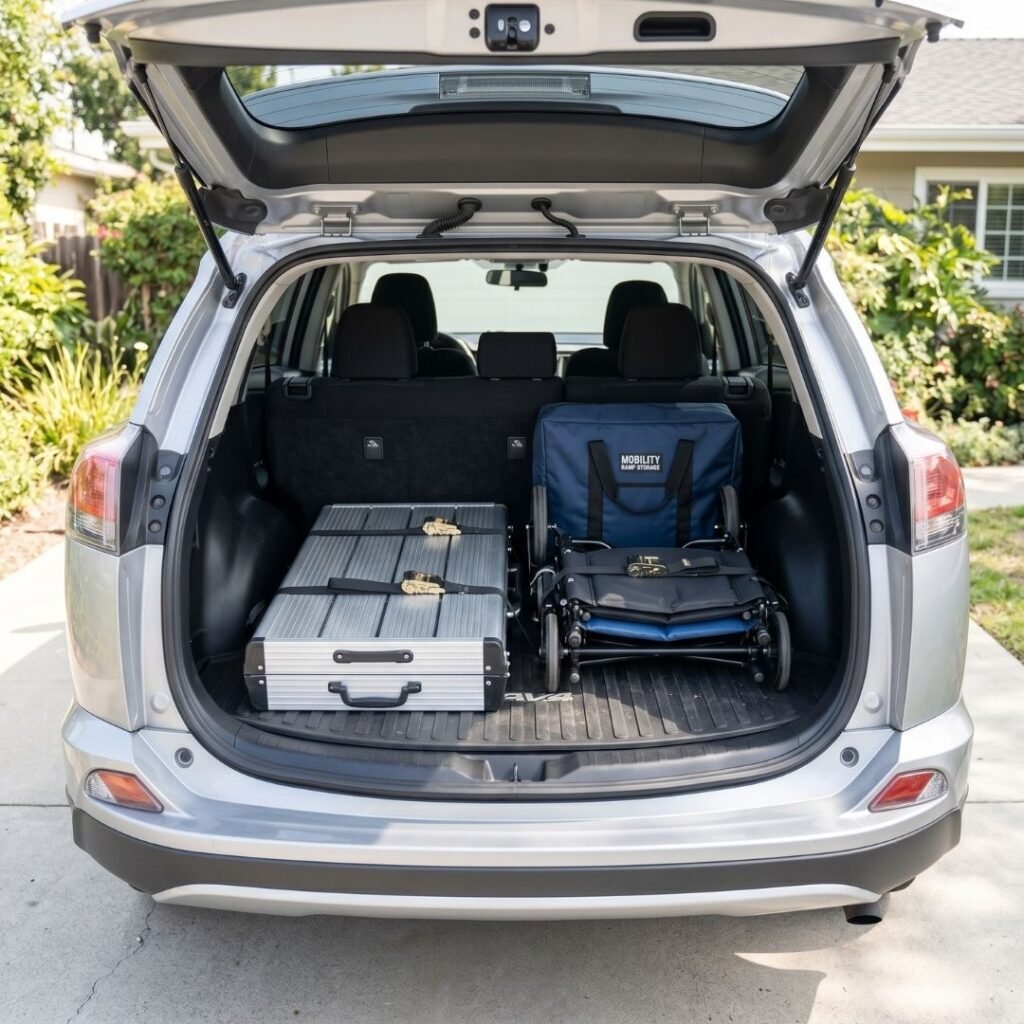
Store the ramp safely between uses. A folded ramp sliding around the trunk during a hard stop can damage the vehicle and the ramp itself. Use cargo straps, a storage bag, or a dedicated trunk organizer to keep the ramp secured. Wheelchair ramps for cars and SUVs that bounce loose in the trunk eventually develop dents, bent hinges, and worn safety pins.
Lifestyle Synergy: Making Wheelchair Ramps for Cars and SUVs Work Better
A vehicle ramp earns its keep when it gets used. That sounds obvious, but plenty of families buy a ramp, use it twice, and leave it in the garage. The difference between a ramp that gets used weekly and one that gets used twice usually comes down to where it lives. A ramp stored in the garage is a ramp the caregiver has to remember to bring. A ramp stored in the trunk is a ramp that is always available.
Build the ramp into the vehicle’s normal cargo layout. Set aside a corner of the trunk or cargo area specifically for the ramp and the folded wheelchair. Use cargo straps or a tie-down to keep the ramp secured during driving. If the family has more than one car, decide which vehicle is the “wheelchair vehicle” and keep the ramp there permanently. Trying to share one ramp between two cars usually means the ramp ends up in neither.
Pair the right wheelchair with the right ramp. A heavy power wheelchair or transport chair has different ramp needs than a lightweight folding manual chair. For families who travel often, our roundup of the best travel wheelchairs for seniors covers the ultralight and airline-friendly models that pair well with portable vehicle ramps. A folding ramp and a travel wheelchair together turn outings, day trips, and even occasional weekend travel back into a normal part of life.
Think about the weather, too. A ramp that lives outdoors will weather faster than one stored in a dry trunk. Keep aluminum ramps clean of road salt during winter months, since salt accelerates corrosion at the hinges. A quick rinse after slushy drives extends the ramp’s useful life by years.
Build a consistent deployment routine. The first few times a family uses wheelchair ramps for cars and SUVs, every step feels deliberate — unfold, position, check the safety pins, lock the chair, push. After a dozen trips the steps blur together and shortcuts creep in. The shortcut that puts people in the emergency room is skipping the pin check. Treat that check the way drivers treat the seatbelt: non-negotiable, every time, even on a familiar driveway in front of a familiar house.
Physician’s Tips for Long-Term Vehicle Ramp Use
Inspect hinges and safety pins monthly. A folding ramp lives by its hinges. Any cracked weld, loose pin, or sticky hinge is a safety issue that should be addressed before the next use. Most quality ramps come with replacement hardware kits; keep them in the trunk with the ramp itself.
Lubricate folding mechanisms twice a year. Aluminum hinges left to weather develop drag that turns easy folding into a wrestling match. A quick spray of dry-film lubricant in spring and fall keeps the folding mechanism smooth and prevents corrosion.
Re-evaluate ramp length when the vehicle changes. A ramp that worked for a family’s old sedan may not be safe for the new SUV they just bought. Whenever the family vehicle changes, re-check the slope math: ramp length divided by floor height should hit at least 8:1 for caregiver-assisted use and 12:1 for self-propelled use.
Replace the ramp surface tape when it wears. Most ramps use non-slip tape or coated surfaces that wear down with repeated use. Replacement tape is inexpensive and easy to apply. A worn surface is one of the most under-reported reasons for ramp-related slips.
Keep a backup plan. A ramp can fail, weather can turn, or the family may end up at a vehicle the ramp does not fit. Knowing the local accessibility taxi number, the closest paratransit service, or a friend with a fully accessible van means the family is not stranded when the ramp is not the right tool for the moment.
Adjust handling for temperature extremes. Aluminum ramps grow noticeably colder than the surrounding air in winter and hot to the touch under summer sun. Bare hands stick to icy aluminum the same way they stick to a frozen flagpole, and a sun-baked ramp can burn unprotected skin within a second or two. Keep a pair of work gloves in the trunk for both ends of the temperature range, and warn passengers not to touch the rails with bare skin until the ramp has equalized with the surrounding air.
Wheelchair Ramps for Cars and SUVs Comparison (Features & Capacity)
Frequently Asked Questions
1. How long should a portable ramp be for a sedan versus an SUV?
The right ramp length depends on the height from the ground to the vehicle’s load floor. A sedan trunk typically sits around fifteen to twenty inches off the ground, while a full-size SUV or minivan tailgate can be twenty-eight inches or higher. For caregiver-assisted use, aim for a ramp roughly eight times the vehicle floor height. For self-propelled wheelchair users, aim for twelve times the floor height. That usually means a three to four foot ramp for a sedan and a five to six foot ramp for an SUV.
2. What weight capacity do I need for a portable wheelchair ramp?
Add the wheelchair weight, the user’s weight, and a generous safety margin. A manual wheelchair weighs roughly twenty-five to forty pounds; a power wheelchair can weigh two hundred pounds or more. For most senior users in a manual chair, a 600-pound capacity ramp is more than enough. Heavier users, bariatric chairs, or power wheelchairs should look for ramps rated at 800 pounds or higher. When in doubt, size up. Wheelchair ramps for cars and SUVs that are barely within capacity flex under load and feel unsafe even when they technically meet the rating.
3. Are folding or telescoping ramps better for daily car use?
Single-piece folding ramps are usually faster to deploy and more forgiving of wheelchair alignment, which makes them the better choice for daily use. Telescoping track ramps are lighter and adjust to different lengths, which makes them better for families who use the ramp with more than one vehicle or in mixed scenarios. For a family with one car and a regular routine, a folding suitcase ramp is the simpler answer. For a family that travels or borrows different cars, a telescoping pair has the edge.
4. Can one person safely set up wheelchair ramps for cars and SUVs?
Yes, most quality vehicle ramps are designed for one-person setup, but practical limits depend on the ramp’s weight and the caregiver’s strength. Folded suitcase ramps with carry handles are usually manageable for an adult caregiver. Longer six-foot folding ramps are heavier and may be too much for a smaller or older caregiver. Before buying, weigh the folded ramp in your hands at the store if possible, or check the manufacturer’s listed weight against your own lifting comfort. A ramp that feels heavy on day one will feel impossible on day fifty.
5. Does Medicare cover portable vehicle ramps for wheelchairs?
Medicare generally does not cover portable wheelchair ramps because they are considered transportation equipment rather than durable medical equipment used in the home. Some Medicare Advantage plans, Medicaid waiver programs, or Veterans Affairs benefits do cover vehicle accessibility equipment under specific circumstances. Families should check with their plan administrator before purchase. Out-of-pocket cost for a quality portable ramp typically runs from one hundred to four hundred dollars, which is far less than the cost of a vehicle conversion.
Final Thoughts on Wheelchair Ramps for Cars and SUVs
The right portable ramp does not look like much sitting folded in the trunk. It is a piece of aluminum, a few hinges, a non-slip surface, and a handle. But for the family that uses it, that small piece of equipment is what makes the difference between a Tuesday afternoon trip to the cardiologist and a canceled appointment, between a grandchild’s birthday party and a missed family gathering. Wheelchair ramps for cars and SUVs are quietly one of the highest-leverage purchases a caregiving family can make. The picks in this 2026 guide were chosen to match real vehicles and real users, not idealized ones. Whichever model fits your situation, the right ramp is the one that gets used — not the one that gets stored.
Medical Disclaimer: This guide is for general educational purposes only and is not intended to serve as personalized medical advice. Always consult a qualified healthcare professional before making changes to medical equipment or care plans.
Last update on 2026-09-15 / Affiliate links / Images from Amazon Product Advertising API
