
Introduction
Most falls among older adults do not begin with a dramatic trip or a sudden loss of balance. They begin quietly, with a subtle shift in weight while reaching for something on a high shelf, a slight wobble when stepping out of the shower, or a moment of unsteadiness when standing up from a low chair. Fall prevention aids for seniors are designed to address exactly these kinds of moments. They are small, affordable, and often overlooked, yet they can be the difference between a safe day at home and a trip to the emergency room.
According to the Centers for Disease Control and Prevention, one in four Americans aged 65 and older falls every year. Many of those falls happen inside the home during routine activities like walking to the bathroom, getting dressed, or reaching for an object. The injury that follows, whether it is a bruised hip, a broken wrist, or a fractured femur, often sets off a chain of consequences that extends far beyond the initial fall.
This guide focuses on the small mobility aids that quietly prevent those moments from turning into emergencies. From walking aids and grab bars to reachers and non-slip accessories, each one addresses a specific vulnerability that seniors face every day. Understanding what these tools do and where they belong in the home is one of the most effective steps a family can take toward keeping a loved one safe.
Understanding Why Small Falls Become Big Problems
To appreciate why small mobility aids matter so much, it helps to understand how falls affect older adults differently than younger people. When a person in their thirties stumbles on a rug, they usually catch themselves with a quick step. For a senior in their seventies or eighties, the same stumble can end very differently. Age-related changes in muscle mass, bone density, reaction time, and vision all work together to make falls more likely and more dangerous. The Centers for Disease Control and Prevention (CDC) reports that falls are the leading cause of injury-related death among adults over 65.
What makes this especially concerning is that many of these falls are predictable. They tend to happen in the same places, during the same activities, and under the same conditions. Bathrooms, hallways, bedrooms, and kitchens are the most common locations. Getting in and out of a chair, walking to the bathroom at night, stepping over thresholds, and reaching for objects are the most common triggers. For families looking to understand why seniors fall at night, the answer often comes down to reduced visibility combined with the absence of support within arm’s reach.
This predictability is actually good news, because it means that targeted interventions work. Placing the right aid in the right location can intercept a fall before it starts. Even a minor fall can lead to a hospital stay, surgery, a long rehabilitation period, and in some cases a permanent loss of independence. That is why fall prevention aids for seniors focus on the specific rooms, movements, and daily tasks where risk is highest. The key is knowing which tools address which risks, and where in the home they need to be.
The Three Pillars of Fall Prevention at Home
Effective fall prevention rests on three foundational principles. Understanding these pillars helps families make smarter decisions about which aids to invest in and where to place them.
The first pillar is stability support. This includes any device that gives a senior something to hold onto or lean against when their own balance is not enough. Grab bars, canes, walkers, and handrails all fall into this category. They supplement a person’s balance, providing a reliable point of contact that can absorb a wobble before it becomes a fall. Stability support is most critical in transitional moments, such as standing up from a seated position, stepping into a shower, or navigating a stairway.
The second pillar is reach and accessibility. Many falls happen not because a senior cannot walk safely but because they are reaching, bending, or climbing to access something out of comfortable range. A senior who stretches overhead for a mug from a high cabinet is placing their center of gravity in a vulnerable position. Reachers, long-handled tools, and dressing aids all address this risk.
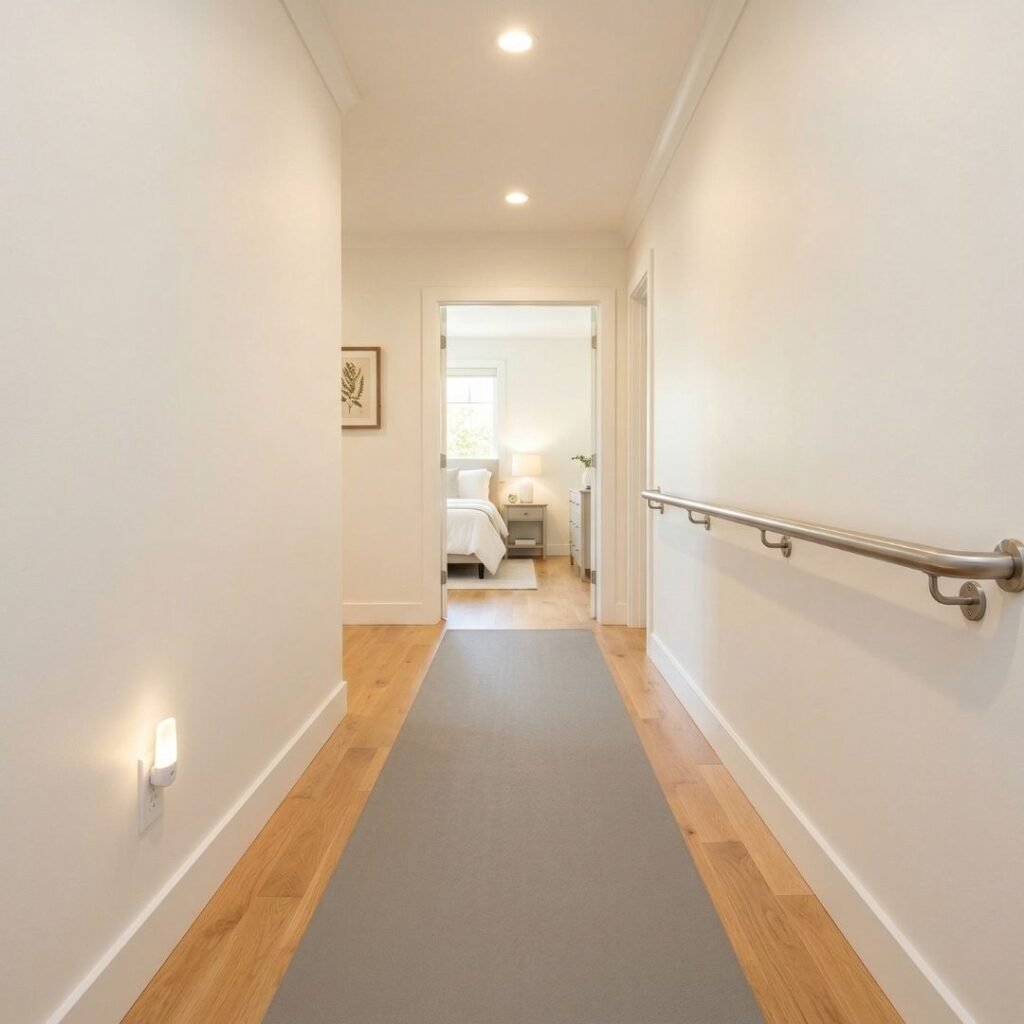
The third pillar is environmental traction. Slippery floors, loose rugs, inadequate lighting, and uneven surfaces create the conditions that turn a moment of imbalance into a fall. Non-slip mats, adhesive tread strips, and motion-sensor night lights all belong to this pillar. They simply make the environment less likely to contribute to a fall.
The most effective strategy combines all three pillars. A grab bar in the bathroom addresses stability, a reacher in the kitchen addresses reach, and a non-slip mat outside the shower addresses traction. When families think about fall prevention aids for seniors, the tendency is to focus on one category. But a cane does nothing to prevent a fall caused by a slippery bath mat, and a non-slip mat does nothing to help a senior stand up from a chair. Combining tools from all three pillars creates comprehensive protection.
Where Falls Happen Most and What Aids Belong There
Understanding the geography of falls inside a home helps families prioritize where to place fall prevention aids for seniors. Research consistently shows that certain rooms carry the highest risk.
The bathroom is the single most dangerous room for older adults. Wet tile floors, the physical effort of getting on and off a toilet, and the act of stepping in and out of a tub or shower create a combination of risks difficult to match anywhere else. A senior who steps out of the shower onto a bare tile floor is one slippery footstep away from a hip fracture. Small aids like suction-cup grab bars, adhesive bath treads, raised toilet seats, and shower chairs can dramatically reduce these risks without any permanent installation.
The bedroom is the second most common fall location, particularly at night. Getting out of bed involves a transition from lying to sitting to standing, which temporarily lowers blood pressure and can cause dizziness. In a dark room, a senior may misjudge the distance to the floor or stumble over shoes or bedding. Bed rails, bedside canes that tuck under the mattress, motion-sensor night lights, and non-slip bedside mats all address these nighttime risks. The path from bed to bathroom deserves special attention, as it is traveled frequently and almost always in low light.
Hallways, staircases, and the kitchen round out the high-risk zones. Wall-mounted grab bars along hallways and sturdy handrails on both sides of staircases provide continuous points of contact. Threshold ramps eliminate small step-ups between rooms. In the kitchen, a long-handled reacher and a rolling cart that keeps essentials at waist height reduce the need for risky reaching and bending.
Walking Aids That Keep Seniors Steady
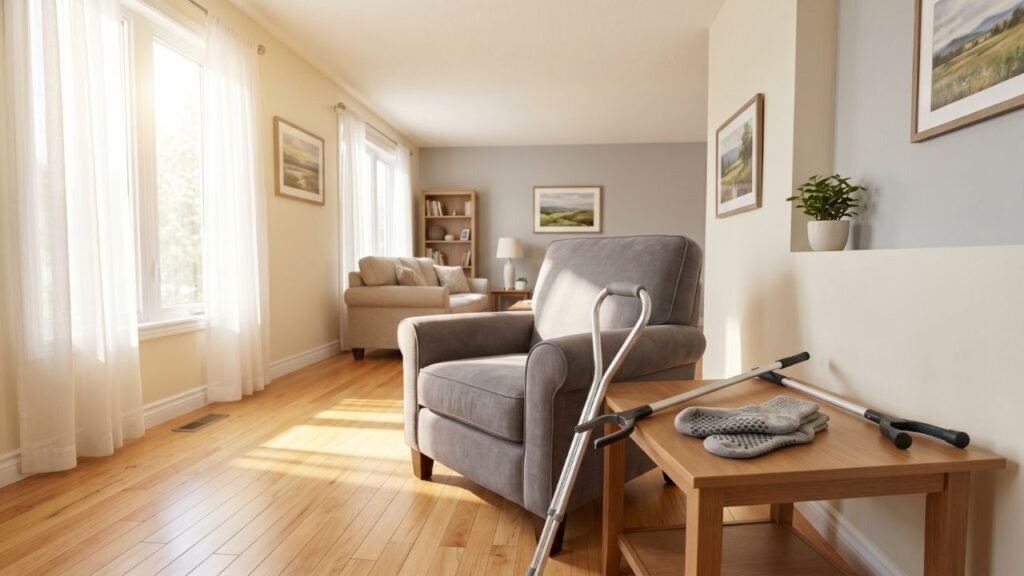
Among all fall prevention aids for seniors, walking aids are often the first that families consider. A cane or walker extends the base of support, giving the body an additional point of contact with the ground. This added stability can prevent the kind of slight wobble that leads to a fall.
A standard single-point cane is appropriate for seniors with mild balance issues or slight weakness on one side. It can support up to about 25 percent of a person’s body weight. The key to effectiveness is proper sizing. The ideal height places the top of the handle at the crease of the user’s wrist when they stand upright with their arm relaxed at their side. A cane that is too short forces the user to lean forward, actually increasing fall risk.
For seniors who need more stability, a quad cane offers a wider base with four small feet that create a more stable platform, especially on uneven surfaces. Quad canes are particularly useful for seniors recovering from a stroke or those with significant weakness on one side. They stand upright on their own, which means the senior does not have to bend over to pick them up.
Rollators, which are walkers with four wheels and hand brakes, offer the most support for seniors who are still mobile but fatigue easily. Many rollators include a built-in seat for resting during longer walks. The brakes provide control on slight inclines, and the wheels eliminate the need to lift the device with each step. The National Institute on Aging recommends consulting with a physical therapist to determine the most appropriate walking aid for each individual.
Regardless of which walking aid a senior uses, proper technique matters as much as the device itself. Using a cane on the wrong side, setting a walker too far ahead before stepping, or failing to engage the brakes on a rollator can each create new fall risks. A brief training session with an occupational therapist ensures the senior gets the full protective benefit of their assistive devices for elderly balance.
Bathroom-Specific Aids That Reduce Risk
Because the bathroom is the most common site of falls at home, it deserves focused attention. Some of the most effective fall prevention aids for seniors are designed specifically for this room, and the good news is that they are among the most affordable and easiest to install. Many require no tools at all.
Grab bars are the foundation of bathroom fall prevention. A bar mounted beside the toilet gives the senior something sturdy to push against when sitting down and pull on when standing up. Inside the shower, a grab bar provides a handhold when the feet are on a wet surface and the body is shifting weight. For renters, suction-cup grab bars offer a temporary alternative, though wall-mounted bars anchored into studs are always more reliable.
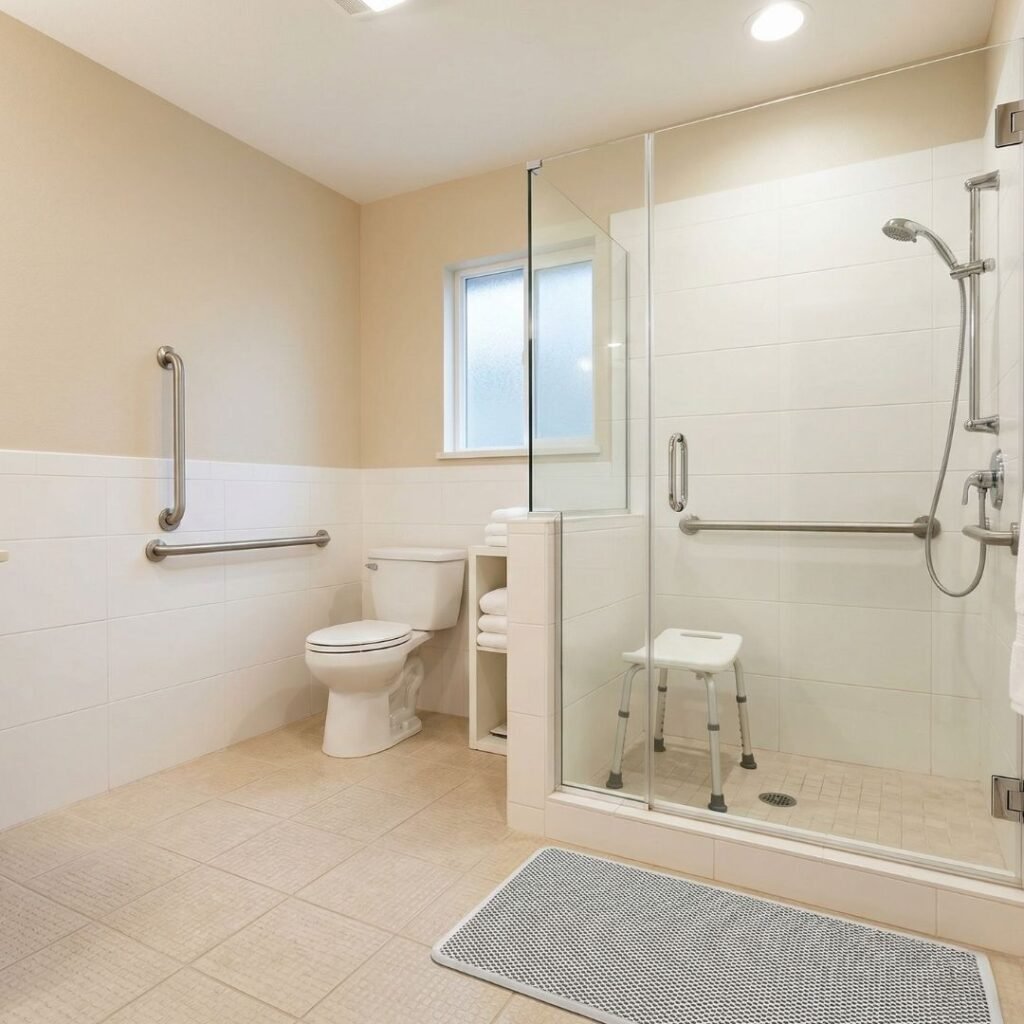
A raised toilet seat adds two to four inches of height, reducing the range of motion and strength needed to sit and stand. Some models include armrests for additional leverage. Shower chairs allow the senior to sit while bathing, and transfer benches let them slide over the tub wall rather than stepping over it, eliminating one of the most dangerous movements in the house. Families interested in a comprehensive approach can explore our guide on creating a senior-friendly bathroom.
Non-slip bath mats and adhesive tread strips round out the bathroom safety toolkit. A textured rubber mat inside the tub provides traction where it is needed most, while a non-slip mat outside the shower provides a stable surface for wet feet. These items cost very little and can be replaced easily when they show wear.
Reachers, Dressing Aids, and Other Daily Living Tools
Not all falls result from walking or standing. A significant number happen during everyday tasks that require bending, reaching, or twisting. Picking up a dropped item, pulling on socks, retrieving a dish from a high cabinet, or reaching behind the back to zip a garment each requires a shift in balance that can easily go wrong. This is an area where fall prevention aids for seniors extend well beyond canes and grab bars. Small mobility devices for elderly daily living are specifically designed to reduce these risky movements.
A reacher, also called a grabber, is a lightweight stick with a trigger-operated claw at one end. It allows a senior to grasp objects from the floor, high shelves, or tight spaces without bending over or stretching upward. Reachers come in various lengths, typically ranging from 26 to 32 inches. Many families keep one in the kitchen, one in the bedroom, and one in the living room so that one is always within arm’s reach. The cost is minimal, usually under ten dollars, and the reduction in risky bending is immediate.
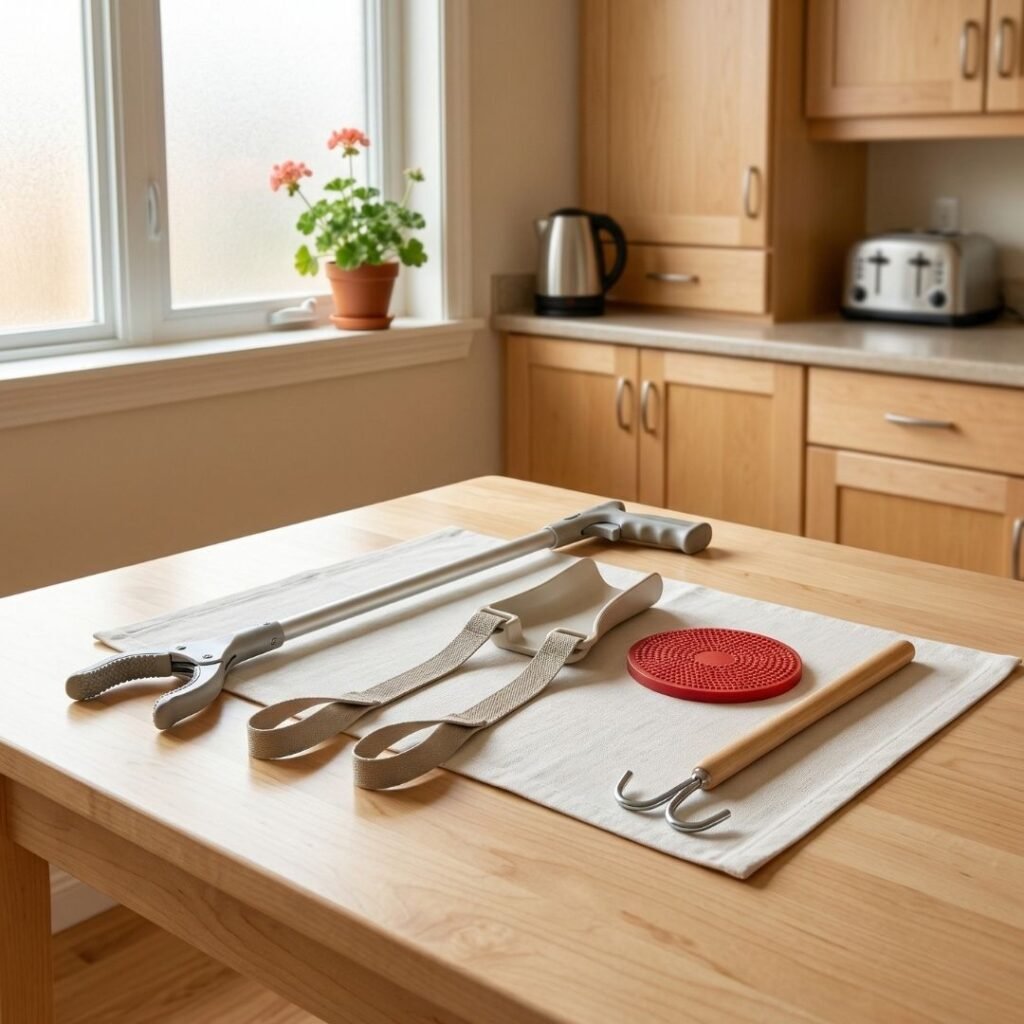
Dressing aids address another common source of falls. A sock aid is a plastic cradle with two long fabric straps. The senior places the sock over the cradle, drops it to the floor, and pulls it onto their foot using the straps, all without bending at the waist. A long-handled shoehorn allows them to slip into shoes while standing upright. A dressing stick, which is a dowel with a hook at one end, helps pull clothing onto the shoulders without awkward twisting.
Button hooks and zipper pulls assist seniors with limited hand dexterity from arthritis or stroke. These small tools reduce the frustration of getting dressed and eliminate the kinds of awkward positions that can lead to losing balance while standing. Taken together, these mobility aids to prevent falls eliminate dozens of daily moments when stability is compromised by the simple act of getting through the day.
Special Considerations for Specific Conditions
While the fall prevention aids for seniors discussed in this guide benefit most older adults, certain medical conditions create additional risks that may call for more targeted solutions. Seniors recovering from hip or knee replacement surgery face a temporary but significant increase in fall risk. Their affected side may not bear full weight for weeks, and pain can cause sudden shifts in posture during movement. A combination of a walker, raised toilet seat, shower chair, and reachers provides a baseline of protection during healing. Families navigating post-surgical recovery can find more detail in our guide on mobility aids seniors need most after surgery.
Seniors with Parkinson’s disease face unique challenges because the condition affects both balance and the ability to initiate movement. Freezing of gait, a symptom in which the feet feel glued to the floor, can cause falls when trying to start walking or turn a corner. Some patients benefit from laser canes that project a line on the floor to cue the next step.
For seniors with significant vision loss, high-contrast grab bars that stand out against the wall color are more effective than bars that blend in. A dark bronze bar on a light wall provides a clear visual cue, while a white bar on a white wall is nearly invisible. Motion-sensor lighting reduces the chance of misjudging distances in a dark room. Seniors with dementia may forget to use portable aids, so built-in environmental supports like wall-mounted grab bars and permanently installed handrails tend to be more reliable than devices that require remembering to pick them up. In dementia care, simplicity matters more than variety.
Frequently Asked Questions
1. What are the best small mobility aids to prevent falls at home?
The most effective fall prevention aids for seniors include grab bars in the bathroom and hallway, a properly fitted cane or quad cane, non-slip mats, a reacher tool, and a raised toilet seat. The best combination depends on the individual senior’s specific risks, mobility level, and home layout.
2. How do I know when a senior needs a cane or walker?
Signs include holding onto furniture while walking, noticeable unsteadiness, a recent fall or near-fall, fatigue during short walks, and favoring one side of the body. A physical therapist can perform a gait and balance assessment. It is better to introduce a walking aid early than to wait until after a serious fall.
3. Can grab bars really prevent falls in the bathroom?
Yes. Research consistently supports grab bars as one of the most effective single interventions for preventing bathroom falls among older adults. Properly installed bars anchored into wall studs can support over 250 pounds of force, making them reliable even during a sudden loss of balance.
4. What is the difference between a standard cane and a quad cane?
A standard cane has a single tip and provides basic balance support for mild unsteadiness. A quad cane has four small feet in a rectangular base, providing a wider, more stable platform. Quad canes are better suited for seniors who need more support, though they are slightly heavier and wider.
5. Are there fall prevention aids that help seniors get dressed or pick things up?
Yes. Reachers allow seniors to pick up items without bending. Sock aids, long-handled shoehorns, dressing sticks, and button hooks help with dressing tasks that would otherwise require risky bending or balancing on one foot. These are inexpensive and widely available at pharmacies and medical supply stores.
Final Thoughts
Falls among seniors are not random events. They follow patterns, and those patterns point clearly toward the moments and places where small interventions make the biggest difference. A grab bar beside the toilet, a properly fitted cane, a reacher in the kitchen, and a non-slip mat outside the shower may not look like much individually. Together, they form a quiet safety net that catches the wobbles and missteps before they turn into injuries.
The best time to introduce fall prevention aids for seniors is before a fall happens, not after. Families who take a proactive approach, walking through the home with fresh eyes and identifying the spots where a loss of balance could turn dangerous, are giving their loved one something no amount of medical treatment can replicate after the fact.
None of these aids require a prescription, a contractor, or a large budget. Most can be purchased at a pharmacy or online, installed in minutes, and put to use the same day. Fall prevention does not have to be complicated or expensive. It just has to be intentional, and it has to happen before the fall does.
Medical Disclaimer: The information provided on this website is for educational purposes only and should not replace professional medical advice. Always consult your physician or qualified healthcare provider regarding any medical condition or treatment decisions.
