

Introduction
Some of the most dangerous advice an older adult ever receives sounds exactly like common sense: slow down, rest more, take it easy, stay off your feet so you don’t fall. It is offered with love by family, friends, and sometimes even well-meaning acquaintances. Yet many of these familiar beliefs are senior mobility myths — ideas that feel protective but quietly do the opposite, weakening the body and raising the very fall risk they were meant to prevent. The gap between what sounds safe and what is actually safe is where a great deal of unnecessary decline happens.
This guide takes the most common and most harmful of these myths apart one by one, and replaces each with what the evidence actually shows. The goal is not to push every senior into a strenuous routine. It is to clear away the misunderstandings that lead capable older adults to sit when they should move, to fear the tools that would help them, and to give up on strength they could still build. Understanding the truth behind these myths is one of the simplest, most powerful steps toward staying steady and independent.
Why These Myths Are So Dangerous
Falls are the reason these beliefs matter so much. The CDC reports that more than one in four adults aged sixty-five and older fall each year, and about thirty-seven percent of those who fall are hurt badly enough to need medical care. Falls are the leading cause of injury in this age group. With stakes that high, it is natural to grab onto any idea that promises safety — and that is precisely why senior mobility myths spread so easily. They wear the costume of caution.
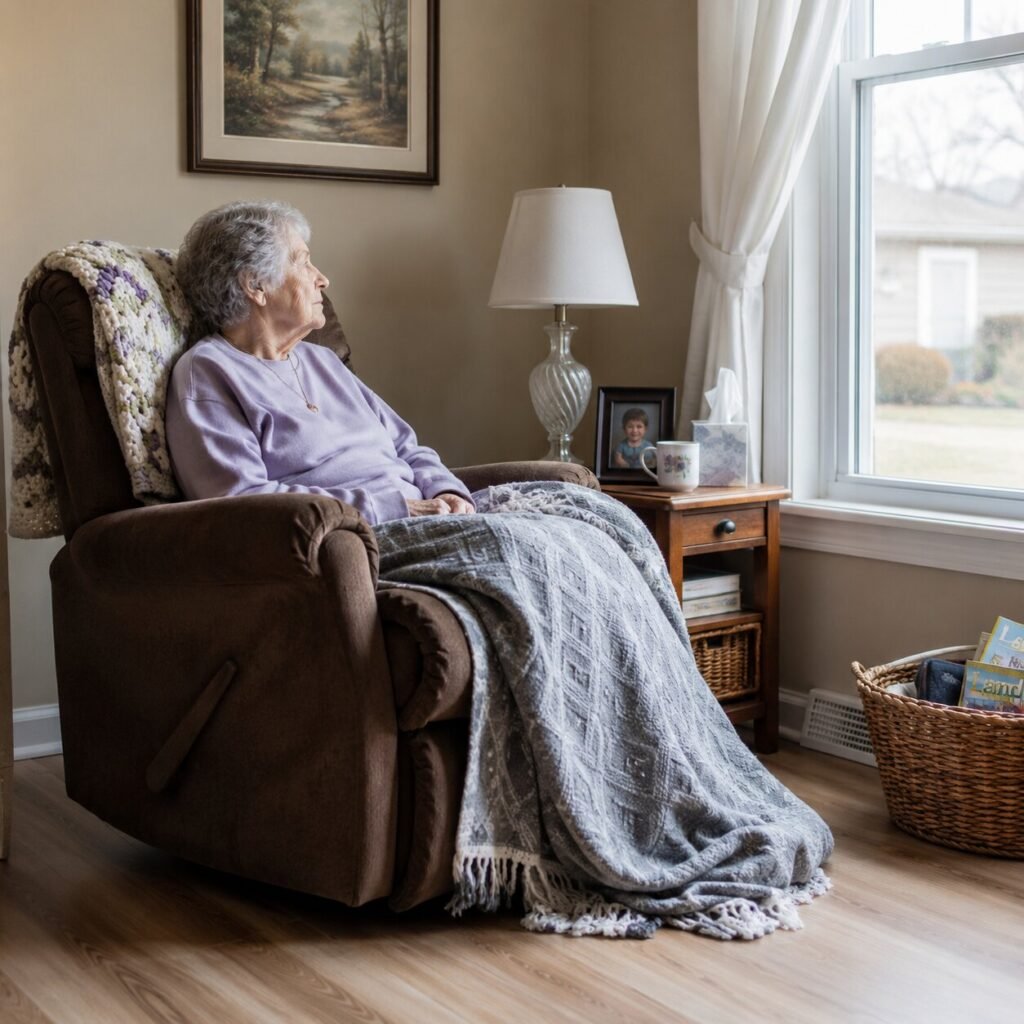
The danger is that the most popular myths point seniors toward less movement, when less movement is one of the strongest drivers of falls. Muscle strength, balance, and bone density all depend on regular use. When an older adult cuts back on activity to “stay safe,” those systems weaken over weeks and months, and a weaker, less balanced body is far more likely to fall. The advice creates the outcome it was trying to avoid. To prevent falls effectively, it helps to first understand what genuinely causes them — our guide on understanding fall risks in seniors lays out the real risk factors in detail.
These dangerous myths about aging also chip away at confidence and identity. A senior who absorbs the message that they are fragile begins to move like someone fragile — tentatively, fearfully — and that fearful movement is itself a fall risk. Believing the myth changes the body. That is why correcting these ideas is not just an academic exercise; it directly affects how safely a person moves through their day.
How to Tell a Mobility Myth From Real Caution
Not every cautious instinct is wrong, so it helps to have a way to separate genuine safety advice from the senior mobility myths that masquerade as it. Three quick tests do most of the work. The first is the evidence test: does this belief match what large health authorities actually recommend, or is it just something “everyone knows”? Much of what passes for mobility wisdom is folklore that research has long since overturned.
The second is the movement test. Be suspicious of any advice whose main message is “do less.” For the vast majority of older adults, the evidence points strongly toward staying active, not winding down. As our overview of the benefits of staying mobile as you age explains, regular movement protects nearly every system involved in staying upright. A claim that tells a capable senior to move less should be examined closely before it is trusted.
The third is the individualization test. Real medical guidance is tailored — it accounts for a person’s conditions, medications, and abilities. Myths are one-size-fits-all. “Seniors shouldn’t lift weights” is a myth; “this particular person should avoid heavy lifting because of a specific spinal condition” is individualized advice from a clinician. When a sweeping rule is applied to all older adults regardless of their actual health, it is almost always one of the mobility myths seniors believe rather than sound counsel. With these three tests in hand, the specific myths below become much easier to recognize.
How These Myths Show Up in Everyday Life
Senior mobility myths rarely arrive as formal statements. They show up as small, repeated choices. A daughter cancels her mother’s daily walk because it rained and “she might slip.” A retiree gives up gardening because a neighbor warned that bending is dangerous at his age. A grandmother stops taking the stairs entirely after a single near-miss, then finds that within months she can no longer climb them at all. Each decision feels reasonable in isolation. Together they shrink a person’s world and their physical capacity.
The myths also travel through casual conversation. “You’re not as young as you used to be.” “Better safe than sorry — just sit and let me get that.” “At your age, you should really be taking it easy.” These phrases sound caring, and they are often meant kindly, but they plant the idea that activity is risky and rest is virtuous. Over time, a steady drip of these comments can talk an active person into a sedentary life.
Perhaps the clearest sign is the unexamined rule. When a senior or their family follows a blanket policy — no stairs, no lifting, no walking alone, ever — without anyone checking whether it fits this specific person’s actual ability, a myth is usually running the show. The rest of this guide replaces the most common of those rules with what the evidence supports.
Myth 1: “Resting More Keeps Seniors Safe”
This is the most damaging of all senior mobility myths, because it sounds the most sensible. If movement carries a risk of falling, the logic goes, then less movement must mean more safety. In reality the opposite is true. Prolonged rest triggers deconditioning — muscles shrink, joints stiffen, balance reflexes dull, and bones lose density. A body that sits all day becomes measurably weaker within just a week or two, and weakness is a leading cause of falls. The “safety” of rest is an illusion that the body pays for quickly.
The evidence runs the other way. The National Institute on Aging identifies regular physical activity — especially exercises that build strength and challenge balance, such as tai chi — as one of the most effective ways to prevent falls and fractures. Movement is not the threat; it is the protection. A senior who keeps walking, standing, and gently challenging their balance is building the exact reserves that keep them upright.
The practical takeaway is to treat daily activity as a safety measure, not a hazard. That does not mean ignoring real fatigue or pushing through pain. It means resisting the pull to default to the recliner, building gentle movement into every day, and recognizing that “just rest” is rarely the safest prescription. Among senior fall prevention myths, the belief that rest protects is the one most worth unlearning first.
Myth 2: “Canes and Walkers Make Seniors Weaker and More Dependent”
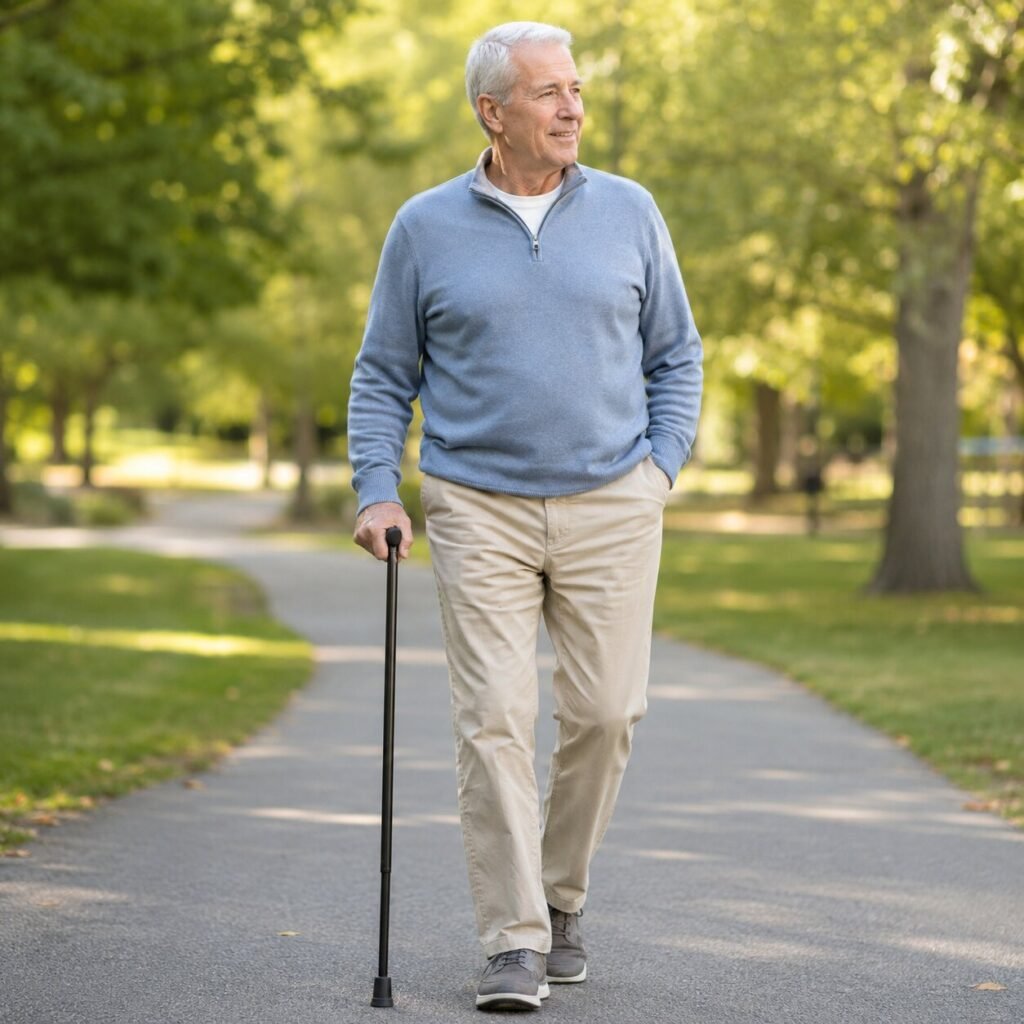
Many seniors refuse a cane or walker because they believe leaning on a device will cause their legs to waste away and trap them in dependence.
In many cases, the resistance has less to do with the device itself and more to do with fears about aging, independence, and identity. Understanding why seniors resist mobility devices can make these conversations much easier for families and caregivers.
So the honest question deserves a direct answer: do mobility aids make seniors weaker? For the overwhelming majority of users, no — the truth is closer to the reverse. A properly fitted aid carries only a fraction of a person’s weight while the legs continue doing most of the work. What it really provides is stability and confidence, and that stability lets a senior keep walking, keep going out, and stay active — which is exactly what preserves strength.
The myth gets cause and effect backwards. Weakness does not come from using a cane; it comes from not moving. A senior who avoids a needed aid often responds by walking less, because walking feels unsafe, and it is that reduction in activity — not the device — that weakens the legs. The walker is not the start of a slide into dependence; very often it is the tool that prevents one, by keeping a person mobile who would otherwise have retreated to a chair.
The real risk lies in using the wrong aid or a poorly fitted one. A cane that is the wrong height or a walker that does not suit a person’s needs can throw off posture and even cause falls, which is how this myth picks up just enough truth to feel believable. The solution is fit, not avoidance. Our guide on how to choose the right mobility aid walks through matching the device to the person and sizing it correctly. Chosen well, an aid is an enabler of activity, and dismissing it on the strength of one of the most stubborn myths about exercise for seniors can cost a person the independence they were trying to protect.
Myth 3: “It’s Too Late to Build Strength or Balance”
Closely related is the belief that improvement is only for the young — that once a person reaches their seventies or eighties, the body can only decline, so why bother trying to get stronger? This is one of the most discouraging senior mobility myths, and it is simply false. The human body remains adaptable across the entire lifespan. Older adults who begin strength and balance training measurably improve, often within weeks, gaining muscle, steadier footing, and real reductions in fall risk. It is genuinely never too late to start.
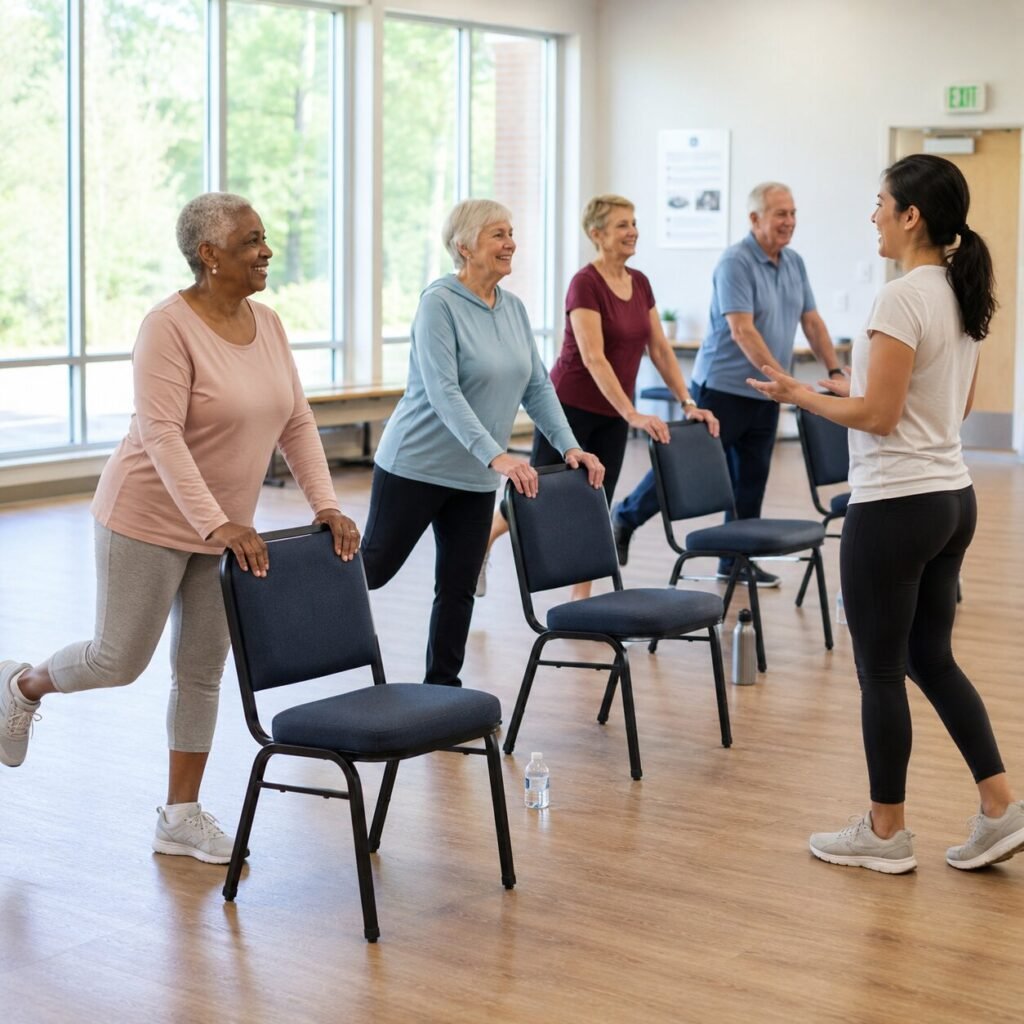
Research backs this up firmly. The National Institute on Aging emphasizes that balance-focused activities like tai chi and yoga, along with simple strength work, improve stability and help prevent falls and fractures in older adults — and that the benefits are available to people who begin late in life. Studies of adults well into their eighties and nineties show meaningful strength gains from gentle, consistent training. The capacity to improve does not expire.
In practice this means a senior who has grown unsteady is not stuck there. With a safe, progressive program — ideally guided by a doctor or physical therapist — balance and strength can be rebuilt. The fix for a fear of falling is rarely more sitting; it is targeted practice that makes the body more capable. Believing the “too late” myth forecloses that possibility before it is even tried, which is exactly why it deserves to be challenged. Pairing this with the daily-movement mindset that defeats Myth 1 gives a senior the foundation to actually reverse some decline rather than simply slow it.
Myth 4: “Exercise Makes Arthritis Worse”
Many older adults avoid activity because they worry that exercise will wear out their joints or make arthritis pain worse. While it is true that painful joints need to be treated thoughtfully, avoiding movement altogether is usually the bigger problem. Inactivity weakens the muscles that support the joints, reduces flexibility, and often leads to even more stiffness and discomfort.
In reality, appropriate exercise is one of the most commonly recommended treatments for arthritis. Low-impact activities such as walking, swimming, cycling, and gentle strength training help maintain joint function, improve mobility, and reduce pain over time. Stronger muscles act like natural shock absorbers, taking pressure off the joints and making everyday activities easier.
The key is choosing the right type and intensity of exercise. High-impact activities may not be appropriate for everyone, but that does not mean movement should stop. A physician or physical therapist can help identify safe options based on an individual’s condition and abilities.
Among senior mobility myths, the belief that arthritis requires rest is especially harmful because it often traps people in a cycle of pain, inactivity, weakness, and further loss of mobility. For most seniors, thoughtful movement is part of the solution—not the problem.
For many seniors, simple daily mobility habits can help maintain flexibility, reduce stiffness, and support healthier joints without placing excessive stress on painful areas.
Special Considerations: When Caution Really Is Warranted
Debunking these myths does not mean every senior should ignore caution and do anything they like. The point is to replace blanket fear with individualized judgment — and sometimes that judgment genuinely calls for care. Certain conditions, recent surgeries, severe osteoporosis, acute illness, or specific medications can make particular activities risky for a particular person. The difference is that real caution is specific and comes from a clinician who knows the patient, while a myth is a sweeping rule applied to everyone. “Avoid high-impact jumping because of your spinal fractures” is sound; “old people shouldn’t exercise” is one of the dangerous myths about aging.
Cognitive decline is another genuine consideration. A senior with dementia may not reliably judge their own safety or remember to use an aid, so supervision and a well-arranged environment matter more, and independent decision-making matters less. Even here, though, the underlying principle holds: keep the person moving as much as is safely possible, because preserved activity supports both body and mind. The adjustment is in how movement happens, not in abandoning it.
The safest path through all of this is partnership with a healthcare provider. A doctor or physical therapist can sort the genuine red flags from the myths, recommend the right level and type of activity, and adjust the plan as health changes. This is how a family avoids both traps at once — neither falling for the senior mobility myths that counsel needless rest, nor ignoring the real, individual limits that deserve respect. When in doubt, the answer is rarely “do nothing”; it is “ask the right person what is safe for this specific body.”
Key Takeaways
Frequently Asked Questions
1. What is the most dangerous mobility myth for seniors?
The most dangerous one is the belief that resting more keeps seniors safe. It sounds protective, but prolonged inactivity causes muscles to weaken, balance to fade, and bones to thin — all of which make falls more likely, not less. Health authorities consistently find that regular movement, including strength and balance exercise, is one of the best ways to prevent falls. The idea that a senior should mainly sit and rest to stay safe is the myth most worth abandoning.
2. Is it true that seniors should rest more to avoid falling?
No. While genuine fatigue and pain should always be respected, defaulting to rest as a fall-prevention strategy backfires. A body that moves less becomes weaker and less steady within weeks, which raises fall risk. The safer approach is regular, appropriate activity — daily walking, standing, and gentle balance work — which builds the strength and stability that actually keep a senior upright.
3. Do mobility aids like canes and walkers make seniors weaker over time?
For most people, no. A properly fitted cane or walker supports only part of a person’s weight while the legs keep doing most of the work, and the added stability lets a senior stay active and keep walking — which preserves strength. Weakness usually comes from reduced movement, not from the device. The real risk is using the wrong aid or one that is poorly sized, so the solution is a correct fit, not avoidance.
4. Is a senior ever too old to build strength and improve balance?
It is essentially never too late. The body stays adaptable throughout life, and studies show that adults even in their eighties and nineties can gain muscle and improve balance with safe, consistent training. Improvements often appear within a few weeks. A senior who has become unsteady can usually rebuild stability with a progressive program, ideally guided by a doctor or physical therapist.
5. Does staying active really reduce fall risk in older adults?
Yes, strongly. Regular physical activity — particularly exercises that build leg strength and challenge balance, such as tai chi — is one of the most effective, evidence-backed ways to prevent falls and fractures. Active seniors maintain the muscle, balance, and confidence that keep them on their feet. Far from being risky, appropriate activity is among the best protections an older adult has.
6. Can seniors with arthritis still exercise safely?
In most cases, yes. In fact, appropriate exercise is one of the most commonly recommended treatments for arthritis. Activities such as walking, swimming, cycling, chair exercises, and gentle strength training can help reduce stiffness, improve joint function, and support overall mobility. The key is choosing activities that match a person’s abilities and medical conditions. While some seniors may need to avoid high-impact exercise or modify certain movements, completely avoiding activity often leads to greater weakness, stiffness, and loss of independence over time. When in doubt, a physician or physical therapist can help create a safe exercise plan.
Final Thoughts: Replacing Fear With Facts
The senior mobility myths in this guide share a single flaw: they confuse stillness with safety. Rest more, lean on nothing, accept that improvement is over — each promises protection and delivers the opposite, because the body that moves less becomes the body that falls more. Seeing through that pattern is genuinely protective. When a senior and their family understand that movement builds the very stability they are worried about losing, the whole approach to aging shifts from shrinking the world to keeping it open.
None of this means recklessness. It means trading sweeping fears for individualized judgment, checking the big decisions with a trusted clinician, and defaulting toward activity rather than away from it. A senior who keeps walking, uses the right aid without shame, and challenges their balance a little each week is doing more to prevent falls than any amount of careful sitting ever could. The most powerful thing you can do with these myths is recognize them — and then, gently and consistently, choose to move instead.
Medical Disclaimer: The information provided on this website is for educational purposes only and should not replace professional medical advice. Always consult your physician or qualified healthcare provider regarding any medical condition or treatment decisions.
