
Introduction
A fall risk assessment in seniors is a structured office evaluation that identifies which older adults are on a trajectory toward a serious fall — before that fall happens. This guide explains exactly what the assessment involves, which tests doctors use, and what families can do with the results.
For most adults, a fall in their 30s or 40s is an embarrassment and maybe a bruise. For an adult in their 70s or 80s, a fall is the moment that often changes the trajectory of the rest of life. A broken hip, a head injury, or even just the fear of falling again can collapse an independent senior’s world overnight. That is why a fall risk assessment in seniors is one of the highest-value visits a primary care doctor can perform — it identifies which older adults are sliding toward a serious fall before the fall happens, while there is still time to change the outcome.
This guide walks families through what a fall risk assessment in seniors actually looks like, why each part of it matters, and what to do with the results. It is written for adult children, spouses, and caregivers who want to understand the visit well enough to advocate for it, prepare for it, and follow through on what the doctor recommends afterwards. The assessment is straightforward and usually quick; what makes it valuable is the structured way it surfaces problems that an unstructured conversation would miss.
Why a Fall Risk Assessment in Seniors Matters
Falls are not a small problem in older adults. The National Institute on Aging reports that more than one in four people age 65 or older fall each year, and roughly one in five of those falls causes a serious injury such as a broken bone or head trauma. Once a senior has fallen once, the risk of falling again doubles. The cascade from a single fall to lost independence, lost mobility, and lost confidence is one of the most common reasons older adults transition out of their own homes.
The good news is that fall risk is largely modifiable. Most falls happen because of a combination of factors — medication side effects, balance changes, vision problems, home hazards — rather than a single uncontrollable cause. A structured evaluation is the tool doctors use to identify which of those factors are actually present in this particular patient, and which ones are the highest-leverage to fix. Without the assessment, even attentive families and well-meaning doctors miss the specific cause that is driving the senior’s risk.
If you want broader context on which conditions and habits feed into fall risk before the doctor’s visit, our companion article on understanding fall risks in seniors covers the underlying risk landscape in detail. The current article focuses specifically on what happens inside the doctor’s office during a structured evaluation.
Core Concepts: The Three Pillars of a Fall Risk Assessment
A modern evaluation of an older patient’s fall risk rests on three pillars that doctors evaluate together. The first pillar is the history: what has happened to this patient already, including prior falls, near-falls, fear of falling, and any new symptoms that suggest a balance or strength change. The second pillar is the functional examination: structured tests that measure how the patient’s body actually performs in real movements like standing, walking, and turning. The third pillar is the medication and medical review: a careful audit of medications, vision, blood pressure, and conditions that could be driving the risk.
The most widely used framework in U.S. primary care is the CDC’s STEADI initiative, which stands for Stopping Elderly Accidents, Deaths, and Injuries. The CDC STEADI clinical resources give doctors a structured screening-and-assessment toolkit that takes a few minutes to administer and reliably identifies which older patients need a deeper evaluation. STEADI does not replace clinical judgment; it gives doctors a consistent starting point so that no patient slips through with a “you look fine” hallway check.
What makes the three-pillar approach effective is that no single pillar would catch every patient. A senior may report no falls but score poorly on a balance test. Another may walk steadily but be on three medications that drop blood pressure suddenly when they stand. A third may have perfect strength and balance but cannot see well enough at night to avoid the coffee table. The pillars cover the three most common failure modes, and the combined evaluation is dramatically more accurate than any single pillar alone.
Real-World Manifestation: What the Visit Actually Looks Like
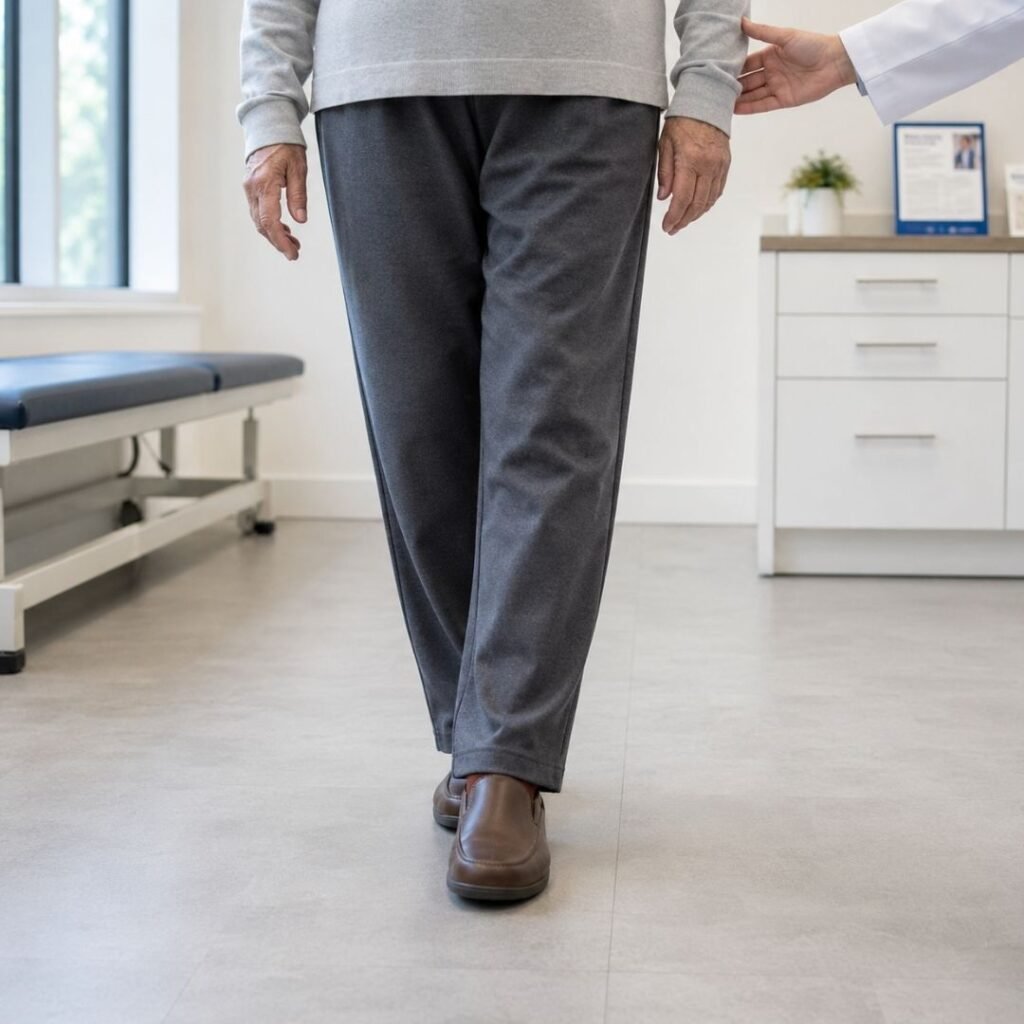
A typical assessment takes about 20 to 30 minutes during a routine office visit, though some practices reserve a longer dedicated visit for high-risk patients. The senior is asked to wear comfortable closed-toe shoes and clothing that allows easy movement. A family member is usually welcome to attend and often noticed details the senior may downplay — near-falls in the kitchen, episodes of lightheadedness on standing, or a creeping unsteadiness that has become normal at home.
The visit usually begins with three screening questions: Have you fallen in the past year? Do you feel unsteady when standing or walking? Do you worry about falling? A “yes” to any of those three answers triggers a deeper evaluation. Doctors who use the STEADI framework will then proceed to the functional tests, the medication review, and the targeted physical exam. Doctors who do not use a formal framework may still cover most of the same ground but in a less structured order.
The functional portion is the part patients remember. The senior will be asked to stand up from a chair without using their hands, walk a short distance, turn, walk back, and sit down. They may stand in different foot positions to test balance. They may have their blood pressure taken while lying, sitting, and then standing. None of these tests is uncomfortable, but each one reveals something specific about the patient’s current function that no question alone could surface.
Practical Guidance: The Functional Tests Doctors Use
Several standardized tests appear in nearly every senior fall evaluation. Knowing what each one measures helps families understand the results.
| Test | What It Measures | How It's Done | Increased Risk Threshold |
|---|---|---|---|
| Timed Up and Go (TUG) | Strength, balance, gait speed, coordination | Rise from chair, walk 10 ft, turn, return, sit — timed | ≥12 seconds; ≥14 seconds = higher risk |
| 30-Second Chair Stand | Lower-body strength | Rise from chair to full stand repeatedly for 30 seconds, no hands | Fewer stands than age/sex norm |
| 4-Stage Balance Test | Static balance (isolated from strength) | Hold 4 progressively harder foot positions for 10 seconds each | Unable to hold tandem stance ≥10 seconds |
| Berg Balance Scale | Comprehensive balance across 14 functional tasks | 14-item battery, usually PT-administered | Score below 45 |
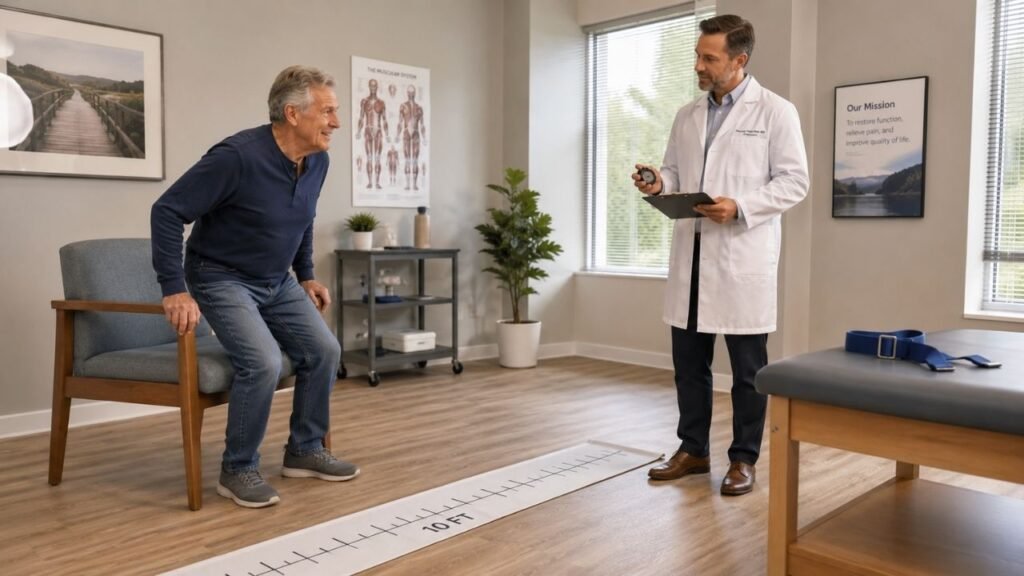
The Timed Up and Go (TUG) test measures the time it takes for the patient to rise from a standard armchair, walk 10 feet, turn around, walk back, and sit down. A time of 12 seconds or longer is associated with increased fall risk; older adults who take 14 seconds or more are in a higher-risk category that warrants intervention. The TUG is so quick and revealing that many primary care practices treat it as the single most useful screen they perform.
The 30-Second Chair Stand measures how many times the patient can rise from a chair to a fully standing position in 30 seconds, without using their hands. The test reveals lower-body strength, which is one of the single biggest predictors of fall risk. A senior who can manage fewer than the expected number of stands for their age and sex is considered at elevated risk and is a strong candidate for a strength-focused physical therapy referral.
The 4-Stage Balance Test asks the patient to hold four progressively harder standing positions: feet side by side, semi-tandem (heel of one foot against the arch of the other), tandem (heel directly in front of toe of opposite foot), and single-leg stance. A patient who cannot hold the tandem position for at least 10 seconds is at meaningfully increased risk. The test isolates balance from strength, which is a different physiological problem and points toward a different intervention.
Some practices also use the Berg Balance Scale, which is a more extensive 14-item battery typically administered by a physical therapist rather than a primary care physician. Berg scores below 45 are associated with significantly increased fall risk and usually trigger a referral for a structured balance program.
Practical Guidance: Medication Review and Targeted Exam
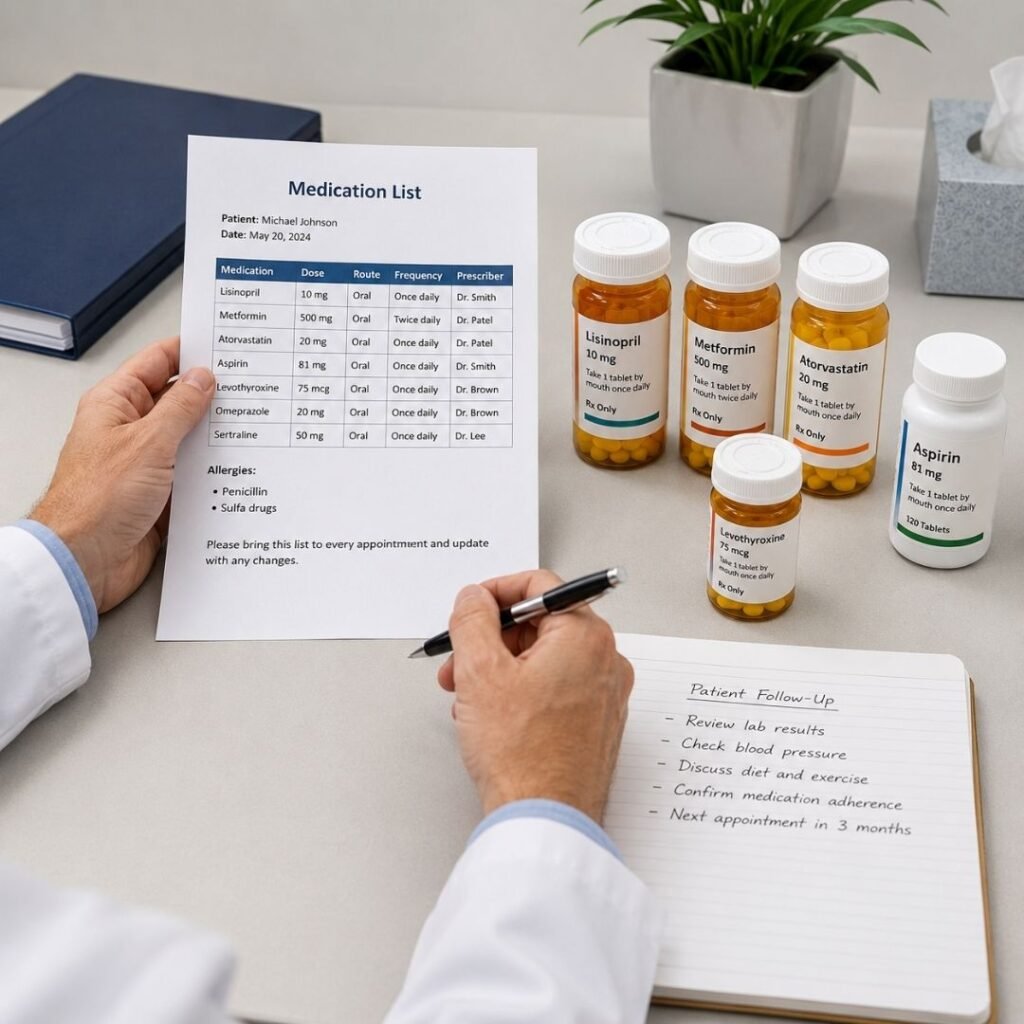
The medication review is often the most actionable part of the visit. Many of the medications older adults take regularly — some prescribed years ago and never reconsidered — can directly contribute to falls. The classes most often implicated are benzodiazepines, sleep aids, certain antidepressants, antihistamines (especially the older ones like diphenhydramine), opioid pain medications, and blood pressure medications that drop pressure too aggressively. A senior on three or more of these is at significantly elevated risk independent of any other factor.
The doctor will go through the medication list one by one and ask: Is this drug still needed? Is the dose appropriate for the patient’s current weight and kidney function? Is there a safer alternative? Sometimes the answer is to taper or stop the medication; sometimes it is to switch to a less sedating option; sometimes it is to keep the medication and address the fall risk another way. The goal is not to take seniors off everything; it is to weigh each medication’s benefit against the fall risk it adds.
Orthostatic vital signs — blood pressure and pulse measured while lying down, sitting, and standing — reveal whether the senior’s blood pressure drops sharply when they change position. A drop of 20 mmHg systolic (the top number) or 10 mmHg diastolic (the bottom number) within three minutes of standing is the threshold for orthostatic hypotension, which is a strong contributor to fall risk and is often medication-driven or dehydration-driven. Catching this in the office prevents the fall it would otherwise cause at home.
Vision is also checked or referred. Outdated eyeglass prescriptions, untreated cataracts, and certain progressive lens issues all elevate fall risk by limiting depth perception or peripheral awareness. A simple visual acuity check at the visit, followed by a referral to ophthalmology if needed, is one of the highest-yield interventions a primary care doctor can recommend.
Practical Guidance: Cognitive Screening and Home Environment
A complete fall risk assessment in seniors also touches on cognition. Mild cognitive impairment significantly raises fall risk because the patient may forget to use a cane, misjudge stairs, or wander into hazards. Doctors typically use a short screen like the Mini-Cog or the MoCA to flag patients who would benefit from a more complete neurocognitive evaluation. Cognitive findings change the rest of the plan: a senior with intact cognition can implement a complex home safety checklist; a senior with mild impairment usually needs a family member to do the implementation for them.
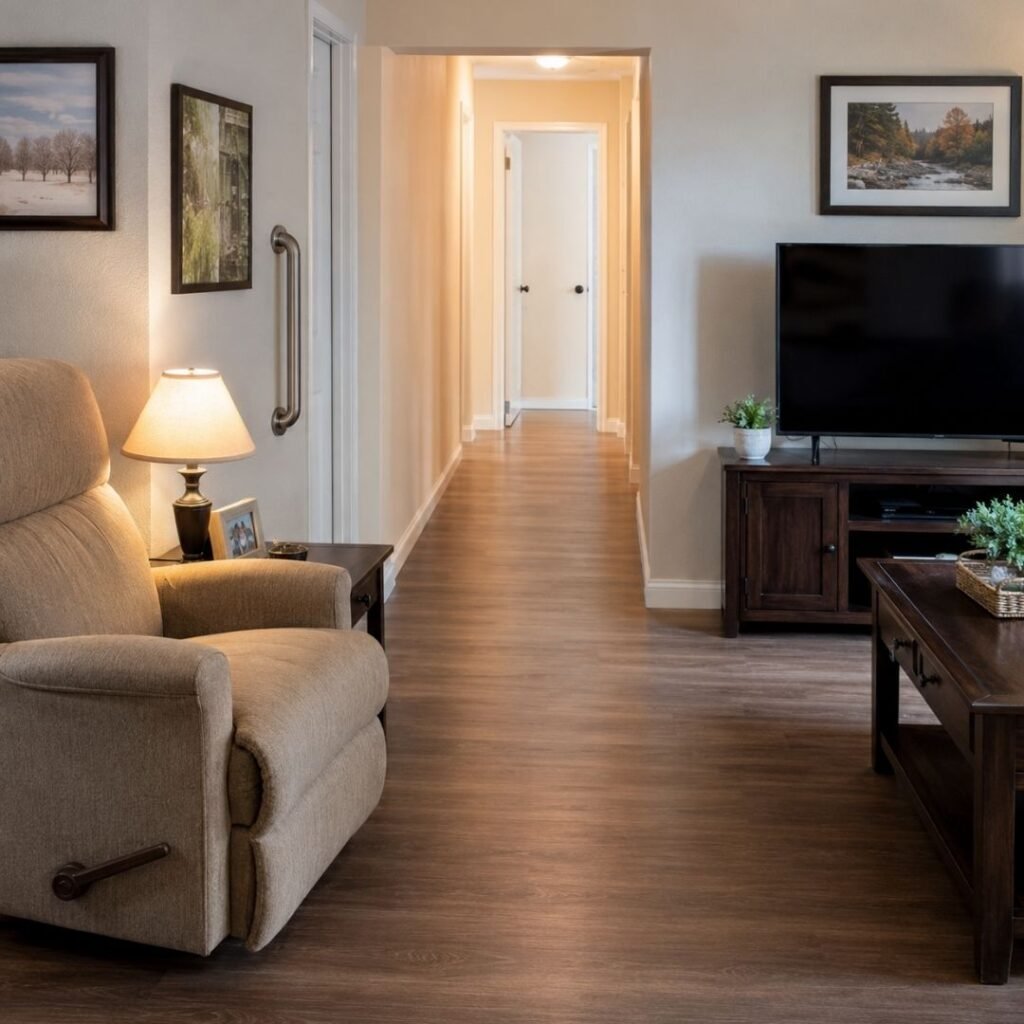
The home environment is the third practical pillar. Most falls happen at home, and the most common culprits are predictable: throw rugs, poor lighting, lack of grab bars in the bathroom, clutter in walking paths, and stairs without handrails. Some practices have a nurse or occupational therapist visit the home directly; others rely on a structured questionnaire the patient or family completes. Either way, the goal is to translate the office findings into specific, addressable hazards in the place where the senior actually lives.
Practical follow-up often includes recommending small, well-chosen mobility devices that prevent falls before they happen. A cane used correctly, a properly fitted walker, or a grab bar mounted at the right height can dramatically reduce risk. Our roundup of small mobility aids that prevent falls covers the simple equipment that most often shows up on a doctor’s post-assessment recommendation list.
Special Considerations: After a Fall, and High-Risk Profiles
The assessment changes when the senior has already fallen. A history of a recent fall — especially one that caused injury, required medical attention, or happened in an unusual way — bumps the patient into the high-risk category automatically. The follow-up evaluation goes deeper: detailed history of the fall circumstances, additional functional testing, and often a referral to physical therapy for a structured falls program. Our practical guide on how to care for seniors after a fall covers the recovery period in detail.
Certain profiles warrant a more aggressive assessment from the start. Seniors over 80, those with Parkinson’s disease, stroke survivors, patients on five or more chronic medications, and seniors who live alone are all in higher-risk groups even before any specific symptom appears. For these patients, doctors often skip the screening step and proceed directly to a full evaluation. A full assessment at this stage is not optional; it is the standard of care.
Cognitive and emotional considerations matter too. Fear of falling is itself a risk factor: a senior who restricts activity because they are afraid will lose strength faster, which raises the chance of an actual fall. Doctors will sometimes ask explicit questions about fear and confidence, and may refer to behavioral health or to a falls prevention class that combines exercise with confidence-building.
Finally, the assessment is not a one-time event. Risk changes with new medications, new diagnoses, new home situations, and the gradual changes of aging. A senior who scored well two years ago can score very differently today. Most clinical guidelines recommend repeating the assessment at least annually for adults 65 and older, and more often after any significant health change.
Frequently Asked Questions
1. How often should a senior have a fall risk assessment?
Most clinical guidelines recommend an annual screening for every adult age 65 or older, with a more detailed evaluation any time the senior reports a fall, a near-fall, or new unsteadiness. A senior with a recent fall, a new medication, a hospital discharge, or a significant change in health should be reassessed sooner. The annual screen is short — usually three questions and a quick balance check — while a full evaluation is reserved for patients whose screen flags them as higher risk.
2. What does the Timed Up and Go (TUG) test measure?
The TUG measures how long it takes the patient to rise from an armchair without using their hands, walk 10 feet, turn around, walk back, and sit down. The total time captures a combined picture of lower-body strength, balance, gait speed, and coordination — the four functional domains that together determine real-world fall risk. A time of 12 seconds or longer is the common threshold for increased risk; 14 seconds or longer is a stronger signal that warrants intervention. The TUG is widely used because it is quick, requires no equipment beyond a stopwatch, and reveals problems that questions alone would miss.
3. Which medications most often increase fall risk in older adults?
The medications most often implicated are benzodiazepines (such as alprazolam, lorazepam, and diazepam), sleep aids like zolpidem, sedating antihistamines such as diphenhydramine, certain antidepressants, opioid pain medications, and blood pressure medications that drop pressure too aggressively. Many older adults take several of these at once without realizing the combined sedating effect. A medication review during a fall risk assessment often identifies one or two drugs that can be tapered, switched, or eliminated, which produces an immediate reduction in fall risk without any other intervention.
4. Can a family member do a fall risk assessment at home?
A family member can do a useful preliminary screen at home but cannot replace a clinical evaluation. Useful home observations include watching the senior rise from a chair without using their hands, noting any unsteadiness during walking or turning, identifying medications that cause drowsiness, and listing any falls or near-falls from the past year. Bringing these observations to a clinic visit gives the doctor a head start. The clinical evaluation adds the structured tests, the medication review against pharmacology databases, and the orthostatic vital signs that family members cannot reliably perform on their own.
5. What happens after a fall risk assessment in seniors identifies high risk?
The doctor will recommend a tailored plan based on which specific factors elevated the risk. A common plan includes a referral to physical therapy for balance and strength training, a medication adjustment to remove or replace the highest-risk drugs, a vision check or eyeglass update, home modifications such as grab bars and removed throw rugs, and a discussion of mobility aids like a cane or walker. Patients with the highest risk are sometimes referred to a multidisciplinary falls clinic that combines medical, therapy, and home-assessment services in a single program. The plan is reviewed at the next visit to confirm the changes are taking effect.
Final Thoughts
This kind of assessment does not feel dramatic. There are no scans, no needles, and usually no surprises that the patient and family did not already half-suspect. What the assessment does is take the half-suspicions, the small concerns, the medications that nobody had reconsidered in years, and the balance changes that had become normal at home, and convert them into a structured plan with specific, addressable steps. Families who push for the assessment and follow through on what it surfaces are families who often look back, two or three years later, and notice that the catastrophic fall they were quietly bracing for never came. That is what the assessment is for — not to predict the fall, but to prevent it.
Medical Disclaimer: The information provided on this website is for educational purposes only and should not replace professional medical advice. Always consult your physician or qualified healthcare provider regarding any medical condition or treatment decisions.
